Author: Shira Pinsker

  • Lack of SEO Skills and Strategy Leave Critical Gap in Higher Education Recruitment Funnel, According to Study

    Lack of SEO Skills and Strategy Leave Critical Gap in Higher Education Recruitment Funnel, According to Study

    Joint study into higher education recruitment strategies indicates foundational marketing tactics are missing the mark in execution. 
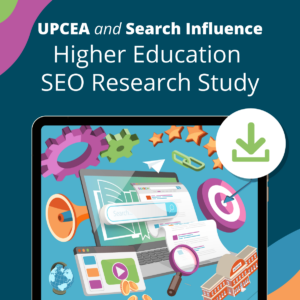
    Higher Ed SEO Research Study - UPCEA - Search InfluenceNEW ORLEANS, April 6, 2023— Research conducted by UPCEA, the leading association for professional, continuing and online (PCO) education, in collaboration with Search Influence, a higher education digital marketing agency, shows that higher education institutions targeting non-traditional students do not reach and recruit prospective students to their full potential. The results of the newly released study reveal that the majority of schools lack search engine optimization (SEO) skills, knowledge, strategy, and effective reporting to leadership.

    Research Highlights

    • Schools say SEO is important but aren’t executing it strategically.
    • Institutional leadership is not informed of SEO performance metrics. 
    • Most institutions do not have a comprehensive SEO strategy. 

    The study surveyed 70 UPCEA institutional leaders and 68 marketing leaders to understand higher education institutions’ current SEO marketing practices that target non-traditional students. The study compares answers against best digital marketing practices, specifically SEO, to determine the key findings. In addition to this, the research includes an assessment of the SEO readiness of 100 member institutions.

    The study finds a gap between what institutional and marketing leaders believe are best practices for SEO and the actual SEO readiness of their institution, indicating that SEO is an area of opportunity for many schools. According to survey data, although marketing and institutional leaders value SEO as a tactic, 51% of respondents said that their unit does not have an established search engine optimization plan or strategy.

    “Innovative marketing practices are important to carry higher education through its current crossroads,” said Jim Fong, Chief Research Officer at UPCEA. “The adult learner is more savvy than previous generations, and institutions need to meet students where they are in order to have a competitive advantage in an evolving and complex economy.” 

    “The higher education institutions surveyed know SEO is important. And many think they’re doing SEO. This study shows that most lack an outcomes-focused strategy. Even if they did have a strategy, they, themselves, indicate they lack the skills to execute or the reporting structure to hold their teams accountable,” says Will Scott, Search Influence Co-owner and Chief Executive Officer. “Given the dollars they’re spending and the proven returns from search engine optimization, it’s clear that a focus on SEO would have a big impact on schools’ student funnel.”

    The study suggests that current SEO strategies are lacking because PCO units do not have the skills, staff, or resources to develop one. A second contributing factor is the lack of leadership awareness of SEO-related metrics that would provide a deeper case for support to inform decisions such as budget, department staffing and employee skill development. 

    The research was conducted as part of a two-year partnership between Search Influence and UPCEA. This partnership provides UPCEA members with custom Search Influence resources that help improve student recruitment through SEO and paid ads strategies. 

    The full report can be viewed online: Higher Education SEO Research Study

    UPCEA and Search Influence will discuss the significant findings from the research study in a higher education webinar on April 27, 2023.

    Additional Resources: 

    About Search Influence:

    Search Influence is a women-owned, ROI-focused, digital marketing agency that helps institutions drive prospects into and through the recruitment funnel with analytics-backed strategies, including search engine optimization and paid digital advertising.  Founded in 2006, Search Influence’s core purpose is to optimize potential. Search Influence collaborates with well-regarded institutions both nationally and locally in New Orleans. Search Influence collaborates with well-regarded institutions including Tulane University School of Professional Advancement, University of Maryland School of Public Policy, and Palo Alto University.

    About UPCEA: 

    UPCEA is the leading association for online and professional continuing education. Founded in 1915, UPCEA now serves the leading public and private colleges and universities in North America. The association supports its members with innovative conferences and specialty seminars, research and benchmarking information, professional networking opportunities, and timely publications. Based in Washington, D.C., UPCEA builds greater awareness of the vital link between adult learners and public policy issues. 

    For Media Inquiries

    Search Influence:

    Shira Pinsker; Marketing Manager 

    (504) 208-3900; [email protected] 

    UPCEA:

    Molly Nelson; Vice President of Communications

    (202) 659-3130; [email protected] 
  • Search Influence Partners with the Louisiana Hospital Association for a Virtual Training

    Search Influence presents “The Great Resignation: How to Stabilize and Even Boost Your Marketing in this Uncertain Time” in partnership with the Louisiana Hospital Association (LHA) on Thursday, Sept, 22, 2022. This is Search Influence’s fourth time partnering with the LHA for a virtual training exclusively for the organization’s members.

    Louisiana Hospital Association logo image

    Established in 1926, the LHA is a not-for-profit association representing all types of hospitals and healthcare systems throughout the state. The LHA carries out its mission by providing services and resources to members through advocacy, education, research, representation and communication.

    About the Virtual Training:

    The Great Resignation is impacting every industry, especially the medical industry. A recent survey by Marketing Hire News found that marketers are not an exception to this trend. But how can medical practices ride the wave of this turnover and still continue to push their marketing objectives forward? How can your in-house mar comm be prepared for turnover whether that is now or later? How can medical practices take advantage of the Great Resignation on the marketing front?

    The Great Resignation sounds scary but let HR handle the comings and goings of staff and deep dive on the marketing engine driving your company’s objectives and revenue. Best practices and strategic line of sight can keep marketing tactics such as third party review sites, patient testimonials and storytelling in motion while staff positions are vacant.

    Shore up four key areas of focus within the marketing communications function that can position your company to excel even without being fully staffed in-house.

    1. Plan
    2. Partners
    3. Performance
    4. Pivot
  • Search Influence Announces Platinum Partnership with Higher Education Association UPCEA

    NEW ORLEANS, Sept 8, 2022—Search Influence, an ROI-focused, digital marketing agency, is now a Platinum Partner of UPCEA, the leading association for professional, continuing, and online (PCO) education. As part of the partnership, Search Influence will share its expertise on higher education marketing strategies and how institutions can optimize, measure and track their search engine optimization (SEO) and paid ads strategies to drive more qualified prospects to their marketing channels. Search Influence will also collaborate on a study with UPCEA’s Center for Research and Strategy in order to provide insights to the PCO community that help them understand the impact of their SEO strategies.

    Search Influence is an UPCEA Platinum Partner

    Over the course of the two-year partnership, Search Influence will publish articles and blog posts, host webinars and appear at several UPCEA conferences to share the value of SEO and paid ads strategies, as well as how analytics and tracking help higher education marketers better understand how their marketing performs and how it contributes to driving inquiries.

    “In our experience, most institutions utilize SEO, paid search and targeted display ads as part of their strategy but don’t know how to measure their impact.” says Search Influence Co-owner and CEO Will Scott. “We’re eager to help demonstrate the ROI of these critical marketing tactics and how they drive recruitment.”

    Search Influence is a corporate member and has spoken at several UPCEA conferences, including their annual conference and Marketing, Enrollment, and Student Success (MEMS) conference. Additionally, one-third of Search Influence’s leadership team completed “Markets, Marketing, and Managing the Cycle from Prospects to Learners,” a course about the importance of data-backed decisions in enrollment management, led by UPCEA’s Chief Research Officer, Jim Fong.

    “We’re proud to offer these partnership options to our members. Search Influence’s investment in UPCEA demonstrates their passion in improving the effectiveness of PCO marketers, as well as their commitment to growing their team’s understanding of higher education marketing trends and challenges,” says Kim Zaski, UPCEA’s chief membership officer and vice president of corporate partnerships. “We view their partnership as a great opportunity for our members to benefit from Search Influence’s SEO and paid ads knowledge.”

    About Search Influence:

    Search Influence is a women-owned, ROI-focused, digital marketing agency who helps institutions drive prospects into and through the recruitment funnel with analytics-backed strategies that include search engine optimization and paid digital advertising.

    Founded in 2006, Search Influence’s core purpose is to optimize potential. We collaborate with well-regarded institutions both nationally and locally in New Orleans. Clients include Tulane University School of Professional Advancement, Tulane University School of Medicine, University of Maryland School of Public Policy, Palo Alto University, and Edgewood College.

  • Search Influence Presents Virtual Training in Partnership with the Mississippi Hospital Association

    Search Influence presents “Communicating Through Pandemic and Weather Events: Planning for Happier Patients” in partnership with the Mississippi Hospital Association (MHA) on Wednesday, May 18, 2022. This is Search Influence’s fourth time partnering with the MHA for a virtual training just for the organization’s members.

    The MHA is the statewide agency for health care representation and serves to all hospitals, wellness types, and health care networks, as well as the patients and communities they serve. MHA is comprised of over 100 hospitals, health care systems, networks, care-providers, and a pool of over 50,000 employees.

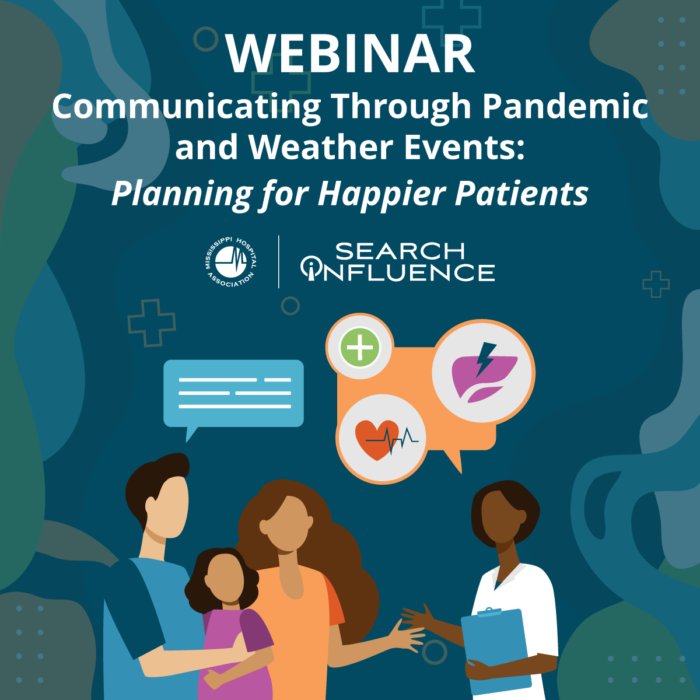
    MHA Webinar Communicating Through Events Graphics

    About the Virtual Training

    Your patients are frustrated when they can’t confidently find information about your hours and availability. If you have inaccurate information on your digital platforms, your staff has to spend extra time managing patient confusion, your patients lose confidence, and your brand reputation suffers.

    The combined impacts of the pandemic and the frequency of unexpected weather events means your staff must have an agile, thorough plan in place to communicate changes to the public. Through our webinar, you can learn how to improve the patient experience and free up your staff.

    In just 30 minutes, we will walk you through what needs to be updated, who needs to do it, and when it needs to be done.

    Learning objectives:

    • How to present your information online to increase patient confidence
    • Which platforms external to your website are critical to update
    • Steps to create a digital presence emergency preparedness plan to improve patient experience in the event of a weather event, such as a hurricane
  • Search Influence Certified as a Women-Owned Business

    Headshot photo of Search Influence COO Angie ScottThe Women’s Business Enterprise National Council (WBENC) has certified New Orleans-based digital marketing firm Search Influence as a women-owned business. In 2021, Search Influence COO and co-founder Angie Scott became a 51% owner of the company. To achieve certification, the WBENC validates that a business is at least 51% owned, controlled, operated and managed by a woman or women.

    As COO, Scott manages Search Influence’s day-to-day operations and ensures they align with the company’s long-term goals. Additionally, she plays a leading role in the company’s quarterly and annual strategic planning and oversees short-term and long-term resource management. Scott co-founded the company with her husband and Search Influence CEO Will Scott in 2006 and the company now has a dedicated team of 30 in-house employees that collaborate with hundreds of clients nationwide.

    “More than 80% of Search Influence’s team members identify as female, with five of six executive team members identifying as female. To reflect the makeup of the company and recognize the critical role Angie plays in our success, we felt it is important that she became the majority owner of Search Influence,” said Will Scott.

    According to the WBNEC, the U.S. has more than 13 million women-owned businesses, representing 42% of all businesses.

    “For years, I’ve had the pleasure of working with a team of exceptionally talented women. To be officially recognized as women-owned and women-led is an honor I’m excited to share with them,” Angie Scott said. “Our focus on SEO, paid online media and analytics make us both a technology and marketing firm. As frequent speakers and presenters, our team takes pride in demonstrating technical excellence in traditionally male-dominated venues.”

    Women’s Business Enterprise National Council (WBENC) certified business logo

    The WBENC is a leading non-profit organization dedicated to helping women-owned businesses thrive. To become WBENC-certified, business owners undergo a thorough vetting process, including review of business documentation and a site visit. Through certification, women-owned businesses gain access to a vast network of support, including targeted business opportunities for certified women-owned firms, increased visibility in corporate and government supply chains, education and development programs to spur growth and increase capacity, and networking and mentorship opportunities with thousands of women entrepreneurs and those who support them.

  • Search Influence Presents Virtual Higher Education Marketing Training, “How to Gain Stakeholder Trust in Your Marketing Plan ”

    About the Virtual Training

    As an education marketer, it’s your job to help deans, admissions, and other stakeholders understand how new marketing strategies fuel student growth.

    Search Influence will guide you through how to build a case for new marketing efforts, including ways to demonstrate how your strategies impact your institution.

    Learning objectives:

    • How to use quantitative goals to plan and pitch marketing strategies.
    • Tactics to demonstrate how a given strategy will help you reach a specific target audience.
    • Guidance to tailor your discussion based on personality styles and role.

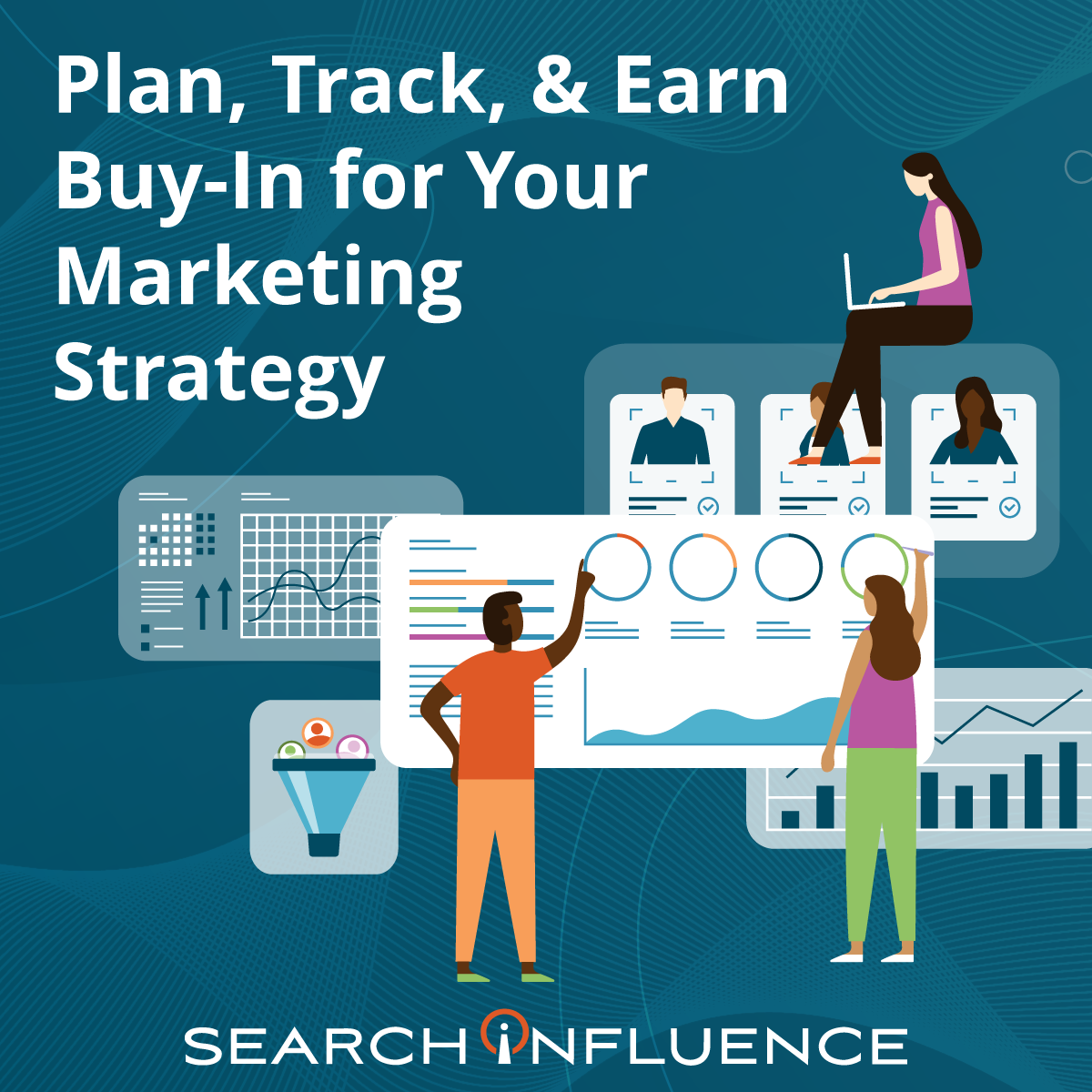
    Plan, Track, & Earn Buy-In for Your Marketing Strategy webinar graphic

    This is the third part of our free training series, “Plan, Track, and Earn Buy-In for Your Higher Education Marketing Strategy. The series helps higher education marketers create a strategic and measurable marketing plan and build excitement for the plan among stakeholders.

  • Search Influence Presents Virtual Higher Education Marketing Training, “Marketing Data, Dashboards, and Decisions”

    Search Influence will host Marketing Data, Dashboards, and Decisions on Tuesday, Dec 7, 2021 at 12pm EST/11am CST.

    Register for this training and our January session here. All registrants receive a recording of the first part of the series, as well as all upcoming sessions.

    About the Virtual Training

    Discover how to unlock powerful insights by using quantitative data to tell a story about the performance of your institution’s recruitment and marketing strategies.

    Learning objectives:

    • Suggestions for tools and high-level processes to use when integrating disparate data into a dashboard.
    • How an integrated reporting dashboard can improve efficiency.
    • Methods to tie marketing and enrollment data together to communicate your work to non-marketing people.

    Plan, track and earn buy in for your marketing strategy graphic

    This is the second of our free training series, “Plan, Track, and Earn Buy-In for Your Higher Education Marketing Strategy.” The series helps higher education marketers create a strategic and measurable marketing plan and build excitement for the plan among stakeholders.

    Upcoming

    Session 3: How to Gain Stakeholder Trust in Your Marketing Plan

    Tuesday, Jan 11, 2022 | 12PM ET/11AM CT
    Register

    As an education marketer, it’s your job to help deans, admissions, and other stakeholders understand how new marketing strategies fuel student growth.

    Search Influence will guide you through how to build a case for new marketing efforts, including ways to demonstrate how your strategies impact your institution.

    Learning objectives:

    • How to use quantitative goals to plan and pitch marketing strategies.
    • Tactics to demonstrate how a given strategy will help you reach a specific target audience.
    • Guidance to tailor your discussion based on personality styles and role.
  • Search Influence Hosts Higher Education Marketing Series, “Plan, Track, and Earn Buy-In for Your Higher Education Marketing Strategy”

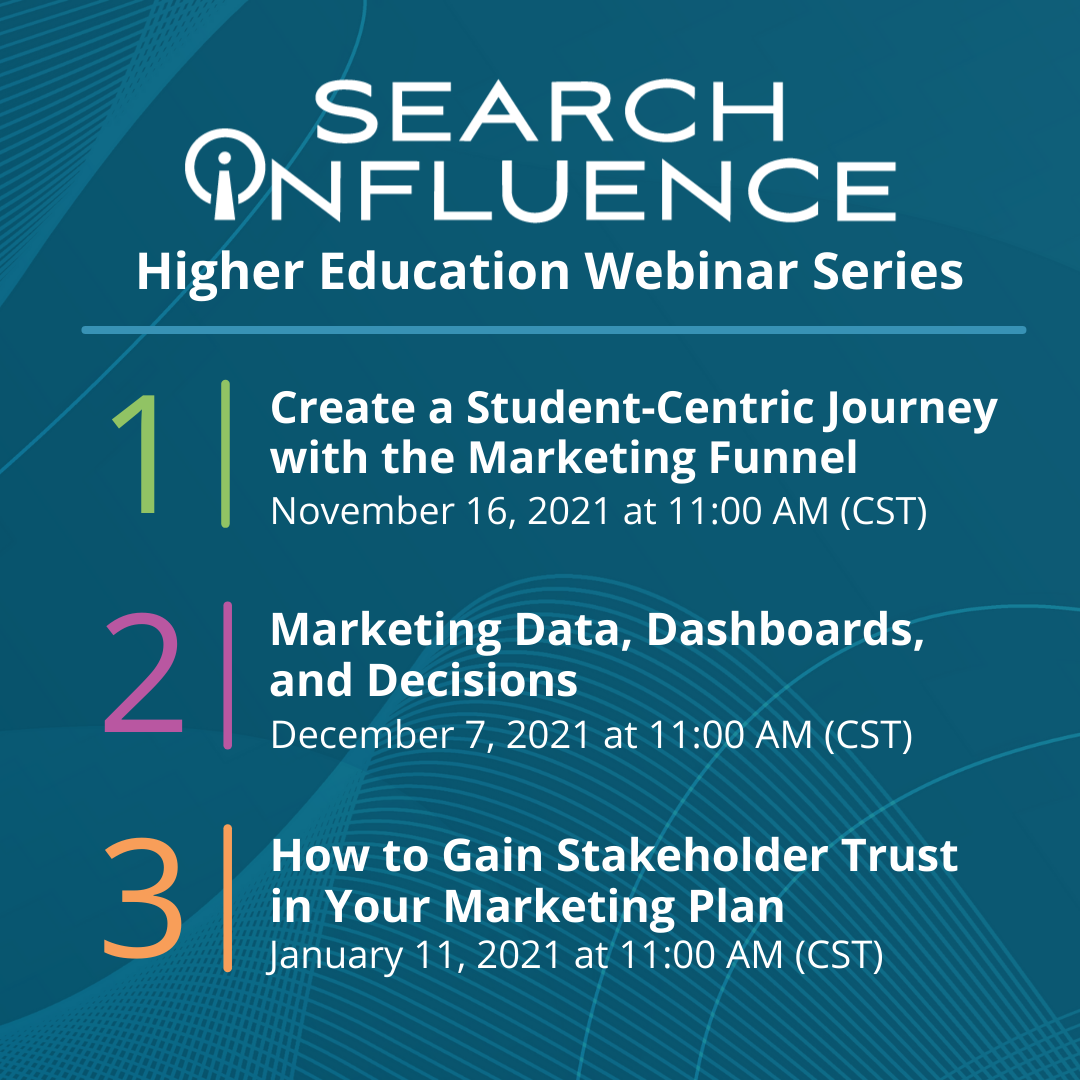
    Search Influence will host Plan, Track, and Earn Buy-In for Your Higher Education Marketing Strategy, a free, three-part training series. The series is designed to help higher education marketers create a strategic and measurable marketing plan and build excitement for the plan among stakeholders.

    Watch all three recordings here.

    Dates for Search Influence's 3-part higher education marketing webinar

    Session 1: Create a Student-Centric Journey with the Marketing Funnel

    Tuesday, Nov 16 | 12PM ET/11AM CT
    Watch the recording here.

    In this Higher Education Strategy Session, Search Influence will walk you through how to nurture prospects with tactics that align to the marketing funnel and student journey.

    Learning objectives:

    • How to look at the marketing funnel from the student’s perspective.
    • The ideal formula and structure for content that converts on your program and degree page.
    • Opportunities to create innovative conversion website points that help you qualify leads.

    Upcoming Sessions

    Session 2: Marketing Data, Dashboards, and Decisions

    Tuesday, Dec 7 | 12PM ET/11AM CT
    Watch the recording here.

    Discover how to unlock powerful insights by using quantitative data to tell a story about the performance of your institution’s recruitment and marketing strategies.

    Learning objectives:

    • Suggestions for tools and high-level processes to use when integrating disparate data into a dashboard.
    • How an integrated reporting dashboard can improve efficiency.
    • Methods to tie marketing and enrollment data together to communicate your work to non-marketing people.

    Session 3: How to Gain Stakeholder Trust in Your Marketing Plan

    Tuesday, Jan 11, 2022 | 12PM ET/11AM CT
    Watch the recording here.

    As an education marketer, it’s your job to help deans, admissions, and other stakeholders understand how new marketing strategies fuel student growth.

    Search Influence will guide you through how to build a case for new marketing efforts, including ways to demonstrate how your strategies impact your institution.

    Learning objectives:

    • How to use quantitative goals to plan and pitch marketing strategies.
    • Tactics to demonstrate how a given strategy will help you reach a specific target audience.
    • Guidance to tailor your discussion based on personality styles and role.
  • What is OTT and CTV? A Marketing Manager’s Guide to Advertising on Long-Form Streaming

    Key Insights

    • Consumers across all age groups have embraced streaming tv shows and movies.
    • Advertising on streaming services offers many benefits over traditional TV advertising, including robust targeting and measurement, including individual or household information.
    • By leveraging OTT, you can reach consumers with messages across multiple devices and platforms, truly running a full-funnel campaign with ads that talk to each other.
    • You can stretch your advertising dollars with OTT to reach consumers where they already watch content: their smart TVs, computers, and mobile devices.

    Even if you are old enough to remember tuning in live for the Cheers finale live or parking in front of the television for “The One Where Ross Finds Out,” chances are you now stream most of your favorite TV shows. In 2020, Hulu found that 90% of all 13–54-year-olds watch TV on a streaming platform. That’s several generations of consumers who engage with TV, movies—and brands—in a streaming environment. The COVID-19 pandemic has increased watching habits, with the average American now spending nearly two hours a day watching subscription video on demand services.

    Person using remote control on their streaming device

    Advertising on streaming television is an affordable way for businesses to fill their upper funnel while capitalizing on the creative flexibility, targeting, and measurement capabilities of digital advertising. Emerging brands can use streaming advertising to leverage the mass reach and advanced targeting capabilities of long-form streaming to help build awareness, while established businesses can use it to connect with coveted audience segments who do not engage with traditional media.

    The industry term for streaming long-form content directly to viewers via the internet through TVs or devices is called OTT. This post will further define OTT and expand on its benefits, including targeting, measurement, and branding.

    About OTT

    Defining OTT

    OTT stands for over-the-top and refers to content streamed on apps and services, such as Hulu, Discovery+, or Peacock.

    You can watch OTT content on any device connected to the internet. The term originates from the now common practice of consumers going “over the top” of a cable box, bypassing cable/satellite subscriptions or broadcast TV to stream long-form, premium video (such as scripted TV shows).

    Advertisers can also use the term OTT to distinguish streaming tv shows and movies from user-generated online video (for example, unboxing videos on YouTube made by an influencer is not OTT content.)

    What is CTV?

    CTV is a subset of OTT. CTV stands for connected television and refers to a device that delivers video by connecting to a TV.

    CTV examples:

    • HDMI sticks: Amazon Fire TV, Apple TV, Roku
    • Gaming consoles
    • Connected television sets, such as smart TVs

    It does not include tablets, computers, or other mobile devices.

    An Example of OTT and CTV

    You start binge watching the latest Hulu series of the moment through a Roku plugged into your TV.

    You streamed OTT content over CTV.

    You move to your bed and watch Hulu from the app on your phone (yes, yes, you know it’s not good for your sleep to watch TV in bed).

    You streamed OTT content.

    Benefits of OTT

    OTT combines the power of digital media with the advantages of advertising on television. Your brand receives traction from the authority consumers assign to seeing your ad on a big screen with the targeting and measurement capabilities that allow you to optimize performance to maximize your ad spend.

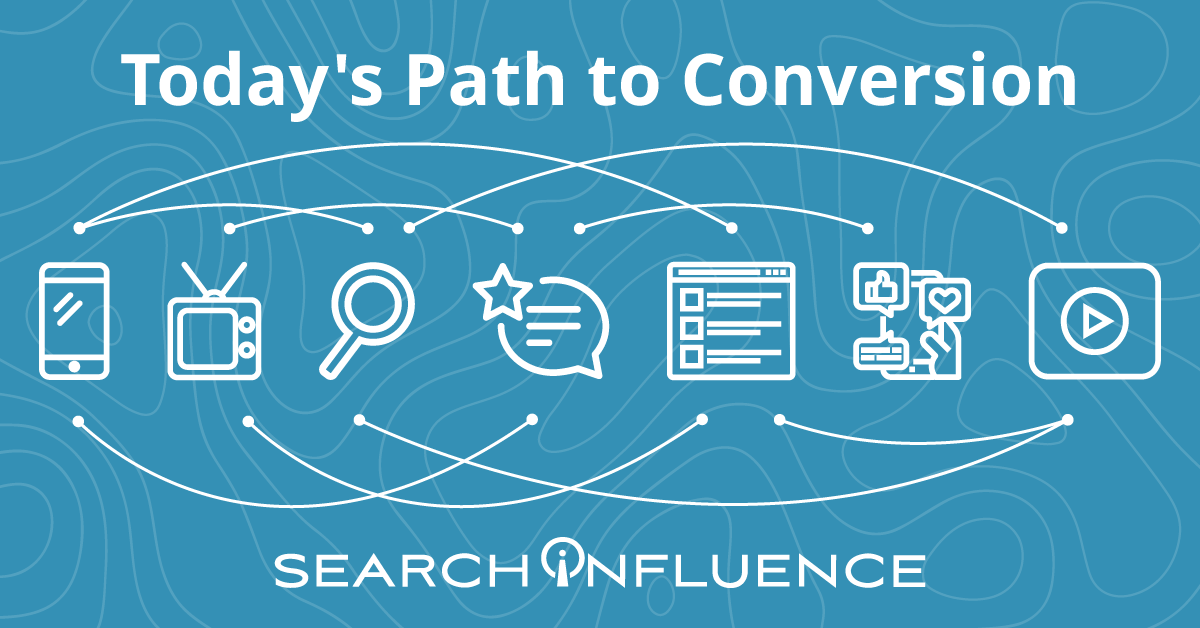
    With all of the research options at our fingertips, consumers’ path to conversion evolves each year. Product research and shopping takes consumers across many online and offline touchpoints. By leveraging OTT, you can reach consumers with messages across multiple devices and platforms, truly running a full-funnel campaign with ads that talk to each other.

    Today's path to conversion

    OTT Targeting Capabilities: First and Third-Party Sources

    OTT first and third-party sources enable businesses to build detailed segments beyond the typical options found on other digital marketing platforms.

    First-party data: The advertising platform learns about audiences through device-level viewer data, which it takes from users’ IP addresses. Targeting options vary by OTT provider. Some options include:

    • Location tracking and geofencing
    • Home page visits

    Third-party data: Third-party vendors provide consumer data and customer attributes that enable more precise targeting definitions. Some options for third-party data targeting include:

    • Purchase behaviors (online and offline)
    • Age/gender composition
    • TV viewership and media consumption

    Retargeting

    A prospect’s viewing behavior becomes part of their digital footprint. If a prospect views an ad, OTT’s retargeting capabilities lets you follow this prospect across all ad-supported streaming services and devices. You can capture brand impressions with video and then prompt an action on a device where it’s easy to convert.

    For example, a healthcare practice can target an upper-funnel ad promoting a new procedure to a household’s smart TV. Later, the practice can display a lower-funnel ad that encourages the prospect to fill out a form for a free consultation for this new procedure to a mobile device in that same household. A prospect is much more likely to fill out a form on a mobile device than if the ad appeared on a smart TV, encouraging prospects to go onto their website and fill out the form.

    OTT Targeting Capabilities: Addressable Geo-Fencing aka Household Targeting

    Through OTT, you can target multiple prospects under one roof.

    ​​When several devices are connected to the same router, they form a network and have the same external IP address. As a result, advertising platforms can identify multiple devices in the same household by looking at whether they have the same IP address.

    OTT advertising platforms can match a smart TV to a series of desktop and mobile devices, creating a “digital household,” which allows advertisers to target individuals across different devices. This extends the opportunity to customize your ad based on the user’s device.

    Examples of What You Can Do with OTT Targeting

    OTT’s multiple targeting options allow you to specify as much as your campaign needs.

    • If a prospect searches a website for events in their area, you can use keyword search retargeting to show them an ad for your event as they stream their favorite TV show.
    • A small business could target residents over 35 years old in a specific zip code.
    • If you want to target adults for your continuing education program, you can leverage information such as education level, areas of interest, and browsing history to customize ads down to which educational programs might be most attractive to a given prospect.

    Measurement and Attribution

    OTT’s sophisticated measurement and attribution capabilities give businesses the tools to evaluate the ROI of their campaigns and understand which segments, platforms, and content deserve further investment.

    The capability to match consumers to their devices means you can see which specific prospects watched your ad, how much they watched, and the outcomes of watching the ad (such as purchase, website visit, or store visit). With the flexibility to test audiences and content variations, you ensure your advertising remains relevant, so you don’t waste ad dollars on a consumer unlikely to take action.

    Branding

    OTT’s multiple platform options help establish legitimacy for your brand. With OTT, your brand ad can appear on a big-screen TV, streaming right after a national brand. This way your ad receives the afterglow of playing right after a Tide commercial on a 70” screen rather.

    Ready to put OTT into practice?

    To drive performance with target consumers, small and medium businesses should consider including OTT as a component of their cross-platform strategy. Emerging brands can use it to build awareness with new consumers, and established companies can use OTT to remain relevant.

    Unsure of where to start with OTT? Contact the experts at Search Influence to discuss how you can use these tactics as part of a full-funnel strategy to drive leads for your business.

  • Search Influence Presents Virtual Higher Education Marketing Training, “How to Gain Stakeholder Trust & Buy-in on New Marketing Strategies”

    Watch the recording of this training session here.

    Search Influence education webinar on gaining stakeholders trust

    About the Virtual Training

    As an education marketer, it’s your job to help deans, admissions, and other stakeholders understand how new marketing strategies will fuel student growth.

    Join Search Influence for a virtual training that demonstrates how to build a case for new marketing efforts, including tips on how to showcase how they’ll help you reach your audience and impact your institution.

    Learning Objectives for this Event

    • How to use and quantitative goals to plan and pitch marketing strategies
    • Tactics to demonstrate how a given strategy will help you reach a specific target audience
    • Guidance to tailor your discussion based on personality styles and role
    • Opportunities to leverage data in your decision making and discussions