Author: Marissa Maggio

  • How to Use Facebook’s Campaign Budget Optimization to Your Advantage

    Who’s ready to spend their Facebook campaign budget more effectively?!

    Chris Pratt giddily rubbing his hands together

    If you waited until the last hour to adopt Facebook’s new mandatory update, Campaign Budget Optimization, you may be slightly panicked. This could disrupt your internal processes and current campaign structure. However, you’ll be thanking Facebook for forcing this change once you adopt it.

    What Is Campaign Budget Optimization?

    Campaign Budget Optimization (CBO) is Facebook’s latest mandatory update that makes you set your campaign budget at the campaign level, without the option to set ad set level budgets. Ideally, Facebook’s algorithm will optimize your campaign for your chosen “result” by effectively spreading your budget across each ad set.

    With CBO, you must accept that not all ad sets will spend the same, and that’s in your campaign’s best interest because the budget will spend on the best-performing ad sets.

    Do’s & Don’ts for Setting Campaign Objectives

    It’s important to use the correct campaign objective and ad set “Optimization for Ad Delivery” when setting up your campaign. Choose the proper result option that aligns with your client’s goals; this will affect who sees your ads and will help you achieve the desired outcome more effectively.

    To get a better understanding of what this means, review the do’s and don’ts below explaining common errors that occur when choosing campaign objectives and optimizations for ad delivery.

    Campaign Objective

    DO: Choose the conversion objective if you want to see an increase in conversions at a lower cost.
    DON’T: Choose a traffic objective to increase traffic to your website in hopes of also increasing conversions at a lower cost.

    DO: Choose the brand awareness objective if serving many impressions at the lowest cost meets your client’s goals.
    DON’T: Choose a conversion objective if your audience is not brand aware, since you will be paying a premium to reach users who are likely to convert online and not achieve your brand awareness goal effectively.

    Optimization for Ad Delivery

    DO: Select “Landing Page Views” if it’s important that the Facebook user loaded the landing page.
    DON’T: Select “Link Clicks” if you’re looking for high-quality clicks from interested users.

    DO: Select “Reach” if you set your campaign objective as reach so that Facebook optimizes to serve ads to the maximum amount of users within your frequency cap.
    DON’T: Select “Impressions” if your goal is to make users brand aware by serving ads to users as many times as possible. Your campaign would be better off using the brand awareness objective instead.

    Facebook always gives you the option for more control, but that doesn’t mean that there aren’t best practices that should be followed. Facebook’s algorithm will only optimize for the results you select when setting up your campaign.

    Screenshot of Facebook landing page on a browser

    Maintaining Budget Control With Ad Set Spend Limits

    Sometimes you’ll need to maintain some control of spend at the ad set level. For this reason, Facebook allows ad set spend limits to be set as a minimum or maximum daily spend.

    • Here are five examples of why you may want to use ad set spend limits:
    • If you create a new ad set to test but it won’t spend, you can force a minimum daily spend until Facebook’s algorithm collects enough data about that ad set. This should only be set temporarily for 2-3 weeks.
    • If you want to control budget based on targeting, such as locals vs. tourists, you can set daily minimums/maximums to align with your desired budget allocation. However, this should only be a temporary solution until you can separate these into their own campaigns.
    • You may want to spend more on promoting a special or limited offer but only for a short period of time (less than 2-3 weeks).
    • You may need to promote an urgent message that requires more spend for a short period of time.
    • If one ad set is spending all of the budget on low-quality results, you should consider setting a daily maximum.

    Disclaimer: Facebook notes, “Use ad set spend limits sparingly, or not at all: The more budget that’s locked into specific ad sets, the less flexibility our delivery system has to optimize your campaign budget.”

    While there are valid reasons to control spend for a short period of time, ad set spend limits should not be a permanent solution if you want to maintain a healthy ad account. At the end of the day, marketers want to produce the most high-quality results at the lowest cost for their clients. It’s best to let Facebook’s algorithm spend the campaign’s budget in the most effective way for the results you chose to optimize for.

    Take Action Now

    As you can see, this mandatory update may require changes in your processes, but Campaign Budget Optimization benefits your Facebook ad account in the long run. If making this transition has been overwhelming, reach out to Search influence for specific recommendations and consulting services. Learn more about how we can also manage your ad account directly with an online advertising package.

    Images
    Mouse

    Hand rub

    Facebook

  • Three Ways to Improve the Quality Score of Google Ads

    At first, Quality Score may seem like an arbitrary number attached to your keywords, but there is so much that goes into it. Once you learn how to improve and maintain a keyword’s Quality Score, you can feel confident that you’re also improving the overall health of your Google Ads account.

    Defining Quality Score

    Google states that “Quality Score is intended to give you a general sense of the quality of your ads.” Quality Scores are provided at the keyword level and meant to reflect how the keyword performs in your account with regards to ad and landing page quality.

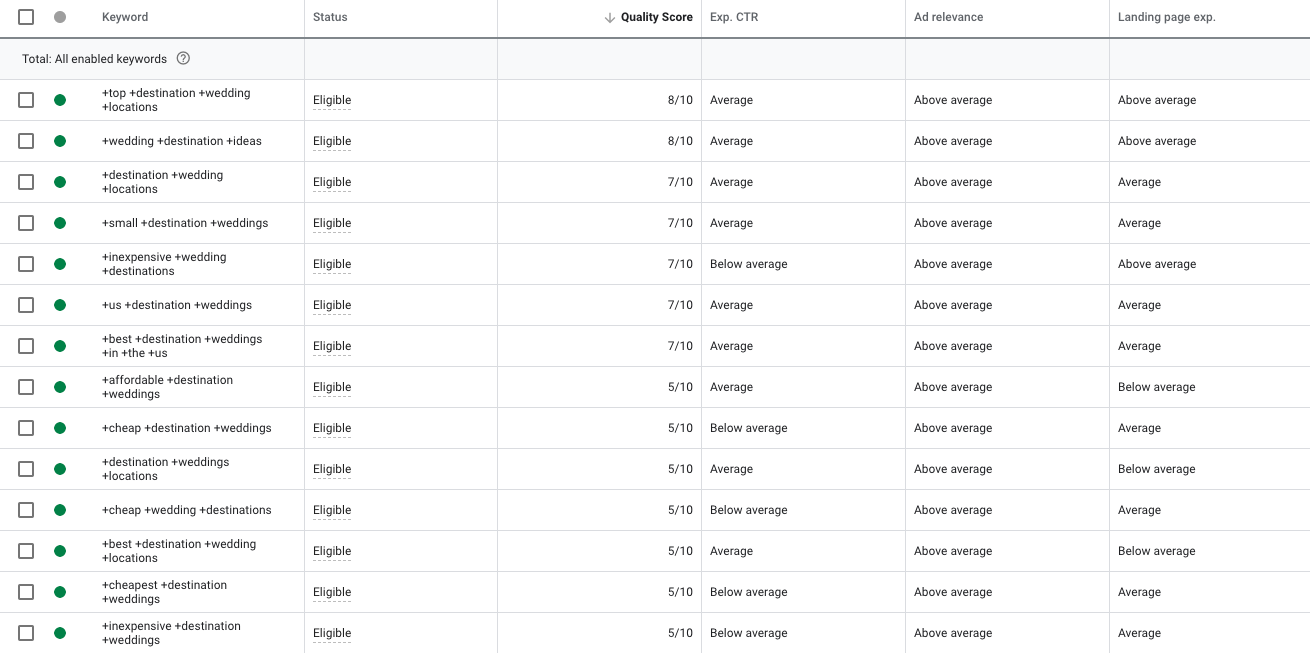
    Quality Score is reported on a scale of 1-10 and factors in expected click-through rate, ad relevance, and landing page experience. Overall, a healthy Quality Score averages around 6. Depending on how aggressively you want to improve Quality Score, start by reviewing keywords scored at a 3 or below for opportunities.

    It’s important to note that although it’s not used during auctions to determine Ad Rank, your historical Quality Score is a good indicator of how future ads will perform. Learn more about the ad auction in this video.

    Improving Quality Score

    Three factors can be optimized to enhance the Quality Scores of your keywords: expected CTR, ad relevance, and landing page experience. Each category can be rated as above average, average, or below average.

    Example of Google Ads campaign being managed by Search Influence in New Orleans, LA

    Let’s talk through each factor and recommendations on how to improve each one.

    1. Expected CTR: This is how likely it is that your ad will get clicked when shown for that keyword. Expected CTR is the easiest and most immediate element of Quality Score to improve.

    First, try reviewing the Search Term Report for keyword opportunities. This way, you can implement keywords more relevant for users. Once you add these keywords to your ad groups, pause the other keywords with low CTR.

    Another consideration is that your ads are not compelling enough for people to click. Test new ads with different messaging. A way to give your ad a natural CTR boost is by using Dynamic Keyword Insertion (DKI) in your ads. This trick is when you write {KeyWord:HeadlineText} in your headline, which then dynamically generates the headline as what the user searched.

    2. Ad Relevance: This measures “how closely related your keyword is to your ads.” An ad may be deemed relevant to a keyword when the keyword appears in the ad.

    If your keyword has a low QS because of ad relevance, instead of writing a brand new ad, try this. First, duplicate an existing ad that has high performance. Then, write in the low QS keyword as part of the ad.

    Also, ensure that your ads are answers for the queries the ad group most often receives. You can check queries using the Search Terms report. This is easier to accomplish when your ads and keywords are in specific ad groups consisting of tightly themed keywords.

    If you want to try something completely new, test Google’s Responsive Search Ads. This tool lets machine learning determine which of your ad headlines and descriptions will be the most relevant to the searcher. You can enter up to 15 headlines and four descriptions per ad!

    Something else to keep in mind is that Google looks at your site for relevance. Make sure you are landing every ad on the page that is most closely related to your keywords rather than only your homepage. Google takes into account keyword density on the site, so using relevant keywords on each landing page can also improve ad relevance.

    3. Landing Page Experience: This measures “how relevant and useful your website’s landing page will be to people who click your ad.” Landing pages that are not mobile responsive may take a hit in this factor. According to Statista.com, as of the second quarter of 2019, Google accounted for 95% of the mobile organic search engine visits in the U.S.

    Not all online advertisers can swiftly optimize landing pages as needed. If this is your case, start with making sure that your keywords and ads are relevant to the landing page’s current content.

    If that still doesn’t improve the Quality Score, you may want to consider the following for your landing page:

    • Making the page mobile responsive
    • Minimizing load time
    • Optimizing images with metatext, tags, title and alt text that include relevant keywords
    • Making conversion points clearly visible

    You should also consider improving your website’s content or testing new call-to-action buttons at each conversion point.

    Take Action Now

    As you can see, there are three factors that you can improve to increase Quality Score, yet there are only so many things you can do. If all of these possibilities seem overwhelming to you, start by making a list of optimizations you can tackle now, as well as some you may need to address later. Then, create an optimization schedule for yourself and revisit it each week.

    We are a Google Premier Partner, meaning we work on ad accounts daily to ensure clients maintain a strong Quality Score and campaign performance. If you find yourself unable to improve Quality Score, reach out to Search influence for specific recommendations and consulting services. Or let us work on your ad account directly with an online advertising package.

  • Seven Tactics to Maximize Your Restaurant’s Organic Reach On Instagram

    In the world of pay-to-play, restaurants are seeing their organic reach diminish across social media. Organic reach is the number of unique people who have seen your unpromoted post. When posting organically, you rely on the social platform’s algorithm to distribute your content to whoever it chooses to show your post to.

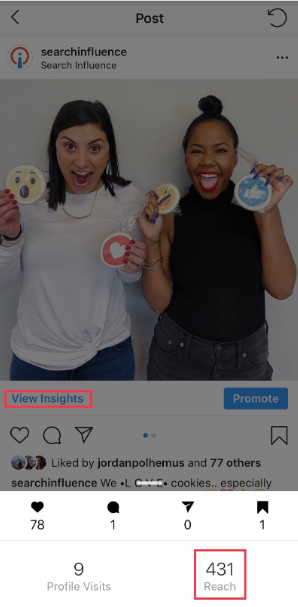
    In order to see your reach on Instagram, you need a business Instagram account. Click on the post you want to analyze and then click “View Insights” under the photo.

    Fortunately, Instagram still has best practices for maximizing reach organically. We’ll start with Instagram basics to lay some marketing groundwork and work our way to reach-increasing tactics. You’ll need a solid organic strategy in place in order to receive engagement and consistently grow your reach. Use these seven tactics to get started.

    1. Know Your Branding

    Checking a restaurant’s Instagram before deciding where to eat is becoming second nature to Millennials. They’ll probably already know what they’re ordering before they get to the restaurant too.

    To impress these Millennials, you’ll need a good Instagram aesthetic, or “theme.” This involves consistent branding, style, and voice—whether it’s an in-feed post, Story, caption, or comment.

    There are a few ways you can nail this, but the most important part is understanding your own brand. If you understand your restaurant’s branding, it will reflect in your posts.

    Tactic #4 will go into detail about how to create a cohesive Instagram theme.

    Dropping phone into food while trying to snap photo for Instagram

    2. Post Consistently

    Be consistent in time and frequency of posting. Your followers will start to expect your posts and even look out for them! It’s best to post daily if you can. One way restaurants can achieve this is by posting daily specials.

    Also, find the optimal time to post, then be consistent. Start by thinking about when your customers are getting hungry. This may be an hour before your restaurant’s typical peak times.

    If needed, you can test different posting times to find which will bring the most reach. You can click “View Insights” under your photo to find the photo’s reach and then compare your results for different times.

    3. Engage Back With Those Who Engage With Your Restaurant on Instagram

    According to the Maru/Matchbox Retail Vision Study, 69% of Millennials take a photo of their food before they’re about to eat. It’s no secret that many of those photos will wind up on Instagram.

    That said, if someone posts a photo at your restaurant and tags your restaurant’s Instagram, be sure to engage with that post. You could even ask to repost it on your account if it fits into your feed’s theme. The same goes for Instagram Stories since you can now share Stories that you’re mentioned in.

    Engaging with customer photos is another great touchpoint beyond table service. Once customers notice that you’re engaging back or even reposting their content, they’ll be more motivated to share food photos and tag your restaurant. #foodie

    4. Get Creative With Your Instagram Theme

    Don’t limit yourself to professional photos of your food. Those will get stale (no pun intended). Instead, fill your feed with drool-worthy food photos, social events, employees, and more.

    To start, choose three to five categories of posts to rotate through. For example, a trendy restaurant with a cocktail bar may rotate photos of appetizer close-ups, cocktails, social events, and interior photos. Knowing this will help you plan which content you need to capture in advance.

    Next, pick your Instagram feed’s aesthetic or tone. Will it be dark and moody? Bright and colorful? Monochromatic? Once you’ve decided this, stick with it and keep that in mind when taking or curating photos.

    Pro Tip: Don’t post blindly. Use any free Instagram planner like UNUM to plan out your feed. Rotate through your photo categories to ensure no two are next to each other. This will keep your content fresh and varied but still consistent.

    You can read more about getting the best photos for social media here.

    5. Reach Out to Local Food Bloggers

    The increased exposure from influencer marketing can make a big impact on your business. Once you have an understanding of who you want to reach, find local food bloggers with a similar following.

    Many food bloggers with a smaller following (under 15k) will be willing to exchange an Instagram post and Story for a meal on the house. For food bloggers with a large following, try offering them a high-value gift card in exchange for their time and discuss the possibility of a giveaway.

    Giveaways are often beneficial for both the influencer and restaurant in terms of brand awareness and follower growth. Make sure not to skimp out on the giveaway prize, and always keep giveaways fresh and unique.

    For example, giving away a gift card every time will get boring and won’t garner much excitement over time. Try giving away a romantic dinner for two in February and free cocktails for a group of friends in March. You’ll reach different audiences this way.

    6. Use Instagram’s Video Features

    According to Hubspot’s study on content trends globally, video content from brands is preferred by consumers. Instagram has three options for sharing video: Stories, IGTV, and an in-feed video post.

    First, use Stories to share videos that are on-the-whim and unedited. Make sure to tag locations, use hashtags, and tag accounts for maximum reach. When you tag other accounts, they have the ability to “mention” your Story in their Story. Essentially, it’s an earned repost.

    In addition to Stories, try IGTV for edited videos. You can share 15-second to 10-minute vertical videos, which are currently the preferred format on social. There are two features you should be using with IGTV:

    1. Show an IGTV preview in your Instagram feed by selecting this option when uploading.
    2. Link the IGTV in your Story so users can swipe up to watch the video.

    Last, you can share videos in your feed like you would share any other image post!

    7. Ensure Maximum Reach With Each Post

    Finally, all your effort comes full circle in this step, where you want to ensure you’re getting maximum organic reach. The key to high reach on Instagram is using most of Instagram’s available features. The more reach you get, the higher the chance you’ll capture the right user’s attention at the right time.

    There are two significant ways to maximize your post’s reach organically, including users who do not follow you: location tagging and hashtags.

    Always tag a location to your photos so that your photo will show in the “Places”’ feed. For example, if you type in “New Orleans” in the Places search bar, you’ll see the top and recent photos that have tagged a location within New Orleans.

    In addition to tagging locations, use all 30 hashtags allowed for each post. If you’re a locally owned restaurant, you should use around 20 local hashtags and the rest as branded hashtags or common food hashtags on Instagram.

    A good hashtag strategy requires you to check and adjust every few months to make sure your photos are appearing in the hashtag feeds. Keep the hashtags that for which you’re appearing at the top, and replace the others with new hashtags. The goal is to appear somewhere in the top of the feed for all 30 hashtags; however, since this is always changing, you’ll always be checking and adjusting.

    Bonus Step: Promote Your Posts

    This is a bonus step because this is not an organic tactic. However, organic strategy pairs very well with paid strategy. If there’s a specific promotional post you want everyone to see, you should pay to promote it. This is a great way to get the word out about weekly specials, and we’ve seen it work well for our own clients.

    To reiterate the importance of an organic strategy, you’ll stay top-of-mind for old customers and certainly reach new ones this way. Start building your organic strategy today! If you need assistance to make it happen, contact the team at Search Influence and utilize our social media expertise.

    Images

    Phone drop

    Wine glasses

    Dining outside