Author: Collin Guedon

  • Search Influence and UPCEA to Present at the 2023 UPCEA MEMS Conference

    2023 UPCEA MEMS Conference

    This year at UPCEA’s 32nd annual MEMS Conference, Search Influence Director of Sales & Marketing Paula French will present “SEO Straight Talk: True Stories From Your Peers and How They Found Success” alongside:

    • Drew Larose, LSU Online & Continuing Education Associate Director of Digital Marketing
    • Christa Payne, Tulane SoPA Chief Business Officer
    • Stephanie Platteter, UMN CCAPS Executive Director of Marketing and Enrollment Management

    This year’s Marketing, Enrollment Management, and Student Success Conference (MEMS) will take place at the Hilton Portland Downtown from November 29th – December 1st.

    The conference offers all who attend networking opportunities, engaging programs, and a chance to learn the latest higher ed marketing strategies from energized thought leaders.

    Higher Education SEO Session Description

    Paula French and the other industry experts mentioned above will discuss a critical gap in higher education digital marketing: PCO units lack SEO strategies to attract new adult learners and nurture them down the recruitment funnel.

    Thankfully, our experienced higher education marketing presenters offer solutions.

    To address this gap, universities must prioritize SEO tactics that make it easy to access information about their programs or certificates via search.

    During the presentation, our presenters will review real-world examples of SEO strategies and tactics that addressed this gap for Search Influence, LSU, Tulane SoPA, and the University of Minnesota.

    The higher education SEO strategies and tactics they will explore include:

    • Using blogs to increase lead-to-application conversion
    • Leaning on keywords and content when launching new degrees
    • Using blogs to drive new website users
    • Utilizing profiles and public relations to build links
    • Leveraging tools for direction and monitoring
    • Using core web vitals to measure SEO health

    2023 UPCEA MEMS Conference

    Learn More About Higher Education SEO With Search Influence

    Since becoming an UPCEA Platinum Partner in 2022, Search Influence and the PCO industry leader have worked diligently to help higher ed marketers bridge the SEO gap.

    From our higher ed research study to our MEMS presentation in 2022 and now this year, we are dedicated to pushing higher education SEO to new heights.

    Contact us today to learn more about all our SEO services, or download our SEO workbook to identify three months of SEO techniques you can execute immediately.

  • Will Scott at Pubcon 2023: How to Use AI for Content Marketing

    Key Insights

    • It’s not hyperbole to say AI has the potential to change everything about how marketers produce content.
    • SEO is not dead, and neither is ChatGPT.
    • The AI sandwich is a content creation workflow that utilizes AI-powered tools and human creativity to create high-quality content that is helpful to readers.
    • The people who work with AI owe it to their fellow humans to use it responsibly.

    On September 21st, 2023, Search Influence Co-founder and CEO Will Scott presented at the Pubcon Pro Annual conference in Austin, Texas.

    This is the second time Will presented on AI Content at Pubcon in 2023, the first being in February 2023.

    Will presented “Robots, Revolution, and the Death of ChatGPT” under Pubcon’s session title “ChatGPT and AI Use Cases for Marketers.” President of Content at Scale, Julia McCoy showed off her own interesting findings in her presentation “Future of SEO Content is AI” during the same session.

    During their respective presentations, the two content creation experts discussed how marketers can utilize artificial intelligence to create content more efficiently — without sacrificing the quality of their writing.

    In this blog post, we’ll break down the key takeaways of Will’s thoughts on content marketing AI and how this new tech could produce a win-win situation for content marketers and their audiences.

    What Is Pubcon?

    The Pubcon Pro Annual 2023 conference was held on September 19-21, 2023, at the AT&T Conference Center in Austin, Texas. In its 22nd year, Pubcon boasts well-known speakers sharing both cutting-edge and tried-and-true digital marketing strategies focusing on search engine optimization and content creation.

    The conference helps attendees learn about new industry trends and generate ideas for their marketing efforts. At this conference, and at Pubcon earlier in the year, there has been much discussion about AI for content marketing and artificial intelligence in general.

    Session at a Glance: ChatGPT and AI Use Cases for Marketers

    As someone who has worked in the SEO and content marketing world for over 20 years, Will Scott has seen trends come and go. But he believes it’s not hyperbole to say AI has the potential to change everything about how marketers produce content.

    Since becoming (admittedly) obsessed with OpenAI ChatGPT and countless other AI content tools in the late winter months of 2022, Will brainstormed ways marketers can use AI to make digital marketing work leaner.

    In his presentation, “Robots, Revolution, and the Death of ChatGPT,” he shared his findings with the masses.

    Will’s session took an in-depth look at how big and small companies alike boost content creation productivity by tapping into the power of AI writing.

    All who attended learned effective strategies for harnessing AI to replace 7+ hours of work per piece while maintaining a genuine connection with their human audience and preserving their unique brand story and style.

    Will presented case studies and offered practical advice and inspiration for marketers based on months of hands-on work.

    Julia McCoy and Content at Scale

    Julia McCoy is a trailblazing entrepreneur and online content strategy thought leader who has spent her career helping marketers scale their content creation process for maximum revenue.

    In her role as President at Content at Scale, Julia helps human writers and marketers create high-quality AI-generated content.

    Content creators across the globe have implemented Julia’s ideas, and she is a trusted voice in the AI content creation space.

    Robots, Revolution, and the Death of ChatGPT

    Will’s presentation, “Robots, Revolution, and the Death of ChatGPT,” is the second installment in his “AI Sandwich” series. It’s an update from his previous Pubcon presentation, “Chatbots, AI, and the Marketer’s Conundrum,” when generative AI first broke ground in late 2022 and early 2023.

    In his first presentation, he discussed the AI buzz and listed some popular AI content creation tools (Midjourney, Jasper, Originality.ai, etc.).

    This experienced SEO and content marketer expanded upon these ideas in his second presentation, with updates that include:

    • Data points
    • Real-world case studies
    • Tips to help marketers improve content creation and edit AI-created content

    What is the AI Sandwich technique?
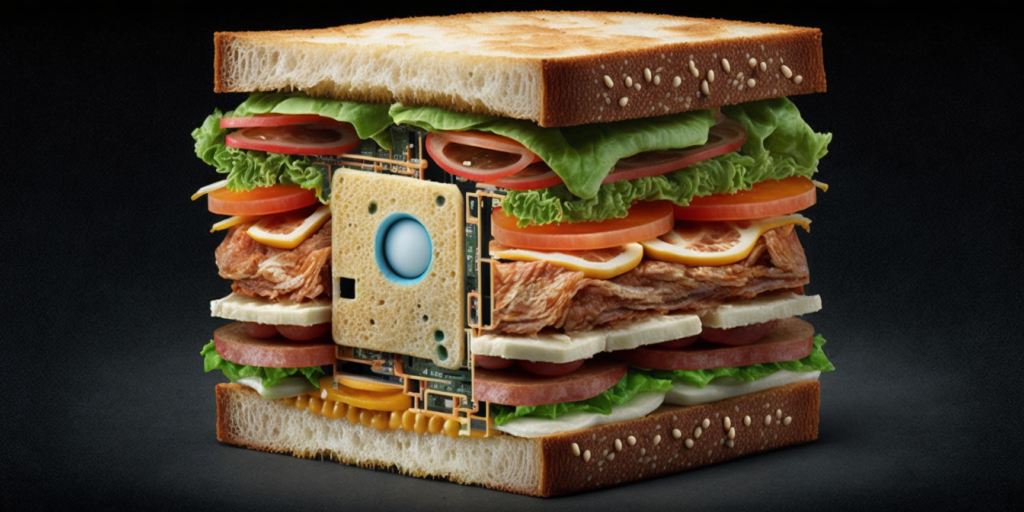
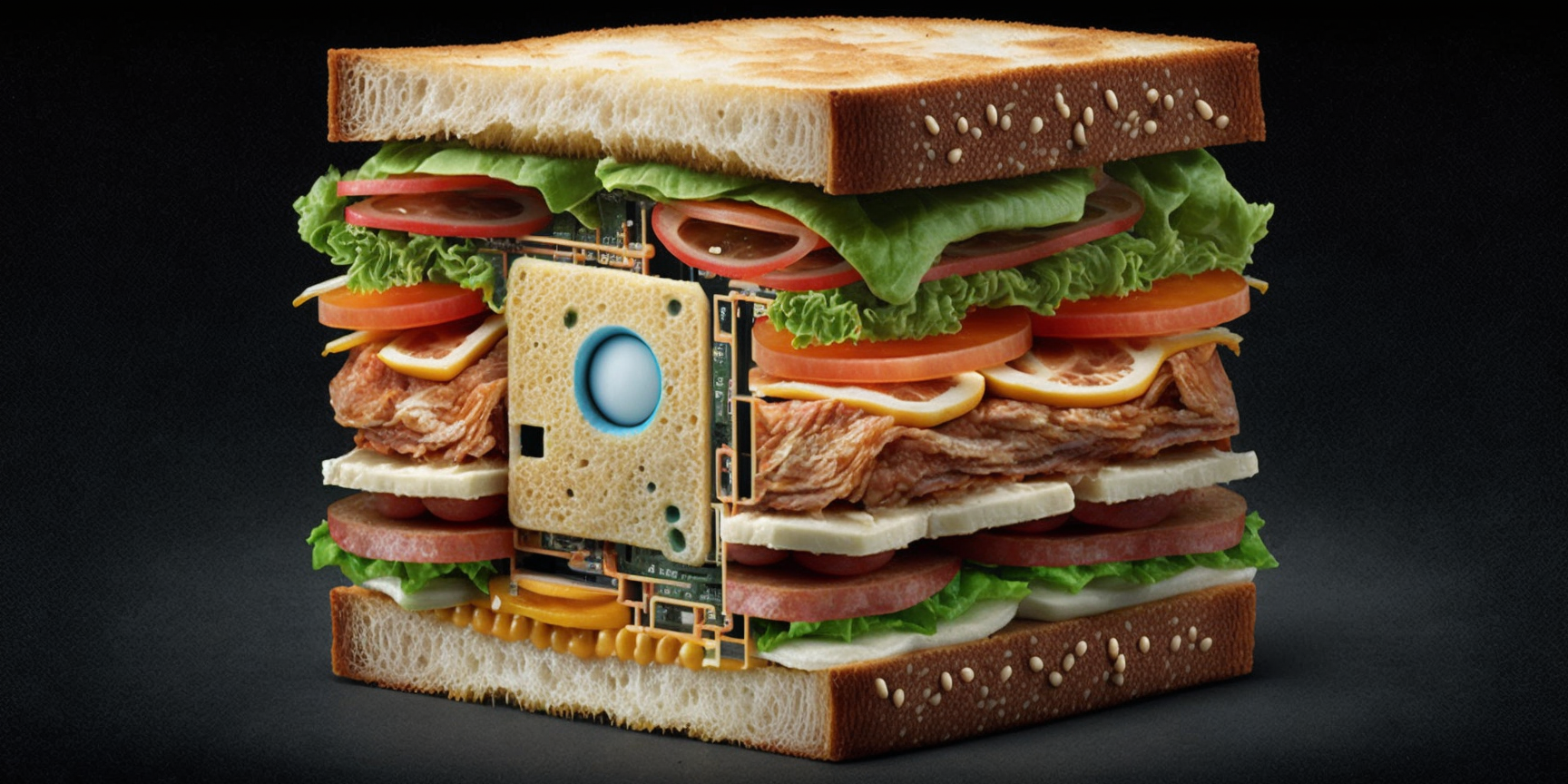
    AI sandwich

    This isn’t your average turkey sub or pastrami on rye.

    The AI sandwich is a content creation workflow that utilizes AI-powered tools and human creativity to create high-quality content (social media posts, blog posts, long-form content, short-form content, ad copy, etc.) that is helpful to readers.

    The process goes like this: A human writer creates the prompts, AI handles the content generation, and then the human edits the AI-generated content.

    This process helps to create content that satisfies Google’s Search Quality Raters, who review content for signals such as Experience, Expertise, Authoritativeness, and Trustworthiness (E-E-A-T).

    In essence, readers come to Google hungry for knowledge.

    They want content with nutritional value — not empty calories.

    Content created solely by AI is comparable to eating ramen noodles and chips in your college dorm room.

    The AI Sandwich is the meal your Mom makes you when you come home for the weekend — hearty and sure to satisfy.

    Will Scott on AI in Content Marketing 2.0

    Hundreds (probably thousands) of blog articles have been written about AI content and content creation tools in the last year or so — a lot of it written by artificial intelligence.

    In his Pubcon presentation, Will gave a human voice to the subject.

    Below is a brief review of some of the topics covered.

    Addressing the misconceptions

    SEO is not dead

    SEO is not dead, and AI tools will not take your job.

    Rather, it’s more likely that an expert using AI-powered tools will replace you. It’s a little harsh, but you still have plenty of time to become an AI tools expert.

    In fact, the AI Sandwich technique and Julia’s AIO method prove that AI tools still need human input to create content that converts.

    ChatGPT is not dead

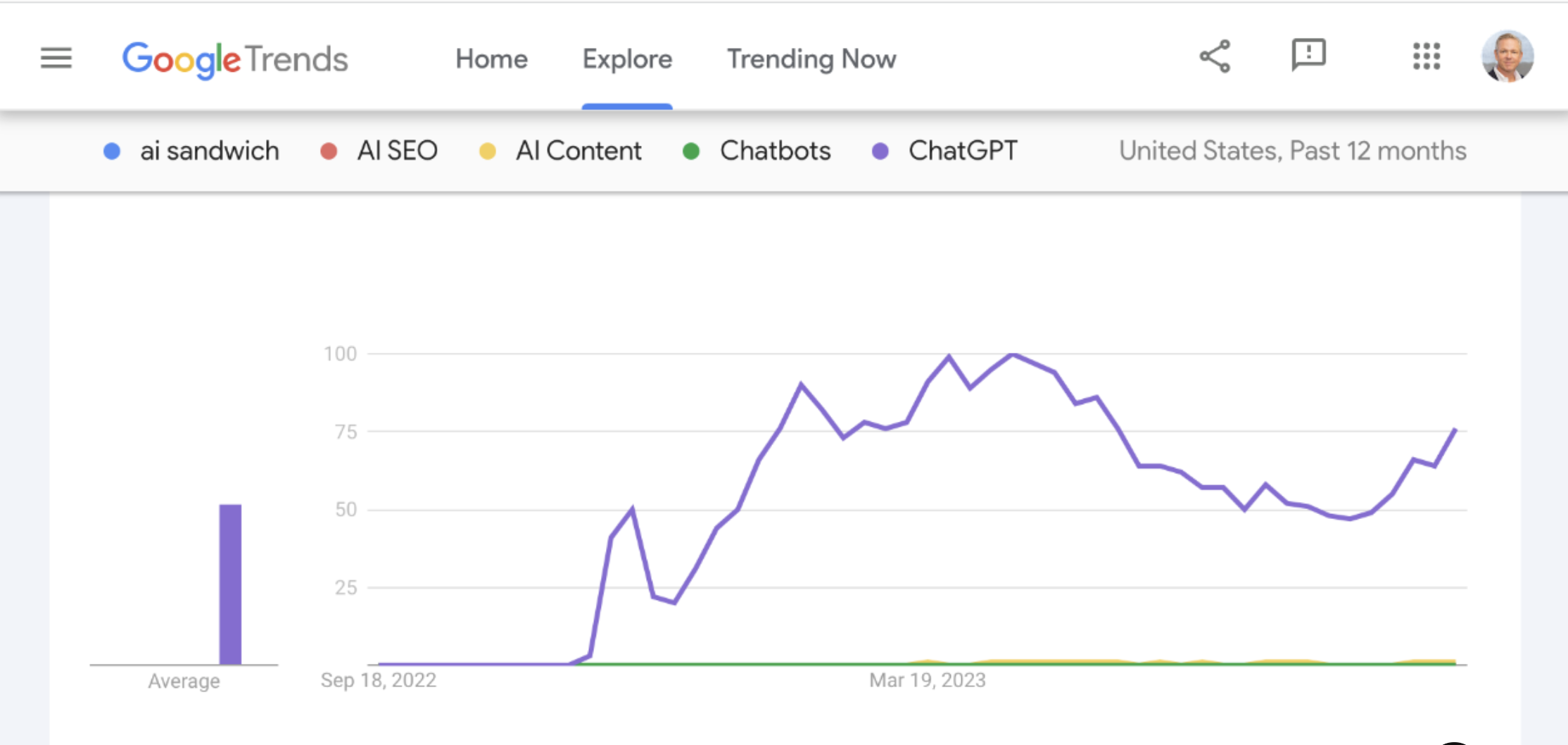
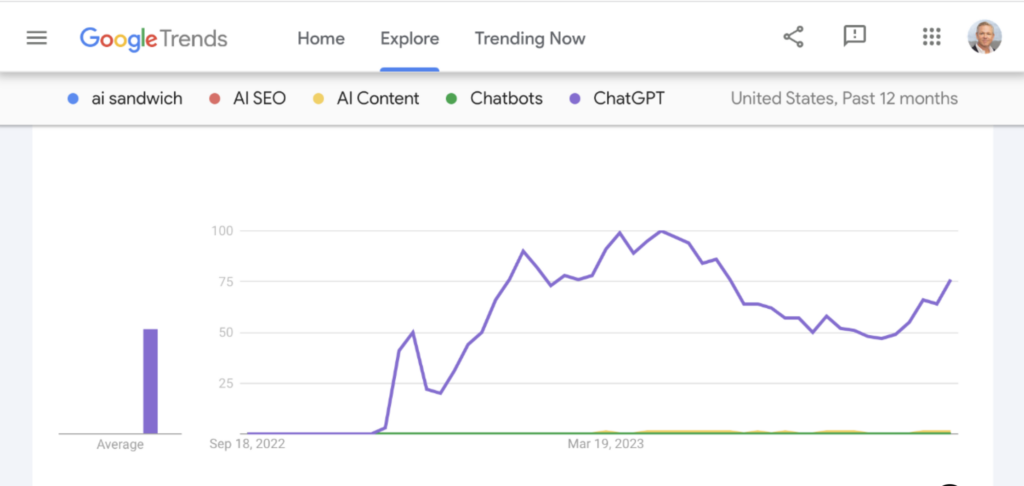
    Despite what clickbait headlines might say, ChatGPT is also alive and well.

    As seen in the screenshot below depicting 12 months of Google Trends Data, people far and wide are still interested in the AI-powered creation tool.
    ChatGPT Google Trends

    Remember all the “Paul is dead” rumors after the Beatles star appeared on the Abbey Road cover in bare feet?

    It turned out the legendary musician was more than alive and was, in fact, gearing up for another slew of hit albums.

    Friends, ChatGPT is not only alive but might also be about to release its Band on the Run.

    Talking about tools

    Tools, tools, tools, and more tools!

    As with anything new that hits the market, there always seems to be an overflow before the tide settles.

    At Search Influence, we’ve tested several AI-powered tools for everything from social media captions to marketing strategy and idea generation. While we’re still feeling things out, we do have a few tools we plan to keep in the rotation.

    AI-generated content tools the SI team is using/testing

    • Content at Scale
    • Machined.ai
    • Surfer SEO AI Writer
    • ZimmWriter

    Image and visual content tools the SI team is using/testing

    • Dall-E 2
    • Midjourney
    • Stable Diffusion

    SEO and keyword research tools the SI team is using/testing

    • PageOptimizer Pro
    • Surfer
    • Frase

    Video tool the SI team is using/testing

    • Wave.video

    Opportunities, concerns, and next steps

    These natural language generation tools offer countless opportunities for marketers when used correctly. Tools like the ones above are great if you need to generate content ideas, research relevant keywords, develop lists of facts and FAQs, or program code.

    But don’t forget — these tools aren’t perfect. In fact, sometimes they can be wrong.

    Think of using AI tools like grading an eager middle school student’s paper. You recognize how marvelous their work is and how much progress they’ve made while still understanding they’re young, so there are bound to be typos, necessary edits, and fact-checking.

    The concern is that lazy SEOs and spammers will rely solely on AI content marketing tools to create their content. This practice is especially dangerous when working on YMYL (Your Money or Your Life) pages. Content marketers and SEOs that only use AI and don’t keep Google’s E-E-A-T requirements in mind will soon see their rankings drop.

    Don’t be a lazy SEO — test it, but don’t spam it.

    AI content creation + human editing + fact-checking = quality writing at an efficient rate.

    For example, Will used but didn’t abuse ChatGPT to create blog content on the Skyscraper Method and ChatGPT data mining. It’s an interesting, informative read assisted by AI but led by a human brain.

    If you can use AI for content tools while still being thoughtful about your work and using good sense methods like the AI sandwich, these little robots could be your new work bestie.

    AI in Content Creation and Marketing: Far From Over

    Will and the Search Influence team love being early adopters of generative AI. While we enjoy using it for everything from writing email subject lines to competitive research, we still exercise caution against leaning on it too heavily.

    We look forward to implementing more natural language processing tools in our content strategy as the industry develops. But as game-changing as we think these tools are, we use them while keeping a few key ideas in mind:

    • AI writing tools will lead to an overflow of information, some good, some not so good.
    • It is the responsibility of marketers, journalists, and creatives not to generate blog posts full of useless fluff and flood social media channels with unchecked facts and misinformation.
    • Those at the frontline of this new industry owe it to our fellow humans not to abuse it.

    With that being said, we think these content generation tools have an opportunity to positively impact the human experience in a similar way as the printing press and the Internet.

    Ready to make your impact?

    Contact us to learn more about generative AI in content marketing strategy and SEO.

    This blog was written entirely by a human between coffee breaks and a little too much early Halloween candy.


    Image Sources:

    1. Photo is from SI: https://townsend.bunksite.com/wp-content/uploads/2023/02/Image-of-an-AI-Sandwich-as-imagined-by-Midjourney.png
    2. Photo is from SI: https://imgur.com/bgQhPoD
  • CityBusiness Names Search Influence in Its 2023 Best Place to Work List

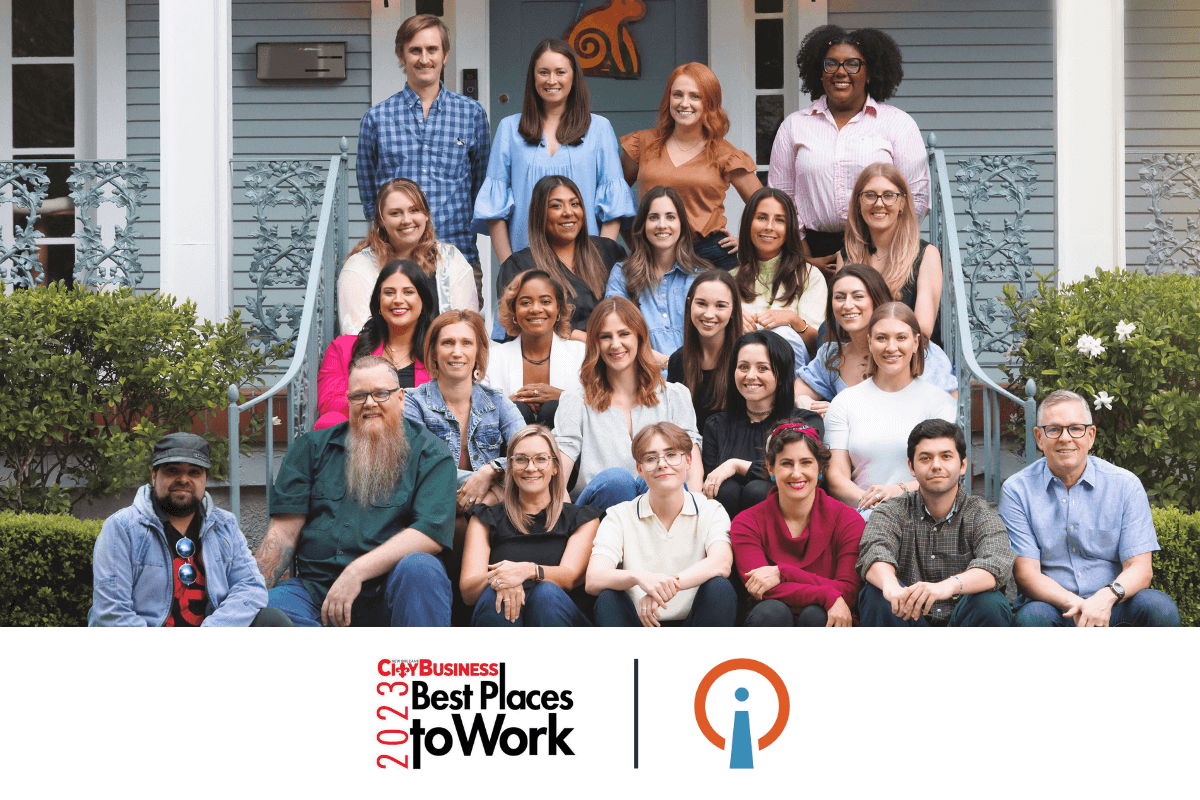
    CityBusiness’s 2023 Best Places to Work

    Search Influence is excited to announce we have been named to CityBusiness’s 2023 Best Places to Work list in the Small Company category. This is our second year in a row receiving this honor and our fourth time overall.

    What Is the CityBusiness Best Places to Work List?

    Every year, New Orleans CityBusiness magazine compiles a list of the best places to work in the Crescent City.

    The local publication divides business into three categories when deciding who makes the list:

    • Large Company (250 or more U.S. employees)
    • Medium Company (50-249 U.S. employees)
    • Small Company (10-49 U.S. employees)

    The magazine judges businesses of all types on employee satisfaction categories, such as:

    • Employee salaries
    • Employee benefits
    • Employee retention levels
    • Employee advancement

    CityBusiness reviews this information, along with an anonymous survey from every company’s employees, to measure workplace culture.

    Around 80 local businesses are chosen each year and recognized in the December issue of CityBusiness magazine.

    Search Influence Is Powered by People

    Led by our CHARGED values, Search Influence is a digital marketing agency for the people by the people.

    Since SI’s early days as a spare bedroom operation at the home of Co-founders Will and Angie Scott, there has been an emphasis on creating a healthy and comfortable work environment.

    Our average employee tenure of 5.9 years illustrates this comfort amongst employees.

    Search Influence happily gives our employees time to take care of life’s little hiccups.

    Need to head out early to bring your car to the shop?

    Drive safe!

    Are the kiddos not feeling well and need an early pickup from school?

    Clock out — your little one’s health comes first!

    We believe giving our employees space to live allows them to come to work energized and ready to create industry-leading digital marketing campaigns for our clients.

    Learn More About Our New Orleans Digital Marketing Agency

    Thank you to CityBusiness for including us in your 2023 Best Places to Work list.

    We are so grateful to be recognized among so many other thoughtful and forward-thinking businesses in our beloved Crescent City.

    To learn more about our company culture and the cutting-edge work we produce at our New Orleans digital marketing agency, give us a call.

  • Unlocking Higher Ed SEO: Insights From Alison Zeringue’s UPCEA Blog

    higher ed seo

    Search Influence’s Director of Account Management Alison Zeringue wrote a blog post for our trusted partners at the University Professional and Continuing Education Association (UPCEA) titled “Paid Search & SEO in Higher Ed: Are Our Search Marketing Priorities Right?

    Summarizing Alison Zeringue’s UPCEA Blog

    In her blog post, the digital marketing veteran shares her expertise on higher education SEO and the findings of Search Influence and UPCEA’s three-part Higher Education SEO Research Study.

    “As an SEO marketer for more than 12 years, I’ve seen the broader marketing world’s knowledge of SEO grow over time, but there remains a gap in knowledge in many industries, including higher education. Our research study results confirmed this.”

    Alison points to one of the leading indicators of this knowledge gap: While 91% of higher education marketing survey respondents integrate paid search into their SEO strategy, only 27% implement keyword optimization and link building.

    She believes this disparity between SEO prioritization and paid search reveals the fundamental issue in higher ed SEO: Higher education marketers need education on:

    • how paid search and SEO differ
    • how they are connected
    • which tactics they should implement to support both.

    Throughout the blog, Alison explains how higher ed marketers can begin investing in SEO to bridge this gap and bolster their higher education digital marketing strategy.

    The Search Influence UPCEA Partnership

    In 2022, Search Influence and UPCEA partnered to create a comprehensive research study that looks at higher ed marketing leaders’ perspectives on SEO and evaluates the SEO readiness of professional, continuing, and online education (PCO) units.

    The study revealed good news for higher education marketers — they have an underutilized tactic that can significantly impact their recruitment ecosystem.

    Access our SEO research study here to learn more.

    Maximize Your Search Marketing Gains With Search Influence

    The team at Search Influence has years of experience helping higher ed institutions reach their full SEO and paid search potential.

    Contact us to see all the high-level digital marketing services we offer.

  • Will Scott’s Higher Ed SEO Blog: A Must-Read Journey on Search Engine Land

    higher education seo

    Search Influence CEO and Co-Founder Will Scott had the opportunity to contribute a blog to Search Engine Land — a leading publication on digital marketing, advertising technology, and the MarTech landscape.

    In his blog, “How Higher Education Is Failing at SEO,” Will shares his vast knowledge and the findings of Search Influence and UPCEA’s 2023 Higher Ed SEO Research Study.

    Will Scott’s Search Engine Land Blog SparkNotes

    Will’s blog pulls highlights from the UPCEA SEO research study to discuss the perception and comprehension of higher education SEO amongst marketing leaders.

    The research findings might surprise you.

    “84% of marketing departments see SEO as a core part of their marketing strategy, but half (51%) do not have an established SEO strategy.”

    Will explains some possible reasons for this disconnect and how higher ed institutions can overcome these challenges.

    Will believes there is SEO opportunity for higher ed institutions

    While “there’s no silver bullet for higher education SEO,” higher ed institutions do have a unique competitive advantage.

    “Given the importance of relevance and trust (surely you’ve heard of E-E-A-T), there are few more trusted websites than those associated with educational institutions. So as an academic unit within a university, your ability to appear for relevant searches is amplified. All you need is great content,” Will writes.

    In true Will Scott fashion, the experienced SEO expert describes how higher ed institutions like yours can leverage Google Search Console and optimized content writing to your benefit.

    The Higher Ed SEO Experts at Search Influence

    We get it — SEO can seem overly complex and, because of that, daunting to implement.

    But no matter where you are in your SEO journey, we are here to provide the support you need to flourish online.

    Contact us today to learn more about all of our digital marketing services.

  • UPCEA Publishes Blog Post by Search Influence’s Alison Zeringue

    SEO and digital advertising is jet fueld for your higher education marketing strategy

    On October 28, 2022, UPCEA (the leading association for professional, continuing, and online education) published the blog post “SEO & Digital Advertising: Jet Fuel for Your Higher Education Marketing Strategy,” by Search Influence Director of Account Management Alison Zeringue.

    For over 100 years, UPCEA has served public and private colleges and universities across North America with a focus on:

    • Professional and continuing education
    • Alternative and non-degree credentials
    • Marketing and enrollment management
    • And most recently, online leadership and administration

    Alison Zeringue’s UPCEA Blog Post

    In her blog, Alison discusses how the demographics of Professional, Continuing and Online education units’ students have evolved along with the demand for online education options — creating a new challenge for high ed marketers.

    She discusses how expertly crafted SEO and digital advertising can give higher education marketers a leg up in a constantly changing field.

    “In my tenure as a marketer, there is a theme that rings true: Search engine optimization (SEO) and digital advertising — both paid search and digital display — work in tandem to deliver consistent, qualified inquiries to fuel your pipeline,” Zeringue said in the post.

    UPCEA and Search Influence’s Partnership

    In 2022, ROI-focused digital marketing agency Search Influence became a Platinum Partner of UPCEA.

    Through this partnership, Search Influence shares how higher education marketing institutions can optimize, measure, and track their search engine optimization and paid ad strategies to drive more qualified prospects to their marketing channels.

    Learn More From the Higher Education Marketing Experts at Search Influence

    Since 2006, Search Influence has been crafting digital marketing campaigns for higher ed institutions that show proven results.

    Contact us today to learn more about our digital marketing services.

  • Search Influence to Present at the 2022 University Professional and Continuing Education Association (UPCEA) South Region Conference

    Search Influence will co-present “The Devil’s in the Details: Using Technical SEO to Solve Your Website Woes” at the 2022 University Professional and Continuing Education Association (UPCEA) South Region Conference, along with fellow higher education marketing specialist, Alicia Jasmin, the Director of Marketing & Communications for the Tulane School of Professional Advancement (SoPA).

    2022 UPCEA South Region Conference graphic

    Since 1915, UPCEA has been a leader in the continuing education space, working with private and public universities across North America. Now based in Washington, D.C., UPCEA continues to be the leading association for professional, continuing, and online education.

    At the 2022 UPCEA South Region Conference, marketing professionals will get the opportunity to learn about the latest trends in higher education marketing.

    Higher Ed Marketing Session Description

    According to The Evolllution, the student experience starts with a university’s website — making the need for concise and user-friendly web pages more important than ever before.

    Higher education institutions put their search visibility and website traffic at risk when big, and even sometimes nominal, changes are made to their websites.

    In Search Influence and Tulane SoPA’s UPCEA session, “The Devil’s in the Details: Using Technical SEO to Solve Your Website Woes,” higher-ed marketers will learn how to avoid costly mistakes that may unknowingly impact search ranking and traffic by gaining an understanding of technical SEO.

    “Technical SEO helps Google better process your site,” said Search Influence’s Director of Sales and Marketing Paula French. “We want higher education marketers to understand its importance, so they don’t risk their search rankings and traffic when they make site updates.”

    Join Search Influence and the Tulane School of Professional Advancement to learn:

    • How website structure can hurt or help rankings
    • The impact of subdomains and microsites
    • How to pull off a seamless website migration

    Higher Education Digital Marketing Speakers

    Director of Marketing & Communications for the Tulane School of Professional Advancement (SoPA), Alicia Jasmin

    Alicia Jasmin is a native of New Orleans with expertise in higher education, strategic communications, and community relations.

    From 2007-2019, Alicia held several roles in the Tulane University Office of Marketing and Communications, where she helped shape the university brand and promote positive university messaging. In her last position at Tulane as the Assistant Director for News, she played a major role in upholding the university’s reputation through the daily management of external university news.

    Prior to rejoining Tulane as the Director of Marketing and Communications for the School of Professional Advancement, Alicia led community relations efforts at the University of Texas MD Anderson Cancer Center in Houston, the largest cancer center in the United States.

    Search Influence Director of Sales & Marketing, Paula French

    Paula French has developed strategic digital marketing solutions for clients since 2009 when she joined Search Influence — then a 9-person team.

    Paula contributed to the company’s rapid growth by building and training effective account and sales strategists. She has led strategy on SEO & digital marketing projects for hundreds of businesses across the country.

    Today, Paula plays online marketing matchmaker by identifying the right marketing solutions to match business goals and help companies in almost any industry optimize their potential, with an emphasis on education, healthcare, and tourism.

    Paula speaks about digital marketing in her hometown of New Orleans and on the road, including past panels at MozCon Local in Seattle, Pubcon Las Vegas, and Engage in Portland.

  • Will Scott on Digital Disaster Plans for the Tampa Business Journal

    Key Insights:

    • Before a natural disaster occurs, audit where your customers find your business online so you have documented which channels to update in the aftermath.
    • Be intentional with your messaging after a natural disaster, and demonstrate empathy.
    • When you reintroduce your marketing strategy after a natural disaster, plan it at a steady pace that allows you to be nimble if there are any further developments in the recovery proces

    On October 21, 2022, following the aftermath of Hurricane Ian, Search Influence CEO and Co-founder Will Scott wrote for the Tampa Bay Business Journal about the importance of businesses reconnecting with customers after a natural disaster to provide accurate operational information.

    While this article is only available to Tampa Bay Business Journal subscribers, we believe this information is vital for all businesses.

    Read on to learn how to craft a better digital disaster plan for your company.

    Waves crashing onto beach during a hurricane

    Essential Steps for Businesses Following a Natural Disaster

    Step 1

    Take an audit.

    Where do your customers find your business? Make a list of all the places where you need to update your digital presence, including but not limited to:

    • Social media
    • Website
    • Email blasts
    • Google My Business profile
    • Yelp

    Hopefully, before the storm, you also made sure the inventory of your digital channels was up to date.

    Step 2

    Be intentional in your messaging, and demonstrate empathy.

    In the wake of a storm, emotions are high. Your customer can experience any range of feelings, from the joy that it is over to devastation from personal loss and everything in between.

    As you craft messaging to deploy on your owned channels, make sure it resonates with your audience and provides them with as much information as possible. Think through what information would be helpful rather than just saying you’re open.

    Also, you’ll need to continue to demonstrate that empathy as long as the community does. When the community begins to rally, reintroduce marketing tactics you had in place prior to the weather event.

    Step 3

    Begin to reinstate your digital marketing plan.

    Reintroduce your marketing plan at a steady pace to still allow you to be nimble if any further developments occur in the recovery process.

    When making your plan, think through your team and who you can assign to do what. Make sure these folks have access to logins and technology to do what they have to do. And verify they understand the message you want to put out there.

    If you are not sure what to say, this blog post can help with crafting content.

    Learn More About Digital Disaster Planning

    As a business founded and headquartered in New Orleans — a city no stranger to natural disasters — we take pride in helping our clients craft sincere and agile digital disaster messaging.

    Fill out our online form to learn how our digital marketing services can assist your business before, during, and after disaster strikes.

    Images

    Waves

  • Create a Student-Centric Journey with the Marketing Funnel

    Key Insights

    • By creating a student-centric journey with the marketing funnel, universities can better understand the mindsets and behaviors of prospective students.
    • When considering goals and tactics for your student-centric campaign, ensure your ask is appropriate to a student’s current mindset and behavior.
    • To ensure your student-centric marketing plan yields real-world results, ask yourself during every step of the process, “Am I considering the mindset and behavior of my audience?”

    For those who work in marketing, the marketing funnel is nothing new. Understanding the decision-making process of prospects is an age-old, effective marketing strategy. Like teenagers, adults in their mid-20s are still figuring out what they want to do with their career post-bachelor degree, all while learning how to budget their own money and make sure the laundry pile doesn’t get too high.

    By creating a student-centric journey with the marketing funnel, universities can better understand the mindsets and behaviors of prospective students. When university marketers understand who would be interested in their graduate programs, they can create a user experience that drives prospects down the student funnel.

    a student walking down a paved pathway

    The Marketing Funnel From the Prospect’s Perspective

    Looking at the marketing funnel from the student perspective allows marketers to open their eyes to the right types of content and the appropriate placement to have the most effective strategy. You can use the higher education inbound marketing funnel to create a map of the route a prospect takes from the time they first encounter your brand, to the time they register, and even through retaining them and turning them into a loyal advocate for your brand. This differs from the normal marketing funnel in that it allows you to gain a deeper understanding of a student’s habits and desires.

    To fully understand the student-centric journey, you must take an in-depth look into a student’s mindset and behavior during the marketing funnel’s awareness, consideration, and decisions stages.

    Awareness

    To better understand the mindset of prospective students in the awareness phase, you have to learn about their habits. These prospective students are working full time after earning their bachelor’s degree and probably feel truly independent for the first time in their lives. They are likely in their mid-20s, or maybe a little bit older, and have some sort of career plan but are still trying to figure it out a little bit.

    These prospective students are also likely to understand the type of career advancement that interests them, but don’t have a complete plan yet. Prospective students in the awareness phase may wonder if earning a graduate degree would be worth it, as well as the potential ROI, their availability to take classes, and if they would qualify for their desired program.

    While these prospective students are still figuring things out, they are probably consuming industry news and best practices and spending some time on LinkedIn and other job sites evaluating the career opportunities available to them after earning a graduate degree. Their web searches might include:

    • How to get promoted
    • How much money does [career/job] make?
    • How to become a [career/job]

    This information should inform your strategy by giving you insight into what your prospective students look like—from their possible age to their work life. To help them move onto the consideration phase, you should present them with information that makes them more confident that a graduate degree can elevate their career and earning potential.

    Consideration

    During the consideration phase, prospective students’ mindsets have changed slightly. Prospective students want to collect information about their prospective university’s programs, culture, and what it’s like to attend.

    Some problems they may worry about during this phase include:

    • Their ability to meet application deadlines
    • Their ability to meet school’s requirements for admission
    • Unsure if the program is a good fit

    Prospective students will begin to look to FASFA, articles about best programs, job titles of recent students, and available jobs for the program that interest them. Their Google searches will include things like:

    • Master’s programs near me
    • Best (program name) programs
    • Affordable (program name) programs
    • Online (program name) programs
    • Jobs for master of (program name)

    As a university marketer, you should use this information to inform the next steps of your campaign. This could be helpful in preparing your strategy for content, SEO, Facebook ads, and Google ads. To help prospective students to move into the decision stage, you should present them with information that shows the validity of your program and that your program can help them get the job they desire with a flexible schedule and affordable price.

    Decision

    Okay, you’ve made it! You’re now in the decision stage.

    During this stage, prospective students have:

    • Established their consideration set
    • Formed opinions about the pros and cons of programs
    • May have identified a first choice

    But they haven’t made all their decisions yet so they need guidance. Students during this phase may need help starting the application process and may still be unsure how to pick the right university. They may not know the best semester to begin their program.

    To help alleviate this uncertainty, they may start:

    • Reviewing programs or universities
    • Spending more time on the school’s website and social media
    • Search university professors on Rate My Professor
    • Use tuition/financial aid calculators

    To help them find this information, they will start searching for things like:

    • Branded searches (school’s name)
    • Application deadlines
    • Tuition information
    • Financial aid applications

    During this stage, you should center your ads and content around your universities application deadlines, tuition information, and financial aid applications to aid in their search.

    Be sure to have all this information readily available for students during the decision stage. The easier it is for students to find this information on your website, the easier it will be for them to decide to attend your university. Make your website easy to scan through so applicants can find this information quickly.

    students posing while wearing caps and gowns

    Goals and Tactics

    When considering goals and tactics for your student-centric campaign, When considering goals and tactics for your student-centric campaign, ensure your ask is appropriate to a student’s current mindset and behavior. For example, your ask in the awareness stage should require less of a commitment than your ask in the decision stage.

    Awareness

    During the awareness stage, your program may help prospective students advance their careers. Your campaign should bring to their attention that your program answers the questions about their career problem.

    The appropriate KPI to track this metric is website traffic. One tactic you can use to bring attention to your program is centering content around the expertise of your professors and programs on timely topics. This can be done through blogs and social media posts.

    Consideration

    During the consideration phase, your number one goal is to get prospective students’ contact information. To measure this KPI keep track of all inquiries. To get contact info from prospective students, showcase your universities rankings, common graduate job titles, and success rates of former students as incentives to request more information.

    Decision

    Finally, during the decision stage, you should convert prospects into applicants. This is where you want to get started applications to become completed applications. To track this KPI, measure started applications and completed applications. The number one tactic you should use to ensure that students finish filling out their applications is making your application process as simple as possible.

    Closing: Tying Tactics to the Funnel

    To ensure your student-centric marketing plan yields real-world results, you should ask yourself during every step of the process, “Am I considering the mindset and behavior of my audience?” By keeping this in mind throughout your campaign, you can ensure your university’s programs are presented as a solution to your prospective student’s career problems. Remember, your audience is still trying to figure out what direction they want to go with their career, be sure your campaign informs them and helps them make that decision.

    Use the steps above to create a well-thought-out and designed higher education inbound marketing plan. If you need more counseling on creating a campaign that can attract prospective students to your campus, contact the education marketing experts at Search Influence.

    Images: