Author: Collin Guedon

  • Will Scott Named to UPCEA Board of Directors as Corporate Partner Representative

    Will Scott Named to UPCEA Board of Directors as Corporate Partner Representative

    Will Scott Named to UPCEA Board of Directors as Corporate Partner Representative graphic

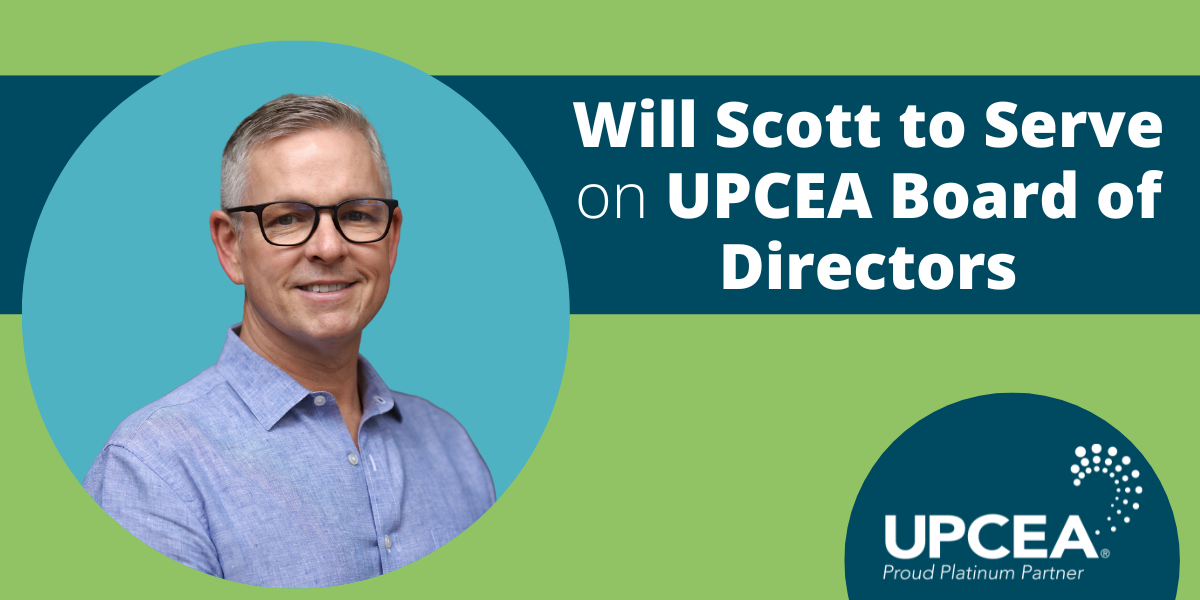
    Search Influence is proud to announce that CEO and Co-Founder Will Scott has been named to the UPCEA Board of Directors as Corporate Partner Representative for a one-year term (2026–2027).

    His appointment reflects his leadership in higher education digital marketing and Search Influence’s longstanding collaboration with UPCEA, the leading association for online and professional education.

    Serving on the UPCEA Board

    UPCEA elected new officers and directors in November, with appointments taking effect at the conclusion of the 2026 UPCEA Annual Conference in New Orleans on April 17, 2026. As Corporate Partner Representative, Will will serve as a liaison between corporate partners and institutional members, contributing insight from the evolving landscape of higher education digital marketing.

    UPCEA leadership emphasized the importance of strategic, forward-thinking expertise during a pivotal moment for online and continuing education. As institutions adapt to AI-driven search behavior, enrollment shifts, and increased competition, the role of data-informed digital marketing has never been more essential.

    About Will Scott, AI SEO Expert

    Will Scott is a recognized leader in digital marketing and is credited with coining the phrase “barnacle SEO” in 2008. A founding faculty member of Local U, Will frequently presents at national conferences and contributes to major online marketing publications. With a Master of Architecture from Tulane University, he approaches marketing as a systems problem, solving for visibility, measurement, and long-term impact.

    Since launching his first website in 1994, Will has overseen teams that have developed thousands of websites, produced hundreds of thousands of directory pages, and generated millions of visits through search.

    Strengthening the Search Influence + UPCEA Partnership

    Will’s appointment to the UPCEA Board of Directors reflects more than an individual milestone. It represents the continued alignment between Search Influence and UPCEA’s shared commitment to research-driven innovation in higher education digital marketing.

    As a Platinum Partner of UPCEA, Search Influence has worked alongside the association to produce actionable, industry-leading research that helps institutions adapt to shifting search behaviors and evolving enrollment strategies. Together, we have collaborated on three major national studies:

    Through conference sessions, webinars, and ongoing thought leadership, the UPCEA x Search Influence partnership delivers practical frameworks for institutions looking to strengthen their visibility, improve ROI, and future-proof their higher education digital marketing strategies.

    Learn More About Higher Education Digital Marketing

    Will’s appointment reflects the deep alignment between Search Influence and UPCEA’s mission to expand educational access and outcomes.

    To learn more about our partnership or to discuss how your institution can strengthen its higher education digital marketing strategy, contact Search Influence today.

  • Will Scott Returns to SMX Online With Generative Engine Optimization Master Class

    On Tuesday, April 14, 2026, Will Scott, Co-Founder and CEO of Search Influence, returns to SMX Online to teach his Generative Engine Optimization (GEO) Master Class, the best-selling Master Class in SMX Online history.

    The live, online session runs from 11:00 a.m. to 4:45 p.m. ET and is available both live and on demand for $199.

    Designed for experienced marketers navigating AI-driven search, this intensive training delivers actionable, real-world strategies on how to stay visible as platforms like Google AI Overviews, ChatGPT, and Perplexity reshape how content is discovered.

    What You’ll Learn in the GEO Master Class

    This is not a theoretical overview of AI SEO. It’s a hands-on, tactical course that focuses on how generative engines actually retrieve, evaluate, and cite content today.

    Attendees will learn how AI platforms differ from traditional search engines and what that means for content structure, keyword strategy, and authority signals. The course dives into creating content that works for humans and machines alike, including entity optimization, formatting for AI extraction, and writing in a way that earns citations in AI-generated answers.

    Will also explores how keyword strategy has evolved in an AI-first world, shifting from static phrases to conversational, intent-driven language. Competitive analysis also plays a key role, with practical exercises that show how to evaluate which brands are winning AI visibility and why.

    Rounding out the day are sessions on measuring AI visibility, tracking performance across platforms, and future-proofing your content strategy as generative search continues to evolve.

    Who Should Attend

    The Generative Engine Optimization Master Class is built for SEO professionals, content strategists, and digital marketers with 2–5 years of experience who are ready to expand beyond traditional optimization. It’s especially valuable for agency marketers, in-house teams managing complex websites, and leaders responsible for long-term content strategy.

    If you’re already strong in SEO fundamentals but need clarity on how AI is changing rankings, visibility, and brand authority, this course is designed for you.

    Meet AI SEO Expert Will Scott

    Will Scott is a recognized authority in SEO and AI-driven content strategy and a longtime advocate for adapting marketing to how search actually works. He is widely known for coining the term “barnacle SEO” and has been a featured speaker at industry events, including PubCon, SMX, and Local U.

    Will leads the Search Influence team in delivering AI-enhanced, data-driven SEO strategies for industries such as higher education, healthcare, and hospitality. With a degree in architecture from Tulane University, he blends strategic systems thinking with practical execution, making complex concepts actionable for marketers.

    Save Your Seat

    Generative search is no longer optional knowledge. It’s the foundation of future visibility. If you want to understand how AI platforms select sources, summarize content, and decide which brands get cited, the GEO Master Class is built to give you that edge.

    Register now for the Generative Engine Optimization Master Class on April 14, 2026, and learn how to optimize for AI SEO performance.

    Get in touch for our super-secret 15% discount code.

  • What It Actually Means to Optimize Content for AI SEO – February Client Insider

    What It Actually Means to Optimize Content for AI SEO – February Client Insider

    How We Are Building Content AI Can Retrieve and Cite

    We have been talking a lot about AI SEO lately, and one question keeps coming up:

    What does that actually mean for our content?

    Fair question! Here’s the clearest answer.

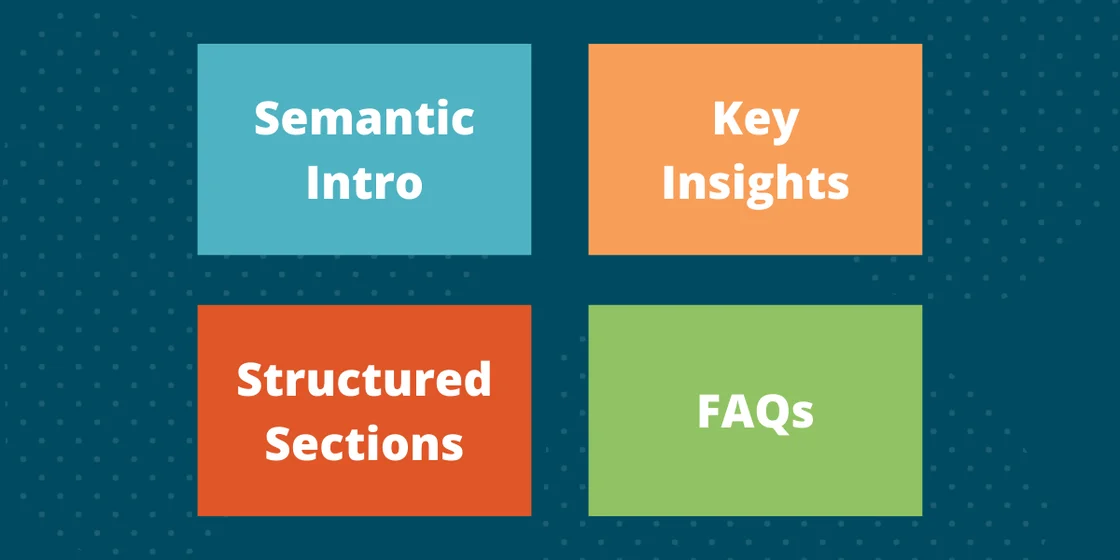
    Optimizing content for AI SEO means structuring it so AI systems can understand, retrieve, and cite it, not just rank it.

    Below are a few specific things we are doing when we optimize content for AI-driven search, with examples from our own content.

    We Start Pages With Meaning, Not Fluff

    AI engines look for clarity immediately.

    That is why we open key pages with a semantic triple, a single sentence that clearly defines:

    • What the topic is (your brand)
    • What it does (your service)
    • Why it matters (how your services/brand helps clients)

    This gives AI models instant context about the page before anything else.

    We Add Key Insights at the Top

    AI systems scan for concise summaries they can extract.

    We add 3 to 5 key insights near the top of pages that:

    • Summarize the core takeaways
    • Stand alone if pulled into an AI answer
    • Use clear, natural language

    These key insights help AI systems quickly understand what the page is about and determine whether it is worth citing.

    We Structure Content for Retrieval

    AI does not read entire pages. It retrieves sections.

    So, we:

    • Keep sections focused on one idea
    • Use descriptive H2s and H3s
    • Write chunks that make sense on their own

    Each section becomes another opportunity to appear inside an AI-generated answer.

    We Use FAQs as AI Entry Points

    FAQs function like neatly indexed cards for AI engines, each one clearly defining a question and its answer.

    We write FAQs that:

    • Mirror real, conversational questions
    • Answer clearly and directly
    • Are easy for AI systems to quote or summarize

    Every FAQ creates another path into AI-driven visibility.

    The Big Idea

    AI SEO is not replacing traditional SEO. It is strong foundational SEO plus smarter content structure.

    When content is clearly defined, well organized, and easy to extract, it becomes far more likely to be included in AI-generated answers.

    That is exactly what we are building toward as we continue testing and refining AI SEO best practices.

    Have questions about how your content is structured today or where AI optimization opportunities exist? Your Account Manager is happy to dig in and share next steps.


  • Search Influence Named to New Orleans CityBusiness’s 2025 Best Places to Work List

    Search Influence Named to New Orleans CityBusiness’s 2025 Best Places to Work List graphic

    At Search Influence, people power our performance, and once again, that commitment is being recognized.

    We’re proud to share that our AI SEO marketing agency has been named to the New Orleans CityBusiness 2025 Best Places to Work list in the Small Company category.

    This is our team’s fourth year in a row receiving this honor and our sixth time overall, a milestone made even more meaningful as we head into our 20th year serving clients across higher education, healthcare, and tourism.

    What the Best Places to Work Recognition Means

    Since 2003, the CityBusiness Best Places to Work program has highlighted organizations that demonstrate excellence in employee satisfaction, workplace culture, benefits, and long-term team support. Companies are evaluated through a two-part process involving an employer questionnaire and an anonymous employee survey measuring satisfaction across leadership, communication, pay and benefits, and overall culture.

    To be selected, companies must meet strict survey participation requirements and achieve high levels of positive employee feedback. Recognition indicates not only strong policies on paper but a workplace where employees genuinely feel valued and supported.

    A Culture Built Over Two Decades

    As Search Influence approaches its 20th anniversary, this honor underscores nearly two decades of intentional culture-building. What began as a two-person operation in a spare bedroom has grown into one of New Orleans’ most enduring digital agencies and a national leader in AI SEO strategy.

    Our long-standing employee tenure is a testament to that culture. Benefits that support our fully remote team include:

    • Generous PTO that grows with tenure
    • Moveable company holidays
    • Comprehensive health insurance options
    • 401(k) with employer match
    • Paid parental leave
    • Flexible schedules
    • Continuing education opportunities
    • The employee-created IDEA Committee for inclusivity and representation

    As a woman-owned digital marketing agency with a predominantly female leadership team, we continue to prioritize equitable advancement and meaningful support at every level.

    Looking Ahead

    As search continues shifting toward AI-powered results, the work we do as an AI SEO marketing agency continues to evolve, driven by the same commitment to people-first strategy that has defined our organization for 20 years.

    We’re honored to be recognized once again and excited for what the next chapter brings.

    Contact Search Influence to learn more about our award-winning work.

  • Search Influence Named a Finalist for Best SEO Campaign at the 2025 US Agency Awards

    Search Influence Named a Finalist for Best SEO Campaign at the 2025 US Agency Awards graphic

    We’re excited to share that Search Influence has been named a Finalist in the Best SEO Campaign category at the 2025 US Agency Awards for our AI-driven campaign, The Art of AI SEO, created in partnership with Maine College of Art & Design (MECA&D).

    This recognition marks our second consecutive year of being shortlisted for this category, following our Silver win in 2023 for Best Integrated Campaign, a testament to our continued excellence in SEO, technical strategy, and AI search innovation.

    The Nominated Campaign: The Art of AI SEO

    MECA&D launched three new online graduate certificate programs into a highly competitive market. To stand out against major universities, the institution needed to increase visibility across both traditional search engines and emerging AI-powered platforms.

    Our solution was an AI SEO strategy designed to boost discovery, strengthen authority, and drive enrollment.

    Our Strategy at a Glance

    AI Search Visibility

    We structured site content using semantic signals, schema markup, and clear topical architecture to ensure AI systems could retrieve and cite MECA&D pages.

    Conversion-Focused Program Pages

    We added video content, clarified messaging, and strengthened user pathways to support prospective students at every decision point.

    Content Development

    We produced keyword-driven blogs, instructor spotlights, and high-salience pages that positioned MECA&D as an authoritative voice.

    The Results

    Our AI-optimized SEO strategy fueled exceptional performance:

    • 77% above enrollment goals
    • 171% increase in website sessions
    • 3,894% growth in ranking keywords

    Today, MECA&D’s Arts Education, Expressive Arts Therapy, and Arts Leadership programs all appear in AI search engines, a major competitive advantage as generative results reshape student search behaviors.

    As MECA&D’s Associate Dean of Online Learning, Heather Holland, shared:

    “Our online programs exceeded enrollment targets by 65% in less than a year.”

    Leading AI SEO for Higher Education

    As a higher education digital marketing agency, Search Influence is at the forefront of AI search strategy. Our team combines decades of higher ed SEO experience with deep expertise in AI content structuring, generative search visibility, and technical optimization.

    Our CEO and Co-Founder, Will Scott, is a national thought leader in AI SEO and the instructor of an SMX Master Class on Generative Engine Optimization. Our approach has been grounded in semantic SEO and structured data since the earliest days of the Knowledge Graph, long before AI Overviews made structured content essential.

    We help higher education institutions:

    • Build full-funnel SEO strategies tied to enrollment goals
    • Improve program visibility in AI and organic search
    • Develop content ecosystems designed for both humans and AI systems
    • Strengthen authority through structured data, internal linking, and topic clusters

    2025 AI Search in Higher Education Research Study

    This announcement follows the release of our 2025 AI Search in Higher Education Study, which uncovers how prospective students use AI tools to research programs, evaluate institutions, and form their initial consideration sets.

    Higher ed marketers can access the full report to understand:

    • Which AI tools prospects use most
    • How AI citations influence credibility
    • What strategies institutions need to stay visible

    Looking Ahead

    We’re honored to be recognized by the US Agency Awards and grateful to MECA&D for their partnership. As AI search reshapes visibility, Search Influence remains committed to helping colleges and universities compete and win in this new era of search.

    If you’re ready to strengthen your AI SEO strategy, our team is here to help you lead. Contact us today to learn more.

  • How to Optimize Content for AI Search Engines

    How to optimize content for AI Search Engines

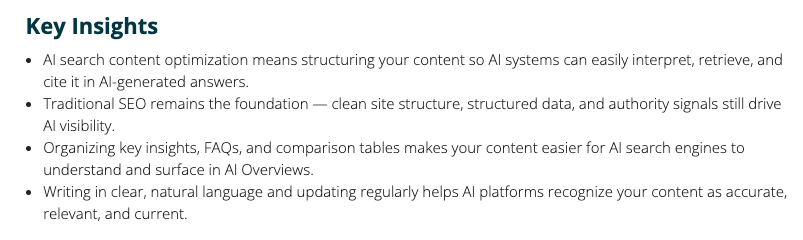
    Key Insights

    • AI search content optimization means structuring your content so AI systems can easily interpret, retrieve, and cite it in AI-generated answers.
    • Traditional SEO remains the foundation — clean site structure, structured data, and authority signals still drive AI visibility.
    • Organizing key insights, FAQs, and comparison tables makes your content easier for AI search engines to understand and surface in AI Overviews.
    • Writing in clear, natural language and updating regularly helps AI platforms recognize your content as accurate, relevant, and current.

    Search Influence leads in AI search content optimization by helping brands structure content that both humans and AI systems can easily understand and retrieve.

    Just as Frank Lloyd Wright believed buildings should grow naturally from their environment, AI-optimized content should grow naturally from meaning and structure. The future of search belongs to those who can design information that fits its landscape, where every heading, list, and table works like a carefully engineered beam.

    At Search Influence, we’re the architects of AI search visibility, helping site owners and marketers craft pages that perform beautifully across AI-powered search engines.

    This isn’t a theoretical guide. It’s the nuts and bolts of how to build AI-optimized content that earns citations, captures AI-generated answers, and stays visible in an evolving AI search landscape.

    Why Optimizing for AI Search Matters

    AI-powered search engines like Google’s AI Overviews, Perplexity, and ChatGPT don’t just rank pages; they summarize them. Instead of serving ten blue links, these AI engines generate conversational AI answers synthesized from multiple trusted sources.

    That means search visibility no longer stops at position one. You need your brand’s content to be included inside the AI answer.

    Click-through rates are declining as zero-click searches rise, and users are becoming increasingly satisfied with direct responses from AI platforms. If your valuable content isn’t structured for retrieval, AI systems may skip over it entirely.

    Optimizing for AI search isn’t about replacing traditional SEO; it’s about building on it. Think of AI search optimization as a natural evolution: combining the best of search engine optimization, structured data, and modern AI tools to help both humans and algorithms recognize your authority.

    At Search Influence, we help brands adapt their digital marketing strategies so they stay visible as AI models rewrite the rules of search behavior.

    Traditional SEO Is Still the Foundation

    Before you dive into AI search optimization, make sure your traditional SEO is rock-solid.

    AI search engines still rely on the same crawl and ranking infrastructure as traditional search engines. If AI crawlers can’t read, index, or trust your site, no amount of clever structure will help.

    Key traditional SEO best practices still matter:

    • Clean architecture and crawlability: Ensure internal linking is logical, pages load quickly, and site maps are up to date.
    • Mobile-first performance: Many AI search tools prioritize user experience metrics tied to page speed and responsiveness.
    • E-E-A-T signals: Add clear bylines, About pages, and author or brand context. Even a simple byline builds trust for AI engines.
    • Structured data: Implement schema markup for FAQs, products, or local business details. It helps search engines understand relationships between entities.

    AI systems like Gemini and Perplexity still rely on traditional search engine crawlers to determine credible citations. Traditional SEO is the foundation, and AI SEO is the architecture built on top.

    Creating Key Insights at the Top

    The best-optimized pages start strong. Your top 200 words are prime real estate for both readers and AI search platforms.

    AI models scan for concise, self-contained summaries near the top of a page to define its topic and relevance. These “vectors of meaning” determine whether your page gets cited in AI search results.

    How to create effective key insights:

    • Write a 3–5-bullet “Key Insights” section summarizing the core takeaways (see the top of this blog!)
    • Use keyword-rich, natural language that mirrors user intent (think “how” and “why” phrasing.)
    • Keep each insight standalone. If a model were to pull that one bullet out, it should still make sense.
    • Include one light mention of expertise or authority (e.g., “Based on Search Influence’s experience optimizing higher-ed sites for AI visibility…”)

    Pro Tip: Treat key insights like metadata in human language — short, factual, and extractable. AI systems interpret them as anchors for what your page means. More AI SEO pro tips here.

    Building a Machine-Readable Table of Contents
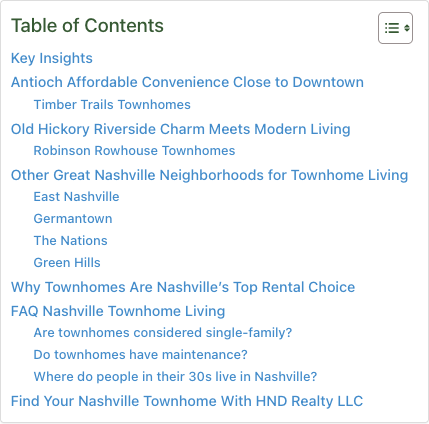
    Table of Contents screenshot

    Think of your table of contents as a blueprint that helps both humans and AI search engines navigate your page.

    Just as a building’s floor plan shows how rooms connect, a well-structured TOC tells AI crawlers where each topic begins and ends. This improves comprehension, organization, and retrievability.

    How to do it right:

    1. Use jump-linked headings (<a href=”#section-name”>) or your CMS’s automatic TOC generator.
    2. Reflect natural search queries in each heading — e.g., “How to Optimize for AI Search” rather than “Optimization Overview.”
    3. Keep heading hierarchy consistent (H2 → H3 → H4).
    4. Use descriptive, not vague language.
    5. Add ItemList schema markup around the TOC for extra machine clarity.

    A good TOC tells AI engines how the story flows and helps your content appear in multiple passage-level citations within AI-generated responses.

    Writing a Semantic Triple Intro

    A semantic triple intro is a concise statement that defines your topic in the format of subject + predicate + object.

    Example: “AI search content optimization is the process of structuring web content so it can be easily retrieved, summarized, and cited by AI-driven search engines.”

    This tiny sentence packs a big SEO punch. It clearly tells AI systems what your page is about before anything else.

    Why it matters:

    • AI engines convert text into numerical “embeddings.” The first few sentences shape your page’s meaning signature.
    • A strong semantic triple reduces ambiguity and helps your content rank for related natural language queries.

    How to do it:

    • Use your main keyword naturally.
    • Define what it is and what it does.
    • Follow with a quick credibility line (e.g., “At Search Influence, we help businesses earn visibility in AI-generated answers.”)
    • Avoid filler like “In today’s world…” — it wastes your most valuable context window.

    Chunk Content for AI Retrieval

    Psst… You wanna know a secret? AI engines don’t read like people; they retrieve by passage.

    Instead of analyzing an entire web page, AI systems break text into smaller “chunks” and compare them to user queries.

    Best practices for chunking:

    • Keep each section around 150–300 words.
    • Focus on one topic per chunk.
    • Start each with a clear claim or question, then support it with concise examples or bullet points.
    • Use transition phrases like “For example” or “This means” to preserve context.
    • End each chunk with a short takeaway sentence that restates the point (see below).

    Chunking multiplies your retrieval opportunities. Each section can be surfaced as its own AI search answer.

    Using FAQs to Capture Long-Tail AI Queries

    If AI Overviews had a favorite format, it would be the FAQ.

    Why? Because FAQs naturally mimic how people search in natural language. Each question represents a distinct user intent that AI tools can easily identify, summarize, and cite.

    Why it matters:

    • Long-tail questions like “How do AI search results work?” align perfectly with how users phrase queries in AI-driven search and voice search.
    • Each Q&A acts as a self-contained data node, making your page more likely to appear in AI-generated responses.
    • Structured FAQs feed into the Google Knowledge Graph, improving your search visibility across generative search engines.

    How to implement:

    1. Use tools like AlsoAsked or Semrush to identify conversational long-tail questions centered around your topic.
    2. Phrase questions naturally. Avoid stiff or keyword-stuffed wording.
    3. Begin each answer with a semantic triple that defines the topic clearly.
    4. Support with concise bullets, data, or short examples.
    5. Add FAQPage schema markup so AI crawlers recognize the format.

    Think of FAQs as the structural beams that make your content citation-ready. Each question builds another route to reach your audience.

    Visuals, Tables, and Comparison Content
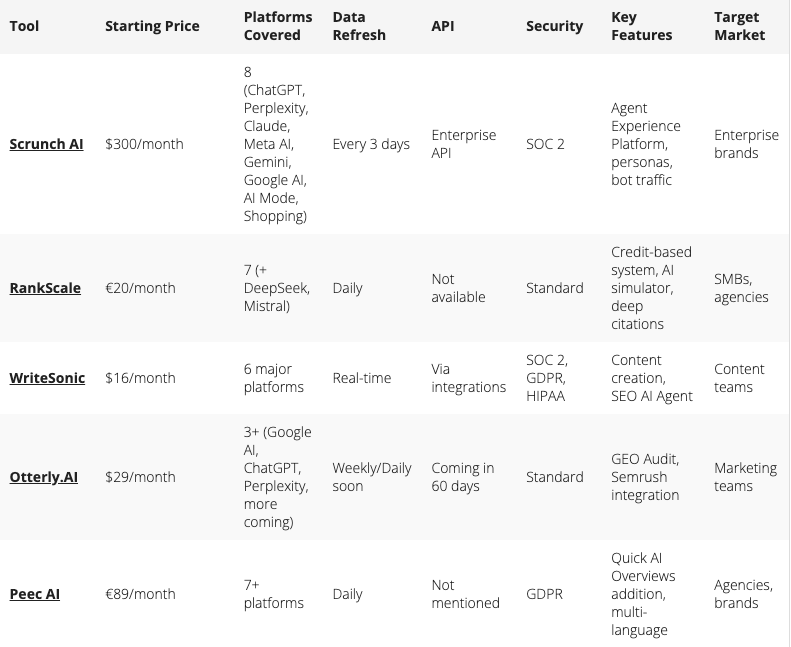
    Table comparing different tools

    Text isn’t the only thing AI engines read. AI search platforms use tables, charts, and labeled visuals to understand relationships and compare information.

    Why comparison content works:

    • Tables make AI-generated answers more precise. They can extract facts directly instead of summarizing loosely.
    • Comparison charts satisfy evaluative intent, a frequent category in AI search queries (e.g., “AI SEO vs. traditional SEO”).
    • Data tables strengthen embeddings by clarifying relationships between key details.

    How to structure tables for AI systems:

    • Use real <table> tags or Markdown tables, never screenshots.
    • Label columns descriptively: “Traditional SEO Tactics” | “AI SEO Tactics.”
    • Keep it simple: 3–5 columns, 5–10 rows.
    • Write factual captions, not marketing fluff (e.g., “This table compares how traditional and AI-driven search optimization differ in structure and retrieval focus.”).
    • Include schema markup where relevant.

    AI can quote directly from a well-structured table, boosting your authority in AI-powered search engines.

    Writing for Humans and Machines

    The best AI-optimized content reads smoothly to humans and structurally to machines.

    Follow these hybrid writing rules:

    • Use clear, factual sentences that stand alone if excerpted.
    • Keep paragraphs under 120 words.
    • Avoid vague language. Replace “this” or “it” with clear nouns.
    • Add internal linking every 150–200 words to reinforce relationships between entities.
    • Balance narrative and structure: storytelling for people, schema for crawlers.

    Remember: clarity isn’t just stylistic, it’s structural. It helps AI understand what matters.

    The Blueprint for AI Search Visibility

    Let’s recap your new building plan for AI search optimization:

    1. Lay the foundation: solid SEO fundamentals first.
    2. Frame the entryway: start with a clear semantic triple.
    3. Add the blueprint: summarize early with key insights.
    4. Map the layout: create a TOC and structured content chunks.
    5. Finish the details: use FAQ schema, visuals, and comparison tables.

    The goal? A digital structure that humans and AI engines recognize as sound.

    Search Influence helps brands design these frameworks to thrive in a world of AI-driven search and generative engine optimization.

    AI Content Optimization FAQs

    1. How to optimize content for AI search?

    AI search content optimization is the process of structuring digital content so AI systems can retrieve, summarize, and cite it accurately.

    To optimize effectively, focus on clarity, organization, and accessibility. Start by breaking your page into self-contained sections with clear H2s and H3s, ensuring each chunk of content addresses a single topic. Use structured data and schema markup to help AI crawlers interpret meaning, and reinforce relationships through strong internal linking.

    Keep your content current with up-to-date examples and sources. AI platforms prioritize pages that demonstrate freshness and accuracy. The more clearly your structure communicates what each section is about, the easier it is for AI search engines to select, summarize, and cite your work in AI-generated answers.

    2. How to write content for AI search?

    Writing for AI search means combining clarity, structure, and contextual depth that both humans and algorithms can understand.

    This approach starts with writing in natural language that reflects how people actually search using long-tail, conversational keywords that match user intent. Begin your piece with a strong semantic triple and support it with concise, fact-based explanations.

    Avoid vague language, dense jargon, or keyword stuffing, which can confuse both readers and AI engines. Instead, focus on writing self-contained paragraphs that answer one question or explain one concept at a time.

    The goal is to make your content easy to read, easy to reference, and easy for AI systems to understand, all while delivering genuine value to your audience. These are insights marketers can’t afford to miss.

    3. What is AI search?

    AI search is an intelligent system that uses language models to interpret and synthesize web information.

    Unlike traditional search engines that simply match keywords, AI-powered search engines like Gemini, GPT, and Perplexity analyze meaning, relationships, and intent behind queries.

    These AI models draw from multiple authoritative sources, summarizing content to deliver direct, conversational answers. Instead of serving a list of blue links, AI search engines generate synthesized overviews, making accuracy and structure more important than ever.

    Understanding how AI search works helps you build content that earns citations and remains visible across this new landscape of AI-generated results.

    4. How do AI search results work?

    AI search results are generated by analyzing and summarizing multiple high-authority sources into one synthesized response.

    When a user enters a query, AI systems identify relevant passages, or “chunks,” from indexed web content. These passages are then combined, summarized, and rewritten in natural language to provide a complete answer.

    Structured, fact-based content with schema markup and clear sectioning helps AI determine what information to include and who to cite. The result is a unified, conversational overview drawn from many sites, with attribution given to the most trustworthy and clearly organized sources.

    This is why creating structured, authoritative content is key to being referenced within AI-generated answers.

    5. Why is AI-optimized content important now?

    AI-optimized content is crucial because generative search engines prioritize structured, factual information over traditional keyword density.

    As tools like Google’s AI Overviews reshape how people access information, visibility now depends on whether your content is retrievable and citable by AI systems. Instead of focusing solely on ranking position, site owners must think about inclusion in AI-generated summaries, the new “position zero.”

    Structured content supported by schema markup, internal linking, and fresh data is far more likely to be featured in these overviews. Investing in AI optimization now ensures your content stays relevant and continues to attract attention even as user behavior and search technology evolve.

    6. How do I know if my content is AI-optimized?

    AI-optimized content demonstrates clear structure, entity consistency, and schema integration that make it retrievable by AI systems.

    To evaluate your current pages, look for clear topic separation, consistent use of entities (like names, products, or locations), and properly implemented structured data.

    Each section should serve a specific purpose and read well both in context and isolation. Lists, FAQs, and tables should be properly labeled and formatted for easy parsing. You can test your content’s performance in AI platforms like Perplexity or use emerging AI SEO tracking tools that monitor how your content appears in AI Overviews.

    If your web pages are easily understood, cited, or summarized by AI tools, you’re on the right track toward sustainable AI visibility.

    7. How often should I update my content for AI optimization?

    Regular updates signal freshness, an important trust metric for AI retrieval.

    AI engines and traditional search algorithms value recency because it suggests reliability. Reviewing your content quarterly helps ensure that statistics, external links, and schema markup stay accurate and relevant.

    Update examples, visuals, and tables as trends evolve, and consider adding new FAQs to reflect emerging search behavior. Regular optimization also gives you an opportunity to re-chunk long sections into smaller, more focused passages that align with current AI retrieval models.

    In a rapidly changing AI-driven search environment, staying up to date is not optional; it’s the difference between being cited and being invisible.

    Stay Ahead With Search Influence

    AI search is shaping how every Google search result is generated and displayed.

    Search Influence specializes in turning traditional SEO content into AI-optimized assets that perform across every AI search platform.

    Here’s how we can help you build your next competitive edge:

    • Audit your top pages for AI readiness, analyzing structured data, schema markup, and retrievability.
    • Upgrade your content architecture for the AI era.
    • Implement optimization strategies that strengthen traditional rankings and AI citations.
    • Track performance to understand how AI engines reference your brand.
    • Consult and educate your team on how to create comprehensive content that satisfies both search algorithms and users.

    AI search is rewriting the rules of visibility, and the brands that adapt their structure now will own tomorrow’s results.

    Let’s talk about how we can audit your site for AI readiness and start building your AI-optimized content framework today.
  • AI SEO Expert Will Scott Shares Insights at Leading European Conferences

    Search Influence continues to advance the conversation around AI SEO on a global scale.

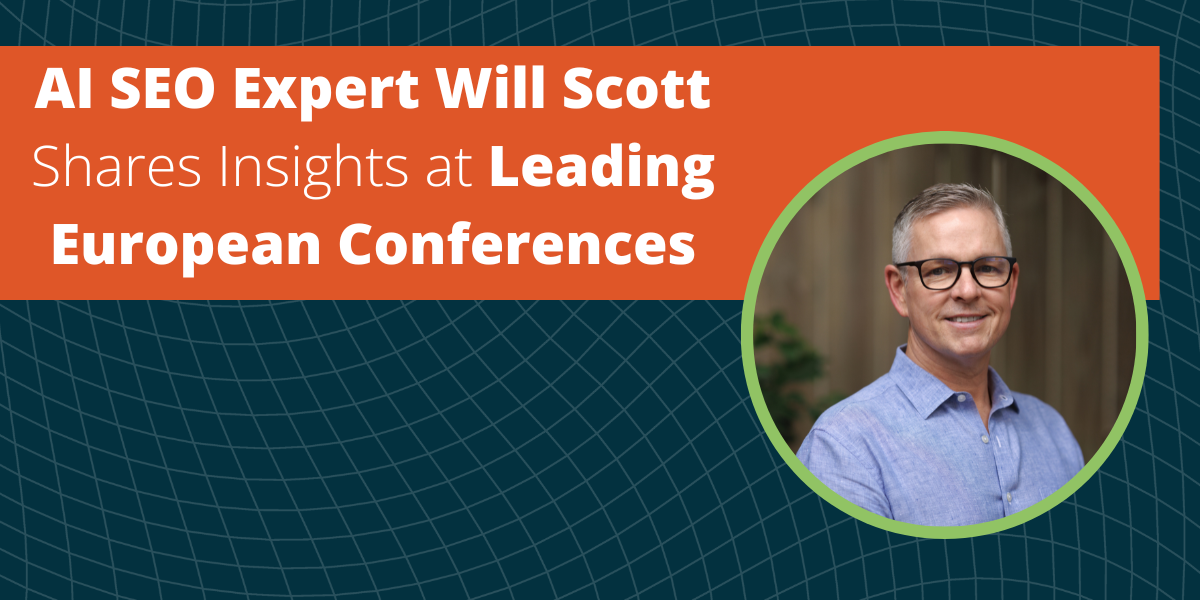
    This fall, CEO and Co-Founder Will Scott represented the agency at two of Europe’s most respected industry events, SEOktoberfest G50 Summit in Austria and SMX Advanced Europe in Berlin, sharing insights on how artificial intelligence is reshaping search, content, and visibility.

    Bringing AI SEO Expertise to the Global Stage

    At SEOktoberfest, an invite-only event limited to just 50 of the top SEO professionals globally, Will joined peers from leading organizations, including Google, Yoast, and Faber Company, to explore the next generation of AI search and generative engine optimization (GEO).

    The gathering fosters open discussion among industry pioneers, offering a rare opportunity to exchange forward-thinking strategies about how artificial intelligence is redefining visibility and authority in search.

    Will’s participation highlights Search Influence’s position among agencies advancing the real-world application of AI SEO — ensuring clients benefit from strategies informed by direct collaboration with the industry’s brightest minds.

    Advancing AI SEO Strategy at SMX Advanced Europe

    Following SEOktoberfest, Will spoke at SMX Advanced Europe 2025 in Berlin, delivering the session “AI Tools for Creation, Deployment & Tracking.” The two-day event is known for fast-paced, expert-level presentations designed for experienced search professionals who want to deepen their technical and strategic knowledge.

    In his session, Will shared actionable approaches for integrating AI SEO tools into marketing workflows. His presentation emphasized how agencies and in-house teams can harness AI to enhance creativity, streamline execution, and measure success more effectively.

    These insights are part of Search Influence’s ongoing commitment to helping brands adapt to a rapidly changing search environment — where visibility depends on mastering traditional SEO fundamentals and emerging AI search capabilities.

    Continuing the Conversation on AI Search

    Will’s European appearances build on a growing list of speaking engagements, including SMX Advanced Boston, SMX Online Masterclasses, Local U, and Pubcon, where he has helped marketers understand and apply AI SEO. His expertise continues to position Search Influence at the intersection of AI innovation and strategic SEO, helping clients thrive in a marketplace transformed by generative search.

    Maximize Your Success With Proven Industry Experts

    At Search Influence, we don’t just talk about online growth. We engineer it.

    Our team combines deep industry knowledge with cutting-edge AI SEO strategies to help clients in higher education, healthcare, hospitality, and more rise above the competition.

    Every strategy we craft is backed by data, driven by results, and designed to unlock your full potential.

    Contact the AI SEO experts at Search Influence and transform your digital presence into a sustainable engine for visibility, authority, and measurable growth.

  • New From Search Influence – AI Search in Higher Education: How Prospects Search in 2025

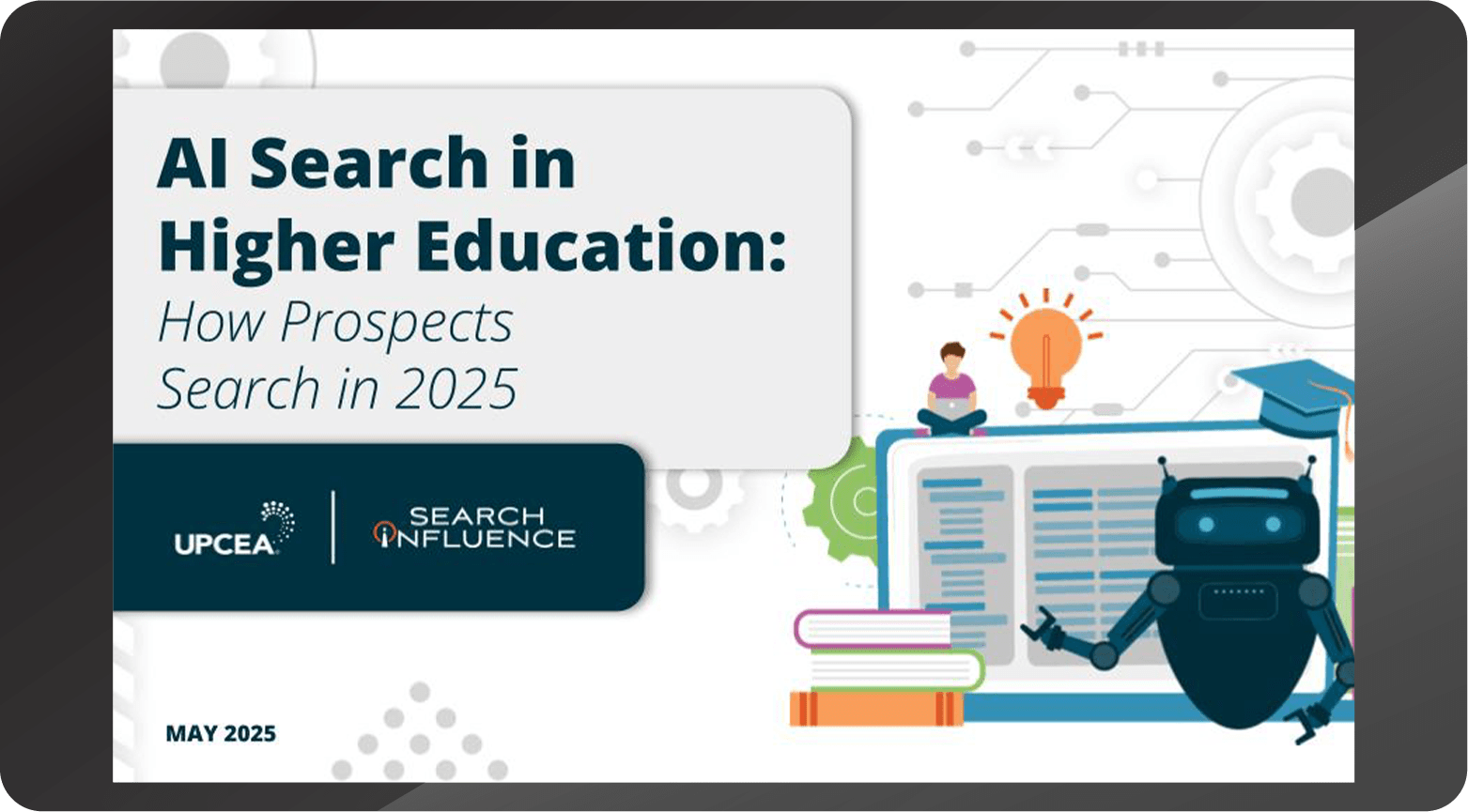
    AI Search in Higher Education: How Prospects Search in 2025 image on a tablet

    Artificial intelligence isn’t on the horizon for higher ed — it’s here. Half of prospective students already use AI tools weekly to search for information in the same way they use Google.

    To help institutions adapt, the Online and Professional Education Association (UPCEA), in partnership with Search Influence, has released the 2025 AI Search in Higher Education Research Study. This research sheds light on how prospective adult learners use AI, search engines, university websites, and other platforms to explore, trust, and select programs.

    Download the full AI Search in Higher Education Research Study

    About the AI Search in Higher Education Research Study

    The AI Search in Higher Education report surveyed 760 qualified adult learners between 18 and 60, all interested in advancing their skills or knowledge through online and continuing education. These respondents represent today’s prospective adult learners, a growth market for universities and an early indicator of broader enrollment trends.

    UPCEA led the research, bringing its deep expertise in online and continuing education, while Search Influence shaped the study with insights from our nearly 20 years as an SEO and AI search optimization agency.

    Together, we uncovered how AI, traditional search, and institutional websites are reshaping the way prospective students find, trust, and ultimately choose programs.

    Key Findings: How Prospects Search in 2025

    The results illustrate a rapidly diversifying student journey. Here are the top takeaways:

    • AI tools are an integral part of the enrollment funnel. 50% of prospective learners use AI platforms weekly, making them a standard part of the search process.
    • University websites anchor trust. 77% of respondents rated institutional websites as their most reliable source when exploring programs.
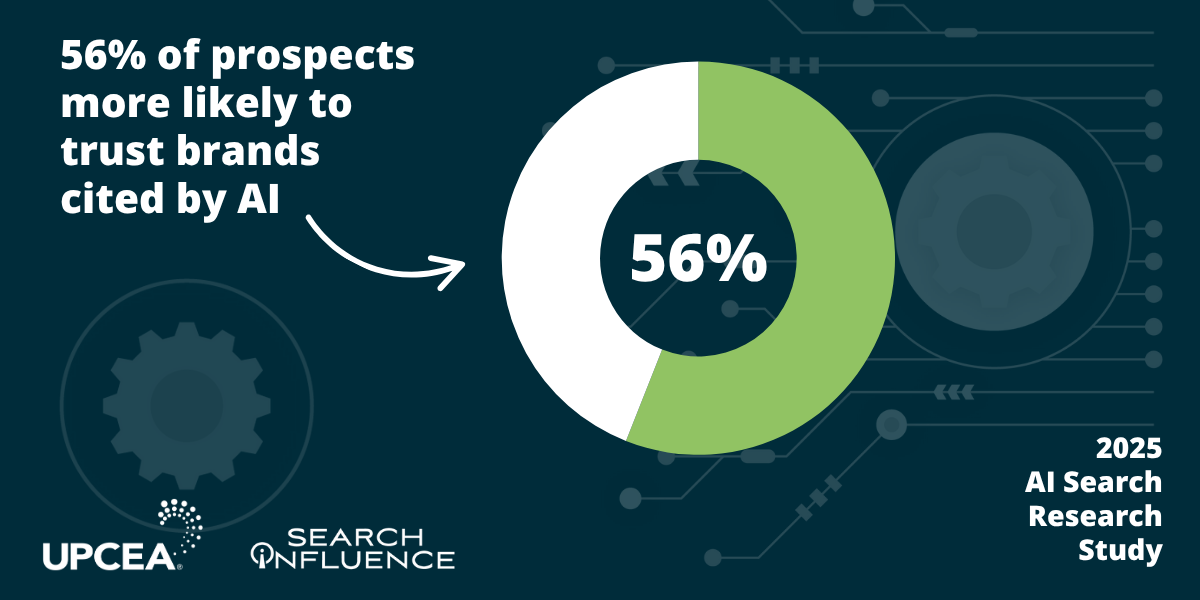
    • AI citations influence credibility. 79% of prospects read Google’s AI-generated overviews, and 56% say they are more likely to trust schools cited within them.
    • Search visibility drives consideration. 82% of students report they are more likely to consider programs that appear on the first page of search results.
    • Discovery spans multiple platforms. 84% of prospects use search engines, 61% use YouTube as a search engine, and 50% rely on AI tools in the same way they use Google.

    These findings confirm that students are moving fluidly between AI platforms, search engines, and video-based resources. Institutions cannot rely on a single channel. They must create content that performs across all of them.

    50% of prospects use AI tools at least weekly

    Why Online and Continuing Education Students?

    Online and continuing education students are often early adopters of new search behaviors, and their choices ripple outward to the broader higher ed market. They are career-focused, typically employed full-time, and actively researching programs that fit their personal and professional goals.

    By focusing this study on online and continuing education prospects, we’re able to capture a forward-looking snapshot of how AI search in higher education is shaping program discovery, trust, and enrollment decisions.

    What This Means for Higher Ed Marketers

    For higher ed leaders and enrollment teams, the implications are clear:

    • Multi-channel visibility is non-negotiable. Students expect to find you on Google, university websites, AI-generated responses, and video platforms like YouTube.
    • SEO is the connective tissue. Strong, authoritative SEO is the foundation that fuels visibility across both traditional and AI search engines. Without it, your programs won’t appear in the places students are looking.
    • Early movers will win. Many institutions have not yet adapted their strategies for AI search. Schools that act now will gain a competitive advantage in enrollment visibility and trust.

    Measuring Success in AI Search

    Success in AI search isn’t just about rankings. Institutions should track citations in AI Overviews, visibility across AI platforms, and engagement from AI-driven traffic, alongside traditional metrics like cost per inquiry (CPI) and ROI. By adding these benchmarks, schools can better understand how AI contributes to the enrollment funnel and make smarter investments in visibility and trust.


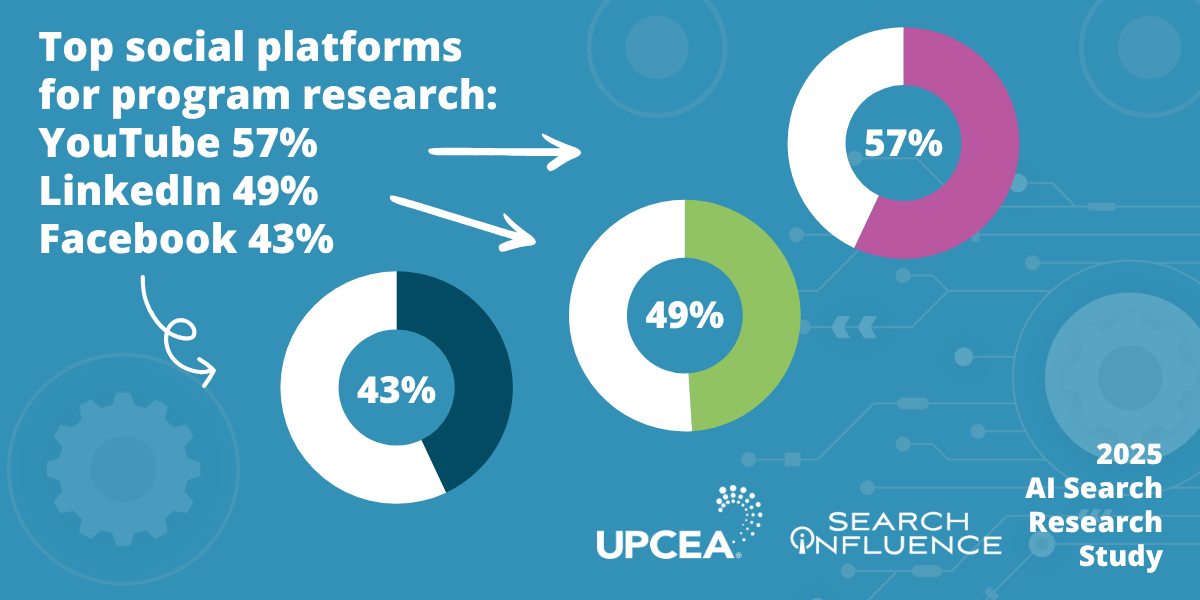
    top social platforms graphics

    Take Action: Be Visible in AI Search

    AI search is a core part of how students find and evaluate higher ed programs.

    The 2025 AI Search in Higher Education Research Study confirms what many institutions are beginning to notice: if you’re not visible in AI search, you’re not in the consideration set.

    The good news? Acting now puts you ahead.

    Download the full 2025 AI Search in Higher Education Research Study to explore the data and recommendations.

  • Search Influence Honored as One of 2025’s Best Women-Owned Businesses by New Orleans CityBusiness

    Search Influence is proud to announce that New Orleans CityBusiness has named us one of the 2025 In the Lead: Best Women-Owned Businesses honorees.

    The special section, profiling recognized companies, will appear in the September 19, 2025, issue of New Orleans CityBusiness.

    This honor comes alongside our recognition as an honoree in the 2025 CityBusiness Empowering Women Award and adds to our ongoing distinction of being named five times to the publication’s Best Places to Work list.

    Together, these awards highlight our growth as a digital marketing agency and our commitment to creating a workplace where women lead, innovate, and thrive.

    What the Award Represents

    CityBusiness selects honorees based on business performance, innovation, workplace culture, and community impact.

    To qualify, companies must be owned in whole or majority by women and based in the Greater New Orleans area. Honorees are chosen for achievements such as:

    • Demonstrating strong growth in revenue or employees
    • Trailblazing in industries traditionally dominated by male-owned firms
    • Building a workplace that supports employees with programs that foster morale and growth
    • Showing consistent community engagement and mentorship

    At Search Influence, these values align directly with our mission. 75% of our leadership and 79% of our team are women, and our culture emphasizes mentorship, inclusion, and opportunity.

    A Women-Owned Digital Marketing Agency Making an Impact

    From our beginnings in a spare bedroom to becoming a nationally recognized digital marketing agency, our growth has always been rooted in people. Being a women-owned company means leading with empathy and strength while ensuring every team member has the tools to succeed. Flexible schedules, paid parental leave, and clear paths for professional development are just a few ways we support our team.

    We also give back by hosting YouthForce interns each year, helping mentor the next generation of women interested in business, technology, and marketing.

    Driving Innovation Through AI SEO and Digital Advertising

    This award also celebrates how we’ve helped clients succeed through innovation.

    Search Influence has been an early adopter of AI SEO strategies, ensuring our clients appear in AI-powered search results like Google’s AI Overviews and conversational assistants.

    Our dual approach, optimizing client visibility in AI search while using AI tools to improve SEO workflows, keeps our partners ahead of rapid industry changes.

    In addition to SEO, our expertise spans digital advertising and data-driven email marketing.

    For nearly 20 years, we’ve delivered measurable results through strategies that blend human creativity with advanced analytics.

    Looking Ahead

    Recognition as one of the Best Women-Owned Businesses underscores what we’ve always believed: When women lead, companies and communities grow stronger.

    We’re grateful to New Orleans CityBusiness for this honor and proud to stand alongside other local businesses that are making an impact.

    As AI, search, and digital advertising continue to evolve, Search Influence remains dedicated to helping our clients thrive in a competitive environment. Our story proves that innovation, inclusion, and community commitment are the foundation of lasting growth.

    Ready to maximize your success with a proven women-owned digital marketing agency?

    Contact Search Influence today to discuss how AI SEO and digital advertising can drive your next stage of growth.

  • The Future of SEO Is AI: Will Scott on What’s Changing and What’s Next

    The Future of SEO Is AI: Will Scott on What's Changing and What's Next

    You’ve probably noticed search isn’t what it used to be. The “10 blue links” are buried under AI-generated answers, featured snippets, and who-knows-what pulled from who-knows-where.

    So if you’re in SEO, the obvious question is: what now?

    That’s the focus of a recent conversation between Will Scott, CEO of Search Influence, and Will Brooks on the Partnerships for Profit podcast. They didn’t talk theory. They talked about real-world shifts in how AI is reshaping search and what marketers can do to stay relevant.

    🎧 Watch the full episode on YouTube

    The Big Shift: From Keywords to Context

    One of Will’s most important points is that SEO isn’t going away. It’s just evolving.

    “It’s not about chasing rankings anymore,” he says. “It’s about making sure the machine understands that you are the best result.”

    That means writing for both humans and machines. Google’s AI Overviews, ChatGPT, and Gemini all rely on systems that prioritize context, relationships, and structure — a big change from the days of exact-match optimization.

    What This Looks Like in Practice

    If you’re thinking, “Okay, so what should I actually be doing differently?” here’s what came out of the episode:

    • Structure matters more than ever. Use schema, clear headings, and answer-based formatting. Will explained how internal linking and semantic cues are essential to showing up in AI results.
    • RAG is real. That’s Retrieval-Augmented Generation — how AI pulls from sources like your website to answer a question. If your content isn’t clear and accessible, it won’t be pulled. Tools like the Web Content Chunker can help structure content for better AI processing.
    • AI tools can help, but don’t replace strategy. Will talked about using AI SEO tracking tools to speed up workflows, but emphasized they’re only effective when used by people who know what they’re doing.

    “The AI’s not going to save you,” Will joked. “But it might save you time if you use it right.”

    One example he shared: A healthcare client where AI-assisted content helped speed up landing page creation by 40%, but only after a strategist built a proper outline and prompt structure first. Without that, the outputs were generic and flat.

    So, What Should You Do Now?

    Here’s the short version:

    • Audit your content. If it’s full of fluff, unclear, or hard to navigate, it’s probably invisible to AI systems. Comprehensive site audits can help identify these gaps.
    • Write with structure. Think FAQs, summaries, and natural language, not walls of text.
    • Understand your entities. Your brand, products, and topics need to be clearly defined so search engines know how they connect. Technical SEO expertise plays a big role here.
    • Experiment with AI, but don’t blindly trust it. Use it to brainstorm, draft, and revise, but always edit with human judgment.

    Why This Conversation Matters

    This episode is worth your time not because it has “hot takes” but because it grounds big ideas in practical reality. Will doesn’t hype the tech. He talks about what’s working (and not) across real campaigns, including insights from the latest SEO trends and challenges his team is navigating.

    If you’re trying to figure out how to keep your content visible in an AI-powered search environment, this is a solid place to start.

    🎙️Here’s the full episode if you want to dig deeper.

    One Last Thought

    SEO isn’t dead. It’s just growing up. And like any maturing system, it rewards clarity, credibility, and consistency over gimmicks.

    If you’re willing to adapt, there’s a real opportunity to stand out, not just in search results, but in the answers users actually see. Want to see how AI-ready your website is? Check out our AI Website Grader for a comprehensive assessment.

    👤Follow Will Scott on LinkedIn 🏢Learn more about Search Influence