Author: Ann Wanserski

  • Four Steps to Improve Your Content Marketing Strategy

    How much content have you consumed today? Probably more than you realize. The American Marketing Association estimates that the average consumer is exposed to upwards of 10,000 brand messages a day. As consumers, we have no shortage of options for anything our hearts desire, from where to get our teeth cleaned to who we call when the A/C breaks. And as marketers, we have no shortage of ways to reach those consumers. With these four steps, you can evaluate and enhance your content marketing strategy to help stop the endless scroll and capture the eyes of your target audience. Take note and let’s make this one piece of content worth your consumption today.

    A person scanning content on a website at Search Influence in New Orleans, LA

    Evaluate your Current Content Strategy

    According to Content Marketing Institute’s 2018 benchmark report, 38 percent of B2B marketers say they have a content strategy, but they don’t actually have it documented anywhere. If you don’t write down your plan, do you really have a plan at all? Whether it is lack of time or lack of people, many businesses understand the value of content marketing but don’t have the capacity to fully implement a fleshed-out strategy.

    By performing an audit of your current content strategies, you can document your successes and areas of opportunity, determine the key metrics that align with your business goals, and get your whole team on board with a plan.

    A content audit should record the following details in one organized place:

    • Who is creating your content (all stakeholders/departments involved)
    • Where content is being published
    • How frequently new content is getting implemented
    • What types of content you are creating (i.e. videos, blog posts, social posts, etc.)
    • What measurable results you are achieving (i.e. page views, rankings, likes/shares, etc.)

    Once you understand the current state of your content strategy, you can then set goals moving forward. Your content marketing goals should align with overarching company goals, and they should be specific, measurable, attainable, relevant, and time-bound (S.M.A.R.T). For more tips on how to set goals for your marketing strategy, check out our recent blog about S.M.A.R.T. goals.

    Woo the Right Audience

    When optimizing your content strategy, it’s important to not only think about your company’s goals, but also to frame your content around your target audience’s goals and pain points. You’ll first want to define your audience by creating up-to-date buyer personas.

    A buyer persona is a fictional “character” that represents a focused and clearly defined target audience based on actual customer behaviors and demographic research. By gathering insights from recent customers about their motivations, concerns, and decision-making processes, you can better understand how to appeal to a similar audience and nurture the right leads. You will also want to survey stakeholders within your company who interact firsthand with your customers in order to reveal any inconsistencies and better examine how prospects are converted.

    Your persona should include details like age range, gender, income, education level, and location, as well as what platforms they use regularly, their interests and hobbies, and any barriers that prevent them from making a decision. For B2B companies, you will also want to consider the persona’s job title, industry, company size, and career goals. Put all of these factors together into one organized document that you can share with your marketing team and content creators.

    Once you build buyer personas, you will be better able to deliver consistent content to reach your audience in all stages of their journey. You can map different content types, like blog posts vs. paid ads, to different stages of their journey in order to give your content creators more guidance. For example, an awareness level blog post will likely share more general industry-specific information, while a consideration level post will weigh the pros and cons of two possible solutions to a pain point. Buyer personas allow you to create intentional, cohesive content that can help you, in time, build a community of loyal brand advocates.

    Improve the Quality of Your Content

    Gone are the days of stuffing in your keywords to optimize content or sneaking in internal links to your product pages without the proper context. It may seem obvious that everyone wants to create quality content, but what does that actually look like these days?

    Stephen Colbert tapping on his watch

    Well, it starts by making the right first impression. And you have less than three minutes to do that. According to Harvard Business Review, the average viewing time for content is 2 minutes and 27 seconds. By optimizing your content titles and subheadings around what your prospects are actually searching for, you can answer their questions and eliminate their doubts more quickly. Skimmers can see immediately if your content is worthy of their time. Bulleted lists can also break up content, while a multimedia approach that incorporates a mix of text, video, and custom graphics can enhance engagement.

    Of course, the old adage “show don’t tell” still plays a major role in determining quality. Show the value of your services and products by featuring customer testimonials and case studies as part of your content strategy. Include any accreditations or awards naturally in your content, and promote mentions you get in local publications. Check out how we showcase our client success stories or read our testimonials at Search Influence for more ideas on how you can prove your value through firsthand accounts and reviews.

    Finally, quality is not just in the eyes of the consumer. You also have to impress the search engines. You’ll want to consider Google’s guidelines for quality, specifically the Expertise, Authoritativeness, and Trustworthiness (E-A-T) of the content. According to Google, high E-A-T content should contain factually accurate information that is sourced from accredited experts in that field.

    There are a couple of quick ways to improve your E-A-T quality right away. First, rather than publishing blogs from a generic company author, create individual authors and corresponding bios for your content creators so they can publish content in their name. Additionally, you can improve the trustworthiness of your content by citing reputable sources and accredited experts in the industry.

    Build a Distribution & Publishing Schedule

    Now that you have taken stock of your current strategy, honed in on the right audience, and improved your quality, you’re ready to share this beautiful content with the world. Remember that documented plan we talked about earlier? Time to make that a reality. Build out a schedule for publication, including the number of posts or pieces of content you will publish monthly, when they will go live, who will author them, and how they will be promoted.

    You should consider any of the following types of content to publish:

    • Website and blog content
    • Advertising on Google Ads or Bing
    • Social media posts (Facebook, Instagram, Twitter, LinkedIn, Pinterest, YouTube, etc.)
    • E-books, digital downloads, or case studies
    • Infographics or custom graphics
    • PDFs of brochures or product manuals
    • Video tutorials, product spotlights, or podcasts

    Remember to focus on the platforms that matter most to your buyer personas, and determine what metrics you will track for each platform. For a Facebook post, for example, you may want to focus on shares, while you may look at conversion rates or cost-per-click for your online advertising campaigns. Success should always tie back to your S.M.A.R.T. goals and target a specific aspect of your buyer persona’s customer journey.  

    Ultimately, content marketing is a cycle of continuous improvement. As you start out, don’t worry about trying to get your content on every possible platform. Remember that, as your library grows, it will become easier to start creating new types of content. For instance, you can turn a series of blog posts into a robust digital download, or you can break up a custom infographic into several small, focused graphics for social media.  

    Even if you start small, building and maintaining a content marketing strategy takes time and a dedicated team. At Search Influence, we aim to serve as an extension of your team by offering content marketing services built around your brand goals. From idea creation to distribution and reporting, we’ve got your back. Request a free analysis with one of our strategists today.




  • Five Tips for Creating Customer Advocates for your Tourist Attraction

    When your past customers talk to their friends and family about their vacation, are they likely to recommend your business? Word of mouth is critical for sustainable, long-term business growth, and social media has multiplied the number of connections between people sharing travel advice and reviews. In fact, a recent study from Nielsen found that 92 percent of consumers say they trust brand advocates, including recommendations from friends and family. Here are just a few of the ways to encourage customers to help promote your tourist attraction.

    Spongebob Sqaurepants laughing - Search Influence

    1. Attach Your Brand to a Real Person

    People naturally connect better with human beings, and it’s even better if customers interact with the same face repeatedly. Do you have a secretary or hostess who can orient new customers to your services and their options? Family-run and personality-driven businesses have an easier time identifying their brand with friendly owners and managers, but any business can make itself more relatable by avoiding shortcuts that result in impersonal service.

    Whenever possible, avoid using automated responses and impersonal emails. Over the phone, your business should be represented by a friendly voice. When electronic communication is necessary, try to use the same staff member so that customers have a chance to develop a rapport. By creating that dialogue, you’ll appeal to your audience’s emotional side, which neuroscientific research has linked directly to decision making in the brain. This genuine and friendly first impression is the first step toward creating a lasting customer who can, in turn, become an advocate for your brand among their peers.

    An excited man with a camcorder on a beach - Search Influence

    2. Create Photo-Ready Shareable Experiences

    If you know you’re creating a remarkable in-person experience for your guests, be sure you make it easy for them to translate that into photos, videos, and content online through their social channels. Tour guides and attraction managers know the best locations for group photos, and you can remind parties and couples of the optimal times to take out their cameras. Introverts may be reluctant to ask for someone else to take pictures, but waitresses and tour guides can start the conversation by suggesting a photo op. All of your customers’ friends will be curious to see where the picture was taken.

    Whether it’s a funky statue that’s perfect for a photo op or a contest through your social media platform to get guests to share their best photos in exchange for a gift certificate or branded swag, make sharing fun and interactive. You can even offer free Wi-Fi at your location and post signage with your branded hashtag or social media handles to make it as easy as possible for your guests to share right away and include you in their posts.

    3. Claim Your Online Presence & Stay in Touch Through Social Media

    Speaking of social, don’t forget to continue to foster that relationship with your guests online, even long after they’ve left. One of the most important steps of building customer advocacy is claiming your online presence. Brand your social media platforms with your company logo and beautiful photos of your attraction so that guests will know right away that you’re legitimate. Rather than just trying to promote your business on social media, be sure you also provide helpful information, fun events in the community, and posts that showcase your brand “personality.” When your fans find your posts helpful and relevant, they’re much more likely to share them with their fanbase.

    In addition to the usual social media platforms like Instagram and Facebook, you need to claim your Google My Business page. Since the Google ratings and reviews appear alongside search results, it’s important that your listing is accurate, detailed, and looks professional. This includes checking your hours of operation and adding photos of your attraction so that guests know they’re looking at the right listing.

    4. Collect Emails By Offering Promotions

    Every business is offering membership discounts and promotions these days, and an email signup is an easier alternative to the sometimes cumbersome memberships. When advertising on social media and your website, encourage customers to sign up for future promotions. Potential customers who are still planning their vacation will be interested to see whether special discounts or offers coincide with the time of their planned visit. In the meantime, your well-crafted emails will make sure your attraction isn’t forgotten as they get closer to finalizing plans.

    At the end of their visit, satisfied customers will be interested to see if you offer promotions they can share with friends. By giving email subscribers advanced notice about special events, you make them feel like they have inside information. When they feel like they have a special connection with your business, customers are more likely to advocate for your business. When their friends are visiting the same destination, they’re even more likely to recommend your business because you’ve continued to make a positive impression.

    Amy Poehler in Parks and Recreation saying Please - Search Influence

    5. Ask Nicely

    Just like Google My Business, it’s important to keep track of reviews on all social platforms. Depending on your industry, Yelp or TripAdvisor or another website may be more relevant. Many business owners forget to ask customers for reviews. Unfortunately, the customers who are self-motivated to write reviews are often the ones looking to vent about a negative experience. Happy and satisfied customers rarely feel the need to go through the necessary steps to write a review, but they’re more likely to take the time if someone at your company makes it clear how much their time would be appreciated.

    Whether you’re running a Ferris wheel or a hole-in-the-wall gourmet donut shop, you need customers to spread the word and advocate for your business. Once you’re confident in the quality of your services and products, it becomes a matter of encouraging customers to share their excitement online. The good news is that most of the things that help build advocacy also improve your connection with customers. When you leverage that connection to further improve your business, you can join in the success of tourist attractions that are winning on social media.

    Need help getting started? Learn more about our consulting services to help build a solid reputation for your attraction.

    Images:

    Spongebob

    Camcorder Dad

    Parks and Rec

  • Diversity in the Workplace: Why Who’s at the Table Matters

    In the corporate landscape, it’s easy to overlook words like diversity or inclusion, which often get tossed out as buzzwords lacking real meaning. But building an inclusive workplace where employees with different backgrounds, viewpoints, and identities can succeed is a benchmark for company success as well. In fact, a 2015 McKinsey report found that ethnically diverse companies are 35 percent more likely to outperform the national industry median and 15 percent more likely to have better financial returns.

    But let’s be real—diversity in the workplace is far from the norm.

    According to the New York Times, there are more male CEOs at S&P 1500 companies named John or David than the total number of female CEOs. And of the CEOs at Fortune 500 companies, only five are African American.

    This issue isn’t just for leadership either. A study from the Society for Human Resource Management found that 41 percent of managers surveyed said they were “too busy” to create structured diversity efforts in the workplace. Even so, more than half of employees surveyed by Glassdoor said they think their companies should be doing more to increase diversity.

    This data shows that there’s immense work to be done. But we can look to companies who have successfully incorporated diversity into their operational ethos as an example for what works—both for the employees and for the bottom line.

    Defining D & I in the Workplace

    Teenagers Young Team Together Cheerful Concept Diversity - Search Influence

    Diversity and inclusion can’t be achieved without first setting a clear definition for what these words mean, how they align with the business’ values and mission, and what systems are in place to create them. Building an inclusive workplace means being accepting and accommodating for gender and race, but also for sexual orientation and identity, religious affiliation, disabilities, age, and even thinking styles or backgrounds.

    By creating a workplace with diversity of thought—as in, collaboration among people with vastly different perspectives and viewpoints to solving problems—organizations can create systemic change. A study from Deloitte found that diversity of thought can help prevent “groupthink,” allowing for more creativity and more thoughtful decision making.

    But how does diversity of thought become a reality in the workplace?

    It Starts at the Top

    If diversity is built into the company ethos, then its leaders should be advocates on the frontline. For example, Arne Sorenson, president of Marriott International, regularly advocates for LGBTQ equality in the workplace. Marriott was ranked #7 on the 2016 Best Workplaces for Diversity list and scored a 100 on HRC’s 2017 Corporate Equality Index. Ethnic minorities make up 64 percent of Marriott’s workforce, with 2.7 percent of employees identifying as LGBTQ. Sorenson has fought for LGBTQ rights publically, even writing an open letter on his LinkedIn account about diversity in government and business.

    You can also include the LGBTQ community at large in your brand’s marketing efforts. Take a look at these ideas.

    Offer Benefits That Enhance Inclusivity

    On an operational level, businesses can also build inclusion into the brand identity by offering benefits that defend their stance on diversity. Rather than just relying on an annual cultural sensitivity class or a blanket statement in the employee handbook on diversity, companies should take a multi-faceted approach that includes diversity in the training, communication methods, and employee benefits.

    For example, AT&T offers Employee Resource Groups (ERGs) and Employee Networks (ENs) connecting over 130,000 members from across the company’s global workforce. The ERGs are nonprofit organizations that support, mentor, and advocate for communities in the company, including ethnic groups, the disabled, women, LGBTQ employees, and military veterans. The ENs are more informal, employee-led initiatives that convene around specific professional development issues.

    Groups like this give a voice to individuals who might feel marginalized and help individuals find common interests—both key for building a culture of inclusivity.

    Other ways to help enforce and validate inclusivity include offering English as a Second Language classes for foreign employees, providing benefits for employees with same-sex partners, and working with other companies that share the same values (or saying no to companies that don’t).

    Make Diversity Measurable

    Think Tank Around Measuring Diversity - Search Influence

    While meeting quotas doesn’t determine your company culture or employee morale, it does make a difference. Including diversity goals in annual reviews for managers and building it into hiring practices can help set the baseline for what diversity really looks like in your company’s daily operations.

    Some companies have even created positions dedicated solely to diversity. Abbott, ranked #10 on DiversityInc’s 2017 Top 50 Companies for Diversity, has a Director of Next Generation Recruitment, Diversity, & Inclusion who focuses on using technology to hire and retain employees with diverse perspectives. While not every company has the budget to devote an entire position to D & I, small businesses can still make diversity part of the recruiting, hiring, and review processes in order to measure success.

    When diversity is measurable, employees feel accountable and empowered to make it a priority. Give employees outlets to share feedback anonymously about the success of diversity initiatives, and be transparent about what is working and where the company can still improve.

    In today’s globalized economy, a diverse workforce can better reflect the needs and wants of a much bigger, much more varied consumer base. By building diversity and inclusion into every facet of your company, you’re building a workforce that is more empowered, innovative, and ready to take on the complex problems of our ever-changing, increasingly-connected world.

    At Search Influence, we realize that we still have a long way to go in order to foster an inclusive and diverse community—especially in the tech industry. Learn some ways we fight for women in the workforce and read more about our company culture.


  • Rookie Website Mistakes, Part 6: You Abandon Good Work When Replacing an Old Site

    So, you’re launching a new spiffy, user-friendly website? Or, maybe you’re migrating your site from an HTTP to HTTPS secure domain? To make the launch as successful as possible, there are a few important steps you (or more likely your web developer) should take on the backend to facilitate a seamless transition.

    Changing your URL requires a strategic plan. Without it, you could end up with lost links, dreaded 404 errors, and annoyed customers. If you’ve built some authority for your site, you also need to manage your page rankings during the process. No one wants to watch traffic plummet when they launch a new site.

    While it may not be as exciting as creating the design or building out new pages, here are four absolutely necessary administrative steps to take during the launch of your new site.

    Set Up 301 Redirects

    A 301 redirect will automatically transfer users from the old URL to the new page on the website that replaces it. So, when someone types in your old domain they will still end up on your beautiful, newly-designed (or newly-secure) website.

    While there are other options for redirecting links, 301 redirects are the safest and most trusted way to permanently redirect pages without diluting PageRank on Google. In fact, Moz estimates that 90–99 percent of ranking power will pass from the old page to the new one with the use of a 301 redirect. This is because Google bots recognize 301s as a permanent change, indicating that the original content from the old URL has found a new home on the redirected page.

    There is no limit to the number of 301s you can use per site, so you can (and should) redirect all of your old, viable content to new URLs for your new site in order to retain all of the rank power (also known as link juice) from your old site.

    To make this happen, extract all the URLs from your content management system or export the URLs from Google Analytics to create a list of the URLs on your existing site. Don’t forget to include landing pages from any paid search campaigns you’re running, as Google will lower your quality score for running ads with broken links.

    Once you have this list, you can proceed to the next item on our list, mapping out your new site.

    Image of Lost Duck With Map - Search Influence

    Update Site Maps

    As you learned in part four of this series, you’ll obviously want to have more than one page on your new site. An updated sitemap should be the foundation for your new site design. Start by creating a list of all the pages you know you want to include in your new site. Your old site’s URL list (see above) can provide a foundation for essential pages that you know you want to keep, especially the pages on the old site with inbound links that help improve rankings.

    Map out all planned pages that correspond to pages on your old site so you can set up redirects for all of those pages. You’ll also want to take note of key analytics on legacy pages to use for comparison once the new site is launched.

    The following are some ideas for what you should track for your benchmark:

    • Organic traffic and page visits
    • Bounce rate
    • Page loading speed
    • Conversions per page
    • Rankings for priority keywords

    From here, you’re ready to create a robots.txt file and an XML sitemap to give Google and other search engines the right information to crawl your new site. If any of the steps so far have left you scratching your head or frantically googling SEO jargon, one of our friendly tech gurus can help you out!

    Recycle Existing Content & Optimize for SEO

    Creating a new website from scratch is already a big undertaking—don’t recreate the circle. Be sure you bring over your existing title tags, meta descriptions, and page headings and ensure all new content includes these essential SEO elements. This is also the perfect time to audit your existing content to ensure that it meets the latest best practices. Are multiple pages using the same headline (h1) or meta descriptions? Do pages have broken internal or external links? Are images too big and slowing download time?

    Use what works, fix what doesn’t. Your content for each page should be unique, use keywords naturally (without stuffing), and include logical internal links.

    Don’t Forget About Google Analytics

    As you launch the new site, it will be more important than ever to track analytics and ensure that everything is functioning like it should. Migrating to a new domain is a huge, detailed undertaking, and little problems are likely to arise.

    Image of Graphs, Charts, and Analytics - Search Influence

    Make sure that the Google Analytics tracking code is properly installed on each page of the new site and collecting data. With your collected benchmark data, you can compare traffic and rankings for the new site and check and adjust as needed. Tools like Screaming Frog can also help you check for 404 errors on the new site and alert you to any issues with pages being indexed improperly via your robots.txt file.


    Images:

    Lost Duck

  • Turning Links Into Lemonade: Your Guide to Juicy Internal Linking

    You’ve likely heard of internal links. In terms of SEO jargon (which there’s a lot to sift through), they’re pretty straightforward. Internal links are just the hyperlinks on your site that point to other pages within the same domain. For example, your homepage content probably has internal links pointing readers to your primary service or product pages. While a blog post might incorporate internal links to other posts that elaborate on a similar topic—or better yet, a service page that helps users solve the problem focused on in the blog post.

    The navigation menu for your website is also a structure for internal linking to ensure that all of your pages are connected and easily crawlable by search engines. It’s important that all new pages you create are linked back to your homepage using this navigation. For the purpose of this post, however, we’re going to assume your navigation is set up and focus on the internal links you incorporate into the actual content of your pages and posts.

    Choose Internal Links for Users & Crawlers

    Internal links are easy to understand, but don’t underestimate their power—both in terms of SEO ranking and an improved user experience.

    A person's hand squeezing a lemon

    When you properly use internal links, you’re spreading ranking power (also known as “link juice”) and authority from your site to that specific page, which improves the chances that it will also rank in search results. Internal links act as road signs, telling search engines which pages to crawl next on your site. On top of that, when you use highly relevant content links that match users’ search queries you’re confirming your authority.

    Internal links also plot the course for users (humans) to navigate your website and find the most relevant content to meet their needs. This keeps them on your site longer and improves the user experience. Just imagine that a prospective customer finds your blog post about steps to take when you get a flat tire, then within the post, they find a strategically-placed link leading them to your tire company’s product page about how to find replacement tires. With the right internal linking, you’ve given that person the information they needed and even offered a solution.

    So what does it mean to properly use internal links? There’s not always a hard and fast rule for when to link, how much to link, where to link, and the like. But this guide can offer a primer for getting started.

    Choose Appropriate Anchor Text

    The anchor text for your internal link is simply the clickable words you select to turn into your hyperlink. You’ll want to think about your selection both in terms of the context of the sentence and how the anchor text reads on its own for skimmers. There’s no character count limitation for anchor text, but you should aim to keep it as concise as possible without sacrificing clarity. Your reader should know where they are headed before they click the link.

    Landing them on a confusing or off-topic page that does not align with your anchor text disrupts the user experience. While keywords or topics for the content are a great first choice for relevant anchor text, Moz recommends using a variety of words throughout the post that most naturally fit for your anchor text. That’s because Google’s algorithm will take note of pages with too many keywords in anchor text and flag them as spam.

    Instead, opt for descriptive, partial-match anchor text that contains part of the target topic within the text. For example, build a comprehensive SEO strategy with Search Influence. This link goes to our SEO services page, which you could probably guess based on the anchor text.

    When in doubt, double-check that your anchor text meets the following criteria:

    1. The anchor text fits naturally within the rest of the content on the page
    2. There is zero mystery about where the user will land when they click the link
    3. Anchor text selection is diverse across all the content on the page

     Opt for Relevancy Over Quantity

    We can’t overemphasize this enough: choose natural, relevant pages to link to within your content. Don’t force a link. Google and your users will catch on quick, end of story.

    You should also avoid linking to the homepage or contact page. Those pages already have plenty of link juice. If your reader is already on an internal page within your site, why would they want to backtrack to your homepage? Instead, do as Kissmetrics recommends and reach for a 1:1 ratio of deep internal links and main navigation links. If your page is content heavy, then you should link out to other content-rich pages that elaborate on your topic and keep your reader engaged.

    Animation of hand counting to five

    While there is no magic number for how many links you need on a page, you can aim for about 2-4 contextual, natural links that make sense and address topics that would interest your reader. Just like with writing calls-to-action, you should assess each linking opportunity from the perspective of your prospective buyer to see if the target page is a good fit.

    Audit Existing Content for Linking Best Practices

    Keeping your content fresh with new internal links is an important step because it notifies Google to crawl the page again, increasing your ranking opportunities. You can also make sure that your inventory of content remains up-to-date and relevant for readers. We recommend building a schedule for updating content on a regular basis, with priority given to posts that cover topics for which you’re most interested in ranking. If you’re a plastic surgeon, that might mean auditing all of your existing posts about breast augmentation and liposuction if those are your top two procedures.

    When you update a page, we recommend checking for necessary updates, adding fresh content in the opening paragraph, then naturally incorporating internal links to any new related content. If you recently added pages about breast augmentation FAQs and post-surgery healing, then you’ll want to ensure those pages have link juice from other breast augmentation pages and posts on your site.

    Tools like Moz’s Open Site Explorer allow you to see how many internal links are going back to each page on your site. This will give you a holistic view of your domain to see how you can move more link juice to specific pages that cover topics related to those top-priority ranking terms.

    Of course, sorting through these tools and creating a dynamic strategy for link building takes a dedicated effort. If you’re short on time but eager to improve your link profile, contact us to chat with an expert.


    Images:

    Lemon

    Counting

  • Growing Your Practice on Facebook, Part 4: Reach Your Audience

    Now that you’ve gained valuable insights on the many uses of Facebook paid ads, the importance of engaging with your followers, and why all of this matters in the first place (spoiler alert: yes, social media is worth your time), we’re going to get into the specifics of understanding and capturing your audience. After all, if you don’t understand your users, how are you ever going to reach them?

    We’ll share how to use the Audience Insights tool on Facebook to analyze when your users are active and what’s catching their attention. Then, we’ll share some surprisingly easy ways to update your Facebook page and grow your followers—as well as your actual patients.

    Ready for the PhD-level course on using Facebook to grow your medical practice? Download our free e-book today.

    How Can You Use Audience Insights to Grow Your Reach on Facebook?

    With nearly 2 billion monthly users on Facebook, it’s important to narrow the scope and understand who is engaging with your practice, as well as what they are looking for from your page. That’s where the Audience Insights tool plays a vital role. Audience Insights allows page administrators to understand their users and target their reach according to demographics, purchase behaviors, geography, and activity on Facebook.

    By creating a custom audience using this tool, you can target your ads to a specific group of users on Facebook. Say you know that your typical patient is a female in greater New Orleans with an average household income of $150-250K and a bachelor’s degree or higher. You can create a new custom audience using these demographics and build an ad campaign on Facebook to target that audience. While that’s a pretty narrow scope for a medical practice that isn’t quite so sure of their ideal patient, experimenting with a few different test audiences to gather data on successes and misses is a great first step.

    On the other end of the spectrum, you can also use Facebook insights to gain more knowledge about your active users and cater your posts and ads to the types of demographics that are most engaged with your page. You can even learn the best times of the day and week to post and the type of content that achieves the highest engagement. Perhaps you see a spike in engagement when you post patient testimonial videos on your page and dedicate more marketing spend on creating videos. Or, maybe your analytics show that users are more engaged in the mornings, so you schedule your posts in advance for time slots between 8 a.m. and 11 a.m. to capitalize on your users’ behaviors.

    These insights can all inform your future social media marketing strategy to focus on what works and build on your successes.

    Picture Of A Medical Doctor's Desk - Search Influence

    How Can You Connect Your In-Person Audience With Your Social Presence?

    While tools like Audience Insights allow you to understand your online audience, it’s just as important to understand and connect to the people visiting your office and living in your community. The more you can bridge these two segments, the better your chances of building a loyal fan base and creating meaningful social media content.

    Events are a great option for bridging these two audiences. If you’re hosting an event at your office, like a drive for flu shots or a fundraiser for a local nonprofit, be sure to create a Facebook event so guests can RSVP, invite friends, and receive reminders as the date approaches. If your event is public on Facebook, the platform will also suggest it to other users based on friends who are attending. Now your online users also have a reason to visit your office and speak with you in person about a subject they are already interested in.

    Community events that focus on the values of your practice are also important for building trust and humanizing your online presence. By showcasing the causes that are important to your industry, work, or community, users can connect with your page through those similar interests. For example, if your company is participating in a community event like March of Dimes or you have a team participating in a local 5K, share updates on your fundraising efforts, highlight photos from the event, and link to informational articles about the cause. All of these strategies help create dynamic social media content while also connecting you to the broader community of users with shared interests and passions.

    How Can Fan-Building Campaigns Help Engage & Grow Your Audience?

    Now that you have a better understanding of who your target audience is and how to build a bridge between your online and IRL communities, it’s time to increase the number of actual fans connected with your page. The first step may seem obvious, but it can’t be overlooked. You have to have an active, established page with helpful content and consistent posts. Make sure you’re dedicating time to posting new content as well as responding to inquiries to build engagement.

    Image Of Stethoscope With Breast Cancer Ribbon At Medical Practice - Search Influence

    Another great tactic to generate new followers is through a fan-building initiative such as a “Like for Lives” campaign. Remember when we said that connecting your social media content to your values and industry is important? “Likes for Lives” does just that. The basic premise is that for each additional Like that your page receives for a set period of time, your medical practice will make a donation or take an action to help save a life. This could be a monetary donation to a charity, a volunteer commitment, or any other creative action your practice can take to help others.

    The goal is to generate excitement on your page and in your office, giving you plenty to post about in order to raise awareness about your campaign and encouraging your fans to share your initiative with their friends in support of a good cause. Be sure your staff is informed of the campaign, and encourage or incentivize them to share the information within their own networks on Facebook. If you work with a nonprofit to raise money, they may also want to share the content, further increasing your reach.

    With a combination of tactics like these and consistent posts on your Facebook page, you’ll start seeing your audience steadily grow. By targeting the right demographics, you can also see this growing audience translate to more patients. Remember, social media is here to stay, and leveraging its power and reach can have a big impact on your medical practice.

    Stay posted for the next update in our series where we’ll discuss the importance of patient confidentiality on Facebook.

    Eager for more tips and tricks to grow your social media IQ, or ready to get started with digital marketing campaigns for your business? Contact an expert from our team.

  • Put a Ring on It: Turning Inquiries Into Lasting Patient Relationships

    Let’s envision an ideal scenario. Your private practice has a dynamic social media campaign, your website is optimized for all the right keywords, your blog showcases helpful and engaging posts, and maybe you’re even showing up on page one of Google’s search results. Basically, you’re an online marketing all-star. Well, to be honest, the real payoff relies on what you do next.

    Image Of Character Ron Burgundy - Search Influence

    How do you respond when all of this great marketing generates a lead? After all, you put a lot of hard work into building new patient relationships. But while all of this marketing could be seen as the courtship, handling the inquiry is the proposal. You better time it right and create an experience worth remembering.

    At this point, the prospective patient is taking the initiative to make contact, which means they are serious about taking action—they’re ready for a commitment. Even if you’re just posting your first Facebook status or still need some SEO guidance, every inquiry is the potential for a new patient to make the jump from interested to committed.

    Responding to inquiries is your first real engagement with a prospective client. They responded to your presence online, but how does it stack up to your presence IRL? In the healthcare industry, competition is high, and patients may be willing to travel great distances for the right provider—but that prospective patient may just move on to the next option if they don’t hear from you quickly or get the right answer.

    So, what’s the best way to ensure a “yes” to your proposal? Here are three tips to turn inquiries into actual patients.

    Image of Beyonce - Search Influence

    Respond Quickly

    Quickly can’t be overemphasized. In fact, according to The Lead Response Management Study conducted by Dr. James Oldroyd of MIT, the odds of qualifying a lead are 21 times less likely when comparing a response rate of 5 minutes vs. 30 minutes. Similarly, according to research from Harvard Business Review, companies that follow up on leads within an hour are 7 times more likely to have a meaningful conversation with the decision maker. This isn’t all that surprising when you consider our fast-paced culture of instant gratification. That same person who reaches out to your practice is likely contacting your competition, scouring through Google results and online directories to weigh the best healthcare options. They may already have their appointment scheduled at the office next door if you don’t respond quickly.

    You can increase your response speed by creating a short cheat sheet or script for answers to common questions, especially pertaining to pricing. This will empower an administrative team to handle inquiries confidently and quickly without consulting with the doctor or dentist before every response. Don’t forget that inquiries on social media, like questions through Facebook messaging, should be treated with the same level of professionalism and timeliness. Other features like online chat and online appointment scheduling make the conversion happen even more quickly. Many users are opting for digital communication, and it’s important to talk to your prospective patients in the format that they prefer.

    Track Your Leads…and Your Successes

    So how do you know what your patients prefer? You can start by collecting valuable information about the behaviors of your current and prospective patients to meet their needs better and make communication as seamless as possible. Online and call lead tracking will allow you not only to understand which communication methods work best, but also what led interested parties to your practice in the first place. Are they interested in a specific treatment page? Are they looking for plastic surgeons close to a particular location? Tracking this behavior can help tailor your response and deliver the right information.

    A tracking system also allows you to keep a detailed record of your correspondences and successful conversions. Use these metrics to determine what’s working and where to focus your energy. Maybe you see the biggest conversions through your online appointment scheduling feature, or maybe most of your new patients are searching on mobile and calling the office—use the data to build on your successes. For example, if you see a lot of phone call conversions, you can tailor your online marketing campaign to feature your phone number more prominently in your ads and website copy. Either way, you can’t make improvements if you don’t have the data. Learn more about the value of lead tracking and analytics.

    Listen to Their Needs and Make It Personal

    Now that you have systems in place for generating prompt replies and tracking your successes, you can focus on the actual response. This part might seem obvious, but it’s the most important aspect—especially in the healthcare industry where your customers are trusting you with, well, their health. Make sure your response includes questions, and spend more time listening to the inquiry than dishing out information. While phone scripts or automated email responses are great timesavers, be sure you consider multiple lead types and create responses that can fit different common inquiries like procedure costs or consultation requests.

    Remember that your response should show that your office is competent, knowledgeable, and compassionate. This extends beyond the healthcare professionals to the caring and attentive administrative staff answering the phones and making the appointments. Each employee is a representative of your brand and can create a memorable first interaction—whether it’s a phone call, email, or social media post. Your staff or a marketing agency should be equipped and ready to handle responses appropriately through multiple channels.

    Essentially, your response should be crafted to potential patients’ needs from the very start. While it may seem simple, ensuring that these steps are built into your systems and training will result in consistent and successful conversions. When it comes to healthcare, patients are looking for the gold standard in quality. So if you’re popping the question (you know, the “do you want to schedule an appointment?” question), be sure to time it right and execute a thoughtful, personalized message. Of course, if you’re still working on your online marketing all-star status, we’re always here to help.

    Images:

    Ron Burgundy

    Beyonce

  • A Day in the Life of a Sales Executive at Search Influence

    Meet Bailey Colomb! Here’s a glimpse into what an average day looks like for Bailey as a Sales Executive working at Search Influence. From her favorite breakfast food (hint: think Ron Swanson) to some of her favorite perks of the job, you’ll get an insider glimpse into what it’s like to join the SI sales team.

    Bailey Colomb, Sales Executive at Search Influence

    Where did you grow up? Where did you go to school?

    I’m from New Orleans. I was born and raised in Lakeview and went to Mount Carmel for high school. I went to college at the University of Southern Mississippi in Hattiesburg, MS. I graduated in Hospitality and Tourism. I wasn’t interested in working at a job that was behind a desk with no social interaction.

    When you’re not working, what are some of your favorite things to do around New Orleans?

    I’m very close with my family. Almost my entire family lives in New Orleans. Every Sunday we’ll do lunch or dinner at my mom’s and my family will all come over. I also have a lot of friends here from college and high school, so we like to do a lot of happy hours. A lot of us after work will go out for happy hour, too. Anywhere that has live music, alcohol, and fries—I’m interested!

    What is your ideal breakfast to get you through a busy workday?

    Anything that includes bacon. I’m not a huge breakfast person before work, but my ideal breakfast would definitely be bacon oriented.

    What led you to this position at Search Influence?

    I was an account manager for almost a year and a half. I’ve been in sales a month, so it’s a very recent transition. I think as an account manager (AM), there are a lot of great things about it, and everybody on the AM team really enjoys being creative and thinking of out of the box ways to help clients, but sometimes the day-to-day responsibilities cloud that. That was an area of opportunity that I wanted to pursue. Being in sales lets you focus on this fresh canvas. These new potential clients have never been approached by anyone, and I get to create this really broad creative strategy to help them.

    What was the craziest job you had before you started at SI? Did you learn anything from that experience that you apply to your sales position today?

    I worked at the Royal Sonesta, which is in the 300 block of Bourbon. My shift that I normally worked was 7 a.m. to 3 p.m. I would get to work when people were going to bed.

    I think that everyone should work in some sort of customer service job because it teaches you about literally everything. It taught me to listen first and hear what people really needed, and then figure out how to help them instead of just assuming. Sometimes you’re so quick to get to the solution that you’re not actually listening to the problem.

    If I talked to your co-workers, what are some adjectives you think they’d use to describe you?

    I would say outgoing and definitely chatty. People always make fun of me because I have a story for everything. I would hope that they would say knowledgeable because I feel like I really have learned so much since being here. It’s cool to be in a position where people are asking you the questions, instead of you asking the questions.

    What is the first thing you do when you arrive at the office?

    The first thing I do is make my coffee. And then I check my email, I check my calendar and get my whole day forecasted. At 8:45 we have our sales meeting, which is great. It’s a touchpoint at the beginning of the morning to see where we are, if there are any updates, check our metrics and any deals we’re working on. Then, we share our daily priority. That is the most important thing we think needs to get done. A lot of the priorities will be making calls if there are prospects to reach out and call. Or, if you have a call that’s in the presentation stage, then preparing the presentation to have ready for the next call.

    Describe an average day at work.

    Right now we are working through our cadences. The cadence is setup to have different touch points throughout the week to try to make that connection with someone who could use our help. After the initial conversation, if they are interested in learning more, then we set up a discovery call so we can get to know their business and get as much information as we can to put together a broad strategy. If all goes well, the next step would be to send a contract and have a kickoff call with an AM who gets into the nitty gritty details of the deliverables.

    What are some big milestones your team is currently working toward?

    We just rolled out our sales playbook, which has been really great. It’s a huge resource for all of us to turn to with tips and tricks for the best ways to leave a voicemail, best ways to send an email, or how to handle pushback when we’re on the phone. It’s been a really good resource for all of our new team members to use. The cadence is also something we recently rolled out that has been really successful. Since the cadence, we’ve had about five outbound calls that have turned into sales presentations.

    What is the most challenging aspect of your job?

    The most challenging is, coming from an AM perspective, you have a lot of platforms that tell you exactly what you need to do, so you know what your day looks like. I’ve had to adjust how I come in and organize since there’s less structure. It’s made me change the way I stay productive and organized throughout the day.

    What is the most fulfilling part of your job?

    The most fulfilling part of the job, for me personally, is that everything is a trial and error right now because it’s so new. We’re all learning together to figure out what works and what doesn’t. I get to be one of the people who is helping to get the department up and running. It’s all the more fulfilling to be able to build new relationships with people here who have so much knowledge.

    What skills do you utilize from previous positions in your career to succeed in sales?

    Definitely customer service, and with that, having no shame. The worst they can do is hang up on me or tell me no, so I might as well just call them. Being in the service industry for so long has helped me be a good communicator and make people comfortable. That’s important in sales because you want to be as conversational as possible and the least sales-y as possible.

    What are some of the perks of a sales job?

    Happy hours! Getting out of the office to mingle more. The second week I joined the sales team was New Orleans Entrepreneur Week, and we got to go out and network and hear speeches. That’s definitely been fun to meet new people.

    What stands out about the culture at Search Influence that makes your job more enjoyable?

    The people. I feel like everybody says that, but it really is what keeps people motivated, keeps morale up, and keeps people here as long as they’ve been here. I remember when I interviewed here, seeing the people coming in and out of the office, I knew I wanted to work here because everyone looked so cool and laid back. Everyone is so easy to work with and collaborative. I think that is one of our strongest competitive advantages.

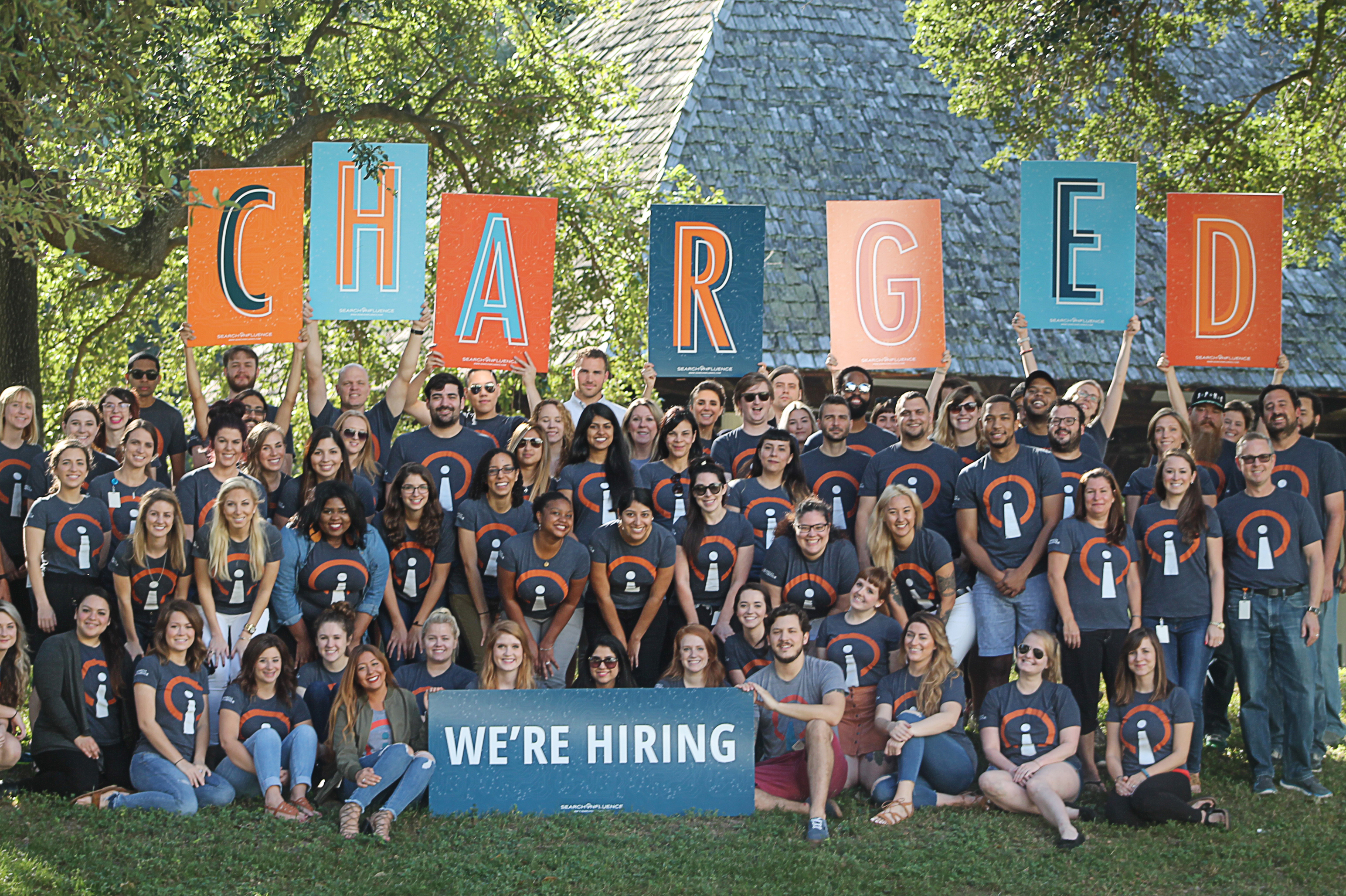
    Charged Employees of Search Influence

    What’s your favorite work memory at SI?

    Me and my friends at SI have a “Ladies who…” group, which is just an event once a week where we do something different. Like ladies who lunch, who happy hour, etc. It is super fun to not only build those relationships in the office but also build those friendships out of the office, too.

    What would you like others to know about your job that they may not expect?

    I think, for me, it was hard switching my AM brain to a sales brain. But, it was interesting to see how much in common the positions had—sales encompasses a lot of the things that each department does each day. Also, it’s just not that scary. I thought it would be really intimidating to pick up the phone and talk to a doctor, but we don’t know what they know, and they also don’t know the things that we know.

    What are your biggest goals for your career in the next 5 years? Beyond?

    My biggest goal in the next few years is just not to get too comfortable and to always stay challenged and learn something new every day. It’s easy to get in a rut and just do what you do because it’s a routine and not because it’s challenging.

    Looking ahead, what are you most excited to achieve and take part in at SI?

    Some big sales! I’m excited now that we are really focusing in on the direct side; it’s exciting to be part of the team that is supporting and growing that. I think we have great clients now who have supported us for a long time, and it’s cool to be a part of the team that’s going to help contribute to that.

    Sometimes it can be hard to explain what we do in the SEO world. What are some successful tactics you’ve used to inform new clients about our industry?

    The way I always describe it is that I help local businesses rank on Google. Obviously, there are a lot of little technical things that go into it. But at the end of the day, our main goal is that when a user searches for something and types in a keyword related to one of our local businesses, it’s our client that shows up in the first five rankings. That’s who the user clicks on and engages with. Everyone Googles things, so it’s easy to relate to that.

    In your opinion, why does online marketing matter for small business? What role does it play in the local economy?

    I think it’s important for small business because people might not know that you’re there unless you tell them. You do that through online marketing. That’s how you make your brand known in this day and age; not doing it is not an option.

    What are prospective clients most surprised to learn when you talk to them about the benefits of online marketing?

    I think that a lot of people obviously know about Google and know how it works, but I don’t think they know how or why those businesses are ranking. They are surprised by all the things you can do to improve your rankings. I don’t think that they understand the actual manpower it takes to manage all these things so that when you do type something into Google, it’s your business that shows up.

    What were you most surprised to learn about this industry when you started working at SI?

    I literally knew nothing. I straight up Googled, “What is SEO?” Every day was different; it was an uphill battle because it’s such a vast level of knowledge. My surprises were very similar to our clients’ surprises.

    What advice would you offer to someone considering a sales position in this industry?

    I would say go for it! I definitely do not regret trying something new. I had never done sales before. There’s an aspect of selling in everything you do, but I had never picked up the phone and tried to sell something. It’s changed the way I think about my work. It’s helped me build on the character traits I already had, and also build new ones as I get more comfortable and gain more experience.


    If you’re interested in learning more about a sales position at Search Influence, please visit our careers page to view our current positions available. We look forward to meeting you and discussing a potential career at Search Influence!

  • Follow the Numbers: Trends to Guide Your 2017 Plastic Surgery Marketing Plan

    With 17.1 million surgical and minimally invasive cosmetic procedures performed in the United States in 2016, a few key trends stand out as opportunities. According to a report released by the American Society of Plastic Surgeons, patients are trending toward fat grafting, non-invasive fat reduction, and facial enhancements. These trends present areas of potential growth for plastic surgeons by focusing their annual marketing plans on the procedures that patients are most interested in learning about. After all, the first step to any great marketing campaign is to understand how to appeal to your target demographic.

    What Do the Numbers Show?

    The first and most notable pattern is that patients are using their fat to enhance other areas of their body. Using liposuction, plastic surgeons remove unwanted fat from the abdomen and inject it into other areas, including the face, buttock, and breasts, to enhance and sculpt the desired look. This process of fat grafting showed a 26 percent increase for the use of buttock augmentation and a 72 percent increase for use in breast augmentation in 2016.

    Patients love the longevity of the results achieved using this method, and that’s certainly a potential benefit to highlight in a marketing campaign. Plus, patients often mention the added benefit of two surgeries in one, as they are especially happy to remove unwanted fat while also enhancing desired body parts. In addition to the cosmetic benefits, this surgery is also a popular option for breast reconstruction patients for many of the same reasons.

    Do Patients Know All Their Options?

    Audrey Hepburn getting a closer look - Search Influence

    While these innovative procedures are gaining popularity, doctors might not realize that many potential clients don’t even realize that this is an option for them. In fact, recent studies show that only 23 percent of women understand the full range of breast reconstruction options available. This indicates that marketing campaigns targeting new customers should focus on disseminating the facts and shining a spotlight on industry advances. By presenting the full range of innovative options available, like fat grafting, patients are more inclined to take the first step to schedule a consultation.

    Paid search and Facebook advertising campaigns may be especially effective in this instance, as both are often great avenues for reaching highly specific demographics. For example, Facebook’s targeting options include new people who have moved into your office’s geographic area or even specifications like salary, industry, and age. You probably already have an idea of the ideal customer for your medical practice, and using these targeting features, you are not only more able to reach them, but you can also present them with the information that they actually want to learn about.

    The same applies to Google searches. After all, if someone is searching on Google to learn about new augmentation options available, don’t you want your practice to show up in the top results as a trusted source for their desired information? Your campaigns should focus on the keywords that match the data trends, and your content should focus on informative, highly-curated landing pages that prove you’re a reputable source. All of these elements combined can lead to big conversion results.

    What About Non-Invasive Trends?

    Another major trend shown in the data from 2016 indicates a move toward non-invasive techniques for skin tightening, rejuvenation, and fat reduction. Injection procedures, like Kybella, that target areas of fat in areas under the chin or along the bra line increased 18 percent in 2016. Additionally, procedures like cryolipolysis (to “freeze” away fat cells) also showed an upward trend with a 5 percent increase. Other non-invasive skin tightening procedures saw a similar 5 percent increase.

    Broadband light and laser treatments are among these popular options for non-invasive skin tightening and offer versatile results with little to no downtime for the patient. While these procedures do not require surgery, patients still want to know that they are receiving services from a reputable, board-certified physician. This is a major area of opportunity for plastic surgeons to focus on in marketing campaigns. An emphasis on innovative technology to achieve long-lasting results shows patients that your office is ahead of the curve and committed to new advances in the field.

    How Do Trends Look Year Over Year?

    Looking at the changes and trends from 2015 to 2016, we can also note which types of procedures show an increase or decrease in popularity. With nearly 1.8 million cosmetic surgical procedures performed, liposuction showed a noticeable jump, up 6 percent from 2015, which may reflect our earlier trend toward fat grafting. Additionally, breast augmentation remained a popular choice for patients, filling the top slot and showing a 4 percent rise from 2015. Finally, as a fairly new procedure to gain in popularity over the last few years, the labiaplasty procedure increased by 36 percent in 2016.

    Another notable movement is the focus on the face, with an increase in facelifts by 4 percent from 2015. In conjunction with the surgical focus on face enhancements, non-invasive procedures, among the 15.5 million performed in 2016, showed a similar trend. Filling the number one slot, Botox procedures increase by 4 percent, with a total of 7 million procedures performed annually. Soft tissue fillers and chemical peels also showed steady inclines in usage from 2015 to 2016.

    How Do You Build Relationships with Patients?

    One possible pattern indicated in these trends is the frequency in which patients are meeting with their plastic surgeons. Patients feel more comfortable discussing all areas of their body with their surgeon, and a long-term relationship can develop between patient and physician. This indicates that a person may be interested in learning about multiple procedures, including both non-invasive and surgical options. A dynamic marketing campaign should reach new target demographics while also building on the loyalty of current patients.

    Emoji Gif - Search Influence

    Email newsletters and Facebook campaigns are great ways to stay in contact with your audience and keep them engaged in your services. Share patient testimonials, highlight employee profiles, and add personal elements that showcase the people-centric side of your business. Encourage happy customers to share their results with Facebook reviews and always make time to answer questions and comments that arise from your posted content. By creating multiple platforms for engagement online, you’re opening a line of communication with clients that can build trust, keep them informed, and ultimately create long-term success for your medical practice.

    If you’re ready to create a dynamic marketing campaign that draws on current trends and builds your plastic surgery practice as an industry leader, the first step might be less invasive than you think. Focus on your audience, deliver relevant information, and stay true to your brand.

  • Embrace Powerful Women in the Workforce This International Women’s Day

    Today, March 8, 2017, we celebrate International Women’s Day. This celebration started in 1909 to pay honor to the International Ladies Garment Workers’ Union strike of more than 20,000 workers fighting for fair pay and safe working conditions. Over the years, we have certainly reached many important accomplishments for women. When we acknowledge International Women’s Day, we’re paying tribute to women throughout history who have fought against a discriminatory majority. These women have set an example for their kids and have broken rules rather than break their values. Today, we celebrate mothers, writers, scientists, daughters, coders, students, activists, and sisters.

    But we do more than just celebrate our female mentors and historical figures. We also acknowledge that we still have work to do. We still have rules to break and statistics to change in order to stand up for the things we value most. According to the U.S. Equal Employment Opportunity Commission, a typical woman working full-time all year in the United States in 2014 earned only 79 cents for every dollar earned by the average man working full-time all year. The pay gap becomes even greater for African American women who earned only 64 cents for every dollar earned by a white non-Hispanic man and only 56 cents for every Latina woman working full-time.

    While the pay gap persists, women are also persisting at a rapid pace. This is especially true in the tech industry. By 2024, the National Center for Women and Information Technology predicts that there will be 1.1 million computer-related job openings expected in the United States. With 57 percent of 2014 female bachelor’s degree recipients and 56 percent of women in 2015 taking Advanced Placement (AP) tests, women are leaning in and hungry for more.

    At Search Influence, we owe much of our success to the hardworking women on our team. Our staff is comprised of 70 percent women, and 66 percent of our senior management team is female. Additionally, the company’s co-founder and Chief Operations Officer, Angie Scott, remains a passionate advocate for women in the workforce.

    “I truly enjoy being a working mom and want the other women that are out there that have the same feelings to be comfortable that they can do it all. We all know that moms are serious, playful, organized, and in charge—isn’t that who you want to be in the workforce with!” said Scott.

    Since the company’s start in 2006, Angie Scott, in conjunction with co-founder and husband Will Scott, has fought to create a company culture built on equality and accommodation for working parents. The company offers a private breastfeeding room in the office for new mothers and allows for flexible working schedules when parental responsibilities come up.

    “Search Influence supported me 100 percent through my transition to motherhood,” said Erica Salm Rench, Production Manager at Search Influence. “I was able to balance work and family during those first critical weeks and months that I transitioned back into working life. I also nursed my baby for 14 months and visited (still visit) him regularly at his school, which is just a few blocks away.”

    Women-in-the-workplace image - Search Influence

    Unfortunately, we still have more work to do in our industry and in our home state of Louisiana. The average overall for women working in the technology industry sits at only around the 20 percent mark. Additionally, according to a recent analysis from WalletHub, Louisiana was ranked 48th for working moms, based on key metrics like accessibility and cost of child care, percentage of families in poverty, female unemployment rate, average length of workweek, and more.

    Still, we persist. We look to positive trends in the workforce that show signs of a changing environment, like a 2016 survey from Thumbtack Journal of 20,557 female entrepreneurs across the country that ranks Louisiana 7th in the country for women starting their own businesses. Moreover, the study found that women in the South are optimistic about their professional opportunities. 21 percent of women surveyed in Louisiana believe that the local government does enough to support small businesses owned and operated by women.

    We also look internally, at our own powerful and passionate female co-workers, like Alison Zeringue and Paula Keller Scott, accomplishing great things. From becoming a new mother to building our sales team from the ground up, the women at Search Influence and in New Orleans are accomplishing important, meaningful work.

    “You have to wake up each day believing it will all happen, it will be ok, and that you can take on anything, and then, just do it,” said Scott.

    So, this International Women’s Day we hope to ignite both optimism and passion in our community. We remember that the juggling act of motherhood and career is not so much about balancing as it is about embracing. Embracing the mess, embracing the obstacles, and embracing each other. Scott has learned this firsthand during her career.

    “I blend my balance—work comes home, family comes to work (literally…remember, I co-own this business with my husband), and I don’t cut off either one just because my environment is changed,” added Angie. “In other words, if my kids have to hear about something I am challenged with or am updating my husband on regarding work, then so be it. I think it will make them a better business person when they grow up!”