Author: Search Influence Alumni

  • Has the Internet Made Us Lazy?

    googleIt’s no doubt that the Internet and search engines have drastically changed many aspects of contemporary life. The way people act, think, and speak have all been dramatically affected by the innovations of the Internet and search engines. In our line of work, we see the great benefits search engines can have on people and business. However, some studies have discovered some other interesting effects the Internet can have on people and their memory.

    Whenever anyone has a question, the automatic answer is “Google it.” To many of us of the younger generation, this seems like a no brainer, but when we think back to our first research project in the 5th grade, just “looking it up” had very different meaning, possibly opening up a book, getting the encyclopedia off the that top bookshelf, or even — gasp — a trip to the library. Information is so easily accessible today through technologies; we have SO much information at the tips of our fingers. Have these innovations of the Internet changed the way our memory and our brain works? Has the Internet made us lazy?

    shutup

    Think back to when you looked up a something simple on the internet, like how late Dominos stays open, and then you wanted to know that information a second time a few weeks later, do you remember that information or do you find your self looking it up multiple times on different occasions. Since the information is readily available to us are we less likely to remember it? Studies have shown the answer is yes!

    A study performed by three psychologists reported college students showed lower rates of recall on newly learned facts when students thought the information would later be easily accessible on a computer. The study also reported that when students are searching for information on the Internet, they were more likely to remember where they got the information than the actual information itself.  All this seems to support the claim that the Internet has in fact has made us lazy.

    Although we may be lazier, the study goes on to tell us the Internet may also be making us smarter! Experiments like these have discovered people are “using technology as external memory storage.” The researchers are quoted saying “We are becoming symbiotic with our computer tools, growing into interconnected systems that remember less by knowing information than by knowing where information can be found.” One of the psychologists concludes this very practice could be making us smarter because we don’t waste brainpower memorizing the facts. Instead we get more out of the information, and we then have a better chance at grasping the overall concept.

    What are your thoughts? How has the Internet affected you over the years? Do you think you are lazier or, in fact, are you smarter?

  • 5 for Friday — Links, Stories & Posts For Your Weekend

    Round 1-01Google AdWords Announces Enhanced Campaigns -Search Engine Watch
    Google announced Enhanced Campaigns this month, much to the dismay of some and delight of most. The Enhanced Campaigns work to simplify mobile marketing – sounds good, right? So why are some advertisers viewing this update negatively? Check out our blog post by resident Google AdWords Expert to learn why.

    The Ultimate Guide for Monitoring your Reputation Online  -Search Engine Journal
    Here’s an infographic Beyonce might be interested in. We’ve all had unflattering or embarrassing photos taken. Reputation monitoring is something we all need to think about in these days of hyped-up connectivity online. This infographic explains the steps businesses and individuals need to take to protect their image online.

    A Glimpse into Facebook Graph Search -Search Engine Journal
    A step-by-step tutorial explaining the new features of Facebook Graph Search. Options to search include: My friends, Photos of my friends, Restaurants nearby, Games my friends play, Music my friends like, and Photos I have liked. Different filters will help you hone down the results even further, based on things like ‘Employer’, ‘Likes’, ‘Following’, and ‘Married to’. Want to find people in your area who are interested in the things you like? Here’s your chance.

    40 Important Local Search Questions Answered -SEOmoz
    Local search is increasingly playing a bigger part in search engine optimization. The takeaway from this piece? “Even though local has arrived, it’s still a mess.” In an attempt to de-mystify this genuinely confusing piece of the puzzle, Mike Ramsey has kindly compiled the 40 most important questions and their answers concerning Local Search.

    How Unique Does Content Need to Be to Perform Well in Search Engines?  -SEOmoz
    Here’s a great questions we’ve been running into a lot lately: “What is meant by duplicate content and how unique do I have to be?” First, let’s qualify that navigation, ads, footer, sidebars, etc., don’t count. This leaves us with the on-page content. Copying internal or external sources can be a problem – but as long as you’re adding unique value it’s not duplicative.

  • The Missing Markdown Editor

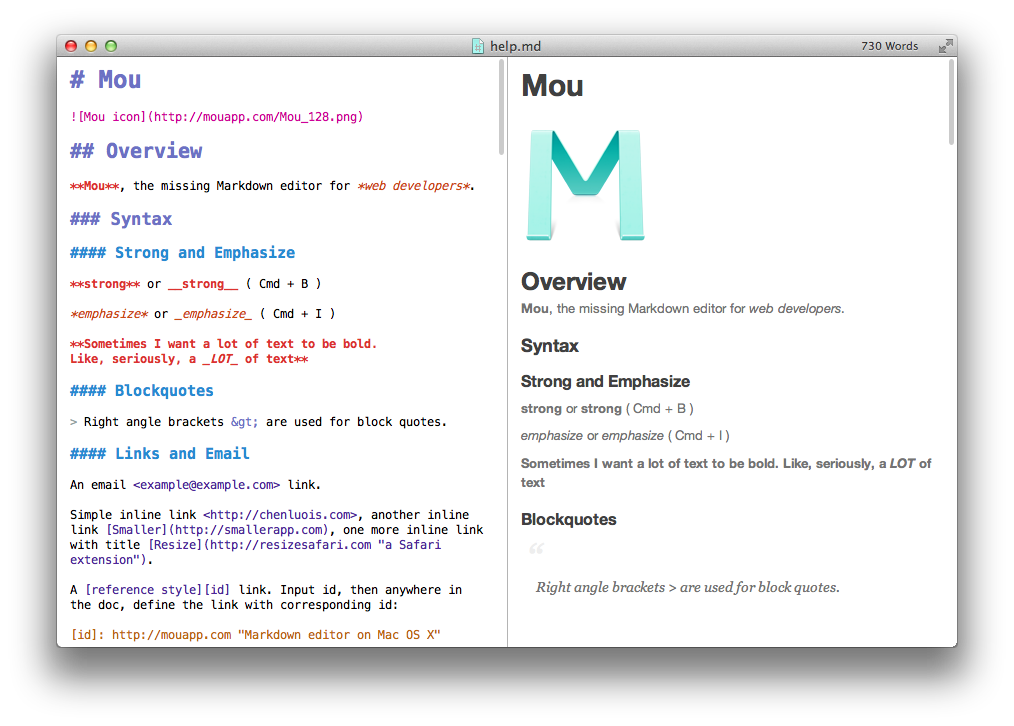
    Let me start by introducing my favorite way to write notes, documents, or any other type of text for that matter. It’s a format called Markdown created by John Gruber. Take a look at his project page for Markdown to learn more about it. I’ve recently discovered a great little application for OS X that absolutely blew me away with how simple, yet amazingly feature packed it is. This application is Mou written by Chen Luo. The missing Markdown editor for web developers.

    Mou_Screenshot_1

    There’s a standard Markdown document on the left with a live render of your document on the right. It provides you with custom stylesheets to change the preview to your liking. For you business folks it can also export your document to a PDF for easy, consistent distribution between multiple different types of devices. Also for those of us who are attached at the hip to our terminal there’s a quick way to launch Mou from the command line using:

    open -a Mou

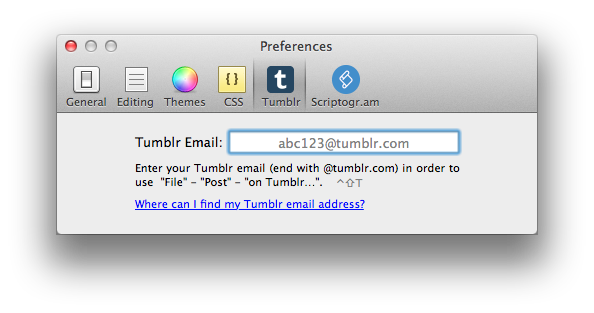
    For those who like to blog with Tumblr, this app will export any Markdown document to your Tumblr blog using the post email address given to you by Tumblr.

    Screen Shot 2013-01-29 at 2.36.22 PM

    This handy little app is a great for anybody who writes text while not wanting to use a large word processing application. Visit mouapp.com to download the application for free, or donate to get a license for free when Mou reaches version 1.0.

  • Two Easy Ways to Avoid Sending Your Readers into a Grammar Rage

    I am terrified to write this post. As anyone who has ever corrected someone else’s grammar in writing can tell you, I’m going to make a mistake. I have no doubt that someone will notify me of my horrendous grasp on the English language via irate (hopefully misspelled) comments. I assume the ensuing grammar rage will look a little like this:


    Angry... ?

    Bring ’em on, I say (reluctantly)!

    So, on to the main event! I have chosen a job that has me spending whole days explaining the differences between dependent and independent clauses, your and you’re, which and that, etc. We’ve already gone over why clear content is so important, so this means that the edits are sometimes extensive. I have noticed that I end up saying the same things over and over.

    The two things I tell writers everyday:

    1. Read over your work….. out loud

    I cannot express enough the importance of proofing your own work. It even helps to let some time go by between writing and reading it. But sometimes, you need to go even further. Yep, get your vocal cords involved.

    Web copy (and all writing, really) should sound like people sound when they speak. Sure, it can be a more polished version of what you would say, but it still needs to follow natural speech patterns and syntax. I’m certain that most of the awkward sentences I come across when editing would have been caught by the writers if they would have heard them and not just read them. Reading aloud can also help you feel out where the natural pauses are, showing you where you need to add commas. And that brings me to my next constant correction…

    Low pressure system over the eastern United States

    2. Commas! Commas! Commas!
    (aka LOOK IT UP!)

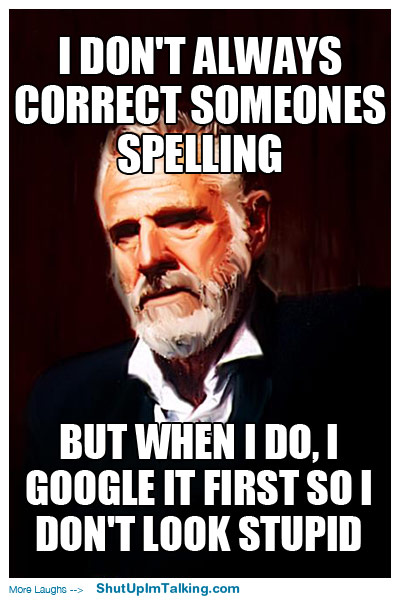
    Though you should always use some type of spell checking program, do not rely on it to fix all of your grammar errors. Most people know whether comma usage is a weakness for them. If this is the case for you, there is help. Fortunately, all you need to know about grammar (and everything else, I guess) is online. Seriously, if you question what you are writing or whether that comma is in the right place, LOOK IT UP! Purdue has a great online resource you can refer to for comma questions, and Grammar Girl is super helpful when you have a quick question about almost any writing topic.


  • AdWords Enhanced Campaigns: Naughty or Nice for SMBs & Agencies?

    Yesterday, Google announced what might be the largest restructuring of the AdWords platform to date: Enhanced Campaigns. Building on (and some say attempting to boost) the influx of mobile advertisements on AdWords, Enhanced Campaigns are an attempt to simplify the mobile pay-per-click management process by removing barriers to ROI calculation for SMB advertisers. While many advertisers are less than enthused about the changes, Search Influence welcomes the new features, streamlined campaign creation process, and simpler campaign management and assessment that Enhanced Campaigns brings to the table.

    Nice!

    The official blog post on Inside AdWords is clear about the goals of Enhanced Campaigns: simplify mobile and multi-touch marketing for the part-time advertiser. Citing a study on the new world of multi-screen browsing, Google claims 90% of consumers “move sequentially” between several devices during the conversion funnel.

    Google highlights three refinements to existing AdWords features that will be live for everyone starting in June: (1) laser-targeted bid adjustment based on location, device, time of day, “and more” within a single campaign; (2) easy management of one campaign across multiple devices, which is in contrast to the previous recommended best practice of duplicating identical campaigns for different device targeting; and (3) more accurate click-to-call data and conversion measurement across devices. These changes allow advertisers to more easily set up mobile campaigns, a strategy Wordstream founder and CTO Larry Kim says only 4% of advertisers participated in despite lower costs-per-click and, in our experience, high conversion rates from calls.

    The new bidding system is based on a percentage of a basic bid which covers the equivalent of today’s national desktop campaigns. This bid can be multiplied by -100% to 300% depending on device targeted and -90% to 900% depending on geographic area or time targeted. This allows advertisers to avoid tedious duplication of campaigns simply for different targeting, while making it much easier on “part-timers” and campaigns with limited budgets to run on multiple devices and control who sees their ads.

    Combined with the recently-simplified Remarketing Lists in Analytics, the upcoming Universal Analytics, and the storyline offered in a post on SEER Interactive, it becomes clear that the other shoe dropping with Enhanced Campaigns is the continued march toward multi-touch lead attribution.

    AdWords is also dropping the direct fee for Google-offered click-to-call numbers in mobile search ads, tracking only calls over one minute as a conversion. This has been a point of contention for marketers who know that a click on a phone number and a call connected are very different things.

    Naughty!

    Not everyone is excited about the changes brought by Enhanced Campaigns. Many advertisers are concerned about the cost-per-click increase that will come with a variety of new advertisers not effectively managing their bids using combined campaigns. According to an Adobe study, the gap between mobile and desktop costs-per-click dropped by 15% between the 3rd and 4th quarters 2012, meaning that there’s already less of an advantage to advertising on mobile. Automatically setting advertisers to run on mobile means that despite the availability of new bidding tactics, less savvy advertisers will inflate the ad auction and lead the platform to be less profitable for everyone.

    Others are concerned that Google won’t be able to effectively manage the preferences expressed in the myriad targeting options provided by Enhanced Campaigns. Per Google’s Guide to Upgrading to Enhanced Campaigns, Quality Scores in upgraded campaigns are reported at a bird’s-eye view, making it difficult to see what targeting is driving increases or decreases of an already-opaque metric. Similarly, the inability to separate out tablets from desktop searchers makes some wary; there are some markets that would be highly affected by this, such as downloads of a desktop program. While this is concerning to some, it may also outline an overarching corporate goal of Google: to make the world fast and universally accessible — contrary to ideas like single-platform apps and solutions off the cloud.

    Misconceptions: Looks Naughty, but Is Nice!


    But some, seeing the change as a step backward for targeting, have unfairly found fault with the update. Enhanced Campaigns eliminates confusion by changing locations of settings.  Many have said that the “mobile-only campaign” has disappeared from AdWords. On the contrary, AdWords provides a checkbox to help Google figure out what device an ad should be shown. Furthermore, ads with extensions such as App Store downloads that only make sense on certain mobile carriers and operating systems will be automatically targeted to those devices.

    There’s also some worry about other platforms following suit. As BingAds has matured as a platform and international search engines have found monetization easier with cost-per-click ad auctions, it might follow that this grand experiment by Google will shape the industry. Yet BingAds has tried to forge its own path in the paid search realm; I can’t see them blindly following Google with its targeting any more than it already has — to wit, only slightly. But while the industry as a whole might not change, it is important to note the Google has over search ads, especially on mobile devices.

    How to Win with AdWords Enhanced Campaigns

    Best practices can already be parsed out from what has been released about AdWords Enhanced Campaigns, but they aren’t necessarily far divorced from current ones.

    1. Follow Google’s guide to transitioning your account to Enhanced Campaigns
    2. Be sure to take advantage of all appropriate ad extensions, which allow you to target you ads appropriately to device and location
    3. Ensure you’re using the most up-to-date version of AdWords Editor to effectively Enhance your Campaigns.
    4. Anticipate a variety of devices coming to your site by providing dynamic content and alternate conversion paths based on device
    5. Provide natural redirection to and from your mobile site if it’s required for your business to avoid issues when desktop ads show on mobile or vice versa
    6. Now more than ever, bid appropriately for your location, device, and time of day — the best strategy in a second-price auction like AdWords is to bid what that website visit is actually worth to you

    We’re looking forward to learning more as marketers start experimenting with these new tools. What do you think? Will this change the way you’re doing PPC?

  • TV’s Next Social Media Superstar Is…

    In 2012, the number of people using social media grew to 1.43 billion users. This stark increase in tweeting, posting, and pinning has grabbed the attention of traditional marketers – most notably: Television. TV shows are not only leveraging social to increase brand awareness and interactions but to increase ratings. While some shows are “duh, winning”, there have been some shows that are just doing it all wrong. This post is going to take a look at my winner and loser of TV social media in 2012.

    Winner: RuPaul’s Drag Race

    Before everyone started mopping their marketing, THE BEST REALITY SHOW EVER, RuPaul’s Drag Race, realized the importance of social media. In 2011, they started watermarking the Twitter hash tag #DragRace during the show. This humble hash tab would eventually birth such memorable hash tags as:
    #SnatchGame
    #TheLibraryIsOpen
    #RuPocalypse
    #RuPologize

    And my personal favorite…

    #indabuttru
    “That’s #InDaButtRu”

    Drag Race’s use of hash tags is genius because it encourages interesting conversations between fans and generates social buzz in real-time.

    But of course like any good lover, RuPaul’s Drag Race is versatile. The show encouraged viewers to vote on Twitter and Facebook who would be the winner at the end of the season. By including viewers on multiple social media platforms in the decision making process, Drag Race season 4 finale was up 33% the previous year’s.

    In a sentence: RuPaul’s Drag Race really know how to burn rubber get the most out of its social media MPG and leave others in the dust.

    I apologize for the racing puns…

    Loser: America’s Next Top Model

    RuPaul isn’t the only supermodel of the world using social media. In an attempt to generate its former success, America’s Next Top Model decided to include a “social media score” in their 19th cycle. While I’m not sure how one averages catty comments about terrible makeovers and catalog poses, ANTM has managed to get its remaining audience more involved. Unfortunately Top Model saw their ratings take a tumblr (urgh more puns) down to 1.22 million viewers.

    It’s not surprising that ANTM’s attempts at social media went so poorly. If you are going to declare the new judge is “social media”, it should actually be social media. You know, Twitter, Facebook, etc. Instead Ty-Ty put together a small select group of viewers and passed this off as social media.  This bothers me (and about 1.22 million teenage girls) for three reasons:

    1. Being selective on whose opinions matter isn’t social, its fascist. Not that I expect Tyra to know the difference, you can bank on that (oh god another pun).
    2. The comments from social media were filled with so many Tyra-isms you would think they were excerpts from Modelland and instead of real people.
    3. A numeric voting system used to vote on physical appearance isn’t social media, it’s hotornot.com

    Also Bryanboy was a poor choice to present “results”.  His delivery was Sahara (RIP). The numero uno rule of social is to be sharable (i.e. fun, interesting, and outlandish) which BB simply was not.  This media boner could have actually worked if you had one of the Jays – it would have at least been entertaining to watch.


    I think calling it social media was Tyra’s way to continue to live in her fantasy world that her show is relevant and people are still hopeful it will produce a supermodel.

    Hate to do this Tyra but here is what social media is really saying about your show:

    I think the lesson TV shows should learn is social media is like ballroom culture. If you are serving “realness,” the children will live and you will be legendary.  You can’t make grandiose claims about the viewer having control over programming when in reality the show has been taped, shipped, and ready for airing months before the premiere. Good or bad, encouraging discussion on social media will reward your show and organically grow your audience, just look at GLEE.

  • 5 for Friday — Links, Stories & Posts For Your Weekend

    High 5The Next Frontier For Google Maps Is Personalization — TechCrunch
    Google has already personalized most of its search results and Maps personalized with user interests will be next up. There’s a lot to look forward to with Google, so stay tuned over the next few months for updates.


    This GIF Search Engine Is Everything You’ve Ever Wanted — Mashable
    Any .GIF you’ve ever dreamed of is now easily accessible with Giphy. Find the perfect .GIF for any occasion.


    SEO Smackdown Round 2: Old Vs. New Search Engine Optimization — Search Engine Land
    Has SEO really changed? Here are some tips about keywords, site design, links, and search behaviors to help you find out what big picture items you should keep in mind.

    4 SEO Tasks Small Business Must Do Every Month — Search Engine Watch
    Four simple ways to increase traffic to your small business website:
    1. Identify Demand
    2. Create Great Content
    3. Tune Content
    4. Track & Promote

    How 4 Consumer Brands Are Using Visual Content To Tell Stories & Engage Customers — TopRank
    It’s not what you say, it’s how you say it. The same goes for your content and how you present it. Look at how Kraft, General Electric, Sherwin-Williams, and Coach have used visual content to tell their story.

  • Super Bowl Social Media: A Touchdown Pass for National Brands

    Super Bowl advertising spots are one of the most sought after 30 seconds in television each year. With the event having an estimated viewership of well over 110 million, many national companies view the hefty $4 million dollar price tag as money well spent. In fact, the New York Times reported that the ad spots were already sold out on January 8th, almost a full month before the big event. In recent years many companies have amped up their traditional television campaigns to include YouTube sneak peeks, dedicated websites, hashtags, Facebook campaigns, and apps designed to garner appeal and catch their audience’s attention on the second screen. Social media is a growing factor in many major corporation’s 2013 Super Bowl advertising campaigns, which is a huge change from the surprise element and secretive campaigns of years past.

    The YouTube teaser video is a popular move by many major national brands. This year, one of the most viral involves model Kate Upton “washing” a Mercedes-Benz, a clip that has already been viewed by over 5 million people. The video directs the audience to the Mercedes USA Facebook page, where more teaser clips of their Super Bowl promo are linked. This method of social integration leads to viewers interacting with the brand on several different forms of media, all well before the Super Bowl kickoff, and creates a great deal of buzz for the 30 second ad spot.

    Coca-Cola was the first brand to launch their Super Bowl campaign this year, which features a gamified “choose your own ending” storyline that asks viewers to vote on the official Super Bowl commercial. Like the Mercedes campaign, Coke has also expanded the storyline on their Facebook page. With polls, character bios, additional video clips and more posted on their Timeline, Coca-Cola also seeks to engage with their audience in an unpaid, organic manner. The use of polls and competition between the three video endings adds an additional level of interaction and has fans gunning for their favorites.

    Other companies have taken a social approach to the entire advertising process. Popular deodorant company Speed Stick ran a contest through its Twitter profile with the hashtag #handleit to solicit pitches for its very first Super Bowl spot. The winning tweets are all already up on Tongal and lead to a funny and viral campaign for an everyday product. They’ve tied the campaign in to their Youtube Channel, which features dozens of “Handle It” moments. It’s definitely a nontraditional move to release a full Super Bowl ad ahead of the big weekend, but it works for Speed Stick’s entirely social campaign.

    Major corporations’ Super Bowl social media campaigns extend their advertising buzz well beyond the big game. By harnessing organic user interest on multiple channels, the expense of a 30 second ad spot seems almost worth it. Do you like the modern trend of brands releasing their Super Bowl commercials ahead of the big game? Let us know in the comments!

  • Clarity, Enthusiasm, Persuasion — 5 Copywriting Tips From The Pros

    Being a copywriter can often times be stressful. If you’re developing content for your own business, you often have to consider the impact of what you’re saying and tweak your wording to sell your product in the best light possible. Developing the art of copywriting takes times and involves developing compelling content that get people to take action. Whether you’re updating your company’s blog or creating an array of new product pages for your sales endeavors, you have to take the time to craft something that is informative, original and authoritative. The following are a few tips to keep in mind when you’re copywriting.

    Write With Clarity

    Each piece of content you write should to be absolutely unique and absolutely clear. When a person visits a website to get information on a business or product, they want as much information as possible without filler or hype. All of the copy should pack as many details about the product or service into the smallest amount of space possible.

    Your copy should tell the reader why they are here, emphasizing a main idea and purpose that supports why they should take advantage of your business. Don’t bog it down with adjectives like “fantastic” or “great” — superlative words are cheap, but they’re not what your reader is there for. Keep it simple, concise, and to the point so your product’s message is front and center. For example, don’t just say “My spa’s fantastic services are the best in the area” — your reader has nothing to go on but your word for that. Instead, say “Our Shiatsu-trained masseuse can address each and every pressure point in your back to relieve the aches and pains of sports injuries.”

    Be Enthusiastic, Not Gimmicky

    While brevity is the soul of effective copy, genuine enthusiasm about the product is the force that drives it. We’ve all seen infomercials: the promoters on don’t simply stand behind a product and rattle off a list of features in a bland, monotone voice. They are passionate and exited, driving consumers to take action.

    While enthusiasm is good, gimmicks are not. At some point, everyone hits the “wall” where they feel like they’ve used up all their ideas. Rather than throwing up your hands and pulling a “Wait, that’s not all!”, take some time to come up with something original and professional. Keeping a variety of interesting words in your mental toolbox can really help with this — a strong verb or interesting metaphor will always be better than a bland list of product features. Also, don’t veer too far in the other direction and use language that just sounds impressive without conveying meaning. Fancy specialized jargon will obscure your message and even leave your readers cold. If they’re wondering why you had to resort to obscure wording instead of explaining your point in plain language, your credibility has just taken a hit. Online purveyor of all things nerdy Think Geek is especially good about this, selling their high-tech gadgets with a style that’s accessible to the common reader.

    Don’t Push, Persuade

    Using general statements that are unsupported typically cause a reader to question authority. Build your credibility and authority by offering insight and referencing statistics or facts. Don’t simply push your statements on a reader: back them up with the research you’ve taken time to perform. Integrating facts and figures into your work is surprisingly easy (hint: everybody loves a list), and your customers will be wowed by objective data that supports your claims.

    However, it’s a fine line between being persuasive and pushy, so do your best to let the service or product sell itself. Often the best way to engage a reader to take action is not by telling a reader what to do, but rather telling them what a service could do for them. Always remember WIIFM (What’s In It For Me?): you’re speaking to potential clients, trying to convince them of the company’s worth. As Bing Crosby said, you have to accentuate the positive and eliminate the negative. The reader knows their situation: what they want is to be assured that the problem will be fixed, and that they will be treated well in the process. Rhetoric on subjects other than that main crucial one is unnecessary.

    If You Don’t Have Something Nice to Say, Don’t Say It At All

    Negative language will turn readers off quickly. Using negative language can cause issues in communication and readers base their perceptions of you or the businesses you’re writing for on the way we say things to them.

    Focusing your writing on positive language. Rather than constantly writing what competitors can’t do or don’t offer, focus instead on what can be done and the services provided. By eliminating words like “don’t” and “won’t,” you can avoid negative expressions and focus your copy on the positive, therefore projecting a more positive image and communicating more clearly. For example, if you’re an attorney that’s writing a blog post about local DUI policies, you don’t want to elaborate on all the negative consequences that come with a conviction: chances are your readers are already depressingly aware of these facts. Instead, talk about the concrete methods and techniques you can apply to make the process as smooth as possible, and the positive results you’ve gotten in the past.

    Give It a Final Polish

    Last but not least, read over your copy before it goes live. It seems simple enough, but most writers often overlook this quick and easy final task, and nothing destroys your credibility faster than an obvious typo on the page.. Don’t just rely on spell-checker to find your mistakes: take the time to give your copy a quick read through to discover any errors you might have overlooked. Often times reading your work out loud will allow yourself to catch awkward sounding sentences and help you hear if everything flows smoothly and coherently.

    It takes time to develop quality content. After all the English language isn’t exactly easy to understand sometimes. However, by keeping these simple tips and tricks in mind, you can craft highly effective social media updates, product pages, press releases, advertising copy and more!
  • 5 for Friday — Links, Stories & Posts For Your Weekend, 5pecial Graph 5earch Edition!

    In a special edition of 5 for Friday, we’ve compiled the best articles about Facebook’s new Graph Search, which was released for beta testing on January 15!

    Facebook SEO Comes to Life as Graph Search Launches — Social Media Today

    Facebook’s newest addition, Graph Search, blurs the line between social and search, gearing towards a new type of search behavior that combines relevant and timely content. Rather than provide the same results as Google or Bing, Graph Search provides personalized results including individuals, photos, places, and interests.

    Facebook Graph Beta Offers Multidimensional Social Search, New Networking Capabilities — Search Influence

    Normally I avoid our own blog in the 5 for Friday recap, but I LOL’d at this flashback to the good ol’ days when an .edu email address was required to have a Facebook account and created a “25-and-under wonderland of location-based dating.” Now with Graph Search, we can search friends of friends who have similar interests, thus making connecting a whole lot easier!

    New Tumblr Blog Raises Privacy Concerns Over Facebook Graph Search — Search Engine Land

    Graph Search has already raised questions regarding the loss of privacy. The discovery tool has the potential to take a very creepy turn — Tom Scott’s Tumblr blog includes searches such as “Single women who live nearby and who are interested in men and like getting drunk” to demonstrate the lurking possibilities. Fortunately, Facebook has improved their privacy settings and included tips on how to control what others see. Our tip? If you wouldn’t want your newly “Internet-savvy” grandmama to see it, keep it off of the ‘book.

    Four Things Marketers Can Do with Facebook Graph Search — AllFacebook

    While businesses cannot optimize their pages for Graph Search, they can take advantage of the new “third pillar.” According to AllFacebook, Graph Search delivers advertising tools to businesses, including higher click through rates, sponsored results, advanced targeting and demographic research.

    Facebook Graph Search MANIA! Must-Read Resources, UI Tour & Review — AimClear

    AimClear is already looking to the future, questioning where Facebook will take Graph Search next:
    Graph Search PPC?
    Event categories?
    Specific posts?
     
     
    Share your predictions for the future of Graph Search in the comments section below!