Tag: writing

  • The AI Sandwich – Chatbots, AI, And The Marketer’s Conundrum

    AI, Chatbots, and ChatGPT are revolutionizing the way marketers create content.

    I don’t believe it’s hyperbole to say, “this changes everything.”

    A friend described a good human/AI workflow as an “AI sandwich” and I think that’s about right.

    Image of an "AI Sandwich" as imagined by Midjourney
    AI Sandwich

    I go into much more detail in a post I wrote for Near Media.

    AI is analyzing medical images, optimizing energy grids, personalizing education, and driving cars. It is also moving quickly into SEO. ChatGPT is the most newsworthy of these tools, but there are many more..

    ChatGPT can render programming code, such as PHP code to write the html for an ascii cat face. 

    AI can be used for good, but it can also be used for evil. Cybersecurity researchers are already finding instances of bad actors posting functional malware code to cybercrime forums.

    ChatGPT and other AI-enabled tools shine in examples like the code above, where they’re either completely doing the work of humans or significantly shortcutting the process. 

    For prototyping, confirming assumptions, and initial fact checking ChatGPT, as an AI writing tool, works well – though a manual review is still advised.

    There are also a number of established AI writing tools such as Jasper, Writer, and QuillBot.

    Additionally, there are an equal number of AI image-generation tools, such as Dall-E, Midjourney, and Stable Diffusion.

    AI tools being used for SEO: ChatGPT, Jasper, and other OpenAI-based tools can be useful in the process of building content.

    However, there are concerns that the use of AI tools will lead to content being deemed “unhelpful”. Search Quality Raters are human beings who review Google search results and give feedback on the quality of the results, and they are looking for signals such as Expertise, Authority, and Trust.

    In order to support the quality guidelines and their human raters, the best use of AI tools may be an “AI sandwich” where humans write prompts, AI does its thing, and then humans edit and fact check.

    However, if we want to produce helpful, trustworthy content, the output of the AI content generation tools will need to be like parts on the shelf that together make the whole.

    We are about to see an explosion in AI-generated content, and legitimate content creators will use it to create better content, develop great ideas, and serve their organizations and clients more effectively.

    As an old-school SEO, ChatGPT and its peers are a great opportunity for testing and tuning.

    As a client-serving marketing organization, we are excited about the ways in which these tools and those still to come will help us produce better, more engaging content.

    However, we may see things get worse before they get better.

    Be sure to check out my post on Near Media. Your feedback is a gift.

    As far as the robot apocalypse goes, I’m hoping our new mechanical overlords will be gentle.
  • Once Upon a Time… The Power of Storytelling in Content Marketing

    Once upon a time, there was a lonely copywriter. All day long, he wrote blogs and web content, press releases and social media posts. He spent hours toiling away at his computer, but no one ever seemed to care about what he wrote. Saddened by this, yet hungry to improve his plight, he set off on a perilous journey across the mysterious internet to find greater purpose in his writing.

    His journey brought him far and wide–from the slippery slopes of search rankings in the north to the massive backlink mines in the south. Along the way, he fought the bloated keyword stuffing behemoth and the two-headed monster of duplicate content, but he never felt any closer to his ultimate quest. Dire and lost, he thought he would never find the answer.

    When he had all but given up hope, the Content King appeared to him. Impressed by the copywriter’s perseverance and quest for knowledge, the Content King gave the copywriter one final test to prove his worth.

    The Content King asked the determined copywriter to describe his long journey and all that he had accomplished so far. Bolstered by his newfound experience, the copywriter recalled his voyage with great energy, weaving a cohesive narrative sprinkled with all the right details. The Content King ooh-ed and ahh-ed and gasped in all the right places.

    When he was done, the copywriter felt confident and proud. He knew this was just the boost he needed to continue his quest. He thanked the Content King and told him he was ready to set off again. The Content King chuckled and told him there was no need. He had already found the answer—for the power of storytelling is the true key to writing amazing content!

    Once upon a time..the power of storytelling in content marketing - Search Influence

    Everyone loves a great story. We learn from them. Stories can convey a wide range of emotions. They pique curiosity and are meant to be shared.

    From a marketing perspective, stories are also more interesting to read than standard copywriting. They also help garner trust between the storyteller and reader. With a story, a reader can establish just how much your business matches their needs and interests.

    Ultimately, your goal is to sell your audience something. But first, focus on having a conversation with your audience—that will open them up more to the sale. Telling a story adds humanity to any sales pitch, and the overwhelming majority of purchase decisions are influenced by emotion.

    Storytelling can be applied to any form of content writing—from blog posts and social media to newsletters and videos. The key is knowing your audience and appealing to them. Think about what emotion you want to communicate and plan to how to bring that out on paper (or on the screen).

    Knowing this, how do you translate that into writing better content? Here are 5 ways to incorporate storytelling into your content creation:

    Create Characters, Structure, and Drama

    It is said that there are only 7 basic story plots (the quest, overcoming the monster, rags-to-riches, etc.). Every story must have a beginning, middle, and end—or in literary terms, an introduction, rising action, and climax. So, how do these basic plots and the traditional 3-act structure fit into content marketing?

    First, you set your scene and introduce your main character. In marketing, this character is the main connection between you and the target audience, aka the customer. Because of this, it must be compelling and relatable.

    Next, create conflict (physical, emotional, psychological). Your audience needs to empathize with your story. Drama makes everything seem more real. For this, you really have to know your audience and their buyer’s journey.

    And finally, you’ll have to read to the end of this post for the third act….

    Personalize and Relate to Your Audience

    To get a reader to identify closely with the story, personalization and parallels are key. Telling the story from either your perspective or a related person’s point-of-view will help provide that connection and evoke empathy by sharing experiences, problems, and concerns. Being authentic is another important factor in making this connection. Without authenticity, you lose credibility.

    Get emotional - Search Influence

    Get Emotional

    Storytelling is an imaginative and clever way to get people to feel something. Stories spark emotions. People can feel happy, sad, afraid, and angry, as well as multiple layers of each, often overlapping another.  This complex nature of emotions is what makes storytelling so effective in marketing.

    Studies show content that evokes emotion is more popular, and those that leave the reader happy (as opposed to sad) are more likely to go viral. What people share on social media proves this every day When crafting a story, decide what emotion you want to arouse and then provide the necessary information and support for the reader to arrive at that emotion.

    Don’t Just Tell Something, Show It

    You want your targeted audience to know about the benefits and advantages you are offering. Do not just tell them matter-of-factly, but rather show them with a story. Integrate these crucial tidbits into the story and fill it will examples, details, and data so that your audience can experience and connect with these elements, and hopefully, make decisions based on the experience. Blankly stating a benefit or advantage will not cut it—they need to be shown how and why.

    Give a resolution - Search Influence

    Give a Resolution

    Finally, in Act 3, you resolve the conflict. The resolution should be your company and the products/services that you offer coming to the rescue. It fulfills the purpose behind the story. To seal the deal, the resolution should also include a clear call-to-action for your audience. And don’t forget, everyone likes a happy ending!

  • NEW ORLEANS, May 24, 2017 — The Plastic Surgeon’s Guide to Press Releases

    Search Influence has done a little blogging about press releases in the past, but now it’s time to kick things up a notch—or 16 billion notches. According to the American Society of Plastic Surgeons, Americans spent roughly $16 billion on plastic surgery in 2016, which is an all-time high. With thousands of plastic surgeons vying for a place in this lucrative industry, your practice should be using every tool at its disposal to keep up with the competition. One such tool is the press release.

    All About Press Releases

    The press release is THE classic public relations tool. It’s over 110 years old, but don’t worry—it’s still very relevant. The modern press release is published online and distributed through networks like PRWeb. A press release can inform media outlets about a newsworthy event related to your practice. Not only is this great for publicity, but it also helps with SEO. When reputable news sites run your press release or write a story about it, they provide authoritative backlinks to your website, which makes your website more authoritative in turn.

    Now, if you’re low-key panicking about what PRWeb, SEO, and backlinks even are, stop. Take a deep breath. Then, contact Search Influence to get all your questions answered.

    Image of a woman trying to decipher the workings of the internet - Search Influence

    If you’re already an SEO pro, great! Let’s move on to exactly what you should talk about in your practice’s press releases.

    Good, Newsworthy Topics

    Step one of writing a good a press release is choosing a newsworthy topic to write about. You should think of it as an announcement, not an advertisement. Press releases are not intended to hype your friendly customer service, compassionate care, or other unique selling propositions. They should not include a personal point of view, like “we” or “you,” and they should not include any promotional language. You probably are an exceptional surgeon who provides stunning, natural results, but PRWeb will probably reject your press release if you say as much. Instead, focus your press release on important recent events or developments.

    Here are some great ideas for topics to write about, courtesy of InboundMD:

    • Celebrating Milestones or Anniversaries
    • Participating in Community Events
    • Hiring New People
    • Acquiring New Equipment
    • Offering New Services or Treatments
    • Opening a New Location
    • Winning Awards or Honors
    • Speaking at a Conference
    • Publishing a Study

    All of these topics let you announce a new event or development that might capture readers’ attention. They also all provide the opportunity to frame your business as an objective leader in your field. A lot of practices could run ads claiming top-of-the-line equipment, but fewer practices could back up their claim with an objective and authoritative news story about acquiring new equipment. Press releases are a factual way to set yourself apart from other practices and stand out to potential patients.

    Sections of a Press Release

    Now that you have an idea of what to write about, let’s move on to some practical how-tos. Press releases follow a very specific format, and the sections are as follows:

    • Title
    • Summary
    • Body
    • Boilerplate

    The title should concisely announce your newsworthy topic. It should include your company name and an action verb.

    The summary should build on your announcement with engaging details to draw in the reader. For example, if the title announces that you published a study, the summary can explain how that study might impact surgical procedures or medical treatments in your field.

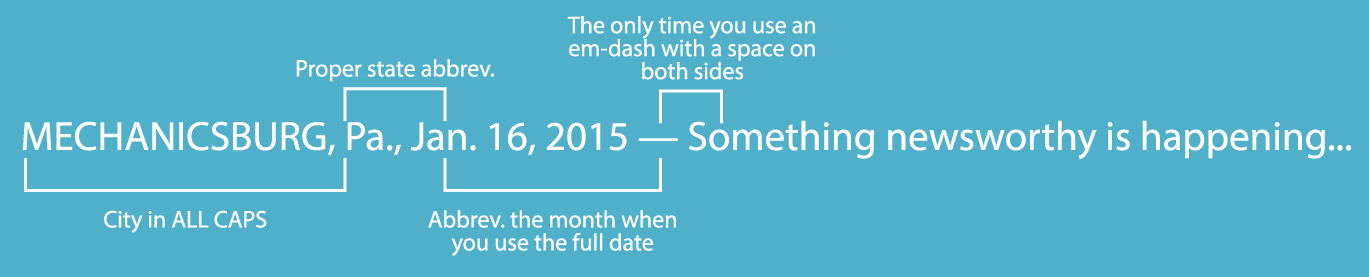
    The body is where the majority of the writing takes place. It should begin with a dateline, formatted like the image below:

    Image of a standard press release dateline example - Search Influence

    The dateline should be followed by a strong hook or lead to capture the reader’s attention. Then, the rest of the introduction paragraph should provide the reader with all the key details they need to know about your announcement. The following paragraphs should build upon these core details, until the final paragraph, which should briefly include your contact information.

    The body should be written in the third person, and language should remain objective, rather than promotional. However, you can include one or more quotations, from yourself or another knowledgeable figure, that can bend these rules a bit. A quotation can say, “I am proud of my practice’s dedication to technological advancements.” The rest of the body cannot. This is because the quotation is clearly attributed to an individual and framed as an opinion.

    The final section is the boilerplate, which is a brief, objective description of your practice.

    Pitfalls to Avoid

    Unfortunately, no list of things to do is complete without a list of things NOT to do. Press releases have fairly strict editorial guidelines, and as you know, the medical industry is heavily regulated. The following are some common mistakes made in plastic surgery press releases and how you can avoid them.

    It’s been mentioned several times already, but do not use promotional language or treat your press release like an ad. Objective language will not only get your press release accepted by PRWeb and news outlets, but it will also lead to more compelling writing. Again, tons of doctors claim that their practice offers experienced, well-trained care. You can prove that your practice offers such care by running a press release about the impressive experience and credentials a new hire brings to your practice.

    Don’t include general business information, except for your contact information and the boilerplate. It isn’t news that your practice offers Juvederm, Radiesse, and other injectable fillers. A lot of practices offer that. It is news, however, that your practice is the first in your area to offer a brand new line of injectable fillers. If you find yourself filling space with general business information, it might be a sign that you should choose a more in-depth topic.

    Don’t make any promises unless they are backed up by studies and statistics. This is not only because such promises can be too promotional for a press release, but also because everyone from Google to the American Medical Association has strict rules against misleading patients. Even seemingly innocuous claims about natural-looking or proportionate results can be flagged as misleading, as results can vary based on a large number of genetic and situational factors. To be safe, include reputable citations for all claims, and it doesn’t hurt to follow up with a disclaimer like “results may vary.”

    Ready to Start?

    This information should put you well on your way to writing the perfect press release for your plastic surgery practice. If you still have questions, or would rather leave the writing work to us, contact Search Influence! We’re happy to help.

    Images:

    Deciphering the Internet

  • #FreelanceFriday: Tips and Trends for Freelancing After 40 (and 50)

    There is a false perception that freelancing (and the gig economy in general) is a young person’s game. But now more than ever, older individuals are making their presence felt in the freelance community.

    Proving that age doesn’t matter, writers and other creatives over the ages of 40 and 50 have come to embrace the freedoms and flexibility of the freelance lifestyle. A recent study conducted by UpWork found that 28% of Baby Boomers are freelancing either full or part-time.

    While that is still less than the total for 18-24-year-olds freelancing (48%), these so-called “silver self-employed” are gaining ground quickly. The Association of Independent Professionals and the Self Employed (IPSE) found a 46.5% increase in freelancers over 50 since 2008.

    Actor Tom Hanks preparing to type on his laptop

    What draws older individuals to freelancing?

    Unsurprisingly, it is the very same reasons that draw younger people to it:

    Flexibility

    Everyone–no matter what age–is trying to find the perfect work-life balance. For many, the flexibility of freelancing offers a step in the right direction towards that harmony. Freelancing is also a viable option for those in need of a more flexible schedule when raising children or caring for sick loved one.

    Independence

    Confined to an office for most of their lives, many older freelancers crave the independence that also comes with the freelance lifestyle.

    Creative Fulfillment

    While some 50+ creatives are supplementing their retirement with freelancing, others who are still working have found the same creative outlet that draws most younger freelancers to the game as well. Performing the same job for several years can leave a creative person yearning for more. Freelancing provides a much-needed outlet for all of that bottled up imagination.

    Availability

    And finally, the widespread availability of freelancing gigs makes it easy for older creatives to find work, especially if that person has been unexpectedly laid off. It is significantly easier to take skills culled from your years of work experience and apply them to freelance side gig or use this background to kick off a fresh new direction in your life. There are plenty of freelancing jobs available these days for everyone.

    Respect your elders, punk from Marvel animated series - Search Influence

    Why older freelancers are actually an asset

    In the recent past, people over 40 and 50 have been filled with doubt and trepidation about entering the freelance world. They may have felt that they were too old, lack the proper experience, or were not tech-savvy enough.

    Despite those fears, the exact opposite was often true. First off, no one is too old to freelance! All/any experience is important. There are so many avenues you can explore as a freelancer; you just need to find the one that works for you.

    Older freelancers typically have a greater desire to learn and prove one’s self—this goes for technology too. It may seem intimidating, but you will be surprised how quickly you catch on.

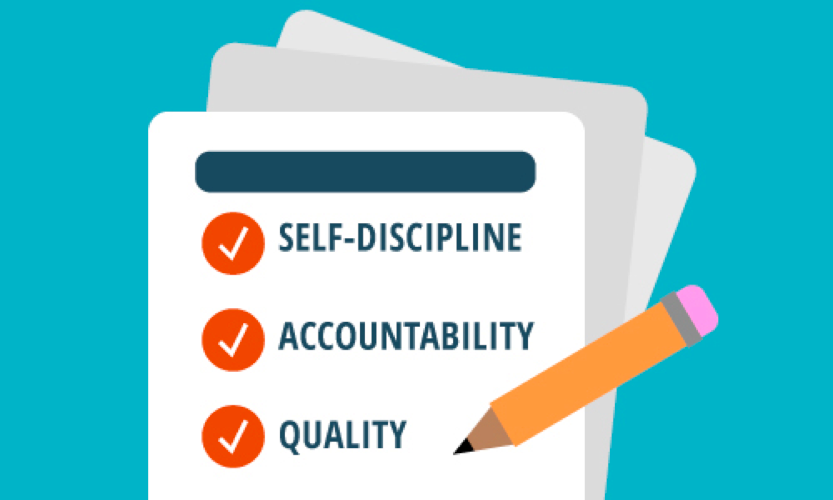
    Self-discipline, accountability, and overall quality are the most important factors to a successful freelancing career.  It is no secret that older adults are proven to be more reliable and focused than most 20-year olds. This will go a long way with those looking to hire freelancers. In the end, being older can actually be an asset to potential clients and employers.

    High-quality Standards Image

    Tips for those over the age of 40 and considering becoming a freelancer

    In addition to general advice for ALL freelancers (stay organized, prioritize, eliminate distractions, don’t take on more than you can handle, etc.), here are a few more tips specifically for the more mature freelancer:

    Be conscious of, but not afraid of the learning curve

    Yes, freelancing is different, in many ways, from your traditional job. Even for the well-prepared, the first time you do something new, it is a bit daunting and full of “what ifs.” Venturing out into a new world will bring with it new processes, new considerations, and new experiences. Rely on what you already know and build on that. Seek out the information you need and gain experience when you can.

    Freelancing may require you to change how you write (at least a bit)

    There are many different avenues you can explore as a freelancer, with many different writing styles attached to each. An experienced, talented writer should be able to adapt their style when needed. In the end, no matter what the style, successful writing usually comes from honesty, connecting with your audience, and provides a direct benefit to the reader (answers questions, entertains, etc.).

    Accept that not every gig is right for you

    While older freelancers can be a tremendous asset to clients, that does not mean they are right for every assignment—just as younger writers are not right for all as well. Whether that reason is based on knowledge or experience, you just may not be the right fit. There is an audience out there for everyone; you just need to find it. Faking it is never easy, and will ultimately be exposed.
    As a more mature writer, you bring a wealth of experience and knowledge, plus a stronger eye to see beyond the challenges a new freelancer will possibly encounter. Combine this with a passion for high-quality work and yearning for more freedom in your life; you should have no regrets for shaping your own track as a freelancer—no matter your age!

    Images:

    Tom Hanks

    Hawkeye

  • The Write Stuff: Search Influence’s Freelancer Community

    Search Influence Tech Jobs Image

    Search Influence’s mission is to help businesses succeed online, and one of the ways we do that is by delivering high-quality content, from engaging blog posts to specialized website content and more. Talented freelance writers are a vital part of our content creation process. In fact, we’ve developed some great tools for managing our entire content creation process as well as an internal team of editors to ensure our freelance community is diverse and vibrant. Now it’s time we shine a spotlight on our talented community members and offer a look into what it’s like to work as a freelancer for Search Influence.

    Who Can You Find Freelance Writing for Search Influence?

    Saying that the Internet is diverse would be an understatement, so producing quality content means having a diverse team. Our community includes professional freelancers, students in undergraduate and professional programs, stay-at-home parents, world travelers (as I write this, we have freelancers spending time in Chile, Indonesia, and Italy), and more. We are always thrilled to match the right content with the right writer, whether that means a journalism student getting the chance to write a press release or an aspiring comic taking a crack at Twitter posts or blogs.

    Developing a Diverse Writing Community

    Over time, we have learned that our writers’ particular expertise is their greatest asset, so we’ve spoken to freelancers to identify the biggest challenges to leveraging that expertise to produce quality content. We have adjusted our grading scale to prioritize original and in-depth work, in order to encourage writers to focus on producing informative, natural content. Meanwhile, although our editorial team ensures all writing meets our standards for quality, we don’t penalize writers over minor technical mistakes. These changes encourage our freelancers to write content that improves our clients’ online presence by conveying valuable content to their audiences.

    We have also taken steps to make sure our freelance community benefits from these changes. First, we raised our pay rates to ensure our writers felt how much we value them. Then, in Spring 2015, Search Influence created a new position, the Freelance Community Coordinator—that’s me—to develop our freelance community by providing valuable training to all of our writers. Before coming to Search Influence, I worked as both a writer and a writing instructor. I taught college writing courses and published articles and a book about Eastern Europe. I also worked as a freelance editor for international corporate and governmental clients, so I’m familiar with the freelancer perspective. In the coming year, I’ll be using that experience and insider knowledge to help Search Influence’s writers develop their freelance writing and professional skills.

    Matching Talent with Content

    Our freelancers come from many walks of life, so we don’t take a one-size-fits-all approach to workloads. We’ve developed a new software system in-house that allows writers to select their own tasks. This way, writers can select the assignments that best match their skills and interests. They can also take on as much or as little work as they want, based on their schedule.

    This means that, at Search Influence, freelancers can decide to take on full-time workloads or only occasionally grab work when they need it. According to Mary S., that’s made a big difference: “The change in the system which allows writers to choose jobs from a list has been a huge improvement … Because of Search Influence’s system, I’ve been able to continue working at a slower pace and dedicate more time to my family.” Joel F., who freelances full-time, also sees the new system as a big improvement: “As a bonus, I like the modern task selection system, which allows me to schedule my work week according to the volume I can handle.”

    Freelance Writing Image Search Influence

    Why They Choose Freelance Writing for Search Influence

    Rather than telling you how our writers feel about writing for us, I’ll let them give their own review of freelancing for Search Influence:

    Katie D. enjoys having a writing career that gives her the freedom to make her own work schedule. “I decided to seek out projects independently. I love the diversity of assignments. I also appreciate the flexibility, especially with a family,” she said. It only took her a few months to prove she’s an exceptionally well-rounded writer who’s dedicated to her work.

    Over 10 years of freelancing, Mary S. has built up an impressive list of clients. She appreciates the variety of topics and media she can write at Search Influence. “The flexibility and variety of jobs is important to keeping my motivation strong … Having a variety of topics and clients helps keep things interesting and presents new challenges with each job.” Freelance writing for Search Influence has also made Mary incredibly adept at capturing the tone and message of specific clients—so much so that we’ve even had clients specifically request her work!

    For Joel F., who has experience in everything from content production to graphic design, freelancing is about preparing for the future. “To put it simply, freelance writing is a fantastic way to practice. Formal tone, business style, marketing tactics, every one of these genres is explored regularly … My goal is to hone my marketing skills in writing so that when I eventually want to promote myself and my own businesses, I have all the skills already finely sharpened.” Joel has diligently developed time-management skills that have made him one of our most productive writers.

    We are proud to count Katie, Mary, and Joel among the talented freelancers writing for Search Influence. As our freelance community continues to grow, we will continue to refine our system to provide them with valuable training and the flexibility to set their own schedules and develop their own specialties, all while continuing to deliver high-quality content that helps businesses succeed online.

    Interested in a freelance writing gig for Search Influence? Apply online today!

  • Content: The Beginning

    In the beginning there was the Internet.

    At least, that’s what I tell myself when I try to think back to my early childhood. Kids (whatever, I’m a kid, kids younger than me) are glued to smart phones, they have these things called tablets and nooks… but what of books? What of literature? These are some of the questions people had about television back when the youths first sat their little rumps down in front of the tube. Now, the eye of Sauron has turned to the Internet.

    internet.gif

    Don’t get me wrong, the Internet is chock-full of copious amounts of information (all the information, in my opinion—if it’s not on the Internet, it doesn’t exist) and can be extremely useful. Ah, but therein lies the issue!

    The Internet is an extremely powerful thing, a great source for random, trivial, and (sometimes) useful knowledge. However, with great power comes great responsibility. Although many can argue that the Internet is killing language (lik3 wut3v3r dude), excusing poor spelling, grammar, and vocabulary, the Internet has also bred a whole new generation of nit-picky grammar specialists. You know who I am talking about, that one person who loves to correct your use of words, followed by a sweet, misleading asterisk.

    What am I getting at?

    hercmeme.jpg

    Although a lot of time goes into straightening out the aesthetic and function of websites, many forget to think about the words.

    To quote the great V, “Words will always retain their power. Words offer the means to meaning, and for those who will listen, the enunciation of truth.”

    However, choosing those words can be a difficult, sometimes even Herculean, task. On the one hand, your content needs to be purposefully crafted, tailoring to those aforementioned language *specialists*, but on the other hand, your content needs to be clear, concise, and easily understood by a diverse audience, i.e. everyone.

    Good Content = Good SEO

    But how do I write good content? You may ask. Obviously, content will vary depending on your site, your brand, and your audience. But, say we were to tackle “good” content on a broad scale

    Check back for my next blog where I break down the concept of content, starting first with: The What — What Your Content Needs To Say.

  • 4 Tips to Writing Attention-Grabbing Social Media Posts

    CONTENT CONTENT CONTENT

    We are bombarded by content and information everyday. The average person reads a couple thousand words and sees about 247 images each day. Something interesting from a marketing standpoint: we see anywhere from 3,000-20,000 marketing messages every day! All of these words and images are pieces of informative content that we have to internally process.

    I mean seriously think about it…

    TEXTS                                                      PHONE CALLS
    EMAILS                                                   RADIO
    WEBSITES                                             TELEVISION
    TWEETS                                                  MENUS
    FACEBOOK POSTS                          BLOGS
    SEARCH RESULTS                              STREET SIGNS
    INFOGRAPHICS                                  BOOKS
    GOOGLE+ POSTS                              MAGAZINES
    PINS ON PINTEREST                         NEWSPAPERS
    PRESENTATIONS                                FOOD LABELS
    BILLBOARDS                                         MAIL

    Whew—it’s exhausting just thinking about it! And I guarantee there is more than what I listed! Most of it probably goes in one ear and out the other, so, as marketers, we only have a split second to catch the attention of someone who is already being bombarded by information. Here’s a list of 4 types of social media posts that are guaranteed to catch the eye of your clients’ audience.

    1. Anything that drives interaction
    Any post that encourages a user to interact with a page usually works well with social media marketing. By interact I mean liking a post, sharing it, commenting, retweeting, +1, pinning on Pinterest, etc. If you can do this organically (without forcing it), then it’s even better!

    Tri County Equipment Facebook Post

    2. Anything with eye-appeal
    We are a very visual culture (why do you think the iPhone took off like it did?)! If you can integrate words into a visual image that presents the information is a well-designed way, then you’re golden! I’m talking about the infographic, people. There are good and bad infographics out there. But a good rule of thumb is don’t over load it with information, and make sure what you are presenting is relevant to your client’s industry. This example below was pinned 508 times and liked 76 times on Pinterest.

    Infographic About Zimbabwe

    3. Anything That Links the Brand to Current Events
    If you can find a way to tie the brand into something that is relevant to current events in the news and/or pop-culture world, you need to post about it! People often try too hard with this one, so please don’t force it! The brand needs to truly be relevant for this to happen organically.

    Volkswagen Google+ Post for Shark Week 2013

    4. Anything That Stirs An Emotional Connection
    We are an emotional species, and significant life events can really change our lives. If you can stir an emotional feeling in someone, they are likely to be more drawn to the brand. Note: This doesn’t always have to be the warm and fuzzy feelings! If you want to touch on the controversial subjects, there is an audience for that as well!

    Susan G Komen Facebook Post

     Now get out there and create some engaging content!

  • 5 for Friday — Links, Stories, & Posts for Your Weekend

    Green faded door number 5

    How Brand Came to Dominate Google’s Relevancy Algorithm – SEO Book
    Google CEO Eric Schmidt has said, “Brands are the solution, not the problem.” Going all the way back to 2003, this infographic details the timeline of Google’s preference for brands in rankings, even going into some high-profile companies using shady techniques and not being penalized in the same ways small businesses might.

    Write a (Good) Blog Post in 1 Hour – SuccessWorks
    The old adage goes, “write about what you know.” The SEO-focused copywriting agency SuccessWorks takes it a step further in this brief how-to list, saying we should write about something we enjoy. Not only is this more enjoyable, but it’s also easier to push out a post quickly when you like what you are writing about. The other main takeaway from this is to take a break after your first draft. Fresh eyes will pick up on typos and other mistakes when you come back to the computer. You may even see places where you can add more information.

    Will Social Signals Replace Links? – Search Engine Journal
    It’s obvious to anyone online, especially in marketing, that social media is becoming more and more important to building a brand, but what if it becomes more important to your rankings? This post explores some of the possibilities but maintains that proven strategies for link building shouldn’t be overlooked just yet.

    How to Use Hashtags in Your Social Media Marketing – Social Media Jungle
    We’ve written about how to use existing hashtags to your advantage, but what if you want to create your own? Probably one of the most important takeaways from this post is to search the hashtag before using it. We’ve seen what can happen if companies use a trending hashtag without knowing why it’s trending. It’s just as easy to make one up that is being used for something completely unrelated.

    34 Tools to Help You Create Better Content From Start to Finish (and Beyond) – BlueGlass
    Getting into creativity mode is not always easy. This list of sites, apps, and other tools is not exhaustive, but can’t be too far from it. From brainstorming to editing, there’s a tool to help you with every step of the content creation process. Lots of these are free and all of them could be helpful for writers. Especially fun is The Writer’s Diet, where you can run a diagnosis on a sample to see where changes can be made to make the writing more concise and accessible to your audience.

  • Write it Like You Own It: Defining Online Content Authority

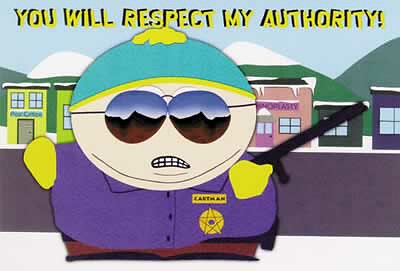
    Respect my authority!
    Better do what he says, honey. He's got a badge.

    As a writer, one of the first and most integral choices you have to make before you put one single word onto the page is disarmingly simple, and yet deceivingly complex: what authority, if any, do I have?

    The answer to this one simple question will define the tone of whatever it is you are writing. It doesn’t matter if you are delicately constructing a poem, building a larger narrative one matchstick at a time, or sitting down to crank out 250 words for a roofing company’s website as a freelancer, you have to know where you stand, especially if you are using content to build online authority.

    Own Your Online Content

    Are you the absolute authority and source of definitive knowledge on this subject? Are you satirizing something? Do you want to expose the faults in an argument? Are you lacing your content with subtle humor? Do you just have to tell the reader when this business opens and what services they provide in the most direct way possible?

    All of these questions can be answered by determining where you, as the content creator, exist in relation to what you are producing. Sound simple? Well, there are a whole bunch of ways you can screw this up.

    I’ve been writing online content for a few years now, and I can tell you one of the most fundamental ways to mess up website copy is to write it in the third person. That can confuse and otherwise turn off a potential customer pretty quickly, and it is difficult to create the kind of authoritative content you need when you don’t know where you as the author stand.

    High Quality Content

    So there’s been a big storm, and you wake up with a tree limb speared straight through the roof of your guest bedroom. You stand there, scratching your head, wondering how you are going to find a roofer that will come out and patch your roof before it starts raining again.

    Suddenly, you remember something… the internet! You reach into the pocket of your Star Wars pajamas (I can’t be the only one to still wear these to bed every night, right?) grab your cell phone, tap the app that brings you to Google, and type in “24 hour roofer.”

    The very first site on the list looks great. The name of the business is actually “24 Hour Roofer.” Perfect, right? So you click on the link, wait for it to load, because AT&T, and then when you finally get the site open, you are greeted with this:

    “24 Hour Roofer is a great place for roofing. They can come help you right away. They have been doing this for a while now, and they can replace your roof quickly. You should call them.”

    Sweet Star Wars PJs.
    Admit it. You're jealous.

    Now, it’s important to note that you aren’t looking at Yelp reviews. You are looking at the actual site. Who is telling you this? Is it someone who works there? If so, why are they not saying “we?” Is this some sort of testimonial? If so, who is testifying?

    Why are people staring at me? Are they just jealous of my sweet PJ’s? What is going on? Ahhhhh!

    See how this can quickly lead to an existential dilemma? You know what can prevent it? Good, clean copy written in an authoritative voice.

    In other words, write it like you own it, even if you’ve never even heard of the business:

    “Roof problems? Come to 24 Hour Roofing. With over 40 years of experience, we can patch, repair, or replace your roof, no matter how damaged or worn out it is. As a locally owned and operated business, you can trust us to be there when you need us. Call today!”

    Problem solved! These guys sound awesome. Whoever wrote that content knows what I am looking for, and they are clearly telling me how to get it. That’s exactly what I needed! Now back inside! Froot Loops for everyone!

    Tone Makes all the Difference

    If you are writing something for yourself, your tone and sense of authority can come naturally, but it becomes much trickier if you are creating content as a freelancer who has never actually used the business and who really didn’t know it even existed half an hour ago.

    Your job is to write like you own the place. A clear sense of ownership really comes through the writing and can create a sense of trust and reliability that may seem intangible but can really go a long way with a potential client.

    Like anything else, this is an acquired skill. The more content you create that clearly lays out the who, what, where, why, and how in a direct way, the better you will be at making your eventual reader believe you are an authority on this topic, no matter what kind of “childish” pajamas you wear.

    Have you ever had an experience with bad or poorly written content on a site that scared you away?

  • Copy This Copy – The Importance of Clean Content

    Having clean, edited online copy is vitally important. Whether we’re talking about content for a website or a blog, it can make a big impact — for better or for worse. As Mitt Romney’s campaign recently found out, even text written for mobile apps should be given a close look before going live.

    romney

    While most people assume that they have a good enough grasp on the English language to get by, the facts are simple — typos are easy to make, and a second pair of eyes can be your saving grace. As a former reporter for a daily newspaper, I know the importance of having an editor work their magic before copy is printed. But in today’s Internet-minded world, writers can be too eager to hit the publish button, sending unedited content to the masses in an instant.

    Not only can errors be embarrassing, but also they can completely change the original intention of the content.

    blog

    People could visit your website, your blog, or your mobile app for a variety of reasons. Whether they’re looking for news, general information, or something as simple as a laugh, you don’t want them to be turned off by copy that was poorly edited (or worse, entirely untouched).

    Your content can say a lot about you, your company, and your purpose. If it’s well-written, clear, and concise, it says that you took the time to get it right. It says that you are concerned about the details, and more importantly, it says that you care about your reader.

    If, on the other hand, your copy is riddled with spelling mistakes or grammatical errors, it can convey a negative view of your organization. It communicates to your reader that quality isn’t your top priority. And if you’re in the business of trying to market a service or a product, it can be a tough sell.

    Instead of just leaving the job to spell check, consider working with an editor or a proofreader before publishing your content online to ensure that your text is error-free. If time constraints or your budget won’t allow, at the very least, have a co-worker take a look at your copy before it goes live. As the adage goes, you never get a second chance to make a first impression, and having a pair of eyes to catch the occasional stray comma or poorly-placed participle can be a lifesaver.