Tag: social search

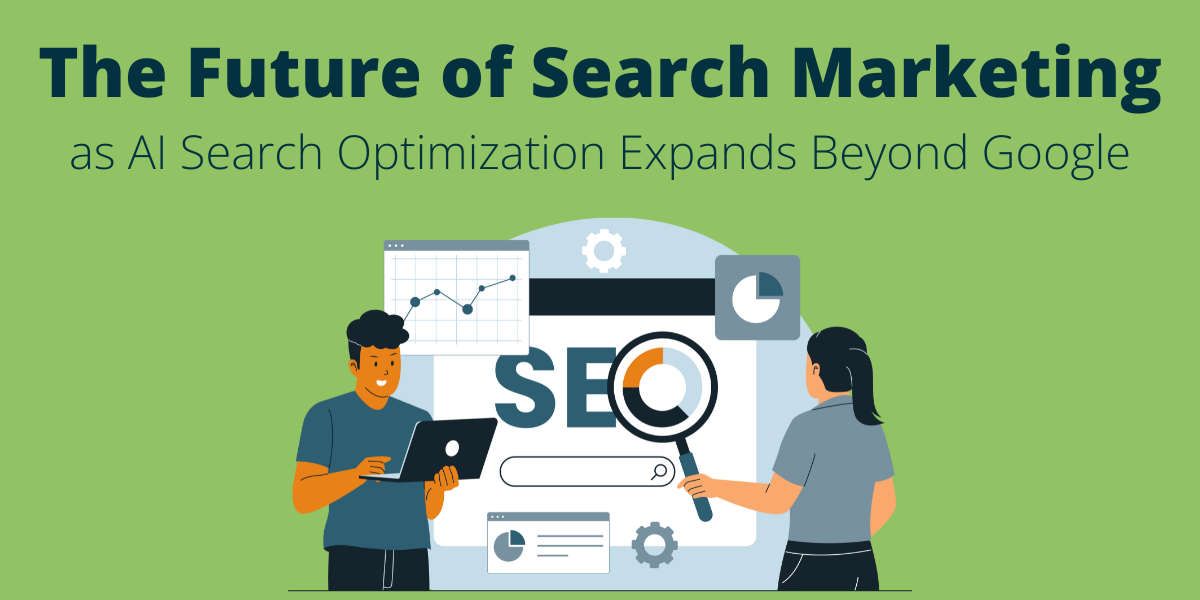
  • The Future of Search Marketing as AI Search Optimization Expands Beyond Google

    Key Insights

    • Search no longer lives in one place. Today’s search behavior spans Google, Reddit, YouTube, social platforms, and AI tools.
    • AI is now the connective tissue of search. AI systems increasingly synthesize answers from multiple platforms, meaning visibility depends on where your content exists, not just how your website ranks.
    • The user journey is shorter and less linear. Many users get the information they need directly from AI-generated answers, videos, or community discussions before ever clicking through to a website.
    • Platforms like Reddit and YouTube now influence search visibility. Community-driven content and video are being indexed, cited, and surfaced in AI Overviews and search results alongside traditional web pages.
    • Winning the future of search requires an omnichannel mindset. Brands that align content, messaging, and authority across platforms are better positioned to earn trust, citations, and long-term visibility in an AI-driven search landscape.

    The future of search marketing is being reshaped by how people discover information, and Search Influence helps brands adapt to that shift.

    People no longer rely on Google alone to find answers.

    That’s not a prediction, it’s observable user behavior.

    Search now happens across Reddit threads, YouTube videos, Instagram posts, TikTok clips, private communities, and increasingly, AI tools that generate answers directly. Traditional search engines still matter, but they’re no longer the sole gateway to information.

    According to the AI Search in Higher Education Research Study conducted by UPCEA in partnership with Search Influence, search behavior is becoming increasingly diversified. Among prospective students surveyed, 84% use search engines, 61% use YouTube, and 50% use AI tools during their research process. While this study focuses on prospective students, it illustrates a broader shift occurring across industries: users are increasingly moving between multiple search platforms before ever visiting a website.

    This creates a new tension in the search landscape. As search behavior fragments, Google Search, AI Overviews, and large language models are doing the opposite — indexing, synthesizing, and summarizing content from all of these platforms into direct answers.

    The user journey is no longer linear or heavily reliant on traditional SERPs. Many users get the rational context they need before clicking anywhere at all. In many cases, the answer replaces the click.

    That shift may feel threatening to organic search traffic, but it also creates opportunity. Brands that understand how the search engine landscape is expanding can earn visibility far beyond traditional rankings.

    Search Influence helps brands optimize their visibility across websites, platforms, and AI-driven search engines.

    This explainer breaks down how search works across platforms today, why Reddit and YouTube matter most right now, and what an omnichannel search strategy really means in an AI-driven world.

    What the Future of Search Marketing Looks Like Today

    The future of search marketing is distributed, platform-native, and behavior-led.

    Search engine optimization and search engine marketing have evolved. Where success once meant ranking webpages on search engine results pages, it now means earning visibility across an ecosystem of platforms, answer engines, and AI-generated summaries. The goal is no longer just organic links. It’s search visibility wherever users express intent.

    AI search optimization acts as the connective layer. It determines which content is surfaced, cited, and trusted across traditional search engines, AI platforms, and conversational search interfaces. This shift affects every industry, from higher education and healthcare to e-commerce and B2B services. The future of search isn’t about abandoning traditional SEO; it’s about expanding beyond it.
    How AI Search Optimization Is Expanding Search Beyond Google

    AI tools like AI Overviews, AI chatbots, and conversational search interfaces generate answers using content pulled from multiple sources. These include websites, forums, videos, social media platforms, and structured data.

    At a high level, AI search optimization works by aligning content with how AI models evaluate relevance, authority, and context. Platforms that provide clear answers, strong community signals, and high-quality content are favored. Instead of ranking ten blue links, AI systems synthesize information into direct answers that often eliminate the need to click.

    This is why search marketing beyond Google is now required to maintain search visibility. If your content only exists on your website, you’re limiting your presence in a search generative experience that increasingly pulls from everywhere else.
    Social Platforms and the Rise of Social Search

    Social search continues to reshape how users discover information. Google now includes a native “Short Videos” filter directly within search engine results pages, signaling how tightly visual search and social content are integrated into the search landscape.

    Brands can leverage short videos by addressing popular FAQs and informational queries, increasing coverage for zero-click search and query fan-out opportunities. Social discovery is driven by visual cues, community signals, and algorithmic recommendations rather than keyword matching alone.

    Instagram supports inspiration and brand validation. TikTok delivers quick demos and direct answers. These platforms are increasingly influencing where users search, rather than Google, especially for lifestyle, education, and product discovery. Social media platforms now firmly sit within the search engine landscape.

    Reddit has become a primary search engine

    Reddit’s role in search has accelerated rapidly. In early 2024, Reddit entered into a data licensing agreement with Google, underscoring its significance in the search engine landscape.

    Users have long added “reddit” to their Google queries to find unfiltered, experience-based answers. They’re seeking peer validation, nuance, and real-world context that traditional organic results often lack. Reddit threads perform well in search results because they deliver long-form, contextual answers supported by community engagement.

    Those same qualities explain why Reddit content frequently surfaces in AI Overviews. Threads frequently answer nuanced informational queries directly, using natural language and lived experience. AI systems favor this conversational format because it aligns with user intent and demonstrates deep understanding.

    From an SEO strategy standpoint, Reddit influences both traditional SERPs and AI-generated summaries. It deserves outsized attention in modern search marketing strategy. Not as a replacement for traditional SEO, but as a powerful signal within the broader search ecosystem.

    YouTube is a search engine, not just a video platform

    YouTube has always been a search platform, but its role in AI-driven search visibility is growing. Videos are increasingly featured, embedded, and cited within Google AI Overviews and other AI summaries.

    Users search YouTube for how-tos, walkthroughs, comparisons, and explanations. Unlike Google search, where users expect links, YouTube search is visual and instructional. The expectation is an answer, not a destination.

    Video search optimization supports AI search because transcripts, titles, descriptions, and engagement signals provide machine-readable context. AI tools can parse video content at scale, reference it as a citation, and surface it alongside traditional organic results. In the new era of search, YouTube SEO is no longer optional; it’s foundational.

    What the AI Search in Higher Education Research Reveals

    The AI Search in Higher Education Research Study, conducted by UPCEA in partnership with Search Influence, surveyed 760 adult learners ages 18–60 interested in professional and continuing education. While the focus is on higher education, the findings reflect broader user behavior across digital marketing.

    The research shows that prospects use multiple platforms to research programs. AI tools and social platforms are increasingly influencing decision-making, and community-driven content plays a significant role in shaping trust.

    Key findings illustrate how search is expanding beyond traditional search engines:

    • 68% of respondents said they are more likely to consider a product or service mentioned or recommended on social media
    • Respondents’ top platforms for program search were: YouTube 57%, LinkedIn 49%, Facebook 43%
    • 1 in 3 prospects trust AI tools for program research

    Higher education often acts as a leading indicator. The developments here reflect broader shifts in search behavior across industries, from healthcare to B2B marketing strategies.

    Omnichannel Search Strategy in an AI-Driven World

    An omnichannel search strategy focuses on visibility across websites, platforms, and AI-generated answers. Optimization can no longer be siloed into traditional SEO, paid search, or social media alone.

    AI systems ingest information from multiple platforms, publications, and outlets. When a brand is consistently present in places where AI is crawling and learning, it sends corroborating signals about topical authority and relevance. This co-occurrence of brand and topic/entity strengthens AI visibility and citation potential.

    AI search optimization rewards brands that appear consistently across aligned signals, including high-quality content, structured data, schema markup, and consistent messaging, throughout their digital footprint.

    What This Shift Means for Marketers

    Rankings alone are no longer enough.

    Visibility is now earned through presence, trust, and relevance across the entire search landscape. Early adoption of AI optimization creates long-term advantage, helping brands stay ahead as user behavior and AI platforms evolve.

    Search Influence helps brands navigate this new era, blending traditional SEO, AI search optimization, and digital marketing strategy to future-proof search visibility before competitors catch up.

    FAQs About the Expanding World of Search

    What is the future of search marketing?

    The future of search marketing is defined by visibility across platforms, communities, and AI-generated answers.

    Search marketing no longer focuses only on ranking webpages in Google. Discovery now happens on Reddit, YouTube, social platforms, and AI tools. AI systems synthesize information from multiple sources instead of directing users to a single link. Effective strategies prioritize presence, authority, and clarity across the full digital ecosystem.

    How is AI changing search marketing?

    AI is changing search marketing by determining how results are selected, summarized, and delivered to users.

    AI-powered search emphasizes answers over lists of links. Content is evaluated based on relevance, context, and trustworthiness. Users receive information without always clicking through to websites. Search marketing now requires content that works for both humans and machines.

    Why does Reddit appear so often in Google and AI results?

    Reddit appears frequently in Google and AI results because it offers experience-based, community-validated answers.

    Reddit threads often address highly specific, real-world questions. Strong engagement signals indicate authenticity and usefulness. Google indexes Reddit prominently for informational and long-tail queries. AI systems reference Reddit due to its conversational language and lived experience.

    How does YouTube function as a search engine?

    YouTube functions as a search engine by matching video content to user intent through metadata and engagement signals.

    Users search YouTube for tutorials, explanations, and demonstrations. Search intent on YouTube is visual and instructional. Video transcripts and descriptions make content discoverable to AI systems. YouTube results frequently influence Google search and AI-generated summaries.

    Where are people searching instead of Google?

    People are searching instead of Google on platforms like Reddit, YouTube, social networks, and AI tools.

    Reddit supports peer-to-peer research and detailed explanations. YouTube enables visual learning and step-by-step guidance. Social platforms like Instagram and TikTok support discovery-driven search. AI tools provide synthesized answers without requiring multiple searches.

    How does AI search optimization work across platforms?

    AI search optimization works by increasing content visibility across websites, platforms, and AI-generated answers.

    AI evaluates content from multiple sources, not just traditional webpages. Clear structure and consistent messaging improve retrievability. Platforms such as Reddit and YouTube influence AI responses alongside websites. Optimization focuses on being referenced, trusted, and cited across the digital footprint.

    Turn Search Behavior Shifts Into Strategic Advantage

    Search has expanded, and AI connects it all.

    The future of search marketing requires optimizing for where people actually search, not just where marketers are comfortable. Brands that adapt now will earn visibility across platforms, AI summaries, and evolving search experiences.

    To explore the full data and strategic recommendations behind this shift, download the AI Search in Higher Education Research Study.

    Search Influence serves as a guide for brands navigating the future of search marketing, helping them stay visible, credible, and ahead in an increasingly AI-driven search landscape. Contact us to future-proof your search engine marketing strategy.
    Images:
    Unsplash
    Unsplash

  • Instagram SEO Playbook: How to Win Over Google and AI Search

    Instagram SEO Playbook How to Win Over Google and AI Search

    This post was updated by Rebecca Michelet on 12/15/25 to reflect current best practices. It was originally published on 11/13/25.

    Key Insights

    • Instagram is now part of the search landscape. Google’s indexing update means public Instagram content can appear alongside websites, articles, and videos, expanding what visibility means for every brand.
    • Discovery depends on relevance, not reach. Algorithms now reward clear, consistent context that helps users find relevant content faster on both Instagram’s Explore page and in Google search.
    • Social and search now shape each other. The lines between platforms are disappearing, and visibility depends on how well your strategy connects storytelling with search intent.
    • Authority is earned through clarity and consistency. Profiles, captions, and visuals that reinforce who you are (and what you’re known for) help algorithms and audiences recognize your expertise.
    • AI is redefining what it means to be found. As generative tools reference social content in answers, brands that post with intention will lead the next wave of discoverability across search and AI.

    Search engines are getting extra social lately.

    Google’s been busy expanding its reach, and it’s now pulling public Instagram posts and profiles directly into search results.

    Your feed just became part of the search universe. For brands and creators, that means every post has the potential to rank, not just resonate. The problem? Most treat Instagram strategy like an art project, not a search tactic.

    That gap decides who shows up first and who never shows up at all.

    It’s time to post with purpose. This playbook teaches you how to treat your Instagram like SEO, built to rank, not just scroll.

    What Is Instagram SEO?

    Instagram SEO is the strategy behind making your content findable, both inside the app and beyond it. It’s how you craft profiles, captions, hashtags, and visuals so that they not only attract followers but also earn visibility in search results.

    The goal is simple: help people (and algorithms) understand what your content is about and why it matters.

    Instagram SEO has entered a new era

    Traditionally, Instagram SEO focused on the platform’s own search function, optimizing for in-app discovery through relevant keywords, hashtags, and engagement. But that world just got much, much bigger.

    In July 2025, Google began indexing public profiles, posts, and Reels, giving your content a direct line to the world’s largest search engine.

    And it doesn’t stop there. AI tools like ChatGPT, Gemini, and Google’s AI Overviews are beginning to pull Instagram content into their own generated answers, referencing social posts alongside articles and web pages.

    That means your captions, keywords, and hashtags now have a dual job:

    • Engage your audience (the scroll-worthy part)
    • Signal context to search and AI systems that decide what to surface (the rank-worthy part)

    Why Search and Social Can’t Be Separate Anymore

    Every post now speaks two languages: one for people and one for algorithms. The more those messages align, the easier it is for both to recognize your brand as relevant and trustworthy.

    Search and social are no longer parallel strategies. They’re parts of the same visibility engine. What earns engagement on Instagram can reinforce authority in search, and the clarity of your SEO can help social content reach new audiences.

    Together, they create a loop of discoverability that rewards consistency, clarity, and intent.

    image of an instagram logo

    How to Optimize Instagram for Search and AI Visibility

    Now that Instagram feeds into Google and AI results, optimization isn’t optional. Every detail on your profile and in your posts shapes how algorithms understand your brand and where you show up.

    Here’s how to make your Instagram work smarter for search.

    Optimize your profile for search context

    Your profile is where discoverability starts. It’s both a visual first impression and a key data point that search engines and AI tools use to understand your brand’s relevance and authority. A strong profile bridges your social identity with your search presence, giving users and algorithms the context they need to trust what they’re seeing.

    What to do:

    • Use a keyword-rich bio that includes your brand, industry, and (if relevant) your location. Write naturally, but make sure the words you’d want to rank for appear early.
    • Keep your name, handle, and profile image consistent across Meta platforms (and anywhere else your brand appears). Consistency builds recognition and reinforces entity alignment.
    • Add a link in bio that leads to a meaningful destination. Link to key internal pages such as services, program listings, or resource hubs that reinforce what you want to be known for.
    • Complete every profile field, including your category, contact details, and business information. These small details help confirm legitimacy and topical authority for both users and search crawlers.
    • Treat your highlights and pinned posts as secondary signals. Label them clearly with relevant keywords or phrases that reflect your expertise.

    An optimized profile becomes the anchor of your Instagram SEO strategy and the foundation for everything else to build upon.

    Write captions that reflect search and AI language

    Instagram captions carry their weight and more. They tell both your audience and search engines what your content means and why it matters. The right phrasing can help your post resonate with people while signaling relevance to AI tools that decide what to surface.

    What to do:

    • Speak like your audience. Use plain, direct phrasing that mirrors how people search. A caption like “what to do during a weekend in New Orleans” performs better than one filled with stiff, bleak terminology.
    • Use long-tail keywords with intent. People search in phrases, not single words. Using specific, natural keywords helps your posts surface in both Google and AI-driven results.
    • Add clarity through structure. Algorithms read relationships the way people do (who’s doing what, and for whom). Think in patterns like subject, action, object: “Search Influence helps universities improve SEO visibility.”
    • Answer real questions. Captions that solve problems or explain value are easier for both users and algorithms to understand: (ex, “what to do after a car accident”)
    • Match your on-screen text. Keep phrasing consistent across Reels, carousels, and captions so both people and machines connect the dots.
    • Lean on proven formats that teach or explain. AI tools favor content that answers questions directly, and people tend to share it more, too. Think FAQ or Q&A Reels, “how-to” carousels, and tip-based lists.

    Captions written with intention earn visibility in both the feed and search results, helping your audience find you faster and engage for longer.

    Use hashtags, alt text, and structure to reinforce meaning

    Relevant hashtags and alt text help algorithms understand the context behind your visuals. They give search engines, AI tools, and even screen readers clearer cues about what your content represents, which improves both accessibility and visibility.

    What to do:

    • Focus on relevance. Use up to three highly relevant hashtags that accurately describe your content and the community you want to reach.
    • Avoid hashtag stuffing. The practice of adding long lists of tags for reach is no longer effective. Instagram’s new hashtag limit signals the end of that trend. Hashtags will still help categorize content, but they won’t meaningfully drive reach. Precision and clarity now matter more than volume.
    • Prioritize a solid keyword strategy. Strengthen discovery by using clear, descriptive keywords in your captions, on-screen text, audio, and bio.
    • Write natural alt text that describes what’s on screen while subtly reinforcing your topic or entities. Think of it as another way to teach search engines what your post is about.
    • Keep a logical post structure. Use line breaks, spacing, and clear formatting so both users and algorithms can quickly identify key ideas. Clean captions signal clarity, which AI-powered search engines reward.

    Each of these small details adds up to stronger discoverability. When your visual, written, and structural cues all point in the same direction, search engines and AI tools know exactly how to classify your content and who should see it.

    Strengthen interlinking between platforms

    Search engines and AI tools use connections between your website and social profiles to verify identity and relevance. When your Instagram activity points back to your site (and your site points back to Instagram), it helps algorithms confirm that both belong to the same trusted entity. Those links also give users clear paths to learn, engage, and convert.

    What to do:

    • Link with purpose. Use bio links, Stories, and post CTAs to direct users to pages that expand on your content, such as articles, services, or case studies.
    • Embed with intent. Add Reels or posts to your website where they strengthen context, such as testimonials or event highlights.
    • Stay consistent. Keep the same handle, URLs, and naming conventions across platforms to help algorithms and users connect the dots.
    • Reference across channels. Mention your website in captions or Stories when relevant, and link to Instagram posts from your site when they add visual context.

    When those signals align, both users and search engines can follow a clear trail of relevance, one that reinforces authority across every platform.

    Monitor and test your visibility across search and AI tools

    Visibility is always shifting. Regular testing helps you see where your Instagram content appears across Explore pages, Google search results, and AI tools — plus, how those systems interpret it.

    What to do:

    • Search for yourself. Each month, test branded and topic-based prompts in Google. Note when your posts or profile appear.
    • Watch for mentions and citations. Check if AI summaries reference your brand, posts, or captions. These signals show your content is being recognized as a trusted source.
    • Identify what works. Look for patterns in visibility to see which formats, keywords, or topics consistently surface.
    • Refine and repeat. Use your findings to adjust your captions and hashtags.

    Treat this step as ongoing maintenance. The more you measure, the faster you can fine-tune what helps your content rank and resonate.

    Advanced Instagram SEO Strategies

    Once your Instagram profile and posts are optimized, the next phase is strengthening how your brand connects across the web. These advanced Instagram SEO tips focus on off-page and contextual signals, which act as the cues that help Google and AI systems verify your identity, recognize your authority, and include your content in richer search experiences.

    Use schema and structured data to strengthen Instagram visibility

    Schema markup doesn’t live inside Instagram, but it works behind the scenes to connect your social presence to your website’s authority. By adding structured data to your site, you’re giving Google and AI platforms the proof they need to confirm your Instagram account belongs to the same verified brand.

    What to do:

    Start with foundational schema types like Organization, Person, and Event to define who you are and what you do. Within that markup, use the sameAs property to list your verified social URLs, like Instagram, Facebook, LinkedIn, and others.

    Example:

    "sameAs": [
    
      "https://www.instagram.com/searchinfluence",
    
      "https://www.facebook.com/searchinfluence",
    
      "https://www.linkedin.com/company/search-influence/"
    
    ]
    

    This creates a direct line between your website and your social profiles, reinforcing brand trust and helping algorithms understand how your content fits into larger entity networks. It also supports accurate attribution in AI-generated search results, where structured data helps your content surface and be cited correctly.

    Build authority through mentions and tagging

    Mentions and tags strengthen your network of credibility. Every time you connect with another verified account, you’re giving algorithms extra context about your brand’s relevance and relationships.

    What to do:

    • Tag collaborators, partners, and organizations in posts, Reels, and Stories to build visible connections that reinforce trust and expertise.
    • Encourage reciprocal mentions through joint campaigns, shared content, or reposts to show consistent engagement between verified entities.
    • Focus on relevant tagging. Partner with accounts that reflect your niche, values, or audience to expand visibility in meaningful ways.

    These authentic connections give search engines and AI tools clearer signals of authority, helping your brand appear alongside other trusted names in search.

    Align content calendars with search trends

    Search and social trends shift fast. Aligning your Instagram schedule with real-time search demand helps your content stay visible when audiences are actively exploring related topics.

    What to do:

    • Study what’s trending. Use tools like Google Trends and TikTok Creative Center (TikTok and Instagram trends often go hand-in-hand) to identify keywords, questions, and topics gaining traction in your space.
    • Spot crossover moments. When a topic starts spiking in Google or TikTok, create a Reel or carousel that adds your brand’s take. This timing boosts your chance of appearing in both social feeds and search results.
    • Plan for peaks. Build posts around predictable cycles (seasonal interest, product launches, or industry events) to meet audience curiosity right as it grows.
    • Revisit quarterly. Review analytics and search trends every few months to refine your calendar and ensure content reflects current interest signals.

    By syncing your posts with how people search and engage, your Instagram feed becomes part of the larger discovery landscape, showing up where curiosity, relevance, and visibility meet.

    Applying Instagram SEO in Higher Education

    The same strategies that help brands stand out now shape how universities are discovered online. As Google and AI tools begin indexing Instagram content, higher education marketers have a new opportunity to influence visibility across both search and social.

    Findings from AI Search in Higher Education: How Prospects Search in 2025 by UPCEA and Search Influence show how search behavior is evolving:

    • Social media plays an expanding role in program discovery.
    • Nearly 7 in 10 respondents said regular social recommendations influence what they explore/purchase.
    • Among learners using social media to research continuing education, 35% said they would use Instagram.

    For colleges and universities, that means Instagram content now supports both storytelling and search visibility. Optimized posts can appear in Google results and AI-generated summaries, helping prospective students encounter your institution at the moment curiosity begins.

    Higher education applications

    To turn visibility into value, higher education marketers need to bring SEO precision to Instagram strategy. Applying search principles to social content helps universities connect what they share to how prospects search.

    Here’s how to put that strategy into action:

    • Showcase programs through Reels. Use short-form video to highlight classroom experiences, alumni achievements, and student life moments that illustrate your institution’s impact.
    • Tag with purpose. Include degree names, job titles, and institutional accounts to help search engines and AI tools recognize relationships between people, programs, and career paths.
    • Share faculty insights. Turn research, thought leadership, or current-event commentary into accessible posts written with context that supports search visibility.
    • Guide discovery with links. Direct users to program details, faculty bios, or admissions pages to capture intent and move prospective students toward the next step.

    Institutional benefits

    When used strategically, Instagram becomes part of the enrollment pipeline. Optimized content strengthens visibility at the awareness stage and builds the kind of credibility that influences applications and conversions.

    The impact shows up in three key ways:

    • Wider reach. Optimized Instagram content can surface in Google results and AI-generated summaries, expanding where prospective students encounter your institution.
    • Greater credibility. Consistent tagging, structured profiles, and cross-platform links help search engines recognize your university as a trusted source.
    • Quality engagement. Posts written with SEO awareness attract prospects already interested in your programs and lead them toward inquiry and enrollment.

    Common Mistakes to Avoid

    You’ve mastered the do’s. Time for the don’ts.

    Even small missteps can make your Instagram content harder to find. These are the habits that quietly weaken your visibility on and off the platform:

    • Keyword and hashtag overload. Overstuffing captions signals spam and makes it harder for algorithms to identify what matters. Keep hashtags intentional and tied to context.
    • Unclear or incomplete bios. Leaving out details like your industry, location (if relevant), or brand focus prevents search engines from understanding who you are.
    • Vague or missing alt text. Alt text helps algorithms interpret your visuals. Use it to describe what’s on screen in clear, specific language.
    • Trend chasing without strategy. Jumping on every viral sound or topic dilutes your relevance and confuses your audience.
    • No visibility tracking. Skipping regular tests in Instagram search bars, Google, and AI tools means missing out on what’s actually helping you rank.

    Attention to detail beats post volume every time. Keep your structure clean, your context strong, and your brand voice consistent across every update.

    someone using the instagram app on their phone

    FAQs About Instagram SEO

    Does Google index all Instagram posts?

    No, Google only indexes public Instagram profiles, posts, and Reels. Private accounts and Stories remain inaccessible to search engines. Indexing is determined by visibility settings and engagement signals, so consistent public activity increases your chances of appearing in search results.

    How long does it take for Instagram content to appear in Google results?

    Indexing can take anywhere from a few days to several weeks. Timing depends on how often Google crawls your account and the authority of your connected website or entity. Keeping your profile active, public, and properly linked through structured data can speed up discovery.

    What’s the difference between Instagram SEO and social media marketing?

    Instagram SEO sits at the intersection of social media marketing and search engine optimization. It focuses on improving visibility and discoverability within both the Instagram app and external search engines. In contrast, social media marketing encompasses broader goals like engagement, audience growth, and storytelling across social channels.

    How can I tell if my Instagram content appears in AI Overviews or ChatGPT responses?

    Search your brand or topic-related prompts directly in Google, ChatGPT, and Gemini. If your Instagram content or handle appears in summaries, citations, or linked examples, it’s being referenced. Regularly track visibility to identify which posts or keywords are driving the most inclusion.

    Can Search Influence assist with social media marketing?

    Yes. Search Influence advises on strategies to help you apply SEO principles to your social media presence. Our team provides recommendations that enhance visibility and connect what you post to how your target audience searches.

    Let’s Talk Your Instagram SEO Strategy

    Visibility is shifting fast. As Google indexes Instagram content, every post influences what people see, when, and where.

    Search Influence helps you stay ahead of the social search shift. Our experienced team advises on strategies that position your brand to capitalize on trends and lead in search, not lag behind it.

    Now’s the time to align your social strategy with search. Let’s chat about what proper Instagram SEO can do for you.

    Images:
    Unsplash
    Unsplash

  • The Kids Are All Doing It: Your Guide to Social Search [The Influencer – Oct 2024]

    Social Search: How Gen Z & Millennial Search Habits Are Changing

    Insights from Co-Founder and CEO Will Scott

    Social Search: How Gen Z & Millennial Search Habits Are Changing

    WILL SCOTT | 10-MINUTE READ

    Discover why Gen Z and Millennials are choosing social search over search engines. Learn how you can still use SEO strategies to capture their attention!

    Read More


    Track and Report the Right Higher Ed Marketing Analytics to Improve Your Strategy

    Track and Report the Right Higher Ed Marketing Analytics to Improve Your Strategy

    ALISON ZERINGUE | 8-MINUTE READ

    Discover how to leverage higher education marketing analytics to optimize strategies, boost enrollment, and track key metrics effectively.

    Read More


    What’s Included in Higher Education Cost Per Inquiry (CPI) for Marketing?

    What’s Included in Higher Education Cost Per Inquiry (CPI) for Marketing?

    FALLON MYERS | 6-MINUTE READ

    Tracking your school’s cost per inquiry leads to efficient budget spend and better marketing decisions. Learn how to track higher ed CPI costs with Search Influence.

    Read More


    Will Scott to Present on AI for Content Marketing at Pubcon 2024 in Las Vegas

    Will Scott to Present on AI for Content Marketing at Pubcon 2024 in Las Vegas

    COLLIN GUEDON | 3-MINUTE READ

    Search Influence CEO Will Scott presented on AI for content marketing at Pubcon 2024. Read the blog to learn how to use AI for content marketing to boost SEO, repurpose content, and drive traffic.

    Read More


    Search Influence Launches Higher Education Marketing Resources & Guides Page

    New Marketing Resources

    Search Influence Launches Higher Education Marketing Resources & Guides Page

    Our rich collection of resources serves new marketing professionals seeking foundational knowledge, seasoned marketers searching for innovative tactics, and higher ed leaders looking to support institutional goals.

    Read More