Tag: social media strategy

  • Instagram SEO Playbook: How to Win Over Google and AI Search

    Instagram SEO Playbook How to Win Over Google and AI Search

    This post was updated by Rebecca Michelet on 12/15/25 to reflect current best practices. It was originally published on 11/13/25.

    Key Insights

    • Instagram is now part of the search landscape. Google’s indexing update means public Instagram content can appear alongside websites, articles, and videos, expanding what visibility means for every brand.
    • Discovery depends on relevance, not reach. Algorithms now reward clear, consistent context that helps users find relevant content faster on both Instagram’s Explore page and in Google search.
    • Social and search now shape each other. The lines between platforms are disappearing, and visibility depends on how well your strategy connects storytelling with search intent.
    • Authority is earned through clarity and consistency. Profiles, captions, and visuals that reinforce who you are (and what you’re known for) help algorithms and audiences recognize your expertise.
    • AI is redefining what it means to be found. As generative tools reference social content in answers, brands that post with intention will lead the next wave of discoverability across search and AI.

    Search engines are getting extra social lately.

    Google’s been busy expanding its reach, and it’s now pulling public Instagram posts and profiles directly into search results.

    Your feed just became part of the search universe. For brands and creators, that means every post has the potential to rank, not just resonate. The problem? Most treat Instagram strategy like an art project, not a search tactic.

    That gap decides who shows up first and who never shows up at all.

    It’s time to post with purpose. This playbook teaches you how to treat your Instagram like SEO, built to rank, not just scroll.

    What Is Instagram SEO?

    Instagram SEO is the strategy behind making your content findable, both inside the app and beyond it. It’s how you craft profiles, captions, hashtags, and visuals so that they not only attract followers but also earn visibility in search results.

    The goal is simple: help people (and algorithms) understand what your content is about and why it matters.

    Instagram SEO has entered a new era

    Traditionally, Instagram SEO focused on the platform’s own search function, optimizing for in-app discovery through relevant keywords, hashtags, and engagement. But that world just got much, much bigger.

    In July 2025, Google began indexing public profiles, posts, and Reels, giving your content a direct line to the world’s largest search engine.

    And it doesn’t stop there. AI tools like ChatGPT, Gemini, and Google’s AI Overviews are beginning to pull Instagram content into their own generated answers, referencing social posts alongside articles and web pages.

    That means your captions, keywords, and hashtags now have a dual job:

    • Engage your audience (the scroll-worthy part)
    • Signal context to search and AI systems that decide what to surface (the rank-worthy part)

    Why Search and Social Can’t Be Separate Anymore

    Every post now speaks two languages: one for people and one for algorithms. The more those messages align, the easier it is for both to recognize your brand as relevant and trustworthy.

    Search and social are no longer parallel strategies. They’re parts of the same visibility engine. What earns engagement on Instagram can reinforce authority in search, and the clarity of your SEO can help social content reach new audiences.

    Together, they create a loop of discoverability that rewards consistency, clarity, and intent.
    image of an instagram logo

    How to Optimize Instagram for Search and AI Visibility

    Now that Instagram feeds into Google and AI results, optimization isn’t optional. Every detail on your profile and in your posts shapes how algorithms understand your brand and where you show up.

    Here’s how to make your Instagram work smarter for search.

    Optimize your profile for search context

    Your profile is where discoverability starts. It’s both a visual first impression and a key data point that search engines and AI tools use to understand your brand’s relevance and authority. A strong profile bridges your social identity with your search presence, giving users and algorithms the context they need to trust what they’re seeing.

    What to do:

    • Use a keyword-rich bio that includes your brand, industry, and (if relevant) your location. Write naturally, but make sure the words you’d want to rank for appear early.
    • Keep your name, handle, and profile image consistent across Meta platforms (and anywhere else your brand appears). Consistency builds recognition and reinforces entity alignment.
    • Add a link in bio that leads to a meaningful destination. Link to key internal pages such as services, program listings, or resource hubs that reinforce what you want to be known for.
    • Complete every profile field, including your category, contact details, and business information. These small details help confirm legitimacy and topical authority for both users and search crawlers.
    • Treat your highlights and pinned posts as secondary signals. Label them clearly with relevant keywords or phrases that reflect your expertise.

    An optimized profile becomes the anchor of your Instagram SEO strategy and the foundation for everything else to build upon.

    Write captions that reflect search and AI language

    Instagram captions carry their weight and more. They tell both your audience and search engines what your content means and why it matters. The right phrasing can help your post resonate with people while signaling relevance to AI tools that decide what to surface.

    What to do:

    • Speak like your audience. Use plain, direct phrasing that mirrors how people search. A caption like “what to do during a weekend in New Orleans” performs better than one filled with stiff, bleak terminology.
    • Use long-tail keywords with intent. People search in phrases, not single words. Using specific, natural keywords helps your posts surface in both Google and AI-driven results.
    • Add clarity through structure. Algorithms read relationships the way people do (who’s doing what, and for whom). Think in patterns like subject, action, object: “Search Influence helps universities improve SEO visibility.”
    • Answer real questions. Captions that solve problems or explain value are easier for both users and algorithms to understand: (ex, “what to do after a car accident”)
    • Match your on-screen text. Keep phrasing consistent across Reels, carousels, and captions so both people and machines connect the dots.
    • Lean on proven formats that teach or explain. AI tools favor content that answers questions directly, and people tend to share it more, too. Think FAQ or Q&A Reels, “how-to” carousels, and tip-based lists.

    Captions written with intention earn visibility in both the feed and search results, helping your audience find you faster and engage for longer.

    Use hashtags, alt text, and structure to reinforce meaning

    Relevant hashtags and alt text help algorithms understand the context behind your visuals. They give search engines, AI tools, and even screen readers clearer cues about what your content represents, which improves both accessibility and visibility.

    What to do:

    • Focus on relevance. Use up to three highly relevant hashtags that accurately describe your content and the community you want to reach.
    • Avoid hashtag stuffing. The practice of adding long lists of tags for reach is no longer effective. Instagram’s new hashtag limit signals the end of that trend. Hashtags will still help categorize content, but they won’t meaningfully drive reach. Precision and clarity now matter more than volume.
    • Prioritize a solid keyword strategy. Strengthen discovery by using clear, descriptive keywords in your captions, on-screen text, audio, and bio.
    • Write natural alt text that describes what’s on screen while subtly reinforcing your topic or entities. Think of it as another way to teach search engines what your post is about.
    • Keep a logical post structure. Use line breaks, spacing, and clear formatting so both users and algorithms can quickly identify key ideas. Clean captions signal clarity, which AI-powered search engines reward.

    Each of these small details adds up to stronger discoverability. When your visual, written, and structural cues all point in the same direction, search engines and AI tools know exactly how to classify your content and who should see it.

    Strengthen interlinking between platforms

    Search engines and AI tools use connections between your website and social profiles to verify identity and relevance. When your Instagram activity points back to your site (and your site points back to Instagram), it helps algorithms confirm that both belong to the same trusted entity. Those links also give users clear paths to learn, engage, and convert.

    What to do:

    • Link with purpose. Use bio links, Stories, and post CTAs to direct users to pages that expand on your content, such as articles, services, or case studies.
    • Embed with intent. Add Reels or posts to your website where they strengthen context, such as testimonials or event highlights.
    • Stay consistent. Keep the same handle, URLs, and naming conventions across platforms to help algorithms and users connect the dots.
    • Reference across channels. Mention your website in captions or Stories when relevant, and link to Instagram posts from your site when they add visual context.

    When those signals align, both users and search engines can follow a clear trail of relevance, one that reinforces authority across every platform.

    Monitor and test your visibility across search and AI tools

    Visibility is always shifting. Regular testing helps you see where your Instagram content appears across Explore pages, Google search results, and AI tools — plus, how those systems interpret it.

    What to do:

    • Search for yourself. Each month, test branded and topic-based prompts in Google. Note when your posts or profile appear.
    • Watch for mentions and citations. Check if AI summaries reference your brand, posts, or captions. These signals show your content is being recognized as a trusted source.
    • Identify what works. Look for patterns in visibility to see which formats, keywords, or topics consistently surface.
    • Refine and repeat. Use your findings to adjust your captions and hashtags.

    Treat this step as ongoing maintenance. The more you measure, the faster you can fine-tune what helps your content rank and resonate.

    Advanced Instagram SEO Strategies

    Once your Instagram profile and posts are optimized, the next phase is strengthening how your brand connects across the web. These advanced Instagram SEO tips focus on off-page and contextual signals, which act as the cues that help Google and AI systems verify your identity, recognize your authority, and include your content in richer search experiences.

    Use schema and structured data to strengthen Instagram visibility

    Schema markup doesn’t live inside Instagram, but it works behind the scenes to connect your social presence to your website’s authority. By adding structured data to your site, you’re giving Google and AI platforms the proof they need to confirm your Instagram account belongs to the same verified brand.

    What to do:

    Start with foundational schema types like Organization, Person, and Event to define who you are and what you do. Within that markup, use the sameAs property to list your verified social URLs, like Instagram, Facebook, LinkedIn, and others.

    Example:

    "sameAs": [
    
      "https://www.instagram.com/searchinfluence",
    
      "https://www.facebook.com/searchinfluence",
    
      "https://www.linkedin.com/company/search-influence/"
    
    ]
    

    This creates a direct line between your website and your social profiles, reinforcing brand trust and helping algorithms understand how your content fits into larger entity networks. It also supports accurate attribution in AI-generated search results, where structured data helps your content surface and be cited correctly.

    Build authority through mentions and tagging

    Mentions and tags strengthen your network of credibility. Every time you connect with another verified account, you’re giving algorithms extra context about your brand’s relevance and relationships.

    What to do:

    • Tag collaborators, partners, and organizations in posts, Reels, and Stories to build visible connections that reinforce trust and expertise.
    • Encourage reciprocal mentions through joint campaigns, shared content, or reposts to show consistent engagement between verified entities.
    • Focus on relevant tagging. Partner with accounts that reflect your niche, values, or audience to expand visibility in meaningful ways.

    These authentic connections give search engines and AI tools clearer signals of authority, helping your brand appear alongside other trusted names in search.

    Align content calendars with search trends

    Search and social trends shift fast. Aligning your Instagram schedule with real-time search demand helps your content stay visible when audiences are actively exploring related topics.

    What to do:

    • Study what’s trending. Use tools like Google Trends and TikTok Creative Center (TikTok and Instagram trends often go hand-in-hand) to identify keywords, questions, and topics gaining traction in your space.
    • Spot crossover moments. When a topic starts spiking in Google or TikTok, create a Reel or carousel that adds your brand’s take. This timing boosts your chance of appearing in both social feeds and search results.
    • Plan for peaks. Build posts around predictable cycles (seasonal interest, product launches, or industry events) to meet audience curiosity right as it grows.
    • Revisit quarterly. Review analytics and search trends every few months to refine your calendar and ensure content reflects current interest signals.

    By syncing your posts with how people search and engage, your Instagram feed becomes part of the larger discovery landscape, showing up where curiosity, relevance, and visibility meet.

    Applying Instagram SEO in Higher Education

    The same strategies that help brands stand out now shape how universities are discovered online. As Google and AI tools begin indexing Instagram content, higher education marketers have a new opportunity to influence visibility across both search and social.

    Findings from AI Search in Higher Education: How Prospects Search in 2025 by UPCEA and Search Influence show how search behavior is evolving:

    • Social media plays an expanding role in program discovery.
    • Nearly 7 in 10 respondents said regular social recommendations influence what they explore/purchase.
    • Among learners using social media to research continuing education, 35% said they would use Instagram.

    For colleges and universities, that means Instagram content now supports both storytelling and search visibility. Optimized posts can appear in Google results and AI-generated summaries, helping prospective students encounter your institution at the moment curiosity begins.

    Higher education applications

    To turn visibility into value, higher education marketers need to bring SEO precision to Instagram strategy. Applying search principles to social content helps universities connect what they share to how prospects search.

    Here’s how to put that strategy into action:

    • Showcase programs through Reels. Use short-form video to highlight classroom experiences, alumni achievements, and student life moments that illustrate your institution’s impact.
    • Tag with purpose. Include degree names, job titles, and institutional accounts to help search engines and AI tools recognize relationships between people, programs, and career paths.
    • Share faculty insights. Turn research, thought leadership, or current-event commentary into accessible posts written with context that supports search visibility.
    • Guide discovery with links. Direct users to program details, faculty bios, or admissions pages to capture intent and move prospective students toward the next step.

    Institutional benefits

    When used strategically, Instagram becomes part of the enrollment pipeline. Optimized content strengthens visibility at the awareness stage and builds the kind of credibility that influences applications and conversions.

    The impact shows up in three key ways:

    • Wider reach. Optimized Instagram content can surface in Google results and AI-generated summaries, expanding where prospective students encounter your institution.
    • Greater credibility. Consistent tagging, structured profiles, and cross-platform links help search engines recognize your university as a trusted source.
    • Quality engagement. Posts written with SEO awareness attract prospects already interested in your programs and lead them toward inquiry and enrollment.

    Common Mistakes to Avoid

    You’ve mastered the do’s. Time for the don’ts.

    Even small missteps can make your Instagram content harder to find. These are the habits that quietly weaken your visibility on and off the platform:

    • Keyword and hashtag overload. Overstuffing captions signals spam and makes it harder for algorithms to identify what matters. Keep hashtags intentional and tied to context.
    • Unclear or incomplete bios. Leaving out details like your industry, location (if relevant), or brand focus prevents search engines from understanding who you are.
    • Vague or missing alt text. Alt text helps algorithms interpret your visuals. Use it to describe what’s on screen in clear, specific language.
    • Trend chasing without strategy. Jumping on every viral sound or topic dilutes your relevance and confuses your audience.
    • No visibility tracking. Skipping regular tests in Instagram search bars, Google, and AI tools means missing out on what’s actually helping you rank.

    Attention to detail beats post volume every time. Keep your structure clean, your context strong, and your brand voice consistent across every update.

    someone using the instagram app on their phone

    FAQs About Instagram SEO

    Does Google index all Instagram posts?

    No, Google only indexes public Instagram profiles, posts, and Reels. Private accounts and Stories remain inaccessible to search engines. Indexing is determined by visibility settings and engagement signals, so consistent public activity increases your chances of appearing in search results.

    How long does it take for Instagram content to appear in Google results?

    Indexing can take anywhere from a few days to several weeks. Timing depends on how often Google crawls your account and the authority of your connected website or entity. Keeping your profile active, public, and properly linked through structured data can speed up discovery.

    What’s the difference between Instagram SEO and social media marketing?

    Instagram SEO sits at the intersection of social media marketing and search engine optimization. It focuses on improving visibility and discoverability within both the Instagram app and external search engines. In contrast, social media marketing encompasses broader goals like engagement, audience growth, and storytelling across social channels.

    How can I tell if my Instagram content appears in AI Overviews or ChatGPT responses?

    Search your brand or topic-related prompts directly in Google, ChatGPT, and Gemini. If your Instagram content or handle appears in summaries, citations, or linked examples, it’s being referenced. Regularly track visibility to identify which posts or keywords are driving the most inclusion.

    Can Search Influence assist with social media marketing?

    Yes. Search Influence advises on strategies to help you apply SEO principles to your social media presence. Our team provides recommendations that enhance visibility and connect what you post to how your target audience searches.

    Let’s Talk Your Instagram SEO Strategy

    Visibility is shifting fast. As Google indexes Instagram content, every post influences what people see, when, and where.

    Search Influence helps you stay ahead of the social search shift. Our experienced team advises on strategies that position your brand to capitalize on trends and lead in search, not lag behind it.

    Now’s the time to align your social strategy with search. Let’s chat about what proper Instagram SEO can do for you.

    Images:
    Unsplash
    Unsplash

  • Social Search: How Gen Z & Millennial Search Habits Are Changing

    Social Search: How Gen Z & Millennial Search Habits Are Changing

    Key Insights

    • Gen Z and Millennials increasingly favor social search over traditional search engines like Google.
    • As social search becomes more prominent, brands need to optimize their presence on social media platforms to capture the attention of younger, tech-savvy audiences.
    • Social search engines prioritize visual content, which resonates more with younger audiences. Platforms like Instagram and TikTok emphasize images and videos, making it crucial for brands to invest in high-quality visual media to capture attention and drive engagement.

    As has been true for countless generations, young people find their own unique way of doing things.

    From turning rhythm and blues into rock and roll to developing new ways to dress, youth always finds a way to adapt the norm.

    You can see this same trend in how this new generation searches the web.

    Gen Z and Millennials are moving away from traditional search engines like Google in favor of what they consider a more authentic experience — social search.

    Understanding and adapting to these changes is crucial for digital marketers trying to reach this ever-elusive demographic.

    As social SEO becomes increasingly important, brands need to optimize their presence on social media platforms to capture the attention of these younger, tech-savvy audiences.

    At Search Influence, we are committed to staying ahead of these trends and ensuring our strategies evolve to reach all audiences. Whether it’s optimizing for traditional search engines or harnessing the power of social media platforms, we dedicate ourselves to continual learning and adaptation.

    Just as previous generations adapted to Elvis and high-waisted jeans, today’s businesses must evolve with social search.

    What Is Social Search?

    A cloud of social media icons depicting popular platforms

    Social search refers to using social media channels to find information, discover products, and learn about services. This approach leverages social media platforms’ dynamic and interactive nature, where users can tap into a wealth of real-time, user-generated content (UGC).

    Traditional search engines like Google and Bing operate by crawling the web, indexing pages, and ranking them based on factors such as backlinks, page speed, keywords, and domain authority.

    Users input relevant keywords, and the search engine returns a list of websites and pages that best match the query while also considering the above ranking factors.

    Issues arise because the best answer to a searcher’s query can get overshadowed by big, trusted (by Google), websites’ desire to capitalize on the searches regardless of their relevance.

    And for generations obsessed with authenticity, it feels particularly shady that a search for “best hiking gear” yields results from The New York Times, CNN, and Forbes.

    These websites have the online authority and know-how to satisfy Google’s ranking factors, not necessarily the user’s query.

    In contrast, social search harnesses the power of social media channels and engagement to surface content that is often more current and contextually relevant.

    Reddit, for instance, enables users to find information through community discussions and “upvoted” posts, often providing more nuanced and diverse perspectives. Platforms like Instagram and TikTok allow users to search for content using hashtags, user profiles, and trending topics, providing results that are influenced by real-time interactions and community interests.

    Let’s contextualize this with a real-world example.

    Say you’ve had a long day at work and are on the hunt for an easy recipe.

    A simple search on TikTok for #quickrecipes will produce a bounty of popular, easy-to-follow, short-form videos based on past content you’ve interacted with, all from authentic sources in your community.

    This makes the search for dinner simple and satisfying.

    TikTok’s powerful algorithm has led to countless viral recipes, like Feel Good Foodie’s Baked Feta Pasta.

    @feelgoodfoodie If you love my Baked Feta Pasta recipe, you can now order it for pickup or delivery from the Creators Kitchen As Seen On TikTok! It’s a new brand that features my viral #bakedfetapasta ♬ original sound – Feel Good Foodie

    In contrast, a search for “quick recipes” on Google opens a floodgate of 3,000-word blogs from the likes of Food Network and Taste.

    While some might not mind this result, for many Gen Z and Millennials, all they see is hard-to-digest content from their parents’ favorite brands.

    Social media platforms show results based on what users engage with in their online communities, leading to a more personalized and trusted experience.

    This is an experience that Gen Z and Millennials can’t get enough of.

    Gen Z and Millennials Are Driving the Social Search Revolution

    There has been a significant cultural shift in how younger generations seek information. The phrase “Google it” is gradually being replaced with “Search it up” on social media.

    This change in language reflects a broader trend: Traditional search engines are no longer the default for discovering new products, services, and information for young people.

    Instead, Gen Z and Millennials are turning to social media search for visual content, peer reviews, and influencer recommendations.

    According to Persuasion Nation, 97.5% of Gen Z use social media as their primary source of shopping ideas, underscoring the dominance of these platforms in influencing purchasing decisions.

    Reasons behind the preference for social search

    • Visual content and peer reviews: Social media platforms offer rich visual content that resonates with Gen Z and Millennials. From Instagram stories to TikTok videos, visual media captures attention and conveys information quickly and effectively. Peer reviews and influencer recommendations add an extra layer of authenticity and trust, making it easier for users to make informed decisions based on real experiences.
    • Direct interaction and community engagement: Social media enables direct interaction with brands, influencers, and peers. Comment sections, likes, and shares facilitate community engagement and discussion, creating a sense of belonging and active participation. This interactive element is something traditional search engines cannot replicate, making social media search more appealing to younger users.
    • “Junk” in traditional search results: There is growing dissatisfaction with the commercialization and spam often found in traditional search results. Users are increasingly wary of ads and sponsored content that can clutter their search experience. While similar ads can be found on social media, they are often delivered by influencers users trust — not a pop-up while scrolling through a blog.

    Concerns about social media search

    While Hubspot reports that 29% of Gen Z and Millennials prefer to use social search engines, it’s not all sunshine and rainbows.

    There is an erosion of trust in social media platforms due to concerns about privacy, misinformation, and the authenticity of content.

    This duality highlights the complex relationship younger users have with social media as both a valuable resource and a potential source of mistrust.

    Impact of Social Search on Traditional SEO

    Traditional SEO involves optimizing a website’s content to improve its ranking on search engines. This includes:

    • Keyword research
    • On-page optimization
    • Building backlinks
    • Ensuring technical elements like site speed and mobile-friendliness are up to par

    The primary goal is to enhance visibility in search engine results pages and drive organic traffic to the website.

    On the other hand, social search SEO focuses on optimizing content for discovery on social media platforms. This involves creating engaging, shareable content that resonates with the target audience. Keywords still play a role, but the emphasis is more on user engagement, video content, and social sharing.

    A phone being held on a brick wall under a painting of a "Like" bubble commonly associated with Instagram

    The success of social search SEO is measured by the level of interaction and community engagement a post receives rather than just its ranking position. And, where those social posts might rank in Google and Bing.

    How social search is influencing changes in SEO strategies

    Social search is driving changes in SEO strategies by emphasizing the importance of creating content that is not only relevant but also highly engaging and shareable. Traditional SEO strategies are increasingly incorporating elements of social SEO, such as focusing on video content and community authenticity. This hybrid approach aims to enhance both search engine rankings and social media visibility.

    Brands now recognize that creating compelling visual content and leveraging influencers isn’t just for social media — it’s an integral part of SEO strategy as well.

    By mixing the powers of social media’s community-driven, user-generated content with the strengths of SEO, marketers can now grasp what has long eluded them… authenticity that ranks across all platforms.

    These strategies help increase brand identity and drive traffic from social platforms back to the website, enhancing overall SEO performance.

    Potential challenges and opportunities presented by social search

    The rise of social search presents several challenges for traditional SEO, particularly in adapting to the preferences of younger audiences.

    One significant challenge is creating content that Gen Z and Millennials trust and want to interact with.

    These generations prefer easily digestible, straightforward content that quickly satisfies their search queries.

    For example, short, informative videos or visually appealing infographics are more likely to engage these users compared to lengthy, text-heavy articles.

    Additionally, traditional SEOs must develop strategies for platforms outside of Google. While Google remains a dominant player, platforms like Instagram, TikTok, and Reddit are increasingly important for reaching younger audiences.

    This requires a shift in content marketing strategy to include the creation of shareable, engaging content tailored to these social media platforms.

    How to Adapt to This New Era of Search

    Optimize for social search

    To increase discoverability on social media sites, it is essential to conduct thorough research on relevant keywords and hashtags to include in your post captions and your profile bio.

    See? Some things never change.

    Utilizing keywords and hashtags can significantly enhance your social SEO performance.

    Ensure that your content descriptions and hashtags align with the latest search trends on social platforms.

    This strategic approach will help your brand appear in more search results on social media sites.

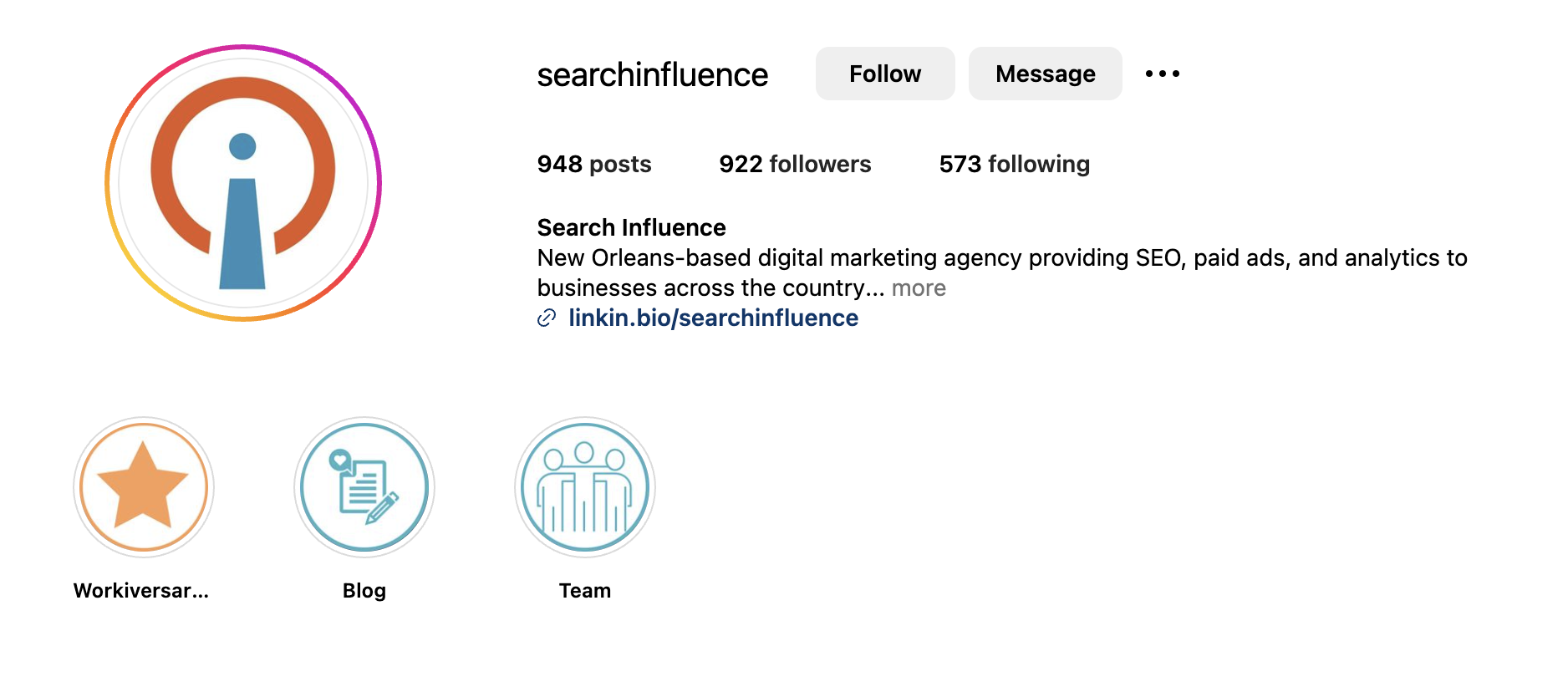
    Optimizing your social media profiles is crucial for strengthening your brand identity and enhancing your social media efforts. Use relevant keywords in your profile descriptions, and include clear, concise information about your brand.

    A screenshot of Search Influence's Instagram profile header, showing the importance of proper optimization

    Make sure to link back to your website from your social media pages to drive traffic and improve your overall SEO strategy. Consistency across all social media accounts is key to creating a cohesive and recognizable brand presence.

    Understand the platform

    Each social media platform has unique features and algorithms, requiring tailored strategies to maximize your reach and engagement.

    For example, Instagram and TikTok both rely heavily on visual content, such as short-form videos, while Reddit relies on community interaction and conversation engagement.

    Developing specific strategies for each platform will allow you to leverage their strengths and connect with your target audience effectively.

    Social media algorithms and features are constantly evolving.

    To keep your strategies relevant, stay informed about these changes by following digital marketing news and updates. Regularly updating your knowledge ensures that your social media efforts remain effective and aligned with the latest trends and best practices.

    Create engaging visuals

    Investing in high-quality images, videos, and graphics is crucial for capturing attention on social media.

    Professional and visually appealing content stands out and attracts more engagement. Platforms like TikTok and Instagram Reels have popularized short-form video content, making it a powerful tool for social discovery. Create short, engaging videos that are informative, entertaining, and easily shareable.


    View this post on Instagram


    A post shared by Search Influence (@searchinfluence)

    Keeping your feed active with fresh content, even if it seems repetitive, helps maintain visibility and keeps your audience engaged.

    Leverage influencers and user-generated content

    Collaborating with influencers who align with your brand values and target audience can significantly boost your social media interactions with Gen Z and Millenials.

    Influencers can create authentic content that resonates with their followers, enhancing your brand’s reach and credibility. Influencer partnerships can also drive more brand mentions and improve your social media signals, ultimately benefiting your SEO strategy.

    Promoting user-generated content is an effective way to increase engagement and build community around your brand.

    Encourage customers to share their experiences using branded hashtags, making it easier for others to discover and engage with your content. UGC not only provides authentic, relatable content but also boosts your brand’s visibility and trustworthiness.

    Trust the Search Engine Experts at Search Influence

    No matter the year or the platform, marketers will always have to adapt their sails to the winds of young people.

    Before SEO and digital marketing, brands spent millions on 30-second spots between music videos on MTV.

    Before that, the mad men of ad agencies bought entire pages in Rolling Stone, trying to grab the ever-fleeting attention of youth.

    Allow Search Influence to be your first mate as you navigate the seas of social search.

    Our knowledgeable team has years of experience getting results for brands just like yours.

    As SEO thought leaders, we take pride in leveraging the latest industry trends to build result-driven campaigns for our clients.

    Get in touch with us today to learn more about all the services we offer.

    Image Credits

    Group of Social Media Logos, Credit to Alexander Shatov

    Phone on Brick Wall, Credit to Karsten Wingeart

  • “Support Parks & Recreation” Campaign Wins “Best Strategic Use of Social Media” from US Social Media Awards

    “Support Parks & Recreation” Campaign Wins “Best Strategic Use of Social Media” from US Social Media Awards

    The 2020 US Social Media Awards selected Search Influence as the first-place winner of “Best Strategic Use of Social Media” for the digital marketing agency’s Together for Parks Alliance millage campaign. See the full list of 2020 winners here.

    In 2019, Search Influence ran a successful digital marketing campaign in support of a property tax millage reallocation that will provide critical funding to a coalition of New Orleans parks and recreation organizations.

    The Together for Parks Alliance was comprised of Audubon Nature Institute, New Orleans City Park, New Orleans Parks & Parkways, and New Orleans Recreation Development (NORD).

    With almost a decade of experience promoting Audubon Nature Institute through digital advertising, the Search Influence team’sbackground helped them strategize and create an impactful campaign that drove online action from advocates and voters.

    The millage passed with over “overwhelmingly” positive response—75% of voters voted YES on May 4, 2019!

    The Alliance’s organizations will begin to receive the approved funding in 2021, which will make New Orleans an even better place to live and visit.US Social Media Awards 2020

    The Search Influence team is thankful to be recognized for the great work of an amazing team for this award-winning campaign. Award judges’ feedback indicated “this was a beautiful example of a coordinated, cross-channel effort.”

    Thank you, US Social Media Awards, for recognizing this campaign for Best Strategic Use of Social Media!

  • How to Use Facebook’s Campaign Budget Optimization to Your Advantage

    Who’s ready to spend their Facebook campaign budget more effectively?!

    Chris Pratt giddily rubbing his hands together

    If you waited until the last hour to adopt Facebook’s new mandatory update, Campaign Budget Optimization, you may be slightly panicked. This could disrupt your internal processes and current campaign structure. However, you’ll be thanking Facebook for forcing this change once you adopt it.

    What Is Campaign Budget Optimization?

    Campaign Budget Optimization (CBO) is Facebook’s latest mandatory update that makes you set your campaign budget at the campaign level, without the option to set ad set level budgets. Ideally, Facebook’s algorithm will optimize your campaign for your chosen “result” by effectively spreading your budget across each ad set.

    With CBO, you must accept that not all ad sets will spend the same, and that’s in your campaign’s best interest because the budget will spend on the best-performing ad sets.

    Do’s & Don’ts for Setting Campaign Objectives

    It’s important to use the correct campaign objective and ad set “Optimization for Ad Delivery” when setting up your campaign. Choose the proper result option that aligns with your client’s goals; this will affect who sees your ads and will help you achieve the desired outcome more effectively.

    To get a better understanding of what this means, review the do’s and don’ts below explaining common errors that occur when choosing campaign objectives and optimizations for ad delivery.

    Campaign Objective

    DO: Choose the conversion objective if you want to see an increase in conversions at a lower cost.
    DON’T: Choose a traffic objective to increase traffic to your website in hopes of also increasing conversions at a lower cost.

    DO: Choose the brand awareness objective if serving many impressions at the lowest cost meets your client’s goals.
    DON’T: Choose a conversion objective if your audience is not brand aware, since you will be paying a premium to reach users who are likely to convert online and not achieve your brand awareness goal effectively.

    Optimization for Ad Delivery

    DO: Select “Landing Page Views” if it’s important that the Facebook user loaded the landing page.
    DON’T: Select “Link Clicks” if you’re looking for high-quality clicks from interested users.

    DO: Select “Reach” if you set your campaign objective as reach so that Facebook optimizes to serve ads to the maximum amount of users within your frequency cap.
    DON’T: Select “Impressions” if your goal is to make users brand aware by serving ads to users as many times as possible. Your campaign would be better off using the brand awareness objective instead.

    Facebook always gives you the option for more control, but that doesn’t mean that there aren’t best practices that should be followed. Facebook’s algorithm will only optimize for the results you select when setting up your campaign.

    Screenshot of Facebook landing page on a browser

    Maintaining Budget Control With Ad Set Spend Limits

    Sometimes you’ll need to maintain some control of spend at the ad set level. For this reason, Facebook allows ad set spend limits to be set as a minimum or maximum daily spend.

    • Here are five examples of why you may want to use ad set spend limits:
    • If you create a new ad set to test but it won’t spend, you can force a minimum daily spend until Facebook’s algorithm collects enough data about that ad set. This should only be set temporarily for 2-3 weeks.
    • If you want to control budget based on targeting, such as locals vs. tourists, you can set daily minimums/maximums to align with your desired budget allocation. However, this should only be a temporary solution until you can separate these into their own campaigns.
    • You may want to spend more on promoting a special or limited offer but only for a short period of time (less than 2-3 weeks).
    • You may need to promote an urgent message that requires more spend for a short period of time.
    • If one ad set is spending all of the budget on low-quality results, you should consider setting a daily maximum.

    Disclaimer: Facebook notes, “Use ad set spend limits sparingly, or not at all: The more budget that’s locked into specific ad sets, the less flexibility our delivery system has to optimize your campaign budget.”

    While there are valid reasons to control spend for a short period of time, ad set spend limits should not be a permanent solution if you want to maintain a healthy ad account. At the end of the day, marketers want to produce the most high-quality results at the lowest cost for their clients. It’s best to let Facebook’s algorithm spend the campaign’s budget in the most effective way for the results you chose to optimize for.

    Take Action Now

    As you can see, this mandatory update may require changes in your processes, but Campaign Budget Optimization benefits your Facebook ad account in the long run. If making this transition has been overwhelming, reach out to Search influence for specific recommendations and consulting services. Learn more about how we can also manage your ad account directly with an online advertising package.

    Images

    Mouse

    Hand rub

    Facebook

  • Cross-Posting Mistakes You Should Never Make

    While you should be posting on social media, especially if you have a new piece of content you want to share, make sure you don’t cross-post on different platforms. Even if it’s easiest to figure out one social media post and call it a day, cross-posting can have negative effects.

    What Is Cross-Posting?Person using mobile device to cross post to social platforms

    Cross-posting is posting identical content across multiple social media channels. Posting the same exact content to multiple social platforms is like giving the same exact advice to multiple friends. You might give them the same type of advice, but the words you choose and tone you use will vary depending on the person. Like friends, different social platforms have different personalities, which is why crafting content for those platforms should involve a one-size-fits-all approach.

    Cross-Posting: Nope.

    Right about now you’re probably thinking, “creating content for social media is hard enough, and now you’re telling me I can’t just post the same content across multiple social networks?” Why, yes, that is exactly what I am telling you.

    The things your friends ‘like’ on one platform aren’t the same things your followers will retweet on another. The language, tone, visuals, and overall formatting best practices for Instagram aren’t the same for Twitter, Facebook, LinkedIn, etc. When crafting a social post, it’s important to be mindful of the following:

    • The audience on the platform you’re posting and talking to
      • You’ll want your tone and message to be more professional when crafting a LinkedIn post, whereas you’re encouraged to take a more casual approach on Instagram.
    • The formatting differences per platform
      • When it comes to Twitter, you’re limited to 280 characters per Tweet. Whereas on Instagram, you have 2,200 characters per post. Should you create content with a one-size-fits-all-platforms approach, you run the risk of your Tweet cutting off in the middle of your sentence due to character limitations, or a bad handle being included within your Tweet due to someone’s handle varying across platforms
    • The guidelines per platform to monitor and prevent spammy activity
      • Last year, Twitter announced new guidelines surrounding the use of automation and posting the same (or substantially similar) content over multiple accounts you control.

    Cross-Promotion: Yep.

    Cross-promotion, in addition to being your saving grace within the realm of creating unique social media content, is the idea of promoting the same overall topic across platforms but in a way that is suitable for the varying personalities, formatting requirements, and guidelines of each platform. And using them to your advantage!

    Having one topic about your business and/or brand that you want to share across multiple social media channels is not the “no-no” we’re discussing here. Instead, it’s sharing that topic in the same exact way across multiple platforms. Creating unique posts for each platform may sound overwhelming, but this idea of cross-promotion can help ease this process.

    1. Think of a topic you want to share on your channels
    2. Create a couple of sentences promoting this topic, providing the necessary information, etc.
    3. Take those sentences and apply tweaks for each platform you want to post to, being mindful of all of the considerations mentioned above
    4. Push out unique, engaging, and easy-to-create content that successfully caters to each social media platform

    Digital marketer using keyboard at computer

    Creating unique social media content that is specifically catered to each social media platform is a great way to keep users engaged with both your brand and your brand’s voice. At Search Influence, we’re always keeping the personalities, requirements, and best practices of individual platforms top-of-mind when creating social media content for our clients. To learn more about how we can help you and your marketing efforts, give us a call today at (504) 208-3900.

    Images

    On cell phone

    Keyboard

  • Does Pinterest Marketing Work for Tourism?

    In short—yes.

    Put yourself in the shoes of a tourist: you are sitting at home, gazing at your “Live, Love, Laugh” wall art, overflowing with wanderlust. You are itching to get out of your same-old-same-old routine. The idea strikes you—let’s get out of town! You enlist a travel buddy and the planning begins. But where do you go? You open up Pinterest for some ~travel inspo~. Finally, you and your pal pick a place to peruse. 

    Pinterest landing page

    You’ve always heard great things about *insert city,* but what do you actually do there? You simply must see all of the “must-sees,” but you also want the inside scoop from people who’ve actually been there—not TripAdvisor. You go back on Pinterest and start to plan your dream vacation.

    This might sound like a very specific example, but the fact of the matter is that Pinterest is growing as a platform for users to plan their travels. 25% of Pinterest activity relates to travel or tourism. With over 175 million users, this is a great space to immerse yourself in your audience’s planning process.

    Is Pinterest Effective for the Tourism Industry?

    Think about Pinterest as a mashup where search engine meets social media. Users search for specific topics, similar to how they would on Google, but the results are presented in a very visual manner. Users can then interact with those pins, as they would with the content on a different social platform, by repinning and sharing with followers. This searchable media is a highly effective format to promote something as visual as tourism. Through Pinterest, users are able to actually see (and plan) their dream vacation.

    Here are three tips to utilize Pinterest for tourism marketing:

    1. Create Timeless Pins

    Pinterest is different than other social platforms, like Facebook or Instagram, in that your content actually has a much longer lifespan. In fact, pins typically circulate for about 3 to 6 months. This means it is incredibly important to invest in content that is more “evergreen.” Make sure not to link to pages that may be temporary and try to incorporate content that is relevant year-round.  

    Does this mean you shouldn’t include seasonal pins? Not at all! Timely pins have their time and place; after all, people are planning trips year-round. However, you do not want all of your pins to be so timely that it limits their relevance. 

    2. Create Compelling Visuals

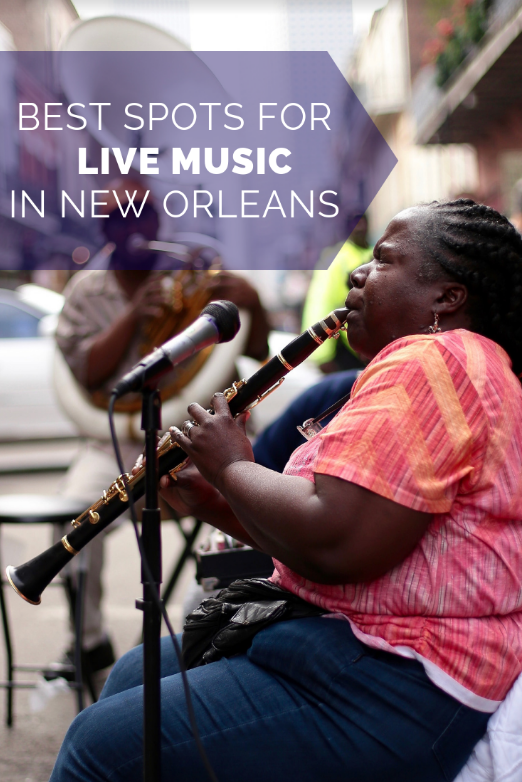
    It’s not rocket science that people are more likely to click on something that looks nice. Your pin’s photo takes up way more real estate on the results page than your pin’s title. But, a pretty picture isn’t always enough to get your pins the love they deserve. People don’t like wasting their time, and they’re less likely to click on a pin if they don’t know what it’s destination is. Overlay text on images tells the user what they can expect if they click through to your website. For instance, take this picture of New Orleans’ French Quarter. Yes—it’s pretty. But, where are you going if you click that pin? Having a title included is much more appealing because it takes out all of that guesswork. Including a defined purpose for the pin creates a better experience for the user, and can increase your click-through rate.

    Clarinet player playing live in the French QuarterSame photo of clarinet photo but spruced up with graphics for social media

    Don’t let the thought of creating a graphic scare you away from Pinterest. There are plenty of easy-to-use tools like Canva that make creating these images a breeze. And no—you don’t have to be an artist to make great pins. 

    3. Create SEO-Optimized Content

    I get it—we do SEO. This sounds like a plug. But, seriously, at the end of the day, Pinterest is a search engine, and having optimized pins that link to optimized content is important. You can create the most beautiful pin in the world, but if it isn’t optimized, it won’t get in front of the right people.  

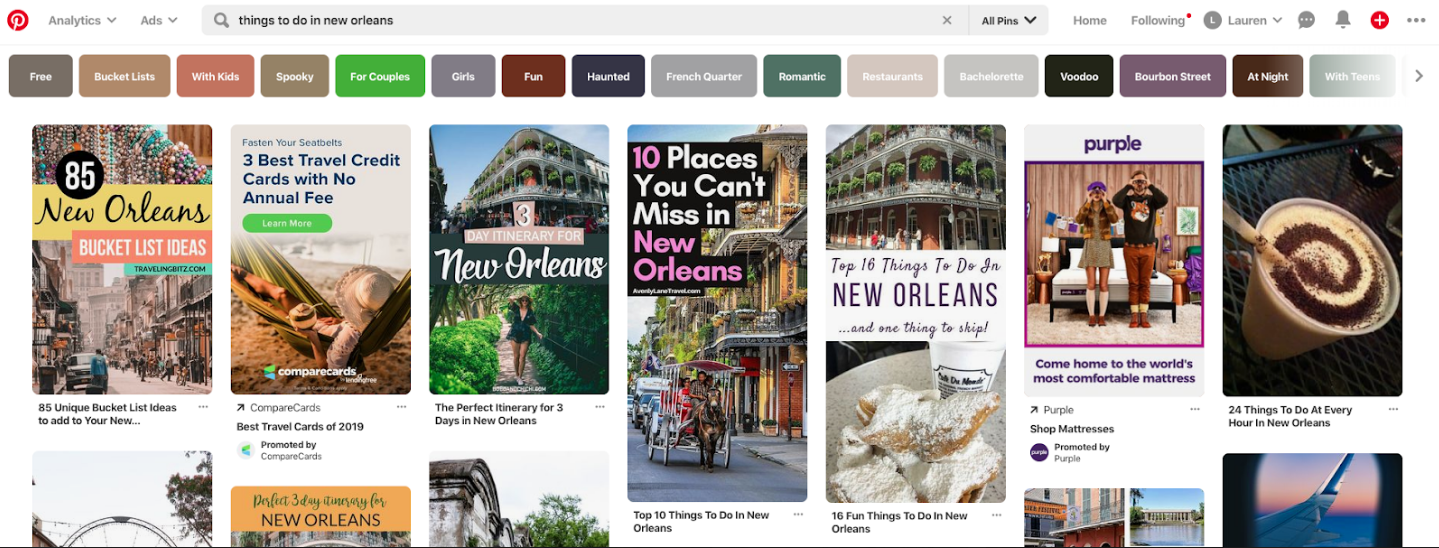
    Start by performing Pinterest keyword research. Type in a root term or phrase that you are trying to rank in, such as “things to do in NOLA.” From there, work through the guided search to see different ways people might be looking for this information. In this example, you can see that people might be searching for “things to do in New Orleans with kids” or “free things to do in New Orleans.”

    Screenshot of things to do in New Orleans search on Pinterest

    Once you define the keywords you’re trying to rank for, build your content around that. Make sure your pin’s title, description, and landing page are all optimized. You want to make your content compelling to users by making it readable for both humans and crawlers alike.

    Pinterest is a powerful platform and an important space to promote your tourism business. Even though it might seem like a large time investment on the front end, creating a Pinterest strategy will support your marketing efforts for months to come. Not sure where to start? Contact Search Influence for help developing a plan that is right for you.

    Images

    Pinterest

    Photo by Nathan Bingle on Unsplash


  • 7 Tips for Eye-Catching Social Media Posts

    For years, social media has been the most cost-effective place to advertise your business, but it takes planning to stand out from the competition. In the up-to-the-minute marketplace of memes, it pays to use eye-catching colors, animated images, and consistent, compelling branding. Fortunately, once you develop a digital marketing strategy that reflects the strengths of your company, you’ll be able to create and share content with a minimal investment of time and effort.

    1. A “Social Media Strategy” is Key.

    Every month, 30 percent of millennials interact with a brand on social media platforms like Facebook. Consumers expect to find information about your business on social media, and they want to be able to reference your company’s page when bragging about their positive experience at your establishment. Pictures of meals have been some of the most popular content on Instagram, and a lot of those pictures are copied to other social media platforms. When the friends of your customers ask where they can get that ice cream fudge volcano, wouldn’t it be great if your business page was suggested as a hyperlink? Customers are already talking about your business online, but your business has to be on social media to join that conversation.

    Social media photographer holding up lens to nature scene

    2. Source High-Quality Images.

    We’ve all learned to spot them: bland stock photos show smiling employees or hands at a keyboard, but they don’t inspire trust in the business. Instead of using generic, one-size-fits-all images, consider hiring a photographer to take real photos of your business and products. Alternatively, grab your iPhone and take a few pictures yourself. DIY photos convey relatable authenticity, and they can work as short-term images on social media, but a professional photographer will take lighting and composition into account, digitally adjusting images as needed. Whenever you can afford the expense, make quality images a priority, especially for the long-term images that become profiles and header images on your social media pages.

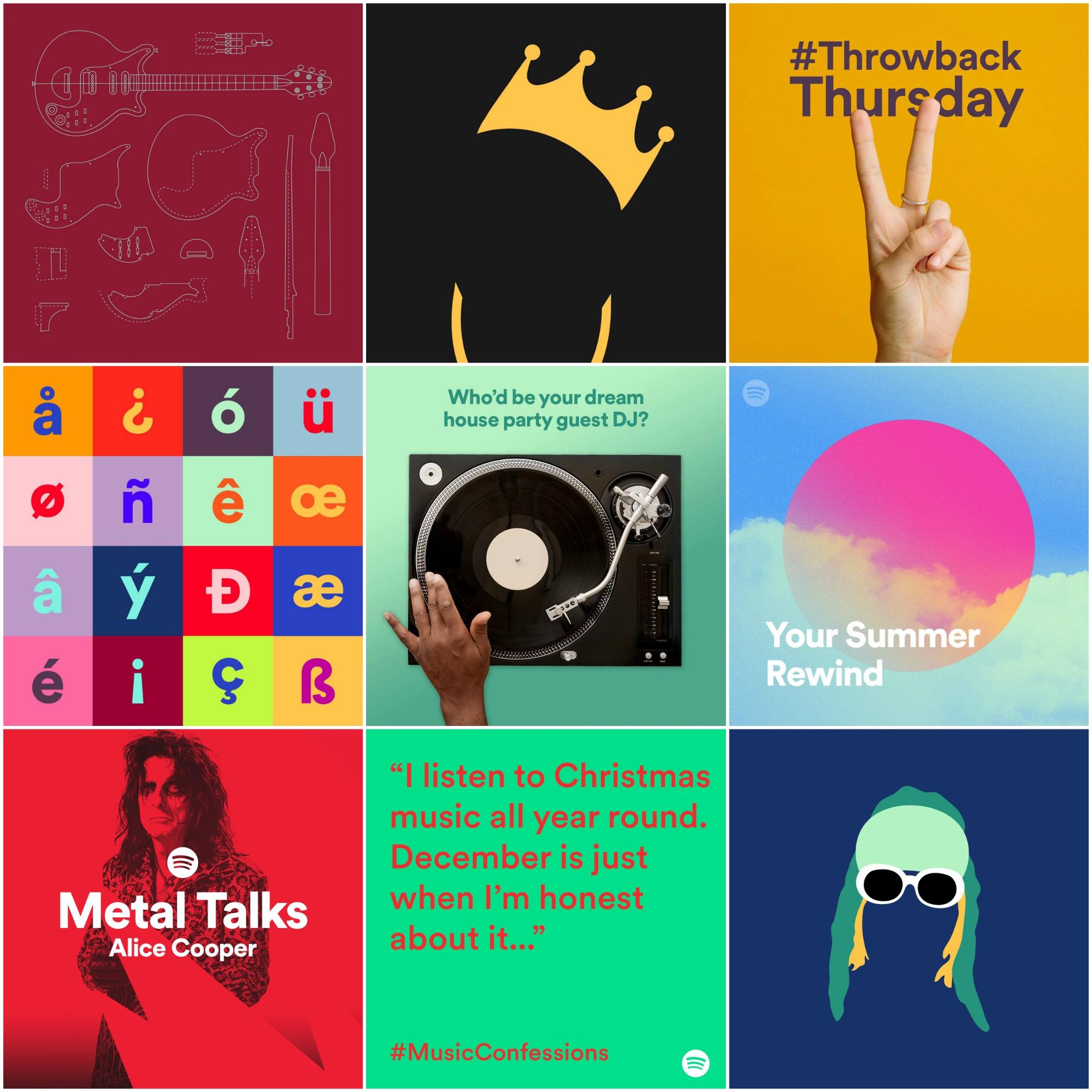
    Example of Spotify leveraging Instagram post

    3. Pay Attention to Color Schemes.

    Does your branding consistently utilize a couple of key colors? Great! But consider using slightly different (but still complementary) colors for different lines of products and services. Spotify is a great example of a brand that makes use of dynamic color schemes but still manages to keep it consistent. In the image from Venngage above, you can see how they’re easy to recognize but hard to forget.

    Colors convey a personality and warmth, and it’s worth a little time to evaluate whether to choose bright and bold colors or something more subdued and approachable. Rather than defaulting to flat reds and blues, use light and dark gradients to achieve something more unique than the local high school’s color scheme. Choose unconventional colors to make your posts more recognizable on social media. Spotify makes use of dynamic color schemes throughout all of their branding designs. This creates a stronger visual for their brand and allows visitors to instantly recognize their graphics and associate them with their company.

    Taylor Swift drinking a Diet Coke

    4. Make Your Own Custom Branded GIFs.

    A step beyond quality still images, GIFs are animated bitmap images. While its pronunciation is debatable, the acronym stands for graphics interchange format. Clips from TV shows and other videos are popular fodder for GIF images, where a gesture or a moment of action is captured and repeated in a short loop. Moving images naturally stand out in the newsfeeds of customers, and humorous GIFs inspire a lot of organic engagement. GIFs are recirculated for free online, but creating your own has distinct advantages. First, when you create your own content, it’s easier to avoid potential copyright issues. Second, when your custom GIFs are fun and compelling, those GIFs can lead people back to your website, helping you build authority online.

    Reeds blowing in the wind

    5. Leverage Cinemagraphs.

    Cinemagraphs can be made in video or GIF format, so there’s naturally some confusion and overlap. Still, GIFs tend to be loops of a video where the beginning and end are clear, not unlike an instant replay from a sporting event. Cinemagraphs, on the other hand, tend to be artistically made in a way in which it’s hard to tell when the image begins to repeat, giving the effect of a live picture or streaming video. A steaming cup of coffee, a waterfall, and a drink being poured are examples of subject matter for cinemagraphs. Naturally captivating, this type of media is harder to DIY, but it can make a crucial difference at the moment when users decide whether to stop or keep scrolling.

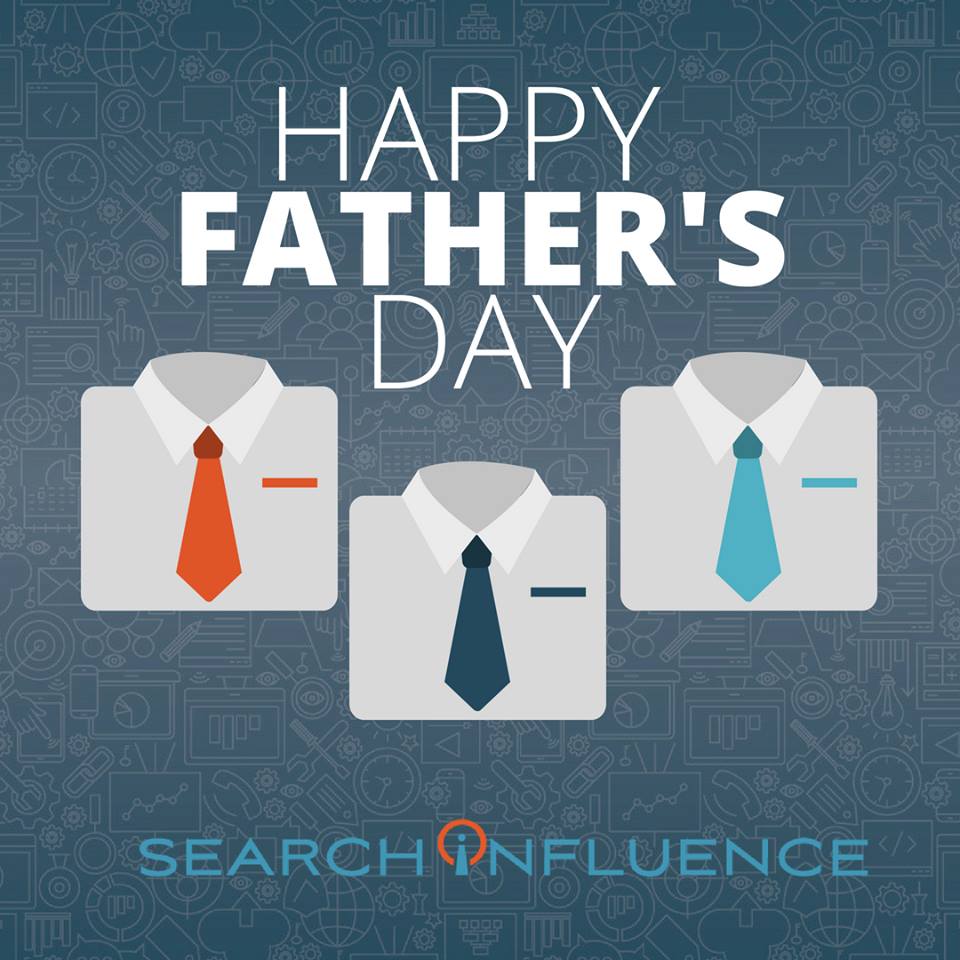
    Happy Father's Day custom graphic for Search Influence social media channels

    6. Keep It Consistent But Exciting!

    While experimenting with different types of media and formats, remember to keep your messaging on track. Don’t get bogged down with details, either in perfecting a single post or cramming as much information as possible. With the short attention spans on social media, clarity and brevity are essential.

    – Bullet points and clear headers are helpful with any text. If you haven’t hired a professional graphic designer, then avoid the temptation to use artistic (but hard to read) fonts.

    – Big, clear lettering is safest, especially when your target audience includes older demographics.

    – Numbers, percentages, and impressive statistics can help catch the reader’s eye.

    – Don’t be afraid to try different techniques and learn what works best for your audience, but stay close to home base while you develop your image as a reliable, professional authority.

    Alternatively, a broader presence in the community can make your business a topic of conversation, but that type of campaign can have a more gradual impact on walk-in clients and leads.

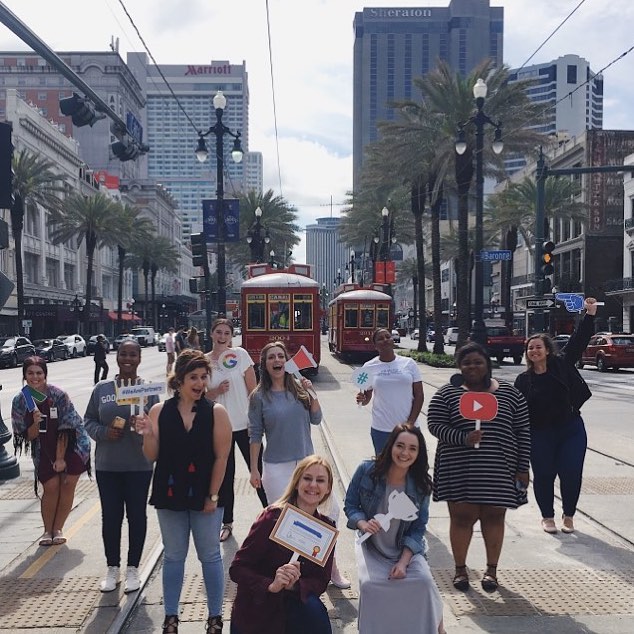
    Search Influence employees posing on Canal Street for social media channels

    7. Always Keep Your Marketing Goals in Mind

    Especially when you’re first getting started, it’s a good idea to check out the social media presence of others in the same industry. You may find businesses in the same industry that have a different service area, and therefore they aren’t direct competition. Take a look at how different types of posts inspire different amounts of engagement, and you may find ideas for developing content of your own. As with any type of marketing, it’s also important to clearly define your goals at the outset. Is your objective to build a following and make your brand more recognizable in the community? Or are you mainly looking to generate leads for potential clients? Depending on your industry, dominating local search may be the most effective way to get clients to call your company.

    If you don’t have the time to juggle business operations with digital marketing, then you can always outsource your social media management to professionals. The experienced team at Search Influence can provide a digital marketing and SEO consultation, identifying opportunities to strengthen your online presence. Follow our blog for the latest tips on GIFs and marketing trends.

    Images:

    Camera lens

    Spotify covers

    Taylor Swift

    Cinemagraph

  • Ain’t Nobody Got Time for That: Make Social Media Fit Into Your Busy Schedule

    Ain’t Nobody Got Time for That: Make Social Media Fit Into Your Busy Schedule

    It isn’t news that an active social media campaign is an integral part to any business model. In these modern times, simple and frequent Facebook posts can go a long way when potential clients are choosing between you and the competitor. Time, however, is also important, and budgeting out a few posts a day can take a shocking amount of it. Surprisingly, many businesses are unaware of the various ways they can solve this problem on their own.

    Simple Tools

    Facebook Audience Scheduled Post Image - Search Influence

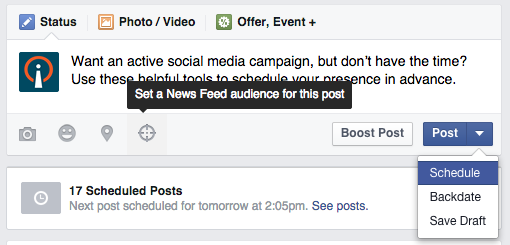
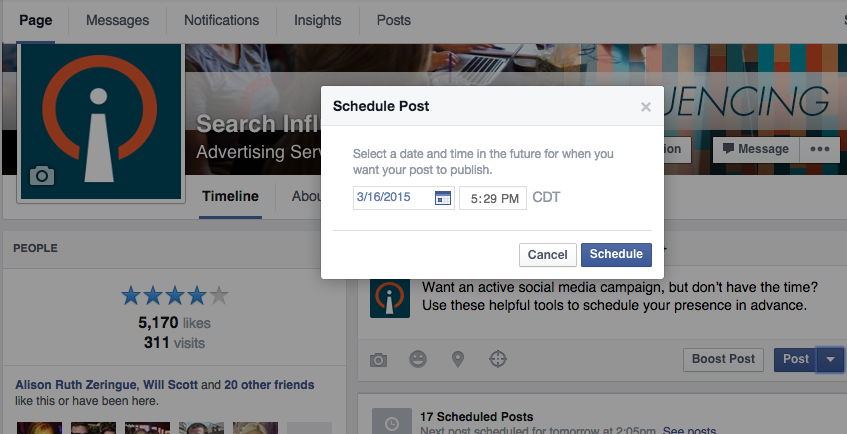
    One of the best and most widely used solutions is the scheduling feature in Facebook. To use it, simply enter in the text, link, and/or image that you wish to post to your business’ profile page. Once you’re ready to publish, click the small drop-down arrow next to the “Post” button. From there, choose “Schedule,” and then pick the day and time you wish to have your update sent to your followers’ newsfeeds. Although it may take you some time to schedule all the posts you will want to share for the whole month, the amount of time it will save you overall is definitely worth it!

    Facebook Scheduled Post Image - Search Influence

    More Advanced

    Another tool that helps companies organize their social media presence is Hootsuite. On the surface, it may not seem as intuitive and user-friendly as Facebook scheduling, but with a little practice, it becomes a lot faster. The only catch is the $9.99 per month you’ll need to pay for pro service. With the upgrade, you’ll gain access to bulk scheduling, enabling you to schedule an entire week’s, month’s, or even year’s worth of posts at the drop of a hat.