Tag: schema

  • Will Scott Talks Higher Education Schema in Seer Interactive Guest Blog

    Search Influence - Will Scott on schema for Seer Interactive

    In a June guest blog for B-Corp certified digital marketing agency Seer Interactive, Search Influence Co-Founder and CEO Will Scott breaks down a fundamental, yet often overlooked, higher education SEO tactic: schema markup.

    Schema markup for higher education websites is a form of microdata added to a website’s HTML to help search engines better understand the content. It uses a semantic vocabulary (i.e., code) known as Schema.org to annotate various webpage elements with metadata. By crawling your schema, search engines can get a better sense of who you are and surface your site in the SERPs in response to relevant search queries.

    Schema markup is the back-end roadmap for your higher ed website. It guides search engines, like Google, Bing, and Yahoo, through the campus of your content via structured data that’s easy to understand and follow. This helps streamline your site’s crawlability, boost your chances for rich snippets, and improve your visibility in the search engine results pages (SERPs).

    How do you know if your institution’s schema markup is up to par? See Will’s blog, “Higher Education Schema – How Your School Can Win Google,” for tips to better speak search engines’ language.

    Key Takeaways From “Higher Education Schema – How Your School Can Win Google”

    Schema is much beyond just simple code. In “Higher Education Schema – How Your School Can Win Google,” Will goes deep into this core technical SEO concept, offering insights on:

    • The Fundamentals of Schema Markup: Understand the basics and why it’s essential for higher education websites.
    • Step-by-Step Implementation: Detailed instructions (with a template) on how to apply schema markup using Schema.org, tailored specifically for educational institutions.
    • Practical Examples: Real-world applications and examples to illustrate how schema markup can be effectively used.
    • Impact Analysis: Insights on how schema markup can grow your institution’s online presence and drive more prospective students to your enrollment funnel.

    Search Influence - High Education Schema for Seer Interactive

    Dive Deeper Into Higher Education Schema

    2024 research from Schema App found that 1 in 5 digital marketers have trouble showing the value of their schema markup. If you’re unsure whether your school’s schema is truly search engine fluent, do your part in helping Google to translate it.

    See Will’s full article on Seer Interactive for more “higher ed schema 101” and how to optimize your site for search engines

  • 12 Things You May Not Know About Online Marketing

    12 Things You May Not Know About Online Marketing

    While some aspects of online marketing may seem straightforward, some things might surprise you. Here are 12 things that surprised some of our team members when they started working at Search Influence.

    1. When listing your business location anywhere online, you should use the USPS verified address.

    “I worked at traditional ad agencies for over 10 years. It shocked me to find out that, when developing a website for a client, it is best practice to use the exact address that the USPS has on file for a business. And that same address should be used on all social media profiles, as well, to enhance a website’s search engine ranking. In my former life, we would simply use what looked or fit best.” – Melissa

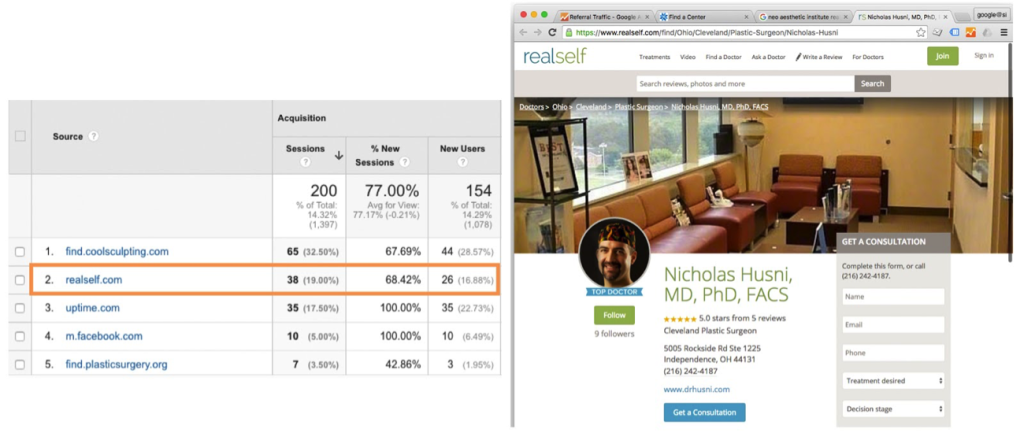
    2. Gain traffic to your website through local search results with industry specific directory listings.

    2


    “I was surprised to learn how many industry specific directories exist. Also, surprised to learn how valuable those can be for businesses to gain traffic to their website through local search results.” – Mary

    (Note: Don’t have a physical location? Check out this blog about ways to improve the local search ranking for a service area business.)

    3. Google My Business is important!

    3


    “I was really surprised to learn that Google My Business had such a large impact on website visibility. I thought, “Google Plus? No one uses that.” And that’s partially true. But having a page, verifying it, and having reviews can play a large role in ranking in the maps pack.” – Ariel

    4. Google prefers location images for profile pictures on Google Plus.

    “With my graphic design background and my love for branding, I was surprised to learn that Google prefers the use a picture of your business location (if you’re a brick and mortar shop) instead of a logo for your Google Plus profile picture.” – Michelle

    5. Content on images cannot be crawled by Google.

    “I was surprised to learn that Google could not track infographics on pages as static images, but we can help make them more Google-friendly through optimization.” – Kayla

    6. Content optimization is for humans too!

    “It may sound basic, but I was surprised to learn that SEO is geared just as much toward optimizing content for human users as it is for computers. When I first started hearing about SEO, I thought it referred only to technical, back-end fixes that would gain the attention of search engines. Working at Search Influence taught me that a huge part of SEO focuses on enhancing the overall user experience, not just making it easy for Google to find your website.” – Aubrey

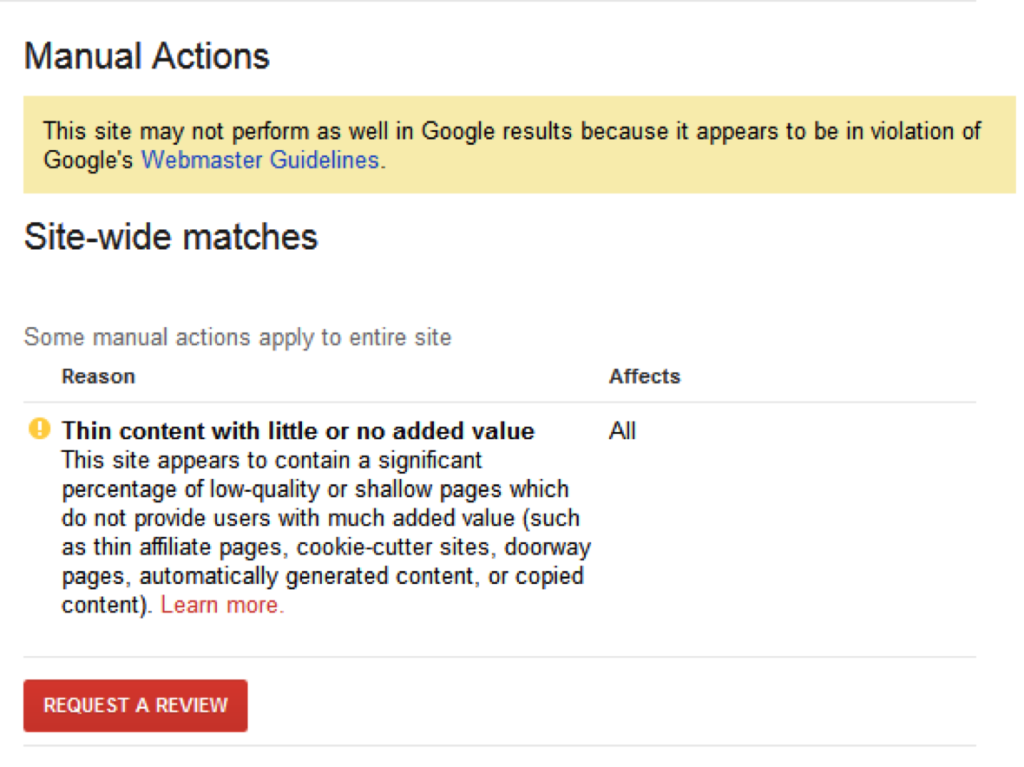
    7. Google penalizes sites from showing up in search results.

    7

    “I was surprised to learn about Manual Actions and how Google can penalize your website, removing it from search results or reducing its ranking. It totally makes sense now that I know more, but coming into the industry without much knowledge of the impact of manual actions, I was definitely surprised.” – Presley

    8. Quality content can affect rankings.

    “The importance of content! It makes so much sense once you actually understand how it affects your website’s ranking potential. I feel like it’s still the number one thing I harp on the most to our clients.” – Gussie

    9. Meta descriptions are helpful in gaining user click through from SERPs.

    9


    “It never occurred to me that meta descriptions are something that needs to be created and are a valuable part of SEO. Now they’re one of the first things I mention when I tell people about the kind of content I work on, because who knew that could be someone’s job?“ – Meaghan

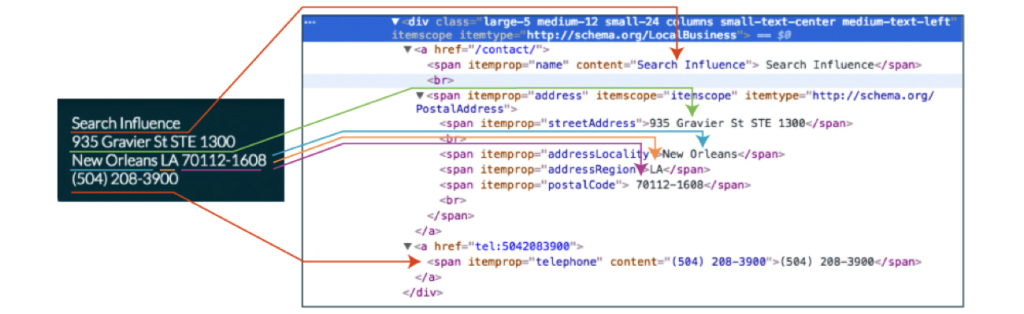
    10. Schema markup can help Google locate the important information on your site.

    10

    “I think schema markup is really cool. I like how you can insert coding to “highlight” important pieces of information on a website, especially since Google is processing lots of information across the internet.“ – Jensen

    (Note: Looking for Schema for Medical Clinics? Check out this blog about the recent Schema update.)

    11. Online marketing best practices are always changing.

    “Having worked for an online marketing company before starting at Search Influence, I was surprised to see how much the industry can change. There was about a three-month gap between my last job and Search Influence, and the environment of SEO was entirely different. Algorithm changes, social media image size changes, changes to what’s good practice and what’s not. Everything was different. Search Influence gave me the tools to navigate those changes and come out with more knowledge than I thought possible.“ – Eric

    12. Attack your online marketing campaign from multiple angles for a greater impact.

    “I wasn’t necessarily surprised by this, but what I love about what Search Influence does is that we fit all of the various components of online marketing together into such well thought out, comprehensive strategies for our clients. Offsite work to benefit organic search, social media marketing, onsite work + paid advertising efforts can complement each other so well and do such great things for small, medium, and large businesses when the work is synchronized with intent!” – Erica

    Staying on top of your online marketing campaign can be tough. We can help! Contact one of our SEO specialists to find out more information.

  • Did You Catch All of That? A Rundown of Our Top May Blogs

    It’s summertime! May was full of so many informative and fun Influencer blog posts, not to mention the laugh-out-loud-worthy gifs. If you haven’t caught up with all of our blogs yet, here’s a quick run-down of all the top blogs from May.

    Kitten Gif

    What Happened to Facebook’s 20% Text Grid Tool?

    The Cliff’s Notes version is that Facebook has 4 categories for the amount of text allowed on an ad: “OK”, “Low”, “Medium,” or “High.” A “High” amount may not reach your audience, but you may also have more room to be flexible with the ad. To every rule there is an exception: Movie posters, book covers, and product images don’t “count” as text.

    Why Social Media Is Critical for the Growth of Your Business

    We all know that social media is here to stay, but here’s the nitty gritty with the reasons why. Bottom Line: your customers are active on social media—a whopping 76%—and Facebook remains the real winner with the most users.

    13 Things We Wish We Could Tell Our Younger Selves: A Guide for Graduating Seniors

    As graduating seniors, there’s so much pressure to go out in the world and do great things. Fear not, 13 of our employees provided solid advice for those entering the workforce. From knowing it’s okay to ask for help, keeping your goals in mind, or reminding yourself that you shouldn’t just accomplish things just to check them off your list, these pieces of advice are bound to make an impact on a young graduate’s mind.

    Oh No! Where Did Medical Schema Go?

    For anyone in the medical field, or anyone interested, there’s a new version of medical Schema. The changes involved include a new extension, which have been moved to another subdomain and more extensions are most likely on their way.

    Seeing Colors? Google Expands Paid Ads

    Hopefully you didn’t miss a major Google update, which involved paid ads in two new areas, Local Finder ads and Maps ads. With the Local Finder, the reduction of five displays to three wasn’t enough for users, so Google integrated some paid ads. Regarding Maps ads, ads are now shown in purple font, positioned at the top of the results, and a purple icon is added directly in the map.

    Kramer Gif

  • Five For Friday: Death to G+, Facebook Video Calling, A Tech Movie Rec & More

    1. Schema Marks Up Gmail – Moz

    Not too long ago, thanks to a pair of excellent blog posts from David and Ian, we learned all about schema—what it is, what it does, and how it can dramatically help a client’s online marketing strategy.

    After that wealth of knowledge was handed down, it should come as no surprise that schema.org markup can improve your email, too. It aids in allowing people to take action on Gmail quickly and simply. The Moz blog gives a comprehensive introduction explaining who should be using schema markup in their emails and why.

    2. Is Google Plus on its Deathbed? – Marketing Land

    Mark Traphagen, a columnist for Marketing Land, addresses the persistent rumors that Google Plus is going to dismantle the network and its social media component because of its perceived lack of popularity. To counter, he offers several key points that show why these Google+ detractors are misguided.

    3. Why Video is a Marketer’s Best Friend – Marketing Land

    Search Influence has been using videos for online marketing purposes for as long as I can remember (i.e. the year I have worked here). As the Video Coordinator (<—- a fancy, self-given title) over on the Production Team, I have learned why and how videos are so important. For those who may not know, Marketing Land breaks down why video is the perfect medium to enhance all online marketing strategies.

    4. Facebook Announces Video Calling – Search Engine Journal

    Facebook announced on its blog two new updates to its messenger services: video calling and a new app called “Hello,” which functions as a caller id, call blocker and search tool.

    5. SI Movie Recommendation: New Sci-Fi Thriller Ex Machina – The Independent

    In the new sci-fi film Ex Machina, a tech genius and CEO of Bluebook (a fictional Google-Facebook hybrid) has managed to successfully create a robot with artificial intelligence using the data collected by his worldwide, all-knowing search engine. The film touches on some really intriguing themes, such as consciousness, voyeurism, technology and human-machine “singularity.” It is a really interesting and exciting film that, as an employee at a tech company, really resonates—and it’s getting rave reviews across the board!

    The film is rated R for language, nudity, and some violence. It stars Oscar Isaac, Domhnall Gleeson and Alicia Vikander. It is written and directed by Alex Garland (28 Days Later, Sunshine and The Beach).

    Image sources:

    Missy Elliot Gif

    Ex Machina

  • The Saints Fan’s Guide To Schema

    Saints season is underway as our boys in black and gold try to bring another Super Bowl win back to the Bayou. Fall season isn’t just a time to enjoy football accompanied by ice cold bevs, a few Lit’l Smokies, and a seven-layer dip, it’s also the best time to ask yourself if you’re getting the most out of schema – one of the most untapped resources in online marketing.

    QUARTER ONE – SCHEMA, BUT WHAT IS IT?

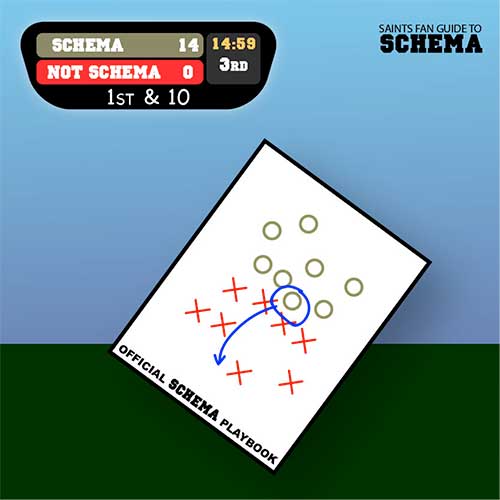
    First off, Who Dat. Secondly, schema is an HTML markup that you can add to web pages to make them more easily readable by search engines. Schema is essentially a type of label similar the numbers on a player’s jersey. Schema gives the crawler an idea of what the content on a page can be categorized as, sort of like how numbers on a jersey can tell you what position a player is (btw, go number 9!!! #breesus).

    QuarterOne

    QUARTER TWO – OKAY…SO, WAIT, WHAT?

    Trust me, schema is great. Still don’t believe me? According to a Searchmetrics case study, pages with schema.org integration on average rank four positions higher compared to pages without schema. Not to mention Google officially recognizes schema in the same way that coors light Bud Light is recognized as the official beer of the NFL.

    QuarterTwo

    HALFTIME – STAND UP & GET CRUNK!

    Also, time to dispose of a few soft pretzels and tray of N’awlins Nachos.

    QUARTER THREE – I AM PRETTY FULL, BUT WHISTLE MONSTA IS HERE, SO LET’S DO THIS.

    Now that you are all in on the schema bandwagon, you need to figure out what kind of schema you should be using. This is where you need to develop your schema playbook. There is an incredible amount of schema out there – and that is an understatement. To get started, try checking out the local business schema on schema.org. If you have reviews on your page, another good starting place may be schema.org/Review.

    QuarterThree

    QUARTER FOUR – CLEAR HIERARCHY, FULL HEARTS, CAN’T LOSE

    Time to implement schema and bring home that elusive win. Schema markup is added within HTML tags on site pages. Both HTML and the schema are structured according to a clear hierarchy, which is important to remember when choosing which schema properties to use for markup.

    QuarterFour

    0:00 4TH QTR – FINAL SCORE: SAINTS WIN! SAINTS WIN!!!!

    And most importantly, you win too. Schema is often misunderstood, but if used correctly, it can be one of the most powerful tools in an online marketer’s arsenal. Thanks for reading, and GO SAINTS!

    Take a more in-depth look at schema with this blog from SI web developer, David Fransen.

  • 5 For Friday: Winning at Local Search, Snippets in Search, & Investing in Content

    1. Google Structured Snippets Officially in Search Results
    – Search Engine Land

    Schema markup and other forms of structured data are being used by webmasters to display Google structured snippets, but this isn’t the only way more data is pulled into the search results. Google has been testing out new forms of this “structured data.” Data for a particular search result is now being pulled from “Knowledge Graph and other data sources.” Google is pulling more and more information from sites to show in search results in order to “provide the most relevant information to the user.”

    2. Be Careful of Switching to HTTPS to Improve Google Rankings: The Buffer Story [UPDATE]
    – Search Engine Land

    In early August, Google announced they would be putting more trust in secure sites as a ranking factor. One particular case in which a site adopted this practice early actually saw a major drop in traffic immediately following. This was an issue on Google’s part during the roll out of this new algorithmic adjustment. It has since been corrected, but the moral of the story is: Be cautious before making such a big website change.

    GoogleAlgoImage

    3. How to Win at Local SEO with Reviews, Citations, and Local Events
    – Search Engine Journal

    Recent Google algorithm updates have local businesses panicking trying to react to these new updates. While it is not time to panic, it is time to make sure you have all your local SEO basis covered. Make sure you are still completing all of the long lasting local search practices – consistent local listings, social media presence, and on-page optimizations. Make sure to take things to the next level by optimizing your local listing and reaching out to customers for reviews. This article takes local search even further by explaining how to leverage your local events online!

    pinslocalbusinessimage

    4. How to Use Keyword Research to Find New Landing Page Testing Ideas
    – Search Engine Watch

    Deciding on which elements of a landing page to test can be difficult and the options are endless. This article describes a shortcut for coming up with winning test ideas, which is competitive keyword research. Many available tools online allow you to view the landing page for given keywords your competitors are using. By viewing different competitors and their landing pages, you can get many different A/B testing ideas to improve your paid search campaign.

    5. Don’t Forget to Invest in Content (Not Just “Content Marketing”)
    – Search Engine Watch

    Businesses are jumping on board with the idea of content marketing, but many are solely investing in content creation. They know they need to be using content in their marketing strategy but they are getting their intern to work on it. Business owners need to be focused on the actual content creation process and what is being published because anyone can write but it may not be representing your brand in the best way. This article focuses on 4 main reasons business owners need to invest in content, not just “content marketing.”

    Image Sources:

    Google Algorithm Image

    Local Business Pin Image


  • A Few Things You May Or May Not Have Ever Wanted To Know About Schema, But Were Too Bored To Ask

    As Google continues to affirm its support for more detailed types of schema markup when crawling sites, it seems that there is an increased level of general interest in the concept and implementation of schema. I know that across our office, there are constant enraptured whispers about the ethereal mystery and beauty of this particular variety of microdata. At least, that’s what I imagine. In any case, I am quite certain that people across departments in the Search Influence office, and presumably others, are talking about schema more than they used to.

    If you are already thoroughly comfortable understanding and implementing schema, this is not a blog post for you. Take a long pull on your cigar, another sip of fine brandy, ease the seat back and return to your Baudelaire. As for everyone else, I’m writing this because Google’s documentation on the subject – though extremely helpful and somewhat surprisingly transparent – is probably still a bit dense for those not familiar with microdata as a concept or without some experience coding a web page. I’m hoping to help bridge this gap for anyone seeking a schema primer without the time or inclination to sign up for a night school web design course.

    So What Is Schema Anyway?

    Schema is a type of microdata that is standardized and structured in a way that can help search engines parse pertinent information from web content. The official description can be found here, but let’s keep this simple.

    Many of us went to school at a time where we had to carry around these huge, heavy things called “books” that contained all sorts of crucial knowledge within words printed on bound “paper.” In the course of trying to learn the material contained in the books, many students found it helpful to highlight really pertinent passages in obnoxious neon colors. Highlighting made it a lot easier to go back and see what passages to focus on when studying later for an exam or putting together an essay.

    Well, schema is a lot like highlighting for a search engine. We mark up certain key pieces of information that may provide a clearer concept of what is most important for a search engine to pull from a larger body of content. It’s not saying that the entirety of that content isn’t important in any way; rather, it’s streamlining the presentation of content so that Google or Bing can get a clear picture of what the page is about even before parsing the full scope of what is contained on a page. Accordingly, there is a vast array of different schema types available for different content topics or functions. Whether the topic of your page involves a bus trip or a volcanic eruption, there is probably a schema type that can help further break down your content.

    OK Cool, But Why Bother If Google Is Going To Read Everything Anyway?

    Yes, Google will find a way to establish a general concept of what is on your page for presentation in search results with or without the use of schema. But, well, the Internet is kind of huge, and search engines tend to get kind of busy dealing with that a lot of the time. I think anyone interested in schema understands that Google and Bing use extremely intricate and elaborate algorithms to assess content for use within search results. Even with all of Google’s bears, birds, and mythical beasts on the job, however, it is still possible for information to be misconstrued within Google’s results. It is less a matter of keeping a search engine from getting things wrong than it is of helping a search engine get things more accurate.

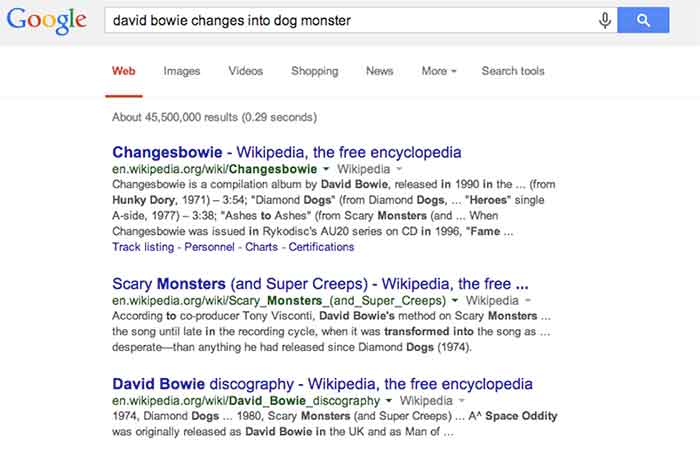
    For a hypothetical example, let’s look at this – as I do most things – in David Bowie terms. As you may or may not be aware, David Bowie actually briefly changed into an apocalyptic half-dog monster in 1974. This is a fact. Had you been unaware of this rather unusual moment in human evolution and overheard it discussed in an elevator (which is certainly where most of us first hear about otherworldly metaphysical transformations), you might be tempted to Google it. Well, if you were to Google “david bowie changes into dog monster,” you’ll eventually find some things about dog monsterdom, to be sure, but you also get an awful lot of results related to the classic 1971 song “Changes,” the compilation album “Changesbowie,” and the 1980 album “Scary Monsters.”
    ChangesBowieSchemaExampleImage

    Well, in this example, Google isn’t doing anything wrong really. It gave you perfectly logical results related to the primary subject of your search and based on the many of the keywords entered, but it still wouldn’t be quite what you were looking for. This is where schema would come into play. If an obviously extant news article on the completely 100% factual occurrence of David Bowie turning into an apocalyptic dog monster had been marked up with, say, Article schema breaking down the subject matter and providing a summary of the content, Google would likely have better understood to serve you the content that directly matched your search query. Likewise, were album and song writeups for “Changes,” “Changesbowie” and “Scary Monsters” marked up with MusicRecording schema or MusicAlbum schema, Google would be better able to differentiate these types of results from articles more pertinent to this search.

    I realize that it’s cheating to hold Google accountable for not being able to perfectly assess my intent in searching for viable news on an event that didn’t actually happen, but this example still hopefully illustrates how schema can be employed to help Google get from “logical and related” to “absolutely on point” in its serving up of search results.

    There is, of course, a less tangible, but equally (if not more) enticing motivation for using schema. Imagine you are trying to settle on your order at a restaurant, and you ask your server if there are any vegetarian options. You’re probably going to leave a bigger tip for a server who specifies and describes the vegetarian options available, versus a server who simply says, “yeah, read the menu” and walks away. In the same way, there is a mentality when using schema that making it easier for Google to see what it needs to take away from a page might result in a better ranking in search results. I will not say in any definitive terms that adding schema markup boosts a site’s search ranking, but – if used correctly and responsibly – it sure isn’t likely to hurt, is it?

    So that’s all it does? What’s all the fuss?

    Well, actually there are a number of other things we can do using schema beyond making Google’s life easier and hoping for some vague benefit in rankings. With many types of schema, we can make really cool things happen in search result snippets for specific types of pages with specific types of content.

    Review Schema

    One thing clients tend to like is having a really pretty star rating value appear in listings of their site in search snippets, which is something that can be accomplished using Review schema.

    StarRatingSchemaExampleImage

    By marking up a number of details within the content of this testimonials page, we are able to communicate enough information to Google about the ratings contained on this page that it presents the rating and review values right there in the search snippet. This is obviously pretty enticing for a user unsure of which result to click on in a long list of unfamiliar names and businesses.

    It is important to remember, though, that the reviews contained in review schema must contain actual ratings associated with said reviews in order to facilitate the addition of the pretty stars to the results. It is also good practice to include some portion of each reviewer’s name in order to establish legitimacy for the content being marked up. Also, in a case like the above example, where there are multiple reviews with multiple rating values, it is necessary for some cumulative review value totals to actually appear on the page. This is known as a review set’s aggregate rating, and it is required in order for the list of ratings to be compiled into a single rating value to be displayed as a star value.

    Video Schema

    Anyone who has used Google (so anyone reading this) has seen the potential results of video schema in action every time the inevitable Youtube video links comes up somewhere in your search results list. When YouTube links appear in search results, they are generally accompanied by a thumbnail of the video, which is also a direct link to play the video and the duration of the video being linked. See below:

    VideoSchemaExampleImage

    Effective use of video schema can lead to a similar thumbnail, play icon, and duration display within your site’s search snippets. This can be accomplished using self-hosted videos displayed with custom players or through embedded videos hosted on YouTube, Vimeo, or any other video engine. It is important to remain realistic about this though. Remember that Google owns YouTube, so it’s kind of unlikely that the page containing your embedded YouTube video is going to rank higher or be featured more prominently than the source video’s listing actually on YouTube.

    MusicRecording Schema

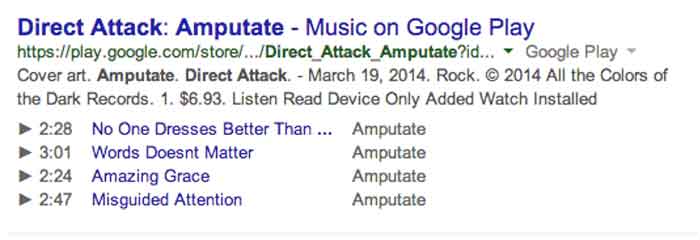
    Much like video schema, MusicRecording schema can display player icons with track, title, and duration details right there in the search snippet. This type of schema obviously only applies to a fairly niche segment of sites and/or clients, but it is another good example of how search snippets can be enhanced through schema. The example below displays a Google Play search result, which, as with fellow Google property YouTube, almost always displays the player info in the search snippet. Similar results can be accomplished in organic results with effective use of schema, however:
    MusicRecordingSchemaExampleImage

    OK, I Get It. So How Do You Do It?

    I’m not going to get into incredibly great detail here, because I promised a relatively simple primer and not a code-heavy breakdown that would scare away newcomers. Perhaps a more thorough explanation of the actual implementation of schema within HTML can be addressed in a future post. For now, I just want to explain schema implementation in terms of properly reading and understanding schema properties in the context of the schema.org item breakdowns.

    The most important thing to understand is that schema markup, like the HTML markup it is integrated into, is hierarchical in nature. This means that there are often numerous schema subproperties, within another schema subproperty, within a schema property, within the top level declared scope of a specific schema type, and so on. And once you go a next level deep in the hierarchy (or change the scope of your markup), the set of available properties is different and only applies to this new scope of the schema.

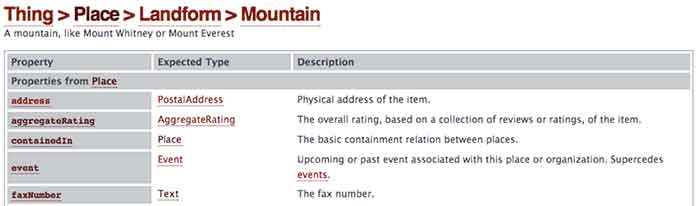
    As an example, let’s look at a section from the page for the always useful Mountain schema*:
    MoutainSchemaExampleImage

    So we’re going to start with Mountain schema as the scope of what we’re marking up in our content. As you can see, there is a list of available Properties for use within this schema on the left. With a nod back to the much earlier comparison in this post, these are all the different types of information we can “highlight” for a search engine. The Description on the right is a pretty self-explanatory explanation of what the property should reference. So far, so good.

    Now, where things get a little tricky is in the Expected Type column in the center. Take a look at the bottom most property “faxNumber,” which is obviously very important. We all know how difficult it can be to send a fax to a mountain, right? Well, you can see that the faxNumber property has an expected type “Text.” This means that whatever text content you list as the value for the faxNumber property is what will be directly communicated to a crawler or search engine as the fax number for your mountain. Simple enough.

    Well, you’ll notice that all the properties above it have more vague and mysterious extended types associated with them. In fact, these types are entirely new hierarchical scopes for the schema being added to the page. So for the “address” property, for instance, instead of just dumping your mountain’s entire street address in as the value, as you can with “faxNumber,” you’re going to have to change the scope of this schema and fill in any address information according to the next level of properties contained in the PostalAddress schema type. Once you change scopes in schema, the deeper level schema type does not know what is going on in the outer levels. So in this example, your PostalAddress does not know or see your mountain’s fax number.

    OK, This Is Getting Ugly. Just Stop.

    Good call. This is probably a good place to cut off an intro level crash course in schema, since anything much more detailed would involve some actual HTML knowledge or experience. Hopefully, this will have helped a non-web developer understand a little bit more about what schema is and how it can be employed to better communicate with search engines. There is such a vast expanse of available schema types for use marking up web content, a fundamental grasp of its structure and function can be extraordinarily useful in pointing your content more directly to the right readers.

    * This is where the Game Of Thrones meme would have gone if I weren’t such a snob.

  • Be Semantic: How to Install Microdata

    Search engines are designed to do one thing — make sense of the various documents found on the Web. Originally using just on-page factors like content and meta information contained in specialized tags, search engines moved to analysis of links in the late 90’s with the advent of the PageRank algorithm. This new method treated links as “votes” for websites, using anchor text and website clout to determine what is relevant to a search query. Recently, though still relying on links as the main source for determining a page’s worth, search engines and other Internet spiders are returning to on-page factors to find information that’s meaningful to users.

    “New” On-Page Meta

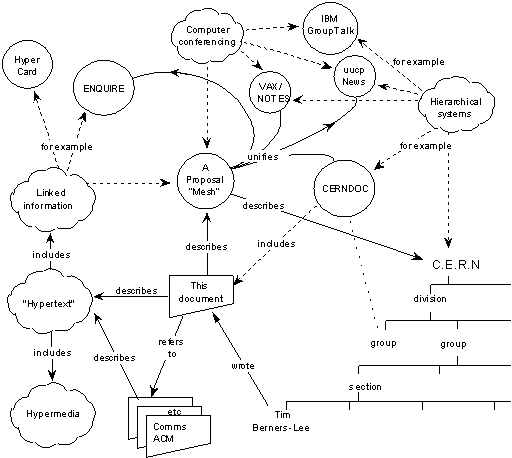
    These “new” on-page factors are the culmination of work dating back to the beginning of the modern Internet. The original diagram showing the basics of how the Web would work devotes much of its space to showing the connections between pages, but one corner lays the foundation for what is now known as the semantic web. This image shows a few of the basic properties in the semantic web: rel=author and other relationship markups, Schema’s breadcrumbs and on-page descriptions, and the hCard microformat.

    Each of these more recent formats are designed to expand on what’s called POSH — “plain old semantic html” — that is, using <p> tags for paragraphs, <ul> or <ol> tags for lists, and <table> tags for tables of data instead of as layout and design elements. The two most common microdata formats, Schema and Microformats, are each based on pure HTML, codifying the use of HTML5’s itemscope and HTML4’s class and ID attributes respectively. In this way, microformats seek to make standard web coding easier for computers to find and use the various data visible on the page.

    Implementing Microdata

    The four most common formats of microdata: XFN, OpenGraph, Microformats, and Schema, make an alphabet soup unwelcoming to newcomers. Part of microdata’s charm is its ease of installation. But while some ways to tell search engines and other scrapers how to index a page are somewhat more arcane, microdata sits on top of the code, easily being added to existing pages.

    Microformats and XFN require relatively little extra knowledge, while Schema and Open Graph assume a little bit of forward-thinking HTML5.

    Microformats & hReview

    hReview, like many compound Microformats, is based around hCard, which was designed to mimic the electronic business card format vCard. With hReview, you can easily mark up reviews to show in Google’s SERPs using standardized classes and IDs.

    In order to do this, there are two steps to the markup. The first is the hReview-Aggregate markup which gives the data shown in the SERP: number of reviews and overall ranking. The second are the actual reviews. Both use hCard to describe about or by whom the review is written.

    Here’s the hReview-Aggregate code from that page:

    <div>
    <h1>Patient Reviews for Columbus, Ohio Plastic Surgeon<br>
    <span id="donaldson-plastic-surgery">
    <span>Donaldson Plastic Surgery – Dr. Jeffrey Donaldson</span>
    <span>
    <span><span title="4661 Sawmill Rd #100"></span></span>
    <span><span title="Columbus"></span></span>
    <span><span title="OH"></span></span>
    <span><span title="43220"></span></span>
    </span>
    </span></h1>
    <p>
    <span>
    <span><span title="4.8"></span></span>
    <span><span title="5"></span></span>
    <span><span title="20"></span></span>
    </span>
    </p></div>

    Much of this example code won’t show, which is against Google’s rich snippets documentation; however, as you can see, the snippet shows in the SERPs. The class=”value-title” syntax follows the microformat specs from their site. But should invisible content be used? Or is it spam? More on that later.

    For the single hReview, the code is clear and most sections are visible. Again, use the value-title syntax to hide any data that’s not meaningful to the user.

    <div>
    <span><span><span title="Donaldson Plastic Surgery - Dr. Jeffrey Donaldson"></span></span><br>
    <span><span title="Tummy Tuck, Columbus, OH"></span><br>
    <span>
    <p>DESCRIPTION</p>
    <p><em>- <span>DM</span> / Columbus, OH </em></p>
    <p><span><span title="4.8"></span></span></p></span></span></span></div>

    XFN & rel=author

    Like microformats, there are other microdata formats that use HTML 4 entities, which keeps the code accessible to most levels of website owners. XFN establishes personal relationships between pages on the Internet and is one of the easiest microformats to install. Prepackaged in many basic WordPress installations, XFN has one major use: establishing your identity using rel=author.

    Using the XFN markup rel=”me”, which relates web pages about someone with social media and other profiles, and the microformat rel=”author”, which associates posts with other web pages about the author, you can let Google and other spiders know who wrote the post. While Google requires further steps and whitelisting to show up in the SERPs,

    For an example, take a look at our authorship markup.
    <a title="Posts by Julia Ramsey" href="http://www.searchinfluence.com/author/jramsey/" rel="author">Julia Ramsey</a>

    This links to Julia’s author archive page, which in turn has a link to her Google+ profile.
    <a href="https://plus.google.com/u/1/104804485354016147497?rel=author" rel="me"><img src="https://townsend.bunksite.com/wp-content/themes/si-dec10/images/g-plus-icon-32x32.png" alt="Find Julia Ramsey on Google+" width="30" /></a>

    There’s some other magic going on, but overall the rel=”me” XFN markup shows who wrote the page and connects it to a social network to grab more information.

    Open Graph

    Moving from connecting with to interacting with social networks, Open Graph is meta information for Facebook. While much of the Semantic Web is about marking up body content, Facebook’s meta information is in the header as tags.

    Using our site as an example:

    <meta property='og:title' content='SOPA Dope &#8211; Today&#8217;s &#8220;Blackout&#8221;, Tomorrow&#8217;s SEO Audit' />
    <meta property='og:site_name' content='Website Promotion Company: Search Influence -  Economical SEO New Orleans, LA SEO / Internet Marketing' />
    <meta property='og:url' content='http://www.searchinfluence.com/2012/01/sopa-dope-todays-blackout/' />
    <meta property='og:type' content='article' />
    <meta property='fb:app_id' content='197784673584291'>
    <meta property="og:image" content="http://graphics.nytimes.com/images/promos/politics/blog/23thompson-nbc.jpg" />
    <meta property="og:locale" content="en_US" />

    There are 7 required tags, mostly named logically. Two that are confusing are og:type and og:locale. The first should be “article” for most pieces of content. The “article” type is for anything that’s a single written post. Necessary, and not always included in Open Graph plugins, is og:locale, which refers to the language and location of the site.

    Schema for Music

    Finally, we come to Schema, the search engines’ attempt to standardize semantic microdata. Schema is deeper and more customizable than any of the other formats, however at the expense of clarity. It uses the itemprop, itemscope, and itemtype attributes from HTML5.

    Of all places to find a modern web example, MySpace’s band profiles use schema for music. Check out the music player on this band’s page.

    The code’s a little less clear because of the flexibility of Schema, but you’ll see by looking at the itemprop attribute that there is a wide variety of meta information categorized and sectioned in that small block of text. In the SERPs, it outputs as a rich snippet, linking to the individual song pages. Needless to say, while extremely niche, this power is invaluable for musicians and bands. All of Schema is this niche, but the benefits are massive, as seen here:

    Is it Spam?

    There comes a point where a marketer could easily see the potential for abuse. Hidden data, which we touched on before, is only one aspect. Certainly, there can be hidden data that is misleading, however it’s clear that some data doesn’t need to be for the end-user. Google’s guidelines say to not hide any data that is a rich snippet, but for things like a strict star rating for a text post and repeating the subject of the review, there’s good reasons to hide structured content.

    However, that hidden data quandary bleeds over to reviews in particular. No website owner is going to be happy about his own site showing his products and services to be low-quality. There is a clear directive for a business owner to cull bad reviews from his own site, and therefore the reviews may be less than perfectly accurate to their customers’ feelings. One way to avoid this would be to take advantage of user-generated content, with safeguards for malicious spam and abuse. Another would be to show accurate ratings based on a rubric, though that could easily become difficult for the website owner to get through.

    For social meta data, often a marketer will use different descriptions and titles to target better on a given social network. This can be used for a sly bait-and-switch, similar to some ads that use a voluptuous beauty to make you click on a much less interesting post.

    However, in most cases a high-powered sniff test and tummy check are all that are necessary to determine if something is spam. Certainly the tools would not be recognized by major search engines if semantic data were considered with the same level of scorn as some marketers have for pure meta keywords. If the reviews selected are glowing, why not give them all 5 stars? If the page is enhanced and not weakened by different social and search meta data, who would mind that?

    The Internet is best served by a semantic, rich web. A vibrant search page, a web that’s easily crawlable for information, and a social experience enhanced by relationships and attribution are all at the core of microdata: make the most of your site today with these techniques.