Tag: remarketing

  • Grow Traffic to Your Higher Ed Content With a Personalized Marketing Strategy

    Key Insights

    • Just like other businesses, higher education institutions need to use marketing tools and strategies to broaden awareness of their brand and attract new students.
    • Education marketing can help a higher education institution to present relevant, personalized information to prospective students, which in turn spurs their interest in enrollment.
    • When you use data to better understand prospective students and provide them with tailor-made content, they will be more likely to engage with you directly on the content you produce.

    When prospective students look for new schools online, they often focus their searches on programs and institutions that will help them achieve their educational and professional goals. The higher education market is extremely competitive, so it can be challenging for prospects to navigate their options and find the right program.

    With a personalized marketing strategy, your higher education institution can more effectively promote your program offerings, highlight what sets you apart from the competition, and attract more students.

    Student at university holding textbooks

    What Is Education Marketing?

    Like businesses, higher education institutions need to use marketing tools and strategies to broaden awareness of their brand and reach new students. In addition to traditional marketing techniques, schools also use digital marketing to increase traffic to their websites, giving prospective students valuable information about their programs and benefits. Education marketing efforts on the web often include search engine optimization (SEO), digital advertising, content creation, and outreach using social media and email.

    Benefits of Education Marketing

    Brand recognition

    Education marketing helps schools increase awareness of their brand, which can be especially useful for attracting new students. The more visible, compelling, and reputable a school’s brand is online— and out in the world — the more that students will be interested in attending.

    Lead generation

    One of the primary goals of any marketing strategy is lead generation, gathering contact information from potential consumers. Education marketing can help a school to present relevant, personalized information to prospective students, encouraging them to provide information via website form submissions, content downloads, or calls to the school. This allows the school to identify and develop a list of prospective students to engage with throughout the marketing funnel.

    What Is a Personalized Marketing Strategy?

    To stand out from competitors, businesses have started to ramp up their marketing efforts by using personalized marketing strategies. Personalized marketing uses data collected from consumers to deliver brand messages tailored to individual prospects. When educational institutions use personalized marketing strategies, they get the chance to know more about prospective students—their interests, browsing behaviors, and search terms, for example—and can then market their brand to them more effectively.

    This attention to detail is paying off for brands across the globe. According to SmartHQ, 72% of consumers claim that they respond to marketing messages that are exclusively crafted to their choices.

    Benefits of Using a Personalized Marketing Strategy for Your Education Marketing Content

    Gain a better understanding of prospective students

    When an educational institution uses a personalized marketing strategy, they learn more about their prospective students’ interests, habits, and desires. This crucial information helps higher education marketers develop smarter marketing strategies and create student-centric journeys through the marketing funnel, giving schools an advantage over competitors when it comes to enticing and recruiting new students. It can also help schools tailor their program offerings and incentives to better match what incoming generations of new students look for in their higher education options.

    Lead nurturing

    Lead nurturing is the process of developing relationships with potential consumers in order to nurture them through the student’s journey. When schools use data to better understand prospective students, they can more effectively market to them as they transition from interested prospects to enrolled students.

    Prospective student engagement

    When you use data to better understand prospective students and provide them with tailor-made, personalized content, they will be more likely to engage with the content you produce. Targeting users with relevant content leads to a 73% higher conversion rate, according to Aberdeen. Increased engagement is a good sign that prospects are interested and can be nurtured toward a final decision.

    Prospective student social sharing

    If your content is useful and engaging, it’s also more likely that prospective students will share it using social media and word-of-mouth. This is a great way to increase awareness of your brand and have your content distributed organically to other prospective students, even those who may not yet be in your personalized marketing strategy.

    Prospective student retention

    A personalized marketing strategy enables you to build closer relationships with prospective students. This helps to retain them from their initial interest in your institution to the moment they decide to enroll.

    Professor giving lecture in a college lecture hall

    Basics of Implementing a Personalized Marketing Strategies for Higher Education Institutions

    Student personas

    Student personas are semi-fictional profiles that mimic the demographic information, goals, and challenges of real prospective students you’re trying to reach and recruit. Personas are a great way to refine your messaging across all marketing tactics, improve your content strategy, and increase applications.

    Remarketing through digital ads based on actions and/or funnel stage

    Remarketing tailors digital ads to prospective students who have already shown interest by visiting pages on a school’s website or interacting with other brand content. This form of re-engagement is useful for nurturing prospects through the marketing funnel and keeping them interested in your brand.

    Program-specific email nurture

    Having data about your prospective students’ interests enables you to send them program-specific emails. These are far more engaging than generalized emails, and they give students valuable information about programs they’re interested in, which helps to nurture them as they consider enrollment.

    Action-driven email nurture

    Emails can also encourage recipients to take action that furthers their engagement with your brand. For example, effective action-driven emails may include a clickable link to a new blog post or video, an invitation to sign up for an event, or an opportunity to start a conversation with a student advisor.

    Appropriate calls to action

    Calls to action in emails and other communications should always be appropriate for the intended recipient. A call to action for a prospective student who is earlier along in the marketing funnel might ask them to request more information about a program, while a call to action for a prospect who’s in later stages of the marketing funnel might ask them to begin filling out an application.

    The Education Marketing Experts at Search Influence

    A personalized marketing strategy enables your educational institution to reach and engage prospective students. Our team of experts at Search Influence will help you to develop a strong marketing strategy and provide you with the digital marketing tools you’ll need to broaden your audience, including SEO, analytics and lead tracking, and content marketing.

    To learn more about the services we offer, fill out our online contact form.

    Images
    Student

    Lecture Hall

  • Facebook Remarketing Explained – 4 Steps to Increase Your ROI

    How Does Remarketing Work?

    Have you ever window shopped for a new pair of running sneakers online and noticed they followed you around the Internet? Advertisements for those sneakers in the same color and size appear on almost every website you browse! You might even be scrolling through your Facebook News Feed and the sneakers pop up again. You may be thinking, “This is fate!” But no, this is not fate or the magic of the Internet.

    I’m going to let you in on a little secret called remarketing. One of the hottest trends in remarketing right now is using Facebook to target a select group of ideal customers with tailored ads. Your company’s marketing team can use this powerful marketing tool to nurture relationships with qualified customers and increase sales.

    What Is Remarketing?

    Let’s say someone clicks on your brand’s Facebook ad. They’re instantly brought to your website, and they can browse your offerings. These people are generally qualified leads because they took the time to navigate away from their cluttered News Feed and click on your ad. However, they may not always complete an action like making a purchase, downloading an e-book, or providing their contact info. In fact, people rarely make a purchase the first time they visit a brand’s website or see an offer from the brand. These lost prospects are valuable, and you will want to continue your business experience with them.

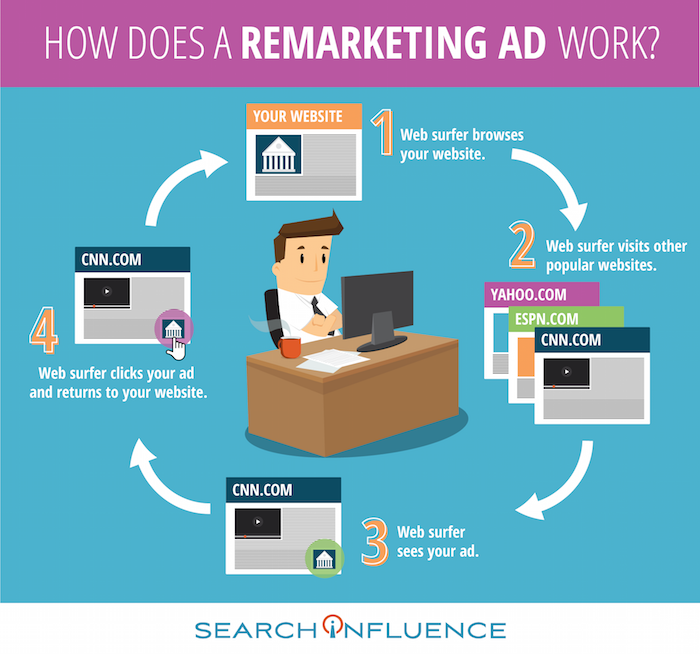
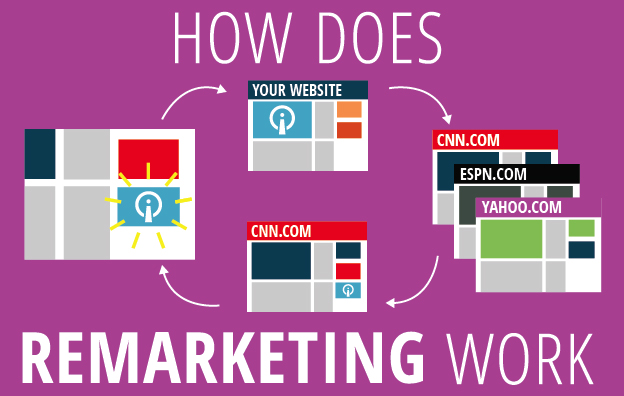
    How Does a Remarketing Ad Work Infographic Image - Search Influence

    The overarching goal of remarketing is to place your brand at the top of consumers’ minds. Remarketing allows you to reach people who have previously visited your website and may not have made a purchase.

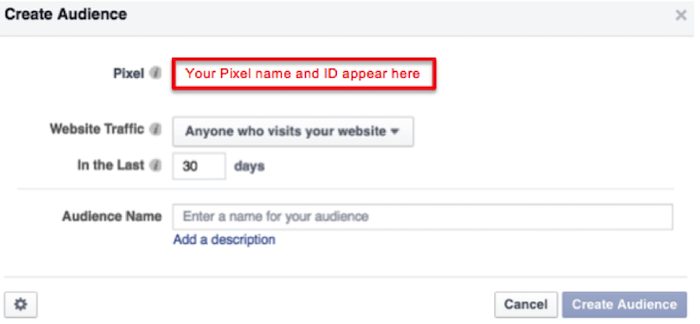
    A great way to revive your relationship with them is by showing tailored ads to them again on Facebook. To do this, you can use your brand’s Facebook pixel to create a Custom Audiences for Website Traffic that builds an audience based on your brand’s website traffic. The opportunities to nurture and build relationships with current and prospective customers on Facebook are endless.

    Why Should I Remarket on Facebook?

    Facebook remarketing ads get three to four times the response rate of regular Facebook ads. With over 1 billion people using the social media platform daily, making sure that you’re reaching the right people is critical! The Custom Audiences for Website Traffic feature seamlessly reaches your ideal customers by creating a Facebook audience representing a group of prospective customers and current customers who have visited your website. This feature has a few benefits:

    • Reach people who are genuinely interested in your brand through targeted Facebook Ads
    • Bring people back to your website to complete an action
    • Find new people who have similar characteristics to your website

    By targeting your ideal customers, you will grow your brand’s fan base, drive website traffic, build a rock-solid email list, and increase ROI. You will also avoid burning a hole in your advertising budget by lowering cost-per-click, driving higher conversions, capitalizing on social proof, and expanding market reach.

    How Do I Use Facebook Custom Audiences for Remarketing?

    Now that you’re an expert in remarketing, let’s dive in and set up a Facebook remarketing campaign for your brand. I’ve created a 4-step guide that outlines the setup process.

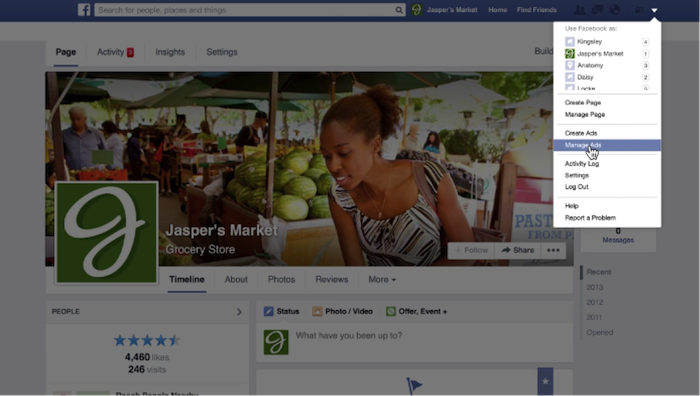
    1. Access Facebook Ads Manager. Log in to your Facebook account and navigate to the drop-down menu on the top left of your screen. Select “Manage Ads” from the drop-down menu.

    1 - Remarketing Drop Down

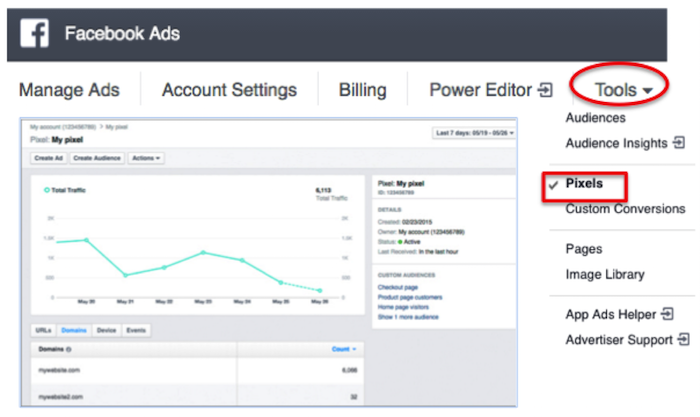
    2. Create a Facebook pixel. To pinpoint your website visitors so you can retarget them on Facebook, create a Facebook pixel and insert it on your site. Now that you are in Facebook Ads Manager, click on the “Tools” drop-down menu and select “Pixels.” Click “Create a Pixel” and give it a name. Then, copy and paste the pixel code into your website code.

    2 - Facebook Ads

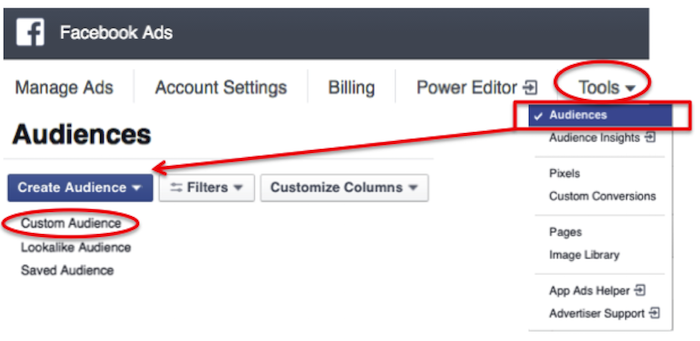
    3. Build a custom audience. Click on the “Tools” drop-down menu and select “Audiences.” You’ll see a blue button that says “Create Audience.” Click on that button and hit “Custom Audience” from the drop-down menu.

    3 - Audiences

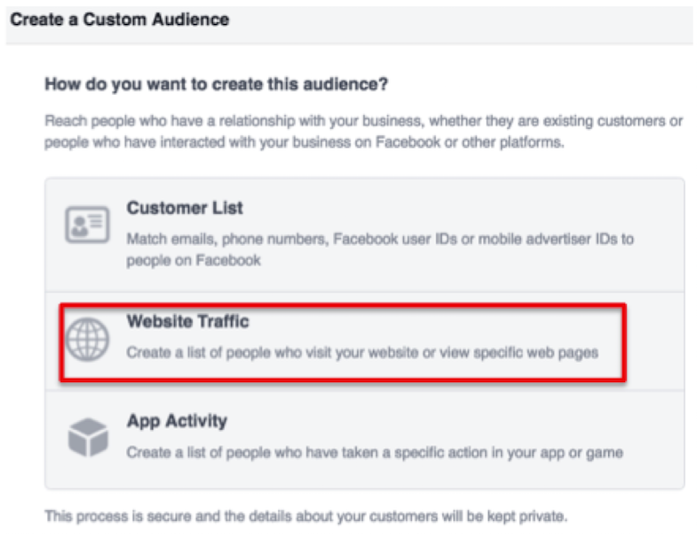
    Then, select “Website Traffic” and name your audience.

    4 - Website Traffic

    5 - Create Audience

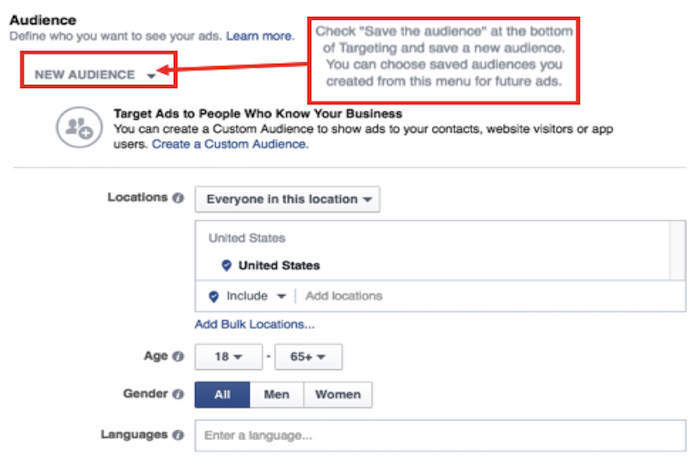
    4. Craft an Ad. In the ads create tool, you can access your custom audience when you choose who you want your ad to reach.

    6 - New Audience

    Voila! You’ve successfully created your remarketing campaign. If you have any more questions along your remarketing journey, you can reference Facebook’s simple remarketing guide.

    Image Credits:

    “Manage Ads” Menu Screenshot – from Video
    Pixel Graph Screenshot

  • Surprise Oscar Winner: jcpenney’s #YoursTruly Real-Time Marketing Campaign

    During this evening’s 85th Academy Awards, jcpenney used real-time marketing to capitalize on our here and now, instant gratification tendencies by launching a strong activation through social media. The goal of the Oscars campaign was to grab new viewers and continue to update their more-than-outdated, less-than-classy image.

    To begin, their Twitter page, much like many Oscar attendees, put its best face forward with a glitzy makeover. Before this evening it’s very likely that you, your wife, girlfriend, or 20 something daughter certainly didn’t think of jcpenney as fresh, on trend, glitzy, luxurious, or modern. Some of you may not have even thought it was still a surviving entity.

    Well, as long-time believer that shopping at this store was calm, easy, and reliable, I have been having so much fun spreading the news of the come-back-company. About 15 months ago, Ron Johnson, the man who made the Apple Store the addictive adult version of a candy store, stepped in as CEO of jcpenney and vowed to not just turn the company around, but completely transform it.

    There has been a slow, but certainly not subtle, roll out of a new store layout including mini brand shops, major tech updates and store renovations, and even a dramatically new “everyday low price” structure that so strongly alienated long-time customers and enraged critics that jcp back-pedaled and brought back the idea of traditional “sales” within months.

    Throughout this time, Johnson had a flurry of critics but I always believed and still do believe they will succeed at their task of complete rebranding, taking the “affordable luxury” phenomenon to the next level.

    Their most significant splash into the homes of their target demographic? Oscars 2013, when the company our children will know as “jcp” and my mom will always call “Penney’s” launched a feel good real-time cross-channel campaign that spanned from our televisions to our tweets.

    In the commercial that aired this evening, jcp writes us a personal love letter stating, “Dear America, you deserve to look better and live better.”  Why wouldn’t I want to shop somewhere that tells me I deserve more!?

    The Key Components of the Real-Time Marketing Campaign:

    In addition to appealing to our egos, let’s discuss the other aspects of the award-winning combination that made this campaign effective.

    On-Time and On-Point Tweets

    Early in the evening, @jcpenny tweeted a back-stage peek inside their social media command center. Many team members were on hand, watching the show on a larger than life projector, all well-situated for quick tweeting and ad targeting. I’m sure they were ready for quick fire graphics in case they needed to step up to the plate to try to out-Oreo Oreo, who gathered with their marketing team to attempt to re-create the magic of their Super Bowl 2013 social media win.

    jcp Oscars 2013 Social Media Command Center

    Demographically Targeted Twitter Ads

    I am clearly in jcp’s target demographic. As I launched Twitter, this was the first thing I saw:

    Even if I had not been popping open my computer to pen this post on the very campaign that was being targeted to me, I, or those out there with similar demographic profiles as me, would have been pulled into the well composed and thought out campaign.

    Shareable Graphics

    The rapid fire team rolled out right-on-time, clearly pre-planned graphics that tied in with the “Dear America” theme all while promoting niche, desirable products.

    jcp Oscars 2013 campaign - Dear Commercial Break,  jcp Oscars 2013 Campaign - Dear Red Carpet  jcp Oscars 2013 Social Media Campaign - Dear Plunging Necklines  jcp Oscars 2013 Social Media Campaign - Dear Mani-Cam

    Strong Television Placement

    Not only was the “Yours Truly” spot placed early in the broadcast, it had all the makings of a 90 second must-keep-watching commercial: the “who’s ad is this” mystery, a montage of memories, a cinematic soundtrack, clever word play, and continuing bold use of text throughout. All ending with the most important piece of the pie…

    Calls-to-Action

    If you happened to catch the ad, you saw the strong close driving you to jcp.com/yourstruly, a buy-now optimized mini site that directed you straight to the promoted products. In case you may have landed straight on jcp.com, they had a nice reminder of the evening’s festivities and invited all their new admirers to join them on Twitter.

    The Free Prize Inside: $100 Gift Cards Galore

    For many of those that jumped in the conversation, @jcpenney quickly returned their tweet with a $100 gift card. 2 big benefits here: 1. getting new customers into the store to see the new changes 2. creating social buzz. If you were given $100, you would tweet it, wouldn’t you?

    That’s right. Congratulations, jcp. Although you didn’t have to try too hard here as I’ve always been a fan, I am sure you have turned a number of heads this evening on the red carpet.

    You have our attention, and now, we’re tipping our hats to you.

    Yours Truly,

    plmk

  • Out of Site, Out of Mind? The Benefits of Remarketing Campaigns

    In advertising, the Rule of Seven states that a potential consumer must see or hear your ad at least seven times before taking action and actually purchasing your product. While this rule is not set in stone, it establishes that you cannot simply engage your target market a single time and expect to stick in their minds. With the sheer volume of ads we see daily, people have adapted to an “out of sight, out of mind” mentality with products and brands.  In order for you to obtain optimal results, the Rule of Seven asserts that your marketing campaign must include continual efforts towards staying in the forefront of people’s minds.

    To best apply the Rule of Seven to Internet advertising, I recommend a remarketing campaign.  Whether your goal is to drive sales, promote brand awareness, or increase the number of leads you receive (phone calls or forms filled out on your site), remarketing—if done correctly—offers an innovative way to convince those fair-weather consumers to return to your site.

    According to Google, “Remarketing is a feature that lets you reach people who have previously visited your site and show them relevant ads when they visit other sites on the Google Display Network.” By implementing remarketing code on specific pages of your website, all visitors to these pages are given a specific cookie ID which is added to your remarketing lists. Once you receive 50 cookie’d users per a given page, you can stay in touch with these visitors by showing them ads across the Google Display Network, which includes any sites that run Google ads.

    Remarketing most benefits Ecommerce retailers because advertisers can market individuals who may have gotten as far as adding products to their shopping cart before abandoning the sales funnel. Ecommerce sites can also direct special offers and promotions straight to their remarketing lists as well.

    Keep in mind that remarketing campaigns are not meant to initiate sales, but they are fantastic for closing them.  For the most effective campaign, advertisers should combine a display campaign dedicated to branding with a remarketing campaign. A strong display campaign will drive new traffic to your site based on their keyword searches. Once these individuals are introduced to your brand and added to your remarketing list, you will appear to them across the Display Network. Your ads will serve to remind your visitors that, at some point, they were interested in a product on your site, thus eventually leading them back to the site to complete the sale.
    By analyzing your remarketing lists, you can better deconstruct the demographics of your target audience. These demographics can later be used for other marketing campaigns. Specifically for Internet marketing, demographic research can influence the style of ads, the placements for your display campaigns, and the keyword research you conduct. You can also attribute your demographic research to Facebook campaigns,

    So now, even when your viewers are out of site, you can keep your brand on their minds!