Tag: ott

  • Reach Your Audience on the Biggest Screen in the House – June Client Insider

    Reach Your Audience on the Biggest Screen in the House – June Client Insider

    Maximize Your Brand’s Impact with CTV & OTT

    The power of TV meets the precision of digital advertising

    Did you know we offer streaming video ads – also known as Connected TV (CTV) and Over the Top (OTT) ads – so your brand remains top-of-mind throughout the entire customer journey?

    Almost half of internet-connected U.S. households* have now “cut the cord” on traditional TV subscriptions in favor of streaming services. Show up where your audience is already watching to maximize visibility and drive meaningful engagement.

    Programmatic Connected TV advertising gives your brand premium placement on the largest screen in the home, while using the same audience targeting and attribution tools as your digital campaigns, and at a much lower cost than traditional TV.

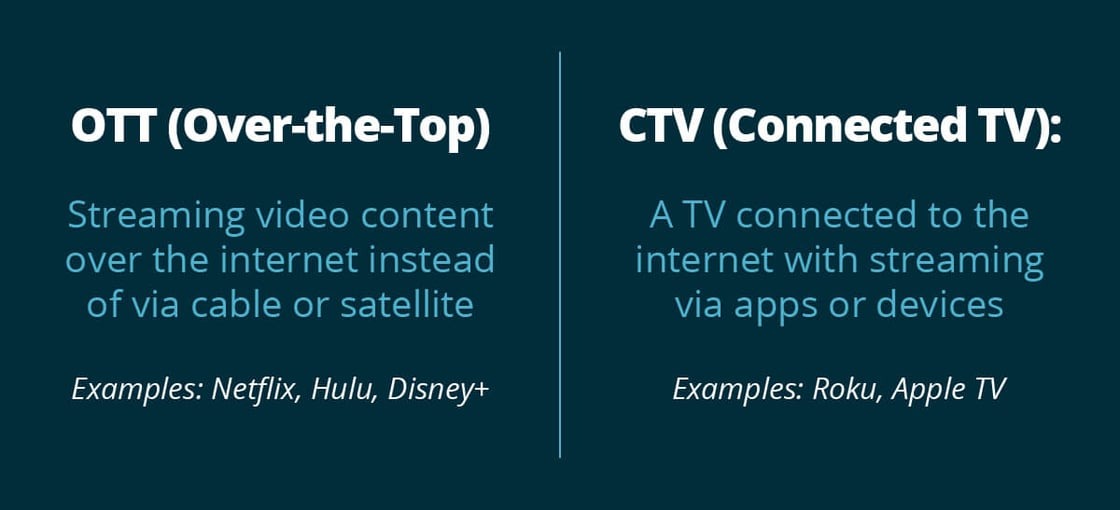
    OTT vs CTV

    Streaming video ads display your ads across devices, from smart TVs to tablets and mobile phones. With the ability to track performance in real time and retarget viewers across channels, these campaigns help you build a full-funnel strategy that connects the dots from awareness to conversion.

    Why Incorporate CTV & OTT Advertising into Your Strategy?

    • Build brand recognition early in the decision-making process
    • Re-engage audiences who have already interacted with your ads or website to move them further down the funnel
    • Drive conversions like sign-ups, inquiries, and purchases with precise and timely targeting

    CTV and OTT ads are the modern evolution of billboards and TV spots: they’re smarter, more targeted, and measurable. With household-level targeting and real-time attribution, we can track how your ads drive action and continuously optimize for better results.

    Adding Programmatic CTV to your existing Display, Social and Online Video campaigns ensures your message lands on the biggest screen (and every screen) in the home.

    Ready to explore Connected TV and optimize your ad results? Reply to this email, or reach out to your Account Manager today to discuss adding CTV and OTT advertising into your strategy.

  • 6 Paid Advertising Trends in 2023 to Stay Competitive

    Key Insights:

    • AI-generated copy allows marketers to generate effective messaging for their ads quickly and easily.
    • Automation lets marketers focus on testing ad variations and creative elements to determine which ads perform best.
    • Video ads are a powerful way to engage your target audience and drive conversions.
    • TikTok’s video-first allows marketers to create engaging, creative ads
    • OTT/CTV advertising offers a cost-effective alternative to TV advertising.
    • Marketers are turning to first-party data to power their advertising campaigns.

    The world of paid advertising evolves constantly, with fresh trends and technologies popping up every year. By keeping your finger on the pulse of these trends, you’ll be able to supercharge your marketing efforts and get the best possible results for your clients. So, what can you expect from the world of paid advertising in 2023?

    1. AI-Generated Ad Copy

    Marketers use AI-generated copy to create effective messaging for their ads. AI copy tools have transformed the advertising landscape with features that even consider tone of voice and audience demographics to craft converting copy.

    By providing these ads in minutes, AI-generated ad copy saves marketers time and effort — so they can focus on other aspects of their campaigns.

    2. Creative Testing With the Rise of Automation

    The rise of automation allows marketers to level up their campaigns by spending time on creative testing.

    Focus on testing ad variations and creative elements to determine which ads perform best with their target audience. This allows for an improved return on investment for advertising campaigns.

    3. Even More Video Ads Than You Ran Before

    Engage your target audience and drive conversions with video ads. We have seen these types of ads get more engagement and have higher conversion rates.

    High-performing video ad elements:

    • Grabbing attention in the first 3 seconds
    • Clear and concise messaging with a call to action
    • Emotional appeal
    • Length: 15-30 seconds for social media ads

    There is a low-cost video solution that is attainable for all marketers — user-generated style videos. Marketers, or your clients, can create these videos at a relatively low cost compared to professionally produced videos.

    User-generated style videos have an authentic, unscripted feel to them that helps to build credibility with the target audience. Test this strategy out on TikTok!

    Influencer taking a photo with smartphone for social media

    4. TikTok Advertising

    TikTok has become one of the most popular social media platforms in the world, with over one billion monthly active users and with users spending an average of 95 minutes per day on the platform. Contrary to popular belief, the TikTok has a diverse audience, with users from all age groups, genders, and backgrounds. We recommend marketers consider this platform for advertising.

    TikTok’s video-first approach allows marketers to create engaging, creative ads that showcase their products or services while connecting with their audience. TikTok’s user-generated content approach means that marketers can also take advantage of user-generated content and create campaigns that encourage online sharing.

    Smartphone with tiktok app open on a phone

    5. OTT/CTV Advertising

    OTT refers to the delivery of video content over the internet, and CTV refers to the use of internet-connected devices to stream content on TV screens. Many viewers turn to OTT/CTV platforms to watch their favorite shows and movies rather than traditional cable TV.

    OTT/CTV ads are typically less expensive to create, the cost of ad placement is generally lower, and marketers can target specific audience segments based on demographic information and user behavior. More importantly, marketers can optimize campaigns in real-time by tracking the campaign’s impressions, clicks, and conversion rate.

    6. Targeting Using First-Party Data

    As the digital world shifts towards privacy and data protection, the use of third-party cookies is becoming increasingly restricted, making it challenging for marketers to track user behavior and target their ads effectively.

    Many digital marketing agencies in New Orleans turn to first-party data to power their advertising campaigns. First-party data refers to information collected directly from users, such as website usage data, purchase history, and demographic information. This type of data is becoming increasingly valuable as it allows marketers to target more effectively.

    By using first-party data, marketers can tailor advertising to specific individuals based on their interests and preferences. Additionally, first-party data can increase the effectiveness of advertising campaigns through remarketing and uses of “lookalikes” of first-party data. Lookalike targeting, a common technique used in Meta Ads, uses first-party data to target users similar to existing customers.

    Learn More About Paid Advertising From Our Advertising Firm in New Orleans

    Marketers who stay on top of these latest trends will produce great campaign results in 2023; however, it’s important to remember that these trends are just a starting point. To truly succeed in paid advertising, marketers must constantly test and optimize their campaigns to ensure they get the best results for their business.

    Staying informed of paid advertising trends ensures you have effective and efficient campaigns that deliver the best possible return on investment.

    Contact our New Orleans digital marketing agency to learn more about paid advertising.

    Images

    Camera

    TikTok

  • What is OTT and CTV? A Marketing Manager’s Guide to Advertising on Long-Form Streaming

    Key Insights

    • Consumers across all age groups have embraced streaming tv shows and movies.
    • Advertising on streaming services offers many benefits over traditional TV advertising, including robust targeting and measurement, including individual or household information.
    • By leveraging OTT, you can reach consumers with messages across multiple devices and platforms, truly running a full-funnel campaign with ads that talk to each other.
    • You can stretch your advertising dollars with OTT to reach consumers where they already watch content: their smart TVs, computers, and mobile devices.

    Even if you are old enough to remember tuning in live for the Cheers finale live or parking in front of the television for “The One Where Ross Finds Out,” chances are you now stream most of your favorite TV shows. In 2020, Hulu found that 90% of all 13–54-year-olds watch TV on a streaming platform. That’s several generations of consumers who engage with TV, movies—and brands—in a streaming environment. The COVID-19 pandemic has increased watching habits, with the average American now spending nearly two hours a day watching subscription video on demand services.
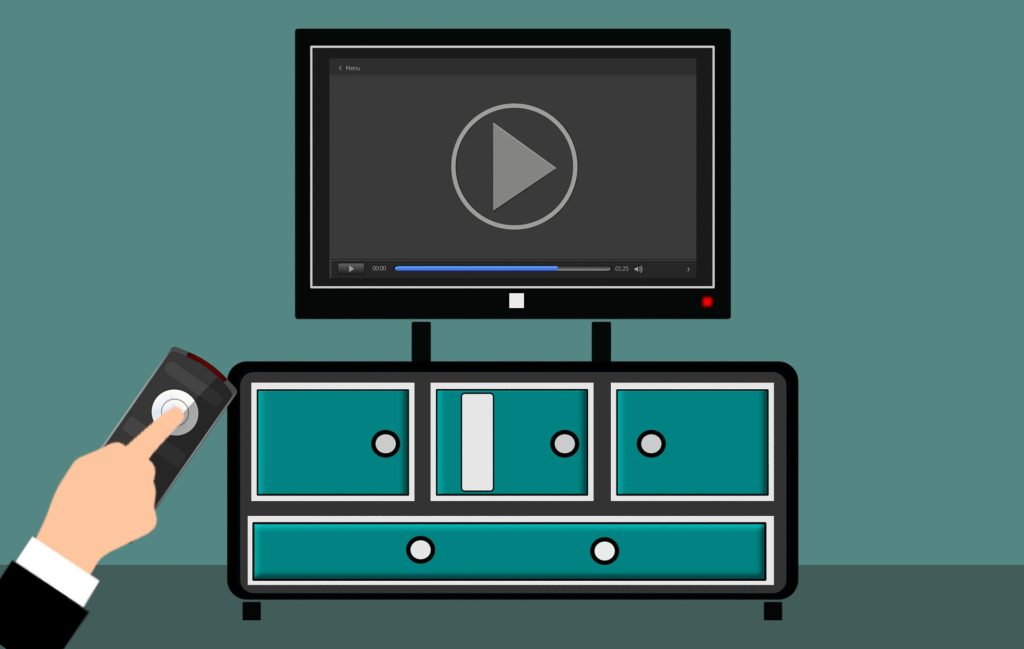
    Person using remote control on their streaming device

    Advertising on streaming television is an affordable way for businesses to fill their upper funnel while capitalizing on the creative flexibility, targeting, and measurement capabilities of digital advertising. Emerging brands can use streaming advertising to leverage the mass reach and advanced targeting capabilities of long-form streaming to help build awareness, while established businesses can use it to connect with coveted audience segments who do not engage with traditional media.

    The industry term for streaming long-form content directly to viewers via the internet through TVs or devices is called OTT. This post will further define OTT and expand on its benefits, including targeting, measurement, and branding.

    About OTT

    Defining OTT

    OTT stands for over-the-top and refers to content streamed on apps and services, such as Hulu, Discovery+, or Peacock.

    You can watch OTT content on any device connected to the internet. The term originates from the now common practice of consumers going “over the top” of a cable box, bypassing cable/satellite subscriptions or broadcast TV to stream long-form, premium video (such as scripted TV shows).

    Advertisers can also use the term OTT to distinguish streaming tv shows and movies from user-generated online video (for example, unboxing videos on YouTube made by an influencer is not OTT content.)

    What is CTV?

    CTV is a subset of OTT. CTV stands for connected television and refers to a device that delivers video by connecting to a TV.

    CTV examples:

    • HDMI sticks: Amazon Fire TV, Apple TV, Roku
    • Gaming consoles
    • Connected television sets, such as smart TVs

    It does not include tablets, computers, or other mobile devices.

    An Example of OTT and CTV

    You start binge watching the latest Hulu series of the moment through a Roku plugged into your TV.

    You streamed OTT content over CTV.

    You move to your bed and watch Hulu from the app on your phone (yes, yes, you know it’s not good for your sleep to watch TV in bed).

    You streamed OTT content.

    Benefits of OTT

    OTT combines the power of digital media with the advantages of advertising on television. Your brand receives traction from the authority consumers assign to seeing your ad on a big screen with the targeting and measurement capabilities that allow you to optimize performance to maximize your ad spend.

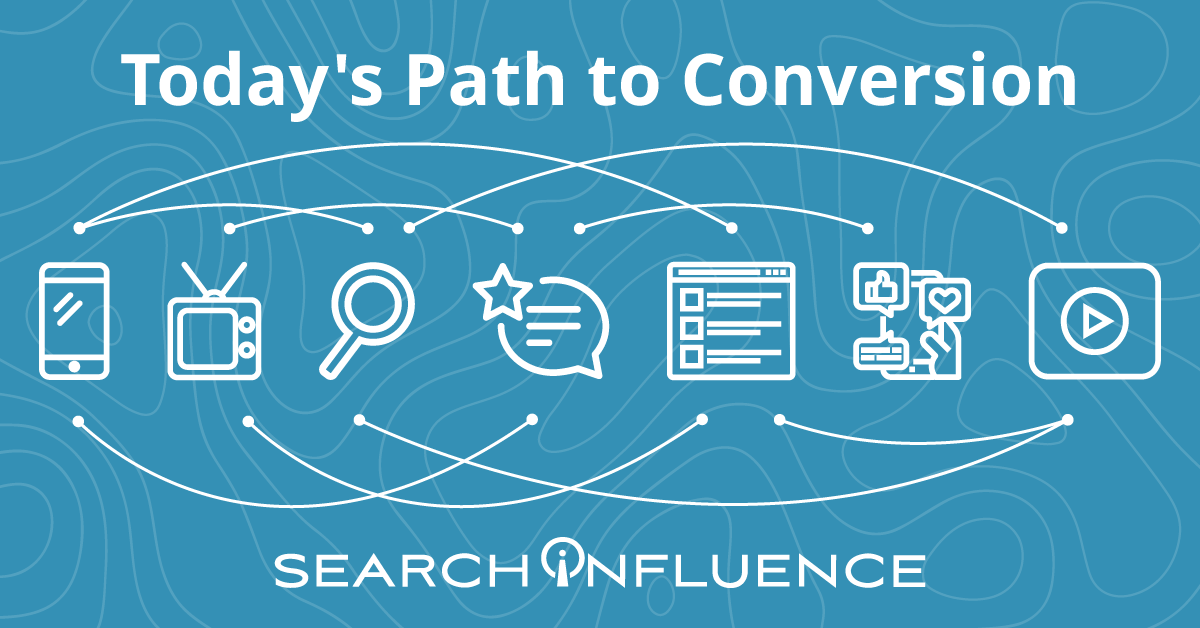
    With all of the research options at our fingertips, consumers’ path to conversion evolves each year. Product research and shopping takes consumers across many online and offline touchpoints. By leveraging OTT, you can reach consumers with messages across multiple devices and platforms, truly running a full-funnel campaign with ads that talk to each other.
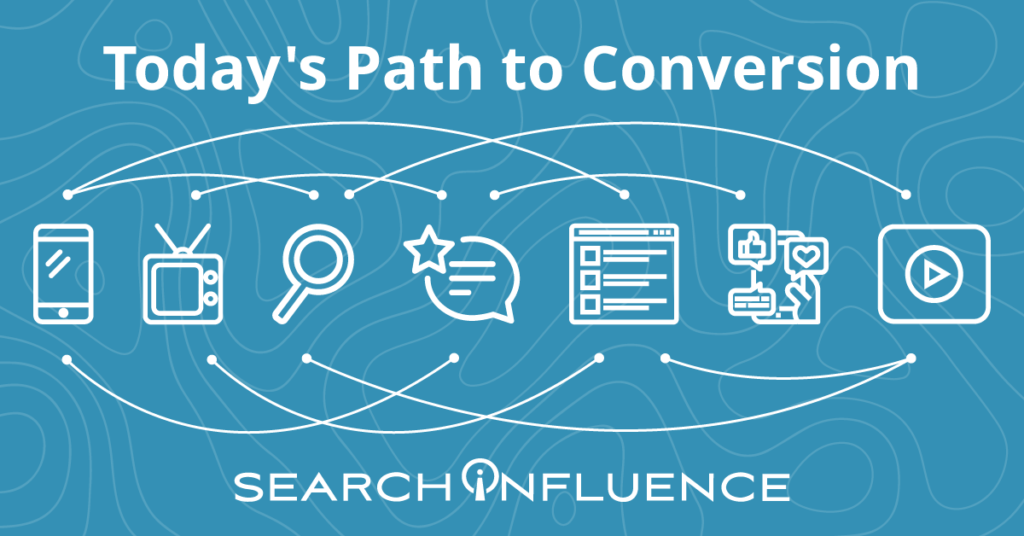
    Today's path to conversion

    OTT Targeting Capabilities: First and Third-Party Sources

    OTT first and third-party sources enable businesses to build detailed segments beyond the typical options found on other digital marketing platforms.

    First-party data: The advertising platform learns about audiences through device-level viewer data, which it takes from users’ IP addresses. Targeting options vary by OTT provider. Some options include:

    • Location tracking and geofencing
    • Home page visits

    Third-party data: Third-party vendors provide consumer data and customer attributes that enable more precise targeting definitions. Some options for third-party data targeting include:

    • Purchase behaviors (online and offline)
    • Age/gender composition
    • TV viewership and media consumption

    Retargeting

    A prospect’s viewing behavior becomes part of their digital footprint. If a prospect views an ad, OTT’s retargeting capabilities lets you follow this prospect across all ad-supported streaming services and devices. You can capture brand impressions with video and then prompt an action on a device where it’s easy to convert.

    For example, a healthcare practice can target an upper-funnel ad promoting a new procedure to a household’s smart TV. Later, the practice can display a lower-funnel ad that encourages the prospect to fill out a form for a free consultation for this new procedure to a mobile device in that same household. A prospect is much more likely to fill out a form on a mobile device than if the ad appeared on a smart TV, encouraging prospects to go onto their website and fill out the form.

    OTT Targeting Capabilities: Addressable Geo-Fencing aka Household Targeting

    Through OTT, you can target multiple prospects under one roof.

    ​​When several devices are connected to the same router, they form a network and have the same external IP address. As a result, advertising platforms can identify multiple devices in the same household by looking at whether they have the same IP address.

    OTT advertising platforms can match a smart TV to a series of desktop and mobile devices, creating a “digital household,” which allows advertisers to target individuals across different devices. This extends the opportunity to customize your ad based on the user’s device.

    Examples of What You Can Do with OTT Targeting

    OTT’s multiple targeting options allow you to specify as much as your campaign needs.

    • If a prospect searches a website for events in their area, you can use keyword search retargeting to show them an ad for your event as they stream their favorite TV show.
    • A small business could target residents over 35 years old in a specific zip code.
    • If you want to target adults for your continuing education program, you can leverage information such as education level, areas of interest, and browsing history to customize ads down to which educational programs might be most attractive to a given prospect.

    Measurement and Attribution

    OTT’s sophisticated measurement and attribution capabilities give businesses the tools to evaluate the ROI of their campaigns and understand which segments, platforms, and content deserve further investment.

    The capability to match consumers to their devices means you can see which specific prospects watched your ad, how much they watched, and the outcomes of watching the ad (such as purchase, website visit, or store visit). With the flexibility to test audiences and content variations, you ensure your advertising remains relevant, so you don’t waste ad dollars on a consumer unlikely to take action.

    Branding

    OTT’s multiple platform options help establish legitimacy for your brand. With OTT, your brand ad can appear on a big-screen TV, streaming right after a national brand. This way your ad receives the afterglow of playing right after a Tide commercial on a 70” screen rather.

    Ready to put OTT into practice?

    To drive performance with target consumers, small and medium businesses should consider including OTT as a component of their cross-platform strategy. Emerging brands can use it to build awareness with new consumers, and established companies can use OTT to remain relevant.

    Unsure of where to start with OTT? Contact the experts at Search Influence to discuss how you can use these tactics as part of a full-funnel strategy to drive leads for your business.