Tag: marketing

  • “Where You At?” 4 Attractions That Are Owning and Winning the Social Media Game

    If you’re anything like me, you’re likely to experience an immediate rush of nostalgia when you hear the phrase “where you at?” Probably because you can recall the early 2000’s when Boost Mobile coined the famous tagline. However, with updates to technology happening all around us, the popular tagline has never been more applicable. Thanks to social media, we’re no longer limited to experiencing some of the world’s greatest wonders and destinations through a fashion magazine or a dusty book at the neighborhood library. Now, with a finger scroll, you can experience live snaps from the Louvre in Paris by night and wake up to astounding images of Tokyo’s Imperial Palace by morning.

    Travel Glasses - Search Influence

    Although some attractions have found the path to social media enlightenment challenging, enticing content can generate the right kind of attention and turn your historic venue or neighborhood candy store into the next viral sensation. Here’s a look at four different attractions that have used social media to help skyrocket their brand’s popularity and engage audiences.

    The Tate Collective

    It’s not every day that you see dancing art from the 1840s, but The Tate Collective, a collection of four UK art galleries, managed to change the way millennials saw classical art with their 1940s GIF party. Using their wide reach in the area and the innovation of a growing young population, their site saw one GIF re-blogged over 100,000 times, increasing the Tate Collective’s Tumblr followers by 25,000 users throughout the campaign.

    Grand Central Station

    While it’s not your typical attraction, Grand Central Station provides a great example of an entity whose making the most of social media. With 750,000 people trekking through the station every day, this travel hub has turned into a true social experience. Creating their own easy to remember hashtag (#ShareGCT), their Instagram, @GrandCentralNYC encourages visitors to share the sights and sounds of one of the world’s busiest travel stations. Not only does this provide visibility through user sharing but it also creates great content for them and an awesome way for travelers to occupy their time.

    The Metrograph

    Utilizing a cool backdrop to attract visitors, the Metrograph has made the most of their newly acquired foot traffic by also using it as a teaching experience. Metrograph’s designer accidentally created one of New York’s hottest new Instagram backdrops by “Sharing the magic of cinema beyond the rectangle of the movie frame.”

    New Orleans Tourism and Marketing Corporation

    Last but not least, we have the city of New Orleans. The city has perfected its social media campaigns just in time for its tricentennial celebration. With what’s slated to be one of the city’s largest celebrations, the New Orleans Tourism and Marketing Corporation (NOTMC) took to social media to coin the giant fête’s theme and slogan, “One Time In New Orleans.” Having had ample time, they’ve perfected the pitch using their captivating #FollowYourNOLA campaign across all social media platforms. NOTMC has set the precedent for how an entire city can showcase itself to the world!

    The Bachelorette Second Line - Search Influence

    Although you may lack the budget of an entire city, not to worry—you too can generate revenue simply by capturing engaging photos and videos from some of your city’s most unique landmarks and busiest hubs.

    How to Make Yourself #Instagrammable

    Becoming a viral sensation doesn’t require in-depth knowledge of string theory, but it does take some strategic planning in order to execute it effectively. So, how can you do it? We’ve gathered a few simple tips:

    Pay Attention!

    Make sure to pay close attention not just to the trends on social media, but also your customers’ behaviors. If you notice that your visitors are drawn to a particular window or centerpiece, then encourage them to share it on their social media! Whether it’s a cool Instagram frame prop or your own clever hashtag, encourage avid and amateur photographers to capture and share their vision with the world. Consistency is key here—the more engaging the content the better!

    Keep It Simple, Silly!

    Social media, while ever-changing, has always stayed true to one principle: Everyone can do it.

    Ease of access to social media has made networks like Twitter and Instagram catapult to the forefront of experience sharing. Don’t believe me? Try social listening to gauge just how many users are on board with Instagram’s change in chronology, or Twitter’s new testing feature that now allows users to tweet with a 280-character limit.

    #DontOverkillTheHashtagTitle

    When curating your hashtag, make sure it’s easy to remember. The last thing you want is for a spelling error to donate your hard earned traffic to another profile. Not only will your hashtags generate lots of attention, but also the constant onslaught of user-generated content will make for weeks of recyclable posts! You’ve filled your content calendar without even having to schedule a professional photo shoot. Keep it simple yet provocative, and you, too, can be #Instagrammable.

    Time to Empty Your Plate

    Got the creativity but don’t have the time? Or, have the time and not the creativity? There’s a professional for that! Let our team at Search Influence help you create a social media campaign that will engage your clients and potential customers.

    Here at Search Influence, we’ve established ourselves as leaders in digital marketing by executing social media strategies for the likes of The National WWII Museum and the Audubon Nature Institute. Learn more about how you can Up Your Social Media Game!


    Image:

    Sunglasses

    Bachelorette

  • Rookie Website Mistakes, Part 5: Weak Content

    Welcome to Part 5 of our series on Rookie Website Mistakes. In Part 4, we learned about single page website design and how they often put form over function much to the detriment of your SEO and the user experience. While we all want a shiny new website with all the bows and whistles, it’s more important to focus on quality content that will give the users what they want. Having weak content can prevent search engines from exploring your site and leave visitors with more questions than answers. Avoid this mistake by following the tips below.

    Hit the Sweet Spot of Content Length

    Unfortunately, there’s no magic number for how long your content should be. Because I can’t tell you that precisely 253 words will make your page number one, I’ll instead give you the frustrating advice my high school English teacher gave me–your content should be as long as it needs to be. Obnoxious, right? But, what it comes down to is that your content should provide all of the related information on the given topic you’ve chosen for the page.

    Very broad topics, like ‘what is family law,’ are going to be longer, while very specific topics, such as ‘features of Victorian-style roofing,’ might not have as many relevant details. Generally, more technical content like a plastic surgery procedure outline will be 500–700 words, while an ‘About Us’ page will be more around 250.

    If you’re not sure how much you should write on a given topic, scope out your competitor’s pages to see how much they’ve written. If they’ve written 500 words, chances are you can build out your own content to be more competitive than theirs.

    That being said, you don’t want to over-inflate your content just to make it longer. The other half of ‘as long as it needs to be’ is that it shouldn’t be any more than necessary to make your point. At Search Influence, we’ve named this superfluous content ‘fluff”; it provides the same amount of nutrition to your content as fluffy cotton candy. Fluffy content makes you sound less authoritative on the subject and doesn’t actually provide the reader with important or new information.

    Focus on EAT Content

    Google uses the acronym EAT to describe the characteristics of high-quality content: Expertise, Authoritativeness, and Trustworthiness. The opposite of fluff is EAT content. Producing EAT content gives you a better reputation in the eyes of Google, and it can help you rank above competitors writing on the same topic who don’t meet the EAT requirements.

    Of all the EAT qualifications, expertise sounds the scariest. When you’re a marketer or a small business owner, you might not feel like an expert on everything you want to write about, and you may not have a degree or certificate that proves you’re an expert. For some topics, like medical and financial, Google expects that you have some sort of formal training to back up your knowledge on the subject. But for most industries, “everyday expertise” that you’ve acquired from working in the field or having a first-hand experience is sufficient. Google evaluates expertise by looking at how useful and detailed the content is, so the goal should be to write what you know, and your expertise will shine through.

    You can also increase your EAT levels by incorporating specific statistics, studies, and other information from reputable sources. Make sure to cite the source and explain the findings in your own words if you can. You don’t need to be overly formal about this, either; saying something like “According to the CDC, 43 percent of sudden, unexpected infant deaths are caused by SIDs” would be sufficient.

    Save Your Spam for Quick Lunches

    Keyword stuffing is an old SEO practice that involves using a keyphrase as many times as humanly possible in the content, even if it doesn’t make sense in context. Sometimes, the keyphrase would even be hidden in the page footers and the background of the page! Google has caught on to this and will penalize sites they think are providing a poor user experience by being spammy. Focus on writing clear content that is centered on a theme and answers the reader’s potential questions. Then you can go back and naturally incorporate a few keyphrases throughout the content.

    Image of SPAM on a conveyor belt - search influence

    Try to pick long-tail keywords that are more specific. For example, instead of using the broad keyphrase ‘botox,’ you could use variations of the long-tail keyphrase ‘does Botox work on crows feet.’ Google is clever enough to pick up on variations, so you can use the exact match long-tail keyword from the example above, and then use ‘Botox for crows feet,’ ‘crows feet Botox,’ ‘treating crows feet with Botox,’ and even ‘Botox around the eyes’ throughout the content to keep things natural.

    If you’re unsure what keyphrases you should be using and trying to rank for, Search Influence can build you build a keyword strategy, track your keyword rankings, and even write content for you. Call us to discuss your content goals!

    Put Some Words Behind the Scenes

    While putting keywords in all sorts of nooks and crannies of your site is considered spam, there are some parts of the backend of your website where you should optimize for keyphrases. Make sure you check out this previous blog for an explanation of what the backend of the site means if you’re unsure what I’m talking about.

    Readers can’t see the metadata of a page when they’re viewing your content, but search engines can see it. It works as a sort of behind the scenes shortcut to what your page is about. Your title tag, meta description, and image alt text should all have relevant keyphrases to solidify ‘this is what this page is about.’

    But metadata is useful for people, too. The title tag and meta description appear in the search results; they encourage the viewer to click through to the page by showing them what kind of information they should expect from your content. Alt text on images will appear in place of an image if for some reason the image won’t display. It is also used by screen readers to describe an image to visually-impaired users. Without alt text, users and search engines could be missing out on crucial information.

    Craft a Killer Call-to-Action

    The final piece of really strong content is a great call-to-action. Now that visitors have read your content, what do you want them to do? This should be a specific action and related to the content they’ve just read. If you’re a cobbler and I’ve just read your page on all the different styles of shoes you can cobble, I should have a pretty clear idea if my shoes can be cobbled. So now, I may want to learn more about the process, what it will cost, or how I can go about making an appointment to have my specific shoe assessed. The call-to-action will direct me to something I will find useful and that will still serve your business needs and entice me to eventually come in to the shop. The goal is to use the call-to-action to convert.

    Strong content will build trust with the reader, provide them with valuable information, and help drive them to buy your product or service. Putting words on the page just for the sake of it could actually drive them away. Download our whitepaper for more information, and tune in next time to learn about mistakes made when going to replace an old website.

    Image Of 6 Rookie Mistakes White Page Graphic For Search Influence - Search Influence


    Images:

    SPAM

  • How Patients Are Searching for Doctors Online: Make It Easier for Them to Find You

    The digital world has infiltrated every facet of our lives, including our health care. Yet, many physicians don’t know how to best compete in this online marketplace. The sheer amount of information on the internet has empowered patients to choose physicians with discretion and change care providers if they don’t have a good experience.

    By placing your clinic’s online presence in the same digital spaces that your potential patients occupy, you can increase the likelihood that they’ll choose you for their next appointment.

    Help Them Find Their Diagnosis

    Patients come into an appointment with a pretty robust working knowledge of all the possible rare tropical diseases they could have and a comprehensive list of all side effects of each potential treatment. How do they have all of this information? They Googled it.

    While some people still go straight to their mom, most first enter their symptoms into a search engine or medical-focused portal like WebMD. They investigate all the possible causes of the symptoms, available treatment options, and further advice on what kind of care they should seek. By creating content that answers these questions, you can position yourself as an authority on the subject and build trust with the readers.

    Claim Your Listings

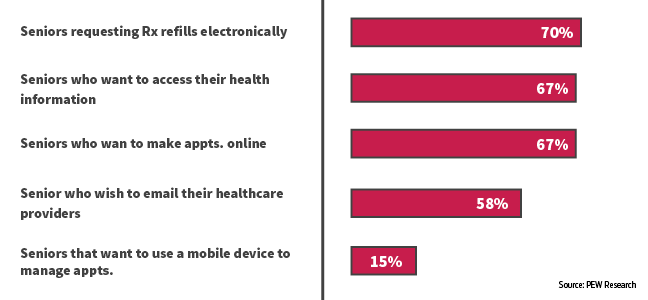
    Once people have a good idea of what could be wrong with them and what kind of medical care they need, they might not immediately make an appointment. Instead, they may return to search engines to do further research. They search facilities and doctors nearby, check to see which providers are in their insurance network, and read reviews. This chart from Gravitate shows some of the queries people are searching.

    Having information about specializations, board certifications, awards, presented papers, and other selling points on your website is useful, but often patients are looking at third-party sites like Healthgrades for reviews from other patients. You only have control over the content of your website, but if you claim your listings on some of these sites, you can update them to have an up-to-date address and phone number, a link to your website, a list of current physicians and specialties, and even responses to negative reviews.

    For help claiming your listings or other healthcare marketing services, contact Search Influence.

    Put a Face to Your Practice

    When you claim your listings, it’s a good idea to list all of your physicians and some of their basic information. You can also provide detailed bios of each doctor on your website. Yext conducted a study on how people search for physicians and found that 76.3% of patients search for individual providers, while only 29.9% research facilities.

    Patients want to feel like a partner in their own healthcare, so finding a physician who is personable, knowledgeable, a good listener, and willing to go out of their way to help the patient is important; a strong doctor-patient relationship may even be favored over a cutting-edge facility if the patient is seeing a different doctor every time or feels more like a lab rat than a person.

    By giving information about the people behind your practice, you’ll appear in front of a much wider audience and get conversions through your personality and expertise.

    Take Advantage of Social Media

    Americans, especially the younger generations, get the majority of their news and information from social media, for good or ill. But even older people use social media to share interesting articles and connect with people who share similar experiences and worldviews. By sharing important and relevant medical information, you can help educate patients and combat misinformation. 

    If you consistently share quality content, potential patients will trust you and see you as an authority within your field. While they may not run off and make an appointment immediately, you will be in their minds already the next time they get sick. Social media is also a great way to continue to engage with patients you’ve seen before by responding to comments and questions. This way, they will feel like you still care for them as a person, even after their treatment has ended. Just be sure to maintain patient privacy.

    By finding patients where they are on the internet and providing them with quality content that answers their questions, you can position yourself as a source for medical information and quality care. Contact our team for help building a digital marketing campaign suited to the unique needs of the medical industry.


    Images:

    Gravitate Graph

  • Turning Links Into Lemonade: Your Guide to Juicy Internal Linking

    You’ve likely heard of internal links. In terms of SEO jargon (which there’s a lot to sift through), they’re pretty straightforward. Internal links are just the hyperlinks on your site that point to other pages within the same domain. For example, your homepage content probably has internal links pointing readers to your primary service or product pages. While a blog post might incorporate internal links to other posts that elaborate on a similar topic—or better yet, a service page that helps users solve the problem focused on in the blog post.

    The navigation menu for your website is also a structure for internal linking to ensure that all of your pages are connected and easily crawlable by search engines. It’s important that all new pages you create are linked back to your homepage using this navigation. For the purpose of this post, however, we’re going to assume your navigation is set up and focus on the internal links you incorporate into the actual content of your pages and posts.

    Choose Internal Links for Users & Crawlers

    Internal links are easy to understand, but don’t underestimate their power—both in terms of SEO ranking and an improved user experience.

    A person's hand squeezing a lemon

    When you properly use internal links, you’re spreading ranking power (also known as “link juice”) and authority from your site to that specific page, which improves the chances that it will also rank in search results. Internal links act as road signs, telling search engines which pages to crawl next on your site. On top of that, when you use highly relevant content links that match users’ search queries you’re confirming your authority.

    Internal links also plot the course for users (humans) to navigate your website and find the most relevant content to meet their needs. This keeps them on your site longer and improves the user experience. Just imagine that a prospective customer finds your blog post about steps to take when you get a flat tire, then within the post, they find a strategically-placed link leading them to your tire company’s product page about how to find replacement tires. With the right internal linking, you’ve given that person the information they needed and even offered a solution.

    So what does it mean to properly use internal links? There’s not always a hard and fast rule for when to link, how much to link, where to link, and the like. But this guide can offer a primer for getting started.

    Choose Appropriate Anchor Text

    The anchor text for your internal link is simply the clickable words you select to turn into your hyperlink. You’ll want to think about your selection both in terms of the context of the sentence and how the anchor text reads on its own for skimmers. There’s no character count limitation for anchor text, but you should aim to keep it as concise as possible without sacrificing clarity. Your reader should know where they are headed before they click the link.

    Landing them on a confusing or off-topic page that does not align with your anchor text disrupts the user experience. While keywords or topics for the content are a great first choice for relevant anchor text, Moz recommends using a variety of words throughout the post that most naturally fit for your anchor text. That’s because Google’s algorithm will take note of pages with too many keywords in anchor text and flag them as spam.

    Instead, opt for descriptive, partial-match anchor text that contains part of the target topic within the text. For example, build a comprehensive SEO strategy with Search Influence. This link goes to our SEO services page, which you could probably guess based on the anchor text.

    When in doubt, double-check that your anchor text meets the following criteria:

    1. The anchor text fits naturally within the rest of the content on the page
    2. There is zero mystery about where the user will land when they click the link
    3. Anchor text selection is diverse across all the content on the page

     Opt for Relevancy Over Quantity

    We can’t overemphasize this enough: choose natural, relevant pages to link to within your content. Don’t force a link. Google and your users will catch on quick, end of story.

    You should also avoid linking to the homepage or contact page. Those pages already have plenty of link juice. If your reader is already on an internal page within your site, why would they want to backtrack to your homepage? Instead, do as Kissmetrics recommends and reach for a 1:1 ratio of deep internal links and main navigation links. If your page is content heavy, then you should link out to other content-rich pages that elaborate on your topic and keep your reader engaged.

    Animation of hand counting to five

    While there is no magic number for how many links you need on a page, you can aim for about 2-4 contextual, natural links that make sense and address topics that would interest your reader. Just like with writing calls-to-action, you should assess each linking opportunity from the perspective of your prospective buyer to see if the target page is a good fit.

    Audit Existing Content for Linking Best Practices

    Keeping your content fresh with new internal links is an important step because it notifies Google to crawl the page again, increasing your ranking opportunities. You can also make sure that your inventory of content remains up-to-date and relevant for readers. We recommend building a schedule for updating content on a regular basis, with priority given to posts that cover topics for which you’re most interested in ranking. If you’re a plastic surgeon, that might mean auditing all of your existing posts about breast augmentation and liposuction if those are your top two procedures.

    When you update a page, we recommend checking for necessary updates, adding fresh content in the opening paragraph, then naturally incorporating internal links to any new related content. If you recently added pages about breast augmentation FAQs and post-surgery healing, then you’ll want to ensure those pages have link juice from other breast augmentation pages and posts on your site.

    Tools like Moz’s Open Site Explorer allow you to see how many internal links are going back to each page on your site. This will give you a holistic view of your domain to see how you can move more link juice to specific pages that cover topics related to those top-priority ranking terms.

    Of course, sorting through these tools and creating a dynamic strategy for link building takes a dedicated effort. If you’re short on time but eager to improve your link profile, contact us to chat with an expert.


    Images:

    Lemon

    Counting

  • How to Spiel Like Spielberg: Using Videos to Showcase Your Business

    How to Spiel Like Spielberg - Search Influence

    YouTube changed history when it was created in 2005, allowing businesses and individuals to upload personal videos that had the potential to impact the world. Today, video dominates with four times as many customers preferring to watch a video about a business than reading content about it. If video has that much influence, businesses should consider the impact of having customized ads on YouTube. In addition to having a greater social media presence, an investment in online advertising increases your visibility, often consistently delivering qualified leads for your business. This combination is ultimately the best of both worlds.

    Grow Your Business With Our YouTube Ads Webinar

    The Search Influence team invites you to join us for a new webinar on how to showcase your small business through YouTube ads. With such a large audience at your fingertips, it is incredibly vital for your business to have a presence on this platform.

    In the webinar, you will learn:

    • Best practices and how to use video for your business
    • How to promote your business using video content
    • How video influences purchase behavior

    Grab the Attention of Your Most Ideal Client Base

    Our experts will discuss content diversity and techniques for offering a variety of educational, thought-provoking, and engaging visuals for current and potential clients. We will also share resources and tools for creating high quality videos that fit your budget. Feel like you don’t know much about professional videography? Our webinar will discuss best practices for making your video, from concept and production to branding and messaging. We will even share information on the best places to publish your video once it is complete.

    Finding your audience is just as important as creating the video itself. We’ll dive deep into the world of YouTube ads, providing you with details on how to target your client base, determine the stage of the customer journey they are in, and analyze and track leads. These tips will help you to generate buzz around your video content and capture your ideal audience across screens and devices.

    Contact one of our experts to learn how you can enhance your current marketing strategies.

    Image:

    Mobile Video

  • Nine Brands Who Have Mastered Instagram

    Each social media has its distinct character, but Instagram is a beast that many small businesses aren’t familiar with. Twitter is quick and to the point, Facebook friendly, and Linkedin professional. But what about Insta? We can look at these nine companies that are effectively using Instagram to uncover the secrets to its members’ hearts.

    Beautiful Images Are the Core

    Instagram is an image based platform. It’s where hobby photographers, style setters, food artists, and more come together to show off their photos. If your business wants to get noticed, you have to have images that resonate.

    Boutique-style online fashion retailer ModCloth uses magazine quality photos that feature their staff members wearing some of the pieces they carry. Some are more glam and others silly, but they are all well lit and intentionally shot.

    ModCloth Instagram screenshot

    Let Your Hashtags Run Wild

    On Twitter, it is best practice to keep your hashtags to a minimum, and most people only use them on Facebook when they’re being glib. Nothing could be further from the way hashtags are used on Instagram. It’s not uncommon to have 10-20 hashtags on a single image, covering every different way you can describe the image.

    Inspirato uses multiple variations such as #luxuryhome and #luxuryvilla to widen the scope and make it more likely someone searching will find images of their vacation homes. They also use trendy hashtags like #travelgram to make sure they are part of the greater conversation.

    Inspirato Instagram screenshot

    In addition to using hashtags to be found by potential customers, hashtags can help you find your customers. Camp Brand Goods created the hashtag #keepitwild and encouraged their followers to use it when they took photos with their products. They then “regramed” those photos, showing off the testimonial while building a relationship with their customers. Customer spotlights are a creative way to build hype and fan loyalty, and they’re easy to leverage using hashtags.

    Campbrand Goods Instagram screenshot

    Build an #Aesthetic

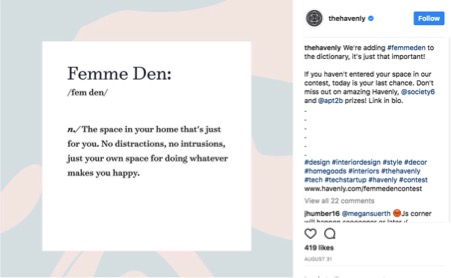
    The most popular Instagram feeds have a coherent theme or aesthetic that appears in each of their photos. This doesn’t mean you need to have your logo in every single photo (but if you can find a creative way to do that, then go for it!). However, having a consistent color scheme, lighting, and subject matter will help to solidify your brand identity. While the three images below from Havenly all have different subjects, the color scheme ties them all together. They all invoke the same feelings and reveal what the brand is all about—decorating spaces with a sense of calm and modern femininity.

    The Havenly Instagram screenshot

    Screenshot of The Havenly Instagram post

    TheHavenly Instagram post screenshot

    Sell a Lifestyle

    Your brand identity is who you are as a company, but the lifestyle you depict in your images is who your customers are. If you’re a car dealership, what kinds of people buy from you, and what do they value? All things USA, the outdoors, family BBQs? Then show those things in your images.

    You don’t have to limit your posts to just pictures of your products. Four Barrel Coffee shows images from the coffee-creation process, as well as the final product. They also post images that appeal to their hipster demographic, such as this photo of their new record player.

    FourBarrelCoffee Instagram screenshot

    If you want to show your products, take a page out of Sphero’s book and showcase some of the features and unique selling points of your business. Their little toy robots roll around all sorts of obstacles, and their photos and videos actually catch them in action.

    Screenshot of Sphero's Instagram post

    ‘Gram in Real Time

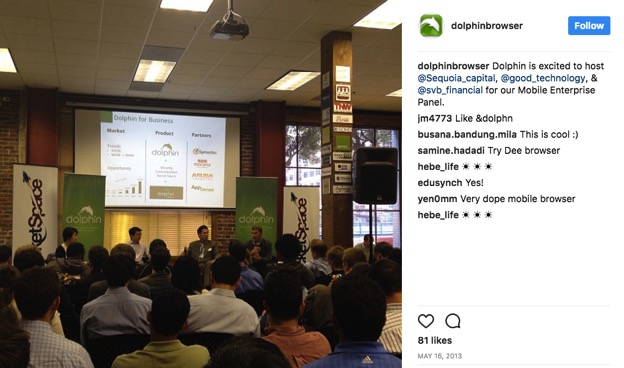
    In addition to sharing staged and styled photos, Instagram can be great for showing off things that are happening at the moment. Testing a new prototype? Take a short video of it in action to use as a teaser. You can also share photos from events, like Dolphin Browser did. This is especially great if you’re hosting an open house, since it can show people how much fun they’ll miss if they don’t head over right away!

    Dolphinbrowser Instagram post screenshot

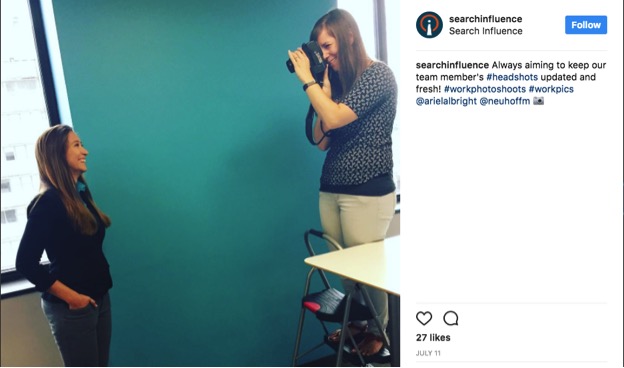
    You can also share photos of your office, a day in the life, or other images of your energetic, smiling employees! It’s something we do here, as well, so you know it’s got to be a great idea 😉  Make sure you follow us on Instagram for updates.

    Search Influence Instagram post screenshot

    Get Local With It

    Small businesses often have close connections with their local community. Take advantage of that by following other local businesses, Little League teams, and other community organizations you want to foster a relationship with.

    Kawaii NOLA is a New Orleans clothing and novelty store that specializes in Japanese imports. In addition to showing pictures of their products, they often share flyers and other information for small businesses, local artists, and Japanese cultural events throughout the city.

    Kawaiinola Instagram post screenshot

    By cross-promoting other nearby businesses, you can unlock a new potential audience.

    In this example, classic anime and film fans can learn more about Kawaii NOLA, and Kawaii NOLA customers may choose to see another film at this theatre after this event is over. Everybody wins!

    Instagram is a brave, beautiful new world for businesses. At the center of all of the examples above is one simple piece of advice: be authentically you. Whoever you are as a company and brand, show that off, and you’ll find the customers you’re looking for.

    If you want help managing your social media accounts, reach out to us to see how we can help!

    Images:

    All screenshots by Meaghan McCarthy. Taken September 2017.

  • How to Write Clear CTAs That Convert

    According to Small Business Trends, “70% of most B2B websites lack a call to action.”

    With millions of websites in existence, the odds are slim that a user will visit your site and miraculously remember your URL or bookmark it for later viewing. Without a continued, personal connection through an email newsletter, a white paper download, a podcast subscription, a special offer, or another form, it may be the last time that person connects with your business online.

    A call to action, or CTA, attempts to establish that connection with your potential customers once they click on your PPC ad and head to your landing page. Even if you’ve got a CTA on your site, it may be deterring visitors rather than inviting them to explore your business. Here are some tips to make your CTA convert visitors into customers.

    Start Strong With Action Verbs

    There’s not a lot of space to get your point across, so it’s important to get straight to the point. Use an action verb to start your call to action. If you’re in the eCommerce world, consider using words like “shop” to start your CTA, possibly followed by “and save 50%.” The goal is to be direct and informative, highlighting the exact action you want your potential customer to take.

    Image of CTA Get Your Guide - Search Influence

    Focus on Value and Benefits

    As a general rule, think of how you might be able to finish your potential customer’s thoughts for their desires/pain points/expectations, and then use that action verb at the end of the following sentence: “I want to _______.” What was the first thing that came to mind that your clients might choose? Grow more leads? Find shoes that slay? Get My Custom Ad Analysis? Start My Free Software Trial? The answers to this hypothetical question are completely dependent upon your business, but one thing remains true—they need to focus on how you can delight your customer by providing them relevant solutions and unique selling points that make their life or job easier. Instead of phrases like “Buy Now,” which focus on an action a user has to do, get more creative by emphasizing what he or she will get out of clicking that CTA.

    In a case study from Unbounce, a B2B website owner reported a 38.26% increase in conversions after replacing just one action verb—Order Information vs. Get Information. With the former, “order” puts the customer in a difficult position—there’s either purchasing the service or not. But with “get,” the potential customer gets to see advantages or rewards. He or she is potentially awarded valuable, relevant information for choosing to continue the buyer’s journey. It’s this combination of value and relevance that can make or break a click.

    Another tip about delivering benefits: Don’t make claims or offers you can’t deliver on. This is going to be the start of a potential relationship with a new customer. The last thing you want to do is promise something you can’t afford.

    Image Of Girl Writing On A Blank Card At Her Desk - Search Influence

    Keep It Short and Be Specific

    According to research performed by Dan Zarrella at Hubspot, the most engaging Press Release headlines are between 90–150 characters. The same holds true for crafting landing page headlines and their corresponding CTAs. Be concise, focused, and goal-oriented. Going back to emphasizing value for the customer, consider these more focused and value-driven options.

    Generate Leads ⇒ Generate {higher quality} leads by {unique qualifier}

    Drive Sales ⇒ Drive {higher value or more} sales by {unique feature}

    Measure ROI ⇒ Measure ROI {across all channels} with our {unique product}

    Sure, the first versions were about as short as you could get, but the amended CTAs remain concise while giving a more in-depth and accurate portrayal of what the customer will get. Clear copy should help reduce any anxiety or confusion that someone may have about exploring your company. And let’s face it; people have a limited amount of time to explore your content. Make the time they spend on your site valuable, not wasted.

    Use Natural Language—Submit or Click Now? No Thanks.

    These antiquated terms used to be exciting when it really was a novel concept to be able to click on something and get immediate results. After all, most CTAs before the internet involved a number that you had to call. Now, though, that novelty isn’t the selling point; what you can provide your customer is. When thinking about writing your CTA, think about how you can connect with them. One way to use this in your writing is to use the words “you” and “my/our.” For example, “Drew Brees Can’t Stop Talking About Our Training Program. Learn Why and Get Fit.”

    Steer clear of using ornate language by cutting unnecessary adverbs and adjectives. These words may seem like they add value to your copy, but they’re hiding the value that you can provide your customer.

    Also, avoid using industry jargon in your copy. This can include words like, “franchise,” “utilize,” “virtualization,” “capitalize,” and especially acronyms that only a limited number of potential customers would even understand, like these marketing big ones: KPI, RSS, CAC, CSS, CRM. Doesn’t look too inviting does it?

    Does the Size and Layout of the CTA Matter On a Landing Page?

    Just like your copy, your page layout should be neat and clean. Kissmetrics recommends: “The size of your CTA buttons is also important. A too-small version won’t command attention, while a supersized one will make you seem desperate.”

    Think about how your landing pages look from a visual standpoint. Avoid the color red for your CTA. There are too many associations with danger, stop signs, stoplights, aggression, etc. You’ll likely see more positive results from calm colors like blue or green.

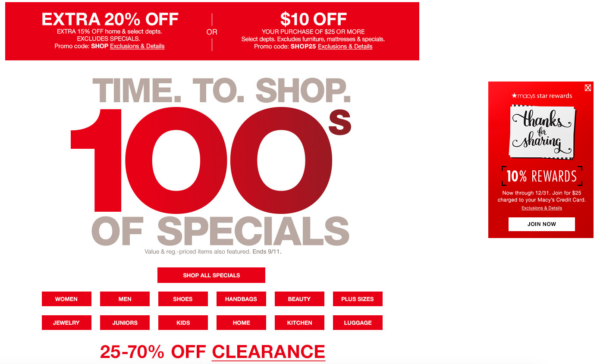
    Also, consider the size and spacing of your text on the page. It should be scannable so that a visitor can instantly pick out the information they’re interested in. Cut out the clutter. For instance, here’s an example from Macy’s current main landing page. Aside from the mixed messaging of the different values, can you spot the call to action?

    Image Of Macy's Landing Page Sale - Search Influence

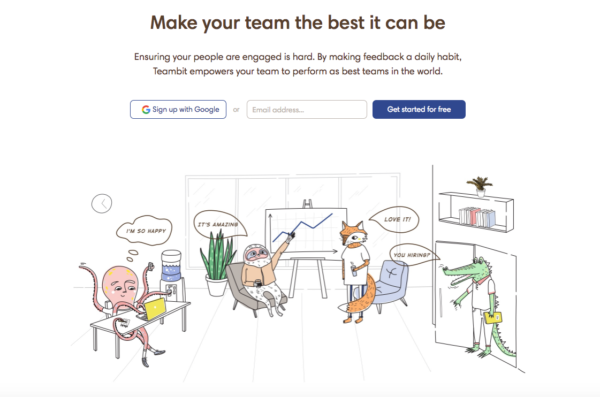
    Their “star rewards” offer is shifted to the right of the page. The goal for a button’s CTA is to predict where the user will look next. This one missed that mark. Also, it’s hard to tell what “JOIN NOW” means until you read the tiny print at the top indicating this CTA is for their rewards program. And finally, they’re asking a lot of their visitors to read the fine print on all of these different offers. A cleaner example of a landing page with less clutter and more clarity would be like this one from Teambit, an employee feedback, recognition, and survey startup.

    Image of Teambit Landing Page - Search Influence

    The value? Your team could be the best it can be. Sounds great. How do I go about doing that? Oh, I’ll get started for free. They have detailed information if you scroll through their page about just how they help people. But the reason why it succeeds is because it doesn’t worry about that up front. It focuses on the why with a compelling headline followed by clean copy and a simple CTA. Sometimes, it really is that simple.

    A Few Final Ideas for Crafting Great CTAs

    In addition to the previously mentioned points, here are a few examples of how you can make your CTAs stand out and drive conversions.

    1. Make sure to always display the benefits. If you’re offering a free guide, then say so right away (e.g. “Get the Knowledge You Crave – Download Our Free Guide.”).
    2. Try using a pain point that your potential customers may be hitting. For example, “Tired of Not Seeing Results In Your Ad Campaign? Watch Our Free Webinar to Find Out…”
    3. Also, you can try using an Influencer who supports and promotes your brand. This adds authority and intrigue to your CTA. Viewers who see that “Mark Zuckerberg Is Crazy About Our Team’s Marketing Ideas” will likely want to click on the corresponding, “Discover Why” button.
    4. Lastly, utilize testimonials from your current clients. This is a source that people often overlook. Your customers should be the biggest proponents of your brand. If a client has said that you’re the best company they’ve ever worked with, then take that and condense into copy to go along with a short, action-oriented CTA. Of course, always make sure to attribute ownership of the testimonial, and it goes without saying that creating a fake testimonial is a horrible idea for your brand. You’ve got to earn them.
    5. Numbers are great. If you have some success metrics, consider including them on your landing page. Are 100% of your employees certified in the service you’re promoting? Visitors should know that.

    Have any great examples of CTAs in landing pages or other types of content that you’ve seen? Share them with us! A great CTA can have your business seeing more conversions and fewer bounces. Need some more guidance on building a landing page that has strong calls to action that focus on your company’s brand and values? Reach out to us at any time.


    Images:

    Macy’s

    Teambit

  • Rookie Website Mistakes, Part 3: Your Site Isn’t Mobile-Friendly

    Now that you have learned how to get your website found in Google searches, Part 3 of our Rookie Website Mistakes blog series will explore how to get mobile visitors to stay.

    It’s no secret that the current generation is keen on the combination of mobility and technology. We are a group who thrives off convenience and being able to get the information we need while on-the-go. It’s no wonder the level of frustration when a website we want to reach is not properly formatted for mobile use. Many of us quickly move on, searching until we find a site that is mobile-friendly and can also provide us with the information and services we need. According to Google, 58 percent of Americans use their smartphone (instead of a computer) to access a website. This means that over half of your potential audience—individuals who use the internet—are searching via cell phone. Visitors are also typically multitasking, leaving you with a limited amount of time to impress and engage them. You would be remiss to not format your website accordingly. Let’s dive a little deeper into what you lose and what you stand to gain with a website formatted for mobile visitors.

    Not Using Responsive Design

    One of the main differences between a site that’s built for mobile use and one that’s not is the responsiveness of the design. Consider the size of the interface or screen on a desktop computer or laptop versus a smartphone. Because mobile phones are smaller, websites cannot afford to have lofty navigation that hangs out in the margins—nor can they afford to have a surplus of text that hides below the fold. Often, the entire design of the website should be optimized for how visitors will need to navigate the page on a 5×3-inch device. Font size, typography, and single-column layout are also some items to consider.

    Optimizing for mobile does not mean that a business will have to create two different sites. Responsively designed websites are flexible and can detect screen size and orientation. The flow and readability of the design are crucial for a pleasant user experience that will keep visitors on your page, allowing them to receive the valuable information you are providing.

    Lack of a Touch-Friendly Interface

    Because visitors to your website are most likely accessing your page from their handheld device, it is imperative that the site can be easily navigated by touch. Visitors are frequently using touchscreens to find your business online, and once they arrive at your website, they need to be able to use their fingers to scroll, move between pages, click links and videos, and request more information.

    Man pointing his finger toward a smartphone's touchscreen - Search Influence

    Consider enlarging the font and adding more space between navigation buttons and links so that it’s easier to select items on the page. Unlike using a mouse on a desktop, fingers are less precise, so the use of buttons is vital to a friendly interface. Be sure to also have indicators on items that can be selected, such as adding a highlight or indentation marker to the button. This lets visitors know that their phone has recognized their selection. Another element is utilizing dropdown menus for navigation. They can be used on desktop screens and are ideal for mobile phones. Also, make sure the phone numbers are click-to-call and emails listed on your website are designed to open a compose window. This adds even more convenience for potential customers and visitors to your website.

    Images That Aren’t Optimized

    In previous blogs, we’ve made a case for the importance of having quality images on your page. But what happens if these images are slow to load? According to a study done by Equation Research, 60 percent of mobile users expect a site to load within 3 seconds, and 74 percent are willing to wait up to 5 seconds for it to load before abandoning the website entirely. Visuals that take too long to configure to the page also slow down the general responsiveness of your website. Scale images through code or optimize them by using new HTML markup that prevents the browser from downloading pictures that are larger than what is needed.

    Coworkers sitting at a table with different multimedia devices - Search Influence

    Content That Isn’t Mapped for Mobile

    Take inventory of each piece of content on your website and evaluate how effective it will read on a mobile phone. The size of the font and the typography style is something to consider, but the length and relevancy of the content are important, too. Trim down the fat. Use your analytics intel to determine which pieces of content your visitors are actually reading, and consider removing or optimizing content they are not. Review your website and be sure each piece of existing content is essential and can be easily digestible on all screen sizes.

    Having a mobile-friendly website is not something to be overlooked. With more and more of your potential customers using their phones to search for your business, mobile-friendly optimization is vital to the health of your business. If you have any questions or concerns about how to optimize your website and grow your business, our team is happy to help. Drop us a line!

    Stay tuned for the next blog in the series, Rookie Website Mistakes, Part 4: You have a Single Page Website.

  • Paid Search, SEO, and the Evolution of Google

    Paid Search, SEO, and the Evolution of Google

    No man ever steps in the same river twice, for it’s not the same river and he’s not the same man. –Heraclitus

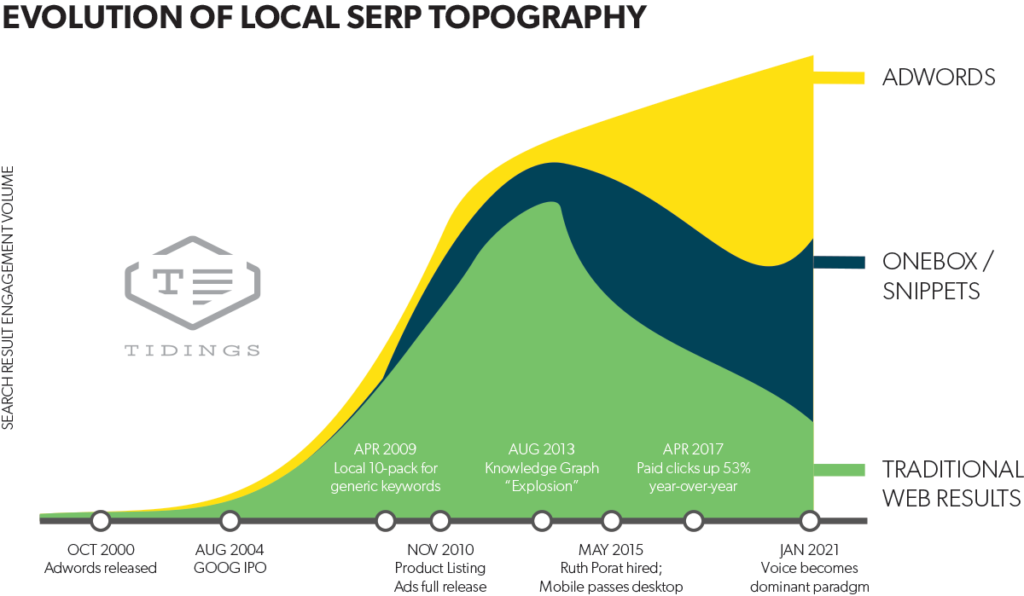
    One thing that’s certain in the world of search is that technology and user habits are always evolving. David Mihm recently wrote an excellent blog on the ever-changing landscape of search engines otherwise known as “SERP Topology.” We recently had the honor of hosting David as a guest speaker for a lunch & learn for the whole team. He provided us with some powerful insights about the evolution of Google. Here are some key takeaways.

    Local serp topography graph

    As you can see above, based on his predictions it is highly likely that Google search results will be more and more driven by paid advertising as opposed to traditional SEO in the next 5-10 years.

    Practically, this will impact your business in a few different ways. Some industries will continue to stay relevant with a traditional SEO approach, but for many, it will become a less effective strategy.

    If you’re a business owner, here are some things to keep in mind:

    1. What percentage of closed business is coming from digital marketing efforts?
    2. Where, specifically, are your leads coming from?
    3. How is your team converting those opportunities?

    Brand Awareness

    If you’re producing content, it will become increasingly important to promote that content using social platforms and other advertising options, such as Google Display Ads. Marketing your brand through ads will continue to be an important and useful strategy.

    Referrals

    The connection economy will continue to increase in importance. Who are the influencers in your industry online? Where are they? Find out what platforms the thought leaders are on and connect with them.

    Also, find out where your customers are hanging out. If it’s Facebook, then you should seriously consider developing a strong presence there.

    Lead Generation

    Organic SEO is very powerful, however, one of the downsides is that it can take a long time to grow results. Google ads are a great option to compliment SEO and content marketing strategies because you get instant feedback from your target audience. From there, you can take that feedback, find those great leads, and nurture them into customers.

    SEO

    Search engine optimization is not going away anytime soon. And, in the next 10 years, it will remain relevant for many industries. However, it won’t be quite as effective in the near future. As Google continues to generate the majority of its revenue from advertising expenditure, it inherently implies a push toward incentivizing businesses to use those tools.

    If you’d like to understand more about how to advertise your business online, or how you can best take advantage of SERP Topology, reach out here to chat with a strategist.

    Image:

    SERP Topology

  • 5 Questions Your Medical Practice Should Ask Before Hiring a Paid Search Firm

    5 Questions Your Medical Practice Should Ask Before Hiring a Paid Search Firm

    When it comes to choosing a marketing firm for your paid search campaign, it’s important to do your homework—especially if you’re in the medical industry. According to Pew Research Center, 8 in 10 online health inquiries start with a search engine, and 72 percent of internet users said they looked online for health-related information. Beyond patients frantically Googling their symptoms, they’re also searching for medical care providers. The right ad agency will make sure you show up on page one of the search results.

    But on top of a highly competitive and saturated market, medical practices also face added challenges to adhere to strict medical guidelines and discuss sensitive and highly personal topics appropriately. All said, a paid search campaign can do wonders to both improve your brand awareness and get new patients in your door. Here are five questions you should ask your prospective paid search agency before signing a contract.

    1. What Experience Do You Have Working With Clients in the Medical Industry?

    Your ad agency shouldn’t just know costs per click and search engine optimization, they should also know how to speak your language. More than that, they should know how to speak your language to your prospective patients. Search Influence has been helping clients in the medical industry stand out and rank in search results since 2007. In that time, we’ve worked with medical clients in 30+ cities across 18 states. Our experience ranges from plastic surgeons and dermatology clinics to hospitals, counseling services, and physical therapists. We use a holistic approach for every campaign to create brand recognition, improve ranking, and—most importantly—deliver qualified leads.

    Our years of experience have helped us build a database of technical and demographic knowledge in order to strategically reach your desired patients where they’re at. In fact, we have helped our clients stay on the frontline of innovation by optimizing their sites for procedures as soon as they are approved and available to the public. For example, when the FDA approved gummy bear implants in 2013, we already had content written for our clients and were ready to run promotions to highlight this highly desirable option at the time.

    We also understand the meticulous detail required to accurately reflect the standards and restrictions of medical societies, HIPAA, and the platforms where we promote your content. We know how to accurately post images in accordance with both American Society for Aesthetic Plastic Surgery (ASAPS) and American Society of Plastic Surgeons (ASPS) promotional guidelines or how to use language that aligns with Google’s expectations for websites in the medical industry—an issue that can even cause Google to suspend your site.

    Stethoscope on a computer keyboard

    If you’re curious about the current state of your website or worried about a site suspension, you can contact us to help you get on the right track.

    In addition to meeting all of the medical industry standards, it’s also important that you position your practice as a thought leader. Our deep knowledge of the subject matter ensures that your content is optimized and technically accurate. More than just knowing that gynecomastia is the condition and breast reduction surgery is the procedure, we also understand the discreet and laser-precise writing required to appeal to men who are searching for this sensitive topic. As your PPC agency, we will deliver results because we start with strategy, and we understand your business.

    2. What Is My Cost Per Lead?

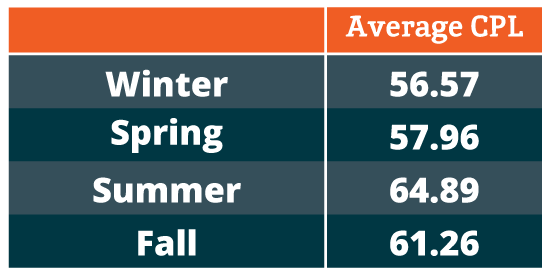
    Your cost per lead will depend on market factors such as seasonality, the size of your city, and the number of advertisers in your area. However, at Search Influence, our typical target for plastic surgeons is $50-$60 per lead. For us, we care most about delivering you qualified leads that actually become patients.

    So how do we actually calculate your cost per lead (CPL)? Let’s say, as an example, that you offer a procedure for $5,000, and you’re willing to pay 10 percent (or $500) in order to get a lead for that procedure. However, you know that not every lead that contacts you is going to become a patient. Let’s say that 1 out of every 10 leads who contact you about the procedure will actually become a patient. That’s a 10 percent conversion rate, which results in a CPL of $50.

    Of course, if your conversion rate is higher or if your cost for acquisition is higher or lower than the example, we can adjust accordingly. The table below outlines seasonal averages for some of our plastic surgery clients to show how we can achieve results for your practice.

    As a medical practitioner, your bottom line all comes down to how many patients are walking through your door (and how much you paid to get them there). For you, a worthwhile investment in paid search results in qualified leads that can translate into actual patients. We get that. That’s why we have built-in systems to seamlessly track your leads, and a post-launch schedule to fine-tune your campaign as quickly as possible. Not only will you have clear reporting, but you can also use our lead tracking system to create an organized database of qualified leads, allowing your team to close leads faster.

    3. How Do You Measure Return on Investment?

    PPC is not a “set it and forget it” machine. Successful online ad campaigns should run on a continual loop. You have to look back to determine what’s working and adjust in real-time to build on successes. Our reporting can help you pinpoint the average cost per patient so you know your exact return on investment. You’ll know if your leads prefer to call or fill out a contact form, and you’ll gain valuable insights like location demographics.

    Physician holding a tablet

    Your PPC agency should also collect continual feedback from you about the quality of your leads in order to apply that information directly to your campaign and avoid any wasted ad spend. With endless customization opportunities—not a prix fixe package—your marketing firm should have a system in place to make things easy, but also be ready to break the rules to fit your budget and make your campaign a success for you.

    4. What Procedures Are You Promoting and What Drives the Most Leads?

    Remember that thing about endless customization? Yeah, that applies here, too. Your ad agency should have the know-how to build a holistic strategy that both grows your brand and promotes your most important services.

    Brand building and search engine optimization are definitely comparable to the age-old chicken and the egg situation. You have to have some brand recognition if you want to rank high on search engines, and once you rank, you’ll get greater brand recognition. So what does that mean for you? Well, if you don’t rank yet, you’ll need to do more than simply optimize your content and build your link profile. You’ll have to create a dynamic strategy to build the overall awareness of your brand. After all, in the age of the internet, who says you can’t have all your eggs in your basket and eat some chicken, too?

    Your online marketing agency can help you do just that. That’s why at Search Influence we start with a comprehensive kickoff meeting to understand the details of your business. Why? It’s simple. Formulating the right strategy first will save you money and get you the right leads.

    Once we understand your business goals, we can target the right procedures and help you establish your brand around specialties and services that matter to you. We can also help you identify missed opportunities. For example, while aesthetic services aren’t the highest revenue driving procedures, they’re a great way for plastic surgery practices to continue generating revenue even when the doctor is booked with another client. Or, perhaps you specialize in rhinoplasty and want to be established as the leader in your market for that procedure. We can center your campaign on your qualification as a rhinoplasty surgeon to build your brand as the preferred specialist. It all depends on your needs, and your ad agency should do the setup work to understand those needs from day one.

    5. On What Page Do Leads Land During a Campaign?

    You can have beautifully written ads, but without the right landing page, your leads are highly unlikely to convert into patients. Especially when it comes to AdWords, you have to optimize for both your human readers and Google’s Quality Score. Google can spot landing pages that don’t align with the search term in the ad and actually make you pay more as result. For example, if someone searches for liposuction, clicks on your ad all about liposuction, then lands on a general page about body contouring services, then you’re missing the mark on user experience and Google’s best practices.

    Without optimized content and a dedicated landing page, your chances of converting are slim.

    A recent report from Unbounce placed the average conversion rate in the healthcare industry at only 2.9 percent. And if you’re using your homepage as your landing page, then you’re totally missing out. Your ad agency can create dynamic landing page content that makes it easy for prospective patients to take an action, with custom forms and click to call buttons that prove your return on investment. In fact, the same Unbounce report shows that healthcare businesses in the 90th percentile achieve conversion rates at 9.3 percent, and the right content and strategy can help get you there.

    Landing pages are just one key element in a successful ad campaign. At Search Influence, we care about delivering a holistic advertising strategy focused on results. Contact our team to see how we can help optimize your medical practice’s online presence.