Tag: linkedin

  • 7 Best Social Media Platforms for Your Digital Marketing Strategy in 2019

    A group of people using social media on their mobile devices at Search Influence in New Orleans, LA

    Social media is an essential element of a holistic and integrated marketing plan. Different social media platforms allow you to create and share content, reach specific audiences, and accomplish your marketing and business goals. Before you begin expanding your current social media marketing, make a plan. Here are some questions to help you get started:

    • Who are you trying to reach?
    • Where does your target audience consume content online?
    • Which message(s) do you want to send your target audience?
    • What is your end business goal?

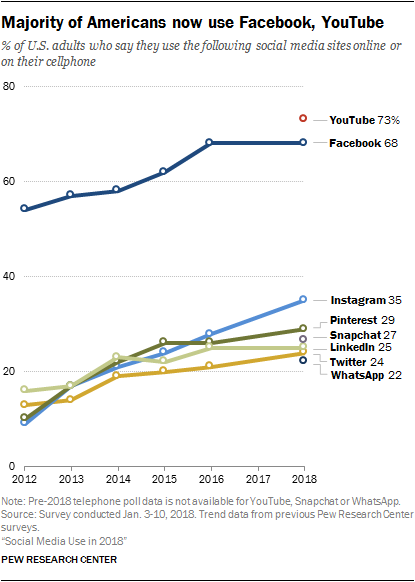
    Your answers to these questions will help you define your business goals and translate them into social media marketing goals. You will then be able to prioritize which social platform to use. If you are new to social media marketing, Facebook is where you should start. If you already have decent engagement on one platform, where should you go next? Most Americans are active on two to three social platforms, so why limit your marketing to just one?
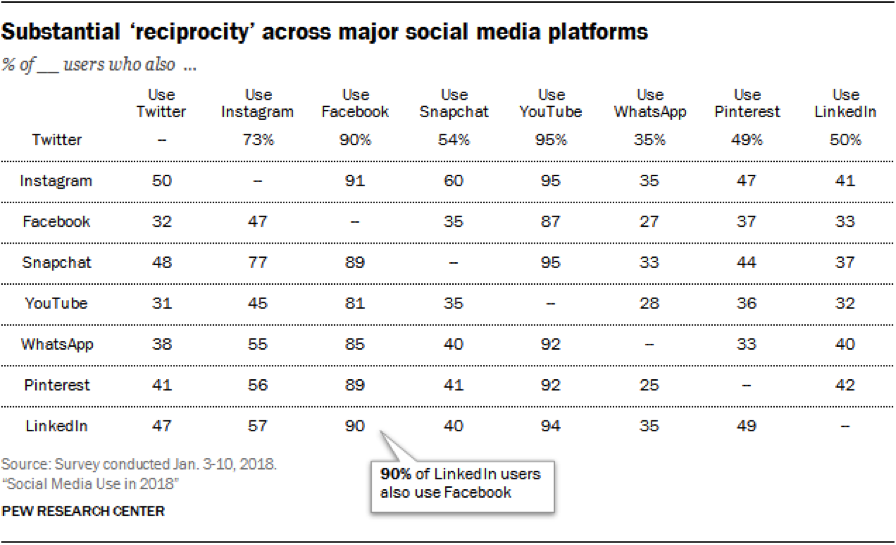
    Screen shot of social media stats

    Which Social Media Platform Is Best for Marketing?

      1. Facebook – With more than 2.27 billion active monthly users, Facebook is definitely your number one choice. Through Facebook Ads Manager, you can target users based on their location, age, gender, level of education, relationship status, job title, interests, purchase behavior, device usage, and so much more. And it doesn’t end there! Facebook allows you to create Custom Audiences to reach current customers or patients. Custom Audiences can be created from the phone numbers or email addresses you’re already collecting, or from Facebook Pixel to target people who have visited your website. To reach new customers, use Lookalike Audiences; these are created from Facebook’s insights about Custom Audiences to target users with similar online behaviors. You may think “My target demographic isn’t on Facebook,” and you could be right, but Facebook Ads Manager takes the guesswork out of it. This platform allows you to create and serve your message to the right user on Facebook, Instagram, or (through the Audience Network) across the web. As stated by Facebook,

    “1 billion+ people see a [Facebook] Audience Network ad each month.”

      1. Instagram – Owned by Facebook, Instagram boasts more than 1 billion monthly active users and has the same advertising options as Facebook. First and foremost, it’s a visual platform, which provides you with an opportunity to showcase your business’s personality. There are a number of free tools you can use to improve your audience’s creative experience.
      2. YouTube – YouTube allows your business to post and share an unlimited amount of video content, which you can then share on social media, send via email, or embed on your website. As a product of Google, there is also an added SEO benefit of having a YouTube channel and producing video content on the platform. With more than 1.8 billion active monthly users worldwide, YouTube has essentially become the second largest search engine behind Google. When it comes to paid advertising on YouTube, it takes the lead over Facebook for video. Facebook charges your account for each 10-second view, while YouTube does not charge you until a user has consumed at least 30 seconds of an ad. According to expandedramblings.com,

    “YouTube overall reaches more 18-34 and 18-49 year-olds than any cable network in the U.S.”

    1. Google My Business – You may not consider Google My Business to be a social network per se, but this free platform offers features that Facebook, Instagram, Twitter, etc. do not. Posts are searchable via keywords, they positively affect your SEO rankings, and they provide an opportunity for backlinks. You can read more about why you should be posting on Google My Business.
    2. LinkedIn – This platform is known as the primary social networking platform for professionals. You can use LinkedIn to update customers on your business, connect with industry partners, and recruit new team members. As a professional network, it is the top choice for B2B social media marketing. According to Forbes, “LinkedIn is one of the best platforms for generating leads and now makes up 46 percent of the social media traffic generated to company websites for B2B firms.”
    3. Pinterest – Similar to Instagram, Pinterest is a visual platform. Pinterest allows your business to show off your product offerings, before-and-after images (great for home improvement, beauty, and cosmetic surgery industries), and curated pin-boards. As you are probably already aware, its audience is primarily female. Pinterest is an oasis for hobbyists, brides and grooms, and day-dreamers in general. Keep this in mind when sharing content. Travel itineraries, suggested packing lists, landscaping ideas, craft projects, and wedding inspiration are the bread and butter of this platform. But don’t think you’re limited to just engaging with your audience. According to Hootsuite, 87 percent of Pinners have made a purchase through the platform.
    4. Twitter – Twitter is a quick-paced platform that’s perfect for sharing the latest trends or your business’s take on current events. Its audience skews somewhat younger but is split pretty evenly between men and women. Your business can participate in a larger conversation by using hashtags for trending topics. These hashtags allow you to reach new potential customers in your industry. Twitter can also be used to monitor positive and negative reactions from existing customers, and you can use the platform to provide additional customer service.

    How Do You Decide Which Social Platforms to Use?

    So, now that you’re familiar with the seven best social platforms for your digital marketing strategy, you should keep these tips in mind. When trying to decide which platform(s) are best for your business, first review your goals and audience, and then make a plan. Then, meet your audience where they are engaging online. Once you have started sharing on one of these platforms, analyze your efforts and look for areas to fine-tune your targeting and content strategy before jumping to another platform. If you’d like more advice on how to use social media platforms to effectively target your ideal clients, start a conversation with our experts by calling (504) 208-3900.
    Whichever type of social media platform you decide to use in your marketing strategy, Search Influence has your back. Our social media experts can work with you to implement a strategy and track the campaign’s performance. Start a conversation with one of our strategists today to make the most of your social media.

    Images:

    Group of people using mobile devices
    Reciprocity Table
    Social Media Line Chart

  • 6 Best Practices on LinkedIn for Your Company Page

    Did you know that only 17% of businesses have a company page on LinkedIn? With over 520 million users, LinkedIn has the right to refer to itself as the world’s largest business network. Connecting users with current and potential colleagues and even to future relationships with consumers, distributors, and manufacturers, LinkedIn is chock-full of opportunities to find whomever you need to grow your business.

    Whether your company is new to LinkedIn or has existed on the platform for years, make sure you’re staying active on LinkedIn in the right ways. Here are 6 best practices when it comes to your business’s LinkedIn page.

    1. Keep It Professional

    Every social media platform has its own tone and personality. The language you use to represent your business on LinkedIn needs to be more professional and polished than what would typically be used on Facebook and Twitter. Don’t make the rookie mistake of writing your LinkedIn posts the same way you would write your Facebook posts.

    2. Have a Company Logo and Implement a Cover Photo

    A company logo adds credibility to your page. According to LinkedIn, company pages with logo images get six times more traffic to their pages. It will also appear whenever a user searches for your company on LinkedIn as well as on employee profiles.

    Search Influence company logo LinkedIn header - Search Influence

    3. Optimize Your Page for Google Search

    Did you know that company pages on LinkedIn are SEO friendly? Google can preview the first 156 characters of your description in search results, so maximize that space with strong keywords and concise information. This helps readers who stumble onto your page on their own know exactly what it is you do, too.

    4. Create Slamming Status Updates

    If you create your company page but then never post anything, you’re missing out on possibly infinite opportunities for micro connections that can grow into real business opportunities. But posting sporadically, or posting things nobody wants to read, won’t help either. Share articles from leaders in your industry, post your thoughts on industry or company news, and promote your blog posts (you are writing a blog, aren’t you?). Focusing on the needs of your demographic will help guide your updates. What do they want to learn, and when are they online? Our social media guide can help you out with that.

    In addition to focusing on what to write about, keep an eye on how you’re crafting it. Shorter updates perform better than longer ones, and ones with links, large and pretty images, and videos all catch people’s attention and get them to share and comment on your updates.

    5. Sponsor Your Content

    It’s true across the board—sponsored and organic content need to work together to create an effective marketing strategy. By sponsoring some of the posts you publish on your Company Page, you can make sure all the right people see it, not just people who are already following you. LinkedIn has very advanced targeting capabilities (company size, seniority level, and even job title targeting is available), and it is easy to track conversions for each sponsored post. This means you can run A/B testing to see what your target audience really wants to see.

    6. Establish Yourself as a Thought Leader

    This is a bit of an extension on point four. You want to consistently publish content that shows you know what you’re talking about and are at the cutting edge of industry innovation. Weigh in on industry news, share your own rich knowledge by promoting blog posts and whitepapers, and even get a bit controversial by taking a stand on an important industry issue. At the end of the day, people don’t buy from you because of your products, they buy from you because of who you are. Show everyone who your company is and how they can present solutions to problems through your LinkedIn updates, and your expertise might just spread.

    Social interaction vector image - Search Influence

    LinkedIn is such a powerful tool for engaging with B2B customers. While it might take some work at first to figure out your strategy, following these tips for creating a strong LinkedIn presence will end up really paying off in the end.

    Check out how Search Influence can help with your social media.

  • Lost about LinkedIn? Here Are 7 Tips for Legal Professionals

    Image Of Worker Using LinkedIn - Search Influence

    LinkedIn was used by 467 million users in 2016. A simple search in LinkedIn showed 384,071 lawyers. Not only are these numbers worth giving LinkedIn some notice, but the B2B and B2C client acquisitions are increasing at rates over 100% each year as well. There is no longer a reason to put off establishing yourself and your law firm on LinkedIn. If you are lost on where to start, here are seven simple tips to improve your LinkedIn presence.

    1. Know the Laws and Ethical Guidelines for Your Area

    This is the legal profession after all, so there are very particular rules to follow when marketing yourself. Depending on the state in which you practice, the words “specialist” and “expert” may be against ethical guidelines. The New York City Bar came out with a formal opinion on the matter in late 2015, which applied general advertising rules to social media explicitly. Though this is a great platform to reach out to colleagues and clients, make sure to follow the guidelines.

    2. Create Your Profile

    If you have already done this step, you are already ahead of the game. If not, signing up for a free profile is the easiest way to start. This will open the wide world of LinkedIn to you. You can also associate yourself with a firm profile. If your firm does not already have a profile, you can check to see if it meets LinkedIn requirements for company profiles and follow the steps to get one created yourself.

    3. Optimize Your Profile

    Once you have created your profile, there are some things that you should add to your personal profile to help you stand out. These include:

    • A professional photo
    • A headline
    • Title and description of your legal experience
    • Skills sections
    • Interest section
    • Education section
    • Volunteer experience & causes

    These sections have varying character counts, ranging from 100 to 1000 characters. All of these sections need to be unique and targeted to give clients a good view of the kind of attorney you are. However, these sections, especially skills, can lead to ethical issues so make sure to follow guidelines.

    4. Make Connections on LinkedIn

    After making and optimizing your profile, it’s time to make connections. These can easily be drawn from your already existing email connections through some simple downloading steps. This will automatically give you instant connections to people that you already interact with, both colleagues and clients. Adding yourself to your firm’s page will also allow other attorneys at your firm to find you easily.

    Continually adding more connections from outside of LinkedIn and through LinkedIn will build a network to interact with, share information with, and get new clients from.

    5. Join LinkedIn Groups

    Groups on LinkedIn are a great place to find pertinent information to share with your colleagues and clients. You should join your local Bar Association page, your former law school, and other ABA organizations that apply to your practice areas. Those can just be a jumping off point for what groups you should join. The possibilities are endless.

    6. Engage with Other Users

    Engaging with users on LinkedIn can be done in a large variety of ways. Just made a new connection? Message them and remind them how you know each other. See an excellent article? Comment on it. Know a fellow attorney you have seen in action? Verify one of their skills. Not only will this build the strength of your connection but it will also get others to interact with you. 50% of LinkedIn members said they are more likely to buy from a business they interact with on the site.

    Another good way to keep up to date is, if you have a smartphone, download the LinkedIn app to keep up to date without your computer.

    Image Of Coworkers Using A Mobile App - Search Influence

    7. Post Content

    This is the last tip on the list, but it just might be the biggest. LinkedIn is a professional network that connects professionals with each other. This is a perfect place to share industry specific news. If you already run a blog, make sure to share the content on your profile. Found an article that pertains to your practice area? Share it on your page with your take on the information. Have some information to share about a case? Share that on your page. The more content you post with your unique voice, the more you build your authority on LinkedIn on the topic. However, make sure to include proper disclaimers with any content you share that could be construed as legal advice.

    Great content on LinkedIn can grow your connections with those within the industry and those that need the help of attorneys. By following these tips and making your presence known on LinkedIn, you can increase your impact online and offline. For more strategic advice about LinkedIn, contact an expert from our team.

  • Focus on Brand and Audience to Leverage Your LinkedIn Profile’s Referral Power

    Blog2

    LinkedIn is for lawyers. If the anecdotal evidence—such as an attorney receiving a 10x ROI from a four-hour investment—is not enough to convince you, consider the takeaway from Chester and Del Gobbo in the ABA’s 2012 Law Practice: “Now that the use of social media is… widespread, disengagement is not the answer. The issues are not insurmountable, and being a wallflower lets others gain a competitive advantage.”

    With a little forethought, LinkedIn can become a powerful referral tool.

    The Discovery Process

    Before you can present your online persona to the public, you need to set some objectives to guide your content:

    1. Know your audience. When you know your audience, you not only know which of their needs you can meet; you also know what they are not interested in. Do not invest time on subjects or past experience that are not relevant to your audience, especially on a new profile. Not sure who your audience is? We can help.

    2. Know your brand. Your brand is the value you offer others. To build a successful online presence, you want to become a thought leader, or “influencer,” on all things related to your brand. Thought leaders are not only recognized for how they think, but also for how they lead. Put another way: your audience is as motivated by trust and likability, the “leader” side, as by your perceived knowledge. To create a successful brand, you need to find the intersection of ability and likability.

    When building your profile, every content decision you make should be based on demonstrating your ability to meet your audience’s needs or promoting your brand.

    Opening Arguments

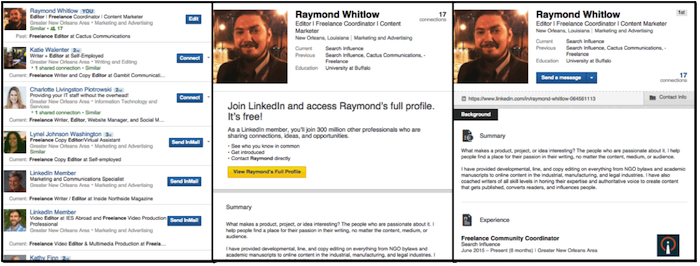
    Two types of viewers will see your profile: the public and your connections. Connections can see all of your information, but public viewers need to click and scroll before they can access everything. You have three opportunities to draw public viewers in: the photo, the professional headline, and the summary.

    LinkedIn Profile For Lawyers Image
    Only your connections (right) will see all of your information at first glance. Use a descriptive professional headline to stand out to searches (left) and public viewers (center).

    3. Use a photo. It should be professional, of course, but more importantly, it should support the brand you are promoting.

    4. The professional headline is not a job title. LinkedIn autocompletes this section with your current job title, but you need to change it immediately. Titles such as “attorney” or “partner” do not tell the public about the services you excel at, the people you can help, or the value propositions you are passionate about. In other words, your job title may not effectively support your brand or target audience. Use a professional header that includes keywords and presents a value statement.

    5. The summary is anything but. Your whole LinkedIn profile is a summary of your professional life—do not lead this section with an even more abbreviated version. Summarize your brand by looking to statements that address:

    • Who do I help?
    • Why do people trust me?
    • Why do people like working with me?
    • What have I accomplished?

    The summary may be the last thing read by a viewer who is interested in you but still on the fence. Use it to encourage the people who are intrigued by your professional headline to become interested in your accomplishments.

    The Evidence

    Now you have drawn your audience into the parts of the LinkedIn profile that address job experience, education, and skills. Use these sections to solidify the claims presented in your professional headline and summary.

    6. List accomplishments, not job descriptions. A list of responsibilities encourages your viewers to skim. Open each job description with a short (1–2 sentence) description of what you do. If you use a list, list your accomplishments, not your responsibilities. You do not need to give an exhaustive account; the purpose of these descriptions is to pique your viewers’ interest so that they contact you or look deeper for information.

    7. Focus on the quality of skills, not the quantity. This is where knowing your audience plays a huge role. Focus on the skills that matter to them. LinkedIn ranks your skills by how many people have endorsed them, which creates a visual hierarchy that emphasizes about ten skills over the rest. By only listing a dozen skills, you create the impression of focused expertise. List too many skills, though, and the ones that are most relevant to your audience may be overshadowed by less important skills.

    (Note: It is recommended you review your bar association’s guidelines on online advertising to determine if skills are considered to be claims of specialization.)

    Closing Remarks

    Very few of the people viewing your profile will read all the way to your volunteer work or organization memberships. That does not mean you should skimp on these sections; they are your opportunity to cement a connection with the people most interested in your brand.

    8. Show your passion. This is another opportunity to bolster the “leader” part of your brand. Stay focused on causes that both you and your audience care about. Show, don’t tell, by listing volunteer experiences and accomplishments, honors and awards, and professional organizations.

    9. Use publications and projects to encourage sustained engagement. Unlike most of the profile sections discussed above, projects and publications enable you to include URLs to outside sources. Direct readers to your legal blog or website to further bolster your online presence.

    10. Do not just build a profile; use it. The lawyer who saw a 10x ROI from LinkedIn spent one hour building his profile and three hours building his network, followed by 30 minutes every week maintaining it. Plan on investing at least as much time sharing your profile as building it:

    • Join and comment in LinkedIn groups.
    • Regularly share updates and engage with other people’s updates.
    • Never stop looking for contacts.

    Over time, a well-curated social media presence will grow into a second profile that shows who you are—the likable and trustworthy part of your brand. When designed with your audience and brand in mind, your LinkedIn profile becomes the cornerstone of a professional network that can drive referrals.

  • For Small Law Practices, Online Resources Can Be Judge & Jury

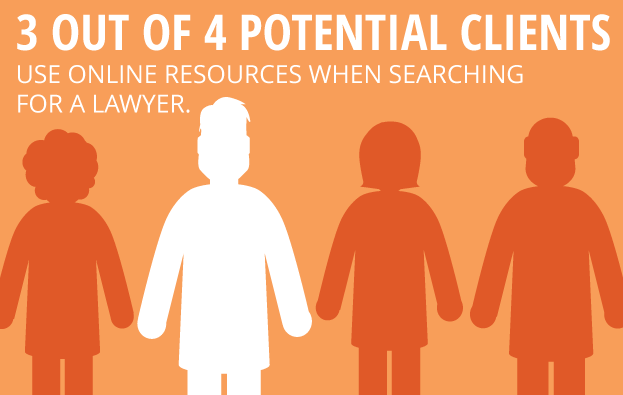
    For many solo practitioners and small law firms just starting out, establishing a consistent client base is the number one priority. In the increasingly competitive land of marketing your law practice, it’s imperative to look beyond the traditional methods such as putting your picture on a billboard, directly contacting potential clients, or simply hanging out your shingle. According to a survey conducted by the Research Intelligence Group, three out of four potential clients use online resources when searching for a lawyer. With that in mind, utilizing a few simple tips can make a huge difference in getting your new law practice found online.

    1511-SI-Newsletter-KG-E-02

    1. Develop and Promote High-Quality Content

    If you’re just in the initial stages of developing your website, it’s wise to keep things simple and focus on quality rather than quantity. For instance, create a few targeted website pages that are written with the potential client in mind, rather than cluttering up your site with an overload of information. Once you have high-quality content in your arsenal, make sure to utilize a social network to promote that content. Also, consider focusing on one social network that you expect will attract the most business, and write timely and substantive posts for that one network.

    LawyerFortunCookie

    2. Create a Blog

    One important way to increase your online visibility and improve your chances of getting to the top of Google’s organic search results is to create a relevant and authoritative blog on your website. A blog is a great way to establish your authority on subjects relevant to your practice while also allowing for the occasional posting of upcoming community events or helpful nonlegal articles. You can also set your blog to automatically post to social media platforms such as Facebook, Twitter, and LinkedIn.

    GavelAndGlobe

    3. Focus on Local

    Think of your potential client base and how you would traditionally market to that group. Getting involved with your community by speaking at regional networking events and participating in local organizations can help establish yourself as a local expert in your field. Internet marketing is another step in that process and can go a long way in bringing in new business. For example, creating consistent profiles across local directories can help you rank higher on Google. Also, consider developing a strategy for gaining local user reviews on websites such as Yelp.

    Starting your own law practice can be daunting, but utilizing these simple tools can make a big impact in helping potential clients find you online.

    Image Sources:

    Lawyer Fortune Cookie

    Gavel and Globe

  • Don’t Be An Advertising Grinch: Grow Your Profits 3 Sizes This Holiday Season

    Can you believe we’re already on the verge of December? Are you prepared for the holidays? I’m not asking if you have your Christmas tree (or Hanukkah bush) picked out or if your travel plans are confirmed…we’re talking about advertising, and specifically online advertising. Hopefully, you’ve already adopted online advertising into your business’s ad strategy (if not, I just happen to know of an exceptional company that can help you get started), but this year, having an online presence for your products or services is more crucial than ever.

    Therefore, it’s only appropriate that we at Search Influence help prepare you and your business for the upcoming season! Here are 8 Questions, Tips, and Best Practices to get you in the right mindset and bring some holiday cheer to your ad strategy.

    1. What channels are you using?

    It’s common knowledge that there are a plethora of ways you can reach potential customers online, whether it’s via email marketing, PPC, social media, etc., but which is the best for your message?

      1. Email Marketing
      2. PPC
      3. Facebook
      4. Social Media in General
      5. Retargeting

    It’s easy to get overwhelmed if you think about utilizing all of these channels, especially if you consider how much it could cost you. So if you don’t have an unlimited budget, try and think about it this way: which channels are you already utilizing that you can focus on during the holidays? Which one (or two) channels might you add, even if it’s just for the holiday season, in order to build awareness and not get lost amongst all the other businesses advertising during the holidays? As with anything else during the holidays, the most important thing is to try not to spread yourself too thin. It’s better to put more budget and effort into a couple of channels than to lose your message by trying to use them all.

    2. Let the Christmas creativity flow!

    Your audience is already primed for the holidays – feed into it!

    Creative is extremely important this time of year. Keep your ad copy fresh by changing up your creative from the rest of the year and integrating topical messages into your ads. And don’t worry about sounding cheesy — this is one of the few times you can get away with it! When people are bombarded with holiday messages, think outside of the box. How do your products or services apply to this time of year? For example, are you a culinary business with an audience inclined to embrace your new recipes and cooking supplies at this time of year? Or are you a travel agency whose key demographic might be looking to escape from the cold weather with one of your vacation packages? There are many lenses you can look through when selling your product, so don’t lose sight of the way your consumer will be feeling during the holidays. Just ask yourself: how can your business/brand help enhance the message of the holidays?

    3. What are you prepared to offer?

    Use “giftable” language.

    This is crucial, especially if you have an online business or utilize e-commerce. It’s the holiday season after all, so people are looking everywhere for – and expecting to see – holiday deals. Remember to use gift-centric language in your ad copy. Could you market your service as a gift for your customers? Make it less about you trying to sell them something and more about what they’ll be getting from you if they turn to you during the most competitive time of year.

    Think about advertising sales/offers/discounts that are time sensitive. Putting out an offer that must be utilized before the new year is a good option because it encourages people to buy now, and it could be more trackable and traceable to a holiday campaign.

    On the other hand, if you’re a “resolution-related” company, your holiday advertising might expand past Christmas into the new year. No one wants to hear about gym memberships when they’re wolfing down the cranberry sauce.

    BraceYourselvesNewYearsImage

    Finally, if you’re going to advertise offers during the holidays, be sure to utilize offers that are truly compelling. Don’t announce something as including free shipping unless it is paired with something else; your message certainly won’t stand out if you’re offering only free shipping along with everyone else.

    4. Christmas isn’t the only holiday in December,

    nor should it be the only thing on which you focus your advertising efforts.
    Is your product or business Christian-centric? If not, would you risk alienating a subset of your audience if you mention “Christmas” in your ad copy and/or message? This may seem like a minor opportunity, but it could be a great chance to demonstrate self-awareness and show your customers how well you know them.

    Additionally, be sure to think about the time surrounding the holidays, not just the holidays themselves. For example, if you’re utilizing a mobile campaign, use the pre-holiday weeks to increase your customer base and drive mobile app installs ahead of the holiday season, and focus your post-holiday time for new device owners activating apps and devices for the first time. Lastly, remember that a lot happens in the buying cycle after December 25th. Consider using after-holiday clearance or Boxing Day specials, and keep in mind New Years and everything that comes with that – hello, resolutions!

    5. Think device.

    If you’re an online advertiser, multi-device targeting for this time of year is crucial. Consumers are omni-channel. People shop online and in-store; therefore, you should really boost your visibility and advertise on as many devices as possible. This may sound easy, as on Google Adwords all you need for this is to make sure your device targeting is set to “All.” However, just because your ads can show up on mobile or tablet does not mean they are automatically optimized to do so. Here are some thoughts to keep you focused on multi-device targeting:

      1. Mobile is where it’s at! This year, there are more people using more devices than ever before.
      2. According to this year’s Facebook Holiday Webinar, over 60% of people in the US use at least 2 devices every day.
      3. Facebook also found that over 40% of all online adults start an activity on one device and finish it on another (think conversions); therefore, cross-platform and cross-device marketing are extremely important. Simply put, more consumers are starting their holiday shopping in-store and finishing it online (or vice versa).
      4. Do not think of mobile as a technology, but as a consumer behavior. Why is your consumer searching on mobile? What do you want to tell them when you show up on their mobile device?
      5. Mobile optimized ads should have creative that accommodates a small screen. For example, utilize a click-to-call function and display a very short, user-friendly menu so your site is easily navigable on a smartphone display. To learn more about using mobile ads or optimizing your site to fit mobile parameters, check out what Google has to say on the matter: Google Mobile Ads.

    6. Account for Black Friday/Cyber Monday.

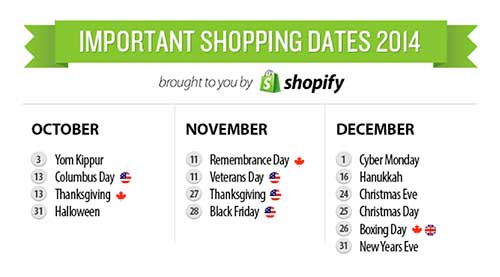
    The holiday season seems to be getting earlier and earlier each year. This year, the retail space seems to have forgotten about Thanksgiving by skipping straight from Halloween to Christmas.

    Technically, you as an advertiser should be thinking similarly (thoughts about holiday shopping and marketing do start in October), but it’s certainly ok if you’re late to the party! Everyone knows the real “gifting” takes off around Thanksgiving and Black Friday.

    ImportantShoppingDatesImage

    That being said, there are certain days that have evolved online regarding holiday shopping. If you’re into e-commerce, you’re already familiar with Cyber Monday, but it might help to organize your holiday advertising efforts even more granularly, as every year there seem to be more “dates to remember.”

    1. Black Friday – November 28th

    2. Cyber MondayDecember 1st – keep in mind: Facebook announced that this year, 25% of online shoppers will place their orders from a mobile phone on Black Friday and Cyber Monday! (https://www.facebook.com/business/success).

    3. Green Monday – December 8th – usually the shipping cut off for most postal outlets to get standard-shipped packages to customer before Christmas.

    4. Free Shipping Day – December 18th – a one-day event held in mid-December. Merchants are encouraged to offer free shipping with guaranteed delivery before Christmas. Like I said earlier, don’t think free shipping alone will give you an edge above everyone else – but it certainly helps! Sign up to be listed as a participant of Free Shipping Day here.

    5. Super Saturday – December 20th – the last Saturday before Christmas, Super Saturday is a big revenue day, as it technically marks the end of the shopping season that is considered to begin on Black Friday. Super Saturday targets last-minute shoppers. Typically, this day is a good day to offer one-day sales in an effort to accrue a great deal of last-minute Christmas revenue.

    6. Boxing Day – December 26th – As mentioned in #5, people are opening the new devices they received over the holidays, downloading apps, and/or looking to trade gifts in for something else. Online and in-store advertisers oftentimes offer deeper discounts on remaining merchandise, which can be a great way to get rid of leftover inventory.

    7. Social Media Presence is Crucial.

    GrinchMemeSocialImage

    The holidays are a very popular time for social media presence; your audience is online more often, whether it’s for shopping or to connect with friends and family. Therefore, make sure you increase your presence as well! Up your post load, produce more articles, and sponsor more updates to make sure you’re seen by your target audience and to show them you’re not “out of office” for the holidays.

    However, you may have to do some shopping yourself in order to make this happen. Advertising inventory prices will be rising for the holidays across Facebook, Twitter, and LinkedIn, so you must decide if you want to expand your budget in order to adequately boost your social media involvement.

    Before you grinch out on this, consider that your potential profit might be worth a slightly (and temporarily) elevated budget. After all, Facebook reports that 46% of shoppers who used Facebook before shopping used it to look for deals, promotions and holiday gift ideas, and they often discovered these things through their news feed. (Facebook Holiday Webinar).

    8. Stay organized!

    This last “tip” isn’t so much about online advertising as it is about advertising in general! Like anything concerning your business, staying organized is key, but it can be even trickier around the holidays when we seem to be juggling our personal and professional lives more than usual.

    Regarding your online presence, we recommend creating a promotional calendar before the month even begins. Know what days you’d like to run what ads, and become as comfortable as possible with the seasonality of the month. You can also take advantage of the ad-scheduling features on certain ad platforms – this way, you can create your ads, post promotions, sponsored updates, etc. ahead of time and then schedule them to run on certain dates/times without you having to be around the computer.

    Simply put, plan ahead as much as possible! This will leave less work for you to do later when you’re trying to baste a turkey, or when your luggage inexplicably gets lost by the airline…

    Now some might think this goes without saying, but remember to breathe. You do not need to implement all of these suggestions into your ad strategy! Whatever you do decide to do this holiday season, the most important thing is to document and remember the results for next year and to ultimately strengthen your marketing strategy. Just because it’s the holiday season doesn’t mean you need to stress about your advertising. But unlike the holidays, just try not to get your family too involved.

    SIHappyHolidaysImage

    Image Sources:

    Brace Yourselves

    Important Shopping Dates

    The Grinch

  • Help! I’m A Cyborg And Nobody “Likes” Me

    Technology is redefining human connections, which has made social media a crucial ingredient in any marketing strategy. With many different outlets available used to communicate with your audience, how do you choose the best approach for your business? When sitting behind a computer screen, it is easy to forget the purpose of B2C marketing – building and maintaining meaningful relationships with your customers.

    Here are some quick tips to create that connection through your social media campaign.

    Be Receptive

    Always be conscious of how your product and service will benefit the customer. Keep these benefits in mind when encouraging your customers to engage in your promotion and be receptive to their feedback. The beauty of social media is that it allows you to create a more personal approach to marketing those benefits, receiving feedback from the consumer and personally responding to his or her thoughts or concerns within minutes, demonstrating your excellence in customer service.

    FacebookPeopleFirstImage

    Be Genuine

    It is critical that the voice and verbiage used for your campaign is coming from an authentic place. Eliminate the robotic, scripted tone and your audience will feel like they are not conversing with a business, but with a person who actually cares about their needs.

    HaveALotOfFeelingsImage

    Be Direct

    In this fast-paced society, your audience is most likely pressed for time and multitasking. Give them stimulating content in a short, digestible format that they will consider worth their time. Your mindfulness and appreciation for their time can go a long way.

    Keeping your campaign personal, and showing your gratitude to your customers in a genuine way can be the key to a successful social media campaign. As long as your customer service is consistent with your social media efforts, your business can build and maintain those essential relationships.

    Image Sources:

    Thanks to Buzzfeed for the Mean Girls gif and for the Facebook “People First” image.

    Other Source:

    LinkedIn’s Social Media & Emotional Brand Attachment Case Study


  • Five For Friday: A Very Twitter Christmas, Facebook Gets Scroogy With Likes, & More!

    iphone5borderimage

    1. Are Twitter Users the Most Efficient Holiday Shoppers? – MarketingLand

    Given their 160-character count limit, Twitter users are clearly efficient communicators. And now, we are learning that they are super efficient holiday shoppers as well. The popular social platform released a study highlighting its ability to influence shoppers in their decisions on retail establishments and which specific items to purchase. 54% of users are more likely to purchase an item if they saw it advertised on Twitter. The study also shows that Twitter users not only shop earlier, but they also shop more frequently for holiday purchases. I guess now we know where retail shops should be marketing during the holidays.

    2. Secrets to Properly Linking on LinkedIn – Business2Community

    We all have a LinkedIn page. We’ve entered in our resume details, uploaded a picture, maybe got endorsed by a friend or two, and received a glowing recommendation from our moms, but now what? How exactly can you benefit from this?

    Here are 12 secrets from LinkedIn pros! Adopting some of these habits will help you increase your presence and improve your network. Some tips include:

    • Message people in groups for free!
    • Share useful and relevant news (mainly for attention).
    • Use tools, like FiveHundredPlus, to stay organized.
    • Follow first; Like, Share, and Comment second.

    LinkedIn can be confusing, and it may seem unnecessary, but with the growing number of companies and business people joining and actively using the platform, it has become more beneficial to understand how it works. Creating a substantial network will help in the long run. So, go forth and connect!

    3. How-To: The Most Perfect List Post – Business2Community

    Everyone loves lists! However, with their increasing popularity and Internet users’ ever-prevalent short attention spans, how do you keep readers reading?

    Business2Community offers a near-perfect list of tips for creating the best and most effective list post. There are several things to consider when writing out a list, and remember, every detail matters. Some of the tips provided are:

    • Always, always, always have an introduction and a conclusion (excluding the distinguished SI Five for Friday posts).
    • Pick the right number (10 instead of 5, 7 instead of 8). Trust us, it’s science.
    • In the title, use “10” instead of “ten.” Seriously, it matters.
    • Write longer posts.

    These tips are guaranteed to help make your list go viral, or at least make sure your readers actually read through to the end.

    YouArePerfectImage

    4. The End of Facebook Like-Gate as We Know It – MarketingLand

    Say goodbye to the days of entering a contest on Facebook with the simple click of a Like button. Facebook engineers have dismantled the ability for companies to use Likes as the entrance fee for contests and prize drawings.

    The effects of this are two-fold. For one, companies will now have to engage users on a deeper level in order for them to connect with the business. This change effectively ends the use of “artificial incentives.” Two, they also expect to see more conclusive results when determining demographics, as opposed to the scattered results received when companies were giving away iPads haphazardly to gain social media presence.

    However, it is also being argued that ending Like-gating is solely meant to gain revenue for Facebook. The belief is that companies will pay for Likes if they have to. And now, they have to.

    5.  What’s the About Page Supposed to Be About? – CopyBlogger

    The About page seems pretty self-explanatory, but it has actually evolved over the years and is no longer a place for you to just describe your business/products. For a more effective page, use it to start a conversation with your reader and emphasize to potential clients that you have what they are looking for. Because this is often the most visited page on your site, it is wise to grab the reader’s attention from the get-go. Let your personality shine! This will assure your visitors that they are in the right place, and they are more likely to continue browsing your site.

    There are 5 steps to creating a superior About page:

    1. Engage with readers by introducing your personality and humor on the site. Don’t be afraid to be different.
    2. Get into the readers’ heads. Make them think you’re reading their mind by showing them you have exactly what they are looking for.
    3. Brag, but humbly. Include some testimonials so others are singing your praises.
    4. Near the end, insert a bit of your biography. Make sure you express why you do what you do, and why you love it.
    5. Call to action! Invite your readers to sign up for your email list, call, or contact you. Most of the time, they will!

    Image Sources:

    Thanks to Mariah Summers for the “You Are Perfect” gif.

  • Let Your Business Be Known: 5 Tips for Improving Your LinkedIn Presence

    linkedinlogoimageLinkedIn is a great resource for business-to-business companies to increase brand awareness and build valuable connections. You may have set up a Company Page, but are you really making the most of the networking site? Use these tips to maximize the benefit of your company’s LinkedIn presence!

    Set Up Showcase Pages

    curtainsstagespotlightimageIf your company has a certain brand or product you’d like to emphasize, set up a Showcase Page. Showcase Pages are extensions of your Company Page that spotlight specific products, brands, divisions and more. This allows users to follow the aspects of your business that most interest them. Use this feature to share updates and maintain dialogue with a highly targeted audience.

    Share Your Content

    ShareFlyingPaperPlanesImageLinkedIn’s publishing platform was originally only accessible to about 500 select influencers. Now, this feature is open to all LinkedIn users. If you’re already writing blogs for your website, this is a simple way to reach and engage even more users. Additionally, sharing on LinkedIn gives you the benefit of showcasing your expertise to others in your industry. Share your content, earn followers, and expand your influence online!


    Join Groups (Or Make Your Own!)

    Groups allow you to make connections with users who share your interests or work in a similar industry. Use groups to network, stay up to date on industry news, and share content with a targeted network. There are over 1.5 million groups on LinkedIn, but if you can’t find one that’s a good fit for your business, then you can create your own!

    Engage With Your Followers

    PenguinsRunningGifImageGaining followers is important, but it’s only part of the puzzle. Remember to engage with your connections. Maintain dialogue through regular posts to your Company Page, Showcase Pages, or groups. Share relevant resources, industry news, and your valuable insights. Make sure the content is engaging and gives people a reason to share or comment on your update. Keep the conversation alive by responding to audience comments.

    Get Ideas From Others’ Successes

    idealightbulbimageFeel like you could use some more guidance? Get inspiration from successful company pages! Check out LinkedIn’s 10 Best Company Pages of 2013 to see how top companies are making the most of the network. Also, take a look at some of LinkedIn’s social media case studies to learn about businesses who have used LinkedIn to their advantage.
    LinkedIn can be a valuable resource for your business if you apply these tips. Are you using LinkedIn for your business? Do you have any additional tips? Share in the comments!

    Image Sources:

    Linkedin logo

    Showcase

    Paper Planes

    Penguins

    Idea bulb

  • Do Your Ads Belong on LinkedIn?

    LinkedInLogoImageLinkedIn is a great advertising platform for business-to-business (B2B) companies. It helps these businesses increase brand awareness and allows them to connect with potential clients.

    Should you be advertising on LinkedIn?

    Unfortunately, if you’re an ice cream shop advertising on LinkedIn in the hopes of increasing your sales, there is a 110% chance that your time, effort, and financial resources are better off on another platform. (Hint: Facebook). This marketing approach is best for linking to other businesses.

    LinkedIn Advertising is also extremely beneficial for companies looking to fill open positions. Users aren’t just on LinkedIn to see the latest baby pictures that their old high school friends are posting. They are mostly looking for professional development and networking opportunities.

    Are you targeting the right audience?

    So, you’ve decided that LinkedIn Advertising is a strategically advantageous move for your business. Now what? Figure out your target demographic.Do this before writing your ad copy and even before sponsoring your updates. It’s imperative that you do this before jumping onto this marketing battlefield with no precise aim.

    TargetMarketImage

    Why is this so important?

    LinkedIn offers a variety of demographic targeting options that can be combined to best fit the audience of your campaign. Strategically deciding on your audience will send your ads in the right direction for the best results.

    Who are you speaking to? Do you know what that audience likes and dislikes? You won’t be able to write enticing, effective ads that achieve your goals without this knowledge.

    When it comes to target options, the possibilities are vast! You can choose to target anything from specific locations, companies, and job titles to specific schools, groups, ages, and genders.

    Once you decide that LinkedIn is the place for your business and you figure out who your target demographic is, you’ll be ready to start running ads and sponsoring your updates.

    Image Source: https://flic.kr/p/3dTdUc