Tag: legal industry

  • 3 Practical SEO Tips to Get More Clients for Your Law Firm

    1603-SI-TheInfluencer-KL-A-04-lg

    Have you ever wondered why your competition appears at the top of search engine results pages while your firm is nowhere to be found? Attorneys today face new marketing challenges, including how to access the ever-increasing number of clients who are using the Internet to search for legal services online. These three practical SEO tips are the stepping stones to getting your firm’s website and the specific practice areas of your firm’s lawyers to appear prominently on the results pages of search engines like Google and Bing.

    Law Books Image

    1. Create High-Quality Content

    Most importantly, your site should feature content that is compelling and thoughtful. Rather than prioritizing obvious and underhanded SEO tactics such as keyword stuffing, organize your website so that there are separate pages dedicated to each of your practice areas and focus on writing comprehensive and user-friendly text to explain each practice area. Your content will naturally include the keywords that potential clients search for when they need legal help. For example, if a consumer is searching for a personal injury lawyer in New Orleans, they will be directed to the page on your site that explains how personal injury attorneys can help clients who have been injured in an accident that was the fault of another.

    2. Select High-Value Keywords

    Speaking of keywords, to see results with SEO, you need to do your due diligence and conduct keyword research so that you know exactly what consumers are searching for. The trick is to focus on your local area by using keywords related to your practice areas and where you are physically located. Try using a keyword planning tool that will tell you what keywords consumers are using to search for your type of legal services. For example, consider the case of The Law Office of Jerod Gunsberg. When their campaign first started with us in 2010, the firm was not ranking for any of their crucial competitive keywords. As of May 2018, they rank #3 for “domestic violence defense attorney los angeles”, #6 for “theft defense attorney los angeles” and #2 for “meth lawyer los angeles” and “prostitution lawyer”. By implementing an aggressive strategy in a highly competitive market, we got Jerod Gunsberg in front those in need of a defense attorney and closed quality cases. In the first 5 years of their campaign with us, the SEO strategy brought in 589 leads. With a 469% increase in organic traffic compared to the first month of their campaign, we continue to connect the right audience with strong cases to The Law Office of Jerod Gunsberg.

    Social media icons image

    3. Create and Optimize Social Media and Blog Presence

    For law firms, creating and regularly updating social media pages is another important step in making your firm more visible online. One way to build authority on Google is to create and optimize your Google My Business profile and engage in evolving Google My Business activity to increase your local presence. Most legal professionals make an effort to build their brand and audience on LinkedIn, but you can also create a social profile on sites like Facebook and Twitter and integrate them into your website. Make sure you focus on regular and relevant updates to your social media profiles by simply making updates on topics related to your practice areas. You can also increase the relevancy of your profiles by adding two or three paragraphs of information describing the type of legal services your firm provides. Lastly, consider setting up a blog where you publish your own interesting and unique content focused on your areas of law. Once your social media and blog presence is relevant and current, you will further strengthen your site’s SEO capabilities.

    Let us help you follow these three steps to build your online presence and help potential clients find you when they would never have known you existed!

    Image Credits:
    Law Books Image
    Social Media Icons Image
  • How to Keep Your Law Firm’s Ads Legal

    With the recent death of Justice Antonin Scalia, the Supreme Court is on arguably on track for confusion, gridlock, and bipartisanship. This uncertainty could affect the future of affirmative action, abortion, union rights, and several other topics that are scheduled to go to court within the year. In the face of this uncertainty, we have been looking back at the famous Bates v. State Bar of Arizona ruling of 1977, which held major implications for digital marketing even before the World Wide Web was invented. In this case, the Court emphasized the benefits of advertising as a means of informing consumers of goods and services. A five to four opinion ruled that any restrictions on advertisements for legal services was in violation of the first amendment. The majority decision continued, however, to stipulate that advertisements that are “false, deceptive, or misleading, of course, [are] subject to restraint.” The opinion went on to address the grey area between perceptions of advertisements: “we recognize that many of the problems in defining the boundary between deceptive and nondeceptive advertising remain to be resolved…”

    In light of this acknowledged grey area, the question is: How do you keep your online legal ads legal?

    Legal Definition of Online Advertising

    Online advertising is not just limited to email blasts, pop-ups, or those dreaded YouTube clips that you must watch for at least five seconds. The legal definition varies by state, but in many states, online advertising is broadly defined to include your website and maybe even social media accounts. To be safe, assume that everything you or your firm publishes online is an advertisement.

    Avoid Misleading Claims

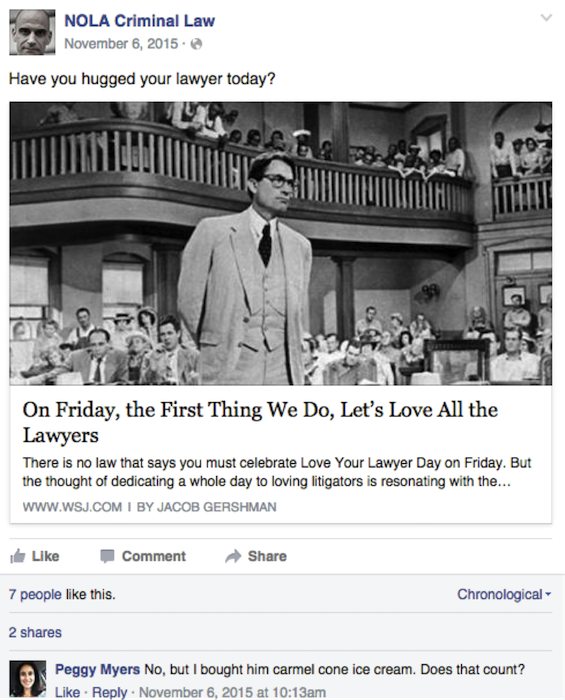
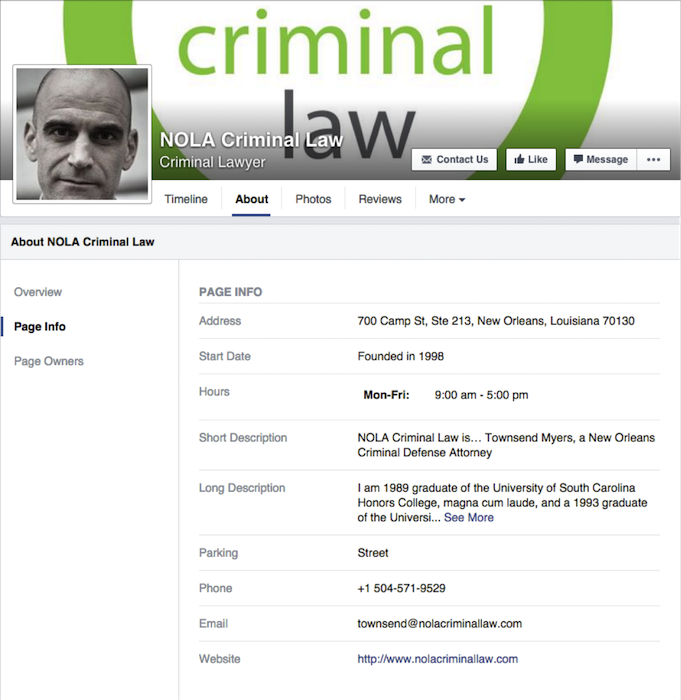
    To avoid false advertisement, everything you publish must be truthful and accurate. In terms of digital content, you will want to hook readers but not make over-exaggerated claims. This might take some creativity from your digital marketing team, but misrepresentation of services could lead to legal repercussions. It’s common sense. Don’t lie.

    NOLA Criminal Law Facebook Image

    Ad Targeting

    Because state laws vary, targeted ads are a great resource a firm can use to ensure ads only appear within a certain geographical region, avoiding inadvertently breaking another state’s regulations. You should keep all of your online ads relevant and targeted to your state or area. On top of staying within the realms of your state’s advertising laws, ad targeting also helps save you money. You can avoid appealing to people outside of your legal jurisdiction and reduce waste on your advertising budget.

    Criminal Lawyer Google PPC Ads

    Creative Commons

    An image in an advertisement, whether a pay-per-click or on Facebook, needs to be creative and eye-catching. But all material published online or used in an advertisement still needs to comply with copyright laws. To ensure compliance, you can use creative commons material, join a stock photo website, pull images or graphics from a public domain repository, or ask the owner. A firm needs to get creative while staying safe.

    Even though the 1977 Bates v. State Bar of Arizona ruling solidified an attorney’s right to advertise, laws regulating the legality and specifics of Internet advertisements have yet to develop. We are operating in a grey area. To stay in the clear, make sure you everything you publish online is not a misrepresentation.

  • Focus on Brand and Audience to Leverage Your LinkedIn Profile’s Referral Power

    Blog2

    LinkedIn is for lawyers. If the anecdotal evidence—such as an attorney receiving a 10x ROI from a four-hour investment—is not enough to convince you, consider the takeaway from Chester and Del Gobbo in the ABA’s 2012 Law Practice: “Now that the use of social media is… widespread, disengagement is not the answer. The issues are not insurmountable, and being a wallflower lets others gain a competitive advantage.”

    With a little forethought, LinkedIn can become a powerful referral tool.

    The Discovery Process

    Before you can present your online persona to the public, you need to set some objectives to guide your content:

    1. Know your audience. When you know your audience, you not only know which of their needs you can meet; you also know what they are not interested in. Do not invest time on subjects or past experience that are not relevant to your audience, especially on a new profile. Not sure who your audience is? We can help.

    2. Know your brand. Your brand is the value you offer others. To build a successful online presence, you want to become a thought leader, or “influencer,” on all things related to your brand. Thought leaders are not only recognized for how they think, but also for how they lead. Put another way: your audience is as motivated by trust and likability, the “leader” side, as by your perceived knowledge. To create a successful brand, you need to find the intersection of ability and likability.

    When building your profile, every content decision you make should be based on demonstrating your ability to meet your audience’s needs or promoting your brand.

    Opening Arguments

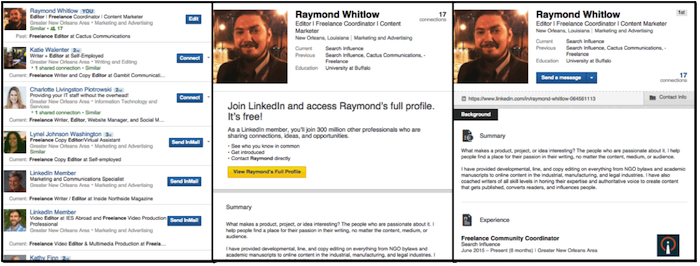
    Two types of viewers will see your profile: the public and your connections. Connections can see all of your information, but public viewers need to click and scroll before they can access everything. You have three opportunities to draw public viewers in: the photo, the professional headline, and the summary.

    LinkedIn Profile For Lawyers Image
    Only your connections (right) will see all of your information at first glance. Use a descriptive professional headline to stand out to searches (left) and public viewers (center).

    3. Use a photo. It should be professional, of course, but more importantly, it should support the brand you are promoting.

    4. The professional headline is not a job title. LinkedIn autocompletes this section with your current job title, but you need to change it immediately. Titles such as “attorney” or “partner” do not tell the public about the services you excel at, the people you can help, or the value propositions you are passionate about. In other words, your job title may not effectively support your brand or target audience. Use a professional header that includes keywords and presents a value statement.

    5. The summary is anything but. Your whole LinkedIn profile is a summary of your professional life—do not lead this section with an even more abbreviated version. Summarize your brand by looking to statements that address:

    • Who do I help?
    • Why do people trust me?
    • Why do people like working with me?
    • What have I accomplished?

    The summary may be the last thing read by a viewer who is interested in you but still on the fence. Use it to encourage the people who are intrigued by your professional headline to become interested in your accomplishments.

    The Evidence

    Now you have drawn your audience into the parts of the LinkedIn profile that address job experience, education, and skills. Use these sections to solidify the claims presented in your professional headline and summary.

    6. List accomplishments, not job descriptions. A list of responsibilities encourages your viewers to skim. Open each job description with a short (1–2 sentence) description of what you do. If you use a list, list your accomplishments, not your responsibilities. You do not need to give an exhaustive account; the purpose of these descriptions is to pique your viewers’ interest so that they contact you or look deeper for information.

    7. Focus on the quality of skills, not the quantity. This is where knowing your audience plays a huge role. Focus on the skills that matter to them. LinkedIn ranks your skills by how many people have endorsed them, which creates a visual hierarchy that emphasizes about ten skills over the rest. By only listing a dozen skills, you create the impression of focused expertise. List too many skills, though, and the ones that are most relevant to your audience may be overshadowed by less important skills.

    (Note: It is recommended you review your bar association’s guidelines on online advertising to determine if skills are considered to be claims of specialization.)

    Closing Remarks

    Very few of the people viewing your profile will read all the way to your volunteer work or organization memberships. That does not mean you should skimp on these sections; they are your opportunity to cement a connection with the people most interested in your brand.

    8. Show your passion. This is another opportunity to bolster the “leader” part of your brand. Stay focused on causes that both you and your audience care about. Show, don’t tell, by listing volunteer experiences and accomplishments, honors and awards, and professional organizations.

    9. Use publications and projects to encourage sustained engagement. Unlike most of the profile sections discussed above, projects and publications enable you to include URLs to outside sources. Direct readers to your legal blog or website to further bolster your online presence.

    10. Do not just build a profile; use it. The lawyer who saw a 10x ROI from LinkedIn spent one hour building his profile and three hours building his network, followed by 30 minutes every week maintaining it. Plan on investing at least as much time sharing your profile as building it:

    • Join and comment in LinkedIn groups.
    • Regularly share updates and engage with other people’s updates.
    • Never stop looking for contacts.

    Over time, a well-curated social media presence will grow into a second profile that shows who you are—the likable and trustworthy part of your brand. When designed with your audience and brand in mind, your LinkedIn profile becomes the cornerstone of a professional network that can drive referrals.

  • 3 Tips to Help Law Firms Generate More Leads on Social Media

    In 2015, 35% of all lawyers obtained clients from their social networks, according to an ABA survey. Tech-savvy attorneys and digital marketing experts alike know that social media sites like LinkedIn, Google+, and Facebook are great business development tools. Engagement is an imperative. In fact, it is the new word-of-mouth for client referrals. Here are three tips to help any firm develop a strong social media strategy.

    1. Start Slow and Develop a Message

    To start, a firm or individual attorney should pick out one or two social media platforms and focus on posting quality, engaging posts. There are only 24 hours in a day, and legal professionals already have a lot on their plate. By focusing efforts on posting good content on a few outlets, a firm can develop its own individual image and message. Once a lawyer becomes comfortable on one or two platforms, they can open various social media accounts and integrate their message across all of them. In 2015, 96% of lawyers and 90% of law firms maintained a presence on LinkedIn, while 33% of lawyers and 52% of law firms maintained a presence on Facebook. As the most popular social media sites in the legal field, these are the best places to start networking. Legal professionals also use Twitter, Google+, blogs, and several other niche social media platforms.

    Lawyer Social Media Engagement Post Image

    2. Set a Policy: Reactionary Content

    Who is the target audience, and what will solicit a response from them? Because of the conservative nature of law, many attorneys may shy away from controversial topics. However, as long as the information is within the constraints of what an attorney is allowed to say in public, it can be posted on the Internet. The whole point of social media is to provoke a reaction. Effective legal social media means not only engaging with potential clients on industry-specific topics, but also provoking a share, like, +1, or comment. One tactic involves posting about real world events, changes to state or federal law, landmark rulings, or events the firm is hosting. These posts showcase the attorney as an expert who is aware of the most recent changes shaping the dynamic field. Up-to-date content appeals to potential clients who may respond with their own opinions, creating a conversation and potential leads.

    Lawyer Social Media News Post Image

    3. Build Relationships

    To maximize the reach of a firm’s social media message, make sure every attorney is involved. If one partner writes a blog or is featured in a local news story, make sure everyone in the office does what they can to promote the story. Through re-posts and shares, good news stories can reach a much larger audience. Each and every digital connection is a lead. To build professional relationships, use social media platforms at conferences, local business events, or any other professional event the firm is involved in. By connecting with other attendees or organizers, a lawyer can expand their social media outreach even further.

    As long as a firm approaches social media as part of a modern marketing campaign, it is easy to develop a successful strategy. Social media is not just for the young: the largest-growing demographic for Facebook is ages 30-50. A creative law firm can connect with social media users of all ages to generate leads and gain new clients.

  • The Verdict Is In: How to Make Your Law Firm Mobile-Friendly

    The Internet is not contained to just desktop computers anymore. With the massive proliferation of mobile devices, including smartphones, tablets, and phablets, users have the Internet wherever they go, and that means there are a lot of mobile search inquiries. In fact, according to Google, more people search using mobile devices than with desktop computers worldwide.

    2283584007_f199332890_z

    Importance for Law Firms

    What this means is that your law firm must be optimized for mobile searches in order to be found, especially by younger generations. Think about it: when a smartphone user needs timely legal advice to handle a situation such as a car accident, they will immediately use it to search for a reputable law firm. And the closer your law firm is to the top of the mobile search rankings, the more likely your firm is to receive that phone call.

    Whether on desktop or mobile, more and more people are using the Internet to find a lawyer. Citing a survey conducted by Moses & Rooth Attorneys at Law and Mike Blumenthal, Will Scott notes that 15.5 percent of those searching for legal assistance use the Internet. He also points out that those between the ages of 18 and 24 have a stronger inclination to search for legal representation using the Internet.

    13677439224_d5d7dc7387_b (1)

    Become Mobile-friendly

    But how can your tell if your law firm is optimized for mobile searches? Google Analytics will provide you with the tools you need to know if your website is up to its standards. Some things to pay attention to when optimizing your site for mobile is your site speed, internal links, how many images are used, the word count, and strong social signals. These elements all affect your search rankings, communicating to Google whether or not your website is mobile-friendly.

    In addition to having a site that is easy to find on Google, you’ll also want to implement strategies to convert mobile website hits into clients. Adding a click-to-call button to your website will allow users to easily call your office so they can arrange a meeting for a consultation. A simple inquiry form is also important to implement on your website so mobile users can fill in the fields with pertinent information about their case without having to wait to find a desktop to do so.

    It is also important to understand what your potential clients will be putting into the search box. Besides specific and location-targeted keywords, Blue Nile research has discovered that 27 percent of search engine users form their searches as questions. That means when a potential client searches for a law firm, over 1 in 4 people will search for phrases such as “where can I find a medical malpractice lawyer?” or “how can I fight a ____ charge?” A detailed and informative FAQ page will help lead these searches to your law firm. Not only does the FAQ page help for search engine optimization purposes, but it also benefits the user experience. A potential client will see the detailed information that answers their question and gain confidence that the site of your law firm has the solution to their legal matters. And with the aforementioned click-to-call button, the initial consultation meeting will be set up with effortlessly.

    As the world transitions further and further into the digital realm, it is important for your law firm to understand how to stand out from the other law firms online. Search Influence is here to make sure your website is optimized for mobile searches to convert hits to consultations.

    Image Credits:

    Law Books

    Mobile Phone Search

  • A War of Words: 4 Tips to Help Lawyers Win the Cost-Per-Click Bidding Wars

    1601-SI-Newsletter-0112-Big-KG-C-01

    Whether a veteran attorney or a recent law school graduate, legal professionals have likely noticed that the world of generating leads and winning new clients has changed drastically. While tried and true marketing methods such as word of mouth and putting your picture on a billboard still have their place, effectively using online resources can have a huge impact in establishing a solid client base. In particular, paid online advertising for attorneys has become so vital that competition for keywords has skyrocketed. Although it may seem daunting and difficult to know how to begin, these critical tips can help you win the cost-per-click (CPC) bidding war.

    1. Understanding the Competition

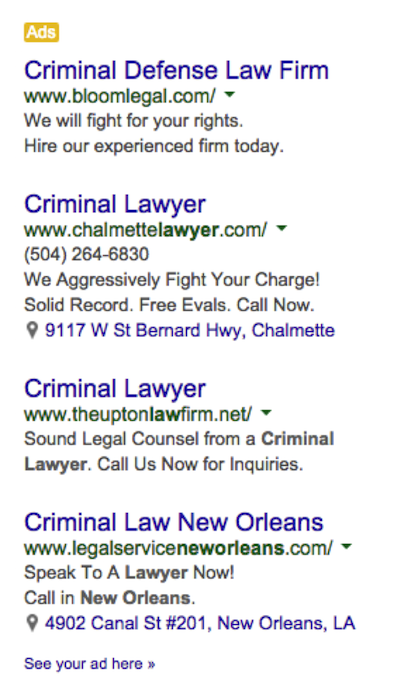
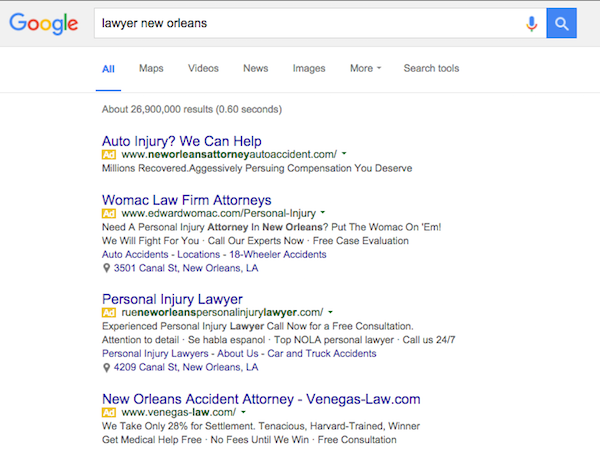
    Consumers who are searching for a lawyer often turn to the Internet to conduct their research. With that in mind, marketing online has become an integral part of building and sustaining a law practice. When it comes to paid online advertising, it’s important to first understand your competition. Legal keywords are typically among the most expensive in Google AdWords, with terms related to “attorney” and “lawyer” topping the cost charts. High levels of competition naturally follow expensive keywords, as lawyers constantly place bids on the exact same terms. Try conducting your own competitive research and search the keywords in your geographic area to see for yourself what ads are getting top placement. Simply run a search on the keywords you’re hoping to target and see which keywords your competition is already bidding on. Take a look at their ads and start crafting a plan to make yours even better.

    Screen Shot 2016-01-05 at 9.04.41 AM

    2. Target Specific Keywords

    So how do you overcome the highly competitive landscape and win the bidding war in your online ads campaign? First, you should create a list of specific and relevant three- to five-word keywords to explicitly target. This is a trial-and-error process, and it takes time to accumulate useful data. A simple way to start is to use the Google AdWords Keyword Planner, which will help you compile specific keyword ideas. This tool will also help you determine average traffic and CPC for your potential keywords, and it will make suggestions based on your site’s URL. In addition, it’s critical to focus on relevancy and make sure that your keywords, your ads, and your landing pages all match the searcher’s intent. For example, if the keyword in your ad is “DWI lawyer,” the click should take the consumer to a page with content for “DWI lawyer.”

    How Can I Fight A DWI Charge?

    3. Use Negative Keywords

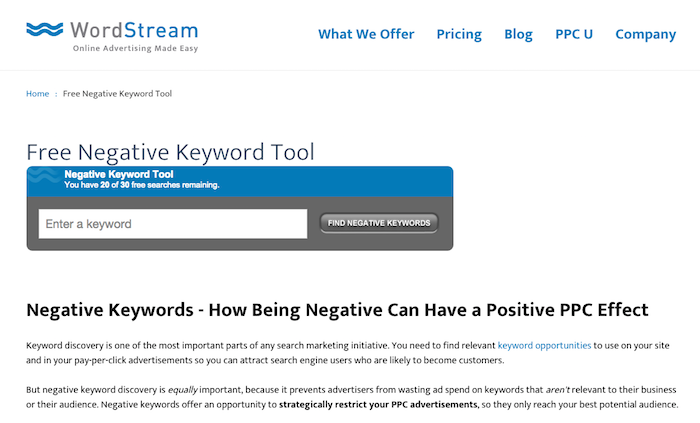
    Another crucial aspect of a successful paid online advertising campaign is the use of negative keywords. This allows you to stop your ad from appearing when you know that the consumer isn’t interested, which can help improve the click-through-rate of your ads. Using negative keywords informs Google that certain search queries are irrelevant to your practice, ensuring that you don’t pay for clicks that will not lead to conversions. You can start by using a free negative keyword tool like the one from Wordstream, which will return an extensive list of search terms that may not be related to your practice area. Using this tool is especially essential in the legal world, where you are bidding on expensive keywords that could result in unnecessary and costly clicks.

    Screen Shot 2016-01-05 at 9.25.01 AM

    4. Optimize Your Landing Pages

    Now that your paid online advertising campaign is set up with specific and relevant keywords and you’re getting clicks from consumers searching for your exact type of practice, it’s important not to derail all of your efforts with ineffective landing pages. Your landing pages should be directly on point to the ads that the consumer clicked on. They will likely need to be continuously tweaked with different types of offers to see how people respond to them. You might want to consider using videos on your landing pages with subject matter explanations directly from a lawyer, or customer testimonials from successful cases. In addition, having a chat function on legal landing pages can be particularly critical for consumers who are hoping to have immediate answers to case-specific questions.

    Keeping your paid online advertising strategy focused on these tips will help you capture leads that you would have normally missed, allowing you to conquer the competitive CPC bidding war for attorneys.