Tag: landing pages

  • How to Drive Conversions With the Right Contact Form—And What to Avoid

    Your business’ shiny new website just launched and everyone assumed a deluge of fresh new leads would follow. To everyone’s dismay, the predicted deluge turns out to be nothing more than just a trickle. What gives exactly? “Build it and they will come” may ring true with your traffic itself but that quote lacks an “and convert” at the end. In years past, traffic was the key metric for a lot of businesses since it was assumed that those users would appreciate the brand awareness. Fast forward to the present day in the “Silicon Age” where users not converting is sure to set your business behind further than the Bronze Age.

    One easy way to convert users into customers is through the usage of a handy-dandy online form, but just having a form doesn’t guarantee a conversion rate anywhere near your industry benchmark. I’m here to help bolster those forms from some boxes into lead machines!

    Positioning

    Back when there were only brick and mortar buildings, there was always a huge focus on location, location, location. That phrase may seem like it belongs in the Bronze Age, but it instead adapted to the changing times and is still just as important as it was before. The location of your form is integral to the success of any lead collection campaign. Forms should always be placed in a very obvious place and above the fold, which is the portion of a page that initially loads in the screen’s viewport, as often as possible. Having a form in a good location puts it on users’ minds as soon as they visit your website and makes it more convenient to convert. Overlaying the form over a banner image is a good start for more visibility.

    Another excellent location for your form is on the sidebar of your site. This allows casual site perusers to convert at their own leisure instead of forcing them to a contact page or trying to lead them back to whatever landing page they entered the site within. One last location for a form is on your contact page, of course. Any site user would expect a way to contact your business on the contact page. In addition to an address, phone number, or email, a contact form is a perfect way to capture visitors’ information and nurture leads to eventually becoming loyal customers of your business.

    Layout

    Now that you’ve figured out where to place your form, the next step is to create a form that users can easily understand, fill out, and convert on. One big helper that was pointed out in a Google AI test is how users’ eyes focus on form fields. Having your labels above the inside of form fields is preferable to labels next to the form fields. This allows users to better scan the information and breeze through forms quicker, which leads to lower rates of dropout and errors in fields. Speaking of fields, try not to overwhelm your users with a bunch of unnecessary fields for information that can be gathered further down the line. If you aren’t shipping something to someone, why would you require a home address? If you’re sending users a brochure via email, why would you require a phone number? Requiring an excess of information makes users go “hmm…” and abandon the website completely. This is not to say that long forms have no place on the internet, rather every bit of information should be relative to the call to action.

    Here at Search Influence, we use our own proprietary lead tracking system to create fully customizable and extremely flexible forms that can keep track of your website leads in an easy-to-read reporting system. With our forms, you’ll know where your leads come from the most and learn how to optimize your campaigns to maximize your lead generation.

    Call-to-Action

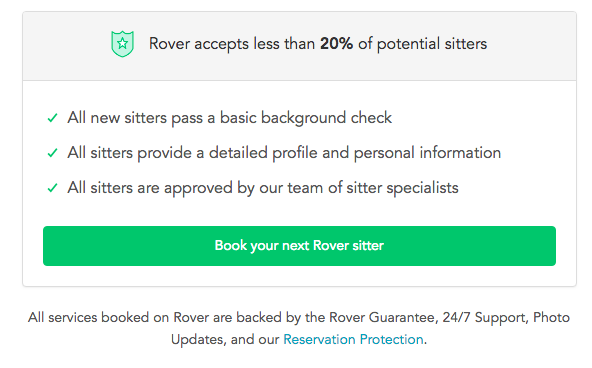
    A “Call-to-Action” (CTA) refers to the phrase that is meant to draw users into completing conversions. In the case of forms specifically, this would be the text that is on the submit button. Hubspot compiled a list of 31 Call-to-Action examples taken from many different corners of the internet and from varying industries. The main takeaway here is your CTA needs to be catchy and draw a user in. “Submit,” which may be seen fairly often around the internet, doesn’t quite cut it anymore. The end of a form should establish some sort of value to a user. Saying “Submit” simply tells the user that you’ll gladly collect their information and may or may not do anything with it.
    Screen shot of a call to action from Rover - Search Influence

    Having detailed text on the CTA button encourages users that your form is something worthwhile whether they’re about to “Subscribe to our newsletter” or Rover.com‘s “Book your next Rover sitter.” Users want to know the value of giving up their precious personal data, so make sure your form is honest and straightforward with how the users’ data will be used.

    Mobile

    One factor that can’t be ignored is the impact of mobile users on your website. Considering mobile users surpassed the amount of desktop traffic almost two years ago—eons in internet time—ignoring mobile users is a recipe for failure. What’s even more surprising is that in the same year, even though there were more mobile visits to websites worldwide, mobile users converted almost 65% less than desktop users according to the 2016 Adobe Mobile Retail Report.
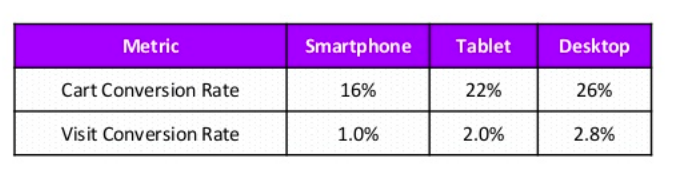
    Table of mobile conversion rates - Search Influence

    Our advantage here is that this data is like, eons old. We’ve progressed since then and have become more accustomed to serving mobile users and Google even recognizes the efforts that developers put in to make their websites mobile friendly and adjusted their search to index mobile sites first. This coupled with the rising magnitude of mobile traffic means that being able to capture leads efficiently on mobile platforms is imperative for any campaign.

    At Search Influence, we have everything you need to start a lead generating campaign, from SEO services, digital advertising, social media management, and the capability to track your campaign with pinpoint accuracy. We also practice what we preach; check out the form in the sidebar if you don’t believe us.

  • 5 Questions Your Medical Practice Should Ask Before Hiring a Paid Search Firm

    5 Questions Your Medical Practice Should Ask Before Hiring a Paid Search Firm

    When it comes to choosing a marketing firm for your paid search campaign, it’s important to do your homework—especially if you’re in the medical industry. According to Pew Research Center, 8 in 10 online health inquiries start with a search engine, and 72 percent of internet users said they looked online for health-related information. Beyond patients frantically Googling their symptoms, they’re also searching for medical care providers. The right ad agency will make sure you show up on page one of the search results.

    But on top of a highly competitive and saturated market, medical practices also face added challenges to adhere to strict medical guidelines and discuss sensitive and highly personal topics appropriately. All said, a paid search campaign can do wonders to both improve your brand awareness and get new patients in your door. Here are five questions you should ask your prospective paid search agency before signing a contract.

    1. What Experience Do You Have Working With Clients in the Medical Industry?

    Your ad agency shouldn’t just know costs per click and search engine optimization, they should also know how to speak your language. More than that, they should know how to speak your language to your prospective patients. Search Influence has been helping clients in the medical industry stand out and rank in search results since 2007. In that time, we’ve worked with medical clients in 30+ cities across 18 states. Our experience ranges from plastic surgeons and dermatology clinics to hospitals, counseling services, and physical therapists. We use a holistic approach for every campaign to create brand recognition, improve ranking, and—most importantly—deliver qualified leads.

    Our years of experience have helped us build a database of technical and demographic knowledge in order to strategically reach your desired patients where they’re at. In fact, we have helped our clients stay on the frontline of innovation by optimizing their sites for procedures as soon as they are approved and available to the public. For example, when the FDA approved gummy bear implants in 2013, we already had content written for our clients and were ready to run promotions to highlight this highly desirable option at the time.

    We also understand the meticulous detail required to accurately reflect the standards and restrictions of medical societies, HIPAA, and the platforms where we promote your content. We know how to accurately post images in accordance with both American Society for Aesthetic Plastic Surgery (ASAPS) and American Society of Plastic Surgeons (ASPS) promotional guidelines or how to use language that aligns with Google’s expectations for websites in the medical industry—an issue that can even cause Google to suspend your site.

    Stethoscope on a computer keyboard

    If you’re curious about the current state of your website or worried about a site suspension, you can contact us to help you get on the right track.

    In addition to meeting all of the medical industry standards, it’s also important that you position your practice as a thought leader. Our deep knowledge of the subject matter ensures that your content is optimized and technically accurate. More than just knowing that gynecomastia is the condition and breast reduction surgery is the procedure, we also understand the discreet and laser-precise writing required to appeal to men who are searching for this sensitive topic. As your PPC agency, we will deliver results because we start with strategy, and we understand your business.

    2. What Is My Cost Per Lead?

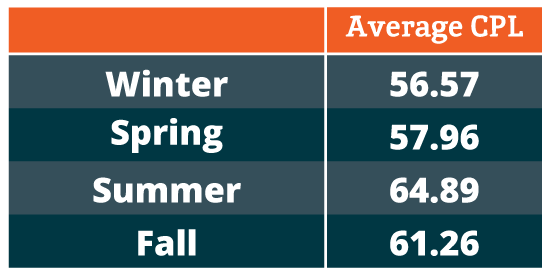
    Your cost per lead will depend on market factors such as seasonality, the size of your city, and the number of advertisers in your area. However, at Search Influence, our typical target for plastic surgeons is $50-$60 per lead. For us, we care most about delivering you qualified leads that actually become patients.

    So how do we actually calculate your cost per lead (CPL)? Let’s say, as an example, that you offer a procedure for $5,000, and you’re willing to pay 10 percent (or $500) in order to get a lead for that procedure. However, you know that not every lead that contacts you is going to become a patient. Let’s say that 1 out of every 10 leads who contact you about the procedure will actually become a patient. That’s a 10 percent conversion rate, which results in a CPL of $50.

    Of course, if your conversion rate is higher or if your cost for acquisition is higher or lower than the example, we can adjust accordingly. The table below outlines seasonal averages for some of our plastic surgery clients to show how we can achieve results for your practice.

    As a medical practitioner, your bottom line all comes down to how many patients are walking through your door (and how much you paid to get them there). For you, a worthwhile investment in paid search results in qualified leads that can translate into actual patients. We get that. That’s why we have built-in systems to seamlessly track your leads, and a post-launch schedule to fine-tune your campaign as quickly as possible. Not only will you have clear reporting, but you can also use our lead tracking system to create an organized database of qualified leads, allowing your team to close leads faster.

    3. How Do You Measure Return on Investment?

    PPC is not a “set it and forget it” machine. Successful online ad campaigns should run on a continual loop. You have to look back to determine what’s working and adjust in real-time to build on successes. Our reporting can help you pinpoint the average cost per patient so you know your exact return on investment. You’ll know if your leads prefer to call or fill out a contact form, and you’ll gain valuable insights like location demographics.

    Physician holding a tablet

    Your PPC agency should also collect continual feedback from you about the quality of your leads in order to apply that information directly to your campaign and avoid any wasted ad spend. With endless customization opportunities—not a prix fixe package—your marketing firm should have a system in place to make things easy, but also be ready to break the rules to fit your budget and make your campaign a success for you.

    4. What Procedures Are You Promoting and What Drives the Most Leads?

    Remember that thing about endless customization? Yeah, that applies here, too. Your ad agency should have the know-how to build a holistic strategy that both grows your brand and promotes your most important services.

    Brand building and search engine optimization are definitely comparable to the age-old chicken and the egg situation. You have to have some brand recognition if you want to rank high on search engines, and once you rank, you’ll get greater brand recognition. So what does that mean for you? Well, if you don’t rank yet, you’ll need to do more than simply optimize your content and build your link profile. You’ll have to create a dynamic strategy to build the overall awareness of your brand. After all, in the age of the internet, who says you can’t have all your eggs in your basket and eat some chicken, too?

    Your online marketing agency can help you do just that. That’s why at Search Influence we start with a comprehensive kickoff meeting to understand the details of your business. Why? It’s simple. Formulating the right strategy first will save you money and get you the right leads.

    Once we understand your business goals, we can target the right procedures and help you establish your brand around specialties and services that matter to you. We can also help you identify missed opportunities. For example, while aesthetic services aren’t the highest revenue driving procedures, they’re a great way for plastic surgery practices to continue generating revenue even when the doctor is booked with another client. Or, perhaps you specialize in rhinoplasty and want to be established as the leader in your market for that procedure. We can center your campaign on your qualification as a rhinoplasty surgeon to build your brand as the preferred specialist. It all depends on your needs, and your ad agency should do the setup work to understand those needs from day one.

    5. On What Page Do Leads Land During a Campaign?

    You can have beautifully written ads, but without the right landing page, your leads are highly unlikely to convert into patients. Especially when it comes to AdWords, you have to optimize for both your human readers and Google’s Quality Score. Google can spot landing pages that don’t align with the search term in the ad and actually make you pay more as result. For example, if someone searches for liposuction, clicks on your ad all about liposuction, then lands on a general page about body contouring services, then you’re missing the mark on user experience and Google’s best practices.

    Without optimized content and a dedicated landing page, your chances of converting are slim.

    A recent report from Unbounce placed the average conversion rate in the healthcare industry at only 2.9 percent. And if you’re using your homepage as your landing page, then you’re totally missing out. Your ad agency can create dynamic landing page content that makes it easy for prospective patients to take an action, with custom forms and click to call buttons that prove your return on investment. In fact, the same Unbounce report shows that healthcare businesses in the 90th percentile achieve conversion rates at 9.3 percent, and the right content and strategy can help get you there.

    Landing pages are just one key element in a successful ad campaign. At Search Influence, we care about delivering a holistic advertising strategy focused on results. Contact our team to see how we can help optimize your medical practice’s online presence.

  • 5 For Friday: Winning at Local Search, Snippets in Search, & Investing in Content

    1. Google Structured Snippets Officially in Search Results
    – Search Engine Land

    Schema markup and other forms of structured data are being used by webmasters to display Google structured snippets, but this isn’t the only way more data is pulled into the search results. Google has been testing out new forms of this “structured data.” Data for a particular search result is now being pulled from “Knowledge Graph and other data sources.” Google is pulling more and more information from sites to show in search results in order to “provide the most relevant information to the user.”

    2. Be Careful of Switching to HTTPS to Improve Google Rankings: The Buffer Story [UPDATE]
    – Search Engine Land

    In early August, Google announced they would be putting more trust in secure sites as a ranking factor. One particular case in which a site adopted this practice early actually saw a major drop in traffic immediately following. This was an issue on Google’s part during the roll out of this new algorithmic adjustment. It has since been corrected, but the moral of the story is: Be cautious before making such a big website change.

    GoogleAlgoImage

    3. How to Win at Local SEO with Reviews, Citations, and Local Events
    – Search Engine Journal

    Recent Google algorithm updates have local businesses panicking trying to react to these new updates. While it is not time to panic, it is time to make sure you have all your local SEO basis covered. Make sure you are still completing all of the long lasting local search practices – consistent local listings, social media presence, and on-page optimizations. Make sure to take things to the next level by optimizing your local listing and reaching out to customers for reviews. This article takes local search even further by explaining how to leverage your local events online!

    pinslocalbusinessimage

    4. How to Use Keyword Research to Find New Landing Page Testing Ideas
    – Search Engine Watch

    Deciding on which elements of a landing page to test can be difficult and the options are endless. This article describes a shortcut for coming up with winning test ideas, which is competitive keyword research. Many available tools online allow you to view the landing page for given keywords your competitors are using. By viewing different competitors and their landing pages, you can get many different A/B testing ideas to improve your paid search campaign.

    5. Don’t Forget to Invest in Content (Not Just “Content Marketing”)
    – Search Engine Watch

    Businesses are jumping on board with the idea of content marketing, but many are solely investing in content creation. They know they need to be using content in their marketing strategy but they are getting their intern to work on it. Business owners need to be focused on the actual content creation process and what is being published because anyone can write but it may not be representing your brand in the best way. This article focuses on 4 main reasons business owners need to invest in content, not just “content marketing.”

    Image Sources:

    Google Algorithm Image

    Local Business Pin Image


  • Five for Friday – LG Hires Bros to Build Brand, Your New Favorite Robot & Google Sees the Future of Eye Care

    Comic5

    1. LG Teams Up With Bro-tastic YouTube Network for Content Marketing Campaign
    – Advertising Age

    YouTube famous stars known as Dude Perfect are getting more than just views from their unbelievable, athletic trick shots. They have already acquired advertising leads with brands such as Pringles, Nerf, and as of this week, smartphone maker LG.

    LG hopes that by standing behind these bros, they can extend their reach to younger audiences and hopefully create some competition for other dominating brands in their industry.

    Incorporating this “jaw dropping” content may boost LG’s brand recognition, but stealing market share from Apple may be a bit of a reach.

    RobotWavingHandSmallImage2. Say Hello to the Robotic Personal Assistant of Your Dreams
    – Entrepreneur

    Meet Jibo, a robotic personal assistant created by Dr. Cynthia Breazeal, a Boston-based professor and entrepreneur. Jibo is a “family robot,” designed to interact with your household, take photos and remind you of important events.

    Having had a strange personal experience with Siri, I’m a bit skeptical of personalized interaction with a computer. Jibo seems to break the mold, but will this technology continue a pattern of diminishing personal interaction in today’s culture?

    3. Novartis, Google to Develop Contact Lenses to Monitor Blood Sugar
    – Mashable

    Google is currently joining with Novartis, a Swiss pharmaceutical research and sales company, to develop smart contact lenses. These lenses, expected to make their debut as early as next year, will be equipped with blood glucose monitors and autofocus for troubled vision.

    “The promise here is the holy grail of vision care, to be able to replicate the natural functioning of the eye,” Jimenez said in the Bloomberg report.

    As if being “the holy grail” of the internet was not impressive enough, Google is taking it a few steps further and improving health care and the quality of life as well.

    ContactsEyeImage

    4. Prototype Improves Mobile Typing by Ditching the Keyboard
    – DNews

    Are you fed up with ineffective, awkward mobile and tablet typing methods? Well, a startup based in Austin, Texas is in the early stages of creating a nonexistent keyboard to solve that #FirstWorldProblem.

    Just as the name implies, the AirType project’s goal is to create a system allowing the user to type freely with no restriction but the mobile sensors around your hands and knuckles. Not only does this keyboard (or lack there of) allow you to type freely, it will also adapt to your activity and begin recognizing your habits, like voice recognition for your hands.

    5. Retargeting Is Flawed; the Future Is Pretargeting
    – Digital Next

    What if ads were designed to service needs that we don’t even know we have? Retargeting will soon be a thing of the past, the future of advertising is our future behavior.

    Most are familiar with retargeting efforts, taking products and services we already recognize and driving marketing for those brands. Marketers are beginning to refocus their goals to be more predictive and create wants and needs we may have in the future. The more information consumers divulge, the more predictive marketers become.

    Image Sources:

    Niek Beck, Moms contact


  • 3 Tips for User-Friendly Navigation

    A few weeks ago, my future mother-in-law purchased her first iPad. While she has been the proud owner of an iPhone for a few months, there was something different, to her, about the navigation of an iPad. As we were walking through some of the different apps and functions on her new tablet, she found herself trapped in her browser window and unsure how to get back to her email.

    MaggieSmith-01

    Are you the type of person who can easily pick up on the newest technology trends? Or do you feel like you can never catch up with things changing so frequently? User-friendly navigation can take that worry away and make your experiences with technology easy and fun!

    Tip #1: Keep something familiar.

    We’ve all experienced that little moment of panic when we don’t know where to go next. For some people it happens when traveling to a new city or starting a job at a new company. We want to know that there’s a way out of any situation. For my future mother-in-law, that “way out” was the home button. After discussing the way she closes out of the Internet on her iPhone, she quickly realized she had that same “panic button” located at the bottom of her iPad.

    Tim Ash, CEO of SiteTuners and author of “Landing Page Optimization” was a keynote speaker at PubCon in New Orleans. During his keynote presentation he mentioned that as soon as we see someone walk into a room, we subconsciously decide how to kill them. He claimed it’s just a part of our natural instincts. I’m not sure if that’s the case for everyone, but I do think we at least look for an escape route.

    MaggieSmith-02

    Tip #2: Make it easy.

    Have you ever started navigating your way through site and then realized that you weren’t sure of the best way to get back without having to click the back button nine or ten times? What do you do? Do you simply close your browser window out of frustration? We crave easy navigation to avoid such frustration and make browsing simpler.

    To a certain degree we all enjoy updates to technology, but we still like to hold onto something familiar. For some social media sites, such as Facebook and Twitter, having a fixed navigation is the solution. How often do you find that you’ve logged into your social media account and then hours later, or for those with better self control, minutes later, you’ve scrolled so far down the page you’re looking at updates from days or weeks ago? Can you imagine what it would be like if you had to scroll all the way back up to the top of the page? If you were on Facebook before 2011, then you might remember.

    Tip #3: Know your audience.

    Is this something that all websites need? No, not necessarily. For many sites, scrolling is not quite as intuitive. The solution could be as simple as having “HOME” as an option in your navigation. Know your audience. Some users need an actual home button or link in the navigation, and some simply expect that your logo will link back to your homepage. If you’re unsure of the way your users interact with your page or how to make your page easier to get through, it may be best to do some testing.

    MaggieSmith-03

    Do you have any tips for easy navigation? If so, let us know in the comments! 

  • Simple Landing Page Strategy

    Lately I have been doing a lot of research on landing page strategy and as I read about what not to do and what you must do, I think someone needs to break it all down into a simpler form.  Where are we going wrong, maybe it’s all just too much?  Make it simple.  All you need are these 5 things arranged properly and it is most likely going to perform better than what you are using now:

    Coming in for a smooth landing
    Coming in for a smooth landing

    1.)    Your Company Logo clearly marked in the top left corner of your landing page.

    Your company logo is your brand and it is what is going to clearly connect your landing page to your website.  You do not need or want the exact navigation that exists on all of your web pages, it offers too many distractions and takes up too much room, most likely forcing the more important information (the Form) below the fold.

    2.)    The only content needed is a few credible and useful facts that must satisfy the users search inquiry.

    Display this text concisely using bullet points.  The messaging should match the ad copy and try to use relevant keywords. Only add relevant images that will enhance the users intent to take action.  Do not use stock photos for design because it will likely distract the user from the intended action.

    3.)    Make the point of your page loud and clear with clear and obvious calls to action.

    To be golden be loud and clear
    To be golden be loud and clear

    If you want the user to fill out the form or call a number don’t make it difficult for them. Add the phone number clearly in the top right of the page.   Add a visible contact form that is above the fold, and does not ask irrelevant questions like “how did you hear about us?”  Since, we can track all of our leads in analytics, we do not need to ask this question, so don’t ask it!

    4.)    Add your credibility symbols above the fold.

    This is very important, because the users need to immediately see a reason to trust your brand, if they do not see it right away, they will not scroll to the bottom of the page, but they will hit the back button to find it somewhere else.

    Visible trust symbols are also very important for the ad copy.  For example many of our client’s are plastic surgeons, and we cannot say, “board certified” in the ads unless it is proven on the landing page.

    5.)    Offer links to more information or to other pages on your website.
    Link to the website at the top and the bottom of the landing page and from your logo.  Add “read more” links to your bullets points, which will allow the uses to find more information.   Remember you do not want to use too many links out because this will distract them from the purpose of the page, but not using any, the user will use the back button and navigate off the page, which is the last thing you want to have happen.

    Everything else will distract you from your purpose.  Yes your pages should look good and be visually appealing, but they should be simple.  Make sure all content is fact and not marketing jargon, also provide links to read more.  Read more about this in Technique: How to build the best PPC landing page , 7 deadly sins of landing page design and 8 Dimensions Of Excellent Landing Pages.

    Airplane image courtesy of Flickr user: Rennett Stowe

    Bullhorn image courtesy of Flickr user: LuMaxArt