Tag: industry insights

  • New From Search Influence – AI Search in Higher Education: How Prospects Search in 2025

    AI Search in Higher Education: How Prospects Search in 2025 image on a tablet

    Artificial intelligence isn’t on the horizon for higher ed — it’s here. Half of prospective students already use AI tools weekly to search for information in the same way they use Google.

    To help institutions adapt, the Online and Professional Education Association (UPCEA), in partnership with Search Influence, has released the 2025 AI Search in Higher Education Research Study. This research sheds light on how prospective adult learners use AI, search engines, university websites, and other platforms to explore, trust, and select programs.

    Download the full AI Search in Higher Education Research Study

    About the AI Search in Higher Education Research Study

    The AI Search in Higher Education report surveyed 760 qualified adult learners between 18 and 60, all interested in advancing their skills or knowledge through online and continuing education. These respondents represent today’s prospective adult learners, a growth market for universities and an early indicator of broader enrollment trends.

    UPCEA led the research, bringing its deep expertise in online and continuing education, while Search Influence shaped the study with insights from our nearly 20 years as an SEO and AI search optimization agency.

    Together, we uncovered how AI, traditional search, and institutional websites are reshaping the way prospective students find, trust, and ultimately choose programs.

    Key Findings: How Prospects Search in 2025

    The results illustrate a rapidly diversifying student journey. Here are the top takeaways:

    • AI tools are an integral part of the enrollment funnel. 50% of prospective learners use AI platforms weekly, making them a standard part of the search process.
    • University websites anchor trust. 77% of respondents rated institutional websites as their most reliable source when exploring programs.
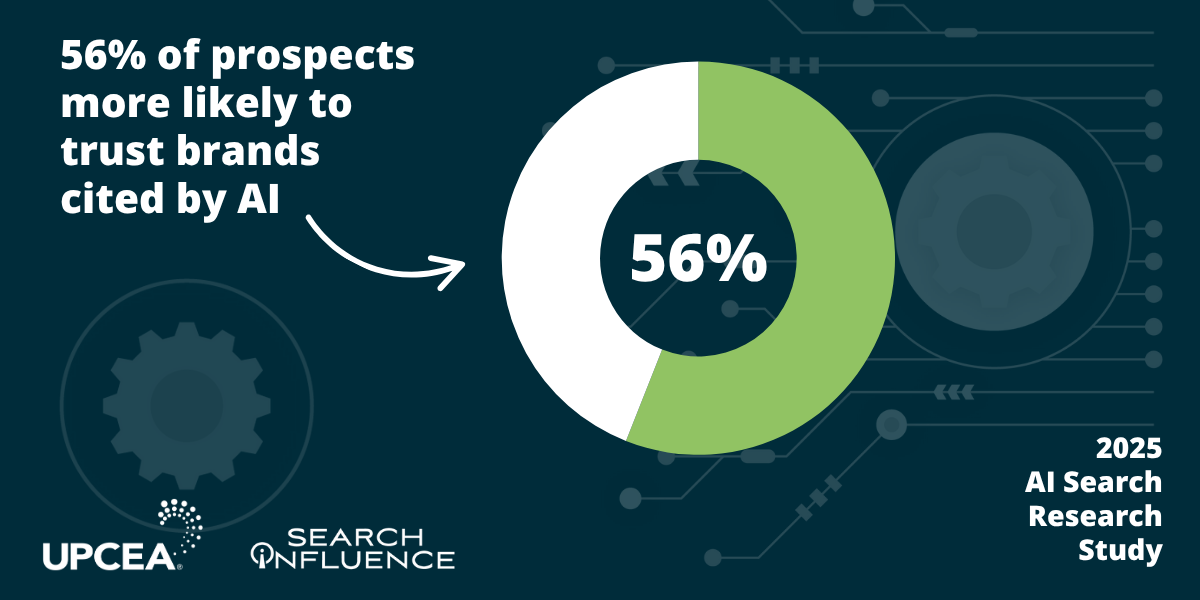
    • AI citations influence credibility. 79% of prospects read Google’s AI-generated overviews, and 56% say they are more likely to trust schools cited within them.
    • Search visibility drives consideration. 82% of students report they are more likely to consider programs that appear on the first page of search results.
    • Discovery spans multiple platforms. 84% of prospects use search engines, 61% use YouTube as a search engine, and 50% rely on AI tools in the same way they use Google.

    These findings confirm that students are moving fluidly between AI platforms, search engines, and video-based resources. Institutions cannot rely on a single channel. They must create content that performs across all of them.

    50% of prospects use AI tools at least weekly

    Why Online and Continuing Education Students?

    Online and continuing education students are often early adopters of new search behaviors, and their choices ripple outward to the broader higher ed market. They are career-focused, typically employed full-time, and actively researching programs that fit their personal and professional goals.

    By focusing this study on online and continuing education prospects, we’re able to capture a forward-looking snapshot of how AI search in higher education is shaping program discovery, trust, and enrollment decisions.

    What This Means for Higher Ed Marketers

    For higher ed leaders and enrollment teams, the implications are clear:

    • Multi-channel visibility is non-negotiable. Students expect to find you on Google, university websites, AI-generated responses, and video platforms like YouTube.
    • SEO is the connective tissue. Strong, authoritative SEO is the foundation that fuels visibility across both traditional and AI search engines. Without it, your programs won’t appear in the places students are looking.
    • Early movers will win. Many institutions have not yet adapted their strategies for AI search. Schools that act now will gain a competitive advantage in enrollment visibility and trust.

    Measuring Success in AI Search

    Success in AI search isn’t just about rankings. Institutions should track citations in AI Overviews, visibility across AI platforms, and engagement from AI-driven traffic, alongside traditional metrics like cost per inquiry (CPI) and ROI. By adding these benchmarks, schools can better understand how AI contributes to the enrollment funnel and make smarter investments in visibility and trust.


    top social platforms graphics

    Take Action: Be Visible in AI Search

    AI search is a core part of how students find and evaluate higher ed programs.

    The 2025 AI Search in Higher Education Research Study confirms what many institutions are beginning to notice: if you’re not visible in AI search, you’re not in the consideration set.

    The good news? Acting now puts you ahead.

    Download the full 2025 AI Search in Higher Education Research Study to explore the data and recommendations.

  • Should You Be Marketing During a National Crisis?

    Should You Be Marketing During a National Crisis?

    This post was updated by Alison Zeringue on July 14, 2025 to reflect current best practices. It was originally published on Nov 4, 2024.

    Key Insights

    • Data shows that marketers who continue marketing during economic, political, health, or environmental crises recover faster and build stronger customer trust than those who cut back.
    • In times of crisis, whether it’s an economic downturn or a natural disaster, your marketing strategy must adapt to meet changing consumer needs and maintain visibility.
    • Digital marketing channels like SEO, PPC, and performance TV provide high value during crises by maximizing reach and minimizing wasted ad spend.
    • Staying focused on brand longevity positions you for growth and success once the uncertainty passes.

    In a world where change is the only constant, every brand’s ability to adapt is tested time and again. Whether facing economic downturns, political unrest, health epidemics, or environmental disasters, marketers have to remain agile to respond to the inevitable effects of a national crisis.

    Yet, one thing remains true: Resilience in these trying times separates thriving brands from the rest.

    When a disaster strikes, the stakes for such adaptability and resilience are higher than ever.

    Marketers across the country face a dilemma: retreat and cut brand marketing budgets or seize the moment to strengthen their brand’s longevity.

    Cutting down on marketing during a crisis is a tale as old as time, though not a wise one. While crises often cause public turmoil, they also create valuable opportunities to maintain loyalty with your core audience and earn new customers at the same time.

    In this blog post, we’ll discuss the importance of marketing during a national crisis and show you how to maintain a strategic advantage during times of adversity.

    Importance of Brand Communication in Times of Uncertainty

    Importance of Brand Communication in Times of Uncertainty

    Here’s the stark reality: If you halt advertising during a national crisis, you delay your rebound and stifle your brand’s potential.

    Yes, consumers tend to temporarily alter their spending habits during tough times, prioritizing essential goods versus discretionary ones. But if you follow suit and slash your marketing budget to the very bare bones, you risk missed opportunities to stay top-of-mind when it matters most.

    Properly managing business disruptions, should they occur, is essential to maintaining a steady connection. When you keep your audience updated about any changes to your operations — whether it’s new safety measures, service interruptions, or modified hours — you demonstrate your commitment to their well-being and ensure they don’t feel left in the dark.

    As the country recovers from the mayhem, your target audience will, too (in time). If you don’t remain present, they won’t be thinking about your brand, even when they have the mental capacity to. Steady engagement builds trust and shows that you remain reliable and transparent during challenging times.

    Failure to do so translates to a crucial blow to your brand’s health, keeping you ten steps behind your competitors who were actively engaged during the mayhem.

    Tips for Budgeting for Smarter Marketing

    Hesitation is the enemy of progress. Instead of going into hibernation mode during a recession, brands need to embrace the challenge and pivot to a proactive budgeting approach.

    Don’t be tempted by budget cuts

    In times of crisis, the knee-jerk reaction is to tighten the purse strings, often resulting in reduced, or even halted, advertising spend. Sure, budget cuts give you the illusion that they’re helping your brand, especially in the short term.

    But, spoiler alert: Marketing research suggests otherwise.

    Instead of cutting the cord on marketing spend, shift your focus to staying visible and resilient to set your brand up for long-term success and faster recovery.

    As Hubspot says regarding crises “… just keeping promotional spend flat will put your brand in a dominant position. As an example, if all the companies in your category cut their promotional spend in half, suddenly your budget that was 10% of the total share of voice now doubles to 20% as a result.”

    Explore cost-effective advertising channels

    Advertising doesn’t always have to be synonymous with “expensive” — it boils down to what you choose to spend your dollars on.

    Digital marketing tactics, whether through SEO (search engine optimization), PPC (pay-per-click) ads, or performance TV, are generally an economically efficient choice. For example, online ad campaigns offer distinct advantages over traditional methods, such as precise targeting, expanded reach, and real-time performance metrics, helping you maximize your impact while minimizing wasted ad spend.

    SEO is also an excellent, cost-effective choice for maintaining visibility in search and driving long-term growth among your prospects. Start implementing strong SEO tactics now, and you just might see considerable results by the time the crisis is over.

    Whichever your preferred channel(s), focus on the ones that are most cost-effective for you. Those with the best cost-to-performance ratio will keep your brand afloat even in the most unexpected times.

    Stay focused on the long-term

    You’ve likely heard marketing is a long game. Go all in for the long haul.

    Consumer spending may dip temporarily, but your mission is to use this time wisely. Position your brand as a dominant presence in the minds of potential and existing customers, even if they’re not making immediate purchases. The downtime is a ripe opportunity to refine your strategic plans and strengthen your marketing processes to set your brand up for success when business picks back up.

    Think of your advertising opportunity today as a brand and pipeline-building objective for tomorrow. Focus on preparing for the future and what you can control rather than reacting to short-term fluctuations.

    Doing so makes you the go-to choice when they’re ready to buy, unlocking the key to loyal customers.

    Effective Marketing Strategies During a National Crisis

    Search Influence - Effective strategies during a national Crisis

    Marketing during an economic crisis

    Marketers en route to budget cuts during a recession should take a lesson from the mighty hand of the Great Recession of 2008. This economic downturn hit marketers hard and their strategies even harder.

    But it was kind to those who stayed the course.

    As the saying goes, “When the going gets tough, the tough get going.” Kantar research shows that brands that took the risk to continue advertising during the 2008 recession recovered 9x faster than those who jumped ship.

    Flipping the angle, Millward Brown data exposed the consequences of cutting advertising spend during this time. A staggering 60% of brands that paused TV ad spending for just six months experienced a 24% decline in brand use and a 28% drop in brand image. Brands that slashed budgets more aggressively than competitors faced an even grimmer fate — a painful loss of market share.

    For businesses already grappling with revenue losses, reducing marketing budgets during a recession often spells disaster. Your strategy must adapt, whether the intensity of a recession is minimal or as impactful as 2008.

    Recommended strategies

    To navigate low consumer sentiment, maximize your budget, and effectively market your business during a recession:

    • Allocate budget funds to the most value-driven marketing channels proven to work for your brand
    • Offer brand discounts, promotions, bundled services, or loyalty programs to reach cost-wary buyers
    • Highlight the cost-effectiveness and long-term savings of your products or services

    Marketing during a political crisis

    From government shutdowns to civil unrest and corruption scandals, political crises are historic shock factors that often lead to mass mayhem. Among these, elections introduce power shifts that, while typically orderly, can still disrupt markets and shake public confidence.

    Despite the so-called “election year effect,” your brand doesn’t have to get lost in the shuffle. Your job is to acknowledge and address the heightened consumer uncertainty head-on.

    In times of political transition, consumers may be more cautious with their decisions, seeking stability and clarity. As a marketer, this is your opportunity to position your brand as a reliable constant amid the noise. Focus on crafting messages that reassure, offering value and trust when consumers need it most.

    Recommended strategies

    To reach your audience and adapt your marketing during political crisis:

    • Focus your budget on long-term brand awareness to ensure your presence remains strong during and after the unrest
    • Prioritize clear, transparent communication to reassure your audience during times of political change or uncertainty
    • Avoid polarizing or controversial messages to maintain broad appeal and avoid alienating any part of your customer base

    Marketing during a health crisis

    Much like the Great Recession of 2008, marketers learned valuable insights during the COVID-19 pandemic — this time, in the context of marketing during a global health crisis.

    COVID-19 or not, a health crisis is often an agent of chaos, but it does bring brands real opportunity. Marketers should hold steady and adopt proactive strategies that position their brand as a trusted leader when customers need it most.

    As consumers tightened their belts and hunkered down at home, many brands instinctively pulled the plug on their advertising expenditures during COVID-19. According to Marketing Week research, more than half (55%) of marketers either delayed launching campaigns or were rethinking budget commitments in March 2020, the month the WHO declared COVID-19 a pandemic.

    The outcome? An environment teeming with advertising inventory but devoid of competition. Advertising costs plummeted to historic lows during the pandemic year (from March 2020 to the following year), resulting in astonishingly low costs per lead (CPL).

    With more people at home, significantly more time was spent online. In March 2020, Facebook reported record usage each day, creating ripe advertising opportunities for many marketers who just wouldn’t bite.

    In this chaotic landscape, the brands with a solid marketing strategy were the ones setting themselves up for success in the future.

    At Search Influence, we saw the success of our clients who chose to stick it out. In March 2020, one of our higher education marketing clients’ Facebook Display campaign generated the most inquiries in one month since its launch. There was also a 111% increase in inquiries from Google Smart Display month-over-month. For Q1 2020, our client achieved an impressive 47% of 2019’s inquiries — with only 29% of their budget.

    Recommended strategies

    To effectively manage prospect and customer relations during a health crisis:

    • Allocate funds to digital marketing channels, such as social media and email, where engagement increases as people spend more time online
    • Emphasize health and safety in your messaging, reassuring prospects that their well-being is your top priority during uncertain times
    • Shift to virtual services or events, offering online consultations, webinars, or shopping options to maintain accessibility and engagement

    Marketing during an environmental crisis

    The United States is, unfortunately, no stranger to the effects of environmental catastrophes. From California wildfires to Hurricane Katrina, these crises often leave devastating impacts on communities and businesses alike in their aftermath.

    Each environmental crisis brings a wave of uncertainty, many times disrupting supply chains, damaging infrastructure, and shifting consumer priorities toward immediate needs and safety. Communities are forced to adapt, and businesses must quickly pivot to meet new demands and expectations — all while doing everything possible to keep operations running.

    This makes staying connected with prospects and existing customers all the more important. Clear, compassionate communication reinforces your brand’s reliability during the immediate crisis and builds trust that can last long after it has passed.

    Recommended strategies

    To stay connected during an environmental crisis, adjust your marketing budget to allocate for messaging that shows empathy and provides real value. You should:

    • Prioritize transparent communication about key business details, such as closures, adjusted hours, or service availability, to keep prospects and customers informed
    • Demonstrate your brand’s commitment to recovery, whether by supporting local relief efforts, offering donations, or sharing sustainability initiatives that resonate with your audience
    • Implement real-time engagement tools, like live chat or automated messaging, to address customer concerns promptly and offer support in challenging times

    Marketing During a National Crisis FAQ

    What is crisis communication?

    Crisis communication is the strategic exchange of timely, accurate information between an organization and its stakeholders during a disruptive event.

    Crisis communications is the discipline that keeps employees, customers, partners, and the public informed when normal operations are threatened. A strong crisis communications program clarifies what happened, what the brand is doing about it, and what people should do next. It blends PR, customer service, and internal messaging across owned, earned, and paid channels to minimize misinformation, protect reputation, and maintain trust.

    How should I communicate with customers during a crisis?

    Effective crisis customer communication relies on clear, empathetic, and rapid updates delivered through the channels your audience already uses.

    Lead with empathy, acknowledge the issue, and state specific actions you’re taking. Keep messages short, jargon-free, and consistent across email, social, SMS, and on-site banners.

    Why is it important to have a crisis communication plan?

    A crisis communication plan ensures fast, coordinated responses that protect brand trust and speed recovery.

    When every minute counts, a pre-approved playbook defines roles, approval paths, key messages, and preferred channels, eliminating guesswork and delays.

    Helping You Turn Uncertainty Into Opportunity

    National uncertainty can be jarring for brands, but it doesn’t have to mean abandoning your marketing efforts.

    At Search Influence, we’ve helped countless businesses navigate turbulent times, enabling them to maintain momentum with targeted marketing. Our crisis marketing strategies, industry experience, and proven services are a cornerstone for brands looking to weather the storm and emerge stronger.

    Don’t let mayhem madness knock you off your path to digital marketing success. Contact us today to discuss your goals and make them a reality.


    Image Credits:

    iStock and Pexels
  • Search Influence Shares Higher Education SEO Insights at UPCEA MEMS 2024

    Search Influence - To share higher education SEO insights at UPCEA MEMS 2024

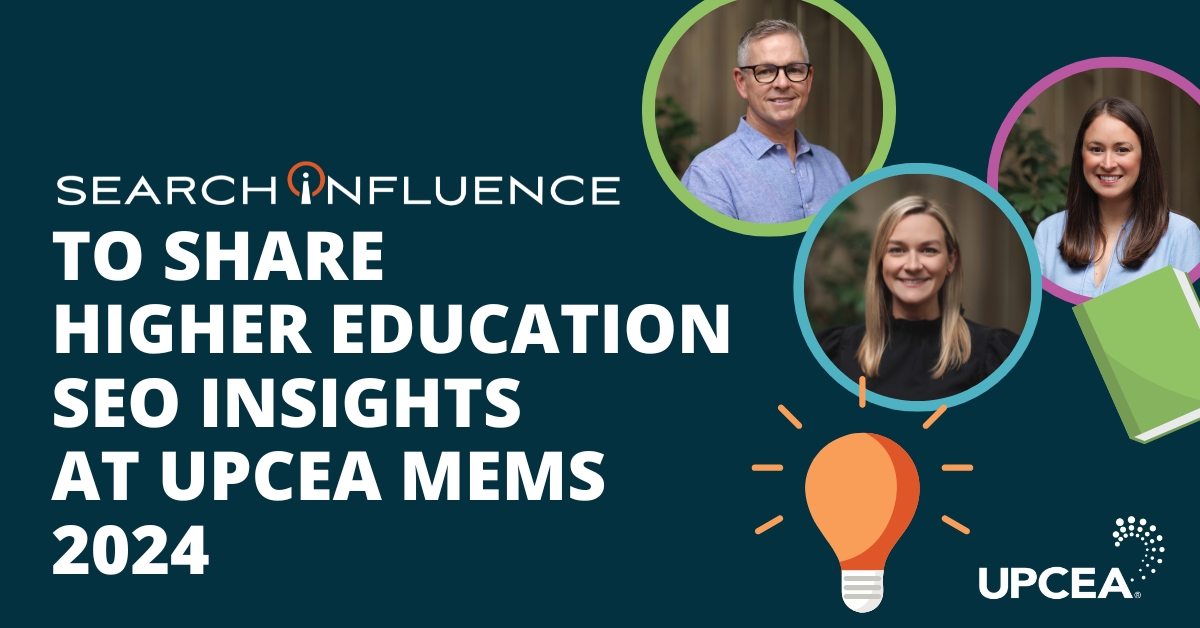
    Director of Sales & Marketing Paula French, Digital Advertising Manager Jeanne Lobman, and Co-Founder and CEO Will Scott represented Search Influence at the 33rd Annual UPCEA Marketing, Enrollment Management, and Student Success (MEMS) Conference in Philadelphia.

    The Search Influence team made a splash at our third appearance at the higher education marketing, enrollment, and student success conference.

    Paula introduced a Breakfast Briefing and led two insightful sessions on higher education SEO and higher education marketing metrics. Will and Jeanne connected with attendees at our booth and showed them how to use SEO to attract modern learners into 2025 and beyond.

    Paula French’s Higher Education SEO Sessions

    Practical Magic: How to Navigate 2025 SEO Trends


    In her first session, Practical Magic: How to Navigate 2025 SEO Trends, Search Influence’s Director of Sales and Marketing discussed the evolution of search behavior — specifically Google’s AI Overviews and the evolution of social search.

    Attendees walked away from this quickfire 10-minute session with practical strategies to implement to conquer these trends and future-proof their SEO strategy to attract more students through the enrollment funnel.

    Visibility is Vital: Maximize Enrollment by Tracking Marketing Metrics

    In Paula’s second session, Visibility is Vital: Maximize Enrollment by Tracking Marketing Metrics, the higher ed marketing expert co-presented a 30-minute roundtable discussion with UPCEA’s Senior Director of Research and Consulting Bruce Etter.

    This session provided an overview the key findings of UPCEA and Search Influence’s Higher Ed Marketing Metrics Research Study, highlighting one shocking finding in particular: The majority of professional and online education schools don’t track critical marketing metrics.

    Paula and Bruce discussed how marketers who don’t track key metrics, like higher education cost per inquiry (CPI) and cost per enrolled student, risk:

    • Poor campaign performance
    • Wasted budget
    • Reduced lead quality

    The session also showed attendees how they can use these key higher education marketing metrics to:

    • Optimize campaigns
    • Maximize budget allocation
    • Improve conversions

    The session showed how to boost adult learner enrollment by tracking the right costs.

    Driving Engagement: Marketing Strategies for Online Learning

    For Paula’s third presentation, she moderated Driving Engagement: Marketing Strategies for Online Learning.

    This session, presented by Auris Calvino and Cari Gold of The University of Texas at San Antonio, explored how UTSA Online’s multifaceted content strategy drives student attraction, engagement, and retention.

    At the Search Influence Booth

    Search Influence Digital Advertising Manager Jeanne Lobman and CEO & Co-Founder Will Scott joined Paula French to host the Search Influence booth.

    Jeanne recently presented her own session, Integrating SEO and Paid Search Strategies, at Pubcon 2024 in Las Vegas.

    Will is a recognized digital marketing leader who regularly presents and writes about the industry.

    Take our higher education SEO Quiz

    Booth visitors could take our new Higher Ed SEO In-House vs. Outsourcing Quiz, specifically designed for higher education marketers.

    This quiz provides personalized higher education marketing recommendations based on user input, categorizing them as “Outsourcing Whiz,” “In-House Hero,” or “Hybrid Hotshot.”

    In just minutes, you’ll be equipped with tailored insights to optimize your resources and make informed staffing choices, ultimately boosting your SEO strategy and student recruitment efforts.

    After taking the quiz, booth visitors received personalized feedback and recommendations from our experienced team about their current digital marketing approach.

    About MEMS

    UPCEA MEMS is the premier conference for online and continuing education marketers and enrollment managers worldwide.

    Held annually for over 30 years, MEMS offers strategically focused presentations and sessions that cover the tactical components of higher education marketing and enrollment management.

    Boost Your Higher Education Marketing Strategy With Search Influence

    Whether speaking at conferences or providing ROI-focused digital marketing services, Search Influence is dedicated to helping higher ed institutions meet their enrollment goals.

    Ready to get started?

    Take our SEO In-House vs. Outsourcing Quiz to learn whether working with a higher education digital marketing agency is right for you.

    Download our Higher Education Marketing Metrics Research Study for tangible insights from Paula’s presentation and to learn more about the power of cost per inquiry and cost per enrolled student.

  • WEBINAR: Top Trends for Your 2025 SEO Strategy [Search Influence and UPCEA]


    About the Higher Ed SEO Trends Webinar

    Search Influence and UPCEA hosted the joint webinar “Top Trends for Your 2025 SEO Strategy to Attract the Modern Learner.”

    AI-generated search results and social search have transformed user behavior, including how prospective students research and apply to institutions. As higher education marketers, our job is to make it easy for prospective students to find the information they need. Therefore, failing to adapt to these higher ed SEO trends could result in losing prospects to more visible competitors in 2025.

    In this webinar, we explored a new way to think about SEO that will future-proof your strategy in a time of changing search behavior. UPCEA’s Chief Research Officer Jim Fong and Senior Director of Research Bruce Etter, joined UPCEA Platinum Partner Search Influence to share a blueprint for a 2025 SEO strategy that attracts and guides more students through the funnel.

    Learning Objectives for the Higher Ed SEO Trends Webinar

    • How AI-generated search results and social search impact your institution’s visibility
    • The key components of a higher ed SEO strategy built to outlast trends
    • How to communicate to your team about this new way of thinking about SEO 

    How to Watch the Webinar

    Watch the webinar recording to learn how to build your 2025 SEO strategy to attract and engage the modern learner.

  • Learn About Key Higher Education Marketing Metrics From Paula French’s UPCEA Blog

    Learn about Key Higher Education Marketing Metrics from Paula Frenh's UPCEA Blog

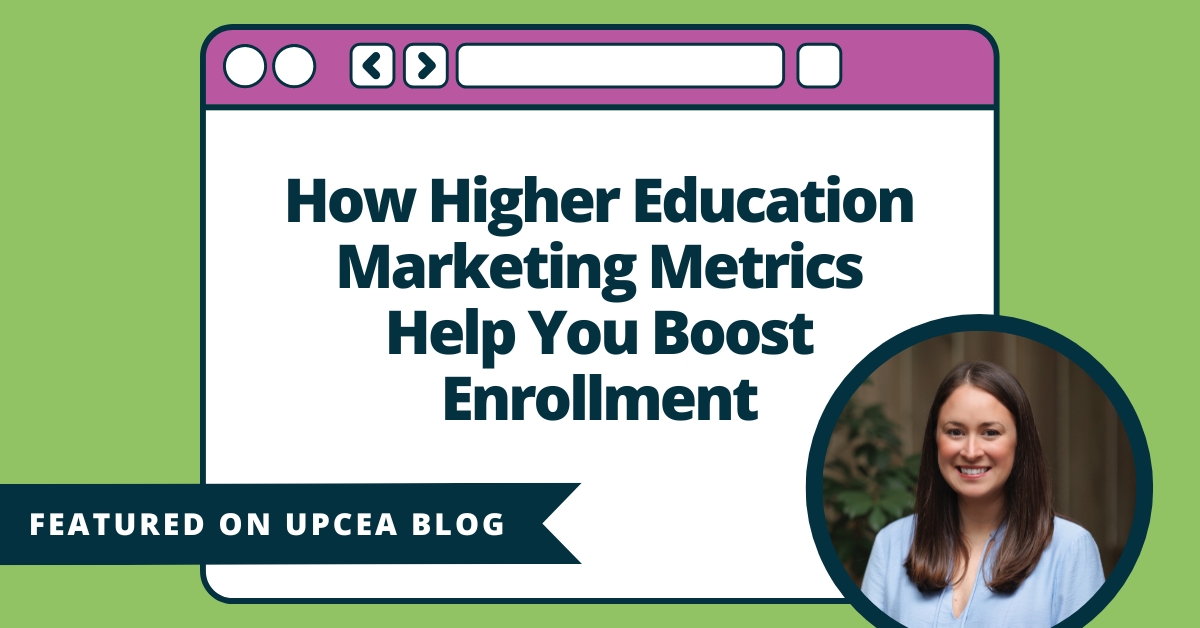
    Search Influence’s Director of Sales and Marketing Paula French recently wrote a guest blog post for UPCEA titled “How Higher Education Marketing Metrics Help You Boost Enrollment.”

    While this is Paula’s first guest blog post for UPCEA, she is a regular speaker at UPCEA conferences and our joint webinars.

    As with her speaking appearances, Paula’s UPCEA blog is filled with higher education marketing insights to help universities see real-world results.

    An Overview of Paula French’s UPCEA Blog Post

    In her guest post for UPCEA, Paula addresses the growing challenges higher education institutions face, particularly the shrinking demand for traditional undergraduate degrees.

    She highlights a key opportunity to boost enrollment: focusing on adult learners — students aged 25 and older — who prioritize career advancement, flexibility, and program quality.

    To successfully reach this audience, Paula emphasizes the importance of understanding marketing benchmarks in higher education, specifically two critical metrics: cost per inquiry (CPI) and cost per enrolled student.

    Paula’s blog underscores that tracking CPI helps institutions optimize their budgets by revealing which of their campaigns best generate inquiries. Additionally, monitoring the cost per enrolled student provides a more comprehensive view of how efficiently marketing efforts convert interest into actual enrollments.

    By consistently tracking these higher education digital marketing benchmarks, universities will make smarter, data-driven decisions that lead to more sustainable growth.

    To dive deeper into these strategies, download the 2024 Higher Education Marketing Metrics Research Study Search Influence created in collaboration with UPCEA.
    Higher Ed Marketing Metrics Research Study 

    The Search Influence x UPCEA Partnership

    As an UPCEA Platinum Partner, Search Influence helps higher education institutions learn how to measure marketing success.

    This partnership focuses on providing valuable insights through joint research, including our recent Higher Education Marketing Metrics Research Study and our 2023 Higher Ed SEO Research Study.

    Together with UPCEA, we explore the state of higher education digital marketing, offering institutions industry insights and data-driven strategies for optimizing their marketing efforts.
    In addition to research, Search Influence and UPCEA collaborate on webinars to educate universities on enhancing their SEO and paid ad strategies.

    Learn More About Higher Education Marketing Metrics

    How Higher Education Metrics Help You Boost Enrollment

    Read Paula French’s full blog post on UPCEA’s website for expert insights into tracking the higher education marketing metrics that matter most.

    Find even more higher education marketing insights in our past UPCEA guest blog posts written by our Director of Account Management Alison Zeringue, and CEO & Co-Founder Will Scott.

    Whether you’re looking to refine your SEO strategies or optimize your paid advertising, Search Influence is here to help.

    Contact us today to learn how we can help your institution achieve sustainable growth through data-driven marketing strategies.

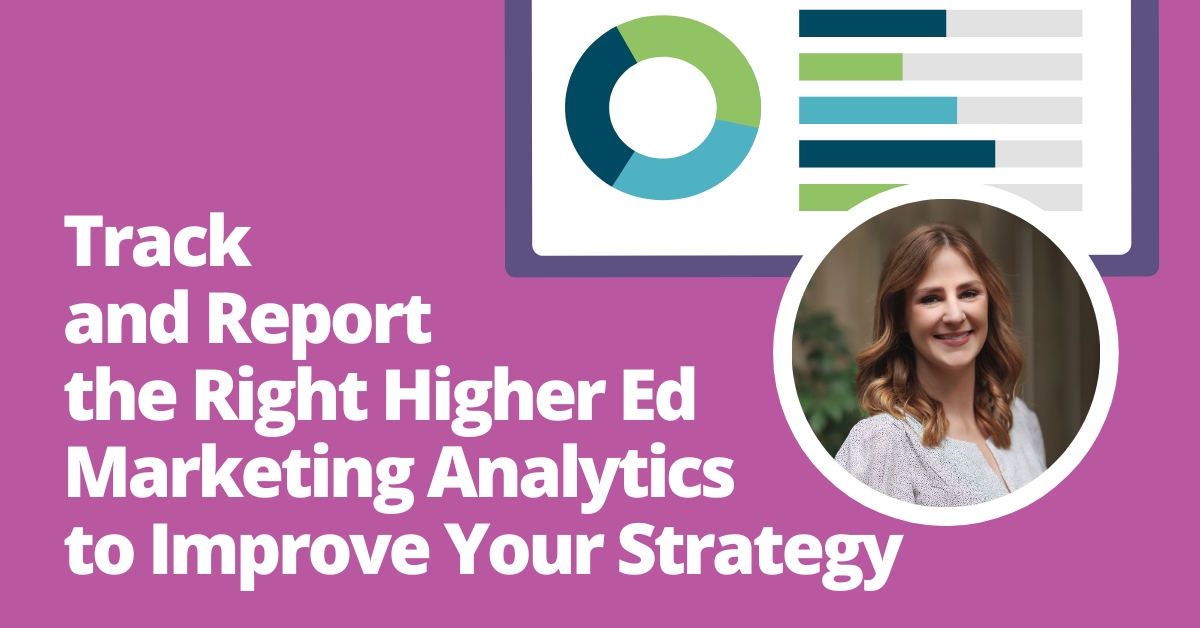
  • Track and Report the Right Higher Ed Marketing Analytics to Improve Your Strategy

    Track and Report the Right Higher Ed Marketing Analytics to Improve Your Strategy

    Track and Report t

    Key Insights

    • Many institutions don’t track crucial metrics like cost per inquiry (CPI) and cost per enrolled student, missing opportunities to optimize their marketing efforts and better allocate resources.
    • Higher education institutions need precise tracking and insights to enhance their marketing strategies, effectively engage prospective students, and drive enrollment.
    • Institutions that actively track key metrics like CPI and cost per enrolled student see higher satisfaction with their marketing campaign performance.

    In the high-stakes arena of higher education, every marketing decision counts.

    Without precise tracking and insightful analysis, your marketing efforts are like a ship navigating without a compass — directionless and bound to get lost in the sea of competition.

    For years at Search Influence, we’ve partnered with institutions like Tulane SoPA and Tufts University College, helping them leverage analytics to optimize their marketing campaigns.

    Our experience has shown that those satisfied with their ability to track success are also more likely to be satisfied with their campaign performance.

    To further underscore the importance of tracking, this year we collaborated with UPCEA on a research study, “Higher Education Marketing Metrics Research Report: What Gets Measured Gets Managed.

    This report provides valuable insights into how data-driven marketing can lead to greater accountability, smarter decisions, and, ultimately, success in attracting and retaining students.

    Read on to learn how tracking the right metrics can empower your institution to thrive in a crowded higher education market.

    Why Tracking Marketing Metrics Is Important for Higher Ed Institutions

    As higher education institutions face increasing competition and evolving expectations from prospective students, it’s essential to track and analyze key performance indicators (KPIs).

    Higher education marketing metric tracking allows institutions to:

    • Measure their return on investment (ROI)
    • Manage campaign performance
    • Allocate resources effectively

    Tracking key metrics provides a clear picture of what’s working and what’s not, enabling higher education institutions to make informed decisions that directly impact student recruitment.

    By focusing on data, institutions can:

    • Determine which marketing channels yield the highest engagement
    • Identify the content that resonates most with their audience
    • Adjust their strategies in real-time to enhance results

    This kind of accountability is critical for marketers, program managers, and faculty who need to develop courses and offerings that align with market demand and student interests.

    Effective higher education marketing tracking can also have a significant impact on resource allocation and budgeting. When institutions measure their efforts to engage adult learners, they create a framework of accountability that drives smarter decisions.

    Track and report the right higher ed marketing analytics to improve your strategy - Search Influence

    Search Influence and UPCEA’s Higher Education Marketing Metrics Study
    Higher Ed Marketing Metrics Research Study 

    To gain a deeper understanding of the marketing metrics and costs associated with online and professional education programs, Search Influence partnered with UPCEA to conduct a comprehensive study.

    The findings of this research highlight the importance of data-driven decision-making for higher education marketing strategies.

    Follow along as we break down key findings from this study that can help your institution boost online conversions.

    Less than half of higher ed marketers track cost per inquiry

    One of the study’s top takeaways is the critical role of tracking specific metrics like cost per inquiry (CPI) and cost per enrolled student.

    Despite the significance of these metrics, less than half of higher education marketers track them. While nearly three-quarters (73%) of marketing units track the source of inquiries, only 46% track CPI, and just 43% track cost per enrolled student.

    Shockingly, nearly 17% of institutions don’t track any of these metrics.

    This gap in metric tracking reveals a missed opportunity for many universities to optimize their marketing efforts and ensure they effectively reach their target audience.

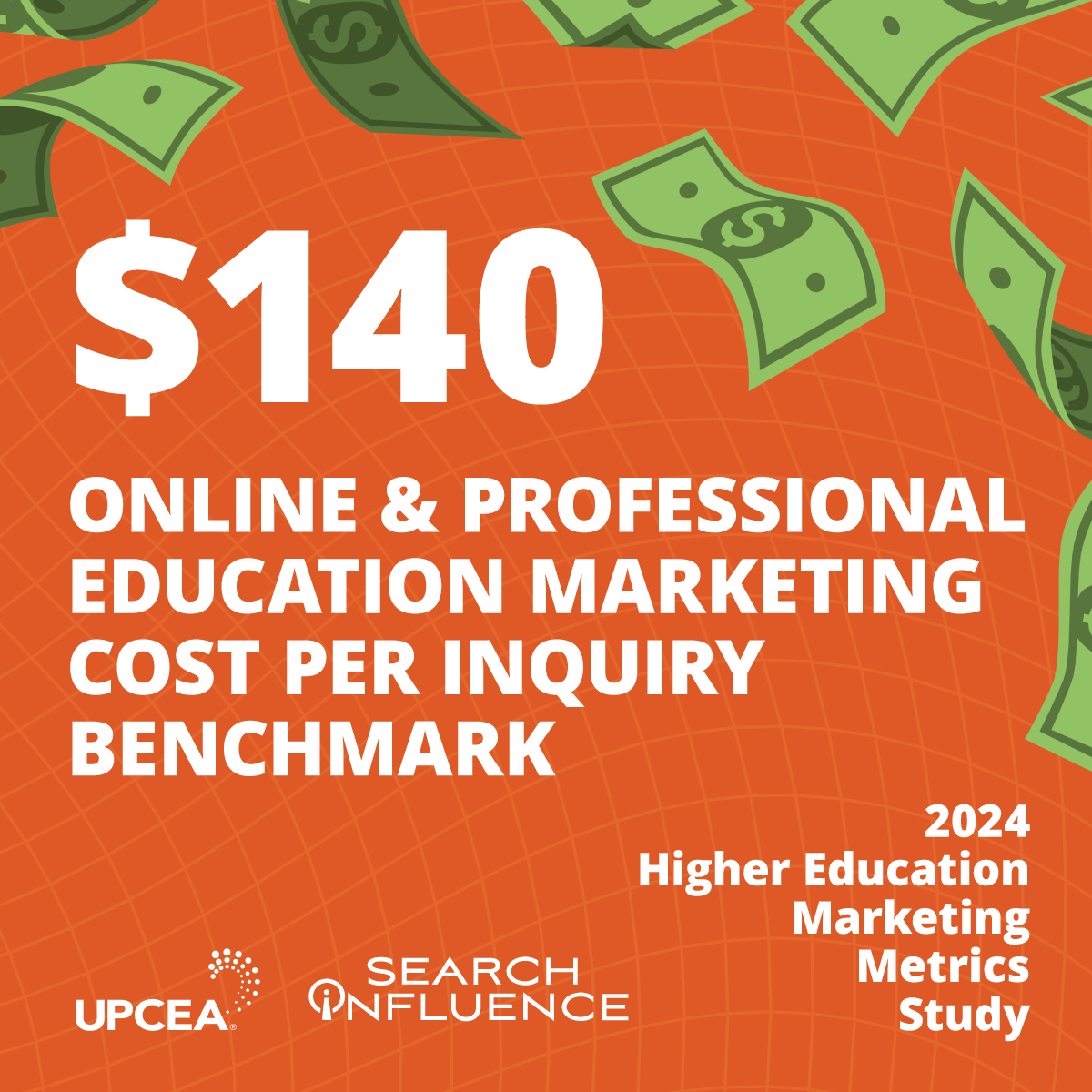
    The average professional and online education cost per inquiry is $140

    Online and Professional Education Marketing Cost Per Inquiry Benchmark - Search Incluence

    For those tracking cost per inquiry, the study found that the average CPI for online and professional education programs is $140, with a median of $106.

    This metric is a crucial indicator of how well marketing dollars are being utilized to attract prospective students. Tracking these costs allows university marketing departments to make informed decisions about where to allocate their resources, ensuring that digital marketing efforts are cost-effective and impactful.

    Email marketing is most often managed in-house, while digital advertising is most often outsourced

    The study reveals that while 73% of higher education institutions manage email marketing in-house, half outsource their digital advertising (such as Google paid search) to external agencies.

    This trend indicates a potential missed opportunity for maximizing ROI, especially given email marketing’s high return of 36:1.

    When email campaigns and SEO are managed internally without adequate resources, universities may not fully optimize these channels, contributing to dissatisfaction with results.

    Conversely, outsourcing digital advertising allows for continuous tracking and optimization, often leading to better performance.

    Marketers who track their campaigns are more happy with performance

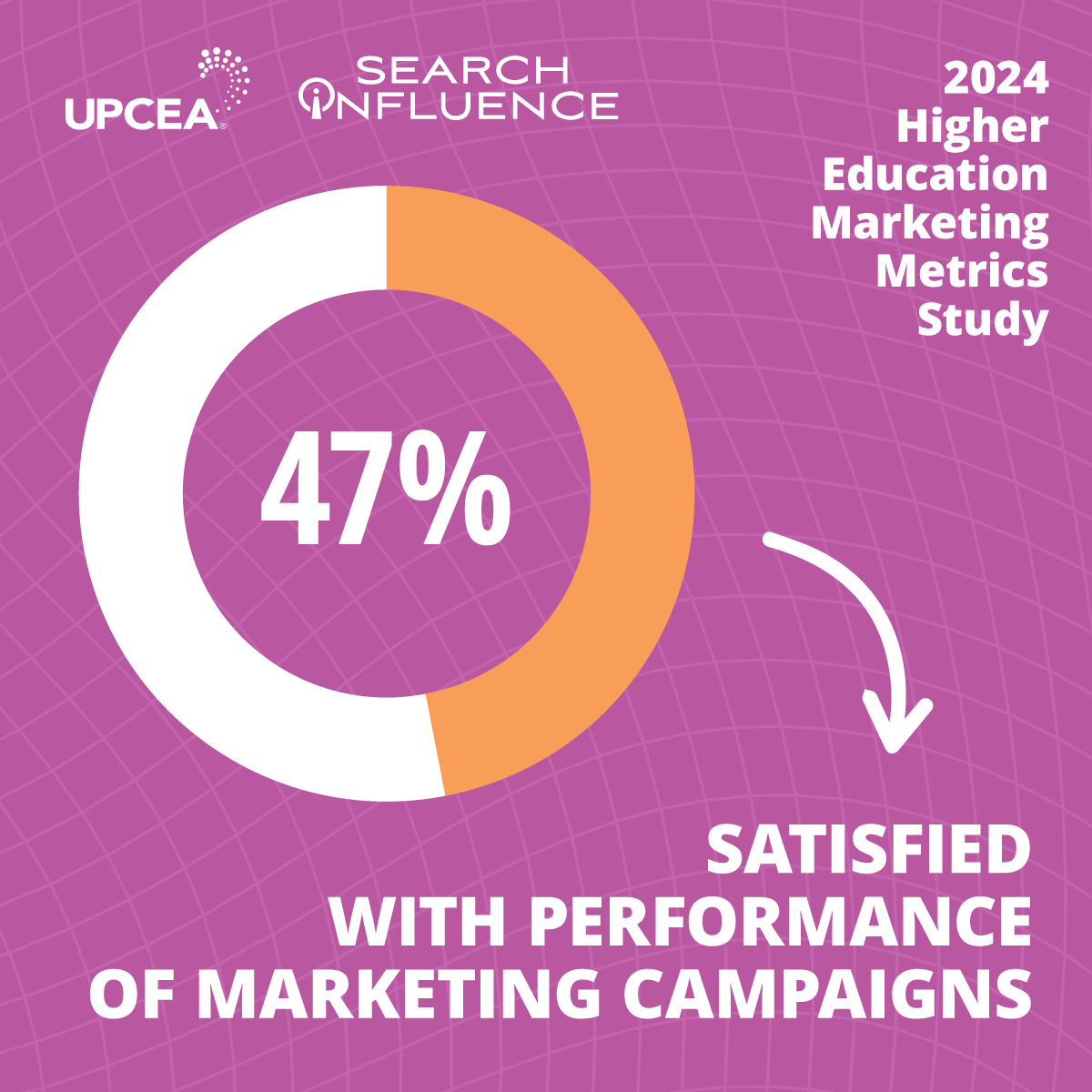
    Another significant finding is the correlation between tracking marketing metrics and overall satisfaction with campaign performance. Only 47% of respondents expressed satisfaction with their marketing campaigns’ performance, and just 29% were content with their ability to track campaign success.

    However, those who actively track metrics like cost per inquiry and cost per enrolled student report higher satisfaction levels, indicating that effective metric tracking is linked to better marketing outcomes.

    Analytics, Tracking, and Reporting Opportunities for Higher Education

    If you’ve read this far, we’ve made the case that it’s important and effective to track key metrics. You might be asking — what exactly are these key metrics?

    Below are the two most important metrics we recommend you track.

    Cost per inquiry

    By monitoring cost per inquiry, institutions can identify the most cost-effective methods for attracting inquiries and allocate resources accordingly, ensuring that marketing dollars are spent where they yield the highest return.

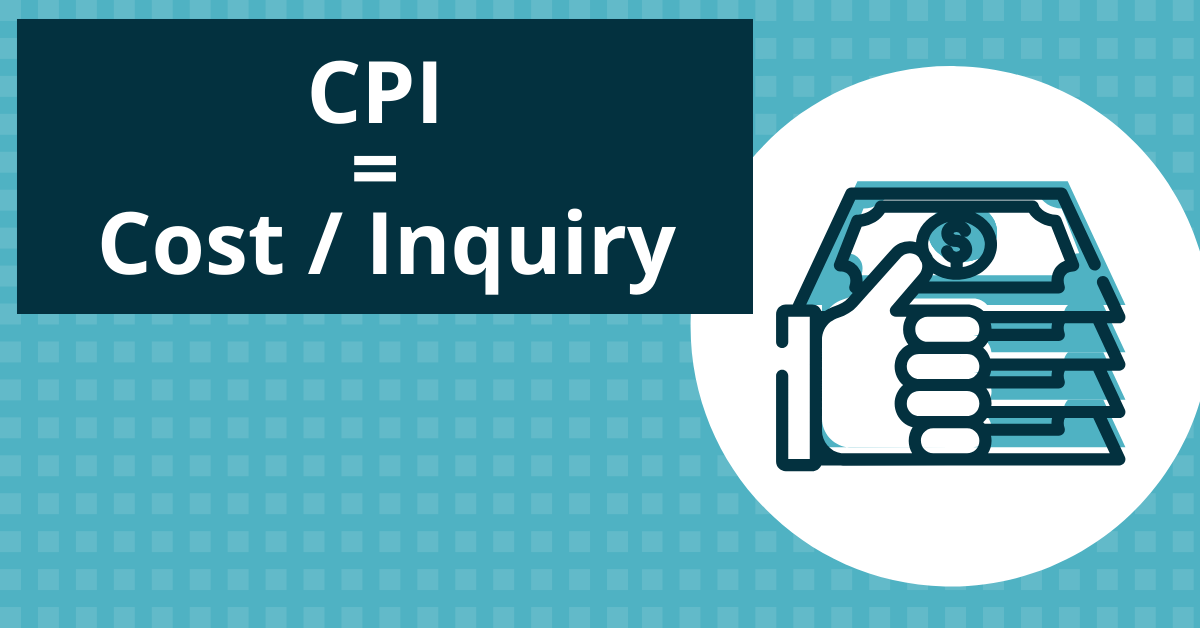
    CPI is a widely recognized metric, yet less than half of higher education marketers actively track it. This metric calculates the total marketing and advertising spend divided by the number of inquiries received, providing a clear measure of budget efficiency and effectiveness.

    Tracking CPI allows marketing teams to gain insights into which campaigns generate interest and drive students into the enrollment funnel.

    Cost per enrolled student

    Another crucial metric for higher education institutions is cost per enrolled student, which measures the total expenses involved in securing each student’s enrollment. This includes all costs from the initial marketing outreach through to the point of a student’s matriculation, encompassing media spend, agency fees, salaries, and other related marketing activities.

    Our study highlighted that less than half of higher education marketers track this metric, even though it offers invaluable insights into spending efficiency and the overall effectiveness of recruitment strategies.

    Understanding cost per enrolled student helps marketing departments optimize their strategies by identifying which campaigns are most successful at converting inquiries into enrolled students. This metric serves as a vital tool for aligning marketing efforts with enrollment goals.

    By integrating systems capable of tracking both cost per inquiry and cost per enrolled student, higher education institutions can make data-driven decisions that enhance the efficiency of their marketing plans and improve outcomes across the enrollment funnel.

    Tracking metrics can lead to new opportunities

    When you better understand your ad spend, you can reallocate funds to other areas of need.

    As our 2023 SEO research study found, 51% of universities don’t have an established SEO plan.


    Higher Ed SEO Research Study 

    Without a strong SEO focus, university websites may become challenging to navigate, leading to frustrated users who quickly leave the site. This can result in lower search engine rankings and less visibility among the target audience. By contrast, investing in SEO helps universities improve user experience, making it easier for prospective students to find information about programs, admissions, and campus life.

    For universities aiming to attract the modern adult learner, SEO offers a strategic way to capture attention and stand out in a competitive market. With an effective SEO plan, universities can ensure their websites rank higher in search results, making prospective students more likely to find them when searching for educational programs. This visibility is especially crucial as more students turn to online searches to explore their educational options.

    Reallocating budget and resources toward SEO could be a game-changer for universities. By gaining a deeper understanding of their website’s performance metrics and ad spend, marketers can identify gaps in their current strategy and shift focus to overlooked areas.

    Search Influence’s Higher Education Marketing Tracking Success

    Track and report the right higher ed marketing analytics to improve your strategy - Search Influence

    At Search Influence, our strategic approach to marketing tracking has consistently driven impressive results for higher education institutions.

    For Palo Alto University, we increased average monthly inquiries from 185 to 272 by expanding focus on key degree programs, optimizing paid advertising, and refreshing campaign messaging. This resulted in a 49% increase in leads within just two quarters.

    Similarly, we helped Tulane SoPA surpass its goal of 500 inquiries per month by implementing a full-funnel marketing strategy. Our efforts, including targeted paid advertising and optimized landing pages, led to an average of 791 inquiries per month — a 58% increase over the initial target.

    These successes demonstrate our commitment to helping higher education institutions enhance their enrollment strategies through effective marketing tracking and optimization.

    Learn More About Higher Education Marketing Analytics

    Accurate marketing tracking is essential for higher education institutions to optimize their campaigns, attract prospective students, and drive enrollment.

    Our UPCEA x Search Influence study sheds light on how universities can better measure the success of their marketing efforts through metrics like cost per inquiry and cost per enrolled student.

    By leveraging these insights, institutions can make data-driven decisions, improve resource allocation, and ultimately achieve their enrollment goals.

    Download our Marketing Metrics Research Study and SEO Research Study to gain valuable insights and start transforming your higher education digital marketing strategy today.


    Image Credits:

  • What’s Included in Higher Education Cost Per Inquiry (CPI) for Marketing?

    Search Influence discusses CPI - Coins scattered across a cluttered desk

    • Properly calculating CPI is vital for higher education institutions to gauge the effectiveness of their marketing efforts and avoid inefficiencies.
    • To gain a complete picture of their marketing costs and CPI, institutions must consider all related expenses, including media spend and staff salaries.
    • Implementing advanced tools like CRM systems can significantly improve the accuracy and effectiveness of CPI tracking, leading to more strategic decisions.
    • Utilizing resources like Search Influence’s CPI worksheet grants institutions more precise assessments of the state of their CPI.

    Every dollar spent on higher education marketing is a step toward shaping your institution’s future. But how do you know if those steps lead you in the right direction?

    Accurately calculating cost per inquiry (CPI) as a key performance indicator reveals the true impact of your marketing efforts and drives strategic decisions that shape your institution’s success.

    Despite the critical role of CPI tracking, our 2024 Search Influence x UPCEA Research Study found that fewer than half (46%) of the institutions surveyed actively monitor CPI for their professional, continuing, and online (PCO) programs. This oversight can lead to missed opportunities, wasted budgets, and stagnant enrollment numbers in the increasingly competitive educational sector.

    To help you assess the effectiveness of your marketing spend, we’ll explore what’s included in marketing CPI and how to accurately calculate higher ed CPI costs.

    All the Costs You Should Consider When Calculating Cost Per Inquiry

    Search Influence Discusses CPI - CPI = Cost divided by Inquiry

    To remain competitive, higher education marketing departments must be well-equipped to systematically track and analyze critical metrics like CPI. These insights are essential for making informed, data-driven decisions that optimize budget efficiency and fuel impactful strategies.

    At its core, CPI for higher education marketing is an invaluable measure of this efficiency, quantifying the amount spent on digital advertising to generate each student inquiry.

    Such inquiries typically come from various sources, such as request-for-information forms, brochure requests, or visit requests to your institution. They might also generate from your email campaigns.

    While it’s important to know the source of your inquiries, it’s equally important to measure the total investment required to secure a prospective student’s enrollment. These costs vary depending on your institution’s budget strategy, but most frequently entail:

    • Media Spend: The total cost associated with purchasing advertising space across various platforms to generate student inquiries.
    • Agency Fees: Payments made to external marketing agencies for their expertise and services in executing and managing digital marketing campaigns.
    • Marketing Team Salaries: The compensation provided to in-house marketing staff who plan, execute, and monitor marketing strategies aimed at driving inquiries.
    • Additional Marketing Efforts: Any other expenses related to higher education marketing activities, such as email and SMS campaigns, virtual events, and open houses.

    Why Is Tracking Higher Ed CPI So Important?

    Tracking CPI is a non-negotiable for institutions who want to enhance their marketing efficiency and align strategies with successful campaigns. Here’s why:

    • Gain Valuable Insights: By leveraging CPI metrics, your marketing department can identify which campaigns drive the most inquiries and enrollments, helping to focus efforts on the most effective strategies.
    • Identify Successful Trends: Tracking these metrics allows your institution to spot successful trends within its target audience. Recognizing these patterns enables you to replicate effective strategies, ensuring your campaigns are continuously refined based on fresh data.
    • Improve Budgeting Decisions: CPI metrics play a significant role in guiding budgeting decisions. By understanding which campaigns generate the most inquiries at the lowest cost, you can allocate resources to maximize your marketing budget.
    • Maximize Enrollment Success: Prioritizing campaigns that deliver high inquiry rates at a low cost optimizes your budget and increases the likelihood of meeting or exceeding your enrollment goals.

    However, without accurately tracking CPI, even the best strategies can fall short — leaving your institution stuck in strategy blindspots that hinder true growth and success.

    How to Accurately Calculate Higher Ed CPI Costs

    Accurately calculating CPI costs often involves utilizing advanced tools like customer relationship management (CRM) systems or applicant tracking systems. These technologies streamline the process of managing inquiries and tracking their progress through your enrollment pipeline.

    A CRM system is designed to manage interactions with potential and enrolled students. It offers a centralized platform to monitor essential metrics such as the source of inquiries, CPI, and cost per enrolled student. The data provided by a CRM is indispensable for understanding the full scope of your marketing efforts and ensuring that no inquiry falls through the cracks.

    In fact, 74% of businesses report that CRM technology provides better access to customer data, which, in turn, enhances decision-making processes. For higher education marketers, this means more precise tracking of where your inquiries come from and how much your institutions spends to generate each one.

    Benefits of using a CPI worksheet for higher education

    To assist institutions in calculating and managing their CPI, we offer a free CPI worksheet specifically for higher education. This tool can help you better understand your costs and streamline your tracking processes by providing:

    • Confidence in Results: By using a CPI worksheet, you’ll have confidence that you’re driving the right amount of inquiries and achieving the desired outcomes. It helps you quantify your marketing efforts and ensure that your resources are being utilized effectively.
    • Benchmarking: Our CPI worksheet allows you to evaluate your institution’s performance against broader industry standards. According to our Higher Education Marketing Metrics Research, the online and professional education CPI benchmark is $140. This benchmarking helps you identify areas where you may overspend or where there is room for improvement.
    • Vendor Evaluation: If your institution works with third-party vendors, you can use our CPI worksheet to assess whether their promises are realistic and then measure their performance against the actual results to make informed decisions about future collaborations.

    Ready to start calculating your school’s higher ed CPI? Download our free CPI worksheet for greater chances of more precise calculations.


    How Better CPI Tracking Can Boost Higher Ed Enrollment

    Despite the clear benefits of tracking marketing metrics like CPI, our research found that less than a third of higher education marketing leaders are satisfied with their ability to track the success of their campaigns.

    This lack of tracking can directly impact the effectiveness of marketing strategies and, ultimately, enrollment outcomes.

    Only 47% of our research survey respondents expressed satisfaction with their marketing campaigns’ performance, and a significant portion (31%) of marketing departments struggled to correlate their marketing success with enrollment numbers. This gap underscores the importance of tracking higher ed CPI costs effectively, which can provide the data needed to advocate for additional resources and optimize your budget.

    Search Influence discusses CPI - 47 percent satisfied with performance of marketing campaigns

    By improving CPI tracking, your institution will have more accurate forecasts and refine its marketing strategies to focus on efforts that yield the best results.

    Search Influence Can Help You Evaluate Your Higher Ed CPI Costs

    Without a clear understanding of CPI, it’s challenging to allocate resources effectively or measure the success of your campaigns.

    At Search Influence, we bring extensive experience in higher education marketing, helping institutions like yours achieve measurable results. In just one of our success stories, we assisted Palo Alto University in increasing its monthly inquiries by 49% in one quarter — well surpassing the institution’s initial goals.

    If you’re looking to optimize your school’s CPI and improve your marketing outcomes, let our experienced team help make it happen. Our tenure in higher education marketing, combined with tools like our CPI worksheet, can guide your institution toward more efficient and effective marketing.

    Download our CPI worksheet to gain valuable insights and start making data-driven decisions today.


    Image Credits: Pexels and Unsplash

  • Higher Ed Marketing Insights From Paula French’s Article for University Business

    Search Influence - Boosting Adult Learner Enrollment with University Business

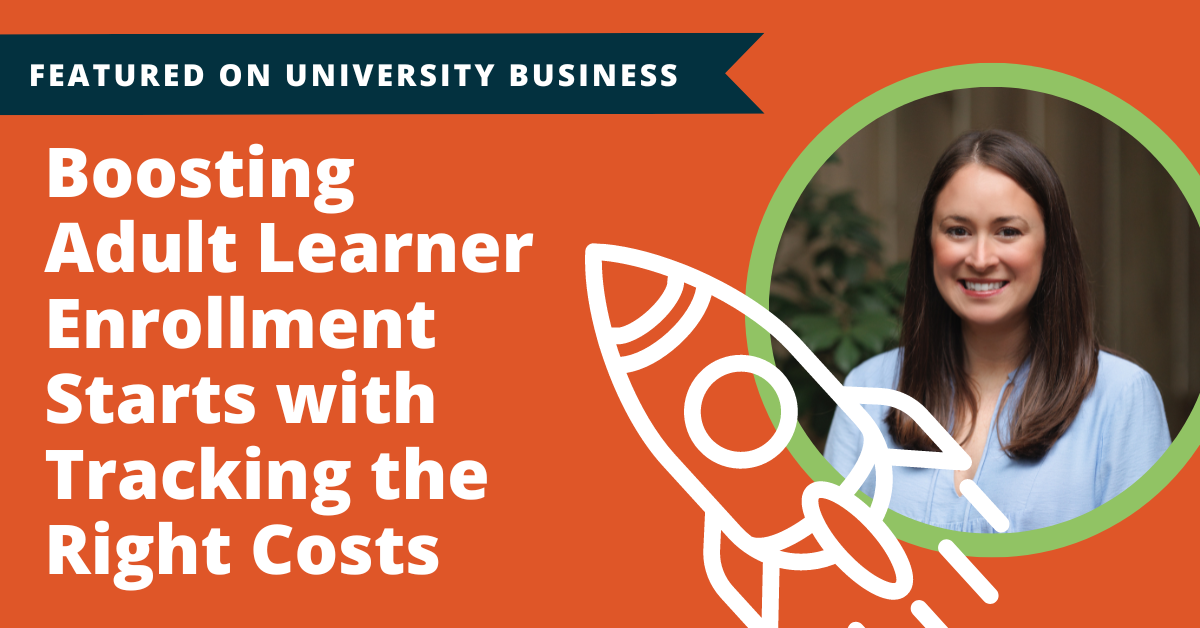
    Search Influence’s Director of Sales and Marketing Paula French recently wrote an article for University Business sharing expert insights for higher education marketers.

    This article, titled “How to boost adult learner enrollment by tracking the right costs,” discusses the importance of establishing a metric-driven approach to efficiently attract the modern learner.

    What Is University Business?

    University Business is a leading news outlet that caters to top decision-makers in higher education.

    It provides insights and strategies to college and university leaders across the United States, addressing challenges and trends in the academic world.

    University Business helps higher education leaders make informed decisions through a combination of news analysis, exclusive interviews, and practical resources.

    Insights From Paula French’s University Business Article

    Paula French’s article in University Business highlights the crucial need for universities to shift their focus toward adult learners. This demographic presents a significant growth opportunity amidst declining traditional undergraduate enrollment. Adult learners are driven by professional outcomes, flexibility, and program reputation — making their needs distinct from those of traditional students.

    Featured on University Business - CPI and CPE are the true north metrics

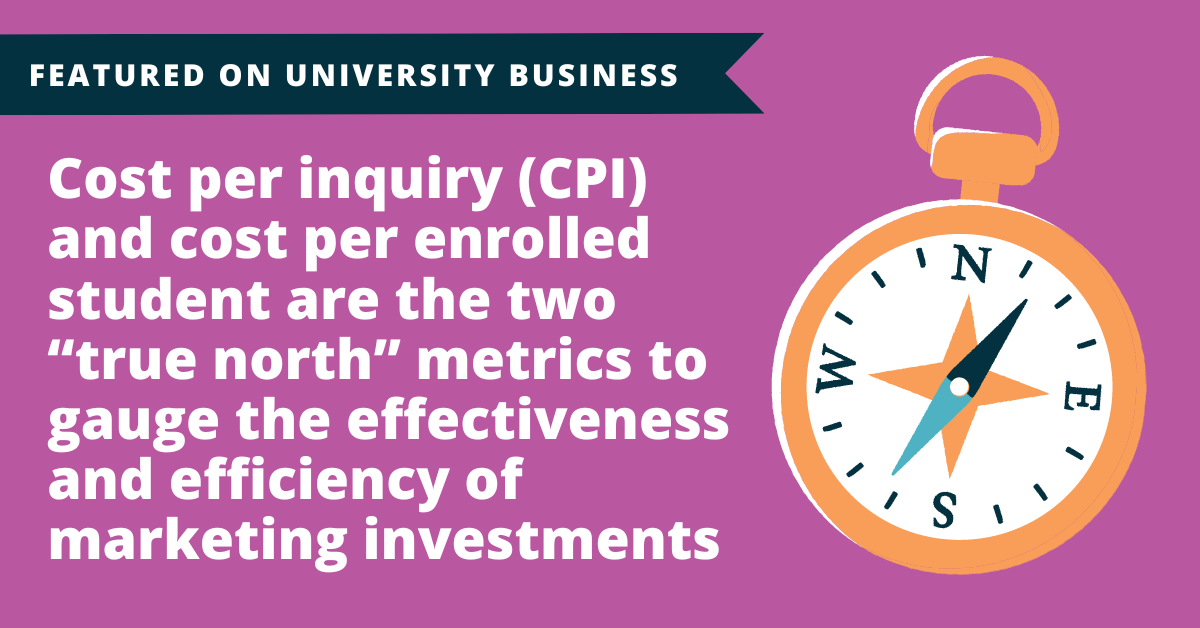
    To effectively market to this group, universities must prioritize tracking key metrics — namely, cost per inquiry (CPI) and cost per enrolled student. These “true north” metrics provide critical insights into the efficiency and effectiveness of marketing efforts, allowing institutions to allocate resources more strategically. Paula emphasizes that while campaign-level metrics like click-through rates are important, the ultimate goal is to drive enrollments, making CPI and cost per enrolled student the most valuable indicators of success.

    The article also notes that many institutions lack visibility into these metrics, presenting a missed opportunity to optimize marketing spend and improve ROI. By focusing on these metrics, universities can make data-driven decisions that enhance campaign performance, drive enrollment, and ensure long-term success in a competitive educational landscape.

    Read the full article for even more digital marketing for higher education insights.

    Contact Our Higher Education Marketing Agency

    Ready to strengthen your institution’s marketing strategy?

    At Search Influence, we specialize in helping universities optimize their potential.

    To get started, download our comprehensive research report, Higher Ed Marketing Metrics: What Gets Measured Gets Managed, created in collaboration with UPCEA.

    This report provides crucial benchmarks for CPI and cost per enrolled student, helping you track and improve your marketing outcomes.

    Contact us today to learn how we can help your institution achieve its enrollment goals with our higher education marketing services.