Tag: Higher Education Marketing Strategy

  • How to Conquer the Biggest Higher Ed Marketing Challenges in 2026

    How to Conquer the Biggest Higher Ed Marketing Challenges in 2026

    Key Insights

    • Student Search Behavior Is Changing, and Marketing Must Follow: Shifting demographics, alternative education pathways, and AI-driven search are changing how prospective students discover and evaluate institutions. Universities must align their strategies with search behavior that now spans AI tools, social platforms, and traditional search engines.
    • AI Search and Social Discovery Drive Visibility: AI Overviews and social search are redefining online visibility. Traditional SEO alone is no longer enough. Institutions need clear, authoritative content that performs across AI-powered and engagement-driven platforms.
    • Tracking the Right Metrics Is Essential: As clicks become less reliable signals, understanding cost per inquiry (CPI), cost per enrolled student, and channel performance is critical for optimizing budgets and improving enrollment outcomes.

    Nearly 50% of prospective students now use AI tools at least weekly, and 79% say they read Google AI Overviews when researching academic programs.

    Search behavior isn’t just changing. It’s fragmenting across search engines, social platforms, and AI-powered tools, forcing universities to rethink how they show up and stay visible.

    As traditional student populations decline and digital marketing evolves, higher education institutions face growing pressure to adapt their recruitment strategies to meet prospective students where they actually search. From shifting discovery behaviors to the rise of alternative education pathways, academic leaders are navigating an increasingly complex and competitive landscape.

    The biggest challenges in higher ed marketing today aren’t tied to a single channel or tactic. They require institutions to redefine how they connect with an audience that is more diverse, digitally savvy, and selective than ever before.

    To better understand these shifts, Search Influence partnered with UPCEA to conduct AI Search in Higher Education: How Prospects Search in 2025, a national study of 760 adult learners exploring professional and academic programs. The research offers critical insight into how prospective students use search engines, social platforms, university websites, and AI tools throughout the decision-making process.

    In this blog, we’ll break down the most pressing higher ed marketing challenges in 2026 and share practical, research-backed strategies to help your institution:

    • Strengthen student engagement
    • Refine its digital approach
    • Compete more effectively in a rapidly evolving search environment

    Higher Ed Marketing Challenges

    AI’s impact on behavior and the search landscape

    The students of tomorrow are already using AI today. And for many, it’s now a routine part of how they search for and evaluate academic options.

    Search Influence’s AI Search in Higher Education research found that 79% of prospective students read Google AI Overviews, and 56% are more likely to trust institutions cited by AI.

    This shift is influencing the student journey well before application, shaping how prospects explore programs, compare institutions, and narrow their choices.

    AI chatbots, search assistants, and generative search experiences are increasingly embedded in the consideration process, acting as filters between prospective students and institutional websites.

    In many cases, students now get answers directly within search results without clicking through to a university website, a behavior known as zero-click search. AI Overviews frequently summarize program information, admissions details, and outcomes on the results page itself, especially for non-branded and early-stage research queries. This means visibility increasingly depends on being cited and trusted by AI systems, not just driving traffic to a landing page.

    As AI becomes more integrated into everyday search behavior, students expect universities to provide clear, accessible information that AI systems can surface accurately, not just compelling messaging once they arrive on a website.

    How to overcome this challenge

    As AI reshapes how content is discovered and summarized, higher education marketers must refine their content strategies to support both human decision-making and AI-driven retrieval.

    Universities will stand out by developing clear, in-depth, and well-structured content that AI systems can confidently reference and prospective students can trust. Research-backed program pages, detailed FAQs, and content that directly answers common search questions improve the likelihood of being surfaced in AI Overviews and other generative search experiences.

    Targeting specific, intent-driven queries, such as program outcomes, career pathways, and admissions considerations, helps institutions remain visible across traditional search, AI-powered results, and emerging discovery channels.

    Incorporating interactive elements such as webinars, virtual tours, and downloadable guides creates engagement opportunities that go beyond AI summaries, encouraging prospective students to take the next step once initial discovery happens elsewhere.

    Institutions that adapt their content and SEO strategies with AI search in mind will be better positioned to maintain visibility, build trust, and connect with future students as search behavior continues to evolve.

    A guy taking notes next to a computer

    Social search

    Social search is redefining how prospective students discover and engage with universities, and it plays a dual role in modern visibility: how people search and how AI systems understand and trust brands.

    Search Influence’s AI Search in Higher Education research shows that prospective students’ search behavior is increasingly diversified when researching programs:

    • 84% use search engines
    • 61% use YouTube
    • 50% use AI tools

    Social platforms sit squarely within this ecosystem. Prospective students now use platforms like TikTok, Instagram, YouTube, and LinkedIn as search engines in their own right, entering queries, scanning results, and comparing options through video, comments, and creator content.

    Instead of typing formal queries and clicking ranked links, students search social platforms with intent-driven phrases, looking for campus tours, student perspectives, program outcomes, and day-to-day academic experiences. Discovery happens through scrolling, watching, and evaluating content in context, often before a university website ever enters the picture.

    Unlike Google’s algorithm, which relies heavily on structured SEO signals, social search is driven by engagement. Visibility is determined by watch time, shares, comments, and interaction, making discovery harder to influence through traditional optimization alone.

    This behavior matters beyond student engagement. AI-powered search engines increasingly pull context and authority signals from social platforms. Social content helps AI systems validate what an institution offers and which queries it should be connected to in generative search results.

    Higher ed marketers must transform existing content into social-native, program-focused formats that support discovery and credibility. Simply having a website is no longer enough.

    How to overcome this challenge

    To succeed in social search, universities must treat social platforms as extensions of their search and content strategy, not just promotional channels.

    Institutions should focus on creating educational social content, such as:

    • Instagram Reels or TikTok videos that clearly explain academic programs, career outcomes, or student experiences
    • Short-form student testimonial videos that speak directly to institutional value, flexibility, and real-world impact
    • YouTube videos that provide deeper program overviews, faculty insights, or recorded info sessions
    • LinkedIn articles that discuss industry trends, academic expertise, or workforce alignment related to your institution and target programs

    By approaching social media as a strategic input into AI-driven search, higher ed marketers can improve discoverability, strengthen brand credibility, and support enrollment goals across an increasingly fragmented search landscape.

    Tracking key metrics for performance

    Tracking key metrics is essential for ensuring the success of higher education marketing efforts, yet many colleges and universities still struggle to measure the true impact of their campaigns.

    UPCEA and Search Influence collaborated on the Higher Ed Marketing Metrics Research Study: What Gets Measured Gets Managed to address this challenge.

    This study highlights a critical issue: While most marketing teams can identify the source of inquiries, far fewer track the actual cost per inquiry (CPI) or cost per enrolled student — two essential metrics for assessing marketing efficiency.

    In fact, while nearly 73% of marketing units track the source of inquiries for online and professional education programs, only 46% track CPI, and just 43% monitor the cost per enrolled student. Even more concerning, 17% do not track any of these key performance indicators at all.

    Understanding CPI and cost per enrolled student provides significant benefits for colleges and universities looking to optimize their campus recruitment efforts.

    Tracking these metrics allows marketing teams to assess whether they are generating an appropriate volume of prospects and determine if those inquiries are converting into actual enrollments. More importantly, it enables data-driven decision-making by showing where budget optimizations can improve efficiency.

    For example, if one marketing channel consistently delivers high CPI but low conversion rates, adjustments can be made to targeting, messaging, or spend allocation to maximize future results. Tracking these metrics provides a foundation for deeper analysis, helping universities evaluate lead quality, conversion ratios, and the overall effectiveness of different marketing channels.

    How to overcome this challenge

    By prioritizing CPI and cost per enrolled student, higher education marketing teams can make informed adjustments to their strategies, ensuring that resources are directed toward the highest-performing channels. This approach improves campaign performance and allows institutions to better understand how their marketing investments drive student engagement.

    Changing demographic and enrollment landscape in higher education

    The higher education landscape is shifting dramatically, and the long-anticipated demographic cliff is here. As the number of “college-aged” students declines, institutions historically relying on traditional undergraduate enrollments must rethink their approach.

    To stay competitive, higher education institutions must expand their focus beyond recent high school graduates and embrace a broader audience — adult learners, career changers, and professionals seeking skills-based education.

    The move away from traditional education pathways

    The traditional four-year degree is no longer the only, or even the preferred, pathway for many modern learners.

    Rising tuition costs, evolving workforce demands, and a desire for flexibility are driving students toward microcredentials, online degrees, and non-credit-to-credit pathways that allow them to tailor their education to their career goals.

    The workforce is evolving too quickly for rigid, 120-credit degree programs to keep up.

    As Aaron Brower highlights in From Degrees to Microcredentials: Higher Education Must Evolve to Embrace the Modern Economy, this shift isn’t just about cost; it’s about relevance.

    Instead, students are adopting a “mix-and-match” approach to learning, combining traditional coursework with certifications, industry-recognized credentials, and skill-based training. This shift is forcing schools and universities to adapt their higher education marketing and university marketing strategies to ensure they reach and engage today’s learners.

    Prospective students are looking for technology-driven solutions that allow them to engage with coursework without sacrificing work, family, or other commitments. Institutions must emphasize the benefits of flexible learning options to attract more students.

    This means adapting marketing communications to highlight the value of alternative education pathways, including non-credit programs that can stack into degrees, online learning that fits busy schedules, and credentials that provide immediate career impact.

    How to overcome this challenge

    For campuses to thrive in this new landscape, institutions need to evolve their messaging to focus on lead generation and long-term student engagement. Universities that successfully communicate the advantages of non-traditional education will attract more students and position themselves as forward-thinking leaders in an era where lifelong learning is essential.

    The Importance of Upskilling Your Team With AI SEO

    To overcome today’s higher ed marketing challenges, institutions must upskill their teams with a clear understanding of AI SEO.

    AI SEO isn’t a passing trend or a niche tactic. It’s the new operating environment for search.

    As AI-powered systems increasingly determine which content is surfaced, cited, and trusted, marketers need to understand how content is interpreted by people and machines.

    New technology can feel intimidating, but adapting to AI SEO is no different than learning any other essential marketing tool. Working in marketing today without understanding AI SEO is like working at Office Depot without knowing how to use the Xerox machine. It’s simply part of the job now.

    For many institutions, the fastest path forward is partnering with an AI SEO agency that recognizes how search is evolving and how higher ed audiences behave.

    Contact Our Award-Winning Higher Ed Marketing Agency

    From understanding AI’s impact on search and social discovery to navigating changing demographics and tracking the right performance metrics, higher education marketers are being asked to do more in an increasingly complex environment.

    That’s where Search Influence comes in. We help colleges and universities adapt with research-backed strategies.

    Of all these challenges, AI search may be the steepest climb. Search behavior is shifting faster than most institutions can track, and visibility now depends on how AI systems interpret, summarize, and trust your content.

    Consider our AI Search in Higher Education research study the climbing gear you need. It offers practical insight to help you navigate this shift with clarity and confidence.

    Download the AI Search in Higher Education study to understand how prospective students use search engines, AI tools, social platforms, and university websites.

    Images:
    1. Unsplash
    2. Unsplash
  • Search Influence to Share AI Search Strategies for Higher Education at MEMS 2025

    Search Influence to Share AI Search Strategies for Higher Education at MEMS 2025

    As AI continues to redefine how students search for and engage with academic programs, marketers are rethinking how they track, measure, and optimize online visibility. 

    This December, Search Influence will share actionable AI search strategies for higher education at the 2025 UPCEA Marketing, Enrollment Management, and Student Success (MEMS) Conference, held December 2–4 in Boston, Massachusetts.

    Three members of the Search Influence leadership team (Will Scott, Paula French, and Jeanne Lobman) will present and moderate sessions on how institutions can:

    • Adapt to generative AI search
    • Integrate data-driven marketing channels
    • Create more credible, student-focused content

    Together, these sessions will help higher ed marketers translate data into decisions and strengthen visibility in the age of AI search.

    Search Influence Sessions at MEMS 2025

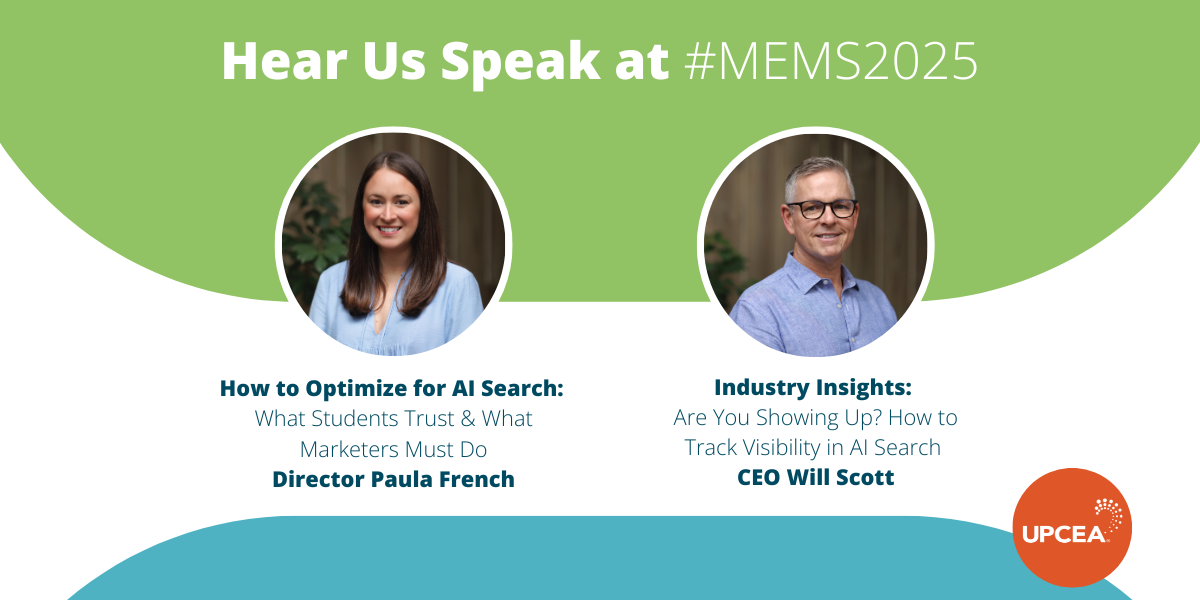
    MEMS2025 speakers graphic

    “Are You Showing Up? How to Track Visibility in AI Search”

    Presenter: Will Scott, CEO and Co-Founder, Search Influence

    Time: Wednesday, December 3 – 10:00 a.m.

    AI search is no longer theoretical. It’s measurable. In this session, Will will show institutions how to connect generative search visibility to real data and use it to drive recruitment strategy.

    Session Highlights:

    • Learn how to measure your institution’s presence across AI platforms like ChatGPT, Gemini, and Perplexity.
    • Discover how to segment AI-driven traffic using Google Analytics 4 and Looker Studio.
    • Identify metrics and tools that help you evaluate AI visibility and performance.

    “How to Optimize for AI Search: What Students Trust & What Marketers Must Do”

    Presenter: Paula French, Director of Sales and Marketing, Search Influence

    Co-Presenter: Emily West, Senior Market Research Analyst, UPCEA

    Time: Wednesday, December 3 – 3:30 p.m.

    Nearly half of prospective students now use AI tools weekly, and 79% read AI-generated summaries. In their presentation, Paula and Emily will translate this data into concrete next steps for marketing teams ready to compete in generative search.

    Session Highlights:

    • Review new findings from the 2025 UPCEA + Search Influence study, AI Search in Higher Education: How Prospects Search in 2025.
    • Understand what prospective students trust in AI-generated results.
    • Learn a three-part framework for AI visibility: discoverability, credibility, and content optimization.

    “From Search to Success: Integrating SEO and Email Marketing to Drive Enrollment”

    Moderator: Jeanne Lobman, Director of Operations, Search Influence

    Panelists: Tim Grenda and Caitlin Dimalanta, San Diego State University

    Time: Tuesday, December 2 – 2:45 p.m.

    Students don’t stop searching once they find a program. They start evaluating how institutions communicate. This session will explore how connecting SEO insights with email marketing creates a continuous, student-centered experience that strengthens engagement and drives enrollment.

    Session Highlights:

    • Explore how integrated SEO and email strategies guide students from search discovery to enrollment.
    • Learn how coordinated messaging increases engagement and conversion.

    “Boosting SEO and Engagement Through Testimonial-Driven Web Content”

    Moderator: Paula French, Director of Sales and Marketing, Search Influence

    Panelists: Caitlin Wilson and Krysten Cole, Boston University Metropolitan College

    Time: Thursday, December 4 – 10:00 a.m.

    Authenticity has become one of higher education’s strongest differentiators. This session will examine how testimonial-driven storytelling can improve SEO performance, strengthen brand trust, and create more meaningful engagement with prospective students.

    Session Highlights:

    • Understand the importance of authentic student and alumni testimonials in building credibility and enhancing visibility.
    • Learn how to turn stories into measurable content assets that support recruitment goals.
    • Explore how to connect storytelling with keywords and SEO strategies for stronger search performance.

    About MEMS 

    Hosted by the Online and Professional Education Association (UPCEA), the MEMS Conference brings together enrollment and marketing professionals from across the country to share strategies that connect innovation with measurable results. 

    Now in its 34th year, the event will focus on emerging technology, shifting student expectations, and the evolving ways higher education institutions can reach, recruit, and retain learners.

    Throughout the conference, Search Influence will host a booth where attendees can learn how to assess their institution’s AI visibility, explore AI SEO tools, and request a complimentary AI Website Grader developed by Will. Our team will be available to discuss real-world applications of AI-driven marketing data and how colleges can start improving their presence across generative platforms.

    Continuing the Conversation

    As AI search evolves, understanding how visibility, trust, and data intersect has never been more important. 

    If your institution is ready to know where it stands in AI search, download AI Search in Higher Education: How Prospects Search in 2025, or meet our team in Boston to explore how strategy, credibility, and creativity can elevate your visibility.

  • Higher Education Digital Marketing – Your Key to Growth In 2024

    Higher Education Digital Marketing – Your Key to Growth In 2024

    Imagine you’re a ship captain embarking on a voyage in uncharted waters. That’s what it’s like navigating the ever-changing currents of Higher Education Digital Marketing.

    Higher education digital marketing in 2024

    As the deck shifts beneath you, you are steering your institution’s ship through the waves of change – hopefully toward improved enrollment and a better return on investment (ROI.)

    Mobile devices, social media, and the need to show value with data analytics are critical in your marketing efforts to attract, engage, and retain students.

    As we go deeper, you’ll learn to master the art of marketing in higher education, turning challenges into opportunities and ensuring your ship doesn’t just stay afloat but sails triumphantly toward the horizon of success.

    [ez-toc]

    Digital Marketing Strategy – What’s Working?

    For a more comprehensive look at what other schools and their agencies are thinking about for lead generation. Have a look at our blog roundup: 10 Winning Higher Education Marketing Strategies.

    Top 10 Higher Education Digital Marketing Strategies

    • SEO (Search Engine Optimization)
    • Paid Advertising (PPC, Pay-Per-Click, Display and More)
    • Content Marketing
    • Email Marketing
    • Social Media Marketing
    • Video Content
    • Personalization
    • Branding
    • Chatbots and Conversational Marketing
    • Data-Driven Strategy

    SEO: The Key to Visibility

    SEO is essential in your institution’s visibility online, bringing high-quality content to the forefront and establishing your authority. It’s a cornerstone of higher education marketing, offering a way to increase search engine rankings and maximize organic traffic.

    Good SEO is simple, not easy.

    In short, SEO is about relevance and authority. Or, another way, keywords, content, and links.

    An academic research paper is judged over time by the number of citations it receives, and your website is judged by the number of links, references, and citations, too.

    In Higher Ed, SEO basics can go a long way.

    Keyword Research Is Changing

    As Internet search engines move from “lexical” to “semantic” search, it is that much more important to create connections in a semantically relevant way. Keywords (or search terms) are still important, but equally important are the entities they represent.

    Hint: look for bolded text in this article. Most are entities – either Wikipedia or Google NLP. Some are just for emphasis.

    Consider the humble Hoagie. You don’t know what a hoagie is? It’s what people in Philly call a Sub or Hero. In New Orleans, we call it a Po-Boy.

    To Wikipedia, however, Sub, Hoagie, Grinder, and others are the semantic equivalent of “Submarine sandwich.”

    Constructivist learning theory suggests learners construct knowledge by integrating new information with existing knowledge and experiences. Search is like that.

    There are far too many “keywords” for search engines to catalog them all, and they must, therefore, index those keywords to known entities.

    A fun aside: Po’ boy gets its own Wikipedia page.

    Link Building Is Hard

    The good news for you, if you’re marketing higher ed institutions, is that most of your websites are very authoritative. They already have a lot of external links, and they get a lot of organic usage.

    Image of an interconnected web of laser-like lights intended to represent the importance of links in higher education SEO.

    In the SEO community, we’ve long believed that user signals, i.e., the way a visitor interacts with your website, are important. With students and other community members using your website as a resource, you can be assured that your user signals demonstrate engagement.

    But is it easy for them to find what they need? And if you were a search engine crawling your own website, would it be easy to navigate among related topics?

    When the World Wide Web first launched, hyperlinks were a radical departure. The idea we could jump from one document or passage to another was revolutionary.

    Site visitors want to move seamlessly from one idea to the next and from one page to another, as well. Search engines do, too.

    Chances are you don’t have enough internal links within the content of your website. If you want the search engines to really understand the relationship between areas of your site, you need to demonstrate those connections with links.

    Hopefully, your content management system supports easy internal linking. If you use WordPress, we’ve been enjoying the plugin LinkWhisper which automates much of the internal linking process.

    Does this mean you don’t need external links? Not at all, but you get to be more selective.

    Are you launching a new program? Highlighting a student or faculty story? These may need external links to get found, and those can be in the form of PR, social media, and other organic behaviors.

    Embrace Your Technical Side

    If your website doesn’t function properly, users and search engines will not be able to find what you want them to.

    Image of a robot head in a field of technology to represent the importance of technical SEO for higher ed.

    A broken website is obvious, but there are less obvious technical implementations that can add tremendous value:

    • Website load speed
    • Readability (important for accessibility as well)
    • Image size and format (relates to load speed)
    • Structured data

    A typical “SEO Audit” will highlight a number of irrelevant issues, like HTML code compliance, for instance. Today, however, having a fast, easy-to-read site that loads well on mobile devices and feeds the engine semantically relevant information is the starting point.

    Technical SEO doesn’t have to be scary if you focus on the handful of things that really matter.

    Paid Advertising: Extend Your University Marketing

    Search engines are attacking your organic search efforts on multiple fronts which makes online advertising that much more critical.

    The integration of AI results means your organic content is further down the search engine results page (SERP.)

    New social channels, like TikTok, Instagram, and Snapchat, are being used by the coming generations in place of search engines.

    Image of a laptop with a graduation cap (mortarboard) surrounded by a swarm of logos to indicate the importance of digital advertising channels for higher ed.

    PPC, Pay-Per-Click, and Search Ads

    You are likely familiar with paid search ads. They are one of the oldest forms of Internet advertising, dating back to the last century.

    They have come a long way. In the beginning, they matched ads to what a user searched for. Now, they can include multiple layers of targeting.

    In addition to the searched words, we can now layer demographics, searcher intent, and even retargeting. The humble search ad started as a sledgehammer and is now a laser-guided surgical instrument.

    With pay-per-click, you only pay when someone clicks your ad, making it a good way to manage budget and ROI.

    Digital Display Advertising

    Closely related to search advertising and often available in the same systems are digital display ads.

    Many channels have options for display advertising, including the Google Display Network and Meta (parent of Facebook and Instagram).

    There are also specialized advertising platforms that allow digital ads to be targeted based on third-party data. These can be subscribers to various services, demographics, or affinity, and in-market data.

    Social Media Advertising for Higher Ed

    Group of young people taking a selfie in front of an institution of higher learning with books and graduation caps floating in the background.

    Each platform has paid ads available. In addition to PPC and Display, there are platform specific options such as InMail on LinkedIn.

    When these advertisements are native to the platform, they often provide a better response rate.

    Television and Connected Devices DTV/CTV/OTT

    As in-home entertainment moves more asynchronous and digital, you can now reach prospects with digital advertising during leisure activities.

    These platforms share the audience targeting capabilities of digital display.

    Retargeting and Remarketing

    Each time a web searcher is exposed to messaging online, whether news sites, entertainment, or in the social media space, they become an opportunity for retargeting.

    You can target visitors to your website, those who’ve seen other ads or a specific landing page, and even by email and phone number. These technologies are available in most paid campaigns, even your existing Google ads.

    Whether you like it or not, if you want to reach your target market, you will sometimes need to pay for it.

    Content Marketing Drives Engagement

    At its best, content marketing is a storytelling opportunity. Regardless of the medium, you have an opportunity to engage your audience in entertaining and informative ways.

    Image of a group of students studying with electronic devices to indicate the importance of content marketing.

    Showcase your institution’s unique values, tell your story, and present your offerings in a way that appeals to your prospective students.

    Current students, campus life, and your degree program are all great topics. Your blog and video content allows for student-centered content with an integrated call to action for relevant leads.

    As higher education marketers, we have to wear a number of hats. Yes, we need to increase search engine visibility. And lead generation has to be a major focus of any marketing campaign focused on new students. But we also have to serve our faculty and administrators.

    The great news is our faculty are prolific content creators in their own right.

    This frees us from having to build brand awareness with new content. We can optimize existing content from our college website and degree programs to reach the prospective student.

    Content comes in many forms. Just as we can leverage the university website to get in front of prospects, we can take advantage of admissions materials like video campus tours to increase our university’s brand visibility.

    The smart marketer is making more with less. Any existing content that is supportive of your school’s brand is ripe for reuse.

    With new AI tools, we can even take a web page and turn it into a short-form video, social media posts, or pretty much anything we can dream up.

    Video content is particularly powerful in higher ed marketing, as it offers an engaging, dynamic way to showcase your institution and its offerings.

    But there are nearly endless ways to get your university noticed with content. Here’s a list to get you thinking:

    Written Content

    1. Blogs
    2. Articles
    3. E-books
    4. White Papers
    5. Case Studies
    6. Newsletters
    7. Infographics
    8. Press Releases
    9. Guides and How-To’s
    10. Checklists and Cheat Sheets

    Visual Content

    1. Images
    2. Videos
    3. Webinars
    4. Slideshows and Presentations
    5. Live Streaming
    6. Virtual Reality (VR) and Augmented Reality (AR)

    Audio Content

    1. Podcasts
    2. Audiobooks

    Social Media

    1. Facebook
    2. Instagram
    3. Twitter
    4. LinkedIn
    5. Pinterest
    6. Snapchat
    7. TikTok
    8. Reddit

    Interactive Content

    1. Quizzes and Polls
    2. Interactive Infographics
    3. Online Courses and Workshops
    4. Games and Interactive Experiences

    Hopefully, this shows that there are tons of ways to get in front of your audience, and in many cases, adapt existing material to new channels to do so.

    Effective Email Marketing

    There are three distinct types of email marketing every school or business unit should be engaged in.

    Image of diverse group of students at university with mobile devices and email icons.

    • Outbound or cold email
    • Nurture sequences (including email, SMS, social media)
    • Newsletter

    Outbound Email Marketing For Higher Ed

    The biggest challenge in lead generation is getting your school’s brand in front of a ready audience.

    Done well, outbound email opens up new audiences for your degree programs you might not reach otherwise.

    There are platforms focused on college students in various stages of decision-making.

    And, with email lists, you can access demographic data that is no longer available on traditional advertising platforms.

    Just like direct mail of old, email is a great way to test messaging and calls to action and to get a quick response.

    Nurture And Followup Email

    What a shame it would be for you to spend time, money, or both getting interested students to your web pages or landing page and then not following up. And if they’re getting there and not taking action you may want to consider conversion optimization.

    We help our clients build nurture sequences in HubSpot, Slate, and other customer relationship management systems (CRM), which include email, SMS, and social media contacts as well.

    The higher education buying cycle can be long, and it pays to stay in front of your prospects throughout that time.

    You can use nurture sequences to stay in front of your target audience, share valuable information, answer questions, and share the perspectives of current students.

    And email nurture is good customer service, too.

    Newsletters

    Newsletters are a great way to stay in front of your audience and communicate important news and events, even when they’re not actively engaged in a marketing campaign.

    For effective email:

    • Personalize: Use the recipient’s name and tailor content to their interests or actions.
    • Segment: Target groups based on course of interest, geography, and more.
    • Make Them Compelling: These are your first impressions. Make them count.

    Invest time in crafting thoughtful, relevant emails. Your prospective students deserve it, and your enrollment numbers will thank you.

    Social Media for Brand Awareness

    Harnessing the power of social media boosting brand awareness

    Harnessing the power of social media can significantly boost your institution’s brand awareness and forge stronger connections with potential students.
    By using popular social media platforms like TikTok, Instagram, LinkedIn, and Facebook, higher education institutions can effectively reach and engage their target audience.

    Sharing engaging content such as videos, experiences, and university events on these platforms can elevate your brand and increase its visibility. You’re not just marketing your institution; you’re building a community where students feel heard, seen, and valued.

    Consider platforms like YouTube and TikTok for sharing engaging video content. These platforms can significantly improve your reach and brand awareness.

    Influencer marketing can significantly increase brand visibility and foster trust with potential students. Consider your own students, some may be micro-influencers in your community.

    In addition to organic engagement, social media sites offer significant advertising opportunities.

    Video Marketing: A Powerful Tool

    Video content resulting in user engagement

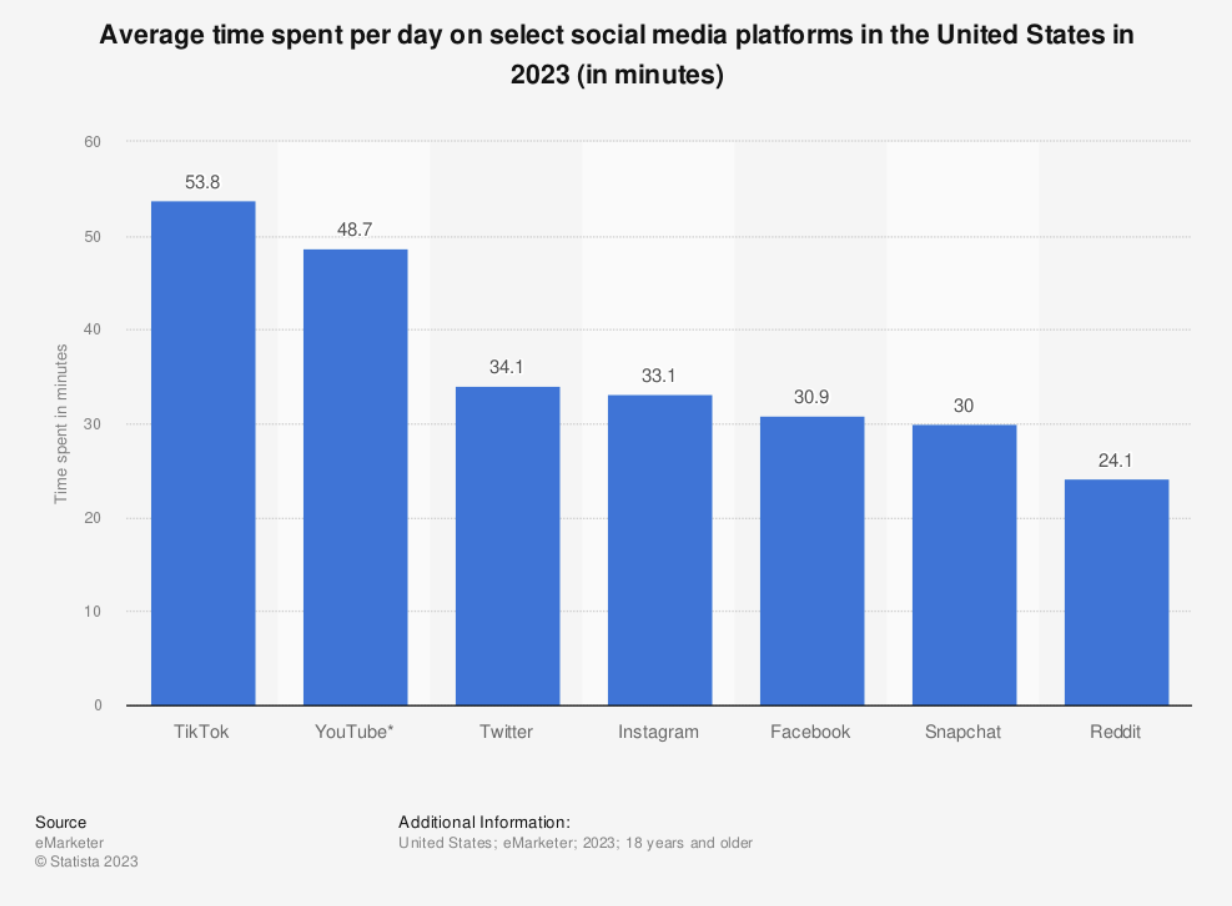
    YouTube is the second most used search engine.

    TikTok and Youtube — video sites — earn around 50 minutes/day of users time and attention.

    This is significantly more than any other platform.

    Time spent on social media platforms in the US in 2023

    And, in each case, the platform algorithms are tuned toward engagement.

    Platforms like YouTube and TikTok are perfect for sharing short videos that showcase your university’s programs and lifestyle. These bite-sized pieces of content often result in better engagement and can be easily shared across various social media platforms.

    Consider crafting virtual tours of your campus facilities. Prospective students can experience your institution from the comfort of their homes, making it a unique selling point in your higher education marketing strategy.

    Additionally, you can link these short videos to longer, more detailed ones for additional information and engagement.

    Analytics & Reporting: Show Me The Money

    higher education analytics and reporting

    Analytics and reporting are an absolute must if you want to demonstrate your value.

    In our practice, we talk about analysis, tracking, and reporting ATR for short. We use that language for a couple of reasons. First, analytics is the brand of Google’s tracking system. More importantly, we believe that without analysis, the data is meaningless.

    For many of our clients, lead generation and cost per lead (or cost per inquiry/CPI) are the most important metrics.

    With every report, we’re making a case for our continued employment. In a recent UPCEA research study the data indicates that 62% of higher education institutional leaders want reporting on SEO metrics, but just 31% receive regular updates.

    There are many ways to view Google search data and other metrics relevant to your higher education website.
    Some of our favorites are:

    • Google Analytics
    • Google Search Console
    • Google Business Profile
    • Bing Webmaster Tools
    • Advance Web Ranking

    We bring all this, plus advertising and task data, together in custom reports built-in Google Looker Studio.

    If you’re trying to decide if a topic is worth pursuing, you can also look at Google search trends.

    It’s important to remember that any of these tools are directional, not exact. The numbers are always an estimate, and the best you can do is follow the trends.

    Prospective Students Aren’t The Only Target Audience

    Often, when we think of university marketing efforts, we think Generation Z enrollment. But there are many more constituencies to consider.

    When we focus on high school students and the younger generation, we may overlook some channels that are more appropriate to some of these other audiences. Just because those high school students aren’t on Facebook doesn’t mean they’re not influenced and financed by someone who is.

    diverse group of people smiling and showing thumbs up gestures and visible five-star review symbolizing positive feedback

    Parents

    At the undergraduate level, college marketing needs to consider parents in lead generation efforts.

    Whether they are paying, guaranteeing a loan, or simply supporting their student, you want to think about parents. They will approach information differently than their students.

    Community

    It’s unlikely that your school is on an island. The community in which you live and work is an important target for your marketing campaigns.

    Whether you are recruiting staff or simply trying to maintain a good reputation, your local community needs to know what is going on at your school.

    Peer Organizations

    Whether down the block or around the world, peer schools and organizations can be an important part of your efforts.

    You may not be trying to fill a faculty position today, but you will.

    Consider how you find “product” information. You ask someone who knows, and likely, your peers will be asked about you.

    Existing Students

    Our best prospect is a customer who’s already connected with us. Your existing students know who you are and, in many cases, are a captive audience on your campus.

    One of our client schools has even used yard signs to reach prospective students for summer graduate programs on campus.

    Your students are also uniquely qualified to create user-generated content that will be sure to resonate with prospects.

    Faculty And Staff

    Like some of these other examples, your employees can be some of your best ambassadors.

    You may have the opportunity to double your return on effort if your marketing campaigns also support your internal communications.

    Frequently Asked Questions

    Students and parents using digital media platforms

    What Is the Role of Digital Marketing in Higher Education?

    The role of digital marketing in higher education is growing. Prospective students and their influencers are turning to digital media first. Traditional media: publications, television, and radio are being overtaken by digital advertising.

    Can You Do Digital Marketing to High School Students?

    There are a number of platforms (TikTok, Snapchat, etc.) that are popular with high school students. You can also use programmatic advertising and email to target households likely to have high school students. You can also use professional sites like LinkedIn to target educators and counselors.

    Which Type of Digital Marketing Is Best for Students?

    The type of digital marketing that is best for student recruitment will depend on a number of factors. Are you targeting undergraduate, graduate, non-credit, community college, or something else?

    There is no one-size-fits-all.

    Who Does Marketing for Universities?

    Marketing for universities is typically a combination of the internal marketing team, external agencies — specialized firms who bring expertise in areas like digital targeting, enrollment campaigns, branding, and faculty and students. Faculty, staff, student achievements, and campus life stories enable compelling content.

    What Are the Functions of Marketing?

    The functions of marketing are understanding customer needs and creating value. Research, develop, price, promote, deliver, nurture, and measure success. It’s all about connecting products with happy customers.

    A computer rendering of an institution of higher learning with images of digital marketing related icons in the foreground.

    Conclusion

    There are countless ways to approach higher education digital marketing. After 18 years in business, we understand the value of focus.

    We specialize in search engine optimization and paid digital advertising because they’re the most reliable way to drive qualified inquiries and deliver a provable ROI.

    By implementing a comprehensive Higher Education Marketing Strategy, you can effectively reach and engage your target audience, nurture leads, and ultimately attract new students.

    By focusing on these key areas and tailoring your approach to your specific audience and goals, you can create Higher Education Digital Marketing Strategies that drive meaningful results.

    The key is to focus on a student-centric approach, utilize a variety of digital marketing tools, and continuously measure and optimize your efforts for maximum ROI.

    We hope this overview was useful. Some other areas you may want to spend time learning about are:

    • Optimizing landing pages for paid search campaigns.
    • Utilizing short-form video content for social media platforms like TikTok.
    • Implementing conversational marketing strategies to engage with prospective students directly.
    • Collaborating with student ambassadors to promote the university brand.
    • Integrating voice search optimization into your content strategy.

    We know it’s a lot. Search Influence has worked with higher education institutions for over a decade to attract prospective students. Get in touch and let’s see if we can help you, too.

    This article was mostly written by Will Scott, CEO of Search Influence with a little help from the robots.

  • SEO for Higher Education Institutions: Invest Now Or Pay Later

    SEO for Higher Education Institutions: Invest Now Or Pay Later

    Key Insights:

    • Institutions need to maintain a well-optimized online presence to ensure they connect with students effectively.
    • Even though SEO is foundational for digital marketing, 51% of universities lack a well-defined SEO plan, representing a significant missed opportunity for increased visibility and engagement.
    • SEO can’t be sidelined or delayed, especially with the increasing number of educational programs and the stagnant or declining pool of potential students.
    • Online platforms, boot camps, and micro-credential programs challenge the traditional models of education. As these alternative educational models gain traction, traditional institutions must leverage SEO to differentiate themselves and maintain their competitive edge.

    In a world where undergraduate college enrollment is on a 10-year decline, according to Brookings, higher education deans and marketing managers are searching for ways to get their programs in front of prospective students.

    Yet, they often overlook SEO (search engine optimization). It’s one of the basics of digital marketing — and digital marketing and institutional leaders know this!

    According to the Search Influence and UPCEA Higher Ed Research Study, digital marketing and institutional leaders see SEO as foundational but admit their PCO units lack an SEO strategy.

    In the same study, we found that 51% of universities don’t have an established SEO plan.

    This is a massive missed opportunity.

    But not to worry!

    SEO has been here waiting — knowing that you’d soon realize what you always needed was right in front of you the whole time.

    Still, SEO won’t wait forever.

    To take advantage of SEO, you need to invest in it now — rather than later. In this blog post, I’ll share why.

    Image of a laptop, backpack, and notebook indicating that higher Education SEO is doesn't have to feel like homework.

    The Importance of SEO for Higher Education

    In our digital world, a well-optimized website is no longer a luxury; it’s a necessity.

    As UPCEA Chief Research Officer Jim Fong said in our Spring 2023 webinar, “SEO is not something institutions can kick the can down the road on. It’s going to become increasingly important, especially as the number of programs increases and the number of potential students stays the same or even decreases.”

    SEO for higher education can impact your enrollment in a multitude of ways, including:

    • First touchpoint: Many students first encounter institutions via online search, making visibility crucial for first impressions.
    • Positive digital footprint: A well-optimized educational website offers more than visibility — it establishes trust and credibility.
    • Building credibility: High search rankings not only boost visibility but also enhance institutional reputation in the eyes of prospects.
    • Actionable insights: SEO analytics reveal what potential students seek, allowing institutions to fine-tune their offerings.
    • Engaging prospects: Beyond visibility, an SEO-driven content strategy can guide students through their decision-making process.
    • Adapting to change: With the dynamic nature of SEO, institutions can stay relevant in shifting search landscapes.

    Why You Need to Invest in Higher Education SEO Now

    As the UPCEA and Search Influence Research Study asserted, “A poor foundation for an SEO strategy creates cracks in the larger infrastructure of your website. And just like the potholes in an old city make the roads challenging to navigate, when SEO doesn’t receive the attention it deserves, websites become difficult to navigate and can slip through the cracks — overlooked by search engines and prospects.”

    higher ed

    The growing competition in higher education

    “As the choices for potential students grow, the challenge for educational institutions to differentiate themselves intensifies.”

    In the past decade, the higher education landscape has witnessed a radical shift. Traditional brick-and-mortar institutions now share the educational stage with many other online platforms. From Coursera to Udemy and edX, the options for acquiring knowledge have become vast, decentralized, and more accessible.

    These alternative education models offer specialized training and often come with the backing or endorsement of industry giants, making them immensely appealing to students searching for immediate value and application.

    As the choices for potential students grow, the challenge for educational institutions to differentiate themselves intensifies.

    One major trend increasing this competition is the growth of online classes and degrees. Previously, an institution’s reputation might have been enough to draw in students from local or even international areas. Today, the boundaries have blurred.

    Additionally, the rise of college and university “boot camps,” certification programs, and micro-credentials have reshaped the way we think about education.

    These flexible programs that teach work-ready skills at a lower price have students thinking:

    “Why commit to a four-year degree when a six-month boot camp promises practical skills and potential job placements?”

    This education evolution has left higher ed institutions searching for new ways to remain in contention.

    SEO can help you cut through the competition.

    SEO helps universities reach their target audience in a crowded market, whether it’s for popular courses or specialized subjects. Having a strong online presence and using SEO helps universities gain credibility and meet the changing search habits of younger generations.

    The changing landscape: no longer a growth market

    “Yet, amidst this backdrop of challenges lies untapped potential. A significant demographic of 40.4 million people have college experience but no degree, as highlighted by the NSC Research Center. This segment represents a ripe opportunity for institutions.”

    Higher education has had difficulties in the last ten years, no longer growing as quickly as before. Key among these challenges is the decline in enrollment.

    According to Brookings, from 2010 to 2021, undergraduate enrollment in the U.S. decreased by 2.6 million students, with the most significant drops observed between fall 2019 and 2021.

    Brookings attributes this decline to a mix of factors. The burgeoning student loan debt, especially prevalent in the U.S., planted seeds of doubt in the minds of many about the return on investment for a college degree.

    When combined with the soaring tuition costs in numerous regions, it’s not hard to see why potential students might be deterred from higher education or pivot to more affordable alternatives.

    Furthermore, the rapid pace of technological advancements challenges the relevance of specific degree programs, with potential students questioning the longevity of what they’re learning.

    Yet, amidst this backdrop of challenges lies untapped potential. A significant demographic of 40.4 million people have some college experience but no degree, as highlighted by the NSC Research Center. This segment represents a ripe opportunity for institutions.

    With the right SEO strategies, universities can specifically target this group, offering them tailored programs and opportunities to complete their education.

    Understanding and Catering to the Modern Student

    higher ed seo

    “From researching courses and reading reviews to watching virtual campus tours and even enrolling, these tasks are increasingly being done on the go. Recognizing this, it’s paramount for universities to offer a robust mobile experience. It’s not just about aesthetics; it’s about efficiency.”

    The face of the modern student has transformed.

    A steady decline in the traditional 18-22-year-old demographic enrolling in universities is proven.

    However, when one door closes, another one opens. Universities have an opportunity in the growing demographic of adult learners — specifically those with some credit but no degree. These learners seek innovative, stackable online programs catering to their unique needs and life situations.

    Beyond this, the modern student desires holistic experiences encompassing practical knowledge, hands-on experiences, and a tangible path leading to employment.

    This calls for a departure from the traditional way universities craft their programs. Modern students want an educational model that respects their time and commitments, allowing them to juggle work, family, and studies. This is where online courses or hybrid models come into play, offering them the flexibility they seek.

    Properly harnessed SEO tools offer insights into the digital behavior of these students.

    What courses do they search for?

    What kind of educational content engages them?

    Understanding these patterns and trends enables institutions to fine-tune their offerings and higher education marketing strategies to resonate more effectively with their target audience.

    Parallel to this is the shift to mobile. The modern student’s relationship with mobile devices is not just about staying connected — it’s about consumption and convenience.

    From researching courses and reading reviews to watching virtual campus tours and even enrolling, these tasks are increasingly being done on the go. Recognizing this, it’s paramount for universities to offer a robust mobile experience. It’s not just about aesthetics; it’s about efficiency.

    Maximizing Exposure with Search Engine Optimization

    search engine results pages, google search console, google search, search engine results, search volume, higher ed website, technical seo, organic search results, organic search traffic, relevant keywords, website traffic, search engine crawlers, local seo, broken links, organic search, comprehensive digital marketing strategy, organic search keywords, seo strategies centralized control, higher education websites, online visibility, higher education seo strategies, higher education seo agency, search engines understand, higher education seo strategy, seo efforts, voice search, university websites, web traffic, seo audit, target keywords, site's search traffic, university website, thorough keyword research, search intent, google search recommendations, higher ed websites, qualified leads, maximize online visibility, free tool, more prospective students, online degree program, department specific web support, college directory listings, marketing strategy, inbound links, technical aspects, website optimization, student's search intent, mobile first indexing, seo success, meta description

    In the digital era, institutions must recognize the power of SEO to amplify their visibility among potential students. Institutions can ascend in search engine rankings by skillfully blending keywords, ensuring excellent content, and optimizing site structure. This not only boosts online presence but also fortifies credibility in the eyes of prospective students.

    Universities can employ several SEO tactics and tools to achieve this heightened exposure:

    • Keyword research: Utilizing platforms like Google Keyword Planner or SEMrush allows institutions to discern the terms that resonate most with potential students, ensuring that their content speaks directly to these queries.
    • On-page SEO: This encompasses the meticulous optimization of individual web pages. It means refining content to be supremely relevant and ensuring meta tags, URLs, and images meet the gold standard.
    • Link building: Curating authentic, top-tier backlinks to an institution’s website can significantly boost SEO standings.
    • Analytic tools: Solutions such as Google Analytics offer valuable windows into visitor interactions, spotlighting potential areas of enhancement.

    Engaging Potential Students: More Than Just Visibility

    “SEO seamlessly links sudent’s ambitions and curiosities with educational institutions’ diverse offerings and promises”

    While it’s easy to perceive SEO merely as a tool for visibility, its potential is far more encompassing.

    Beyond driving an institution to the top of search results, SEO plays a critical role in aligning with and appealing to the genuine interests of potential students.

    Effective SEO delves deeper than the superficial metrics of rankings and algorithmic nuances.

    At its heart, SEO is attuned to the pulse of user intent. When institutions fine-tune their content based on SEO insights, they aren’t just adhering to search engine protocols. They’re reshaping their narratives and offerings to resonate with what potential students are earnestly seeking.

    SEO seamlessly links students’ ambitions and curiosities with educational institutions’ diverse offerings and promises.

    Learn More About SEO for Educational Institutions With Search Influence

    The competition for prospective students is fierce in higher education — waiting is not an option. Every moment an institution delays leveraging the power of SEO, they potentially lose out on a student, a connection, or an opportunity to make an impact.

    Investing in SEO sooner rather than later isn’t just a proactive step — it’s a strategic necessity. Early adoption ensures a competitive edge, allowing institutions to engage and resonate with potential students in real time.

    Ready to rank higher on SERPs and increase your university’s organic traffic?

    Still not sure whether you should do your SEO in-house or outsource it? Take Search Influence’s In-House vs. Outsourcing SEO Quiz to get quick, custom recommendations today.

    Our higher education digital marketing agency has been helping universities nationwide for years.

    Including helping our longtime partner, Tulane SoPA, increase their organic traffic by 90%.

    Download our research study we conducted with UPCEA to learn more about our work in SEO for higher education.


    Image Sources: 

    Image 1: https://images.unsplash.com/photo-1535982330050-f1c2fb79ff78?ixlib=rb-4.0.3&ixid=M3wxMjA3fDB8MHxwaG90by1wYWdlfHx8fGVufDB8fHx8fA%3D%3D&auto=format&fit=crop&w=1074&q=80

    Image 2: https://images.unsplash.com/photo-1519452575417-564c1401ecc0?ixlib=rb-4.0.3&ixid=M3wxMjA3fDB8MHxwaG90by1wYWdlfHx8fGVufDB8fHx8fA%3D%3D&auto=format&fit=crop&w=2070&q=80

    Image 3: https://images.unsplash.com/photo-1519389950473-47ba0277781c?ixlib=rb-4.0.3&ixid=M3wxMjA3fDB8MHxwaG90by1wYWdlfHx8fGVufDB8fHx8fA%3D%3D&auto=format&fit=crop&w=1470&q=80

    Image 4: https://images.unsplash.com/photo-1560472354-b33ff0c44a43?ixlib=rb-4.0.3&ixid=M3wxMjA3fDB8MHxwaG90by1wYWdlfHx8fGVufDB8fHx8fA%3D%3D&auto=format&fit=crop&w=2151&q=80

  • Search Influence and UPCEA Present, “Higher Education SEO Research Study – How to Impact Your Enrollment”

    UPCEA Research Webinar

    About the Webinar:

    Watch the recording here.

    Join us for a discussion of the latest findings from UPCEA’s Center for Research and Strategy led by UPCEA Chief Research Officer Jim Fong, Senior Director of Research and Consulting Bruce Etter, and UPCEA Platinum Partner Search Influence.

    UPCEA and Search Influence collaborated on a three-part higher education research study to understand institutional and marketing leaders’ perspectives on search engine optimization (SEO) and evaluate the SEO readiness of professional, continuing, and online education (PCO) units.

    The research indicates that while higher education marketing leaders and institutional leaders value SEO as a tactic, 51% of respondents said that their unit does not have an established search engine optimization plan or strategy.

    The webinar will cover how universities like yours prioritize SEO and how peer websites rank. The data reveals good news: higher education marketers have an underutilized tactic that will make a significant impact on their recruitment ecosystem.

    Learning Objectives for the Higher Education Webinar:

    • The most significant findings from the research study
    • An understanding of the study’s implications on recruitment strategies
    • Recommendations for leveraging this critical opportunity to drive more students to your programs
  • 5 Higher Education Marketing Challenges Solved by SEO and Paid Digital Advertising

    5 Higher Education Marketing Challenges Solved by SEO and Paid Digital Advertising

    Key Insights

    • SEO and paid digital advertising works. And because they are trackable and measurable, we assure you they do.
    • Drive more qualified leads with SEO and paid digital advertising, which will help you capture prospects actively looking for your offerings.
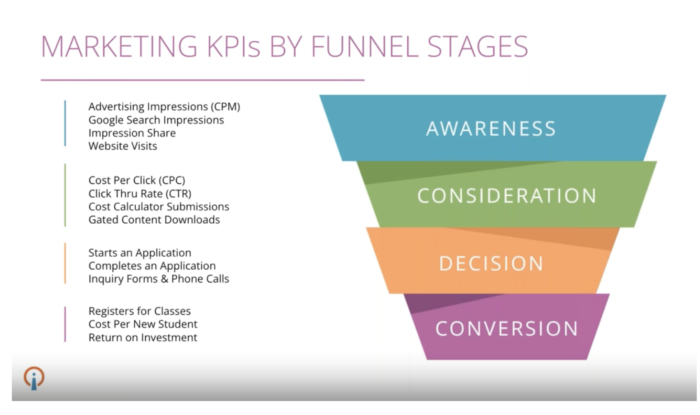
    • Reach your audience at all stages of the funnel with SEO through broader, career-growth topics in the awareness stage and more specific, branded searches in the decision stage.
    • With the flexibility of these tactics, you can quickly adjust your marketing plan when it isn’t working.

    Prioritize SEO and paid ads to make the biggest impact on your marketing plan

    Education marketing leaders need reliable strategies to drive results. If you don’t know which strategy to favor to meet your enrollment goals, we are here to let you in on something — SEO and paid digital advertising will make the biggest impact on your marketing plan. And because they are trackable and measurable, we assure you they do. (When we refer to paid digital advertising, we mean paid search and display ads. Throughout the rest of the blog post, I’ll refer to paid digital advertising as paid digital ads.)

    While marketing leaders see SEO as important, we at Search Influence don’t believe that they have prioritized it as a key part of their strategy. We also know marketing teams spend a lot of money on paid digital ads but believe they don’t optimize their campaigns to their fullest potential because they don’t look at the data from the right angle.

    In this post, we’ll detail how SEO and paid digital ads can solve the top five challenges we hear from education marketing leaders. Overall, you’ll see that SEO and paid digital ads address the number one goal of a successful higher education strategy: qualified inquiries (at an acceptable cost) that turn into students.

    #1: How Do I Get More Qualified Inquiries?

    Most often, higher education marketing plans have both a quantity and quality issue when it comes to inquiries.

    • You don’t have enough new prospects entering the funnel
    • You receive a decent number of inquiries but not enough high-quality inquiries
    • It seems like you receive high-quality inquiries, but you don’t know how to evaluate their quality

    SEO and paid digital ads help you capture prospects actively looking for your degrees, programs, and certifications, which means you’ll receive more qualified inquiries.

    A comprehensive SEO strategy improves your rankings, which drives more website traffic and more inquiries. When these prospects inquire, you should expect higher quality leads because they got to your site through a search that indicates they are actively considering a solution and want to learn about your educational offerings. Similarly, paid digital ads fuel qualified inquiries in the same way — by driving website traffic from people actively searching for your programs.

    Paid display advertising (i.e., Facebook and LinkedIn advertising) helps you drive more qualified inquiries by targeting the RIGHT audience. Other tactics, such as organic social media, could reach a variety of people. However, when you specifically target your audience through paid digital advertising, the data gives you confidence that your messages reach the right people.

    Graphic showing magnifying glass over marketing metrics

    #2: I Know My Audience Is Out There. How Do I Reach Them?

    SEO and paid digital ads help you reach your audience in distinct ways.

    When people think about SEO, they usually think about reaching audiences that directly search for your programs. Less often, they think about the impact SEO can have at the top of the funnel — when prospects are not yet aware that education may be their answer.

    By writing blog posts about more general topics that your audience may be searching, you can be one of the first organizations to reach them and lead them to consider education. For example, higher funnel topics like “Most Popular Programming Languages for a Career in Web Development” or “How to Launch Your Freelancing Career in 3 Steps” can drive traffic from prospective students who are looking for career growth advice but might not yet have considered a degree. Yes — this is SEO!

    Although higher education marketers generally include paid digital ads as part of their strategy, we often hear from them that their campaigns don’t drive enough inquiries. This isn’t a problem with paid digital ads as a tactic. This suggests there’s an opportunity to adjust your campaigns, which means testing your target audience and/or fine-tuning the creative messaging.

    Campaign adjustments, through both expert human optimization as well as machine learning optimization, help you better reach your audience. For example, a campaign might drive very few inquiries or the wrong types of inquiries because your campaigns target either too narrow or too broad an audience. By making these types of adjustments, paid digital advertising can drive leads at an appropriate cost.

    #3: How Do I Drive Prospects Down the Funnel?

    Some higher education marketing leaders are surprised to hear that both SEO and paid digital ads can drive prospects down the funnel.

    A robust higher education SEO strategy includes a full-funnel approach to content that speaks to prospects in each stage of their decision-making process. Recommended content for each part of the funnel:

    • Top of the funnel: Career growth topics
    • Middle of the Funnel: Program/degree-specific content
    • Bottom of the funnel: Branded search engine optimization, which allows you to capture searches specific to your school/unit and assure that prospects find their answers quickly — and on your website

    Branded SEO is often overlooked and is one of my favorite tactics! Branded searches in the decision phase include application deadlines, reviews, tours, and tuition costs.

    Paid digital advertising allows you to tweak your creative messaging to fit your prospect’s place in the marketing funnel. With the proper campaign segmentation, you can:

    You can also run multiple ad variations to speak to more people. Over time, you will see which messages work more than others and switch them out.

    As you segment your messaging down the funnel, you can create specific messaging you wish your audience knew about. You don’t have to worry about overall/introductory messaging because your audience has already engaged with your institution and knows you. For example, a single ad could focus on:

    • A student’s success story
    • An alumni career achievement stat
    • An award, or special pricing

    #4: What Am I Getting for My Budget?

    The clear accountability of paid digital ads and SEO is a key reason many have moved the lion’s share of their budget to the digital arena.

    SEO and paid digital ads enable you to see the source of the prospect on an inquiry-by-inquiry basis, which means you can track the cost per inquiry and cost per application from each source and overall. Ultimately, this means you can tie ROI back to your campaigns.

    These direct metrics enable you to compare your stats to industry benchmarks and to peer organizations which both give you confidence your results stack up and tell you clearly what you get for your budget.

    Graphic showing a coin being put into a piggy bank

    #5: Can I Quickly Adjust My Marketing When My Plan Isn’t Working?

    The beauty of SEO and paid digital ads is that you can make adjustments along the way.

    With SEO, you can increase your emphasis on optimizations for a given program or degree if the work so far hasn’t been aggressive enough. If one program outperforms the others, you can pivot your time spent to another program.

    Contrary to traditional marketing or longer-term media buys that lock you into a specific time frame, with paid digital ads, you can make adjustments after you have specific data. Optimizations can range from creative/messaging updates to changes to where the ads run to who sees the ads.

    If a campaign has not met your goals, you can actually turn it off and reinvest that money into a campaign that drives results at an acceptable cost. For example, if you have campaigns on Facebook and paid search, and the paid search campaign drives quality leads, you can reallocate your budget from Facebook to paid search.

    Prioritizing SEO and Paid Digital Ads Will Have an Impact on Your Higher Education Marketing Plan

    As a digital marketing agency that started out as a search engine optimization agency, it may not be surprising that we have this point of view. Yet, we think it’s worth repeating: Higher education marketing teams know they should prioritize SEO in their marketing plans, but they often don’t.

    We also believe that universities that invest heavily in paid digital ads and don’t see expected results have not leveraged data to make the best optimizations.

    If you are ready to learn how SEO and paid digital ads can make the biggest impact on your marketing plan, please reach out to the Search Influence team via our contact us form or give us a call at (504) 208-3900.


  • 5 Minute Power-Session: Solving 3 Key Higher Education Marketing Data Challenges

    5 Minute Power-Session: Solving 3 Key Higher Education Marketing Data Challenges

    When it comes to marketing and recruitment pipeline data and analytics in higher education, there are a few common challenges universities and professional, continuing, and online education units (PCOs) often face:

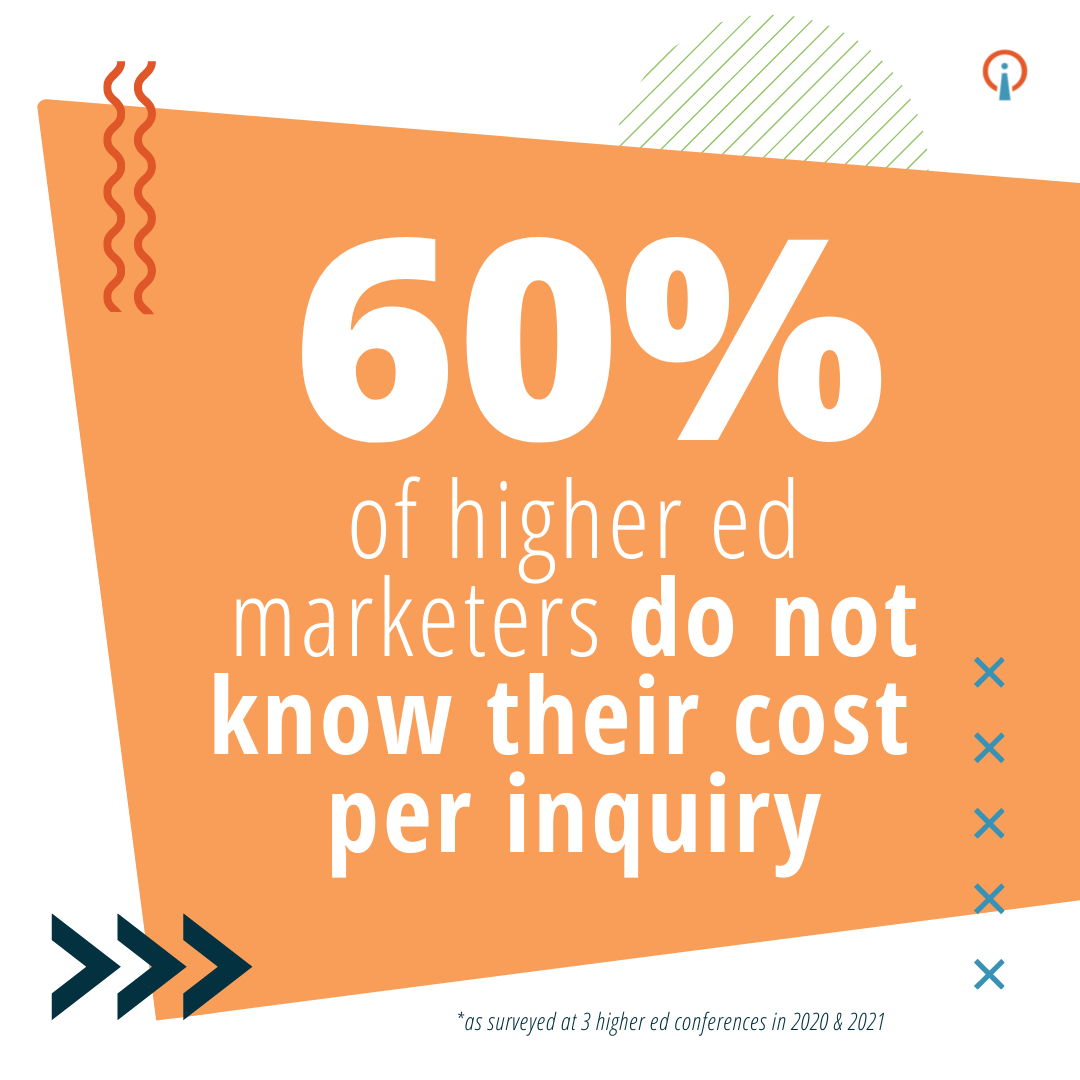
    60% of Higher Ed Marketers do not know cost per inquiry

    Silos within the university

    Marketing is responsible for owned and paid media including the website, social media channels, and placing media buys but it often has limited or no access or insight into the enrollment CRM. Meanwhile, the recruiting team isn’t even aware of the depth of rich data available to them about prospects and current students. The existence of this data presents an opportunity for marketing to better understand the ideal student, and adjust their strategy to reach more of them, in a more effective way.

    Data systems challenges

    Many institutions have data about their students and prospects living in disparate systems, there’s simply too much of it, and it is incredibly time consuming to collect and understand, much less piece it together for insights.

    Fragmented data

    There’s largely an inability to string together information about a single prospect all the way through the recruitment to enrollment funnel, or even to understand the funnel end-to-end.

    Recently we were honored to present a quick 5-minute power sessions at HighEdWeb Analytics Summit, where we dove into Marketing Data, Dashboards, and Decisions, with a goal of helping universities and PCO’s understand the impact they can have when they’ve done the work to better understand their own first party data and overcome these common data challenges.

    Higher ed marketer looking at marketing metrics

    As we’ve presented this and similar insights to higher education stakeholders and conferences over the last 3 years, we’ve polled to get an understanding of where most institutions fall within those 3 key data challenges. The results are telling: 60% of our respondents didn’t know how much they currently spend on marketing for an inquiry. As an analytical marketer I can tell you – that pains me!

    Check out our presentation for more on where to start to overcome the most common data challenges facing universities today, tools you can use to facilitate deeper insights, and examples of how access to data can influence key decisions and strategic direction.

  • 4 Steps to Demonstrate the Value of Your Higher Education Marketing Strategy

    Key Insights:

    • Define relevant SMART goals for your marketing strategy to provide clarity on the results you want to achieve.
    • Utilize research-backed data to demonstrate how your campaign’s messaging and platforms help reach your target demographic.
    • Tailor your presentation to your audience to convey how your strategy helps each stakeholder reach their unique goals.

    A person making charts and graphs on a computer

    After you’ve created your marketing plan, your next step is to present your strategy to key stakeholders to demonstrate how it will improve the organization’s results. Effectively presenting this information is essential for gaining stakeholder trust and aligning your organization’s goals. In this post, we will outline the four-step formula for demonstrating the value of a new marketing strategy.

    #1: Share Your Goals

    Discussing the goals of your campaign allows stakeholders to visualize the end result of your higher education marketing strategy and understand the expected returns. Furthermore, sharing your goals conveys you have thoroughly examined how this plan impacts the organization.

    When sharing goals, focus on quantitative measures primarily, but don’t forget to bring in some qualitative measures to show the whole picture. Start by defining important qualitative goals, and then turn these into more tangible measures by adding quantitative metrics. These goals should be SMART: specific, measurable, achievable, relevant, and time-bound. SMART goals clarify what results you are trying to achieve and the time frame you aim to achieve them.

    After defining these goals, let your stakeholders know how often you will update them on your progress. This will keep you accountable to the measurement of your performance and lets your stakeholders see your commitment to achieving results.

    #2: Relate Your Goals to Your Target Demographic

    After you have defined the goals of your marketing strategy, it is essential to demonstrate how these goals impact your target demographic. This helps you convey to stakeholders how this direction aligns with your organization’s goals. To demonstrate this, start by researching industry data on the demographic makeup of the platforms your campaign is utilizing.

    The good news is that you can find an abundance of reliable data on the demographic makeup of popular social media platforms in the age of digital marketing. Knowing where your target demographic is consuming information can aid you in conveying the power of your higher education marketing strategy and stay ahead of the curve. For example, here are the largest age groups on major social media platforms:

    You should also research how much time your target demographic spends on each platform. This will allow you to determine how effectively your marketing strategy will reach these users. For example, 20% of Gen Z spends more than 5 hours every day on Tiktok. This data can convince stakeholders that TikTok can be a very effective platform to reach Gen Z due to its high engagement with that demographic. Take a look at this breakdown of the average time spent per day on each popular social media platform:

    • Facebook: 38 minutes per day
    • Instagram: 29 minutes per day
    • Twitter: 3.53 minutes per session
    • TikTok: 45+ minutes per day

    Including this demographic information while presenting your strategy allows stakeholders to understand the effectiveness of this plan. Additionally, showcasing these key statistics helps gain stakeholder buy-in and aids in preparing you for any potential objections.

    During a strategy presentation, use this research-backed data to justify the messaging of your campaign. You can use this data to explain what challenges your target demographic faces and how your messaging drives conversions.

    For instance, let’s say you are a higher education institution trying to reach Gen Z students applying to college. You do research and find that 67% of Gen Z students indicate their top concern is being able to afford college. Using this data, you can adjust your campaign’s messaging to speak to this concern. You can convey this by highlighting your programs’ affordability or by providing resources on applying for financial aid.

    Then, when demonstrating the value of your marketing plan, make sure to include these key statistics that helped you determine your target consumer’s needs. Presenting research-backed data that supports your campaign’s platforms and messaging can help gain stakeholder buy-in.

    #3: Compare and Contrast to Your Current Strategy

    When you present a new marketing plan, you must emphasize why the current strategy doesn’t meet your organization’s goals. Comparing and contrasting it with your proposed tactics will clarify the necessity of a new approach.

    To compare and contrast with your current strategy, pull data on which audiences your current campaigns reach and what results it has achieved. You can do this by looking at Facebook, Google Ads, and Google Analytics campaign results. Use this data to highlight where your current campaigns fail to meet your goals and reach your target demographic. Then, emphasize how your proposed strategy will fill in the gaps and deliver more results for your organization. You can convey this by using research-backed data and SMART goals to demonstrate to stakeholders the results you expect with this new campaign.

    #4: Tailor Your Presentation to Your Audience

    Depending on who you are presenting to, it is beneficial to make slight adjustments to how you explain your strategy and what data you bring to support it. Different stakeholders have unique needs and interests, and tailoring your presentation assists you in conveying how this higher education marketing strategy will benefit them in particular. Furthermore, your stakeholder’s personality can help determine the most successful approach. Using personality assessments like the DISC method can help you understand how best to reach different personality types.

    Be sure to tailor your metrics depending on the different stakeholders you are talking to. Tailor the data you include based on what is most important to your audience and the funnel stage of your campaign.

    For instance, different stakeholders may respond better to macro or micro metrics. Macro metrics are actions that directly contribute to the primary objective of your campaign, such as cost per enrollment and return on investment. Macro metrics are useful when presenting to stakeholders that may not be as familiar with marketing terms and are more invested in the overall picture. On the other hand, micro metrics are secondary conversions that support the overall goal, such as cost per click and click-through rate. These metrics are more likely to be effective when presenting to stakeholders with marketing experience.

    In addition, the stage of the marketing funnel you are targeting will help determine which metrics to present. For instance, awareness campaigns might focus on metrics such as website visits and impressions, while conversion-focused campaigns are more suited for tracking metrics like return on investment and cost per new student. By tailoring the data and messaging in your presentation to each audience, you can more effectively communicate how your plan will drive results by using language your audience is familiar with.

    marketing KPIs by funnel stages

    In order to gain stakeholder trust in a new higher education marketing strategy you should define goals that align with your target demographic; compare these to your current strategy, and tailor the presentation to your audience. By following this guide, you can use research-backed data and targeted messaging to convey the value of your marketing plan to any stakeholder.

    To learn more about how Search Influence handles higher education marketing strategy, fill out a form to get access to our on-demand webinar series.

    Images: