Tag: healthcare roi

  • Nurturing Inquiries Into Lasting Patient Relationships

    Key Insights

    • Your prospective patient could be in any of the three patient funnel phases, and so it’s important to meet them where they are with the information and communication provided.
    • Responding quickly and in a valuable way to inbound patients can be the differentiating factor between booking an appointment and losing that appointment to a competitor.
    • Sometimes, even if your marketing strategy does all the “right” things, some inbound patients don’t take the next step and book that appointment. But, by providing them valuable, various touch points throughout their journey, you can put yourself in a position to further nurture them.

    Every inquiry has the potential for a new patient to make the jump from interested to committed. However, in the healthcare industry, competition is high. Patients may be willing to travel great distances for the right provider—but that prospective patient may just move on to the next option if they don’t hear from you quickly or get the right answer. If you do not respond quickly enough, this could mean you run the risk of losing potential new patients.

    In this post, we will walk through the three different phases your prospective new patients can fall within the marketing funnel, the most valuable ways to communicate with those patients in each of those phases, and a few platforms to aid in nurturing these newly formed relationships.

    Graphic displaying medical marketing funnel

    Top of the Funnel Marketing

    Top of the funnel marketing (also known as the awareness phase) refers to any marketing efforts with the goal of improving a business’s online presence and overall brand awareness. Your initial touchpoints should align with where the potential patient’s place in the marketing journey. At the top of the funnel, the patient seeks educational information. They will conduct research online for relevant, valuable information related to the issue and/or illness they’re navigating.

    Key metrics to consider in a brand awareness campaign include impressions (or views) on your paid advertisements and/or website traffic.

    Types of content to offer:

    • A website that houses clear, search engine optimized content so that patients can find your website and understand that your offerings are relevant to their needs
    • Testimonials from previous patients advocating about their pleasant experience/results
    • A frequently asked questions page to help resolve any often-asked questions, such as insurances accepted, office hours, or office location
    • Paid advertising efforts, such as Facebook Display, with high-level messaging that has the goal of building brand awareness

    Middle of the Funnel Marketing

    Once this prospective patient has some initial education, they move from the top of the funnel to the middle (also known as the consideration phase). Marketing efforts within the consideration phase use metrics such as increases in: clicks on paid advertisements, the average session duration on the website or views on videos.

    In this phase, the patient seeks a deeper level of information and spends more time absorbing content. Similar to the awareness phase, the types of content offered should provide answers and insight for the patient.

    Types of content to offer:

    • Expansive, detailed website and/or blog content that speaks to your office’s specialty, the types of options you offer patients, etc.
    • Option for patients to schedule a complimentary education call with a member of the staff to ask any questions and learn more
    • Paid advertising efforts, such as Facebook Display and Remarketing, with more targeted messaging that has the goal of driving a conversation

    Bottom of the Funnel Marketing

    The last and final stage is the bottom of the marketing funnel, also known as the decision phase. Once a patient has entered this stage, they’ve absorbed information about their symptoms and options (likely both online and via education calls), and feel ready to make a decision on next steps. Most likely, these next steps will come in the form of a booked appointment. This means, more than ever, it is important to respond quickly. Ideally, you have an appointment management system that conveniently allows patients to book appointments.

    According to The Lead Response Management Study conducted by Dr. James Oldroyd of MIT, the odds of qualifying an inquiry (potential patient) are 21 times less likely when comparing a response rate of 5 minutes vs. 30 minutes. Additionally, the odds of successfully scheduling a qualified inquiry (potential patient) decrease by over six times in the first hour. Because that patient likely identified a few options during their consideration phase research, failing to quickly reach out could result in them scheduling their appointment with another doctor/office.

    Once the patient has scheduled their appointment, you can still provide valuable content, such as:

    • Outreach confirming the appointment, location, and other useful details
    • Downloadable PDFs that include information about what to bring and what to expect during the initial appointment
    • Success stories and testimonials from previous patients who had similar symptoms, underwent similar procedures, etc.
    • Paid advertising efforts, such as Facebook display & remarketing, with messaging that includes a very clear call-to-action

    Doctor showing patient information via tablet

    How to Nurture Past, Current, and Prospective Patients

    Sometimes, regardless of how effectively you provide value to prospective patients, it may not result in a newly scheduled appointment or surgery. However, even if they don’t convert at the time, another benefit to providing avenues for potential patients to engage (e.g., downloadable PDFs, Facebook display advertisements) is the opportunity to identify them and further nurture them.

    The most important thing to consider when developing a nurture strategy is that any efforts deployed are HIPAA compliant. There are some limitations here, and so it’s important the strategy adheres.

    A few HIPAA compliant nurturing methods:

    Email Marketing

    There are a few different tactics that can be deployed through this avenue depending on the ultimate goal and quite a few different email marketing platforms that can be used to ease the creation and distribution.

    • Newsletters to past, current, and potential patients highlighting updates to the office, any changes in personnel, etc.
    • Messaging to past, current, and potential patients promoting upcoming specials to help entice appointments booked, reminders about upcoming appointments and/or that appointments are due to be scheduled
    • Outreach that includes more information about the office or testimonials to potential patients who have previously shown interest

    Facebook Display & Remarketing

    Remarketing to users on Facebook is HIPAA compliant and a beneficial way to get back in front of potential patients. When creating this strategy, consider:

    Creative and messaging

    These two elements should look and sound different to patients in different funnels. Identifying what types of questions could be answered within each phase, the types of content that would be beneficial to consume, etc., are a few great ways to curate both the creative and messaging.

  • Targeting

    Identifying and honing in on the target demographics, geolocations, and other relevant audience specifics will help see that advertising dollars are only spent where they are likely to produce more qualified inquiries.

    Overall strategy

    Facebook offers a variety of objectives (conversion, traffic, lead generation) to pursue. This effectively tells Facebook how to best optimize campaigns.

    How to Ensure You Make an Impact

    It can feel overwhelming to determine how to market your business online. With so many different best practices, strategy options you can make an impact by considering the phases of the marketing funnel and the most valuable ways to communicate with the patients in those phases. By providing your prospects with different valuable touchpoints, you put yourself in a great position to nurture them through the funnel.

    Contact Search Influence for help with all your digital marketing needs. Our team of experts can help you implement all the best practices and strategies needed to turn inquiries into long-lasting relationships.
  • 6 Steps To Align Your Healthcare Marketing With Business Growth Goals

    Key Insights

    • Set specific, attainable goals that are important to all stakeholders
    • Implement measurable tactics to monitor campaign performance
    • Track patient booked rate and patient lifetime value to analyze the quality of new business

    Introduction

    Without clearly identified goals or strategies to measure results, your healthcare marketing efforts may be met with this question, “What are we getting for our marketing investment?”

    As a marketer, you should have the ability to point to well-structured, outcomes-focused data to answer this question each time it’s posed. Build ROI-focused marketing goals for your hospital or practice with this guide.

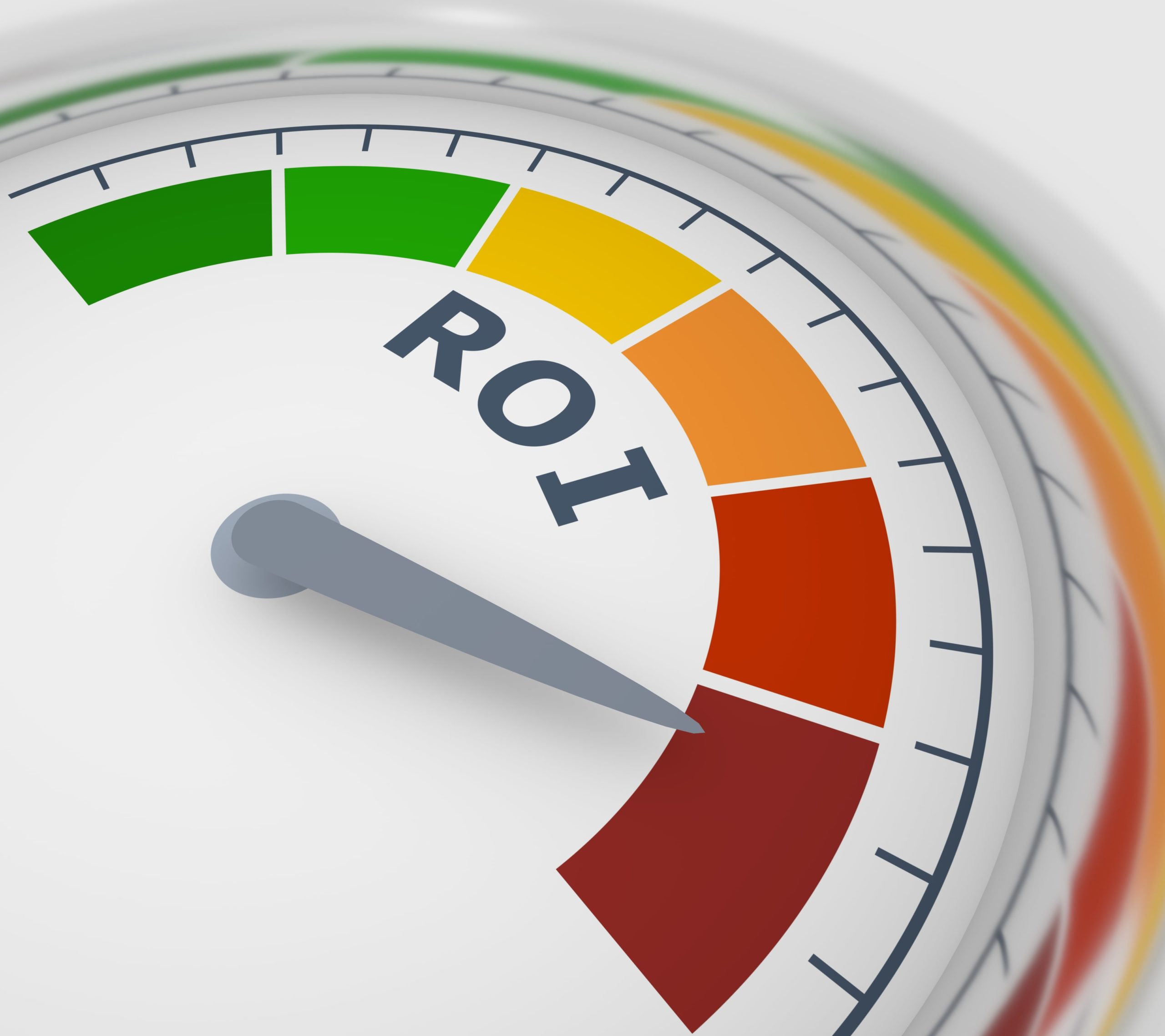
    Return on investment meter in the red

    Step 1: Understand Your Needs and Goals

    Typically, when stakeholders meet to discuss business growth and development, they discuss marketing needs and opportunities. Key points can include:

    • Patient retention
    • Filling the number of open beds
    • Building patient base to hire more physicians
    • Increasing utilization of surgical hours
    • Booking available appointment slots

    Understanding not only the significance of every need but the opportunity cost of underutilized appointment slots or surgical hours (i.e., missed revenue) is an effective way to triage goals.

    When setting goals, communication and accountability are imperative between marketing and operational stakeholders. The team should discuss campaign expectations, what success should look like, and how to measure results.

    Some great questions to ask yourself as you’re creating goals are:

    • What does success look like?
    • What kind of growth do we want to see in 6 months/12 months/2 years?
    • What organizational metrics will we track to know if we’re successful? How often can we report on these metrics?

    Step 2: Clarify the Product or Services You Want to Promote

    Now, let’s connect the “need” to “services” we’ll be promoting. If the need is to increase the number of surgeries and the goal is to increase surgery revenue by 8%, identifying which surgeries have the highest revenue and the greatest opportunities for promotion can drive your campaign strategy.

    You can also look at each of the needs in Step 1 by procedure/surgery to help understand the areas for growth.

    By doing this, your team will ensure that marketing activity funnels patients to the areas that need and can handle the increased volume instead of funneling more patients to an already overbooked area of the business, where you risk creating unhappy patients.

    Step 3: Determine Your Campaign Objectives

    Your goals (from Step 1) are the destination of where you want to be, and your campaign objectives are the driving force that get you there. The goals above are big picture organizational impact goals (For example: “Increase appointment time utilization to 90%”), whereas campaign objectives are more specific to the marketing campaigns themselves (For example: “Achieve 50 patient inquiries”).

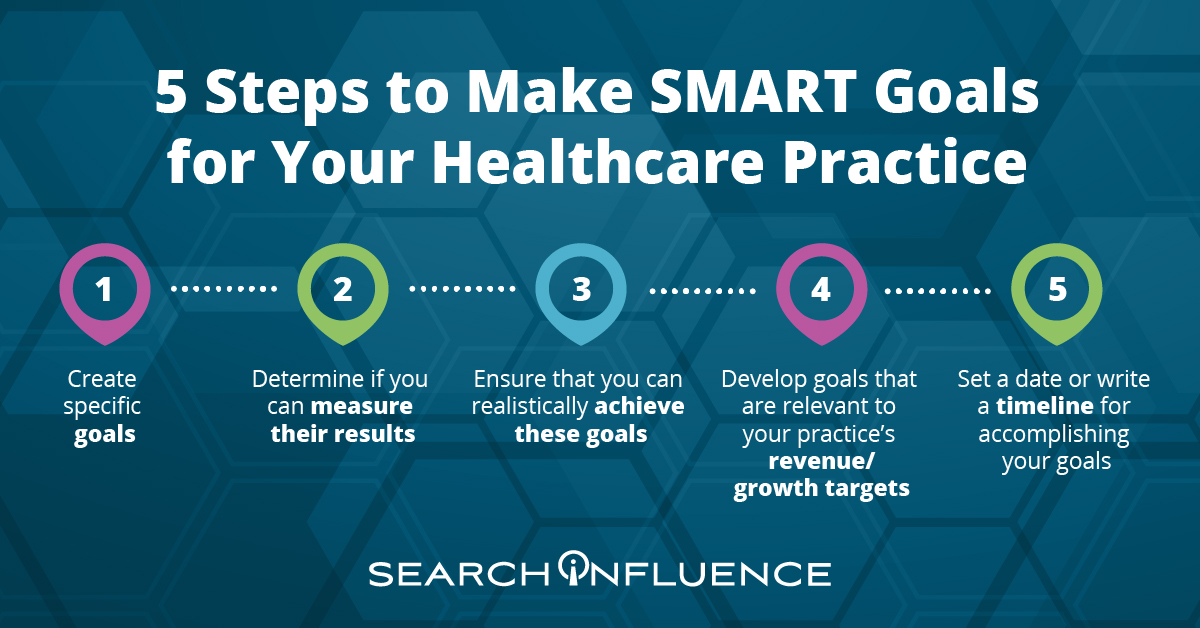
    Objectives keep specific campaigns on track and serve as the foundation of every marketing strategy. At Search Influence, we’re BIG on SMART goal-focused campaign objectives.

    • S – Specific
    • M – Measurable
    • A – Attainable
    • R – Relevant
    • T – Time-bound

    Five steps to creating a SMART healthcare marketing plan

    We found this to be one of the most productive ways to work toward an achievable goal and hold our campaigns accountable. The more specific you can be in defining your goal, the better.

    For example:

    • A campaign objective: “Increase appointments booked.”
    • A SMART campaign objective: “By June 1, increase ENT appointments booked by 20 new patients a month by implementing a Google Paid Search campaign.”

    To determine if your goal is attainable, compare your current state to where you want to be. Use any historical data or estimates that you can get your hands on.

    Using the example above, historical data may show your practice is only seeing an average of 2 new patients per month; a campaign objective that targets 20 new patients within the same timeframe is likely too aggressive for you and your staff. Adjust to something more modest.

    Consider how much more effort or how much you’re increasing your investment to drive those additional patients. If you know or can estimate your historical cost per new patient, that is the absolute best way to determine if it’s realistic to drive the number of new patients you want/need with the budget you are adding to your investment. This will help assure your goals are realistic AND profitable for your business.

    Step 4: Establish How You’ll Measure ROI

    Return on investment (ROI) can be looked at in several ways, with the calculation always being similar:

    (Revenue – Marketing Investment) / Marketing Investment

    How you apply that calculation may be different. You can look at:

    • Overall increase in revenue compared to overall marketing budget
    • New patient revenue compared to overall marketing budget
    • Procedure-specific revenue compared to procedure-specific marketing budget
    • Individual patients acquired by marketing activity compared to the cost to acquire them

    Additionally, some may choose to calculate ROI specifically by looking at profit as opposed to revenue. For others, that number may be far too complicated to obtain, so leveraging revenue is most often the more straightforward.

    • How can ROI help?
    • Justify next year’s marketing budget
    • Make your case for an increase in budget
    • Help you assess and report on improvements to marketing success for a given period and over time

    Step 5: Calculate Your Patient Lifetime Value or Average Revenue Per Patient

    Overhead shot of a doctor's desk

    You can look at Patient Lifetime Value and Average Revenue as a true average for your facility or you can look at it by department/unit. You can also look at year 1 value of a patient if that’s something that is important to you.

    Your patient management system may either provide this information for you or provide you the info you need to calculate this data point.

    If you want to come up with an estimate, you can do a simple equation of average cost per visit multiplied by # of visits. If you cannot get actuals, use estimates based on your experience—using estimates is better than having no data at all!

    For example, a pediatrician may expect to see a new patient at least 8 times within the first year. That frequency decreases as the patient ages—let’s say you expect 2 well visits and 3 sick visits in year 2. The estimate of sick visits could be based on actual numbers from your patient system, or you can estimate based on your experience. Let’s say the average revenue per visit is $200. This makes the value of the first 2 years is $2,600 (13 visits x $200 per visit). Even if this isn’t exact, it’s helpful to know the value of the patients that marketing is driving in order to use this figure in ROI calculations.

    If you really want to use exact numbers, pick a time period, say, the last 2 or 5 years, and pull data and find an average.

    One ROI measuring strategy is to center your ROI goals around new patient value. You can use this patient value number as a proxy for revenue in your ROI calculation. This is one way of getting around the need to have access to real revenue data.

    Step 6: Consider Your “Close Rate“ or Patient Booked Rate

    Now you understand the importance of attainable goals and factoring this into lead acquisition. However, does the number of patient inquiries matter if they aren’t converting via consultations, scheduling surgeries, or attending their follow-up appointments?

    Understanding your patient booked rate can build confidence in the attainability of your campaign objective.

    To find your patient booked rate, ask yourself:

    • If you had 10 inquiries last month, how many of them ended up visiting your facility?
    • What factors may have prevented someone who called your office or scheduled an appointment online from qualifying as a good candidate for a procedure?
    • Are there internal opportunities to improve how many inquiries turn into in-office visits?

    After evaluating the patient booked rate, consider the probability of your team booking 20 new patients a month before finalizing your goal. For example, a practice with a close rate of 80% would need fewer new inquiries to increase their in-office visits than a practice with a 20% close rate. You can also find opportunities internally to increase your booked rate so that you can book more of the inquiries that you want marketing campaigns to deliver.

    Understanding these data points will help you have informed, concrete discussions about marketing. They are helpful in budget, performance, and growth conversations.

    Search Influence builds your patient pipeline and helps you stay productive. We work with you to set measurable and transparent campaign goals to help you understand how your medical marketing activity impacts your healthcare practice’s success.

    Gain professional insight into how to calculate these metrics and set yourself up for success by calling (504) 208-3900 or filling out our form to get the conversation started!