Stay ahead in digital marketing with The Influencer, Search Influence’s monthly newsletter covering SEO, digital advertising, and content strategy. Get top tips to fuel your online growth, expert insights from the Search Influence team, and our latest company news. Don’t miss out!
How To Use Cold Email Marketing to Reach New Audiences
MADISON HORST | 8-MINUTE READ
Looking to diversify your top-of-funnel marketing strategy and increase new audience engagement? Cold email marketing with Search Influence is your way in.
Adapting to Google’s Cookies Deprecation: Essential Strategies for Marketers
MARISSA MAGGIO | 10-MINUTE READ
Learn how to prepare for cookie deprecation. Discover how Search Influence can help adapt your marketing strategy for a privacy-first, cookie-light future.
Marketing during a national crisis helps your brand stay the course in the face of adversity. Explore budget-friendly strategies with Search Influence.
Research shows that 93% of Americans think they are better drivers than average, 90% of teachers think they are more skilled than their peers, and this overestimation is pervasive across many skills — including logic tests.
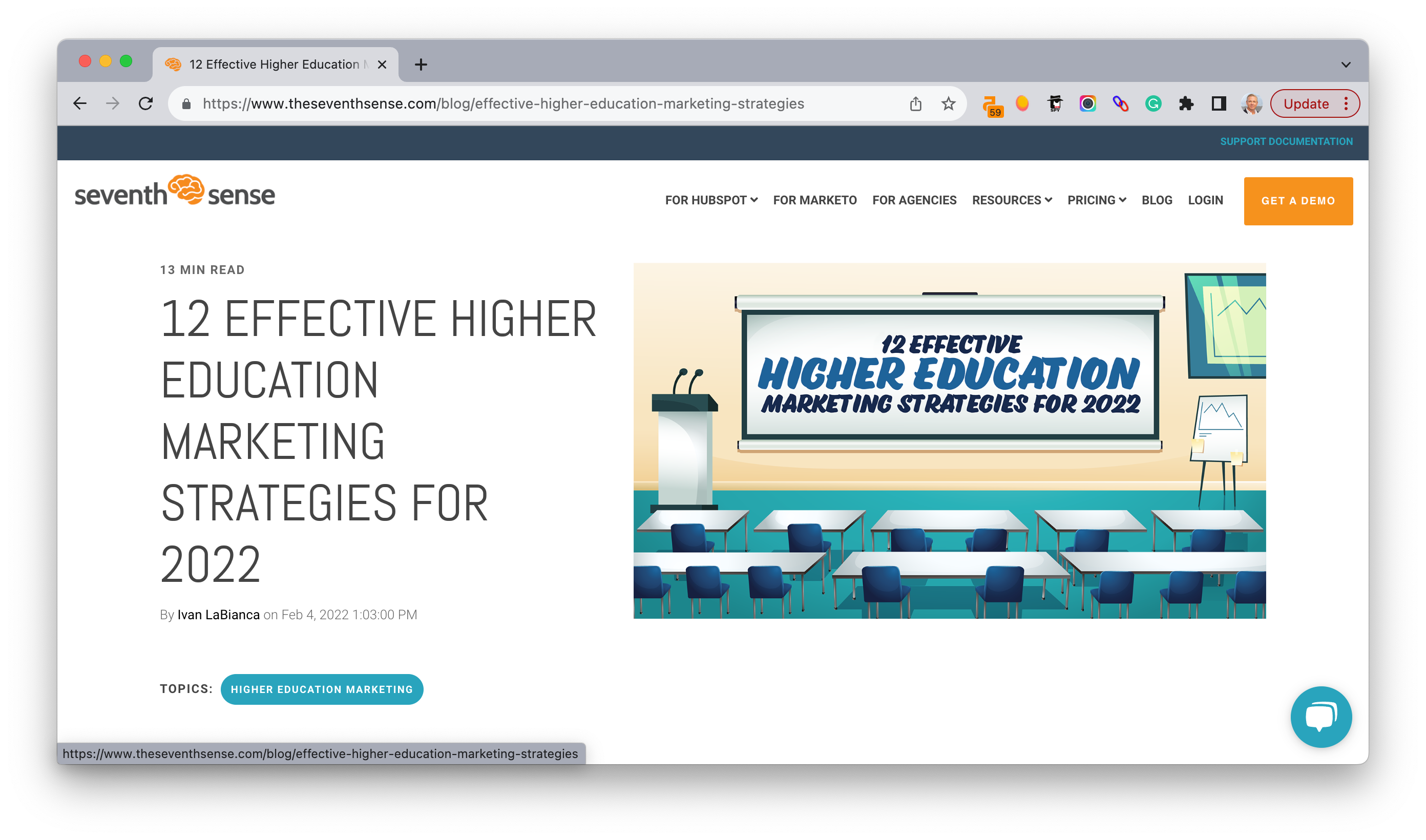
For the typical higher education institution, effective marketing strategies are like that.
Mathematically speaking, it’s not possible for a majority to be “above average.”
We analyzed the top 10 results in Google for “Higher Education Marketing Strategies” and extracted some really useful learnings. First, I’ll share the most commonly cited strategies, and then give you a skimmable summary of each article.
Top 10 Higher Education Marketing Strategies
These strategies are the most frequently cited in the following articles, in order of prominence.
SEO (Search Engine Optimization): Emphasized across multiple articles. Ensuring high visibility on search engines is critical for Higher Education SEO.
Social Media Marketing: Highlighted in almost all articles for engaging authentically on each social media platform preferred by younger generations.
Email Marketing: A recurring theme emphasizing personalization, automation, and AI-powered programs.
Video Content: Both short-form and long-form videos, including live streaming and platforms like TikTok and YouTube, are great ways to educate prospective students.
PPC (Pay-Per-Click) and Digital Advertising: Discussed in multiple articles for targeted advertising on platforms like Facebook Ads and Google Ads.
Content Marketing: The importance of creating engaging and informative content, such as blogs, podcasts, and videos.
Branding: Consistent branding across all marketing channels, including a recognizable voice and image.
Chatbots and Conversational Marketing: Highlighted in several articles for real-time, one-to-one connections and instant answers.
Data-Driven Strategies: Using data to inform marketing decisions, track KPIs, and understand the audience.
Digital Marketing and Marketing Strategy Opportunities
What we learned in the UPCEA SEO research study was that there are some big gaps in the university marketing strategy and the typical higher education website for attracting prospective students.
When we got deeper into the data, we saw that the higher education industry is overly reliant on certain digital marketing channels. A good marketing campaign addresses the full funnel. To attract students, you must increase search engine visibility, maintain a strong social media presence, and ensure you’re doing all you can to target prospective students.
So, with all the great tactics and technologies to attract prospective students (virtual campus tours, student ambassadors, and taking advantage of digital technology to highlight student activities), one has to wonder why other higher ed institutions seem to be attracting more new students.
As I’m sure you’re aware, Google and the other search engines know everything, right? So, I thought, why not let Google guide me? I wanted to see how other higher ed marketers were thinking about the strategy to build brand awareness and get in front of prospective students.
I think it’s important to take content created by marketers talking about a marketing strategy with a grain of salt. We can, however, learn a lot when we analyze the frequency with which these articles cite specific tactics, platforms, or strategies to get in front of prospective students for educational institutions.
My perspective: It’s surprising to see this continued focus on the pandemic. From what we’ve seen, things are different — the pandemic is done in most people’s minds, and we’re now in the “new normal.”
The article discusses the challenges faced by university marketers due to the pandemic and the downturn in undergraduate student enrollment. It provides 12 strategies for higher education marketing:
Centralize Strategy and Reporting: Emphasizes the importance of centralizing marketing expenditures and standardizing KPIs.
Track the Right KPIs: Highlights the importance of tracking call-to-action conversion rates, traffic sources, social media engagement, and cost of acquisition.
Use Marketing Automation: Discusses the benefits of tracking digital interactions with prospective students.
Optimize Your Email Program With AI: Offers email deliverability and engagement solutions.
Improve SEO: Stresses the importance of using relevant keywords and answering prospective students’ queries.
Build a Digital-Friendly Brand: Talks about updating branding to be more digital-friendly.
Live Streaming: Suggests using live streams as an authentic way to connect with potential students.
Personalized Communication: Emphasizes the importance of segmenting audiences and tailoring communication.
Higher Education Marketing on Social Media: Provides various strategies to maximize social media efforts.
Personalized Mobile-Friendly Website: Highlights the importance of a responsive and personalized website.
Chatbots for Higher Education Marketing: Discusses the benefits of using chatbots for immediate responses.
Don’t Forget Visuals and Aesthetics: Emphasizes the importance of appealing visuals for the Gen Z audience.
Unique Positions:
The article emphasizes the importance of data-driven strategies, especially in the context of the challenges posed by the pandemic.
It highlights the significance of understanding and catering to the preferences of Gen Z, who are the next in line for higher education.
Conclusion: The article concludes by emphasizing that marketing shouldn’t be stagnant but should evolve with the university’s overall goals.
Higher Education Marketing: Strategies and Trends to Know
My perspective: It’s interesting to see a focus on the rise of Instagram. TikTok is more timely and clearly the place where Gen Z and beyond are starting their product experiences.
The article emphasizes the importance of refining marketing strategies for higher education institutions, especially in light of decreasing college enrollments.
It provides insights into current higher ed trends and offers strategies to enhance student recruitment.
Key Questions for Your Higher Education Marketing Plan:
Identifying target audience and personas.
Determining KPIs for engagement.
Establishing the cornerstone of the marketing plan.
Differentiating from other institutions.
Platforms to Market Your Educational Offerings:
Text messages, especially during the student enrollment process.
Social media platforms like Twitter, Facebook, LinkedIn, Instagram, and Snapchat.
Email, direct mail, phone calls, and websites.
Higher Education Marketing Strategies:
Use a CMS Built for Higher Education: Implement a quality web content management system (CMS) tailored for educational institutions to address challenges like outdated content, complicated coding, inconsistent branding, and low search rankings.
Get Current Students Involved: Engage existing students to provide authentic insights into campus life.
Choose a CMS With an Email Module: Emphasizes personalized and targeted email marketing.
Focus on Video Content: Highlights the importance of integrating video content into marketing strategies.
Keep Track of Your Brand: Monitor the digital image and reputation of the institution.
Use the Power of Social Media: Utilize a mix of social media platforms for effective messaging.
Use Videos and Images on Social Media: Emphasizes the growing preference for visual content on platforms like Instagram, YouTube, and TikTok.
Personalize at Scale: Deliver personalized content across various platforms.
Include SEO and Conversion in Your Program Pages: Optimize program pages for search engines and conversions.
Target Parents: Recognize the influential role of parents in students’ college decisions.
Unique Positions:
The article underscores the importance of authenticity, especially when involving current students in marketing efforts.
It highlights the shift in the relevance of different social media platforms, noting the rise of Instagram and the decline of Facebook in the context of college planning.
Conclusion: The article concludes by emphasizing the significance of a quality website and the potential of a CMS to fine-tune a college or university’s marketing strategy.
My perspective: I wonder if the author’s suggestion of the value of traditional marketing is pandering to the old guard. Sure, brochures, commercials, etc., may appeal to the parents, but the students are on social media and search.
The article delves into the unique challenges of marketing in the higher education sector, emphasizing the need for institutions to create a superior academic environment while facing intense competition.
It underscores the importance of an effective marketing strategy blending traditional and digital methods to achieve institutional goals.
Why Is it Important to Prioritize Marketing?
Higher education institutions need to maximize enrollment and diversify their student and faculty demographics.
They must cater to various stakeholders: students, parents, faculty, and donors.
Traditional Marketing in Higher Education:
Print: Newspaper or magazine ads, billboards, and stationery.
Mail: Targeted ads, imagery, and product samples.
Radio: Over-the-air ads, jingles, and testimonials.
Television: Video ads, customer reviews, and product demonstrations.
Unique Assets: Campus tours and visits, research and development, arts, music, and sports.
Digital Marketing Strategies:
Email Marketing: Deliver branded messages, newsletters, and offers.
Social Media Marketing (SMM): Disseminate content across channels and engage with influencers.
Content Marketing: Use blogs, podcasts, videos, etc., to enhance branding.
Search Engine Marketing (SEM): Utilize paid placement and digital ads.
Pay-Per-Click (PPC): Cost-effective advertising where payment is made only when the ad is clicked.
Ideal Marketing Strategy for Higher Education:
Blend traditional and digital methods.
Maintain a dynamic website showcasing institutional value.
Engage in SEO and SEM efforts.
Execute a comprehensive digital advertising strategy.
Implement a multifaceted SSM plan.
Produce diverse content across various media.
Secure advertising spots in local, regional, and national media.
Leverage unique assets like research, campus visits, arts, music, and sports.
Highlight notable faculty and alumni.
Unique Positions:
The article emphasizes the two-way nature of digital marketing, allowing institutions to have meaningful conversations with interested parties.
It suggests that, while traditional marketing methods remain relevant, digital marketing has taken precedence in the modern age.
Conclusion: The article concludes by promoting the benefits of joining the American Marketing Association (AMA) for institutions looking to elevate their marketing strategies.
The Ultimate Guide to Higher Education Marketing Strategies
My perspective: Ultimate is a bit of a stretch, but I do appreciate the view on good copy and the needs of various university stakeholders, like advancement, athletics, and current students.
The article addresses the challenges higher education marketers face in today’s digital age. It emphasizes the shift from traditional mass marketing methods, like glossy brochures, to more personalized strategies that resonate with modern students.
Defining the Goals of Your Higher Education Marketing Strategies:
Marketing for Enrollment: With declining enrollments, targeting prospective students and their parents using digital channels is crucial. Strategies include:
Publishing informational blog posts and podcasts.
Engaging authentically on social media.
Collaborating with micro-influencers.
Creating video content, including live streams.
Adopting a mobile-first marketing approach.
Marketing for Advancement: This focuses on building relationships with alumni and friends of the institution, often for fundraising purposes.
Marketing for Athletics: Promoting athletic programs to boost interest, spirit, and revenue.
Marketing for Student Involvement: Inform enrolled students about on-campus activities and opportunities.
The Role of Email in Higher Education Marketing Strategies:
Email marketing offers a high return on investment (ROI) across various aspects of higher education marketing.
Effective email strategies include automation, mobile-friendliness, relevant content, inclusion of images and videos, and personalization.
Using Segmentation and Personalization for Prospective Students:
Personalized email subject lines are more likely to be opened.
Segmentation ensures content relevance, further increasing open rates.
Consistent Branding:
Emails should maintain consistent branding, using recognizable colors, fonts, and logos.
Killer Subject Lines and Captivating Content:
Subject lines should be personable, actionable, and unique.
Content should be relevant and valuable to the reader.
The Importance of Testing:
A/B testing or split testing is crucial to determine the effectiveness of email campaigns.
Testing provides data to refine campaigns for optimal results.
Conclusion: Higher education marketing strategies are essential for institutions to overcome challenges and achieve their goals. Email marketing, in particular, is a powerful tool that can be tailored for various purposes, from boosting enrollment to promoting athletic programs. The article emphasizes the importance of personalization, segmentation, and consistent branding in email campaigns to engage and convert recipients effectively.
My perspective: I find the idea of marketing “Higher Education” as a concept compelling. I recently had a conversation with one of our summer interns in which he asked, “Do I even need a degree?”
There are definitely fields, like computer science, for instance, where we’re learning that degrees don’t necessarily separate the wheat from the chaff.
The article emphasizes the long-term changes in higher education institutions due to the pandemic, highlighting the importance of distance learning programs, local student outreach, and improved campus safety. It presents 12 techniques for an effective higher education marketing strategy:
Branding: Focuses on crafting an identity that represents both the school and its student body. Authenticity is key.
Search Engine Optimization (SEO): Highlights the importance of high rankings on search engines and lists several SEO techniques.
A Great Website Experience: Stresses the importance of mobile-first design, speed, and ease of use.
Social Media Marketing: Discusses the significance of authentic engagement on social media platforms, especially for Gen Z and millennials.
Live Streaming: Emphasizes the use of platforms like Facebook Live, Instagram Live, and YouTube for events, Q&A sessions, and classes.
Email Marketing: Highlights the preference of students for email communication and the importance of personalization and segmentation.
Interactive Advertising: Describes the potential of interactive ads, such as games and story-based video ads.
Leveraging Alumni and Students: Discusses the power of word-of-mouth marketing and the importance of reviews and testimonials from current and former students.
Distance Learning: Highlights the increasing demand for distance learning options post-pandemic and the opportunities it presents for institutions.
Pay Per Click Advertising: Discusses the benefits of targeted advertising on platforms like Facebook, Google Ads, and Bing Ads.
Short-Form Video Content: Emphasizes the importance of platforms like TikTok, Instagram Reels, and YouTube Shorts in engaging potential students.
Focus on Positive Career Outcomes: Addresses the ongoing discussions about the value of higher education and the importance of showcasing the tangible benefits of a college education, such as high-paying jobs after graduation.
Unique Positions:
The article stresses the need for institutions to market themselves and the very idea of higher education in light of recent discussions questioning its value.
It highlights the blend of traditional and modern marketing strategies, emphasizing the importance of authenticity in all communications.
Conclusion: The article concludes by promoting ComboApp as a full-cycle higher education marketing agency that can assist institutions in crafting a comprehensive digital marketing strategy.
8 Higher Ed Digital Marketing Tactics & Trends for 2023
My perspective: Social will continue to be a tremendous way to get in front of future university students. Even though we’re no longer talking about the “Zero moment of truth” (thank goodness), students will continue to be exposed to our schools and programs before they even know they’re looking.
The article sheds light on the evolving landscape of higher education marketing in 2022, emphasizing the need for institutions to adapt to the digital age and the unique preferences of Gen Z.
Understanding the Crowdsourcing Habits of Gen Z: Gen Z’s decision-making is described as “crowdsourcing,” where they seek opinions from peers, influencers, and reviewers. Institutions should involve them in conversations and connect with their sense of humor, especially on platforms like TikTok.
Reaching Gen Z With Conversational Marketing: The trend of “conversational marketing” is growing, emphasizing real-time, one-to-one connections to answer questions and assist consumers. University websites should incorporate a human voice and chat opportunities.
Data Insights Shedding More Light on Higher Ed Audiences: Research indicates that understanding the audience leads to better marketing outcomes. Universities are using CRM systems and other software to analyze the student journey and understand their motivations.
Growing Emphasis on Personalized Messaging: Digital content engages young people, but they are wary of overt marketing. Personalized, targeted messaging helps universities connect with students and boost conversions.
Growing Preferences for Short-Form Video: Universities should incorporate short-form videos (around 90 seconds) into their marketing strategies. Examples include video campus tours, answers to FAQs, and student-guided mini-tours.
Unique Positions:
The article emphasizes the importance of understanding and connecting with Gen Z’s unique preferences, especially their reliance on crowdsourcing for decision-making.
It highlights the significance of conversational marketing and the need for human interaction, even in the digital age.
Conclusion: The article concludes by promoting Unibuddy, a platform designed for students that offers tools to enhance higher education marketing strategies in line with current trends.
My perspective: It’s not surprising Penji would focus on social and ad creative since they are a marketplace for creative work. I’m not familiar with Penji, but it looks like a new-style iteration of a “99 Designs” concept.
The article underscores the importance of marketing in universities, especially given the competitive nature of higher education marketing. It provides a comprehensive list of strategies to enhance university branding and appeal to a younger audience.
Social Media: Emphasizes the shift from traditional mail to social media platforms to engage with prospective students. Universities should be present where students are active and ensure their content aligns with the platform’s audience.
User-Generated Posts: Encourages universities to monitor and engage with content created by students about the institution. This provides insights into the university’s perception and offers opportunities for authentic engagement.
Define Your Brand Image: Universities should have a consistent voice and image across all marketing channels. This helps in creating a recognizable and trustworthy brand.
Focus on the Students: Marketing strategies should prioritize the needs and interests of students, both current and prospective. This includes promoting events, assistance, and showcasing the university’s supportive environment.
Video Marketing on All Platforms: Highlights the increasing importance of short-form video content on platforms like YouTube. Videos offer a dynamic way to showcase campus life, events, and more.
Statistics: Using data to showcase the university’s achievements, such as high graduation rates, can be a compelling marketing tool.
Promote Sitting in Classes Before Enrolling: Offering prospective students the chance to experience lectures can help in their decision-making process.
SEO (Search Engine Optimization): Ensuring the university’s website ranks high on search engines is crucial for visibility.
Showcase Success: Highlighting the achievements of alumni can serve as a testament to the quality of education provided.
Use Infographics: Visual representations of data can be more engaging and easier to digest than text-heavy content.
Paid Traffic: Utilizing paid ads, especially on platforms like Instagram, can help in reaching a wider audience.
Interactive Webinars: Hosting webinars can provide valuable information to prospective students and give them a taste of the university’s teaching style.
Downloadable Guides: Offering resources to help students prepare for college can be a valuable tool in the decision-making process.
Email Marketing: Automated email series tailored to the student’s application process stage can provide personalized guidance.
Unique Positions:
The article emphasizes the importance of understanding the younger generation’s preferences and adjusting marketing strategies accordingly.
It highlights graphic design’s role in enhancing marketing campaigns’ effectiveness.
Conclusion: The article concludes by promoting Penji, a graphic design service, as a valuable tool for universities looking to enhance their marketing strategies with quality designs.
16 Effective Digital Marketing Strategies for Higher Education in 2023
My perspective: I appreciate the focus on real-time and alumni engagement. We’ve been spoiled by instant responses and always on media. And, students want to know what’s out there after attainment of that degree or certificate. Alumni can help tell this story much better than administrators or (gasp) marketers.
The article delves into the competitive landscape of higher education marketing, emphasizing the importance of standing out to attract the best students. It provides a comprehensive list of strategies to enhance university visibility and appeal:
Maximize Organic Traffic through Optimized SEO Techniques: Emphasizes the importance of SEO for attracting the right students. It covers aspects like keyword research, internal linking, backlinking, technical audits, and on-page optimization.
Accelerate Your Sales With Proven PPC Techniques: Discusses the benefits of pay-per-click advertising for promoting university programs and increasing web traffic.
Attract, Engage, and Retain Students With a Winning Content Marketing Strategy: Highlights the importance of creating engaging and informative content to resonate with potential students.
Elevate Your Brand Visibility With Google Display Advertising: Discusses the effectiveness of digital display ads over traditional billboard ads, especially on Google’s Display Network.
Unlock the Power of Social Media: Explores the role of social media platforms like Twitter, Instagram, LinkedIn, and Facebook in connecting with potential students.
Use Exclusive Email Marketing Campaigns to Promote: Emphasizes the continued relevance of email marketing, stressing the importance of personalization and using AI-powered email programs.
Make Informed Decisions With Advanced Analysis and Tracking: Discusses the importance of setting specific tracking goals beyond what Google Analytics provides.
Utilize Video Marketing to its Fullest Potential: Highlights the engagement potential of video content, both in long and short formats.
Inspire Student Success With Real-Life Stories: Advocates for sharing student success stories to showcase the value of the university’s programs.
Maximize Your Reach With Influencer Marketing: Discusses the power of influencer marketing, especially leveraging successful alumni.
Boost Engagement With Short and Snappy Video Content: Emphasizes the importance of short video content, especially in the wake of reduced on-campus visits due to COVID-19.
Optimize for Featured Snippets: Discusses the importance of ranking in Google’s featured snippet for increased visibility.
Reach Your Ideal Customers With Lookalike Audience Targeting: Highlights the benefits of using lookalike audience models to improve brand reach.
Improve Customer Service With Chatbots Integration: Discusses the rise of conversational marketing and the effectiveness of chatbots in providing instant answers.
Build Connections With Live Streaming: Emphasizes the engagement potential of live streaming over traditional content.
Hire a Professional Higher Education Digital Marketing Agency: Advocates for seeking professional assistance if universities lack the resources or expertise for effective digital marketing.
Unique Positions:
The article emphasizes the blend of traditional and modern marketing strategies, highlighting the importance of adapting to the evolving digital landscape.
It underscores the importance of personalization, real-time engagement, and leveraging alumni for effective marketing.
Conclusion: The article concludes by emphasizing the importance of current marketing strategies for universities to attract future leaders. It also suggests hiring a higher-ed marketing agency for those lacking the time or resources to run effective campaigns.
My perspective: OK, I know it’s shallow, but I like the look and feel of this site. It’s got a very medium-esque vibe.
On a more serious note, the authors point out one of my constant refrains: The decentralized nature of a higher education marketing strategy is costing universities dearly. Very few schools have central oversight and are therefore cannibalizing their own messaging and budgets.
The article delves into the complexities of marketing in higher education, highlighting the unique challenges faced by universities. One of the primary challenges is the siloed nature of marketing in universities. While universities typically have a central marketing team focused on boosting student enrollment and driving donations, there are also numerous smaller teams across various academic departments and schools, each with slightly different target audiences.
These smaller teams often work independently on their marketing strategies, employing a wide range of tactics such as social media, SEO, email marketing automation, PPC campaigns, live streaming video content, direct mail, in-person events, and even chatbot scripts. This decentralized approach can lead to several issues:
Dilution of the Brand: Inconsistent application of messaging and brand guidelines can weaken the overall brand identity.
Missed Opportunities: Due to weak communication channels, potential marketing opportunities might be overlooked or not fully capitalized upon.
Decreased Morale: Teams or individuals working in isolation can experience reduced morale.
Despite these challenges, the article offers hope by suggesting nine strategies to promote more cohesive and effective higher education marketing. While the specific strategies aren’t detailed in the provided excerpt, the article emphasizes the importance of cohesive marketing efforts across the institution.
Unique Positions:
The article highlights the unique challenges higher education institutions face due to the decentralized nature of their marketing efforts.
It underscores the importance of a unified approach to marketing to ensure consistent branding and messaging.
Noteworthy Mentions:
The article references recent engagement examples related to the pandemic, suggesting that universities have proactively created content around COVID-19.
The University of Queensland is highlighted for its digital publication, “Contact,” which offers an engaging and interactive user experience while catering to those who prefer traditional print magazines.
Final Thoughts
As you can see, there are a number of ways to get in front of students for your school.
The consensus seems to be that SEO, social media marketing and advertising, email, and PPC are great ways to invest your marketing dollars.
It’s surprising to see how little attention is paid in the articles to analysis, tracking, and reporting, given how many of the UPCEA Higher Education SEO Study respondents indicate this is lacking.
As management icon Peter Drucker is famously quoted, “What gets measured gets managed.” All the landing pages, tactics, and strategies in the world won’t make us successful if we don’t know what’s working.
For more tips to create a winning higher education marketing strategy, check out our Higher Education Marketing Resources & Guides. For more information about higher education marketing – and to learn more about services like our SEO Roadmap for universities, contact our team at Search Influence today.
Establish specific goals for your email marketing campaign
Determine the metrics you want to measure before executing your campaign
Think of conversion and retention campaigns as umbrella campaigns. Choose a more specific subset campaign once you decide which aligns best with your marketing goals
You may have gotten a notification in your email inbox about this blog. Or, you started your morning organizing the daily or weekly emails in your inbox. Hello, email marketing!
Yes, we’re still talking about email as an effective marketing strategy in the age of TikTok and Instagram. When done correctly, email campaigns can help businesses build brand loyalty and nurture potential leads into customers. Companies have the chance to get directly in front of their audience,—99% of consumers check their emails every day—while exhibiting the value of their products and services.
Remember: if your audience chose to subscribe to your email list, they have some interest in your brand. Don’t waste their time with irrelevant content that has them reaching for the “Unsubscribe” button.
In this post, we’ll define conversion and retention email campaigns, explore campaign types within those categories (campaign-ception!), and find the right email marketing strategy for your campaign.
Determine Your Goal: Conversion or Retention?
Before you decide on a strategy, you need to identify your main goal. Do you want your campaign to result in X% more subscribers buying a product or downloading an ebook? Perhaps you want only X% to Y% subscribers to hit “unsubscribe” in the next quarter or X% more engagement with your content.
These are examples of conversion and retention goals—now, let’s find out which type of goal is for you! Think of conversion and retention campaigns as umbrella campaigns. Once you decide which aligns best with your marketing goals, you’ll choose a more specific subset campaign.
Once you pick a goal that’s S.M.A.R.T. (specific, measurable, attainable, relevant, and time-bound) and your metrics to measure, you’ll know if your email marketing strategy should be a conversion or retention campaign.
Conversion goals focus on your subscribers completing the desired action prompted by your email.
Examples:
Download an ebook
Purchase a product
Fill out a form
Register for a service
Retention goals focus on keeping your subscribers engaged and satisfied with your brand. You can measure their success by monitoring how subscribers interact with your emails.
Examples:
Rate of subscribers vs. unsubscribers
Open rate
Click-through-rate
Content engagement
Conversion Email Campaigns
Conversion email campaigns focus on building brand loyalty and establishing trust with potential leads that have shown interest in a business’s product or service. They nurture leads through the buyer’s journey with the ultimate goal of, you guessed it, conversion.
If your industry has a more extended buyer’s journey, conversion campaigns nurture prospects from the top of the marketing funnel and through the entirety of your buyer’s journey.
The first email in a conversion campaign won’t end with “buy now.” You’ll have to build trust with your audience before we get there! (However, if your buyer’s journey is on the shorter side, you can always adjust your email campaign’s length).
Drip Campaigns
A drip email campaign is a multi-email strategy that targets your leads along every stage of the marketing funnel. Drip emails are relatively simple to set up and can be great tools for a quick-start campaign.
Purpose: Drip emails are sent at regular intervals to potential leads. Each email is connected to an overarching goal or strategy.
Recipients: Recipients are potential leads identified in real-time or when they take a specific action (e.g., fill out a landing page form) that serves as a catalyst to start the drip campaign.
Content: Content will align with your marketing funnel. Campaigns typically start at the top of the funnel with more general content (introductory information, overview) and eventually lead readers to content encouraging decision-making. A specific call-to-action will be outlined in each email.
Timing: These emails are sent automatically according to an established campaign timeline.
Possible Metrics: Open rate, click rate, and the desired conversion.
Nurture Campaigns
Nurture email campaigns are similar to drip campaigns, but they’re even more detailed and contain many moving parts.
Purpose: Readers are nurtured through the marketing funnel by content sent over a period of time, ultimately leading them to the desired action.
Recipients: Similar to drip campaigns, recipients are potential leads that are identified in real-time or when they take a certain action (e.g., fill out a landing page form) that serve as a catalyst to start the nurture campaign.
Content: Content should be tailored to your marketing funnel and your lead’s behavior. They should receive specific content based on which action they took. Did they request general information? Have they downloaded your ebook? Content could include F.A.Q.’s, testimonials, additional information, benefit stories, and a call-to-action leading them to the next step in the funnel.
Timing: Communication is automated with a customized timeline based on a set of defined actions (unlike drip campaigns that follow one general schedule). If your lead takes the desired action, they stop receiving one series of emails and move on to the next email series (or another step.)
Possible Metrics: Open rate, click rate, desired conversion, and length of time in each email segment.
Retention Email Campaigns
While both conversion and retention email campaigns do build trust with readers, retention campaigns focus more on trust than promoting products or services. Customers receiving these emails fall into the “Delight” stage of the marketing funnel. Delight content focuses on maintaining the loyalty of established customers.
You want to retain customers and build brand loyalty by delighting and engaging them with helpful updates, promotions, sales, news, and upcoming events—delivered right to their inbox.
Here’s what that this looks like:
One-Off Campaigns
One-off email campaigns are short, sweet, and focused.
Purpose: These email(s) offer specific promotions or timely events your business is running.
Recipients: Those already familiar with your brand, such as subscribers who have already made a purchase or leads near the bottom of your marketing funnel.
Content: Keep it short and visual! Content should be easily skimmable and focused around eye-popping graphics.
Timing: Timing will vary with the offer and strategy. You can send out multiple emails leading up to the event or just send one the day of to create a sense of urgency.
Possible Metrics: Open rate, click-through-rate, and visiting a specific site page.
Newsletter Campaigns
Newsletter email campaigns are non-promotional and sent out periodically to customers.
Purpose: Update customers about your business and establish a sense of loyalty and trust—you’re not asking them to convert!
Recipients: Broader audiences that have subscribed to your mailing list. Your audience can be at different levels in your marketing funnel, but they are usually familiar with your brand.
Content: Newsletters contain topical company news, important updates, helpful tips, and other content that makes readers feel like an insider at your business.
Timing: Campaigns are recurring and regularly occur monthly or quarterly.
Metrics: Open rate, click-through-rate, and unsubscribe rate.
Email campaigns can be an excellent marketing tool with a pretty impressive R.O.I.—it can generate $38 for every $1 spent! If you’re not sure where to start, contact our team at Search Influence. Together we can help craft, set up, and optimize an email marketing campaign that’s tailored to your goals.
Seasonality is a major marketing challenge for the tourism industry. Considering the struggle to turn a profit during the low season, and the rush of overtime work during the high season, this challenge should come as no surprise. The good news, however, is that we have solutions! With these four smart ways to market during the off-season, travel and tourism companies can combat seasonality and improve business year-round.
1. Build Email Databases All Year
Email might seem a bit old-school in the world of digital marketing, but even in 2018, email databases provide a valuable list of people who are genuinely interested in your brand. And when it comes to efficiently targeting your marketing campaigns, interested people who have subscribed to your database are much more likely to buy your product than those who haven’t subscribed. Some simple ways to build your database include prominently featuring sign-up forms on your website and across your social media channels and clearly informing new customers when they will be added to your email list. This transparency will promote trust in your brand and cut down on any annoying surprise emails, thereby limiting your number of unsubscribers and keeping your database numbers strong.
Even though you’ll be using your email database to communicate during the off-season, it should be a priority during your peak season, as this is when you’ll be interacting with the most customers, both on and offline. For more tips on how to make the most of your email marketing campaign—and which crucial mistakes to avoid—read our past blog post on email marketing for small businesses.
2. Create a Low-Season Content Strategy
With your email database in place, you’ll need fantastic content to send to your customers and leads, keeping them engaged with your brand even when they aren’t able to purchase your products or experiences. This Hubspot blog, for example, suggests some great off-season blog topics for pick-your-own fruit or vegetable businesses, including smoothie recipes with frozen berries, and lists of foods for families to grow in the winter. Providing useful and engaging information even when you’re closed can build customer loyalty and encourage people to remember your business for once you’re back open.
If your business is still open during the off-season, you have even more opportunity to drive sales with content! Consider a blog that addresses a common tourist concern and turns it into a positive opportunity. For example, a company in the tropics, where the rainy season is a big concern, could write a blog focusing on their location’s amazing indoor experiences, like shopping or museums. Or, if the company is a local zoo, they could write a blog explaining different animals that thrive in wet and humid conditions, and then promote the decreased prices and cooler weather that come with a little rain. To make these blogs especially compelling, your team should get out and about during the off-season and share first-hand accounts and photographs of their activities. This will show potential customers what your area is truly like during the off-season and likely convince them that an off-season trip will still be loads of fun. For more great content ideas, visit our content marketing services page, and learn how our business can help yours!
In addition to sending your team out and about during the off-season, consider using discounted experience packages to send customers exploring, as well. While discounts can feel like a risky strategy for driving business, there are many ways to leverage these discounts to your advantage. For example, host a contest or giveaway and then require the winners to submit photos, videos, or diary entries while on the trip. You can then form these first-hand customer experiences into a blog for your content strategy, or otherwise use them to promote your experience package.
Because activities and accommodations are already planned in this type of discounted trip, experience packages will likely appeal to short-on-time travelers who want to get straight from Dreaming to Experiencing Moments, without slogging through Organizing and Booking. For more information on these crucial moments, and how your business can use them to attract customers, read our recent blog post on travel micro-moments.
4. Don’t Forget About the Locals
Locals deserve a lot of love for showing their hometown love and support during the off-season. The off-season is the perfect time to say thanks to locals, and make some money while you’re at it! Consider offering discounts for local residents, or altering your marketing strategy to promote staycations or otherwise appeal to the local community. Sometimes people just need a reminder of all the fun things they can do in their own city!
Also, don’t forget that locals are the primary source for visiting friends and relatives, which can contribute heavily to your customer base, especially during the off-season. To see how Search Influence has helped tourism customers in our community market to both locals and visitors, visit our Zoos, Museums, and Attractions page.
Seasonality will always be a challenge for businesses in the seasonal tourism industry—after all, it’s right there in the name! However, with these four marketing strategies, you can combat the low profits of the low season and improve your business year-round.
Sending frequent emails isn’t enough. In fact, if your content isn’t thoughtfully developed for your target audience, your hard work can find its way to the spam folder. From collecting email addresses to allowing people to unsubscribe, basic newsletter marketing is required to reach your audience’s inbox. Once you’ve got an interested audience, engagement is the first step to generating conversions.
Craft a Strong Subject Line
If your subject line isn’t engaging, the email may not be opened. Your subject line needs to communicate the content of the message clearly. Are you talking about a new product that’s not available anywhere else? Create urgency by emphasizing the timeline on the sale or promotion. From commercials and social media, we all have a basic understanding of how to make a compelling pitch. The challenge is creating an original subject line for each email marketing blast.
Your subject line should attract interest like a BuzzFeed headline, whether it’s describing an upcoming sale or exciting news updates for your stakeholders. Numbers are easy to digest, and they make better use of fewer characters. An email with “5 insider coupons” is more appealing than a vague promise of a special promotion. Similarly, “curiosity gap” is a term for headlines that give just enough information to make readers curious to read the rest of the story. Give the reader just enough information to pique their interest, and they will open the email in search of the answer.
Create Valuable Content
Before you put too much work into planning the perfect subject lines, make sure that your email marketing blasts are worth opening. Collect compelling, interesting, and useful information that rewards subscribers who continue to open and read emails. With both your website and email marketing, content is king. Whenever practical, offer special advantages and updates on future events. Are your subscribers offered insider discounts and advanced notice of sales?
If your email marketing campaign suffers from a high rate of people clicking “unsubscribe,” then you aren’t meeting the expectations of subscribers. Think about the types of content that would most interest your target audience, whether they are interested in regular news about your industry or only occasional updates, presented in a timely manner. Offer special promotions and tips that reward people for continuing to follow along.
Optimize for Mobile
Many viewers will be sorting through their inbox on a smartphone. In fact, mobile devices are where 65 percent of emails are first opened. Those first seconds are critical in determining whether the recipient reads the message, archives it to read later, or deletes it immediately. A complex, information-rich chunk of text may get archived for later, but that’s no guarantee that it won’t be forgotten.
If you have too many images or a poorly formatted page, you’ve already alienated a lot of potential readers. A modern email marketing campaign needs to leverage a mobile-friendly approach to newsletters, as well as websites. Short lines of text and a fast loading speed are essential. When targeting readers on their mobile devices, try to get them to engage while still on their smartphone. Keep your message short and clear, and quickly convert views into leads with an effective call to action.
Use Compelling Calls to Action
What’s your desired outcome for your email marketing campaign? Whether you’re looking to collect more followers, increase website traffic, or turn subscribers into repeat customers, the call to action should reflect your goals. The call to action should have a sense of timely urgency, and it should dovetail with the value offered by your email. Are the readers looking for a coupon or more information about new technology? Direct readers to your website for additional details. Have them call or visit your contact page to use the coupon today.
Be careful about sounding too gimmicky or cheesy, both with your subject line and your call to action. We’re all familiar with the promotional hyperbole of excited advertisers, promising that this one-time offer is the best thing ever. Try to avoid language like “click here,” which is both overly specific and vague. “Here” doesn’t explain the content or purpose of the page that you want the reader to visit. “Click” places all the emphasis on the first action you want from the viewer. A stronger call to action would focus on the benefits of calling or visiting. Will they learn more about a new service? Will clicking or calling allow them to schedule a free consultation or request a proposal?
Break Up the Text With Subheadings
Attention spans are shorter, regardless of whether readers are pausing with their smartphones or relaxing with their laptops. Even a compelling subject line won’t compensate for a large, intimidating block of text. Break up your message into short paragraphs with frequent subheadings. Get conversions instead of TL;DR responses and deletions.
Like subject lines, subheadings should summarize content in a concise and interesting way. Readers who aren’t interested in the first paragraph may find a later subtopic appealing. Similarly, readers on a tight schedule should be able to skim the page to locate the information most relevant to their needs.
Email marketing is an effective way to generate leads, but it only works with an engaging message and appropriate formatting. Contact our team to learn more.
Part of my everyday is sorting through ~150 emails, which can be quite taxing if you don’t have a good system in place. We use GMail for our email system at SI. I know most small businesses probably have their email system already figured out, but if you don’t, I would HIGHLY RECOMMEND using GMail as it has lots and lots of great features that make emailing less painful. I have learned some great tricks offered within Gmail- far too many for just one blog post. This first post is about organizing and archiving your email account. Part two will be geared towards writing and scheduling emails. I hope you find this helpful!
1. Priority Inboxes
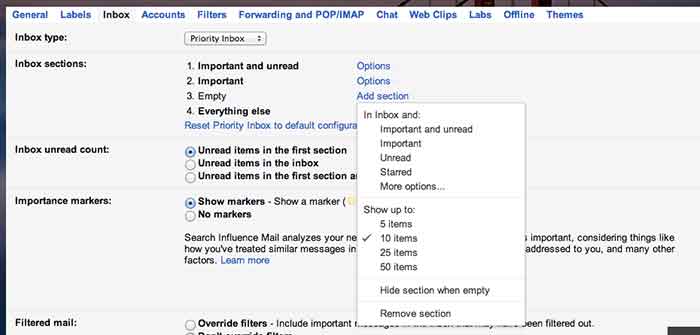
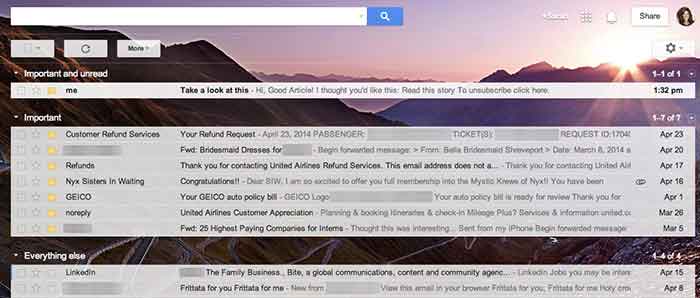
Priority inboxes are a great way to organize your inbox if you have trouble figuring out what’s important and what is actually relevant to you. This setting is very customizable, and you can set the number of emails you wish to see or have visible per section. I have mine set up as Important and Unread, Important, and Everything Else. Important and unread is exactly what it says- all messages that are marked as important or all messages that are unread. Important is everything that I have read and marked as important, but I haven’t necessarily responded to or handled the particular issue yet. Everything else is compilation of things I just need to file away or delete (because they’re not applicable to me).
2. Important Arrows
These are great in combination with the Priority Inbox. If you use these, Google will start to learn what is and is not important to you. It will learn to sort them in the priority inboxes accordingly. When I get an email in my Important and Unread, Google knows to put it there because it has the important arrow. If I receive an email in my Important and Unread section that is actually not applicable to me, I uncheck the arrow. That way, the next time I get a similar email (with that same subject or from that same person), Google puts it in my Everything Else inbox. It works the other way too- if I see something in my Everything Else Inbox is actually important, I put the important arrow with it, and Google moves it into my Important and Unread Inbox. It learns these habits over time, so your Inbox for the most part really does become organized.
3. Filters
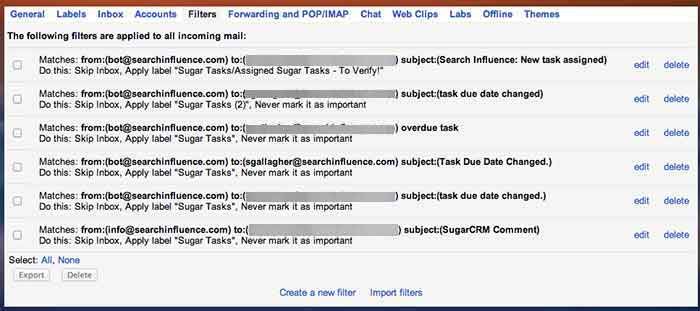
Do you find yourself receiving emails that you don’t ever need to read or open? We get emails from our CRM system all the time, but I never look at them because, frankly, I receive way too many other emails a day that are much more important. So, I have set up a filter so the emails I receive from that recipient are automatically filed away into my “CRM” folder. They never actually show up in my inbox! To set up a filter, go to settings, filters, and then create new filter at the bottom. You can perform a search function by email recipient addressed to you with a certain subject line, etc. You can set it so GMail will either automatically apply a label or archive it into the folder you have identified. This will save a lot of filing time if you have emails similar to this coming to you everyday.
4. Unread Messages Icon
This is a Lab in the settings. If you’re like me and you leave your email open all day in a tab (I know I shouldn’t, but hey- we all have our vices), you can enable this feature so you can monitor your email as you are working on other tasks. My recommendation is if you get more than 10 new messages, you should probably hop back over to your email just to check and make sure nothing SUPER important needs to be tended to.
5. Mute Button
This is a great feature that you can use to mute conversations if they keep popping up in your inbox. I get a lot of emails that are not related to me, so I often put a “Not Mine” label on them. If that same conversation pops up again in my inbox, I’ll see the “Not Mine” label on it, realize that it is not for me, and press the mute button. This will make it so if anyone else responds on this email strand, the conversation will no longer come to my inbox, but it will stay filed away in its folder. BRILLIANT STUFF HERE!
Any business that sends regular emails to a list of subscribers has a Sender Score. Your score is a method of determining how mail servers (inbox gatekeepers, so to speak) view your reputation as a trustworthy email source.
To keep it simple, think of it this way: if you’re not monitoring your Sender Score, the emails you send to your subscriber list may not have a positive impact on your business. Unfortunately, a poor Sender Score could land your emails in the spam folder, never to be seen by your subscribers.
Five Things You Need to Know about Email Marketing
Let’s start off by saying that Sender Score is important, and you should not only know what yours is, but you should constantly work to improve it. A great first step to take to acquaint (or reacquaint) yourself with email marketing protocol is to make sure you understand the CAN-SPAM Act.
Once you know the law, you can move on to nuances like double opt-in email marketing vs. single opt-in email marketing.
Many top email marketing firms are of the opinion that a double opt-in subscriber system is superior to a single because it ensures not only a higher level of recognition, but also of subscriber retention. In an article that defines both systems and gives advice on whether or not to use them, one email marketing expert adds,
“…Double opt-in serves you when you already have a good amount of interactive leads, and don’t want to have any more headaches with bad email addresses.”
Increase Your Score
No matter what system you decide to use, the goal is the same: you want to increase your Sender Score (trust us!), and here are the top 5 ways to do just that:
People who get frustrated when they have trouble unsubscribing from email lists may be inclined to mark your emails as spam (which is BAD). Make it easy to unsubscribe from your email list.
Use a consistent theme to reinforce your brand when you send emails to your subscriber list. Your email subject line should accurately reflect your email message and include a reference to your brand.
Analyze your reader engagement data once you’ve sent out an email to your list. Knowing how many people are opening, reading and clicking around vs. unsubscribing from your list is a very handy way to evaluate the effectiveness of your email content.
Maintain your reputation by focusing on how to avoid complaints and keeping up your subscriber list hygiene. List hygiene is determined by how frequently you send emails to unknown users and spam traps.
Be sure your emails are coming through authenticated. That means ‘showing’ ISPs (Internet Service Providers) you’re doing your best to follow their authentication protocols, which may include reverse DNS, Sender Policy Framework (SPF), SenderID, and/or Domain Keys Identified Mail (DKIM). Using a reliable email marketing service will prevent many authentication issues.
How to Interpret Your Sender Score
Once you have your Sender Score, you can begin to interpret your level as an email marketer. But how do you know what the Score means? Here’s the gist: any score over 90 is GREAT. If you score that high, give yourself a pat on the back, because you’re doing it right!
If you score between 50 and 80, you’ll need to take a step back and spend some time figuring out what the problem is. For example, how many of your emails are accepted vs. rejected? How high is your unknown user rate? Any score under 50 indicates you’re a spammer. “But wait! I’m NOT a spammer!” you might be thinking. Unfortunately for you, the mail servers think you are. It’s up to you to rebuild your reputation.
That’s why it’s so important to maintain your Sender Score, lest your emails wind up marked as spam or worse: your IP is blacklisted and your emails never arrive to an inbox at all!
So pay close attention and monitor your email marketing activity and you’ll be well on your way to a great Sender Score. Good luck email marketers!
Kelly Lucia is the Lead Staff Writer atPostsbyGhost.com. A ghostwriting service that provides businesses with the opportunity to build their online presence and grow their companies, Posts by Ghost offers strategic blogging, content marketing and SEO assistance to businesses of all shapes and sizes. Kelly hit the ground running as a web copywriter several years ago and hasn’t stopped since. Over the last few years she’s developed a vast range of knowledge within the realm of content writing, and she prides herself on being able to write clear and unique content for an immense variety of industries, from overseas blogs about raffle tickets to small business and marketing advice on ChamberofCommerce.com.
Do your email newsletters never get opened? Do your fans often ignore you on your social media outlets? Many small business have trouble figuring out how to engage their customers and potential customers. How you communicate with them is important, and newsletter marketing is a big part of that.
Whether you send a monthly or bi-weekly email newsletter, the likelihood of a user clicking the link to “unsubscribe” from your newsletter is 67%, according to an ExactTarget study. Here are some helpful tips of direct marketing via newsletters and how to leverage your newsletters through social media.
When should you send out your newsletters? According to Mashable, don’t send your newsletters on Monday — customers usually get a blast of emails at the beginning of the week and will ignore your emails. Don’t send on Friday afternoons because it’s closing time and the last thing a customer is thinking at 5 pm is your email.
What is the main focus of your email? Will your newsletter include promotions or will it be informative? You want to set these guidelines so that your customers know what to expect. In your newsletter, you can discuss a new product and/or service you are carrying or even how you resolved a concern with a customer. Deals and freebies for subscribers can also be effective.
Do you have an opt-in or unsubscribe option? The top three reasons users “unsubscribe” from email newsletters are overfrequency of your emails, repetitious or boring content, and the number of emails a user gets from several companies.
Is the newsletter content boring? The first way to engage a “subscriber” is having an enticing subject line. If the subject is drab, the user will not even open your email. Keep the content concise. If your newsletter can’t be scanned in five minutes, you might as well not send it out.
How do I market my newsletter? Now that you have sent out your newsletter, you can also reach people who do not subscribe already. You can post a link to your newsletter on Facebook and Twitter. You may have fans who aren’t aware of or do not subscribe to your newsletter but still like you, and marketing to them is a good way to boost subscribers.
How do you measure the success of your newsletters? Some services, such as Mailchimp, provide metrics for your efforts. It’s important to gauge if a subscriber opens your email or what draws them in. Without metrics, it’s hard to visualize what you are doing wrong or right.
These helpful tips will get your business on track for performing effective newsletter marketing. How do you interact and engage with your customers?
I’ve sent out a few newsletters in my time at Search Influence, and I’ve had to curb the client’s expectations more than once. Email marketing can be a time-consuming, arduous process and returns what seems to be very little. While email marketing is becoming more obsolete in this social media-dominated world, it’s still worth pursuing. Your expectations just need to be adjusted (read: lowered). Below I’ll break down the different metrics, what they mean, if you should care about them and what you should be expecting out of a successful campaign.
Open Rate The Open Rate is exactly what it sounds like… well, sorta. It measures how many recipients opened the newsletter, but beware. These numbers are usually vastly underreported. For instance, if the recipient’s email blocks images, it will not count as an open unless they click to display them. Many people (including myself before learning this information) choose not to display these images, so I wouldn’t put much stock in this metric.
If you do, however, here is what you should expect. I’ll use an industry familiar to me – Beauty and Personal Care. I had a client express disappointment with the performance of a particular Mother’s Day campaign. It went out to roughly 1,500 recipients and had an Open Rate of 19%, which looks pretty terrible on the surface; however, MailChimp reports that the average Open Rate for this industry is 14.94%. It might not be something to write home about, but after delivering this information to the client they were much more impressed with their campaign.
Click Rate Good thing these names pretty much define themselves. Saves me some time. The Click Rate (click-thru rate or CTR) is how many people click a link from your campaign. This metric is going to be drastically lower than your Open Rate. It’s possible to get into a double-digit percentage here, but not likely. In fact, The Click Rate average for most industries is less than 5%.
Bounce Rate In email marketing, the Bounce Rate is determined by the number of email addresses that failed to receive the message sent. There are two types of Bounce Rate: hard and soft. A hard bounce occurs when the recipient email address does not exist or is unrecognized. This is generally anywhere from 1% – 5% for most industries. It’s important to purge the incorrect addresses when this occurs, as it can bring down your sender reputation.
A soft bounce is when the message is sent back from a valid email due to an issue with the server, such as an inbox that has reached capacity. There’s not much you can do about these, but the average is typically less than 3% so it doesn’t have a negative impact.
Abuse Complaint Rate One of my biggest pet peeves is also one of the most ridiculous. I cannot stand it when someone abuses the “Abuse Complaint” function in eblasts. Its intended purpose is to mark spam or emails to which you may not have subscribed. If you use an eblast client like MailChimp, it will automatically remove these emails from your list. If you’re sending out your own, you could be blocked from the ISP if too many complaints are received, so constant vigilance is needed. The industry averages are mostly below 0.01% for this, so if yours is higher than that I don’t know what to tell you. Delete all emails in your list? Wipe your harddrive? Burn your computer? I don’t know, I’m just spit-balling here. This feature is not intended to be used as a quick way to stop receiving annoying emails because you hastily forgot to uncheck the “send me news and specials” box of a form. That’s what the next section is for!
(Sorry, I know I can get unnecessarily worked up over something so trivial. My therapist and I are working on it. For the time being I’ll shift my hatred to those who are more deserving of it, like people who leave shopping carts in parking spaces or in the middle of the lot because they’re too lazy to walk the 30 feet to the cart corral.
People who leave shopping carts in parking spaces. People who leave shopping carts in parking spaces. People who leave shopping carts in parking spaces)
Unsubscribe Rate …is, again, exactly what it sounds like. It’s the rate of people that unsubscribe from your newsletter. This is what most people intend to do when reporting you as spam, but are too lazy to find out the proper way to do so and end up doing unwarranted damage to your campaign stats.
I’m just going to stop here before a tirade ensues.
People who leave trash in movie theaters. People who leave trash in movie theaters. People who leave trash in movie theaters…
These are the basic factors that you’ll be looking at when running an email marketing campaign — remember, while your success can be tracked with some measure of accuracy, it’s all relative. Next time you send out a newsletter or special email offer to your subscribers, take a look at your metrics. You might be pleasantly surprised!



















 Do your email newsletters never get opened? Do your fans often ignore you on your social media outlets? Many small business have trouble figuring out how to engage their customers and potential customers. How you communicate with them is important, and newsletter marketing is a big part of that.
