Tag: dental industry marketing

  • How Should a Dentist Handle a Bad Review?

    1603-SI-Newsletter-0331-KG-E-02

    There’s a lot of chatter on the Internet about where to find a great dentist. You can give patients a bag of goodies and send out reminders about regular cleanings, but some will still forget to come back just as surely as they forget to floss. Retention is a challenge for any dental practice, but fortunately, there’s a whole pool of people searching for local dentists online. To tap into the online traffic and fill more exam chairs, one of the most important tools is online reviews.

    Claim Your Listings

    Even if you don’t have a top-of-the-line website, just claiming your existing online listings can make a big difference. Update your hours of operation and contact information on places like Google+ and Yelp. And claim the listing so that you can follow what the community is saying about your practice.

    Reviews Matter

    Reviews have a very real impact on the perception of your practice and whether people choose to contact your practice. One dentist estimates that “It takes at least five good reviews to counter one negative review.” And a negative review could come for seemingly no reason at all, such as a patient who came in once for a promotional offer and was upset about the final bill. The negative review that takes only a few minutes to write can impact your business’s average for months.

    Last year, the Minnesota dentist and hunter who killed a lion in Zimbabwe faced an influx of thousands of negative Yelp reviews for his practice. Fortunately, Yelp’s user support team helped to remove the negative reviews that did not describe a “first hand customer experience.” Still, it’s clear that many people are willing to use review sites as a means of inflicting damage on a business.

    Responding to Reviews

    Even if the review has been filed under the patient’s real name, HIPPA limits how much you can say in response, even if you simply want to refute false accusations. While responding to negative reviews is one of the best ways to minimize their impact, what you say makes a big difference. In general, an official response to a negative review should incorporate the following tips:

    • Apologize, even if the complaint is unreasonable.
    • Address their concerns, but don’t go into detail. This isn’t the place for an argument.
    • Move the conversation out of the public eye. Provide an official email contact.

    Keep the Audience in Mind

    The natural human response to a bad review is to argue and get defensive, especially when the negative rating seems unjustified. Unfortunately, winning the argument online wouldn’t necessarily impress future patients, and it could even make you look like a bully. Rather, try to address the situation and move the conversation to email so that it takes up as little real estate as possible. A back-and-forth exchange will just highlight this one negative review. Don’t make any public offers for compensation or refunds, or it may encourage more negative reviews.
    424274849_c4593205c9_o

    Get Help from the Professionals

    Claiming all the proper listings and inviting happy patients to fill out reviews can be a significant investment of time. To take the guesswork out of improving your online reputation, you can enlist the help of a company like Search Influence. We’ve had past success with helping our clients get more positive reviews, and it’s a process that dovetails neatly with other SEO services.

    Image Credits:

    Chattering Teeth GIF
    Simpsons Laughing GIF
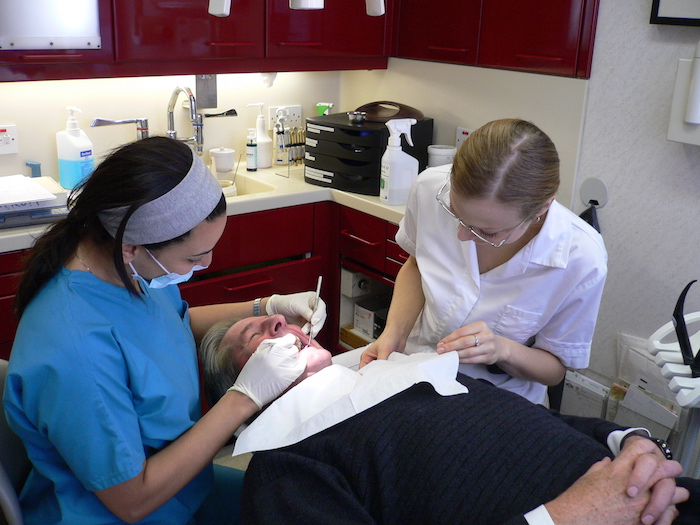
    Working Dental Professionals Image

  • 5 Things Healthcare Professionals Should Never Post on Social Media

    Over the past decade, social media has become a major part of nearly all aspects of life, including the business world. With the ever-growing importance of social media marketing, more and more businesses—including doctors, dentists, and others in the medical field—are using social media sites such as Facebook, Twitter, LinkedIn, etc. to connect with current and potential future customers.

    Thanks to the expansive, direct, and often personal nature of social media, with all those benefits also come numerous pitfalls that must be avoided to ensure that you get the most out of social media. Here are five things to never post on social media if you are a doctor or work in the medical field.

    1. Inaccurate Medical Information

    We have all seen it on social media before. Somebody shares an article claiming a miracle cure or the shocking results of some unbelievable new study. Unfortunately, very few of these attention-grabbing headlines are actually backed up by truthful scientific research in the article itself.

    As a trusted medical professional, it is your responsibility to avoid sharing or liking these bogus news stories about medical treatments unless you have thoroughly read the story and have verified its accuracy. Sharing something like this can reflect very poorly upon you and your practice. Be wary of satirical articles as well, because some people may not be able to distinguish the difference at first glance.

    2. Misleading Information or Images

    An offshoot of the previous category, misleading information or images can be just as detrimental as false info. This can include anything that could be considered deceptive or ambiguous to patients. Photoshopped images, exaggerated guarantees, and more can fall into this category.

    A perfect example of this can be seen with the American Society of Plastic Surgeons’ rules and regulations specifying that any images that are not real patients must be identified with “Model” on the image itself.

    3. Anything Violating Patient Confidentiality

    Similarly, The American College of Physicians cautions doctors to be particularly aware and respectful of patient confidentiality when using social media. This is a slippery slope in today’s over-sharing society—even a faceless image of a skin rash can be a breach of patient confidentiality.

    Remember to always obtain written permission from the patient if you want to use an image of them or any body part. It is best to avoid talking about specific patients at all on social media unless you have clear permission to do so. And be careful when taking pictures around your office to post so that no patients or medical records can be seen in the background.

    4. Opinions on Controversial Issues

    Today, many people use social media to express their opinions and speak their mind without realizing that there are consequences for what you say in the digital world, just like in the real world.

    It is best to avoid any controversial topic or “hot button” issue at all cost. This includes divisive subjects including anything to do with religion, politics, racism, and abortion.

    5. Complaints or Rants

    It is equally as important not to use social media as a platform to blow off steam. Using social media to complain about your day or a patient or to rant about a particular situation will always come across as unprofessional. Everything you write on social media has the potential to come back and haunt you.

    In the end, it is best to remember that when using social media as a physician, only post information that your patients and community will find useful. Be professional and remember that social media posts still have real world outcomes that can negatively affect you and your practice.

    Image Credits:

    The Simpsons
    Scrubs

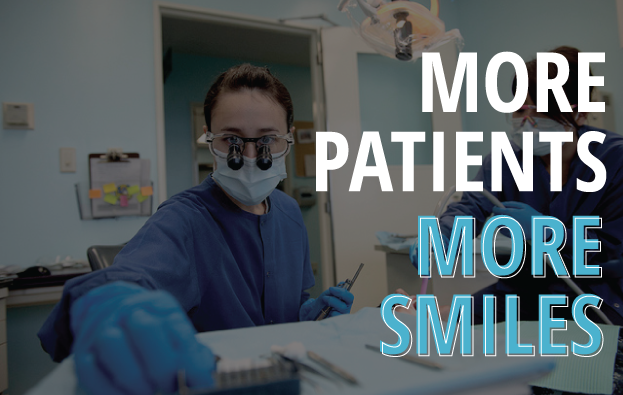
  • 5 Ways Your Dental Practice Can Win More Patients (and More Smiles) with SEO

    Blog3

    Today’s dental patient is becoming much more Internet-savvy.

    • 81% will do research online before booking an appointment
    • 71% will find their new dentist on the first page of a search engine result page like Google or Bing
    • 55% will choose one of the top three results

    It’s no longer good enough to simply have a website. If your site doesn’t show up on the first page of the search engine results pages (SERPs), you are losing potential patients. Maybe you already have a search engine optimization (SEO) strategy but have yet to notice the benefits of increased exposure and web traffic. Or maybe you haven’t thought much about SEO. Either way, there are a few steps worth considering to boost your client referrals. Here are five fundamental and actionable tips to help you maximize the effectiveness of your website.

    1. Local Keywords and Your Specialty

    By adding hyper-targeted and high-converting keywords to your website’s content, you can achieve a higher organic ranking in the SERPs. Instead of choosing “dentists” as your keyword, pick out an area of specialty. It is much easier and more effective to optimize “pediatric dentist” than “top dentist.” With a targeted keyword, you will be able to avoid competition from across the country and reach out to people who need you for specific dental services.

    2. Dental SEO Blogging

    A dental practice website with a blog section is leveraging Google’s algorithm in their favor. A regularly updated blog helps boost your SEO rankings in two different ways. First, you can include your keyword in the first section of the post, which can facilitate organic traffic. Blog posts also help give your website unique, non-duplicate content. When a searcher is searching for your keyword, all duplicate content is noted by the search engine, and those websites are punished for their inauthenticity. Blog posts that include your keyword will help your overall ranking.

    Between teeth whitening and root canals, the average dentist does not have a lot of time to devote to a blog. But blogging does not have to be a time-consuming task. When writing a blog post, consider using reader-friendly formatting like lists, including outbound links to resources, providing actionable tips, writing in a conversational tone, and using real-life examples. As an integral content marketing tool, your blog will help boost your SEO ranking and convey a professional, helpful image.

    3. Build Backlinks

    Backlinking is a central element of SEO, and to boost your SEO ranking, you need to generate content that others will want to link to. Having creative, informative blog posts can also help build backlinks, mostly because people will want to share your posts. Another way to build backlinks is to get featured. If you ever have the chance to write a blog post or opinion piece for a medical publication, do it! If a local new station wants your advice on a new dental implant treatment, don’t shy away! When you appear on another website, a link to your website is often included in the story. In the eyes of the search engine algorithms, this is one of the most effective ways to gain authority, boosting your SEO ranking.

    4. Don’t Be Camera Shy: Use YouTube

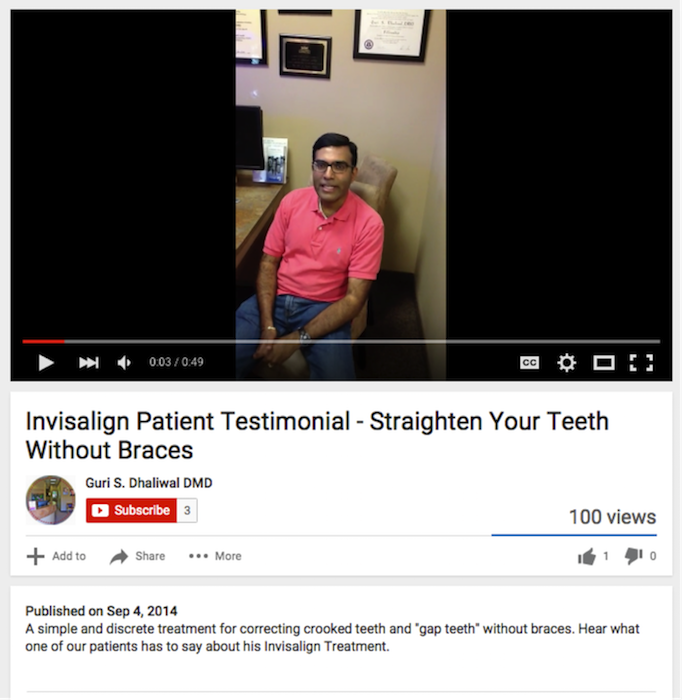
    You went to dental school, not film school, but if you have the resources, making a short YouTube video can really boost your SEO ranking. YouTube is the second-largest search engine on the Internet, but because videos generally have less competition, a video can rank higher in the SERPs. If you are targeting a region, you should include that area in the video’s title. Even though your video doesn’t have to have Leonardo DiCaprio in it, it also doesn’t have to win an Academy Award. Instead, it should focus on sharing general information about your practice or medical tips. You could even get patients involved and use videos as a platform for sharing patient testimonials. Whatever your approach is, video content will help tag your website as a superior one.

    Invisalign Patient Testamonial

    5. Get Social

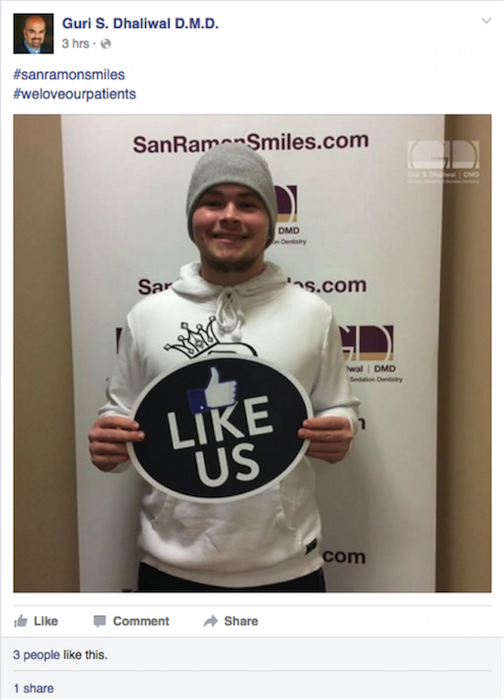
    A strong presence on social media can help the trustworthiness of your site. Because Google+ is owned by Google, your dental practice should put an extra emphasis on gaining +1s and building a network. In 2013, then-Google CEO Eric Schmidt said, “Within search results, information tied to verified online profiles will be ranked higher than content without such verification, which will result in most users naturally clicking on the top (verified) results. The true cost of remaining anonymous, then, might be irrelevance.” For optimization purposes, you cannot just have a verified account: you must also regularly post and try to gain followers. Facebook has only minor effects for healthcare SEO ranking, but it is a great tool for building a presence in your community. The number of times your office is tweeted about, as well as the number of tweets you tweet, can also slightly impact your ranking. No matter the platform you choose, make sure all of your posts are relevant and authoritative, as these posts will be most likely to gain a reaction from your audience.

    SanRamon Smiles Like Us Image

    There are many elements that impact your SEO ranking. These are five actionable tips that every dentist should be using for their SEO strategy.

    Image Credits:

    Dentists at Work Image
    YouTube Invisalign Patient Testimonial
    Guri S. Dhaliwal Facebook Page

  • A Dentist’s Guide for Choosing Target Audiences on Facebook

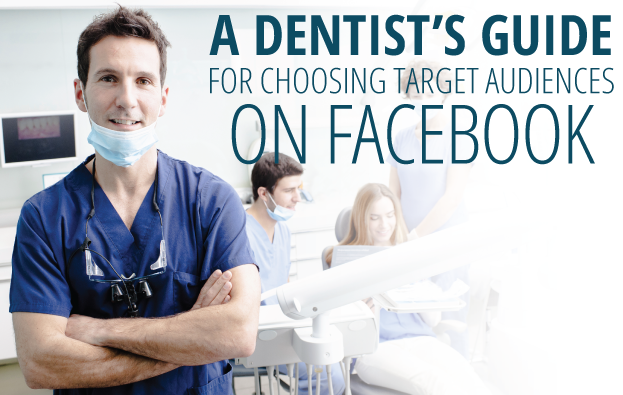
    A Dentist's Guide For Choosing Target Audiences On Facebook Image

    The number one tool in any business’s online advertising arsenal is knowing your audience. In a field as wide-ranging and diverse as dentistry, such knowledge can mean the difference between a stagnant online presence and social media success. So we’ve put together a helpful guide to improving your understanding of Facebook’s targeting tools in the hopes that you can hit that sweet spot of audience-targeting potential!

    We’ve investigated the targeting strategies behind some of our most successful social media campaigns in the dental industry to bring you three distinct targeting groups: family dentistry, young adults and orthodontics, and cosmetic dentistry. We dug deep to provide you with result-generating, relevant targeting parameters that go beyond the typical dental hygiene-related interests of mediocre social media campaigns. For each of these three hypothetical campaigns, we’ve provided some of Facebook’s best options for reaching your intended audience.

    5684115572_55bc83414f_z

    Family Dentistry

    Although your first instinct may be to target users by selecting more obvious interests, such as pediatric dentistry, oral hygiene, or dental care, you can generate much more social engagement through streamlining your strategy and focusing on specific age groups, lifestyle choices, and purchase behavior.

    For a family or pediatric dentist group, we recommend targeting women between the ages of 25 and 55 who have children. This demo group comprises the family decision makers who are most likely to engage with your page. Exploring Facebook’s fantastic targeting tools within the “More Demographics” dropdown will allow you to target parents of children within a specific age range. For instance, you can target new parents all the way through parents with children aged 12. This will ensure that your bid for impressions is going to the right users and not parents with adult children who would be more likely to seek out a dentist on their own.

    Finally, investigating the options available under Facebook’s “Behaviors” section is most helpful in providing you with the best methods for reaching those most likely to engage with your social media presence. Here, you can ensure you are reaching parents who are willing to invest in health and wellness products for themselves and their children. We recommend exploring the “Purchase Behaviors” section and adding behaviors like spa enthusiasts, shoppers, and baby care.

    Young Adult & Orthodontics

    This group can be a little tricky to reach. The sticky situation, if you will, is developing a targeting strategy wide enough to include parents of teenagers as well as young adults and even older adults who require orthodontics. For best results, we recommend targeting both men and women between the ages of 18 and 45. Under “More Demographics,” we have found that the option to target by “Generation,” which includes Baby Boomers, Generation X, and Millennials, is most useful. We’ve discovered that targeting Generation X and Millennials, which encompasses those users born between 1961 and 2004, is quite effective for this subset of the dental field.

    The most useful behaviors for this targeting group are those related to technology. Facebook now allows for targeting by “Mobile Device User,” including tablet and smartphone owners. You can even get more focused by choosing to target only those who prioritize being up to date with their tech gadgets by selecting new smartphone and tablet owners. As common as orthodontics have become and as the stigma of adult orthodontics is reduced through innovations such as invisible braces, more and more of this targeting group’s social media audience will be young adults who are plugged in.

    Cosmetic Dentistry

    Our last targeting group presents the widest range of targeting options based on exactly who your cosmetic dentistry office intends to serve. Here, we have provided you with just a sample of what Facebook’s targeting parameters can allow you to do.

    For this specific targeting group, we recommend focusing on both women and men in the 30 to 65+ age range. Once again, we can look to the “More Demographics” dropdown to provide even more insight into the makeup of our audience. Take a look at Facebook’s “Work” and “Financial” targeting options to get the most out of your marketing budget. You can focus on specific job titles and industries, highlighting those occupations in which a winning smile is most beneficial, such as CEO, lawyer, broadcast journalist, and the entertainment, sports, and media industries. Targeting by financial parameters allows you to engage customers with enough expendable income to prioritize cosmetic procedures.

    Under “Behaviors,” we can select those users who are already investing in health and wellness, especially when it comes to dental care. Facebook provides options for targeting users whose purchase behaviors reflect investments in beauty products and accessories, cosmetics, and oral care. Lastly, Facebook’s “Behaviors” section provides our hypothetical campaign with one of my favorite targeting parameters: photo uploaders. This group includes those Facebook users who posted more than 50 photos in the last month. We all have one of those Facebook friends who is obsessed with selfies, and who wouldn’t want to make sure their perfect pearly whites are on point for all those photos?

    7910370882_39d180fb66_z

    The benefits of social media marketing campaigns are apparent. Every time you flip through your News Feed, you are greeted, hopefully, by well-targeted promotional campaigns that bring you the products and services you’re interested in. With the tips we’ve provided in this helpful guide to understanding your social media audience, you, too, can be on your way to increasing audience engagement and building your online presence!

    Image Sources:

    Facebook Like Button Image
    Smartphone Image

  • Birds of a Feather Tweet Together: How to Shape Your Dental Practice’s Strategy

    1601-SI-Newsletter-0112-Big-KG-D-01

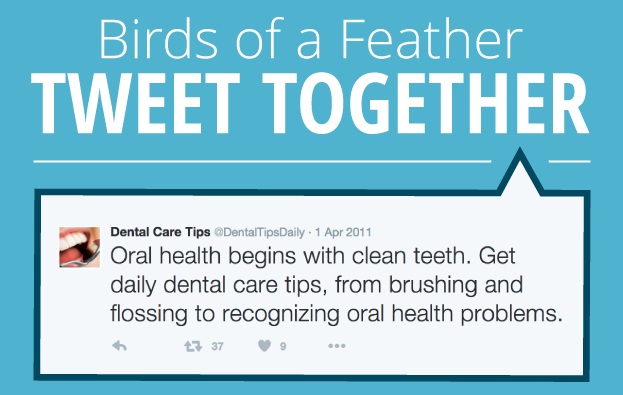
    With today being National Bird Day, one saying comes to mind, and it’s one that forever rings true: “Birds of a feather…” Like-minded individuals with similar interests and agendas generally come together and communicate with each other more regularly. This can be beneficial for dentists, periodontists, and orthodontists as they work on growing their audiences online.

    Who’s in Your Flock?

    For those in the family dental industry, consider who will be most inclined to tweet about your services. First to note in the flock is, of course, parents and families. With that in mind, crafting your content with families in mind can benefit both your business as well as your audience, both of which will do wonders for your online presence and, in turn, grow your respective audience as more of that same audience is brought in by their own family and like-minded friends.

    Tweet to Your Birds

    Birds go where other birds go. If you want your Twitter audience to grow, start with those on Twitter who fit your audience to a tee. From there, encourage interaction and engagement with them and their fellow followers who share the same general mindset and lifestyle. For example, if you share a great joke, infographic, or helpful fact about oral health practices and end it with “RT to your friends and fam!,” more will learn of your company’s personality and expertise through shared tweets, and those with whom the messages resonate will join your flock of followers, allowing your audience to continue to grow and prosper.

    Take Flight Today

    The idea of growing your audience online can be daunting to those who aren’t entirely familiar with the method, as the Internet has grown to become a whole new world of its own. Don’t worry, though—that’s what online marketing services are for! Allow a professional company to best serve you in the way that will grow your audience, your company, and your success via online marketing today.