Tag: conversion tracking

  • AI Search KPIs: Why Traffic No Longer Tells the Full Story

    AI Search KPIs: Why Traffic No Longer Tells the Full Story graphic

    Key Insights

    • Brand influence now happens before a website visit.
      Discovery and evaluation increasingly occur inside AI chat interfaces, not on your site or a traditional search engine results page.
    • Traffic reflects outcomes, not total visibility.
      Sessions show engagement, but they do not capture upstream exposure.
    • Presence and citations are leading indicators.
      Appearing in AI-generated answers and being cited as a source signal authority before traffic occurs.
    • Brand representation shapes decision-making.
      How AI systems describe your brand affects perception, trust, and competitive positioning.
    • Measurement must connect visibility to outcomes.
      AI tracking works when exposure signals and on-site performance live in the same reporting framework.

    For years, organic traffic was the clearest proof that SEO worked.

    More sessions meant more visibility. More visibility meant more opportunity. (Rank higher → earn clicks → measure results.)

    It was clean, predictable, and measurable. 

    Today, that proof is less complete.

    AI systems increasingly answer questions within their own interfaces. Users compare brands, evaluate options, and form opinions before ever visiting a website.

    Traffic still matters. But it no longer reflects the full scope of your visibility.

    This post explores:

    • Why traffic is now an incomplete KPI
    • What AI search changes about measurement
    • Which AI SEO KPIs provide clearer insight
    • How Search Influence’s dashboards report on visibility 

    TLDR: Traffic tells part of the story. The right AI search KPIs complete it.

    Traffic Used to Tell the Truth About SEO Performance

    Before generative search reshaped discovery, SEO measurement followed a straightforward assumption: visibility required a click.

    When rankings improved, traffic increased. When traffic increased, business outcomes often followed. Organic sessions became the clearest proxy for exposure and performance because users had to visit your site to consume your content.

    Why Traffic Worked as a Primary KPI

    Historically, traffic has served as a reliable stand-in for:

    • Search visibility
    • Content relevance
    • Audience demand
    • Business impact tied to on-site behavior

    Because outcomes happen on websites, traffic connected search performance to measurable results. That’s why most reporting frameworks still anchor on organic sessions and year-over-year growth.

    The structure of search has always supported that model.

    Today, however, the structure of search has changed.
    Graphical elements depicting data

    AI Search Changed the Journey Before Most Dashboards Changed

    The biggest shift isn’t that answers exist inside AI systems. It’s when influence happens.

    Consideration now starts earlier and often outside your analytics environment. By the time someone arrives on your website, they may already understand the category, recognize your brand, and have narrowed their options.

    That changes the role of the visit.

    Instead of initiating discovery, the session often confirms a decision that has already been shaped elsewhere. Users return through branded search, direct navigation, or assisted channels after AI-driven exposure has done part of the persuasion work.

    Most reporting systems still assume that influence begins when a session begins.

    Increasingly, it does not.

    The Visibility–Click Gap (And Why It’s Growing)

    The visibility–click gap is the space between being seen and being visited.

    Your brand can appear in search results, AI summaries, and comparisons, and still never generate a session. As zero-click behavior continues to rise (roughly 60% of U.S. searches end without a click), that space becomes more visible in your reporting.

    You’ve probably noticed the pattern. Impressions stay strong. Click-through rate dips. Traffic slides. Yet conversions hold steady, or even improve. Branded search volume climbs while non-branded sessions level off.

    At first, it feels like the data doesn’t line up. It does. Exposure and visits are just no longer moving in lockstep.

    Traffic Still Matters, But It’s Not the Lead KPI Anymore

    Let’s be clear: traffic didn’t stop being useful.

    Sessions still reflect real behavior. They show engagement, interest, and when someone cared enough to act.

    What changed is priority.

    Traffic used to be the headline metric. In the age of LLMs, it’s now one of several signals. It supports performance analysis, but it no longer defines search success on its own.

    What Traffic Still Measures Well

    Traffic remains strong at measuring:

    • Overall demand trends
    • Whether content resonates enough to earn a visit
    • Channel efficiency and cost performance
    • Relative performance across search, paid, referral, and direct channels

    If sessions rise, something is working. If they fall sharply, something deserves investigation.

    Traffic still provides directional insight. It just doesn’t capture the full environment where influence occurs.

    Where Traffic Under-Reports AI Search Impact

    Traffic struggles to reflect:

    • Zero-click discovery and brand exposure
    • Assisted conversions that begin outside your site pages
    • Trust-building moments that don’t register as sessions
    • How your brand appears inside AI-generated summaries

    In other words, traffic tells you who arrived.

    It doesn’t always tell you who was influenced.

    Why “Traffic Loss” Often Gets Misdiagnosed

    Today, traffic declines require context.

    Traffic can shift for several different reasons, and they don’t all point to the same problem. Before assuming visibility declined, look at the surrounding indicators:

    • Are impressions holding steady?
    • Have rankings materially changed?
    • Is branded search trending upward?
    • Are conversion rates stable or improving?

    If exposure remains strong while sessions dip, the issue may lie in how clicks are distributed rather than how often your brand appears.

    There are also cases where fewer visits align with stronger outcomes. A smaller audience arrives with clearer intent. Conversion rates improve. Revenue holds steady.

    In that scenario, traffic volume is like counting footsteps in a store. Fewer people may walk in, but if more of them buy, the business hasn’t weakened.

    Geographical shapes on a background with lights

    What AI Search Success Looks Like (If You’re Measuring It Correctly)

    AI search success expands beyond sessions and rankings.

    It reflects how often your brand appears in AI-driven answers, how accurately it’s represented, and how that exposure influences downstream behavior.

    To measure that shift, you need a broader set of KPIs alongside traditional SEO metrics.

    AI Search KPIs That Belong Next to Traffic in Your Reporting

    If traffic shows what happened after someone arrived, these KPIs help you understand what happened before that moment.

    They focus on presence, credibility, and influence inside AI-powered search and discovery environments. Instead of asking “How many people clicked?” they ask:

    • Are we showing up?
    • Are we being trusted?
    • Is that exposure shaping behavior?

    Here’s what that looks like in practice.

    AI Visibility

    Start with presence.

    When someone asks a category-level question, does your brand appear in the response at all? And does it appear consistently, or only occasionally?

    Track:

    • Frequency of brand mentions in AI-generated answers
    • Presence across platforms like Google’s AI Overviews, ChatGPT, Gemini, Perplexity
    • Visibility for high-intent, decision-stage queries
    • Trends over time, not one-off spot checks

    This metric answers a simple question: Are we part of the conversation when decisions are being shaped?

    Citation Performance

    Visibility tells you you’re included. Citation performance tells you whether your content is being relied on.

    In many AI outputs, sources are referenced directly or indirectly. When your domain is cited, linked, or clearly attributed, that signals authority.

    Track:

    • How often your domain is cited or referenced as a source
    • Whether you appear as a primary source or secondary mention
    • Competitive share of citations within the same answer set
    • Citation momentum over time

    Whereas visibility reflects participation, citation performance reflects influence.

    Brand Representation and Trust Signals

    Appearing in an answer is one thing. How your brand is described is another.

    AI systems summarize, compress, and reinterpret your content. That representation shapes perception before someone visits your site.

    Track:

    • Accuracy of brand descriptions in AI-generated responses
    • Alignment with your positioning and messaging
    • Framing and sentiment in summaries
    • Risk of misinformation or oversimplified claims

    This KPI focuses on quality, not quantity. It answers: When we show up, are we represented correctly?

    AI-Influenced Outcomes

    Exposure inside AI platforms does not always produce an immediate click. But it can influence later behavior.

    This is where visibility connects back to business impact.

    Track:

    • Engagement quality of AI-referred sessions (when they occur)
    • Assisted conversions tied to AI exposure
    • Lift in branded search following visibility spikes
    • Contribution to inquiries, leads, and pipeline movement

    This category links upstream visibility to downstream performance. Because ultimately, presence alone is not the goal. Influence is.

    Dive Deeper → How to Set Up AI Traffic Tracking in GA4

    Dive Deeper → AI SEO Tracking Tools 2026: Comparative Analysis of Over 15 Platforms

    Disclaimer: AI search measurement is evolving. AI platforms do not provide flawless attribution, and zero-click exposure often occurs outside traditional analytics reporting. The goal is not perfect precision at the interaction level. It’s consistent trend tracking across visibility and performance metrics to understand directional impact over time.

    Common Mistakes Teams Make Measuring AI Search

    Even with the right KPIs defined, measurement can still drift off course. AI search introduces new signals, but it also introduces new ways to misread performance.

    Before expanding marketing dashboards or shifting budgets, it helps to clarify what strong AI measurement actually requires. Here are some common mistakes and what to do instead.

    Mistake What to Do Instead
    Treating AI visibility like traditional rankings Track consistency of brand mentions across prompts and platforms over time.
    Over-reacting to prompt-level volatility1 Focus on directional trends, not single-answer fluctuations.
    Measuring visibility without outcomes Connect exposure to branded search lift, engagement quality, and conversions.
    Ignoring third-party and comparison ecosystems Monitor how your brand appears in listicles, directories, and cited sources.
    Making budget decisions based on traffic alone Evaluate visibility, citations, and influence alongside sessions.

    AI search performance requires a broader lens. When teams shift from ranking-based thinking to influence-based measurement, strategy becomes clearer, and decisions become more durable.

    ¹ Prompt-level volatility refers to natural variation in AI answers. Small shifts in phrasing, user context, model updates, or training data can change which brands appear in a single answer. That does not automatically signal a gain or loss in authority. Individual prompts are snapshots. Trend lines across many prompts and time periods provide a more reliable view of performance.

    How Search Influence Tracks AI Search Performance

    Impactful measurement works when visibility and outcomes are evaluated together. That requires more than a new metric. It requires a reporting structure that connects exposure inside AI systems to on-site user behavior in a consistent, repeatable way.

    Here’s how we approach it.

    AI Traffic Report (GA4)

    We begin with what is measurable inside analytics.

    AI platforms that link to external websites send referral traffic. In GA4, those sessions can be isolated and trended when configured intentionally. Our AI Traffic Report surfaces:

    • Sessions originating from known AI tools
    • Engagement quality, including time on site and pages viewed
    • Top landing pages receiving AI-driven visits
    • Conversions and downstream actions tied to AI-referred sessions

    This layer shows what AI discovery produces once a user leaves an AI interface and engages directly with your content.

    AI Visibility Tracker (Scrunch-Powered)

    Traffic tells you who arrived. Visibility tracking tells you whether your brand is part of the answer in the first place.

    Through our AI visibility tracking powered by Scrunch, we measure how AI platforms surface, cite, and describe your brand across relevant prompts. Scrunch is an enterprise AI visibility tracking platform built specifically to monitor brand presence inside generative search environments like AI Overviews, ChatGPT, Gemini, and Perplexity. It aggregates structured prompt-level data across models to deliver consistent reporting on brand presence, positioning, and competitive context over time.

    We use Scrunch to report on:

    • Prompt-level tracking across major AI platforms
    • Brand mentions and AI citation count
    • Sentiment and positioning analysis
    • Competitive share of voice
    • Content gaps and citation opportunities

    This layer captures exposure that occurs inside AI systems, including interactions that may never generate a direct session.

    Why This Lives Beside SEO Reporting

    AI visibility does not replace traditional SEO reporting. It extends it.

    By placing AI traffic data and AI visibility tracking inside the same dashboard environment, we create context:

    • Visibility trends can be evaluated alongside engagement trends
    • Citation shifts can be compared against branded search lift
    • Traffic patterns can be interpreted with upstream exposure in mind

    No single metric defines AI performance. The value comes from evaluating presence and outcomes together, consistently, over time.

    That is how AI search becomes measurable in a way that supports real strategy decisions rather than isolated data points.

    AI SEO KPI Frequently Asked Questions

    Is organic traffic still important for SEO?

    Yes. Organic traffic remains among the most important traditional SEO KPIs because it measures demand, engagement, and on-site performance. However, it no longer captures total visibility. Modern AI systems can influence awareness and decision-making before a visit occurs. Traffic should be evaluated alongside AI visibility, citations, and influence metrics for a complete view of SEO performance.

    How do AI Overviews affect click-through rates?

    AI Overviews can reduce click-through rates for some queries because they provide summarized answers directly in search results. When users receive sufficient information within the AI summary, fewer clicks may occur, even if impressions remain stable. The impact varies by query intent, industry, and whether a brand is prominently featured or cited.

    What are the most important AI search KPIs to track?

    The most important AI search KPIs measure presence, authority, and influence. These include how often a brand appears in AI-generated answers, how frequently it is cited as a source, how accurately it is represented, and whether exposure correlates with branded search lift, engagement quality, or conversion trends. Together, these metrics provide a broader view of performance than traffic alone.

    Can AI search influence conversions without sending traffic?

    Yes. AI search can influence awareness, preference, and comparison before a user visits a website. A user may encounter a brand in an AI response, then later return via branded search, direct navigation, or another channel. In this case, AI exposure contributed to the decision even though it did not generate a direct click.

    How do you measure brand visibility in AI-generated answers?

    Brand visibility in AI-generated answers is measured by tracking relevant prompts across AI models and monitoring how often the brand appears, how it is cited, and how it is described. Measurement focuses on trends over time and competitive context rather than individual responses. This approach provides directional insight into presence and authority within AI-driven search environments.

    The Bottom Line: Traffic Is a Signal, Not the Scoreboard

    Traffic still matters, and it always will.

    But in an AI search pipeline, influence often happens outside your website. Visibility, citations, and brand representation now shape decisions upstream.

    Traffic is the outcome. Visibility is the leading indicator.

    If your reporting only tracks sessions, you’re only seeing part of the picture. It’s time to measure what happens before the visit.

    Explore our analytics and tracking services, and see how we connect AI visibility and on-site performance in one reporting framework.

     

    Images:
    Unsplash
    Unsplash

  • Why Branding Is Vital in Your Marketing Campaigns

    Branding and marketing are terms often associated with each other. Though they’re not synonymous, they should be harmonious. Your brand is what you market. The colors, logos, voice, tone, and so much more dictate how you should market your products or services and ultimately show the world (or a tiny segment of it) exactly who you are.

    But wait a moment…what does that even mean?

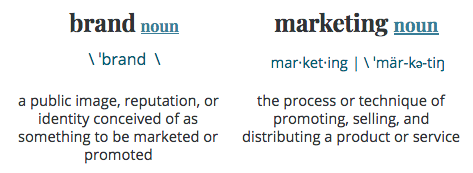
    Let’s break it down with Merriam-Webster:

    Brand vs. marketing graphic for Search Influence blog post

    As a New Orleans native, I like to think of a brand as the roux of a delicious marketing gumbo. Your branding, much like the roux, is the foundation and soul you put into your overall marketing campaigns. Without it, you’re simply not going to get the results you were hoping for.

    Your branding encompasses who you are as a company and what your customers see. Your culture, core principles, values, and ideas are the foundation of your brand, along with the way you present your company visually. An effective marketing plan will take who you are as a company and personify that as a character who is able to interact and relate to your customers. While your campaigns will have many objectives and goals, the overall structure, tone, and theme of these efforts should be consistent and more importantly, recognizable.

    So with that being said, what makes your company unique? What truly sets you apart, or how do you want to set yourself apart from the competition? Your brand is your company personified, so get creative! You may be incredibly focused on your commitment to quality, customer service, or your community. Customer loyalty may be an issue you need to improve, so build your brand around that key metric. While a marketing plan can exist separately from your values, the most successful campaigns will include your key strengths in the eyes of your current customers and broadcast them to your potential target base.

    Man screaming into megaphone about branding

    So We Got Branding Down…What Next?

    The connection between your brand and your marketing lies within the confines of what will have the biggest impact on the most important part of any campaign:

    Elvis dancing with conversions written in red

    Conversions!

    Getting potential customers to take action and engage with your business is critical. Marketing plans based on Google keywords and Facebook data alone won’t pack the punch needed to grab the attention of a market that is perpetually bombarded with the messaging of your competitors. Simply put, thoughtful and effective branding helps produce engaging content. In a world where the average consumer reads 11.4 pieces of content before making a decision, content reigns supreme in this crazy, competitive battle for attention.

    When your branding is developed and reinforced over time, you can use this foundation to create content that educates customers about your products or services, differentiates you from competitors, and influences your perceived value in the eyes of your customers. This brand-rich content should be utilized in every holistic approach of the digital marketing campaigns you create. (Or we create for you!)

    Gale Henry portrait photo for Search Influence blog

    Don’t Stop Now!

    You got the brand down, and people are converting, but you can’t stop there. This is an ongoing, endless ride, my friend. Between the continual upkeep of your search engine optimization, email marketing, content marketing, social media, and paid advertising, branding never stops! Your customers are hungry for more information from you, so it’s time to put on your thinking cap and start a blog. You can use blogs to demonstrate your industry expertise and meaningfully connect with your audience. It can also help establish your company’s authority in the eyes of search engines to increase your rankings in search results.

    The combined efforts of your marketing and branding can create a powerful message to the customers that you already have the ones you need to target to keep growing. A comprehensive marketing plan will bring in new business, while your branding and customer service will ensure their satisfaction and loyalty.

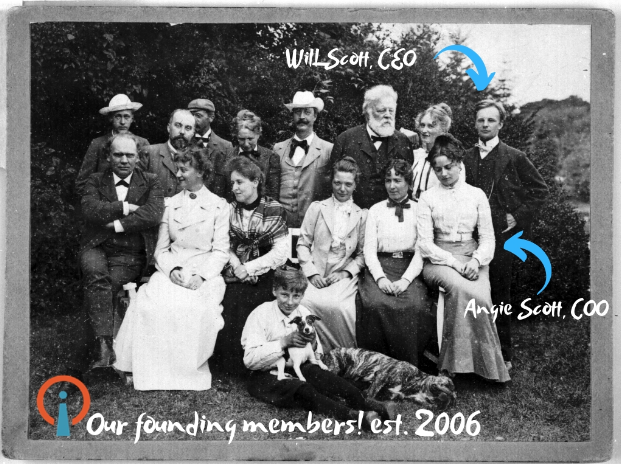
    Interested in learning more about how your brand is perceived online and how to build a successful campaign around it? Start a conversation with us today! As you can see, we’ve been doing this for a while…

    Old time-y photo of Search Influencer founders Will and Angie Scott

    Images

    Camera

    Megaphone

    Elvis

    Gale Henry

  • 5 for Friday – Twitter and Facebook Duke it Out, Social Signals’ Effect on SEO, and the Power of Nofollow Links

    5hand

    1. Mobile Site Call Conversions Now Available in AdWords – PPC Hero

    It’s finally here! Adwords now tracks click-to-call conversions on mobile devices. This can easily be added to a specific landing page with a little bit of coding. This feature will allow you to track calls through the same venues as your other performance metrics and customize the value of the incoming call. This blog post has step-by-step instructions on how to implement this new feature on your site!

    2. Google Wallet’s 2-Click Instant Buy Checkout Comes To iOS – Tech Crunch

    This week Google Wallet released its Instant Buy API for iOS apps. This was first released for Android apps a year ago. This free service can be accessed with your Google+ login and stores your shipping and credit card information. Merchants can then use the information to complete the transaction. Google Wallet aims to eliminate the frustration of mobile device shopping and decrease shopping cart abandonment.

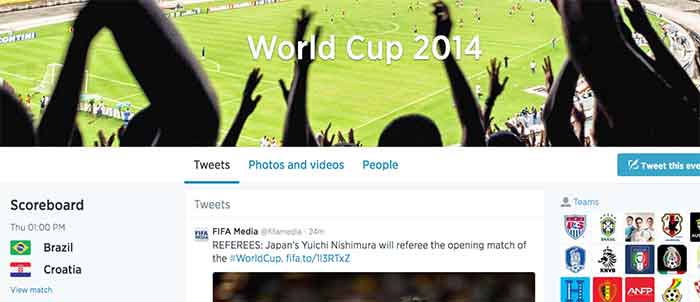
    3. Facebook and Twitter Want You to Talk About the #WorldCup on Their Field – Marketing Land

    Facebook and Twitter are engaged in a Battle Royal almost as intense as the World Cups itself. With yesterday’s commencement of the Fifa World Cup, these two social media powerhouses pull no stops to be become the No. 1 platform for Fifa fans to electronically engage.

    Facebook’s campaign provides fan with a Trending World Cup Page. Here fans can access the latest scores, view highlights and interact with a global map to pick their favorite teams

    Use #WorldCup and #WorldCup2014 to access Twitter’s World Cup landing page. Here you can create a Fifa-specific profile and choose a cover photo and profile picture to support your team. Don’t forget to include your HashFlag. Introduced during the last World Cup, these three-letter hashtags can be used by fans to unlock an image of a country’s flag.

    Which social media platform will reign supreme? Only trending numbers will tell. Let the games begin!

    WorldCup

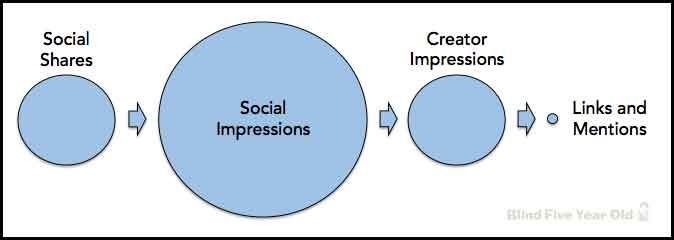
    4. Social Signals and SEO – Blind Five Year Old

    While the power of social media seems encompassing, Google is currently not using social signals, even from Google+, in its algorithm to calculate search results. You might be asking yourself why you’re putting so much effort into social now. Fear not! Maximizing the potential of a Google+ listing and other social outlets does have benefits. The Blind Five Year Old breaks down social media activity to explain that its not necessarily the activity itself, but the result of that activity that matters.

    social-seo-signals

    5. The Hidden Power of Nofollow Links – Moz Blog

    Link building is an integral part of all SEO campaigns. They can help build your company’s brand, build public awareness, increase profit and, of course, lead to more links. Links can also help build your site’s authority in the eyes of search engines. But what about nofollow links? While they seem unfathomably dreadful, this blog posts offers a silver lining and techniques to utilize those nofollow links.

  • Watch the Possibilities Unfold

    For many years we’ve considered the fold, or the first 600 pixels of content on a website, to be the gateway for user interaction and hopefully the production of leads. To take advantage of this, we’ve filled this space with as many buttons, forms, and click-through opportunities as humanly possible. The result, oftentimes, was a cluttered site with so many calls to action that viewers didn’t know where to look first.

    So what’s changed?

    Tablets and smartphones have helped us by naturally encouraging users to scroll. These smart devices have not only made it easier to scroll, they’ve also made it fun! Because of this, the purpose of those 600 pixels has changed. Instead of using the space above the fold as the one and only location for possible lead generation, we can use this area to help direct the viewers’ eye down the page to discover more.

    How do we do that?

    Have you ever seen a social media contest that directs you to “like” the page and enter to win? The designs for these ads usually include a directional arrow that points up to the “like” button, to help you understand exactly where you need to go next. Often times the call to action for this type of contest will be sometime similar to ”Like & Enter” or “Like us to find out more.” The need for a clear call to action on websites such as the ones used for contests is now more important than ever.

    An even better example of a great call to action is Amazon’s graphic to get customers to take a look inside of one of their books.

    Screen Shot 2014-01-22 at 3.56.49 PM

    What is it about Amazon’s call to action that makes you want to click on that book? How can you achieve a similar effect? Here are three tips for creating a successful call to action:

    1. Use a Contrasting Color

    According to The Institute for Color Research, we subconsciously make judgments about people, products and their environment within 90 seconds of seeing them. Between 62% and 90% of that initial judgment is based solely on color.

    The most important thing to consider when selecting your call to action color is to choose one that will stand out on the page. If most of your page has varying shades of blue, a bright green button will do the trick, or a golden shade of orange. As KISSmetrics highlights in their infographic on color, this can be achieved by using analogous colors for the background of the page’s main content, while using a complementary color as your call to action color.

    Take a look at the Amazon example again. Did the contrast of the blue and the orange catch your attention?

    2. Remember these 3 C’s: Clear, Compelling, and Concise

    “Read the Case Study”
    “Try it For Free”
    “Take a Tour”

    All three calls to actions are common, but effective. They tell the user what they will be doing: reading, trying, and touring. By eliminating the concerns of the user, you compel them to want to find out more. Case studies, free trials, and tours are great ways for the user to find out more information. If you can do compel the readers clearly and be concise in your wording, you will have successfully created a perfect call to action.

    Amazon’s example achieves this in two ways. The call to action, “Click to Look Inside” is to the point, but they’re actually able to abbreviate this even more by emphasizing “LOOK INSIDE.”

    3. Give Directional Cues

    Whether you’re attempting to get your customer to scroll down the page or trying to direct them to your form, you need to use directional cues to show them where they need to go next. From arrows that point to the call to action, to imagery that implies the need to scroll down to see more, people subconsciously want to be prompted towards their next step.

    The arrow for Amazon’s click to look inside serves two purposes. It implies the action of opening a book while also directing customers to click on the image of the book to see what’s inside.

    Another great example of directional cues is on the Nike Better World site. While there is not an arrow or obvious directional cue, customers will subconsciously want to scroll through the page because of the visual implication of movement. They use a very subtle, but effective approach for directing their customers to look further to see more.

    Michael Lykke Aagaard, a A/B testing guru, blogged about testing he did on the positioning of a CTA. He states that this test showed a 304% increase in conversions for the placement of the CTA under the fold. If that isn’t proof enough, try it for yourself and watch the possibilities unfold.


  • 5 For Friday — Links, Stories & Posts For Your Weekend

    Round 1-036 Ways to Use the New LinkedIn Features to Get More Business — Social Media Examiner
    Even your online presence only gets one chance to make a first impression. LinkedIn recently updated its user interface to help users present their accomplishments and skills in a refreshing, new way. This article looks at how to use these new features to your advantage to make stronger connections, create more business, and engage with people with whom you share a common interest.

    Microsoft’s Bing Social Sidebar Gets More Context with Facebook Status Updates, Links, and Comments — The Next Web
    Facebook may have launched its new Graph Search feature this week, but Microsoft is also making some major improvements with the addition of social data to enhance its partnership with Facebook. Moving forward, when you search the web using Bing, you’ll get some Facebook results mixed in; using Facebook’s Graph Search will yield some Bing results.

    11 Obvious A/B Tests You Should Try — QuickSprout
    A/B testing can help you generate leads for your business and, if properly done, can help you create a competitive advantage. Here are some easy tips and tricks to increase your conversion rate.

    YouTube Investment in VEVO Would Strengthen its Top Position in Online Video Rankings — Search Engine Watch
    VEVO is the largest video publisher on YouTube, so it only makes sense that YouTube plans to invest in it for a content partnership. Between rumors of Facebook showing interest in stealing VEVO away from the Google-owned YouTube and its deal with YouTube ending in December, this would be an effective way to help YouTube maintain its more than half-billion views per month.

    23 Reasons to Improve Your Content in 2013 — SEOptimise
    From ranking on Google and Bing to local search and keyword competition, there are a multitude of ways to beat the competition by creating relevant, quality content in the new year. Check out this handy list for a compelling array of reasons to get it in gear and start killing it on the content end in the new year.

  • Facebook Introduces Conversion Tracking for Advertisers

    Data.

    This is the most fundamental building block when trying to determine the success of a Pay-Per-Click campaign.

    Data tells you if that “iffy” ad copy you wrote is actually paying off and it also tells you when something’s gone belly up and is stinking up your cost per lead. But despite being extremely useful, data is also extremely problematic especially when you are using third party report tool with unrelated PPC platform.  The data gets well… unpleasant. This statement has been especially true for me using tools such as Analytics to track Facebook advertising performance.

    Don’t misunderstand, I am a huge fan of Google Analytics because it is useful and free (two of my favorite software attributes). While Analytics has proven to be useful in determining the actual run-of-the-mill site metrics, figuring out specific Facebook ad details has been tedious. I mean we’ve all seen that highlighted message they displays when you start using expressions and Advanced Segments – “This report is based on sampled data. Learn more.

    Google Analytics Sample Data Warning
    Google Analytics Sample Data Warning.

    I hate this message.

    I especially it when I’m trying to figure out performance of a Facebook ad. I constantly ask myself, “Why is Analytics ignoring all the information built into the URL? Is this bounce rate even correct? Why doesn’t Facebook allow conversion tracking so I don’t have to deal with these messy urls?”

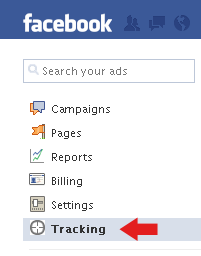
    Whether it was other advertisers demanding more functionality or FB’s development team telepathically sensing my frustration, Facebook is now offering conversion tracking! Even though it is still in beta, Facebook conversion tracking is going to allow advertisers to see at a glance how well new images and adcopy is converting visitors. No more relying completely on Google Analytics and its jaundiced sampled data!

    Facebook Tracking
    Facebook new "Tracking" tool.

    Another benefit of Facebook conversion tracking, conversion data can be compared for accuracy. This is huge for me because having Facebook conversion data allows me to see how accurate the Analytics conversion data is. I trust Analytics but ultimately things do fall through the virtual cracks because of outages, page load errors, or malformed urls. Plus having multiple  sources of data allows advertisers to determine the percent of data loss between platforms.

    While I will never know why Facebook didn’t include conversion tracking initially, I am happy after months of tedious URL building and endless data confusion it’s being offered. With an increasing number of advertisers using Facebook, we should see more advanced conversion tracking options. Now if only they’d do something about the archaic reporting tool…

  • delicious Links from Today 5/12/09

    I have come to love >delicious.com (formerly del.icio.us which I liked more.

    For those of you not already familiar, delicious.com allows you to store all your bookmarks in one place organized by date with tags for secondary management.

    I was very fortunate in my reading today, thanks mostly to my friends on twitter .