Tag: blogging

  • 4 Tips for Finding the Right Blog Length in 2016

    4-14-2016-BlogImage4

    When you have your own blog, there are a lot of things to consider if you want it to be successful. One common question people ask is, “How long should a blog post be?” Unfortunately, there is no cut-and-dry answer. Instead, the length of a blog post should depend on a few things, so I’ve put together a short list of important factors to consider when writing your blog posts.

    1. What is the topic of your blog?

    Is it fun and playful or technical and formal? If it’s more technical, it will probably require a lot of explaining and therefore have a longer word count. This would especially apply for very niche businesses like law or medical offices. If I am reading a blog about chemical peels, I will probably want to learn about the procedure itself, how it works, and what to expect after the procedure. This would require a pretty lengthy post. On the flip side, if I am reading a blog post about what I should do this weekend in Austin, a short list will do.

    2. What good is a blog if no one knows it exists?

    A study done by SerpIQ found that the average content length on the first ten search results is 2,000+ words. No worries: this doesn’t mean that every post on your blog should be research-paper length. Instead, try to include a few longer posts here and there. I would do some research and find some more specific topics that readers will want to learn about that require a lot of information.

    By writing some longer posts, you will also be able to include the topics you want to be ranking for more often than in short posts. It’s best practice to include the topic once every 100 words, so if you have a blog that’s 300 words, you should make sure the topic is mentioned three times total, which isn’t very much compared to a blog that’s 2,000 words long. Also, with a higher word count, there are more chances for you to include differently worded variations on that topic.

    3. Analyze past blog posts.

    What blogs do your readers like the most? Once your blog is established, take a quick analysis of the posts. Which ones get the most shares or comments, and how does that relate to the length of the post?

    4. Who is your target audience?

    What kinds of people do you want your blog to speak to? What is their day-to-day schedule like? Are they stay-at-home moms who might have a more flexible schedule and therefore would be more interested in long blogs? Or are they medical professionals who have a day full of appointments and would prefer blogs that are short and to the point?

    The most important thing to remember is that there is no rule on the length of a blog post, so if your topic can perfectly be explained in 300 words, leave it at 300 words. You shouldn’t feel like your blog isn’t long enough or you need to add words just to have a higher word count. If there are parts of your blog post that are “filler” or “fluff” and don’t really contribute, don’t hesitate to take them out.

    So how long should a blog be? Now you know the answer isn’t a simple one! The next time you’re writing a blog post, think about these four things, and hopefully you’ll reach a happy medium for a successful blog.

    Image Credits:

    Jim Carrey GIF
    Tom Hanks GIF

  • Bloggin’ Like “The” Boss: Think Like Bruce Springsteen to Boost Your SEO

    Keeping up with the ever-evolving world of SEO can be overwhelming. Blogging has been considered a beneficial marketing tool since the late 1990s and continues to be an excellent way to keep your business’s SEO relevant and reliable. However, just because blogging has been around for some time does not mean that it is a simple task. There are questions that arise when blogging, especially if it’s your first attempt. Why should I blog? How do I choose a topic to blog about? Well, in this blog…about blogging, Bruce Springsteen and I offer a few tips and tricks to ensure that you start Bloggin’ Like a (The) Boss.

    1603-SI-Newsletter-0331-KG-A-02

    Why Should You Blog? You’re About to Be “Blinded by the Light.”

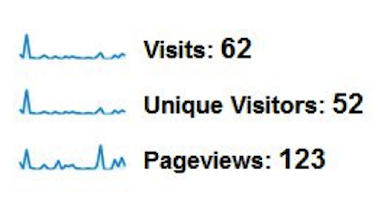
    There are a few reasons why blogging is so beneficial for a business, but one of the most important is that it helps to drive traffic to your website. Here is a screenshot of a business’s analytics the month prior to creating and launching their blog:

    Before Graph 1

    Before Numbers 1

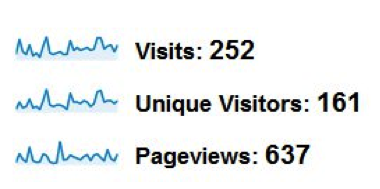
    Here is a screenshot of a business’s analytics for the month after they created and launched their blog:

    After Graph 1

    After Numbers 1

    As you can see, the visits, unique visitors, and pageviews vastly increased the month after the blog went live.

    In short, the more relevant, optimized content you put onto the Internet about your business, the knowledge that you have, or even the services that your company provides, the more opportunities you create for a user to discover your business, its products, and its website. They can also create a direct link back to your website.

    Blogs are an excellent way to help establish your website’s authority. As Google continues to advance and get smarter, so do the ways in which it determines what information is important, natural, and helpful to the user. Consistently creating new and useful content around aspects relating to your business does exactly that.

    Blogs can help to position your business as a leader in your industry. By crafting blog topics and content around current happenings in your industry, you can showcase your knowledge and expertise within your market.

    How to Choose a Topic That Will Make Your Blog Rankings “Born to Run”

    With endless options, choosing a topic can be overwhelming. Start with a category. Although categories are broad, you are creating an overall idea and theme that can easily be narrowed into a specific topic. The category should be one that you are interested in and knowledgeable about.

    Take steps toward narrowing your category. Look at your category as a whole, and then choose the aspects within this area that you know the most about and that you think will be the most helpful and interesting to your readers. For example, if Bruce Springsteen happened to be the broad category that you chose, you could break it down with the following subjects: world tours, autobiography, and best-selling albums. Without even realizing it, you have created potential blog topics. Now all you have to do is choose your topic from the list you created for yourself!

    You will need to elaborate on the topic that you have chosen. Create a list by obtaining facts and details, and develop a list of questions that your blog should answer about your topic. Then make an outline to help structure your blog, incorporate all of the necessary facts and details, and make sure it answers all of the potential questions the reader may have. Once your outline is complete, you are ready to start “Bloggin’ Like a (The) Boss!”

    The digital marketing industry is composed of numerous beneficial and effective ways to better your business and its online presence. Because of this, it can be difficult to choose which strategies to move forward with. Blogging, like Bruce Springsteen, has proved its value for decades and continues to prove its importance in today’s ever-changing world.

    Image Credits:

    America Bruce Springsteen GIF
    Bruce Springsteen Thumbs Up GIF
    Bruce Springsteen Dancing GIF

  • Upgrade Your Website with Fresh Content and Some Help from Beyoncé

    In this ever-evolving age of Google, there seems to always be a way to upgrade your website and its search engine presence. Fresh content will not only ensure your website is up to date, but it can also inform your frequent customers of new information, let Google know that it should crawl your site, and add overall value to your site. Well, Beyoncé is here to help us give you our reasons for why a fresh content upgrade is so important.

    1. Give Them a Reason to Come Back

    Customers who periodically visit your site are likely to return when they know that you are updating your website frequently. I suggest something simple like adding a newsletter or on-site blog. Blogs don’t have to be publicity pushes or “salesy” advertisements. They can be fun ways to share content and let your consumers know that you are engaged in your business’s growth in a competing market. Also, you can use them as an excuse to show off your favorite Beyoncé GIFs.

    2. New Content = New Site Crawl

    Googlebots love to crawl new sites! Google pays special attention to existing sites that have previously been crawled but contain new content. This can be easy for any business to do, as most industries see gradual changes in techniques, best practices, and technology over time. There are new processes, seasonality changes, and all sorts of things that could warrant an extra boost in your content. Don’t feel like you need to rewrite from beginning to end; spicing your content with updates or including additional information to a page that may be lacking is a great way to upgrade your content. The new content should be relevant and engaging for your customer so that you stand out among your competition, or background dancers.

    3. Increase Your Authority

    Your fresh content will engage users and help increase your domain authority. If you aren’t convinced yet that fresh content will help your website, check out this blog about tracking your changes through Google Search Console. This tool can help show you how your site traffic changes when you update your content. The upgrade of content can gain page authority, along with domain authority, which can produce higher rankings for your site overall.

    Website content is by far one of the most important parts of your site and one of the easiest ways to change things up to increase visibility for your business. There are many sides of an SEO campaign, but upgrades to your content keep you relevant and let’s those in your industry know you are a force to be reckoned with.

    Image Sources:

    Upgrade U GIF
    Head Shake GIF
    Background Dancers GIF
    Hair Blowing GIF

  • Five For Friday: Backlinks Back, Alright! The Missing Linkjuice & More

    5PoolBallImage

    1. Blogs on Blogs
    – Moz

    Recently, Isla McKetta wrote an entry on The Moz Blog entitled “When Is a Blog the Right Form of Content Marketing?” Blogs have been championed as sure shots for improving online traffic and increasing a company’s influence. McKetta, however, argues that blogs are often overrated, and whether or not a business needs a blog depends on the type of business it is. The article provides concrete examples of when blogs are superfluous and marketing efforts would be better spent on other areas. It’s definitely worth reading.

    2. Link Trouble
    – Search Engine Land

    Julie Joyce wrote a piece on why a website might not be as “linkworthy” as it could be. It’s common knowledge within the SEO realm that having other websites link to yours is vital. There are many steps that can be taken to optimize your site’s linking potential. While some of Joyce’s examples are somewhat obvious, such as including social sharing buttons, there are some important points that could be overlooked. For example, if your site has “atrocious writing,” it’s very unlikely that anyone will link to it.

    3. Backlinks Matter
    – Search Engine Watch

    Adam Stetzer posted an article concerning why backlinks matter for small businesses. Stetzer argues that while small companies can’t afford to overlook backlinks when trying to rank higher on Google, they can’t take an easy way out either. According to Stetzer, low-cost deals offering “500 backlinks for $79” are actually dangerous for businesses because Penguin will view those links as spam and therefore suppress the business’ ranking. The article also discusses the relatively new concern of “Negative SEO” and how to avoid it.

    4. How to Verify Apple Maps Listings Faster
    – Mike Blumenthal

    It has happened to just about everyone working in Internet marketing – while trying to verify a listing on Google or Apple Maps you’re forced to spend extraneous amounts of time retrieving a verification code over the phone and enter it in online. It seems as if these directories are trying their hardest to prevent you from taking control of the listing. Arbitrary factors, such as using a specific phone number too many times, can delay this process from anywhere between 5 minutes to an hour. Luckily, Justin Moseback of blumenthals.com has a trick to curb your time (and anger) spent on getting this task done.

    5. Stuff: Where Should You Put it?
    – Matt Cutts

    TypingOnLaptopImage

    When working within SEO, copious amounts of data are used every day. Therefore, it’s important to know where and how to store it most effectively. Matt Cutts has posted an in-depth article that explores the pros and cons of various data ecosystems. Ultimately, it seems, the best option is the one that molds the best to your business’ needs. However, there are some very convincing arguments for a few of them!

    Image Sources:
    Thanks to Dricker94 for the #5 pool ball image, and to Ministerio TIC Colombia for the typing image.

  • Five For Friday: Facebook Mobile Ad Tracking, Promoted Video Tweets, And More.

    FiveForFridayRedFiveImageFacebook rolls out new way for advertisers to track engagement with mobile ad campaigns. User suspicion on the rise as updated Messenger app gains greater access to personal information stored on mobile devices. Twitter begins testing promoted video posts for brands. Yelp and Bing join forces in the name of breaking down international language barriers. New addition to Google guidelines marks the end of guest blogging. Get the scoop with this week’s Five For Friday.

    1. Facebook introduces new ad data tool – Marketingland

    Facebook announced on Wednesday that they would begin allowing advertisers to track the click through rate of promoted posts and sponsored ads on mobile devices. According to a white paper written for Facebook by Altimeter Group titled, “Why Mobile is Essential for Brand Marketing,” users spend an average of 40 minutes per day on the Facebook mobile app. The white paper also revealed that users check their mobile phone nearly 150 times per day, and that 51% of mobile users say they prioritize checking their notifications over other messages.  Aside from confirming the fact that most people are more attached to their smartphones than their own shadows, the research reveals just how important it is for businesses to be able to reach their target audience with mobile ads.

    Conversion tracking helps businesses measure the return on investment for their Facebook Ads. The conversion reports on the actions people take after viewing and interacting with an advertisement. Marketing Land discusses the implications of the new cross-device feature, including that it enables advertisers to closely track mobile browsing behavior and allows them to better understand how customers are reacting to their campaigns. While Facebook already allowed for advertisers to target specific users, the new cross-device report amplifies an advertiser’s ability to view more detailed metrics on mobile conversions.

    What does this mean to you? Now, using this cross conversion report, businesses can track the success rate of their ad campaigns. Ads that were previously unsuccessful among PC users may be working well as a real-time mobile marketing tool. These ads can be tracked based on location as well, so get excited for better campaign analysis!

    2. Mark Zuckerberg’s Facebook Messenger spy game – Mashable

    TryingToReadMyThoughtsImage

    You’ve probably noticed a recent influx of paranoia popping up on your news feed, this time about the “permissions granted” required to download the new Facebook Messenger app. The concern is based on suspicions that the app can access your smartphone camera and microphone along with a plethora of other private information stored on your device.  Considering the PRISM program’s deal with Facebook, as revealed by Edward Snowden just one year ago, the public is beginning to feel more aware of apps having increased access to personal information. The origin of these suspicions seems to be based off a 2013 Huffington Post article. Some of the app’s new capabilities include:

    • Facebook can read your phone’s call log, including info about incoming and outgoing calls. Who have you been calling? How long did you talk to them?
    • Facebook can actively track your GPS location, approximate location, or precise location.
    • Facebook can actively record video and audio from your phone and take pictures as well as view all files stored on your phone.

    Mashable breaks it down for us in a different way, explaining that a lot of the permissions allow the app to have all of its convenient, user-friendly sharing capabilities:

    • Facebook Messenger requests permission to access your camera and microphone so the user can share images and record videos right from the app.
    • Facebook allows users to directly call people with the app. It needs permission to access your device’s call log so that it can identify who may be calling you via the Messenger app.
    • Facebook requests permission to access your GPS location so that you can check-in and share your location with friends and in posts.

    Now that we’ve walked through two perspectives on the issue, what do you think? Is this just a ploy to monitor the 250 million users on Facebook, or is it another step toward providing an optimal user-based experience?

    3. Twitter introduces promoted video sharing – Mediabistro

    TonyHawkTwitterVideoImageTwitter has introduced a new nifty feature where businesses can better communicate with their followers using promoted video sharing. According to the Twitter blog, “by using Promoted Video, it’s easy for brands to upload and distribute video on Twitter, and to measure the reach and effectiveness of this content.”

    What does this mean to you? As a business, you’ll have more options when it comes to competing for user attention and interaction. If your business is already actively using Twitter, statistics have shown that promoted videos gain more viewers than ever before. The cost-per-view ad model includes ample opportunity to see viewer analytics, including organic as well as paid posts. Overall, this means a much more engaging Twitter feed and increased opportunities for businesses to reach targeted audiences.

    4. Yelp introduces Bing translation– Marketing Land

    BeautyBeastFoodTastingImageHow nice would it be for everyone to communicate with each other as needed, especially about food? Well, that day seems to have arrived, as Yelp has now introduced a Bing translator capability, according to Marketing Land. Yelp can now translate up to 15 languages, which is sure to help travelers that can’t seem to navigate through restaurant menus, reviews, and directions that are posted in different languages. For international eateries looking to attract tourists with local customer reviews, this app update is perfect.

    5. Google updates guideline violations  – Search Engine Land

    With the ongoing battle for good content, Google+ has now updated their listed standards for determining what is considered spam. Guest blogging, a common practice used for SEO purposes, is now on the Google radar. Search Engine Land reports that guest blogging has been used as an attempt to cut-corners around Google’s algorithm, so if you are using low-quality guest blogs to increase the results of your Google page search results, then it is definitely time to stop. Certain guest blogger sites have already been removed from the Google-ranking loop, as reported by Search Engine Land back in April.

    This update is just another example of Google’s ongoing mission to deliver meaningful, authentic content to Internet users. If you haven’t already, take the time to review your business’s blog and website. The real moral of this update: Consider the ways your products and services cater to your audience’s needs by publishing content that is unique and informative!

    Image Sources:

    Red Five Image

    They’re Trying To Read My Thoughts Gif

    Tony Hawk Twitter Video Gif

    Belle Tasting Food Gif

  • Is Your Website Healthy? Increase Its Organic Intake & Watch It Grow!

    Whether you’ve noticed it or not, all website owners are in the parenthood business. Our websites are our babies; despite how frustrating they can seem, how stressed they make us, and how much of our money and time they require, we love them anyway. And, of course, we want them to live long, healthy lives. So, whether your business is currently raising a newborn, keeping track of an 8-year-old, or guiding a young adult, your baby deserves undivided attention, precious care, and the healthiest food available.

    100 Percent Organic Image - Search-Influence

    Why Choose Organic?

    Just as any living and working body, your site deserves a high intake of organic food, and in this case, every visitor is a small portion of a meal. Organic traffic is traffic that comes to a website through unpaid links from search engines, directories, and more. Because organic traffic is considered natural, it’s not a quick process but rather builds over time. Its success is directly related to the content on the site and the number of backlinks it receives from trustworthy sites. Since you’re the parent of this functioning being of the virtual world, you’re responsible for its wellbeing.

    Website Healthy Eating Image - Search Influence

    The Recipe To Increasing Organic Traffic

    The organic method is not only a high-quality and reliable tactic, but it’s also free and increasable. Plus, high numbers in organic traffic will naturally inflate your search engine rankings. How do you do this? Here are a few, efficient ways to increase your site’s organic traffic:

    • Build a site with relevant, unique content that’s up to date and free of grammatical errors.
    • Add keywords as naturally as possible into your compelling content. (Don’t overuse them.)
    • Do NOT post duplicate content on your pages.
    • Start an engaging blog.
    • Only have dependable, authoritative backlinks to your site. (Strive to have content that others want to link to. Don’t use link schemes.)
    • Optimize your photos.
    • Remember to add page descriptions.

    Healthy Choices Scale Image - Search Influence

    The Final Health Check

    The question at hand is simple: Is your website healthy? Or, is it stuffed with too many keywords? Is it living on manipulative, artificial backlinks? Is its body suffering from the lack of unique content nutrients? Deceptive preservatives will decrease your traffic and discredit your right to rank high on Google, Bing, and other search engines. Fill your site’s body with authentic, creative content with striking, optimized photos and strong backlinks. Then, you can sit back and watch its organic traffic grow.

    Your website has a heart. Treat it like it does, and give it your best.

    Website Healthy Heart Image - Search Influence

  • 5 for Friday — Links, Stories, & Posts for Your Weekend

    five1. Google Acquires Waze to Improve Local Search Experience – Brafton

    On June 13, Google announced that it had acquired Waze, a social-sharing platform that uses crowdsourcing to gather real-time information about road closures and traffic jams to give mobile searchers accurate, up-to-the-minute directions. The deal will provide new data for Google Maps that might improve local search capabilities and help fuse online content marketing with in-store sales.


    2. Apple Makes Bing The “Default Search Engine” For Siri – Search Engine Land

    Apple announced this week that when iOS 7 comes out this fall, Siri will have a new integrated web search feature powered by Bing. This update could go a long way toward making the voice activated virtual assistant a better web search option for iPhone users, and could potentially drive a lot of new traffic to Bing.


    3. Twitter Offers Free Analytics For All Users – Search Engine Watch

    New analytics are available on Twitter to help users identify trends in their accounts without having to go to a third-party tool. While the data is basic, it may provide marketers and small businesses with valuable insights into the behavior of their followers.


    4. Marketers See Big Data Analysis As Critical Skill for Success – Marketing Pilgrim

    A recent study shows that the “ability to use data analysis to extract predictive findings from big data” is the most prized skill for a marketer to have. You might be surprised by which skill ranked second. Overall, the list shows that some “old school” skills still have a lot of value.


    5. How to Build Links to Your Blog – A Case Study – Moz

    Proper link building is a key ingredient in developing a successful blog. Paid advertising and social media strategies will only take so far. This author shares the story of how he got the links he needed to get his travel blog out to a wide audience.

  • Medium: Twitter’s Founder Develops WYSIWYG Blogging

    mediumAs an avid Tweeter, I’ve been excited about the launch of Medium since I first learned about the new site this summer. The promise of a service that bridges the gap between the 140 characters I already love and a more traditional blogging platform is one that excites both my passion for social media and my desire for a more directed writing channel. A traditional blog often seems like an exercise in futility for your average writer, but a system that is designed specifically for uncovering interesting posts — optimized for quality, rather than popularity — is one that I can certainly get behind. Medium founder Ev Williams took to the platform this week to discuss his new service’s functionality, and how editing and writing will work in the system.

    Ev describes the service as truly a “what you see is what you get” interface, as opposed to the creation vs. preview mode favored by so many other blog publishing systems. I’ve used both Blogger and WordPress extensively for blogging and I can tell you with certainty that neither system comes even close to presenting a seamless WYSIWYG interface. The frustration that arises when you click “Preview” for the tenth time while attempting to align a photo just right is one that I am sure all novice bloggers are familiar with. The idea of eliminating that frustration entirely is immensely appealing.

    Screen Shot 2012-11-28 at 1.48.00 PM Medium seeks to do more than just make blogging easier: it aims to reinvent digital publishing altogether. Beyond the aesthetic wonder of being able to edit the exact page you will publish, the service offers up a flexible range of post styles — you can publish just photos, just essays, or somewhere in between. My inner 13-year old envisions meaningful lines from my favorite songs attached to beautiful photos, and my slightly more rational (and significantly more jaded) 20-something self wants intelligent and argumentative pieces about why airlines should charge for carry-on luggage. Ev utilizes both of these styles in his own Medium collections, with topics ranging from “This Could Be Better” to “When I Was a Kid”. The options are virtually endless.

    The platform was recently released to all Twitter employees, which hopefully indicates that they are moving toward letting more users into the beta platform. There has been no official launch date released yet, but as they add increased functionality and grow the user base, Medium will hopefully be ready for a universal launch in the coming months.

    What do you think of Medium’s aims? Will they successfully revolutionize the digital media and blogging industry? Let us know your thoughts in the comments!

  • Top 5 Search Marketing Bloggers You Should Be Stalking in 2011

    Why hasn't Matthew Lesko written a get rich with SEO book yet?
    Why hasn't Matthew Lesko written a get rich with SEO book yet?

    I’m a search marketing guy, have been since my first job out of college (if we are not counting that liquor store on Ponce I worked out for 2 weeks in the summer of ’06. You can’t beat a 30% discount…). Most people can’t grasp what I do or even understand why the company I work for exist (my mother thinks I’m everything from a telemarketer to an Internet panhandler) but it is what I do and love. Recently I have become increasingly more serious about being able to do my job better and become a more rounded internet guy (I mostly just hang out on the fringe of the internet with the /b/tards and tweeps heckling e-celebs for my own amusement). Now I feel I have to pour myself into learning new search marketing strategies in order to keep with the constant changes and competition.

    Finding good information is not always easy for search marketers.

    There are no continued learning programs for SEO backlinking strategies or creating compelling keyword rich content. So I decided to put together a list of my favorite internet marketing bloggers and explain why you should be reading them if you are serious about SEO.

    #1) Matt Cutts is Better Than You

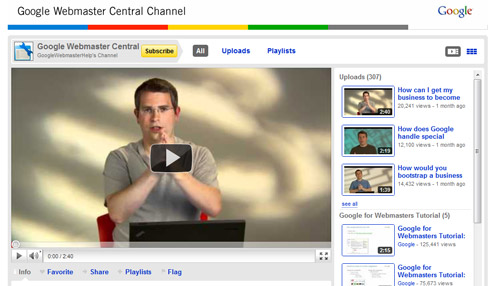
    If you are lazy like me you prefer to just listen to Matt Cutts talk.
    http://www.youtube.com/user/GoogleWebmasterHelp

    If you don’t know who Matt Cutts is and you are in Search Marketing, ctrl+alt+delete your resume. Best known as being the smilin’ enforcer of Google Webmaster Guidelines, Cutts provides guidance to search marketers through his Youtube videos and blog posts.

    Why You Should Care: Matt Cutts is Google’s Prometheus.  He presents SEO guidance in several different formats (videos, blog posts, guest speaking, etc). Having so many different formats make the information he provides easier to digest. If you are like me, hitting the play button is a lot easier to do than reading three paragraphs of insights.

    What Should You Stalk: While you can always follow his blog, I find his information most useful from the Youtube Channel – Google Webmaster Central Channel

    #2) The eWhisper

    @bgtheory on Twitter
    @bgtheory on Twitter

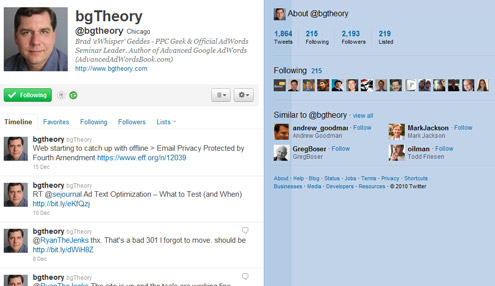
    bgTheory’s Brad Geddes is a world-class PPC Geek and Adwords affacionato. Besides being the Official Adwords seminar leader, he is also the author of Advanced Google Adwords.

    Why You Should Care: If you want to know what you should be doing with your Adwords account, Geddes is the man to follow. He is a well of information and ideas about how you be better use your Adwords campaign for generating and sustaining ROI.

    What Should You Stalk: His Twitter account – http://twitter.com/#!/bgtheory

    #3) David and the Paid Goliath

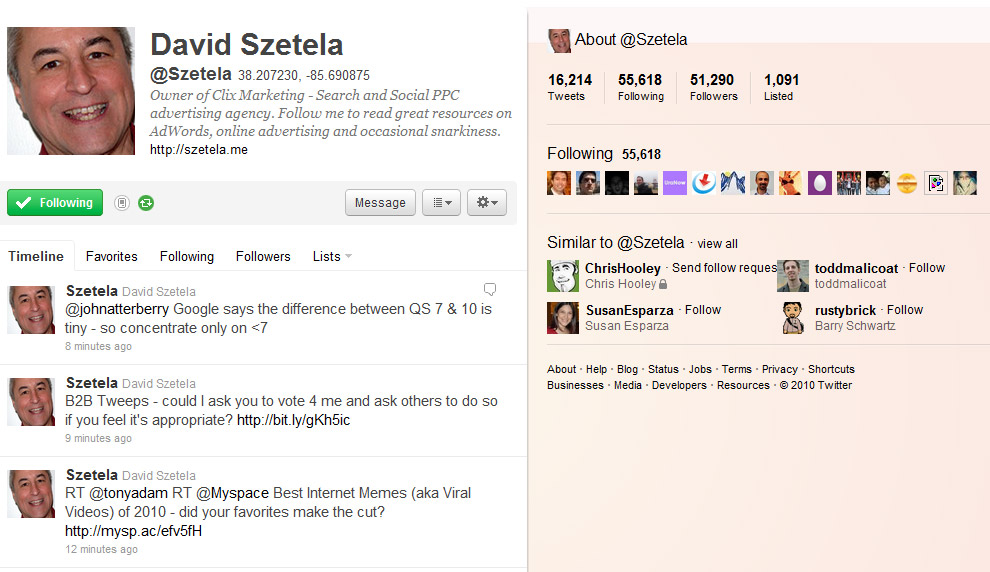
    @Szetela on Twitter
    @Szetela on Twitter

    David Szetela – the occasional snarky owner of Clix Marketing, David Szetela is one of my go-to sources for PPC news and updates.

    Why You Should Care: His knowledge of cross-platform paid search is extensive and an quick follow on Twitter will have your timeline full of information on tweets on paid search strategies and general SEO information.

    What Should You Stalk: Like with Brad, David is most active on Twitter – http://twitter.com/#!/szetela

    #4) Moz-el tov

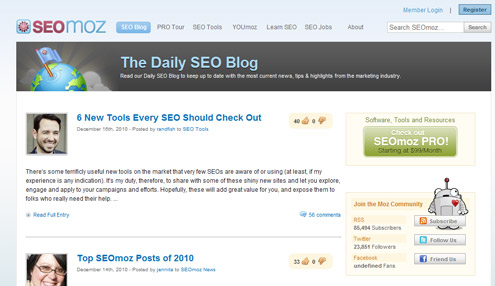
    http://www.seomoz.org/blog
    http://www.seomoz.org/blog

    SEOmoz  has some of the most informative blog post on SEO benefits, keyword mining, and PPC tips.

    Why You Should Care: I’ve been faithfully reading SEOmoz’s blog for up-to-date information on SEO, PPC, and SMM from some of the best and brightest. If you are not following this blog, you are missing out.

    What You Should Stalk: I highly suggest daily readings of the blog – http://www.seomoz.org/blog

    #5) Mike Maps It All Out

    [/caption]

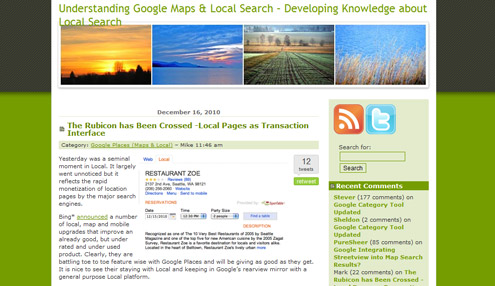
    A student of life, political economy & local search, Mike Blumenthal is a Google Maps and local search guru. He frequently authors articles at Search Engine Land and his blog Understanding Google Maps and Local Search.

    Why You Should Care: Local search, local search, and local search. Oh and maps.

    What You Should Stalk: : Mike’s blog is a warehouse of data points and Google Maps techniques