
Tag: Apps

  • 5 For Friday: Local Search, News, Advice, Measuring Success, and Penguin Refresh

    Five

    1. Local Businesses: Watch Out!
    – Search Engine Watch

    Apple’s newest gadget, the Apple Watch, is likely to have a major impact on local search. The expected increase in hyper-local searches means added pressure will be placed on businesses to ensure they can be found easily online. “Users will be able to search for locations via dictation or favorites, map out the routes and receive touch feedback at each turn – including different notifications to denote right or left turns” said Apple’s Vice President of Technology Kevin Lynch.

    2. SEO Success: Ranking #1 Isn’t What it Used to Be
    -Search Engine Land

    Following “Pigeon”, Google’s latest algorithm update, it has become increasingly apparent that rankings do not equal success. Instead you should focus on the following 5 metrics to more effectively measure SEO success: organic traffic, organic landing pages, organic conversion sources, Google My Business impressions and clicks for driving directions.

    PigeonUpdateImage

    3. Awaiting the Penguin Refresh
    – Search Engine Watch

    Google’s John Mueller recently announced that a Google is working on a Penguin update that is expected to launch in the “reasonable future.” In the meantime, Muller encourages webmasters to “focus on cleaning up site issues and making sure the sites are as good as they can be in and of themselves rather than focusing on individual factors of individual algorithms.”

    4. Social Customer Service: Now More Important than Ever
    – Search Engine Watch

    The social media revolution has had countless impacts on the success and failure of businesses. Consumers have more power than ever before; therefore, it is crucial businesses are aware of their concerns. Tips for success include: taking complaints and issues offline as quickly as possible, responding in less than an hour, and creating content that helps the customer, while maintaining a positive attitude.

    5. App-sessed
    – Marketing Land

    A new study shows that users spent 21 percent more time on apps in the last year. The data revealed that users are spending the longest amount of time on music-related apps and the shortest (but also most frequent) amount of time on social networking apps.

    MobileAppImage

    Image Sources:

    Pigeon Update Image

    Social Media Apps Image


  • Mobile, Mobile, Mobile: Why You Should Be Optimizing In The App Store

    marysilva1Who are we kidding? Mobile is already here and it is here to stay. With the shift from desktop to mobile for everything you can imagine, and the continued growth of app creation, it has become extremely important for creators to optimize their apps for in-app store rankings.
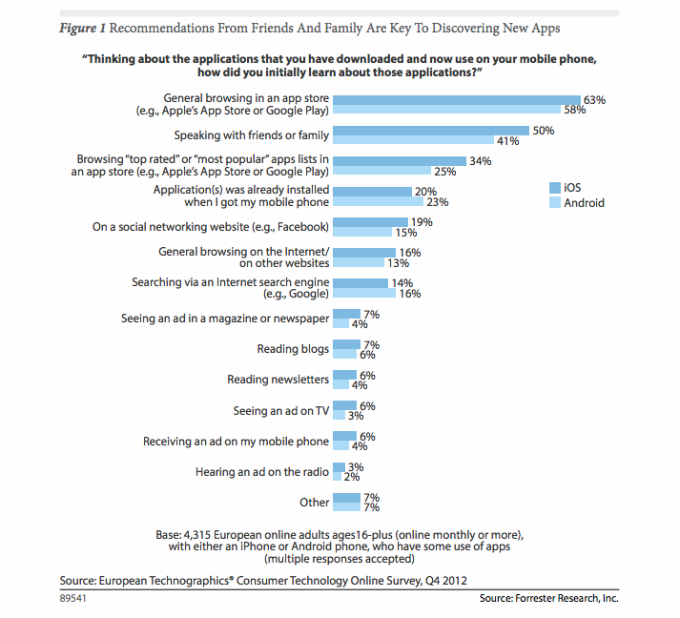

    App Store Optimization (or ASO, as it is known) is basically SEO for the app store search ecosystem. Much like major goals in SEO, the main goal of ASO is to drive more traffic to your app page in order to gain more downloads. In order to effectively optimize your app page, you must first understand your audience and what your target consumers would search for to find you.

    marysilva2

    Research firms, such as Forrester, have released studies in the past showing that most applications are discovered through general browsing and searching of the app store. From a user standpoint, when I am looking for a new app I first look for things that are relevant to my search terms and then weigh the options based on the number of downloads and ratings/reviews. This is much like the user experience when looking for local businesses online.

    This means that the best thing you can do for your app is provide relevant keywords in the title of your app. The other two determining factors (downloads and ratings) will come naturally once you improve your App Store Optimization. Keep in mind, however, that is not just the number of ratings, but the quality of ratings that really matters. Providing consumers with in-app support for encountered issues is a great way to help garner primarily positive reviews in the app store.

    Back in January 2013, Moz published the Top Three Inbound Marketing Strategies for Mobile Apps, a great resource for those looking to improve their ASO and app store rankings.

  • 5 For Friday — Links, Stories & Posts For Your Weekend

    Number 5 Street Falmouth1. The Marketing Value of YouTube – SEO MOZ

    The author here discusses the impacts YouTube can have for your product. YouTube is a great resource if you are looking to build your brand. It is important that you put up quality videos over the quantity of videos. Check out the article for some great information if you are looking to build a presence on YouTube.

    2. Google Places Is Being Updated To Google + Local – Search Engine Journal

    This talks about the transition from Google Places to Google + Local.  The post describes how this should make the process easier to use, faster updates, and integration with Adwords (Express) and G +.

    3. SEO & Keywords: Think Conversions, Not Rankings – Search Engine Watch

    Here the author talks about how rankings should not be the ultimate goal when it comes to SEO services. The author lists 4 steps you should take to produce stronger SEO results in the long run.

    4. Indecision 2.0: Are Apps Taking Away Your Power to Decide? –  Mashable

    Are we too dependent on social media to make simple decisions we face on a daily basis? I sure hope not. This is an interesting article about different apps that can help you make decisions you are not comfortable making, or if you just want some help making a decision.

    5. Google On Developing For Google Glass – Search Engine Round Table

    This post has an informative video on how developers can develop apps for Google Glass. In this article, it lists four key developer guidelines from the video to help you better understand the process.

  • SI Social: Hitman Social Media Game Shows How To Do It Wrong

    Social media is a fairly new medium, so it’s no surprise that people gaffe from time to time when they try to execute it right. Of course, there’s a varying degree of severity between “Whoops, I posted the wrong link!” to “Oh my, I’ve done something so bad that I need to dig a hole and crawl in.” You might expect the latter from individuals or smaller companies, but when a big company slips on that level, it comes as a bit of a shock. And that is just what happened yesterday when the enormously high profile video game publisher Square Enix tried to use a Facebook game to promote their newest title in the Hitman game series.

    Since the game itself depicts the adventures of an assassin, the Facebook game in question was a social device that allowed you to “put a hit” on friends. That’s already a little weird, but with the right comedic twist, I can see the potential for it. However, the faux pas came in the form of a drop down box that allowed you to specify the reason for the hit. The list included PC-unfriendly motivations such as “her muffin top” and “her bad hair,” but took the cake with “her small tits,” which is not only inappropriate language but sexist as hell to boot. Men weren’t left out of the insult war either, as “tiny penis” was also an option.

    As expected, social media exploded over the app — in exactly the opposite way that Square intended. The app was pulled within hours, apologizing and they issued a statement saying they did not mean to offend their audience. The campaign was created by Emmy-award winning ad agency Ralph, who apparently don’t that cruelly making fun of people before shooting them in the face with a sniper rifle is much of an objection given the game’s “mature” audience.

    Epic fail doesn’t even begin to describe the debacle here. While the newness of social media has made it a necessity for businesses to figure out how to connect with their consumers, it also means a lot of wandering into the creative unknown — which can yield stellar results or a landmine of bad PR. I keep trying to wrap my brain around how anyone greenlighted this thing, and no matter what angle I come at it from, I still can’t get a handle on it. Kudos to Square-Enix for reacting with lightning speed, removing the app less than an hour after it appeared, but how did it even get that far in the first place?

    If you are trying to think of ways to use Facebook to engage your client that are cool but not over the top, it’s best to have a checklist handy. “No racial, ethical, or sexist slurs” is probably a great place to start, followed by “know your target audience.” In this case, sadly, the target audience MAY have found this app funny, as the 2011 demographicfor gaming shows that 53% of the people playing games are between the ages of 18-54. In other words, lots of teenagers that might not think twice about picking on a classmate for physical flaws. Sexism in gaming has recently drawn huge amounts of criticism over the rampant and violent misogyny that the medium and its consumers have tacitly encouraged for years. The fact that the company was willing to put their seal of approval on such a blatant example of juvenile asshattery shows that they’re tragically out of touch with the contemporary climate — not to mention ignorant of the disastrous PR effects on a brand that wading into these issues can provoke.

    What do you think about Square Enix’s slipup? Can you think of any other social media disasters that have caused you to facepalm at the speed of light?

    (Image via Kotaku.)