Tag: Amazon

  • Amazon Has a House Party, and Your Local Business Needs an Invite

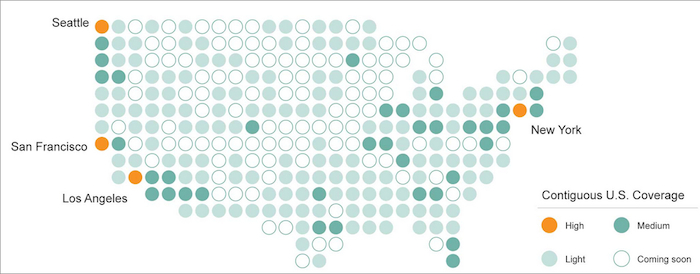
    Amazon Home Services Map Image - Search Influence

    To compete with Angie’s List, Craigslist, Yelp, Home Advisor and other marketplaces, Amazon has recently launched its own marketplace called Amazon Home Services.

    What makes this platform different from the others? How could it help you, as a local business, with an increase in leads and improved Google rankings?

    Amazon has its own ecosystem: loyal customers and Amazon Prime members. Being a part of this ecosystem means being exposed to 85 million potential customers. “In less than 60 seconds, customers can now browse, purchase and schedule hundreds of professional services from wall mounting a new TV to installing a new garbage disposal to house cleaning, directly on Amazon.com,” according to the company’s recent press release. And your business can be a part of it.

    In contrast to Google, which ranks services in terms of the most accurate answer to the searcher’s query, Amazon ranks services in terms of what product the searcher is most likely to buy. This functionality is easier for small businesses. Indeed, Amazon’s algorithm will automatically show the best service to match what the searcher is looking for. In other words, when a searcher is looking for a television on Google, the result will include everything in relation to televisions except a list of local services, while Amazon will include all the repairs/installation services related to a television based on the searcher’s geolocation. That is why it will potentially make it easier for small businesses to rank on Amazon. But there is a catch: to be part of that ecosystem, you need to be invited by Amazon.

    So how can you get invited? First, you need to have a strong Web presence, a good strategy for displaying information about your services, a good reputation and finally, great online reviews from your customers. (But really, you’d want all of these things anyway.) On top of that, you need to be licensed and insured.

    Are you ready to apply? Don’t jump to it too fast! Google just announced it is going to open its own marketplace for local businesses, which means more visibility for you as well as more leads, since most people search on Google.
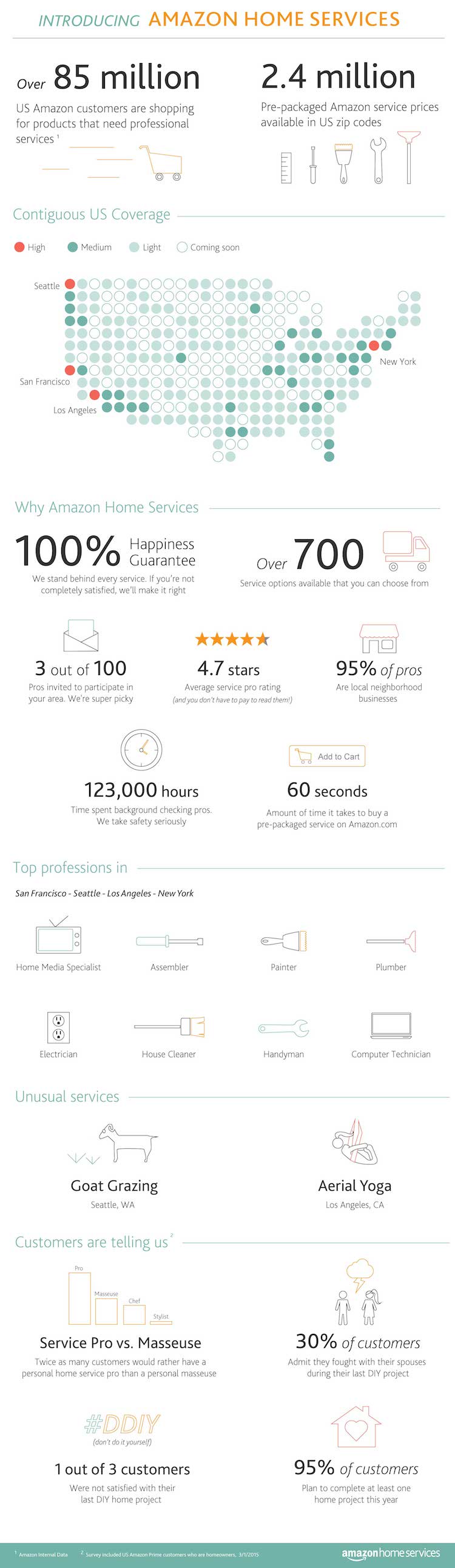
    Amazon Home Services Image - Search Influence

    Image sources:

    Amazon Home Services infographic

    Amazon Home Services map

  • Five for Friday: Beef Up Your Local SEO, Twitter Welcomes Newbies, and More

    1. Google’s Domain Registration Service Now Open To All US Residents – Search Engine Journal

    Google now has a proprietary domain registration service! What’s great about this service is that, like most Google products, it’s fully integrated with Gmail forwarding as well as other goodies provided by Google’s partners – Squarespace, Weebly, Wix, and Blogger. Streamlined and familiar, domain registration starts at $12, with additional add-ons available. For more information about this service in different countries, you can sign up to a mailing list.

    2. A Step-By-Step Introduction to Amazon Product Ads – PPC Hero

    Amazon has always been kind enough to direct customers to your product, and it sometimes even directs them straight to your website. With Amazon Product Ads, the company helps you become better at selling your wares the right way – with the consumer in mind, but the seller at heart. This article details the step-by-step process on how to utilize APAs to the fullest, and it educates you on the nuances of selling products online.

    3. How to Have a Successful Local SEO Campaign in 2015 – Moz

    These tips are typically a no-brainer for us optimizers, but as evinced by our recent SI Conference, there are nuances to local SEO, and SEO in general, that we sometimes just don’t see right off the bat. With the new Google updates, optimizing is getting more personal and organic than ever. Check out the interesting click map to see just how organic SERPs are becoming.

    4. The Big List: 80 Of The Hottest SEO, Social Media & Digital Analytics Tools For Marketers – Marketing Land

    Note: this is not a ranked list of SEO tools, but rather a running total of great tools out there at the moment. Perhaps we will see some of these in our near future as employees of Search Influence. It’s nice to see kind things said about the tools we currently use, if not only to solidify the reasons why we chose the ones we did.

    5. Report: Twitter Planning New Home Page For Logged-Out Visitors – Marketing Land

    As an avid Twitter user, I’ve always been concerned with the esoteric universe that is Twitter’s inner sanctum. What’s in a homepage, you ask? Well, currently Twitter leaves a lot to be desired (a marketing ploy perhaps); there’s no indication of what the user interface even remotely looks like based on their homepage. Reports indicate that, unlike many social media home pages, Twitter may give in to human curiosity and allow potential users to glimpse its inner workings.


    Image Sources:

    Oh Boy Gif

  • Five For Friday: Amazon Gets Physical, Tinder Cleans Up, & G+ Asks, Am I Pretty?

    FiveForFridaysColorfulFive

    1. Google Testing New Local Interface In Web Search Results – Search Engine Roundtable

    Google is testing a new interface for showing the local web search results. Back in August, we saw that Google was showing the local carousel within the results, but this new interface is simply a list of the results and isn’t going to preview a map within the carousel.

    2. Tinder Spammers Move to SMS After Improvements To Dating App’s Security – Tech Crunch

    For awhile now, the dating app Tinder has been overwhelmed with spam bots, or accounts created to flirt with Tinder users and then direct them to adult sites. However, this summer, Tinder was called out by Symantec and therefore had to address the issue with an update. At first it appeared the update addressed the issue, but a new report is showing that the spammers have just moved to using SMS texts.

    3. Report: Amazon To Open New York Retail Store – Marketing Land

    Recept news reports say that Amazon is planning to open a Manhattan store just in time for holiday traffic. According to WSJ, the new store, opening at 7 West 34th Street, is to operate as a mini-warehouse of sorts, allowing returns and pickups. Others had reporting that this might be a place for Amazon to showcase it’s upcoming products such as new e-readers, the Fire Phone, or Fire TV. Either way, this could be a game changer for this e-commerce provider.

    4. Google Adds The Ability To Post Polls On Google+ – Marking Land

    As of October 9th, Google+ is giving users the ability create and share polls. This was a tool Facebook was offering back, but then pulled back in 2012 finding it redundant. This new feature in Google+ will on the web and Android versions within the next few days, and then eventually iOS.

    5. Google Makes Conversational Search Even More Intelligent – Search Engine Journal

    OpenTableLogoImageOn October 9th, Google announced an update to their conversation search functionality which should make it easier for planning. Overall the new features include, location-based searches, making reservations, and finding directions. These new features are now available on the Android and iOS app. What does this mean for businesses? It’s more even important to optimize your site for local search as well as to verify your Google+ local listing. If you own a restaurant, then you should ensure you are listed on OpenTable so you don’t miss out on potential customers!
  • 5 For Friday – Amazon Ad Challenge, Facebook Changes, Twitter Spam, & Google’s Snafu

    1) Amazon Takes on Google Adwords – Wall Street Journal

    AmazonLogoImage

    The war for Internet supremacy rages on between Google and Amazon. The increasingly competitive relationship between the two giants has grown even more strained as of late, but their tenuous relationship has survived largely because Amazon is one of Google’s largest advertisers for text ads. But that may change.

    Amazon is working on a competing in-house platform, and testing could commence as early as later this year. Using the plethora of shopping data the online retailer has amassed, the program could almost instantly become a major force against the search engine’s online ad dominance.

    2) Despite More Ads, Facebook Promises, “We Will Not Show More Ads” – Digiday

    Speaking of Internet giants, Facebook is in the news again. In a rather quiet update earlier this month, Facebook amended its advertising policy to allow marketers to show ads more frequently in users’ News Feeds.

    The update allows advertisers to show the same ad twice a day, as opposed to the previous once a day restriction. The new update also allows advertisers to show users two News Feeds ads per day from a page that they did not explicitly “Like,” again up from just one.

    Facebook emphasizes that you will not see more ads from various companies, just possibly more ads from the same company. A Facebook spokesperson said of the change, “This does not change ad load. We will not show more ads; rather, we are updating the spacing between ads, and relaxing some of the parameters around the insertion of ads.”

    Hmmm… more ads is more ads, no matter who they are from.

    3) More from Zuckerberg & Co: Facebook is Finally Cracking down in Upworthy-Style Click Bait – Gizmodo

    We’ve all seen it – an annoying, attention-grabbing headline like “No One Would Help This Little Girl from Being Bullied. What She Did Next Will Shock and Amaze You.”

    Of course, these headlines are designed only to generate clicks, but dang, am I intrigued. I mostly refuse to click them simply on principle, but even when I do succumb to the temptation, I am always disappointed.

    DoNotPushButtonImage

    Thankfully, Facebook is finally taking steps to eradicate this spammy click bait by looking at how long people actually read the articles they click on as well as comparing the click ratio to comments, “Likes,” and shares.

    Facebook also announced that links should be posted in a “link format” instead of shared in the status update and captions of photos. Posts that have links in the captions will be given less priority in the News Feed.

    4) Meet Twitter’s Spam-Fighting Tool – Marketing Land

    And now, a word from that other social media juggernaut: Last week, Twitter gave an inside look at their super spam-killing system known as BotMaker. Since launching the system recently, spam metrics have dropped 40% overall.

    BotMaker is designed to prevent spam content from being created, reduce the amount of time spam appears on Twitter, and reduce the reaction of new spam attacks. To accomplish this, Twitter uses a combination of systems that detect spam at various stages: Scarecrow (real time), Sniper (near real time), and Periodic (over extended periods of time). What makes it even more effective is its ability to adapt quickly with new models and rules to combat the ever-changing production and proliferation of spam.

    To learn more about the creation of BotMaker and how it works, feel free to dig in deep over on the Twitter Engineering Blog.

    5) Moving to HTTPS: Good or Bad? – Wall Street Journal

    Google recently announced it would be giving a boost in search rankings to encrypted websites. But in an effort to push site owners to switch to HTTPS, Google overlooked the fact that many web components, including its own Trusted Stores and AdSense, are not completely compatible with those types of sites yet.

    To protect sensitive info, sites were already required to have their checkout pages encrypted, but the announced rankings boost spurred many sites to try and convert all of their “non-sensitive” pages as well.

    This caused a bit of a problem with user experience. Trusted Stores is not compatible with basic encryption, meaning that the required badge cannot be displayed. Without this badge, Google will not accept HTTPS sites into the Verified Stores program.

    As for AdSense, Google now acknowledges that “if you convert your HTTP site to HTTPS, ads on your HTTPS pages might earn less than those on your HTTP pages.” This is because the HTTPS ads don’t compete in auctions with HTTP ads, which lowers rates. Whoops!

    OopsMyBadImage

    Image Sources:

    Amazon in Browser

    Do Not Push Button
    “Oops my bad”