Tag: algorithm

  • How I Learned to Stop Worrying and Embrace Google Algorithm Updates

    Author’s Note: During the course of writing this blog Google took an unusual step (for them) and announced an impending core algorithm update. While this blog does not discuss this update specifically, the underlying themes about handling these updates should remain applicable. To learn more about this core update, I recommend reading some of industry news sources I have mentioned below. 

    Much like the sun will rise in the east and set in the west tomorrow, digital marketers and business owners alike will hear rumblings every few months about supposed updates to Google’s ever-elusive algorithm and begin to worry. For some businesses, these updates (or “improvements,” as Google usually euphemizes) can generate significant dips in traffic to their site and seemingly undo previously successful SEO efforts. A prime example of that scenario would be back in August of 2018, when SEOs noticed a noticeable drop in site traffic, particularly in the medical vertical.

    This led to wild speculation about the scope, purpose, and future impacts of this particular update. Undoubtedly, many digital marketing practitioners felt the effects of this update with diminished traffic to their sites. As someone who has worked on numerous SEO campaigns and strategies, I can certainly relate to the consternation around Google reconfiguring their algorithms to change the way sites are rewarded organically. In many instances, these updates can positively impact sites that may be less authoritative and in some cases utilize underhanded tactics that do not necessarily meet searchers actual needs.

    Lisa Simpson taking a scientific approach to Google algorith updates

    This is certainly very frustrating from a marketer’s perspective, as the parameters around what is best practice and how to win organically can shift seemingly overnight. When this is combined with Google’s textbook evasiveness around these updates, it may be overwhelming.

    So, How Should I Respond to a Google Algorithm Update?

    Google has made efforts to become more communicative with SEOs in recent years (they even updated their “SEO Starter Guide” for the first time in over seven years back in April of 2019), however, they still are very cagey about what they are willing to reveal as it relates to specific algorithmic updates. In certain cases, if there’s enough of a perceived backlash from the larger SEO community, then Google representatives may take steps to address it publicly; however, those answers are typically engulfed in vaguery as well. Take this statement from Google’s Search liaison Danny Sullivan in the aftermath of the August and September 2018 updates as an example.

    “We understand those who do less well after a core update change may still feel they need to do something. We suggest focusing on ensuring you’re offering the best content you can. That’s what our algorithms seek to reward.”

    The word “seek” is pretty telling here, as it underscores the idea that the algorithm is imperfect. Also, consider the fact that Google is constantly reworking their algorithm to best serve searchers, another implicit sign that there is room to improve. The first thing you can do to help yourself respond to algorithm updates is to realize that 1) it’s not a perfect reward system and 2) these changes are out of your control. Additionally, the solution is intentionally vague and does not really define what “best content” really is.
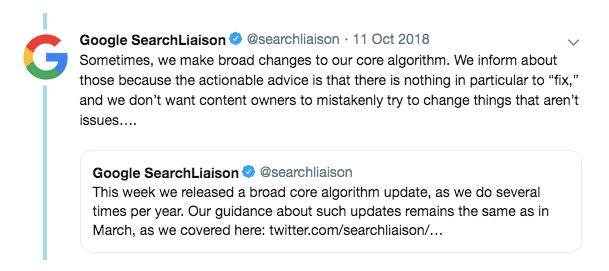
    Screenshot of Twitter discussion of Google algorithm updates

    Above we see the acknowledgment. One can waste a lot of time questioning Google’s decision-making, but it is important to evaluate whether these updates have actually had a tangible effect on your business. In many cases, these updates may impact certain industries, but certain sites within that industry do not see the effects. Before looking at the macro of the issue, the focus should be on if there is any tangible impact on the micro level; in other words, did this update actually impact me? From there, you can start to take the steps needed to recover, if you even need to.

    How Do I Know When a Google Algorithm Update Is Occurring?

    Since Google does not typically acknowledge when an update is happening, digital marketers rely on third-party tools and anecdotal evidence to connect the dots. The best way to stay on top of this is by following some of the industry leaders who follow and discuss news stories of the day, such as (to name just a few) Search Engine Roundtable (who does an amazing job staying on top of chatter around updates), Search Engine Journal, or Search Engine Land.

    Most reporting around these updates comes from what SEOs and digital marketers are seeing in real time, as well as from new tools that help monitor search engine volatility. One of these tools is SEMRush’s Sensor that measures the level of volatility across industries and across different countries. Often, the sensor will pick up on this volatility and the news about updates will follow in the next few days.
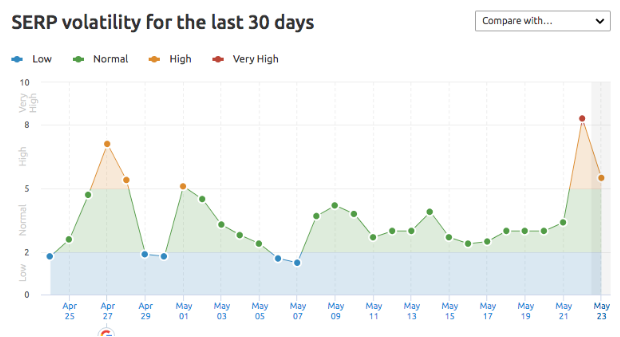
     

    SEMRush's Google algorithm sensor

    As you can see here, April 27th and May 22nd are of particular interest. SERP (Search Engine Results Position) volatility is noted as very high, meaning sites’ rankings have fluctuated greatly. As I write this blog on May 23rd, I am starting to see chatter around the typical sites about potential updates to Google. These are largely unconfirmed, and it’s unlikely that this is a massive update, but we do not know that until more SEOs and digital marketers weigh in or Google confirms these updates. What this tells us is that somewhere, in some verticals, rankings have fluctuated. Whether or not this is a result of an update or some other unknown factors is hard to know.

    It is important to remember this: these anecdotes and 3rd party tools are just signs, not concrete evidence. There are many examples of overreaction to this data and many times it can lead to unnecessary scrambling when it may just be a minor change or something completely unrelated to an algorithm change.

    Well, My Traffic Is Way Down, Now What?

    This is where it becomes tricky, as you must be familiar with your overall SEO strategy as well as the possible sources of these issues. This is why monitoring tools like SEMRush’s Sensor as well as the various industry news sources is imperative to running an effective SEO campaign. If your traffic is down as a result of an algorithm update, then there is almost assuredly highly skilled digital marketers attempting to diagnose and find solutions to the problems.

    Take this post about how to recover from the “Medic Update” from Search Engine Journal. This is chock-full of the usual pain points about these updates, Google’s vague acknowledgments, and some evaluation of previous updates. In addition, however, we get plenty of great strategies around content to help rectify the issue. The volatility of SEO and rankings allows for your site to recover if you continue to be ardent about following best practices and putting effort into your strategies. Furthermore, you cannot get locked into a fixed set of best practices. In many cases, the best solution is to try a new approach you may have avoided or not known prior.

    In the moment, these updates can seem like a business-altering minefield, but it is very important to remain focused on long-term strategy. SEO is oftentimes a slow, non-linear process, so it’s important to keep that in perspective before getting overwhelmed by a bad few months after an update.

    If you need help with your SEO strategies, the team at Search Influence has the expertise to navigate through the ups and downs of Google algorithm updates. To learn more, contact us today.

    Images

    Laptop

    Lisa

    Google Twitter

    SEMRush

  • Understanding Facebook’s Algorithm – Ariel Tusa from Search Influence on WDSU

    Ariel Tusa from Search Influence joins Christina Watkins on WDSU! She shares some knowledge about:

    • The Facebook Algorithm

    • Tips for tailoring your feed to show the types of posts you WANT to see


    These tips can be helpful for your personal Facebook page, as well as your business’s Facebook page. Social Media Optimization is beneficial for businesses in most industries, and understanding the basics of the Facebook Algorithm is the first step in developing a social media strategy for your business. To learn more about social media optimization, contact us at Search Influence.

  • How the Google Penguin Update Will Affect Your Site in 2016

    Happy Penguin Awareness Day! (You remembered, right?) Today, we celebrate everyone’s favorite quirky, aquatic natives of the Southern Hemisphere. Maybe you’ll want to spend the day in a tuxedo, visit your local zoo, or adopt a penguin to celebrate?

    Of course, if you’re in the world of SEO, you might find that instead of adorable fluff balls, Google’s massive algorithm springs to mind. While it’s not quite as cute and cuddly as its animal cousin, this Google algorithm continues to be a crucial part of SEO in 2016—and this January, it’s more important than ever to be aware of how it affects your site.

    Google’s Big, Fluffy Penguin

    First launched in April 2012, Google’s Penguin update made massive waves in the SEO world. That era was a dark time in the online world—back when questionable content and black-hat SEO could earn you high rankings in the SERPs. The Penguin update’s primary aim was to make these manipulative strategies ineffectual, decreasing the SERP rankings of any website found to be in violation of Google’s Webmaster Guidelines, especially those sites that tried to increase their rankings through various link schemes.

    The penalty for sites with too many low-quality, “spammy” links is steep: you may lose your high rankings in the SERPs, or Penguin may even remove your URLs from the SERPs altogether, which is the last thing you want. Fortunately, penalties can be removed in a number of ways, from manually removing questionable links to using Google’s Disavow Tool. In a January 2015 video hangout, John Mueller also stated that these penalties can be removed by simply building high-quality links—which can help Penguin overlook some of your more questionable links.

    What’s New?

    Up until recently, Penguin was pretty old news: the last confirmed Penguin update was over a year ago in October 2014. But Google has been working on a revamped version of its favorite fluffy algorithm for some time, and Penguin 4.0 is expected to be released within the next few weeks. With anticipation hanging in the air, influencers throughout the industry have been on the edge of their seats awaiting the update—but in spite of a lot of unusual ranking changes, Google has confirmed that the latest Penguin update has not yet been released as of January 12.

    The Penguin update, according to Webmaster Trends Analyst Gary Illyes, promises to be the “real time version,” which means that the revamped Penguin algorithm will update continuously, discovering and analyzing your site’s links in real time. This, in turn, means that any changes to your site (whether good or bad) should have a much faster impact on your rankings.

    In the long run, this is great news: fast and frequent “real time” analysis should mean that Penguin penalties are less lasting, so removing unnatural links from your site should allow you to see a speedy recovery.

    How to Prepare for the Coming of Penguin

    While massive Google algorithm updates tend to shake up the SERPs for a while, the good news is that the same SEO best practices we preach so frequently on this blog should be a good defense against the worst of the changes.

    Now is the time to perform a comprehensive link audit, especially if it’s been a while, just to be sure your site is prepared. Take the time to eliminate any bad, exact match, low-quality, or irrelevant links in favor of clean linking strategies. If you’ve made every attempt to remove an unnatural link, use the Disavow Tool as a last resort: this tool tells Google that despite your attempts to remove the link, you were unable to do so.

    Aside from this careful audit of your site’s links, the best thing you can do is continue creating content that is high-quality, helpful, and informative—or tweaking your existing content to be this way. Organic backlinks are grown from this kind of information, as people naturally share content that they find interesting or informative.

    If the impending Penguin update has you worried, don’t forget that Search Influence offers a wealth of SEO services to ensure that this penguin doesn’t come back to bite you!


    Image Credits:

    Jumping Penguins
    You Didn’t See Anything
    Penguin Attack

  • What’s Black & White & May Have Killed Your Site in 2014? This Year’s Top 3 Algo Updates

    In 2014, there were numerous algorithm updates that changed the world of SEO—for the better. Google uses a finely tuned (and ever-changing) algorithm to sort search results in a way that best caters to the searcher. In order to perfect this art, Google turns out algorithm updates, both minute and massive, regularly (and sometimes not so regularly). As such, SEO is always evolving to match this quickly turning tide, which is why it’s best to focus on creating a site that will best benefit the end user.

    Looking back on the past year, there were many, many, MANY updates of note. So let’s just focus on the top three major hitters.

    Panda 4.0

    About

    Being in the top three is no small feat, and kicking off the list of top algorithm updates of 2014 is Panda 4.0. On May 19th, Panda 4.0 rolled out, affecting about 7.5% of English-language queries. Though there was another major Panda update in 2014, Panda 4.1, the effects of this second Panda update were less noticeable than those of its predecessor, “only” affecting about 3-5% of queries.

    Generally, Panda updates are geared towards high-quality content. Their goals are twofold:

    1. To stop sites with low-quality content from working their way into Google’s top search results
    2. To reward high-quality content with more presence by pushing sites with thin content down in SERPs

    What did it do?

    Panda 4.0’s effects did not stray from the Panda expectation. Some of the observed changes that occurred to sites as a result of Panda 4.0 were that it:

    • Penalized aggregated content
      • Aggregated content relates to sites that compile content from other sites. A well-known site that utilizes aggreged content is Buzzfeed, though Buzzfeed seemed to fare this update well.
    • Penalized thin content
      • There were 2 major types of sites with thin content that were affected:
        • Sites lacking quality, long-form content throughout
        • Sites with strong hierarchical structures that may contain quality, long-form content on key pages but contain thin content on higher-level category pages
    • Rewarded high-quality content
      • Sites with reputable, long form, user-friendly content

    How it changed SEO

    Quality content = good content + positive user experience. The major takeaway from Panda 4.0 is not a new one. User experience is always an important factor, but it’s one that can get lost in pursuit of developing long-form content. When developing quality content, an emphasis should also be placed on how the content is viewed.

    AddingCustomGraphic

    Images

    Paragraph after paragraph about your service offerings is likely a wasted effort without visual aids to break up text and give users a new means of understanding.

    Internal Links

    Do you have before and after images? Related blog posts? Anything to give the reader more info? Add links to give users a reason to click through more of your site.

    Mobile Experience

    Now have you considered mobile? Site visits from mobile users are always increasing. Are you providing mobile visitors a good viewing experience that is specific to mobile and easy to navigate and read?

    PizzaNewOrleans

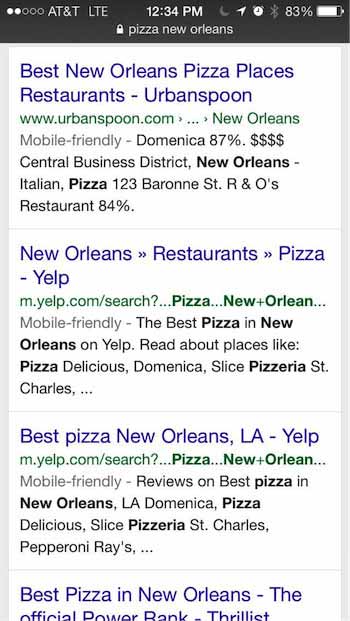
    Though not a part of the Panda update, Google is now providing information in SERPs stating whether a site is mobile-friendly or not. This effectively allows users to skip over results they know cannot be easily viewed on their device, and it furthers the importance of ensuring that your site provides a positive user experience for searchers on all devices.

    “Pigeon”

    About

    A few short months after Panda 4.0, a new breed of animal entered the circus of algo updates when Google rolled out “Pigeon.” Unlike Penguin and Panda updates, Pigeon was not a penalty-based update (aimed at cleaning the SERPs from low-quality sites), but a core change to the local search ranking algorithm. Many different types of businesses were affected by Pigeon. Some of the industries that saw a big effect from Pigeon were real estate, restaurant, hotel, retail, and more.

    What did it do?

    Overall, Pigeon dramatically altered some local results and modified how they handle and interpret location cues. This update is supposed to be a move toward a better user experience for mobile users, with results more concentrated in number and in proximity to your location. Google has also stated that Pigeon helped develop closer ties between the local algorithm and the core algorithms.

    How it changed SEO

    Some of the major changes that occurred as a result of this update were:

    • The disappearance of local listing packs from a large number of SERPs
    • A stronger emphasis placed on relevant directories in search results, leading more SERPs to become directory-heavy rather than heavy with individual businesses’ sites.
    • A switch in focus of local ranking factors
      • Local rankings are expected to depend more on website authority and less on traditional local ranking signals
    • A change to the way in which location cues are interpreted, with results more concentrated in number and in proximity to your current location

    Penguin 3.0

    About

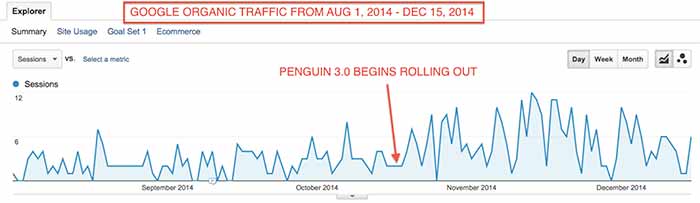
    Last, and certainly not least, this list would not be complete without mention of our long-lost “frienemy,” Penguin. This year, the story of our love/hate relationship with the Penguin algo update was mostly one of love and longing as we patiently awaited its arrival after a yearlong hiatus. Much like preparing for the arrival of Santa, webmasters spent their year diligently reviewing and cleaning up backlinks in an effort to wind up on Penguin’s “nice” list. Finally, Christmas morning came on October 17th when Penguin 3.0 began rolling out, initially affecting less than 1% of US/English queries. 

    What did it do?

    Generally speaking, Penguin updates focus on the level of natural linking behavior. This filter primarily affects websites with a high volume of lower-quality links. For those sites who were affected by the Penguin updates of 2013 and took the initiative to clean up low-quality links in 2014, a positive effect was likely realized after Penguin 3.0.

    PenguinGoogleOrganicTrafficIncreaseImage

    Specifically, Penguin 3.0 also began a movement to begin regular refreshes, much like Panda. As a result, many webmasters have observed major changes since Penguin 3.0, dubbing these major changes Penguin 3.1, 3.2, 3.3, and 3.4.

    How it changed SEO

    Penguin 3.0 resulted in 2 major industry changes in how Penguin updates are processed and anticipated:

    1. Google has stated that they will move toward regular refreshes of Penguin 3.0, much as they have done with Panda. In the past, Penguin updates have been processed offline and pushed live on a specific date and time. With this new change, Google is indicating that they will be making changes to the algo within their live rankings processes.
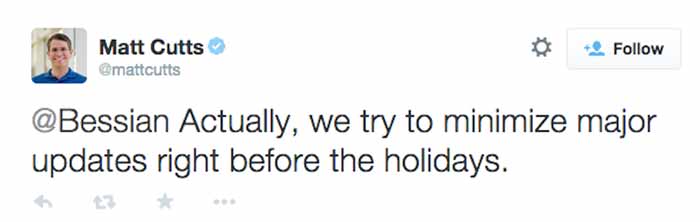
    2. Google broke its “no major updates during the holidays” promise on Thanksgiving Day when Penguin 3.1 occurred. Though Google considered this Thanksgiving Day fluctuation a part of their initial Penguin 3.0 rollout, rarely do updates take this long and cause major fluctuations late in the game.

    MattCuttsTweetHolidayUpdates

    Takeaways For 2015

    So whether Panda, Pigeon, or Penguin affected your site in during 2014, we hope you have been able to use the plethora of circulating information to bounce back. If not, you can always contact Search Influence to help you formulate a specialized plan.

    The big takeaway, however, is that algorithm updates are to be expected, so it’s best to prepare for them ahead of time by making your site as user-friendly as possible. We don’t know what’s headed for us in 2015, but rest assured, it will probably be as eventful as 2014.


  • Those Who Do Not Learn From The Past Are Doomed To Have Poor Search Value

    If you’re reading this blog you’re probably already aware that Google has been busy updating their algorithms. If you work in the Internet marketing industry you may be on edge, cowering at the very mention of any animal whose name begins with the letter P. Ever since the first Panda update in 2012, followed by the introduction of the infamous Penguin algorithm that laid waste to the search engine rankings of many a carefully formulated marketing campaigns, ended careers, crushed SEO companies, and changed the hierarchy of competing businesses across the globe, people have kept an ear to the ground for the approach of further updates.

    Unfortunately, the secrets behind these algorithms are tightly guarded, and only general guidelines and information are provided to the public by the clandestine data giant, Google. So what are we to do? How can we avoid being penalized for our efforts and implement a lasting marketing strategy that won’t blow up in our faces like some Looney Toons derived Acme product?

    Threading Through the Maze: Birth of the Search Engine

    In search for the most strategic tactics to create a future-perfect website, I believe we must first visit the distant past, the primordial pre-digital world of 1945. Yes, its time for a flashback.

    BackToTheFutureImage

    The heated global conflict of World War II has induced a brave new world of scientific development spurred on by allied nations sharing research to gain a technological edge in the war. In the wake of the conflict, a newly established international science community, having proven itself as an invaluable resource in every aspect of the war, is continuing to progress at an unprecedented rate. As the head of the U.S. Office of Scientific Research and Development, Vannevar Bush, has been coordinating between a broad range of scientific disciplines from all over the world since 1941. Frustrated with the inefficiencies involved with sharing massive amounts of data between specialized fields of study, namely the inability to quickly find pertinent information, Bush devised a solution that he described in his essay As We May Think.

    “The summation of human experience is being expanded at a prodigious rate, and the means we use for threading through the consequent maze to the momentarily important item is the same as was used in the days of square-rigged ships.”

    Bush’s vision was to create a system that more naturally indexed information by association, implementing “associative trails”  allowing a person to further explore particular ideas within an article as opposed to having to put down one resource to take up the search for information anew. He envisioned the ability to view multiple articles on a single screen, with the ability to add comments that could be stored and recalled with the article thereafter and the creation of links between related articles, allowing users to map out a network of information easily accessed and built upon by future users.

    Of course, in that day, the technology did not exist to implement Bush’s machine. Bush’s device, the “Memex”, he proposed would use every 60’s spy film’s favorite storage format — microfilm. His vision inspired further development within the scientific community that above all other things resulted in streamlining the exchange of information making exponential leaps and bounds in development and implementation of new science possible.

    Back to the Future

    WhereWereGoingDontNeedRoadsImage

    So you’re probably thinking at this point. “Awesome. A guy back in the 1940’s thought up something vaguely search-engine like. Great. Maybe next time I need to change the oil in my Nissan you can tell me about the inception of the steam engine.”

    Okay. I like nerding out about history. Guilty as charged, but this brief walk through the annals of history does have some significance to the modern webmaster. As much as technology changes and improves, the demands that drive development remain unaltered. The desire for an intuitive means to access a large network of information led to a series of advancements that reshaped modern society.

    The entire history and continued development of search engines lies within the scientific community as an effective means to index and provide relevant information to those that are looking for it. Every search engine adheres to these concepts and despite the negative association with algorithm updates in the Internet marketing community these updates are, at the very least, intended to improve on Google’s ability to provide the most relevant and desirable information to the user.

    For those looking to the future, bare in mind that Google isn’t just getting better at devising its algorithms and penalizing what it interprets to be undesirable marketing practices, Google also provides ever increasing access to information and incorporates more user behavior into how they determine the validity of a website. As the #1 search engine in the world, and largest provider of analytics solutions, Google has access to massive amounts of user data which is being actively used to determine search rankings. While you can fool search engine crawlers and automated ranking processes, Internet users of today are savvy, experienced, and don’t take kindly to spammy or misleading marketing practices.

    Preparing for the Inevitable

    The oversimplified answer to how to implement a website that will succeed on the search engines, and continue to do so, is one that embraces the ideals on which Bush’s Memex was based and all search engines were built — to put useful information into the hands of the people that are looking for it.

    STEP 1: To best do this, the important first step is determining what information your clients need and want most. Don’t get tripped up analyzing at this part of the process. Think simple. If it’s a product you’re selling, generally a wealth of user reviews on the Internet will tell of the user’s opinions and desires. Tap into these for inspiration.

    STEP 2: Next, create original, well-written and researched content. The content should provide users with the information they are looking for, clearly labeled and organized to enable a user to quickly find the tidbits that are most relevant to their search. Updating or adding to this information often is important. Keeping your site current and error-free will help continue visits to your site and an upward progression in ranks.

    Step 3: In addition to text, it’s important to provide high-quality images, videos, and other media, and it’s even more important to label these properly. The more original media you provide the better.

    Step 4: Established social media sites and Internet communities relevant to your industry are important places to have a presence in order to connect directly with potential clients and establish your site’s authority.

    I know these tips are nothing new. These are the time-tested practices for Internet success that have barely changed since the genesis of the Internet.

    I understand the general reaction to algorithm updates. It’s crushing to struggle up the ranks using all your know-how just to have those efforts ripped to pieces. And when battling for exposure in the dog-eat-dog world of marketing, many, if not most, will turn to any competitive advantage they can muster.

    It’s important to realize, however, that with regular updates occurring that further marginalize the gains of shady marketing practices, anyone looking for more than a flash in the pan needs to embrace the ideals from which the search engine was born and connect people to the information they are looking for.

    Image Sources:

    Thanks to Don’t Count Your Chickens and to halbschwer for the Back To The Future Gifs. Also, thanks to Mark Bourne for the Wile E. Coyote image.

  • 5 for Friday – Twitter and Facebook Duke it Out, Social Signals’ Effect on SEO, and the Power of Nofollow Links

    5hand

    1. Mobile Site Call Conversions Now Available in AdWords – PPC Hero

    It’s finally here! Adwords now tracks click-to-call conversions on mobile devices. This can easily be added to a specific landing page with a little bit of coding. This feature will allow you to track calls through the same venues as your other performance metrics and customize the value of the incoming call. This blog post has step-by-step instructions on how to implement this new feature on your site!

    2. Google Wallet’s 2-Click Instant Buy Checkout Comes To iOS – Tech Crunch

    This week Google Wallet released its Instant Buy API for iOS apps. This was first released for Android apps a year ago. This free service can be accessed with your Google+ login and stores your shipping and credit card information. Merchants can then use the information to complete the transaction. Google Wallet aims to eliminate the frustration of mobile device shopping and decrease shopping cart abandonment.

    3. Facebook and Twitter Want You to Talk About the #WorldCup on Their Field – Marketing Land

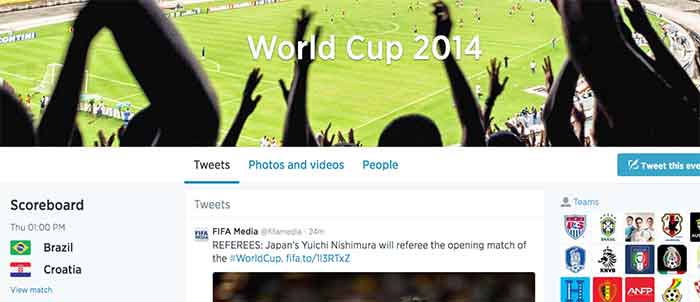
    Facebook and Twitter are engaged in a Battle Royal almost as intense as the World Cups itself. With yesterday’s commencement of the Fifa World Cup, these two social media powerhouses pull no stops to be become the No. 1 platform for Fifa fans to electronically engage.

    Facebook’s campaign provides fan with a Trending World Cup Page. Here fans can access the latest scores, view highlights and interact with a global map to pick their favorite teams

    Use #WorldCup and #WorldCup2014 to access Twitter’s World Cup landing page. Here you can create a Fifa-specific profile and choose a cover photo and profile picture to support your team. Don’t forget to include your HashFlag. Introduced during the last World Cup, these three-letter hashtags can be used by fans to unlock an image of a country’s flag.

    Which social media platform will reign supreme? Only trending numbers will tell. Let the games begin!

    WorldCup

    4. Social Signals and SEO – Blind Five Year Old

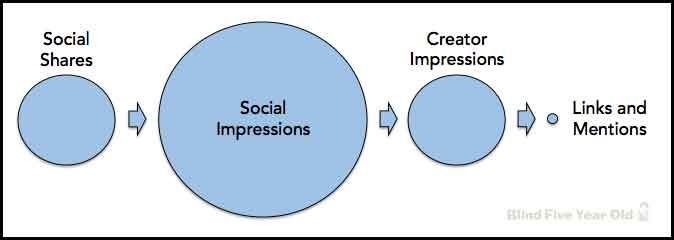
    While the power of social media seems encompassing, Google is currently not using social signals, even from Google+, in its algorithm to calculate search results. You might be asking yourself why you’re putting so much effort into social now. Fear not! Maximizing the potential of a Google+ listing and other social outlets does have benefits. The Blind Five Year Old breaks down social media activity to explain that its not necessarily the activity itself, but the result of that activity that matters.

    social-seo-signals

    5. The Hidden Power of Nofollow Links – Moz Blog

    Link building is an integral part of all SEO campaigns. They can help build your company’s brand, build public awareness, increase profit and, of course, lead to more links. Links can also help build your site’s authority in the eyes of search engines. But what about nofollow links? While they seem unfathomably dreadful, this blog posts offers a silver lining and techniques to utilize those nofollow links.

  • Google Ranking: No ShortCutts to Success

    More often than not, our clients ask why their keywords aren’t as high up on Google as they should be. Is it a penalty issue? Is it an algorithm change? Or is it your content? Recently, I had a client that asked these exact questions. Here at SI, our job is to diagnose the answer.

    If you’re an online marketer, you know one name to be the Holy Grail of answers: Matt Cutts (for you non-online marketers, the head of Google’s Web Spam team).

    Recently, Cutts created a help video to answer the question we ask every day: What really determines why you’re not ranking as high as you think you should?

    The answer: It depends!

    Image of Google's There are No Simple Solutions Quote

    Make Friends With Webmaster Tools

    According to Cutts, you should first ALWAYS, ALWAYS, ALWAYS check Webmaster Tools. Here, you can see in detail what could be the issue, whether it be keyword stuffing within your content or some sort of crawl error.

    “We have seen sites that will launch a new development website that was previously no-indexed, and forget to take off the noindex tag,” Cutts said. “Or there’s 404s, or we can’t reach your site…”

    But what about the other algorithmic issues? How can you determine if it’s an algorithmic penalty or your content? According to Cutts, they don’t give much thought about algorithmic penalties because Google doesn’t really view them as penalties.

    “It’s a tough call to make,” he says, “because the web spam team is working on more general quality changes, not necessarily things specifically related to web spam…we just think of it as the holistic ranking.”

    Don’t Fear The Algorithm

    According to Cutts, in 2012 Google rolled out about 665 changes to how they rank search results, so the odds that they are rolling out some algorithmic change at any given point are pretty high. In fact, they might be rolling out a few. However, if the algorithm changes they make will impact your site in a big way, Google will notify you of those changes.

    For example, as Cutts says, Panda’s algorithm has become more integrated into indexing and has less of an impact on your rankings, whereas Penguin’s is still ever-changing and will more than likely have a bigger impact. In other words, Google will  likely send you a notification if you were affected by some change within Penguin’s algorithm.

    You’re probably wondering, what does this all mean? The reality is, it comes down to what you believe is best practice for your site. If your competitors are doing something that you think might be affecting their rankings in a great way, then use your judgement to determine if that’s something you should be doing for your site. As Cutts says, it’s difficult for Google to say that something is a penalty because it’s just a part of ranking. The good news is that it is algorithmic. As you change or modify your site based upon what you see within your competitors, you can see that these algorithms can reprocess the sites and you can and will rank again!

    Applause

  • Is Facebook No Longer Effective for Small Business?

    Image Of Facebook LogoIt’s well known that Facebook is, by far, the largest and most successful social network in the world. Here are just a few of the astonishing statistics for this social giant:


    • More than 1,310,000,000 (that’s 1.3 billion) active monthly Facebook users
    • Over 680,000,000 active mobile Facebook users
    • Number of users rose 22% from 2012 to 2013
    • 48% of Facebook users visit the site every day
    • The average number of friends per Facebook user is 130
    • 48% of 18- to 34-year-olds check Facebook when they wake up
    • 28% of 18- to 34-year-olds check Facebook before they get out of bed

    Facebook is obviously home to a massive potential audience. The problem for businesses, especially small businesses, is the same as the advantage: Facebook is massive. And it’s hard to be noticed in the crowd.

    Finding Your Facebook Audience: Then vs. Now

    For quite some time, Facebook has remained the cornerstone of social media marketing. Small business marketers discovered and fine-tuned strategies to grow their Facebook pages organically, gathering page “Likes” and fans who would spread their message willingly to their own friend networks.

    However, there have been a few changes along the way. In late 2013, Facebook acknowledged that the organic reach of posts would drop off for everyone. Advertising Age reported that a statement from Facebook read: “We expect organic distribution of an individual page’s posts to gradually decline over time as we continually work to make sure people have a meaningful experience on the site.”

    Facebook’s New Algorithm

    The driving force behind the “meaningful experience” Facebook is promoting came in the form of algorithm changes. Near the end of 2012, the social network changed its news feed algorithm—and users immediately saw a decline in organic post reach. At the time, Facebook denied the algorithm was intended to reduce news feeds.

    However, another update to the algorithm in 2013 filtered news feeds even more, and this time Facebook stated the reach reduction was deliberate. Coincidentally, the network began offering promoted posts: a program that lets companies buy the ability to push their posts into more Facebook news feeds.

    Organically, page posts will now show up in only around 1 to 5 percent of the news feeds of people who have “Liked” your page. A number of variables, such as relevance and shares, can increase the percentage of exposure within that range—but only paid, promoted posts will exceed it.

    Are Promoted Posts Worth It?

    With organic reach on Facebook in decline, and the reality that businesses must pay to have their posts pushed to enough news feeds for the chance of going viral, is it worth investing your time and resources in Facebook marketing?

    The answer likely depends on your existing circumstances. If you already have a strong Facebook network with a substantial number of followers, you’ll probably benefit by continuing to post actively and buying the occasional promoted posts. It should be noted that promoted posts can cost anywhere from $5 to $300 per post—and the per-action cost of these promotions can run high.

    For small businesses lacking the time and the budget to sink into Facebook as a primary platform, this form of social marketing may no longer be viable. It won’t hurt to maintain a presence on Facebook, but relying solely on this platform to increase your business could be a costly mistake.

    What do you think—has your Facebook reach declined recently? Have you ever tried a promoted post? Share your thoughts in the comments!

    Image courtesy of Gerd Altmann

    Megan Totka is the Chief Editor for ChamberofCommerce.com. She specializes on the topic of small business tips and resources. ChamberofCommerce.com helps small businesses grow their business on the web and facilitates connectivity between local businesses and more than 7,000 Chambers of Commerce worldwide.

  • No really, … was there a Google update in January 2014?

    It’s curious how when you’re looking so intently at one thing, something so much bigger sneaks up behind you. Like when you’re a six-year-old kid all excited at your birthday party opening presents, your mom buzzing around taking lots of pictures demanding everyone to “smile,” and your dad sneaks in behind you rolling in a bright shiny new bicycle!

    Google January 2014 update is a nice present
    Thanks PorticoMecanica for the picture of such a big smile.
    http://www.flickr.com/photos/portocalamecanica/

    That’s how I have been feeling the last week or so. Like I just got a bright shiny bicycle with a horn and a bell and handlebar fringe!

    I have been head down, concentrating on a project with numerous Excel spreadsheets, lots of cups of coffee, data overload, and a glazed look in my eye.  When I was poking around in yet more data, I found that Google snuck up behind me with a big bright shiny present.  I gotta say, it’s a pretty exciting surprise when I see the majority of our clients have an increase in January’s organic traffic; and not just any increase, impressive increases that makes big smiles all around the office.


    So, was there a Google update when I wasn’t looking?

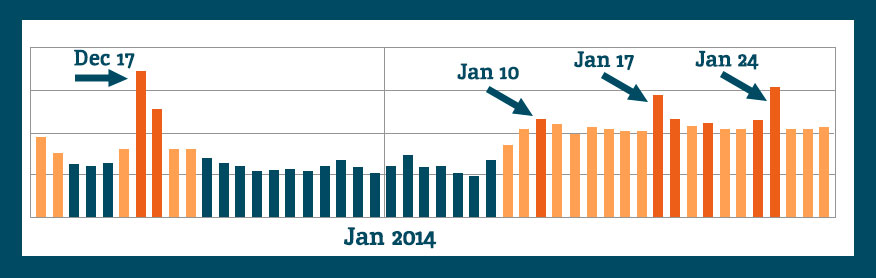
    Because the increases in Analytics are seen across so many clients, across so many industries, there had to be an algorithm shakeup.  Lo and behold, on January 9th, Barry Schwartz announced the chatter on it “Is Google Search Updating?

    The post’s comments express some winners and losers as expected with any update.  I had to dig to find some excitement similar to my own:

    Vibhu Gauba
    • 16 days ago
    “Tracking almost like 700-800 clients of ours and all have moved up !!!!”

    and …

    SAJID
    • 16 days ago
    “Wao… Thats gonna be a wonderful update… My traffic rose about 250% from last few day”

    Barry Schwartz’ post drove me over to Algoroo. Algoroo was developed by Dejan SEO, and they say “Algoroo tracks Google algorithm changes by observing turbulence in rankings of thousands of keywords.  When the bar is high, it’s likely that Google has made a tweak to their algorithm.”

    They posted on recent, significant algo updates which is interesting and related to the topic.  This unannounced, unacknowledged January update is the 6th most strongest update since May 2013 Penguin.

    When we look at the Algoroo chart for more recent dates, we see some definite turbulence in keyword rankings:

    algoroo-Google-algo-changes-Dec-2013-Jan-2014

    The chatter indicates that there was an unannounced update, and a fellow blogger commented, I’m going to enjoy it while I can.

    Crawl Rate as an Indicator?

    Some of the commenters on the webmasterworld forum had a short burst of discussion around crawl rates trying to find some commonality among websites’ changes, or at least as an indication of “something” happening.

    White Dove says, “I’ve seen an increase of crawling activity, including pages that don’t exist anymore.”

    Shai comments, “Although no major changes in rankings, I can see some strange crawling occurring on around 30 sites. Not found anything in common between any of them yet.”

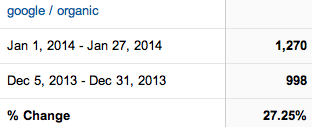
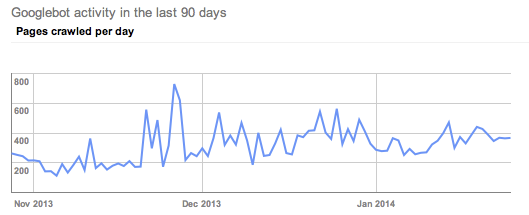
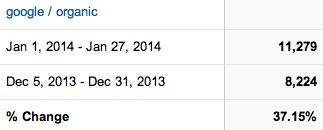
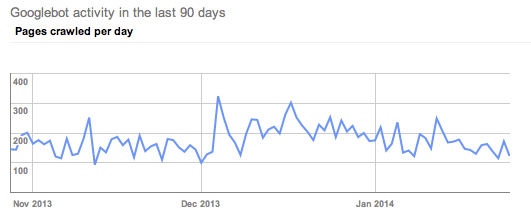
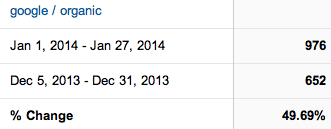
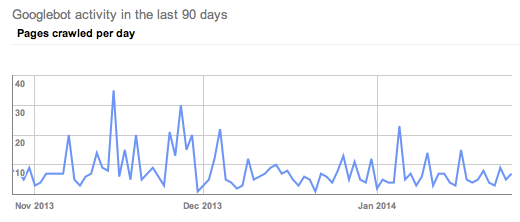
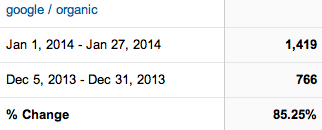
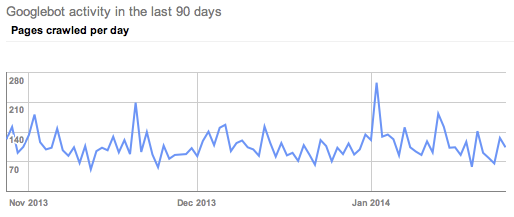
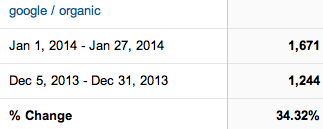
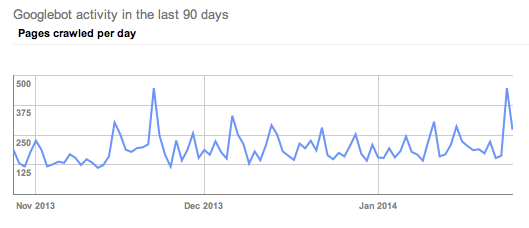
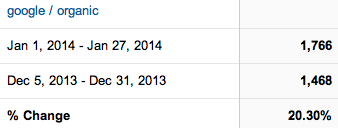
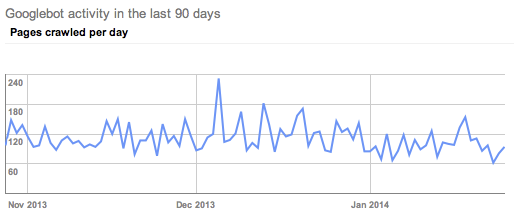
    I want to check this out, so I’m looking at clients who I know have improved organic visits in January and scoping out their crawl rates. (Screen shots are Google organic visits Jan 1, 2014-Jan 27, 2014 Compare to: Dec 5, 2013-Dec 31, 2013.  Crawl rate charts are showing last 90 days.)

    divider

    Client A has fantastic organic increases in January.  I will take 27% organic increase any time.

    client DC google organic increases january 2014

    A’s crawl rate shows a clear uptick in crawl rate, but not in January. His crawl rate started picking up in late November.

    client DC google crawl rate January 2014

    divider

    Client B had a 37% increase in Google organic traffic.

    DL google organic traffic January 2014

     His crawl rate picked up in early December.

    client DL google crawl rate January 2014

    divider

    Client C had great improvements.

    client DD google organic visits January 2014

    If anything, I would say his crawl rate slowed in January.

    client DD google crawl rate January 2014

    divider

    I had to dig around to find these somewhat obvious examples of the above crawl rate changes.  Most of the clients within this same industry had crawl rates like Client D.

    Client D has exciting organic visit increases in January.

    client N increase in google organic search Jan 2014

    The crawl rate doesn’t indicate any clearly obvious trends.

    client N pages crawled per day last 90 days

    All of the clients looked at above are in the same industry, so let’s look at another industry to see if the trends are widespread.

    divider

    Client E is enjoying a 34.32% increase in Google organic traffic in January.

    client S January 2014 google organic

    Their crawl rate also picked up in late November.

    client S Google crawl trends January 2014

    divider

    Client F has a 20% increase in Google organic.

    client G google search in January 2014

    His crawl trends seen in Google Webmaster tools show a slight decrease in crawl rate in January.

    client G WMT crawl data

    divider

    I poked around at other clients in GWT, and I’m not real sure we can pull any decided trends from the crawl rate theory.  I didn’t check every Search Influence client, nor did I create elaborate charts of crawl rates per month. I’m comfortable seconding Shai from the webmasterworld forum, “Not found anything in common between any of them yet.”

    Search Queries

    I’m not seeing any huge changes in rankings data for the keywords we are tracking.  We have some ups and downs, but nothing out of the ordinary.  We update tracking information regularly, so until the next keyword ranking report is updated, Google Webmaster Tools can tell me some great information, too.

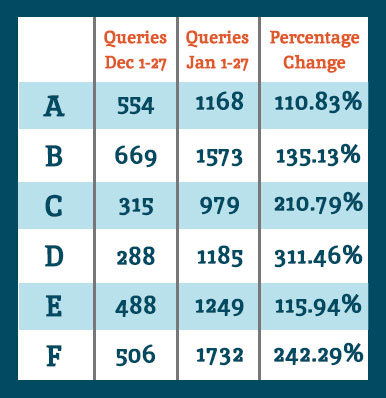
    Google Webmaster Tools Search Queries data shows a lot of keyword data that we don’t track in our keyword reports. So for the example clients noted above, I see they all had an increase in Google search results shown in GWT.

    QueriesChart

    When we look at the Queries data for the same comparisons as the organic search data at the top of this post, we see they all had an increase in showing up for searches.  Google defines Queries as: “The total number of search queries that returned pages from your site over the given period.”

    I interpret this as our websites are ranking for more varied keywords and more than we are tracking.  It’s typical for a website to rank for more than you are actually tracking. It’s unreasonable to track for all of the possibilities.

    I want to acknowledge that there is seasonality in January search for some industries.  Some of the organic increases can be attributed to seasonal search trends, but never at these levels.  Also, last week I spoke with client F telling him about the January organic goodness, and his response was January was usually dead for him, and the phones this last month have been ringing.  Yes, seasonality is often a factor for any month-to-month increases or decreases, but these data are suggesting something bigger.

    Bottom Line

    Any time there is any Google algorithm update, whether announced or perceived, there will be winners and losers.  I’m happy our client sites are on the positive side of whatever changes were implemented.  Yes, it’s good to be a winner today, but it’s not without effort.  I can repeat what everyone has been talking about for months and months:

    • Clean fresh content on a regular basis
    • Encourage client engagement on Google+
    • Cleanup any residual devalued links
    • Earn links with great content and local community participation

    These are just a few actions to take in earning trust and traffic from Google search.

    If you’ve noticed any changes in search traffic or rankings in January, we would love to hear about it in the comments below.

  • Penguin 2.0 May Not Be Done Just Yet

    Penguin 2.0 reconfigure?We’ve been watching Penguin 2.0 and its effects, and as a team we have noticed some fluctuating data that suggests the algorithm has not quite settled in yet.  In another blog post, I put it out there that rankings are not everything, and they are not the primary measure of success.  Ranking reports have known flaws, but they can be used as a weather vane.  When we look at the ranking weather for a few clients, we see some ups and downs, clearly with some effect from the most recent Penguin, but it appears that the players on Google page 1 are still moving around more than a month after the rollout.

    When we look at a few examples, we see the musical chairs being played on page 1 with nobody being safe and comfortable for very long.  We’re watching rankings for a  plastic surgeon in New Jersey for the term “rhinoplasty New Jersey.”

    SEO for plastic surgery

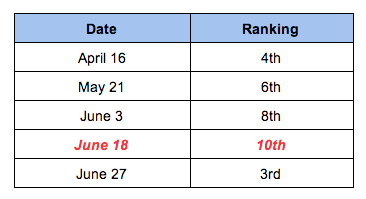
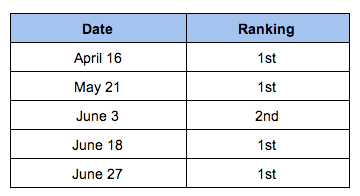
    Here’s a summary of his rankings hopping all over.  His biggest drop was on June 18th:

    Rhinoplasty New Jersey

     The same client for “breast augmentation New Jersey” had more subtle changes, but they are meaningful.

    Breast Augmentation New Jersey

    So it looks like he got a little hit from Penguin 2.0, but may be rebounding.  We have done nothing out of the ordinary for this surgeon to move his site from 10th to 3rd in just nine days, so we make an assumption that Penguin is still adjusting.

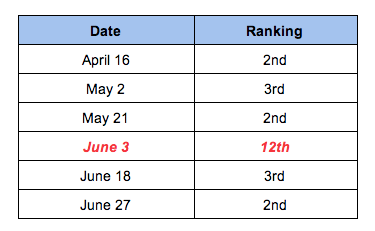
    Another example in ranking fluctuations for “Columbus allergist” is in a doctor’s rankings seen below.  His biggest decrease was on June 3rd vs the guy above who got the hit on June 18th:

    Columbus Allergist

    Rankings Aren’t Everything!

    Rankings are not the only measure by which we watch successes and failures. Organic traffic is another layer of data, and in some organic traffic trends, we see noticeable changes around June 3rd then again around June 18th.

    The client represented in the chart below is a cocktail bar in the South.  They saw a dip in organic traffic after May 22, but they enjoyed an unexpected bump in early June (the traffic dropped off again after that early June peak, but what I want to know is what’s behind that weird little bump up earlier on?):

    Penguin 2.0 adjustment in early June?

    The next example is a traffic bump around June 18th.  This client is a completely different business on the west coast.  We see a little effect from Penguin, then a weird spike:

    Penguin 2.0 adjustment June 18th?


    And Then There Are Other Data Too

    Bounce rates before and after Penguin 2.0It gets a little fuzzier when you start looking at Bounce rates and Time on Page and these data in Analytics.  Who’s to say that these increases or decreases are a direct effect from Penguin?  You could argue your site is having better or worse quality traffic because of ranking and where your site now shows up vs where it showed before Penguin.  You could argue lots.  All I know is that 3 of the 4 clients mentioned above saw an improvement in Bounce rate after Penguin.

    Bounce rates before and after Penguin 2.0 2013Bounce rates improved after Penguin 2.0

    So … what?

    I’m not convinced that Penguin 2.0 was a one time algorithm update, it did its thing on May 22nd, and we’re experiencing the good or the bad or the indifferent.  I think it’s still shaking out, and we may still see a few odd spikes or odd drops in ranking or traffic or some other data.  We may have a few more weeks before websites settle into a relatively comfortable placement on page 1, and it is only then that we can claim some clear understanding of the full effect of Penguin.

    And because Penguin 2.0 is still reconfiguring, it may not be time for drastic action.  If your site is experiencing some definite ups and downs, then yes, you should look at your backlinks quality, the anchor text quality, internal links, etc.  All of this stuff is covered in many other blog posts.  You should have been long ago working on authoritative backlinks and building up your social cred.  But it’s not time to throw up your hands, and just Disavow everything. It’s not time to scrap your website and start with a brand new domain and design.  Take some time to digest what’s going on before bulldozing ahead.

    What I would really like to know is if anyone else noticed definite odd fluctuations around June 3rd and June 18th.  Or if you noticed unusual changes at anytime after May 22nd.  Leave a comment, and let us know.