Tag: ai

  • AI Search Optimization for Graduate Education Marketing in 2026

    What 2025 Research Tells Us About AI Visibility, Zero-Click Search, and Enrollment Strategy

    Executive Summary

    Here’s the reality: the way prospective graduate students find and evaluate programs has changed faster than most of us anticipated. Research from across 2025 — including original survey data from UPCEA and Search Influence (n=705) — shows that half of all prospects now use AI tools weekly, while 82% are more likely to consider programs appearing on page one of search results. Zero-click searches have climbed to 69% of all Google queries. AI Overviews now appear on nearly half of search results.

    And this is just where we are today. The trajectory for 2026 is clear.
    Key Findings at a Glance

    Metric 2025 Finding Implication for 2026 Source
    AI tool usage (weekly+) 50% of prospects Expect 60%+ as tools improve UPCEA/Search Influence
    Page one consideration 82% more likely AI citations become equally critical UPCEA/Search Influence
    Zero-click searches 69% of queries Will exceed 75% for informational Similarweb/SparkToro
    AI Overview reach 1.5B monthly users Expanding to 80%+ of queries Google Q1 2025
    ChatGPT weekly users 800 million Continued exponential growth OpenAI September 2025
    AI in college search 23% (6x from 2023) 35-40% projected Carnegie 2025

    So what does this mean for 2026? Traditional higher education SEO and paid search remain foundational—that hasn’t changed. But they’re no longer sufficient on their own. Institutions that fail to invest in AI search optimization and AI visibility strategy risk disappearing from the consideration set entirely, before prospects ever visit a website.

    The institutions that act now on GEO for higher education will have a 12-month head start on those still debating whether this matters.

    The State of AI Search: Where We Are and Where We’re Headed

    The Adoption Curve Has Been Steeper Than Anyone Expected

    I’ll be honest: when we started tracking AI adoption in college search two years ago, I didn’t expect to see numbers like these so quickly.

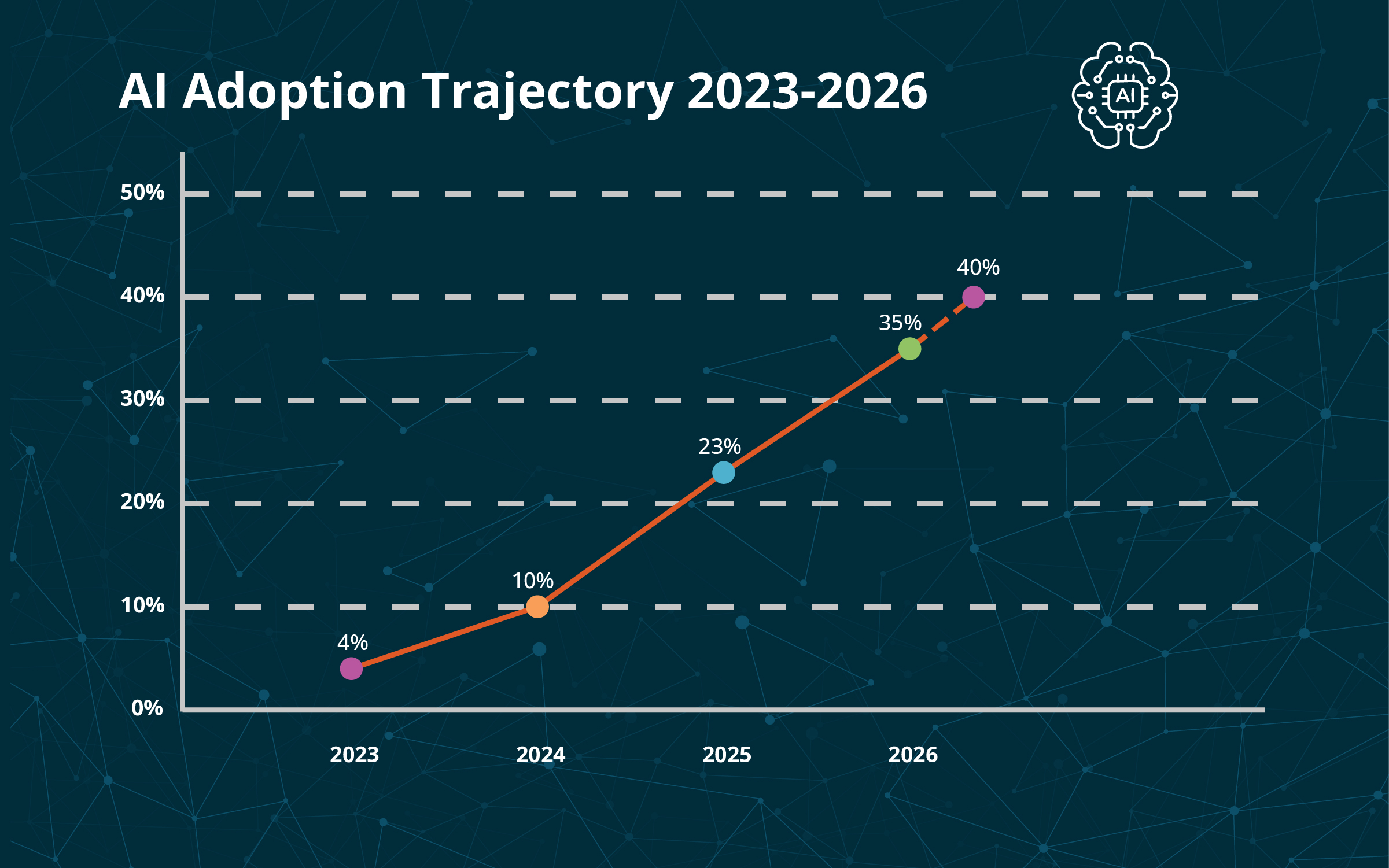
    According to Carnegie’s 2025 Summer Research Series, AI usage in the college search process jumped from 4% in 2023 to 10% in 2024 to 23% in 2025—nearly 6x in two years. Rising students show even higher adoption at 25%, while parents trail slightly at 21%.

    If this trajectory holds—and there’s no indication it won’t—we’re looking at 35-40% AI usage in college search by the end of 2026. For graduate and professional programs, where prospects skew older and more research-oriented, adoption may be even higher.
    The UPCEA/Search Influence study of 705 qualified respondents (March 2025) digs deeper into professional and continuing education prospects specifically:

    • 24% use AI-powered tools daily
    • 26% use them weekly
    • 18% use them a few times per month
    • 17% never use AI tools for search

    Younger prospects show higher daily and weekly usage, which isn’t surprising. But here’s what caught my attention: even among older demographics, the “never use” category is a minority. This isn’t a Gen Z phenomenon anymore. By 2026, the “never use” segment will likely shrink to single digits.

    Search Engines Still Dominate—But the Picture Is Getting More Complicated

    When researching professional and continuing education programs, prospects use multiple platforms, often in the same search session:

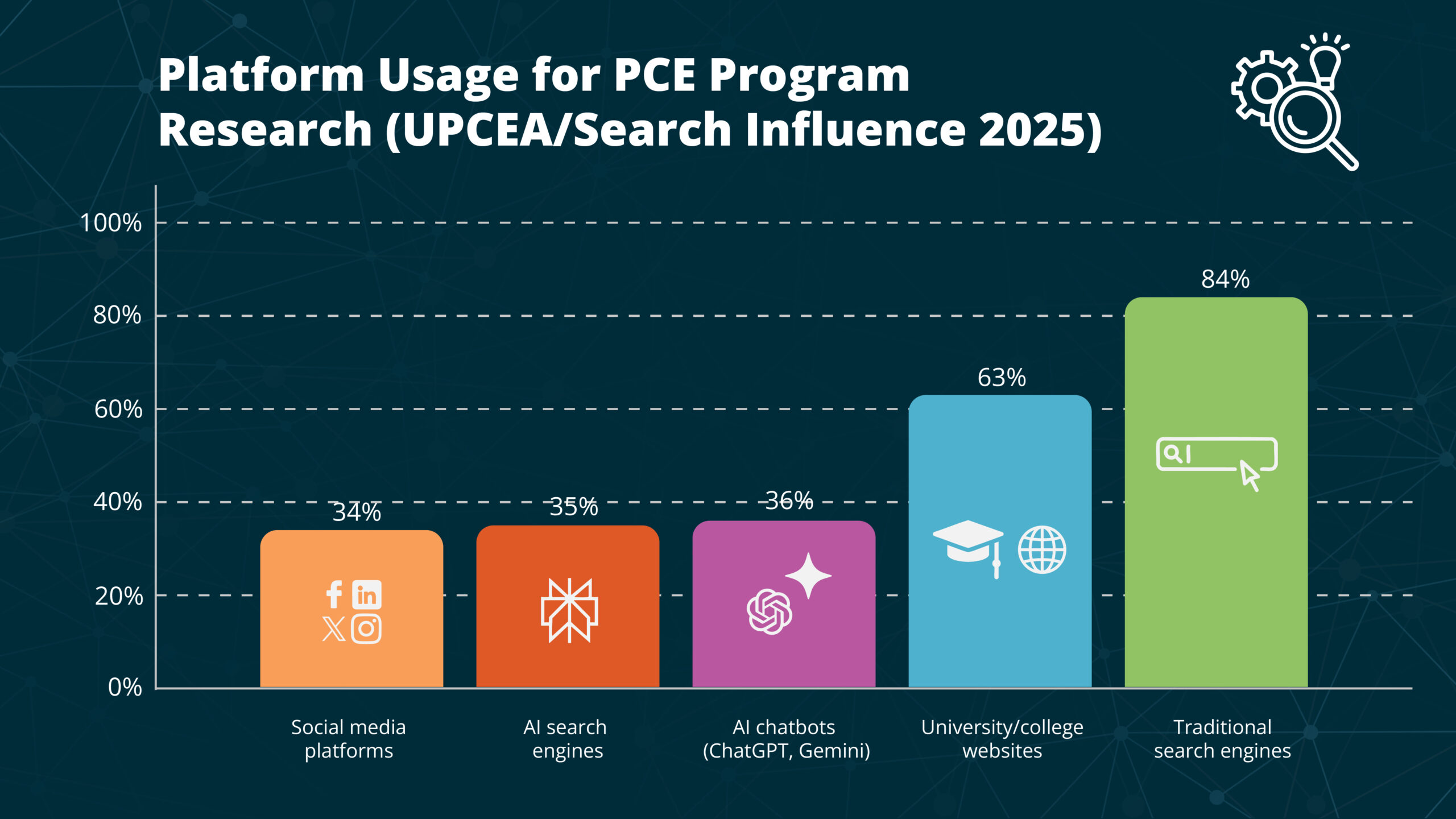
    Platform Usage for PCE Program Research (UPCEA/Search Influence 2025)

    Platform Extremely/Very Likely to Use
    Traditional search engines 84%
    University/college websites 63%
    AI chatbots (ChatGPT, Gemini) 36%
    AI search engines 35%
    Social media platforms 34%

    Here’s the number that should get your attention: AI-assisted tools now warrant the same strategic investment as social media, where institutions spend an average of $166,303 annually on advertising, according to UPCEA’s 2024 Marketing Survey. Are you spending proportionally on AI visibility for your university? Most graduate enrollment marketing teams aren’t—yet. By 2026, that gap will separate the visible from the invisible.

    The Lines Between “Search” and “Browse” Have Blurred Permanently

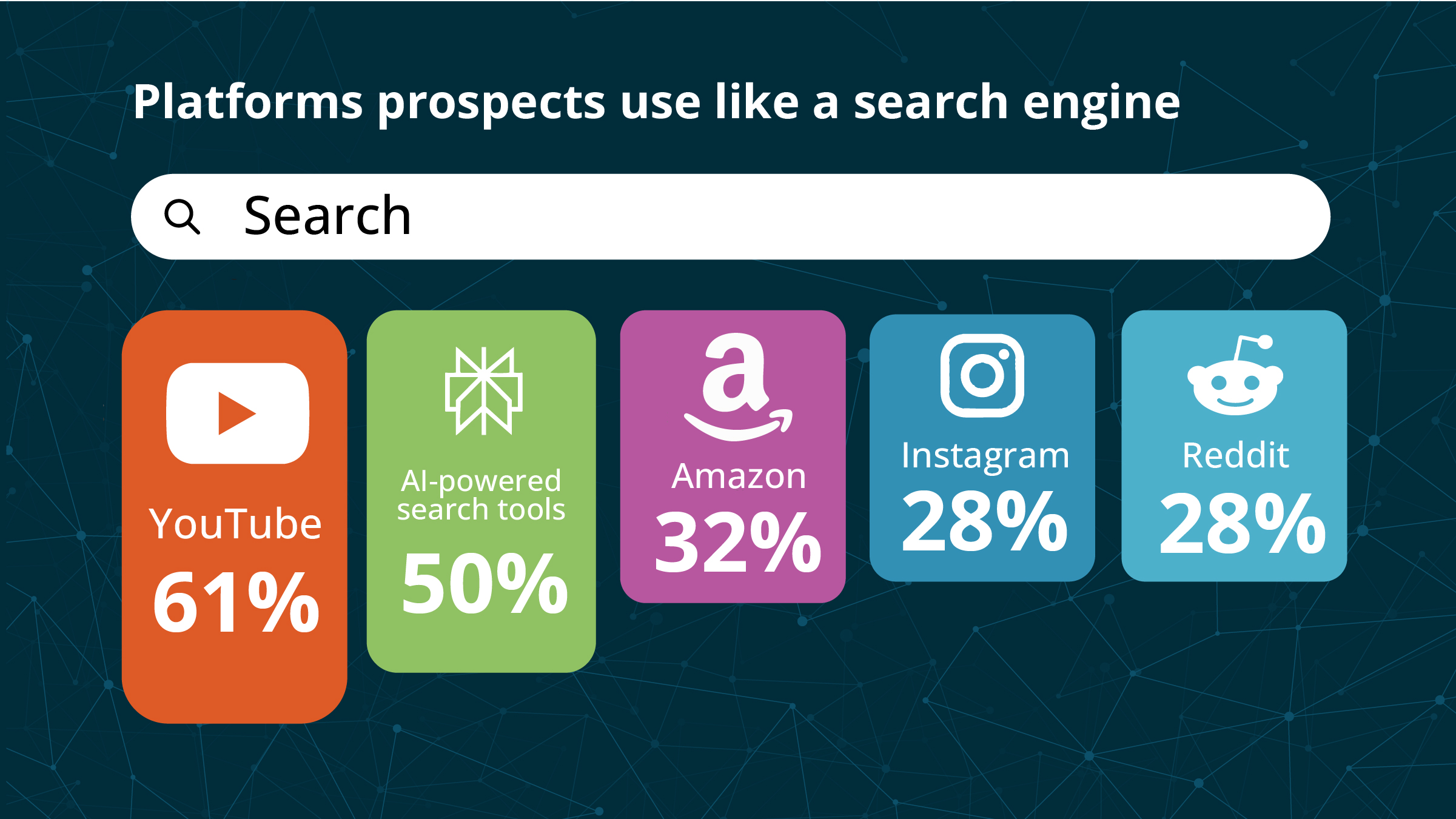
    We asked respondents which platforms they use “in a way similar to how you would use a traditional search engine.” The results tell us something important about how prospects actually behave:

    • YouTube: 61%
    • AI-powered search tools: 50%
    • Amazon: 32%
    • Instagram: 28%
    • Reddit: 28%

    Prospects don’t distinguish between “search” and “browsing” the way we do in marketing meetings. YouTube is a search engine to them. ChatGPT is a search engine. Instagram is a search engine. Your content has to work across all of them, or you’re only reaching part of your audience.

    For 2026 planning, this means content strategy can’t be siloed by platform. The same information needs to exist in formats optimized for each discovery channel.

    The Zero-Click Search Reality: Planning for a Post-Click World

    Most Searches Don’t Result in Clicks Anymore

    Zero-click searches—queries where users get answers directly from search results without visiting a website—have reached a tipping point:

    • 69% of Google searches ended without a click (May 2025), up from 56% in May 2024
    • 60-63% of all Google searches result in zero clicks according to SparkToro/Similarweb
    • 70-90% click-through rate decline when AI Overviews appear
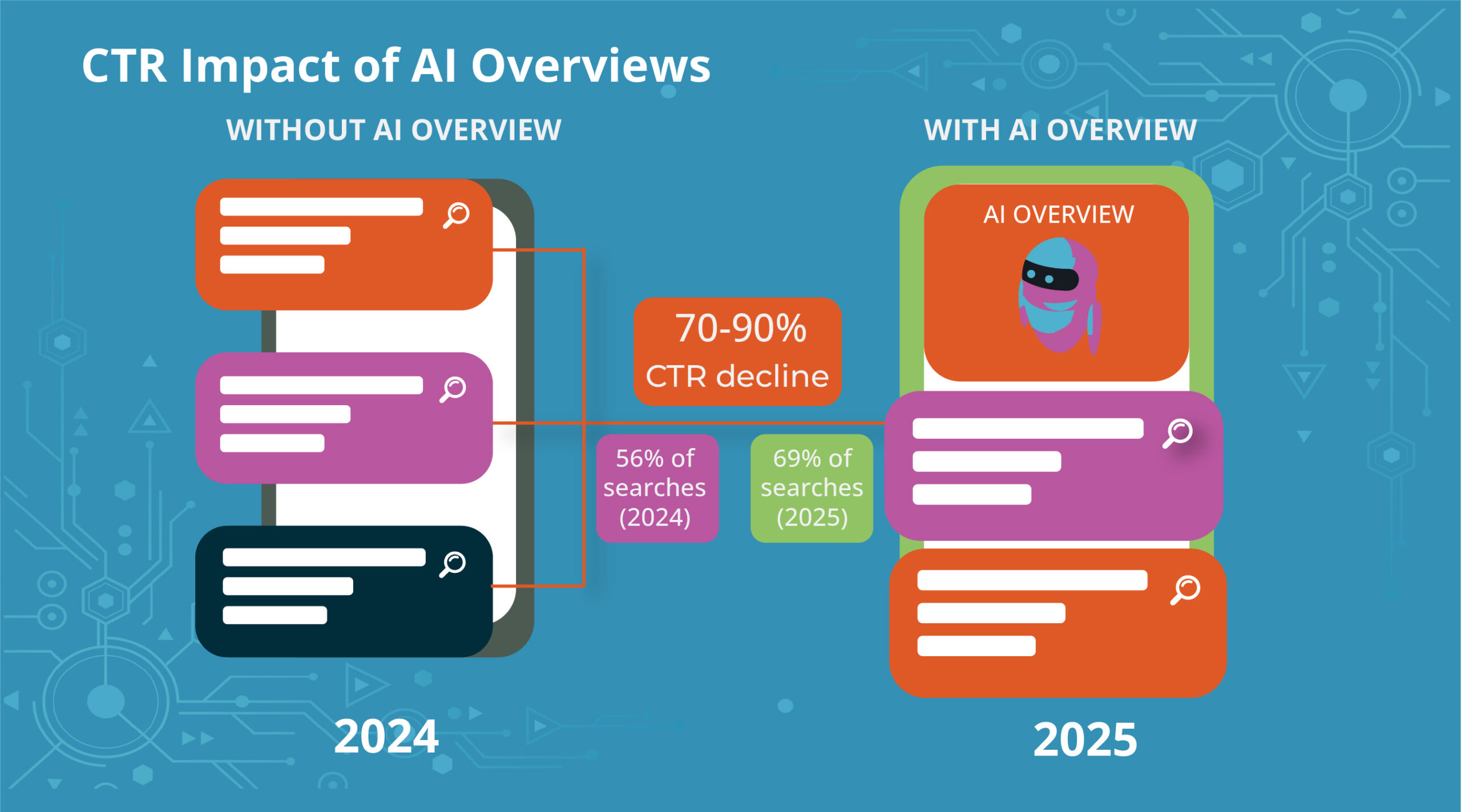
    Google’s AI Overviews now reach 1.5 billion monthly users as of Q1 2025. The feature appears on 47% of searches today, with Google’s internal testing suggesting this will exceed 80% for informational queries in the near future.

    For 2026 planning: Assume zero-click will exceed 75% for the informational queries that drive graduate program research. Questions like “What are the admission requirements for [Program X]?” or “How much does an MBA cost?”—exactly the queries your prospects are typing—will increasingly be answered without a click.

    What Zero-Click Search Means for 2026 Graduate Enrollment Marketing

    The implications for university marketing teams are significant, and I don’t think we should sugarcoat them:

    1. Traditional funnel metrics are becoming less reliable.

    If prospects get answers about tuition, deadlines, and program details from AI summaries, they may form opinions about your institution without ever reaching your website. Your analytics won’t capture that interaction. You’ll have incomplete data on what’s actually influencing enrollment decisions.

    2026 action: Build brand visibility metrics alongside click metrics. Track AI citations, brand mentions, and sentiment—not just traffic. This requires a different approach to higher education analytics.

    1. You’re paying more for declining performance.

    Everspring reports that the average cost-per-click for higher education terms has increased 45% year-over-year, while performance has declined. That’s a rough combination that will only intensify.

    2026 action: Rebalance paid media budgets. The ROI calculus on traditional higher education PPC is shifting. Organic AI visibility may deliver better long-term value.

    1. This is already disrupting adjacent industries.

    Learning platform Chegg reported a 49% decline in non-subscriber traffic between January 2024 and January 2025, coinciding with AI Overviews answering homework and study questions that previously drove site visits. Graduate enrollment marketing isn’t immune to the same dynamics.

    2026 action: Don’t wait for disruption to hit your specific program category. Invest in zero-click search strategy now.

    The Trust Signal Hidden in AI Overviews

    Here’s where the data gets interesting. The UPCEA/Search Influence study shows how prospects actually interact with AI Overviews:

    • 79% read the AI-generated overview when it appears
    • 51% click on sources most of the time or always
    • 43% click occasionally
    • 56% are more likely to trust brands/websites cited in AI Overviews

    That last number matters enormously for 2026 strategy. Being cited in AI Overviews isn’t just about visibility—it’s a credibility signal. When prospects see your institution referenced in AI-generated content, they’re more likely to view you as trustworthy. Absence from those results may communicate the opposite.

    Rethinking Optimization: From Higher Education SEO to GEO

    SEO vs. GEO for Universities: A Different Kind of Target

    Here’s a useful way to think about the shift we’re navigating:

    Traditional SEO feels like optimizing for an algorithm—a system that scores and ranks based on signals (keywords, links, technical factors). It’s mechanical, pattern-matching. You’re essentially optimizing for a librarian: cataloging, indexing, and retrieval.

    GEO (Generative Engine Optimization) feels fundamentally different. It feels like optimizing for a reader who happens to have perfect memory and infinite patience—an entity that’s actually trying to understand what you do, synthesize it, and explain it to someone else. You’re optimizing for a research assistant: understanding, synthesizing, recommending.

    Put more directly: with GEO, you’re writing content that helps an AI form an accurate opinion about your institution—because that’s what it’s going to share with prospects.

    The practical difference:

    • SEO rewards structure and signals
    • GEO rewards clarity, accuracy, and citable claims

    You’re not just trying to rank anymore. You’re trying to be the source an AI would quote if it were writing an article about your program category.

    What This Means for University Content Strategy in 2026

    For 2026, your higher education content strategy needs to serve two masters simultaneously:

    1. Traditional search engines that still drive significant traffic and still reward keyword optimization, technical SEO, and backlink profiles
    2. AI systems that are reading your content to form an understanding of who you are, what you offer, and whether you’re worth recommending

    The good news: these aren’t entirely at odds. Clear, factual, well-structured content performs well for both. But the emphasis shifts. AI systems don’t care about keyword density—they care about whether they can extract accurate, citable information. This is the core of AI-ready website optimization for higher education.

    What Prospects Trust—and Don’t Trust

    The Trust Hierarchy Is Clear (and Stable)

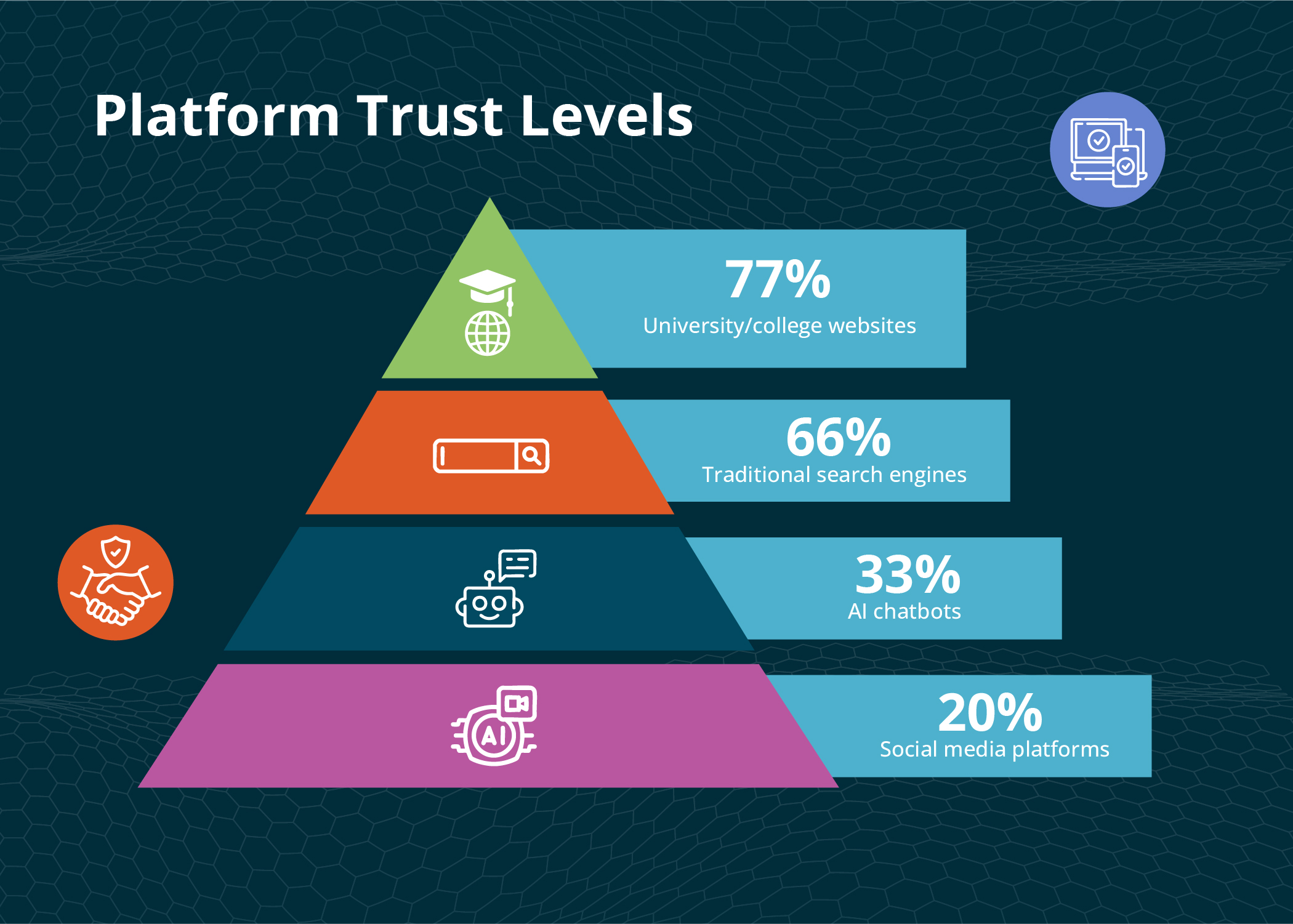
    When searching for professional and continuing education programs, prospect trust varies dramatically by source:

    Trust Levels by Platform (UPCEA/Search Influence 2025)

    Source Extremely/Very Trustworthy
    University/college websites 77%
    Traditional search engines 66%
    AI chatbots 33%
    Social media platforms 20%

    University websites are still the most trusted source by a wide margin. That’s actually good news for 2026. While AI tools are gaining usage, the destination of trust remains institutional websites. The challenge is making sure AI tools surface and cite your content accurately—so prospects who trust AI still end up trusting you.

    Think of it this way: AI is becoming the intermediary, but your website is still the authority. You need AI to accurately represent what’s on your site.

    Not Everyone Is Worried About AI Accuracy

    This surprised me a bit: nearly a third (32%) of respondents have no concerns whatsoever about using AI search tools for researching professional and continuing education programs.

    Among those who do have concerns:

    • 28% worry about validity, reliability, or accuracy
    • 7% cite privacy or security concerns
    • The remainder mention environmental impact, bias, and relevance

    So while accuracy concerns exist, a substantial portion of your prospect pool is comfortable taking AI recommendations at face value. That makes your AI presence even more critical—if AI gets your information wrong, a third of prospects won’t question it.

    What Would Build More Trust?

    When asked what features would be most valuable in AI-generated search results:

    1. Transparent sources for AI-generated recommendations: 51%
    2. AI-generated side-by-side comparisons of programs: 50%
    3. Emphasis on accredited institutions: 39%
    4. AI personalization based on interests: (favored by younger prospects)

    Prospects want AI to show its work. Transparent sourcing and comparison tools matter more than fancy personalization for most age groups.

    2026 implication: Structure your content with clear, citable claims. Include specific data points, credentials, and outcomes that AI can reference. Make it easy for AI to cite you accurately.

    Search Query Patterns: How Behavior Differs by Platform

    People Talk to AI Differently Than They Talk to Google

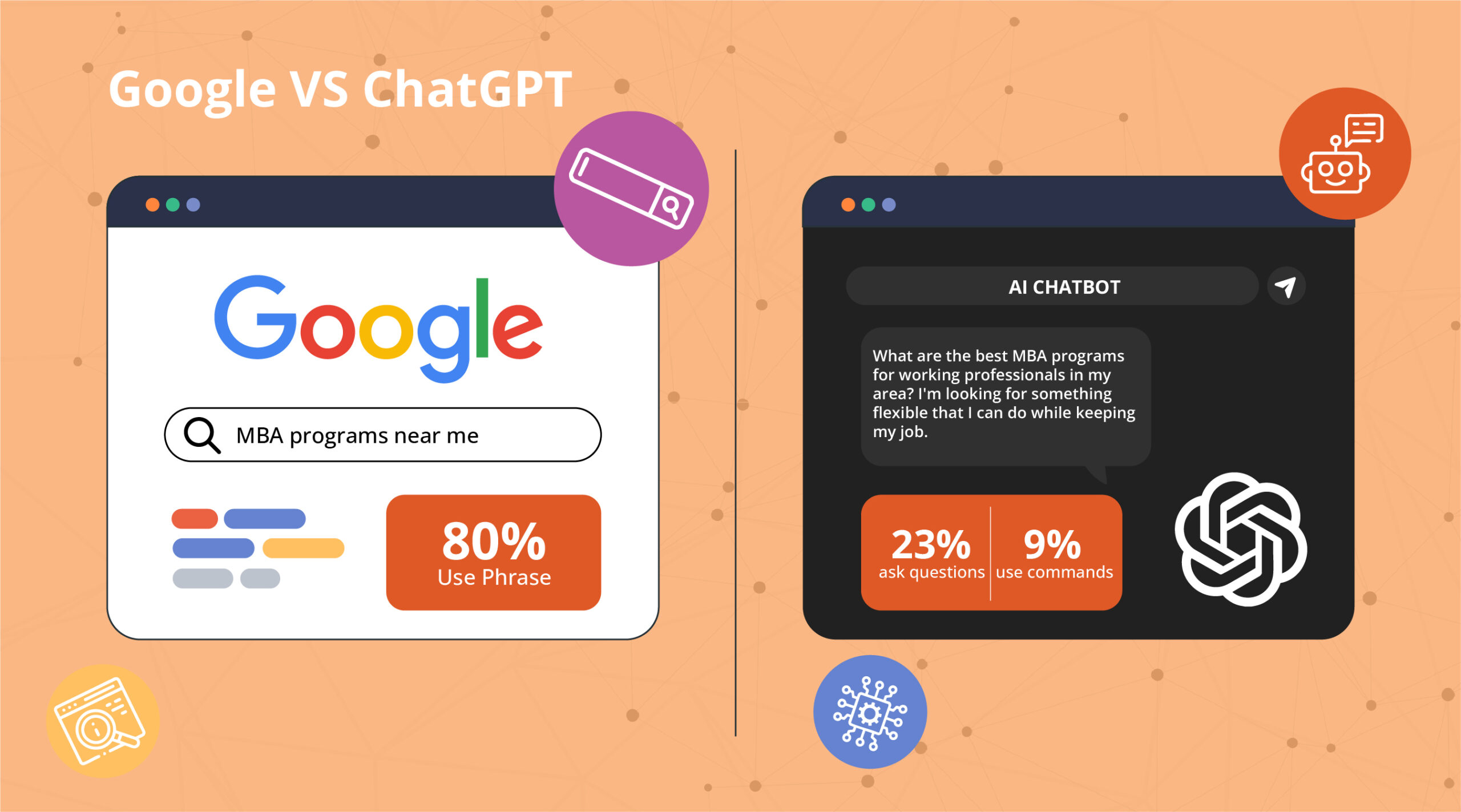
    This is one of the more actionable findings from the research. The UPCEA/Search Influence study asked respondents what they would type when searching for an MBA program across different platforms. The patterns are distinct:

    Query Type by Platform

    Query Type Traditional Search AI Search Engine AI Chatbot Social Media
    Phrase 80% 64% 55% 71%
    Question 12% 16% 23% 8%
    Command 1% 8% 9% 2%
    One-word 6% 6% 7% 9%
    Wouldn’t use 1% 5% 6% 10%

    On traditional search, 80% of prospects type phrases like “MBA programs near me.” On AI chatbots, that drops to 55%, while questions jump to 23% and commands to 9%.

    What this means for 2026 content: If you’re only optimizing for keyword phrases, you’re missing the conversational queries that dominate AI interactions. Content that answers questions directly—”What is the best MBA program for working professionals?” “Compare online vs. in-person MBA programs”—will perform better in AI contexts.

    The Core Keywords Still Matter

    Across all platforms, the most common search approaches for MBA programs included:

    • “MBA programs/degrees/courses/education” (27-31%)
    • “Best MBA programs/schools” (8-11%)
    • “MBA programs near me” (8-12%)

    The consistency across platforms tells us that core keyword targeting still matters. People are looking for the same information—they’re just asking for it differently depending on where they’re searching. Your content needs to address both the keyword and the question.

    Platform-Specific Behaviors: What to Prioritize for 2026

    ChatGPT Is the Default, But Don’t Ignore the Others

    Among prospects likely to use AI platforms for program research:

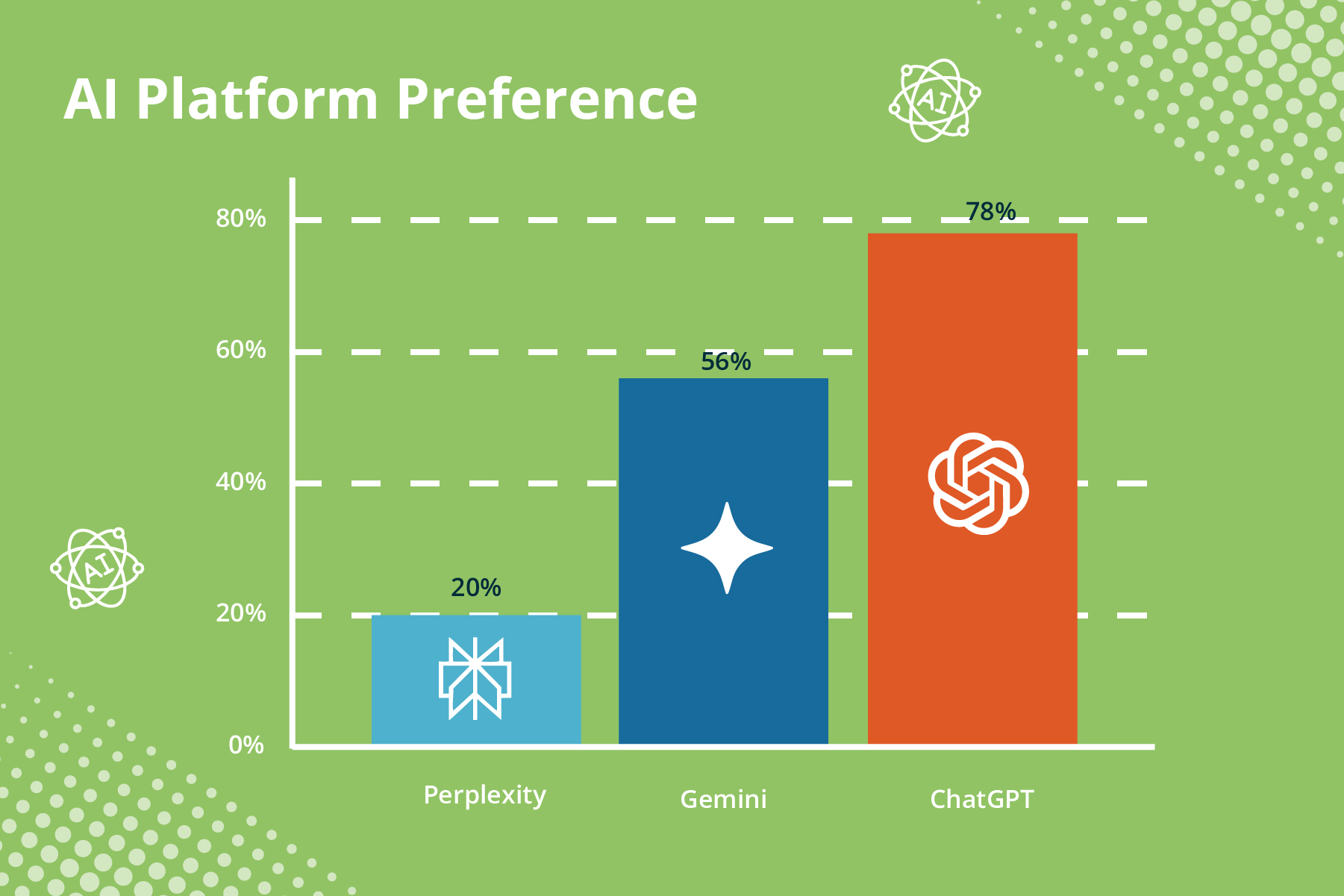
    AI Platform Would Use
    ChatGPT 78%
    Gemini 56%
    Perplexity 20%

    Here’s an interesting wrinkle: older age groups were more likely to use Gemini and Perplexity than younger prospects. My guess is this reflects different adoption pathways—Gemini through the Google ecosystem that older users are more embedded in, Perplexity through professional and research applications.

    2026 consideration: Your AI visibility strategy can’t focus on ChatGPT alone. Gemini is integrated into Google’s ecosystem (where 84% of your prospects still search), and Perplexity is growing fast among research-oriented users—exactly your graduate prospect demographic.

    The Scale of ChatGPT Is Hard to Overstate

    As of late 2025, ChatGPT’s numbers are staggering:

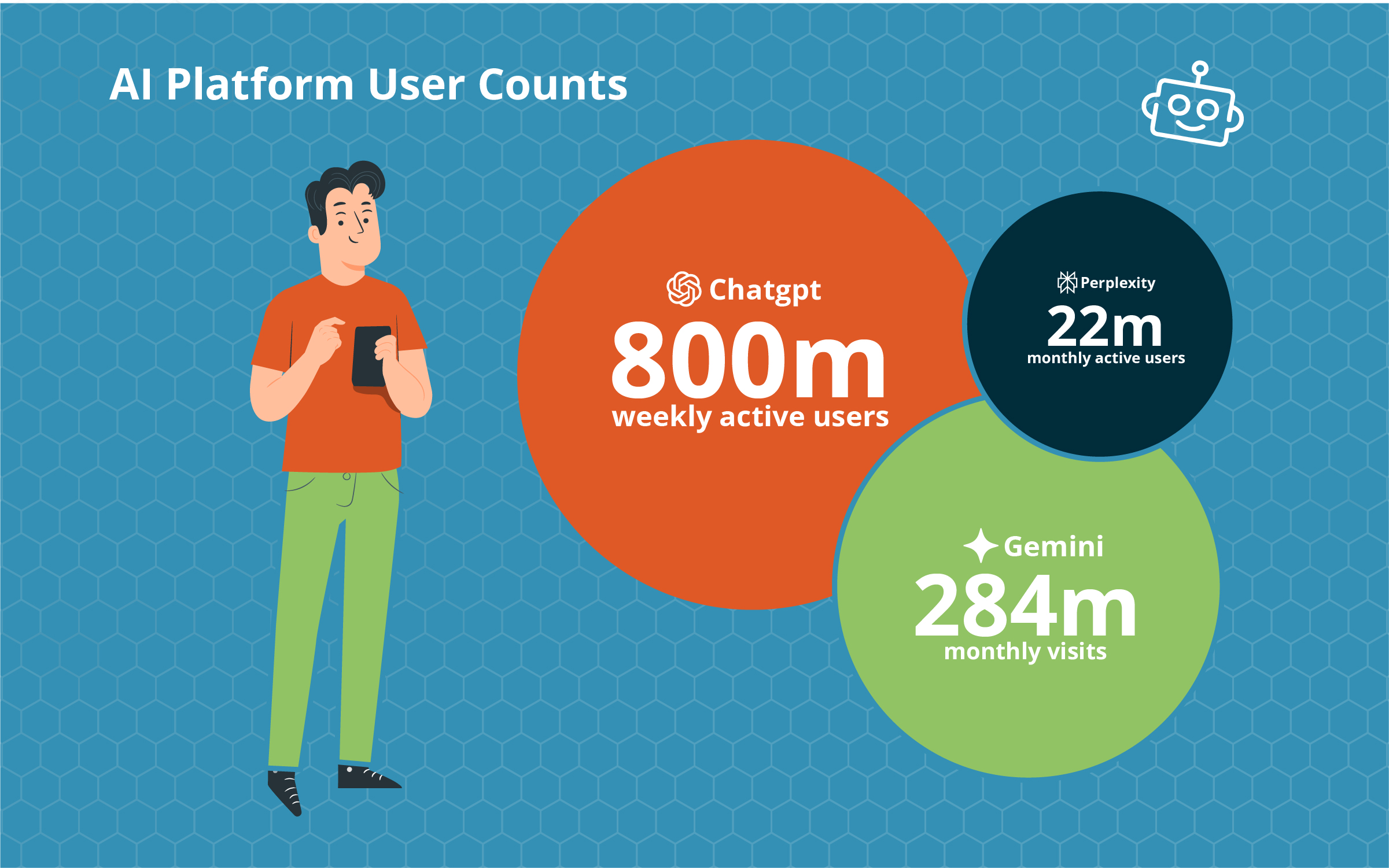
    • 800 million weekly active users (September 2025)
    • 190 million daily active users
    • 5.72 billion monthly visits
    • 77.2 million monthly active users in the US alone
    • 46.7% of users are aged 18-24

    For context, Perplexity AI processes 780 million monthly queries with 22 million monthly active users—substantial and growing fast, but still an order of magnitude smaller than ChatGPT.
    Social Media Platform Preferences Vary by Age

    Among prospects likely to use social media for program research:

    Platform Would Use
    YouTube 57%
    LinkedIn 49%
    Facebook 43%
    Instagram 35%
    Reddit 31%

    The age patterns are predictable:

    • YouTube, Instagram, TikTok: Skew younger
    • LinkedIn, Facebook: Skew older
    • Reddit: Relatively consistent across age groups

    What Actually Works on Social

    When using social media to research programs, prospects find these content types most helpful:

    1. Program summaries or descriptions: 65%
    2. Career advice related to education choices: 54%
    3. Student testimonials: 50%

    One exception worth noting: for 18-22-year-olds, university/college advertisements ranked as the most helpful content type. Traditional advertising still resonates with the youngest prospects in ways it doesn’t with older demographics.

    The AI Tools Landscape: A Quick Reference

    Major AI Platforms by the Numbers (Late 2025)

    Platform Monthly Active Users Monthly Queries Key Demographics
    ChatGPT 800M weekly / 190M daily 5.72B visits 46.7% aged 18-24
    Google Gemini 284M monthly visits 18% education sector
    Perplexity AI 22M MAU 780M queries 57% aged 18-34
    Claude ~3.2% US market share Professional/technical skew

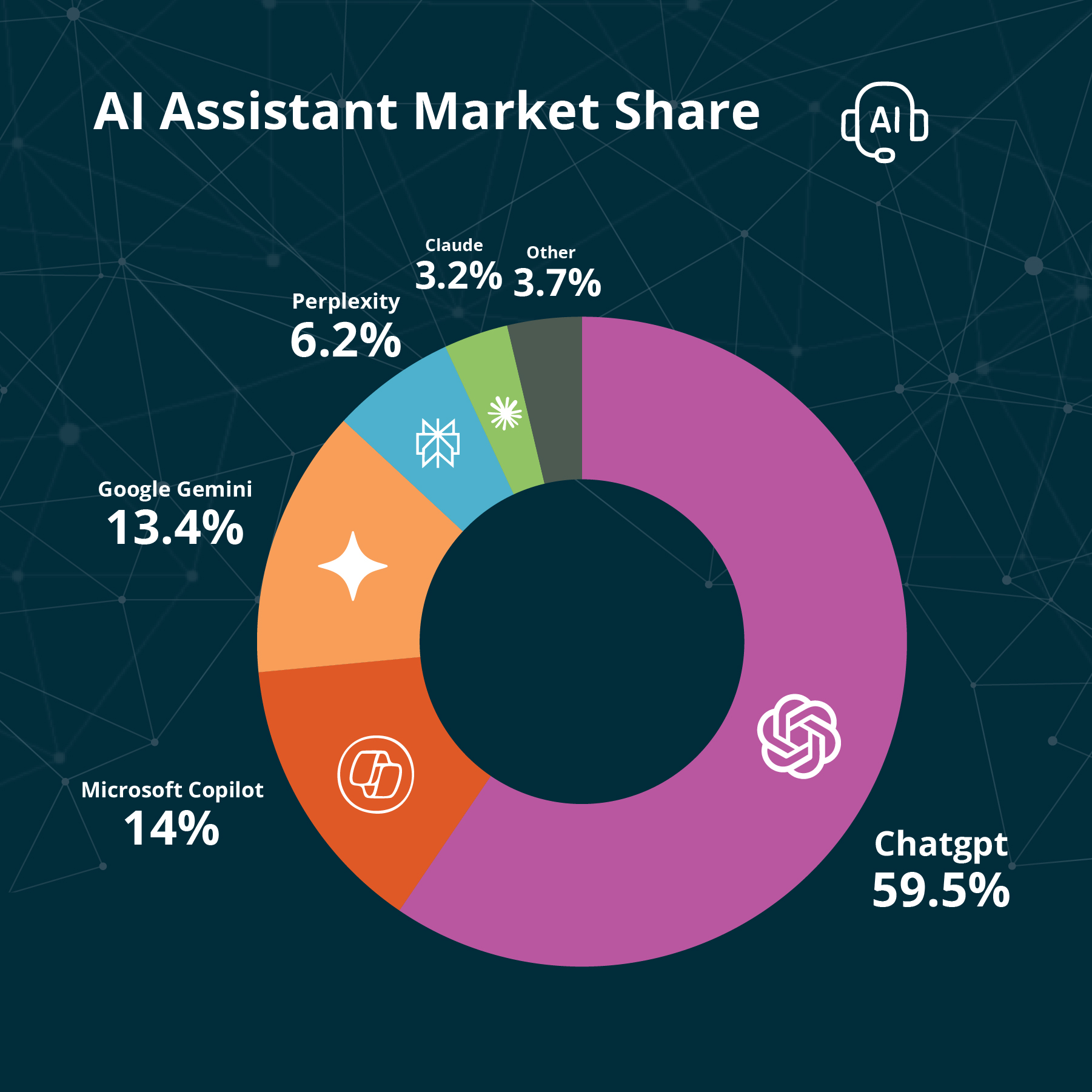
    US Market Share Context

    • ChatGPT: 59.5%
    • Microsoft Copilot: 14%
    • Google Gemini: 13.4%
    • Perplexity: 6.2%
    • Claude: 3.2%

    Strategic Roadmap: AI Search Optimization for Higher Education in 2026

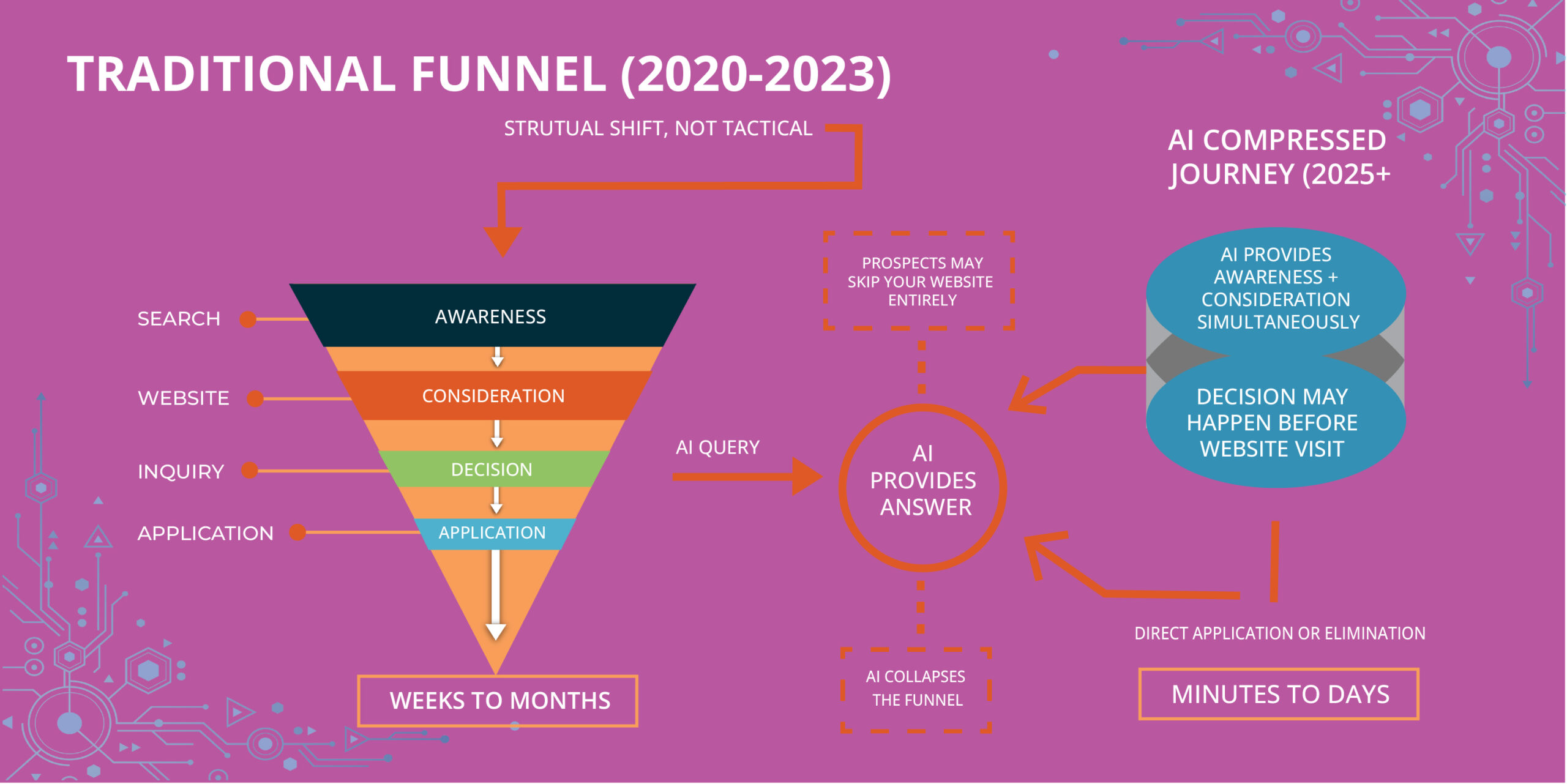
    The Shift Is Structural, Not Tactical

    Let me be direct about what the data is telling us about graduate enrollment marketing:

    1. Search behavior has diversified permanently.

    Prospects use 5+ platforms interchangeably for program research. If you’re only optimizing for Google, you’re reaching a shrinking portion of your audience. Single-platform strategies are increasingly risky.

    1. AI is compressing your funnel.

    Generative AI tools deliver answers about your institution—and your competitors—before prospects visit any website. The traditional “awareness → consideration → decision” funnel is collapsing. Prospects may move from “never heard of you” to “crossed you off the list” without a single website visit.

    1. Citation is the new ranking.

    Being referenced in AI Overviews and AI tool responses builds credibility. Absence from these results may signal irrelevance. For a generation that trusts AI to give them straight answers, not appearing in those answers is a problem.

    1. Your metrics are incomplete.

    Website traffic and click-through rates don’t capture AI-mediated discovery. Brand visibility and AI citation frequency matter, but most institutions aren’t tracking them yet.
    Your 2026 Action Plan for Graduate Enrollment Marketing

    Q1 2026: Foundation—AI Visibility Audit and Technical SEO

    1. Conduct an AI visibility audit. Query ChatGPT, Perplexity, and Google AI Overviews with the exact phrases your prospects use. Screenshot what appears. Document what’s missing or inaccurate. This is your baseline for AI search optimization.
    2. Review your website’s structure for AI readiness. AI tools favor content with clear headings, factual statements, and authoritative data that they can easily extract and cite. Does your program content deliver that, or is it buried in marketing language? An AI-ready website audit should be your first step.
    3. Check your technical SEO fundamentals. Crawlability and site speed matter more than ever for higher education SEO. AI engines are less patient than traditional crawlers. If they can’t see your content, they can’t cite it.

    Q2 2026: Content Development—GEO and Multi-Platform Strategy

    1. Develop a YouTube strategy if you don’t have one. 61% of prospects use YouTube like a search engine. Program overviews, student testimonials, and career outcome videos aren’t optional anymore for graduate enrollment marketing.
    2. Create content in multiple formats for AI optimization. AI chatbots favor Q&A formats. Traditional search favors keyword phrases. Social favors summaries and testimonials. The same information needs to exist in multiple expressions optimized for each platform.
    3. Build FAQ and comparison content. These formats are highly citable by AI systems and directly address how prospects query AI tools. This is core GEO for universities.

    Q3-Q4 2026: Infrastructure and Measurement Evolution

    1. Implement structured data and schema markup. Help AI tools understand your programs, faculty, outcomes, and accreditations through proper technical implementation. This is table stakes for AI visibility in higher education.
    2. Distribute content through authoritative channels. AI tools favor citations from recognized sources. Publishing through professional associations, research outlets, and established media increases the likelihood of AI citation—a key component of any higher education SEO strategy.
    3. Evolve your measurement approach. Start tracking brand mentions, AI citations, and sentiment alongside traditional metrics. The full picture of enrollment marketing visibility now extends well beyond clickable results.

    Methodology

    UPCEA/Search Influence Study (2025)

    Survey period: March 11-13, 2025

    Sample:

    • Total participants: 1,061 individuals
    • Qualified respondents: 760 (met all criteria)
    • Completed surveys: 705

    Qualification criteria:

    • Adults aged 18-60
    • Minimum high school diploma
    • Not currently enrolled in a PCE program
    • Interested in advancing skills through professional/continuing education

    Respondent demographics:

    • 55% female, 45% male
    • 68% employed full-time
    • Education: 32% bachelor’s degree, 19% some college, 18% master’s degree
    • Age: 25% ages 46-54, 19% ages 55-60, 17% ages 35-40

    Distribution: Internet panel

    Conducted by: UPCEA and Search Influence

    Carnegie Summer Research Series (2025)

    Sample: 3,400+ prospective students and parents

    Focus: College choice trends, AI usage in admissions, personality-driven communication

    Key longitudinal finding: AI usage in college search: 4% (2023) → 10% (2024) → 23% (2025)

    Additional Data Sources

    Platform statistics compiled from company announcements, third-party tracking services (Similarweb, SparkToro, Semrush), and industry research reports. All figures represent the most recent publicly available data as of November 2025.

    Glossary of Key Terms

    AI Overview: Google Search feature providing an AI-generated summary at the top of results, synthesizing information from multiple sources. Previously called Search Generative Experience (SGE).

    Zero-click search: A query where users find their answer directly in search results (featured snippets, AI Overviews, knowledge panels) without clicking to any website.

    Generative Engine Optimization (GEO): Optimizing content and digital presence to appear in AI-generated responses from tools like ChatGPT, Perplexity, and Google’s AI Overviews. Unlike traditional SEO (optimizing for algorithms), GEO focuses on helping AI systems accurately understand and represent your institution.

    Professional and Continuing Education (PCE): Post-secondary programs for working adults seeking to advance skills, change careers, or earn credentials—including graduate degrees, certificates, professional development, and continuing education.

    AI chatbot: Conversational AI interface (ChatGPT, Gemini) responding to queries in natural language, often synthesizing information from training data and/or real-time web search.

    AI search engine: Search tool (Perplexity, SearchGPT) providing direct answers by searching the web and synthesizing results, rather than returning a list of links.

    Frequently Asked Questions

    How are prospective students using AI tools in their program search?

    Half of prospects (50%) use AI-powered tools at least weekly for general information search. For program research specifically, 36% are extremely or very likely to use AI chatbots, and 35% likely to use AI search engines. ChatGPT dominates (78% of AI users would use it), followed by Gemini (56%) and Perplexity (20%).

    Do prospects trust AI-generated information about educational programs?

    It’s complicated. Only 33% rate AI chatbots as extremely or very trustworthy for program research, compared to 77% for university websites. But 32% have no concerns whatsoever about using AI for this purpose, and 56% say they’re more likely to trust brands cited in Google’s AI Overviews. Trust in AI is lower than traditional sources, but AI citations boost trust in the sources cited.

    What percentage of searches result in zero clicks?

    As of May 2025, roughly 69% of Google searches end without a click to any website, up from 56% a year earlier. When AI Overviews appear, click-through rates to top-ranking websites decline by 70-90%.

    Which platforms do prospects use to research graduate programs?

    Search engines dominate (84% extremely/very likely), followed by university websites (63%), AI chatbots (36%), AI search engines (35%), and social media (34%). But 61% also use YouTube “like a search engine,” and 50% use AI tools the same way. Platform diversification is the new normal.

    How do search queries differ between traditional search and AI tools?

    On traditional search, 80% use phrase-based queries. On AI chatbots, only 55% use phrases while 23% ask questions and 9% use commands. AI-optimized content should address conversational queries and direct questions—not just keyword phrases.

    What content types work best on social media for program discovery?

    Program summaries and descriptions (65%), career advice (54%), and student testimonials (50%) rate highest. Exception: for 18-22 year-olds, university advertisements were actually rated most helpful.

    What’s the difference between SEO and GEO?

    Traditional SEO optimizes for search algorithms—systems that score and rank based on signals like keywords and links. GEO (Generative Engine Optimization) optimizes for AI understanding—helping AI systems accurately comprehend and represent your institution so they can recommend you to prospects. SEO is like optimizing for a librarian; GEO is like optimizing for a research assistant who needs to explain you to someone else.

    About This Report

    This analysis synthesizes original research from the UPCEA/Search Influence study with data from Carnegie Higher Education, Everspring, EAB, and platform-specific metrics to provide a forward-looking view of how AI search optimization is reshaping program discovery in graduate education.

    The report is designed to help enrollment marketing leaders, higher education SEO professionals, and university marketing teams understand the AI visibility landscape and develop effective GEO strategies for 2026.

    Primary research sponsor: Search Influence

    Research partner: UPCEA (University Professional and Continuing Education Association)

    Report date: November 2025
    Sources and Citations

    Primary Research

    1. UPCEA and Search Influence. “AI Search in Higher Education: How Prospects Search in 2025.” Survey conducted March 11-13, 2025. n=705 qualified respondents.
    1. Carnegie Higher Education. “2025 Summer Research Series: AI Use in the College Search.” Survey of 3,400+ prospective students and parents.

    Industry Reports

    1. Everspring. “AI and the Collapse of Student Search: 2025 Higher Ed Trend Report.” May 2025.
    1. EAB. “Is Your College Website AI-Ready and Built to Drive Enrollment?” July 2025.
    1. EAB. “How Graduate Enrollment Leaders—and Prospective Students—Are Using AI.”
    1. Semrush. “AI Overviews Study: What 2025 SEO Data Tells Us About Google’s Search Shift.” May 2025.
    1. SparkToro and Similarweb. Zero-click search analysis, May 2025.
    2. EducationDynamics. “Engaging the Modern Learner: 2025 Report on the Preferences & Behaviors Shaping Higher Ed.”

    Platform Statistics

    1. OpenAI. ChatGPT usage statistics, August-September 2025.
    1. DemandSage. “ChatGPT Statistics” (November 2025).
    1. DemandSage. “Perplexity AI Statistics” (November 2025).
    1. Business of Apps. “ChatGPT Revenue and Usage Statistics” (2025).
    1. Business of Apps. “Perplexity Revenue and Usage Statistics” (2025).

    Additional Sources

    1. ICEF Monitor. “Students are switching to AI for search. Are you ready?” August 2025.
    1. EdTech Innovation Hub. “Universities face digital visibility crisis as students shift to AI search tools.”
    1. Search Engine Journal. “Google AI Overviews Impact On Publishers & How To Adapt Into 2026.”
    1. Bruce Clay. “How Google’s AI Overviews Are Changing Click Behavior and SEO Metrics.”
    1. Pew Research Center. AI usage survey, 2024-2025.
    1. McKinsey & Company. “The State of AI.”
    1. UPCEA. “2024 Marketing Survey Results.” (Social media advertising spend data—available to UPCEA members)
    2. Statista. “Share of Adults Who Would Switch to an AI-Powered Search Engine by Generation.”

    The landscape described here is evolving quickly. The 2025 data establishes clear trajectories, and the institutions that invest in AI search optimization and GEO for higher education now will have a meaningful advantage heading into 2026. AI-mediated discovery is becoming the norm, not the exception. The question for graduate enrollment marketing isn’t whether to adapt—it’s how quickly you can move.
  • The October Influencer: AI Search Insights – SEO Fundamentals and Our Brand-New Research Study

    Stay ahead in digital marketing with The Influencer, Search Influence’s monthly newsletter covering SEO, digital advertising, and content strategy.

    AI Search in Higher Education: How Prospects Search in 2025 image on a tablet

    Search Influence and UPCEA Launch Research Study

    AI Search in Higher Education: How Prospects Search in 2025

    Our brand new research study with UPCEA reveals how AI, search engines, and university websites shape enrollment decisions.

    Download


    AI SEO Fundamentals vs. Foundational SEO: What’s Changed, What Hasn’t

    CHUCK WILKINS | 12-MINUTE READ

    Learn the fundamentals of AI SEO vs. traditional SEO, and how they work together to keep your brand visible in search.

    Read More


    Higher Education Advertising Strategies for Centralized vs. Decentralized Teams

    MARISSA MAGGIO | 11-MINUTE READ

    Discover the best advertising models for your team to help your institution spend smarter and boost results.

    Read More


    What Your Marketing Dashboard Isn’t Showing You, And How Ours Does

    JEANNE LOBMAN | 10-MINUTE READ

    Most dashboards miss the big picture. Learn how we build marketing dashboards that track real ROI, lead quality, and SMART goals.

    Read More

  • The July Influencer: Can AI Search Affect Your Paid Ads Strategy? Plus: AI SEO Tracking Tools

    Stay ahead in digital marketing with The Influencer, Search Influence’s monthly newsletter covering SEO, digital advertising, and content strategy. Get top tips to fuel your online growth, expert insights from the Search Influence team, and our latest company news. Don’t miss out!

    Graphic for How Will AI Search Affect Paid Ads? What Marketers Need to Know blog post

    How Will AI Search Affect Paid Ads? What Marketers Need to Know

    AUDREY REYNAUD | 11-MINUTE READ

    How will AI search affect paid ads? Get answers and ROI-boosting tactics from Search Influence. Act now to adapt, cut costs, and stay ahead in AI SERPs.

    Read More


    SI Essential AI SEO Tracking Tools

    The 8 Best AI SEO Tracking Tools: A Side-by-Side Comparison

    WILL SCOTT | 19-MINUTE READ

    AI search is changing everything about SEO. Learn about the best AI SEO tracking tools that turn data into strategy with Search Influence

    Read More


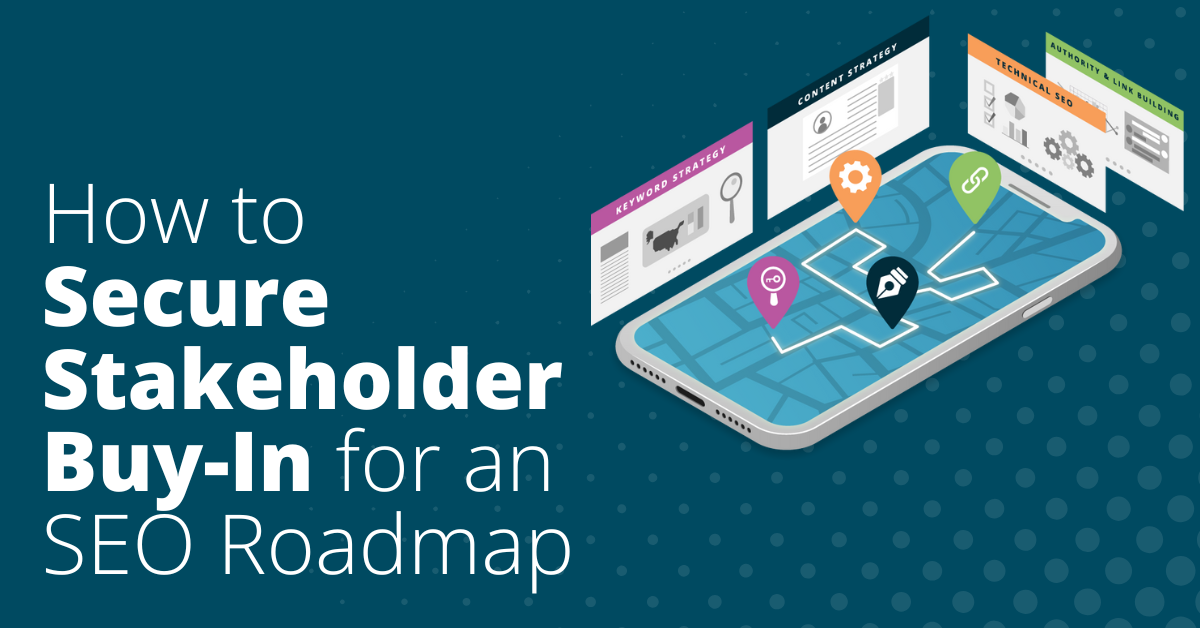
    How to Secure Stakeholder Buy-In for an SEO Roadmap

    PAULA FRENCH | 18-MINUTE READ

    You know you need SEO. A roadmap will show you exactly how and why you need it. Now, with AI inside.

    Read More


    AI Search Interview on Search Engine Land showing Danny Goodwin and Will Scott

    Video Interview: Will Scott on AI content reuse, schema and semantics, and generative engine optimization

    WILL SCOTT | 27-MINUTE WATCH

    Hear the latest on AI SEO in a video interview with Will Scott by Search Engine Land editorial director, Danny Goodwin.

    Read More

  • SEO Automation: How I Built an AI-Powered Question Discovery System with Make.com

    SEO Automation: How I Built an AI-Powered Question Discovery System with Make.com

    SEO Automation: How I Built an AI-Powered Question Discovery System with Make.com

    I recently automated an SEO process that used to take our team hours of manual work. 

    It now runs in 5 minutes. This isn’t about replacing experts. It’s about getting them out of spreadsheets so they can actually solve strategic problems and get creative with content. 

    Here’s how I built it using Make.com, Google Search Console, Semrush, and People Also Ask data from AlsoAsked, and why every SEO team should be doing this.

    SEO Automation: How I Built an AI-Powered Question Discovery System with Make.com

    The Manual Question Discovery Process We Had to Kill

    Here’s what our question discovery automation process looked like before implementing SEO automation with Make.com:

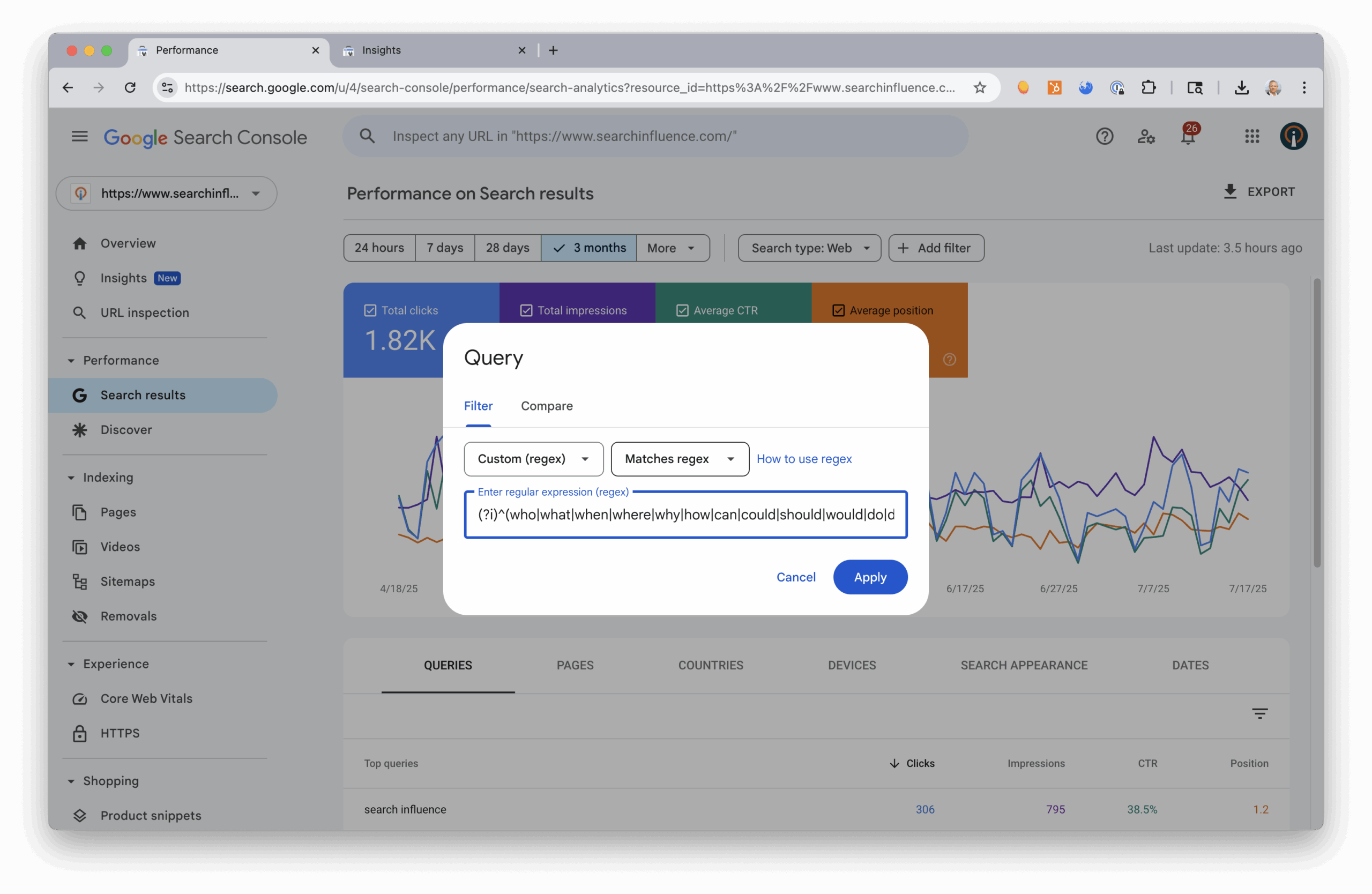
    1. Google Search Console Export: Pull search queries for specific URLs and domains
    2. Semrush Research: Cross-reference GSC data with broader keyword opportunities
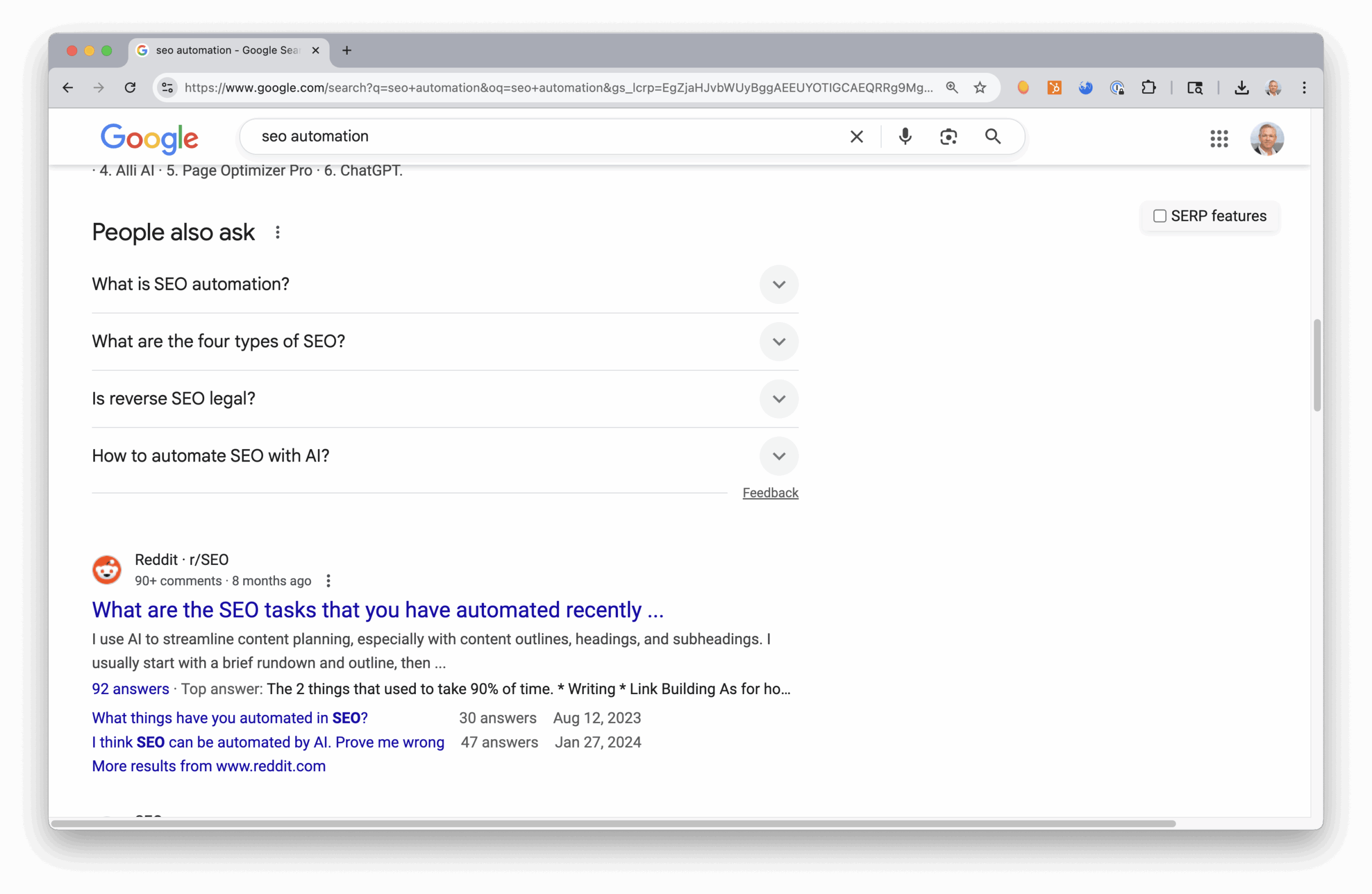
    3. People Also Ask Research: Manually collect AlsoAsked questions for FAQ optimization
    4. AI Search Analysis: Hunt through competitor frequently asked questions for AI Overviews
    5. Related Topic Research: Expand into connected topics for broader search visibility
    6. Relevance Assessment: Manually score questions for content fit and business value

    This took 2-3 hours per analysis. Multiply across clients, pages, and team members, and you’re wasting 15-20 hours weekly on work that doesn’t require strategic thinking.

    The turning point came when I realized our senior strategists were spending more time pulling data than actually optimizing for the things that matter – like getting featured in Google’s AI Overviews and other search features that are reshaping SEO.

    How to Build Your Own SEO Automation with Make.com

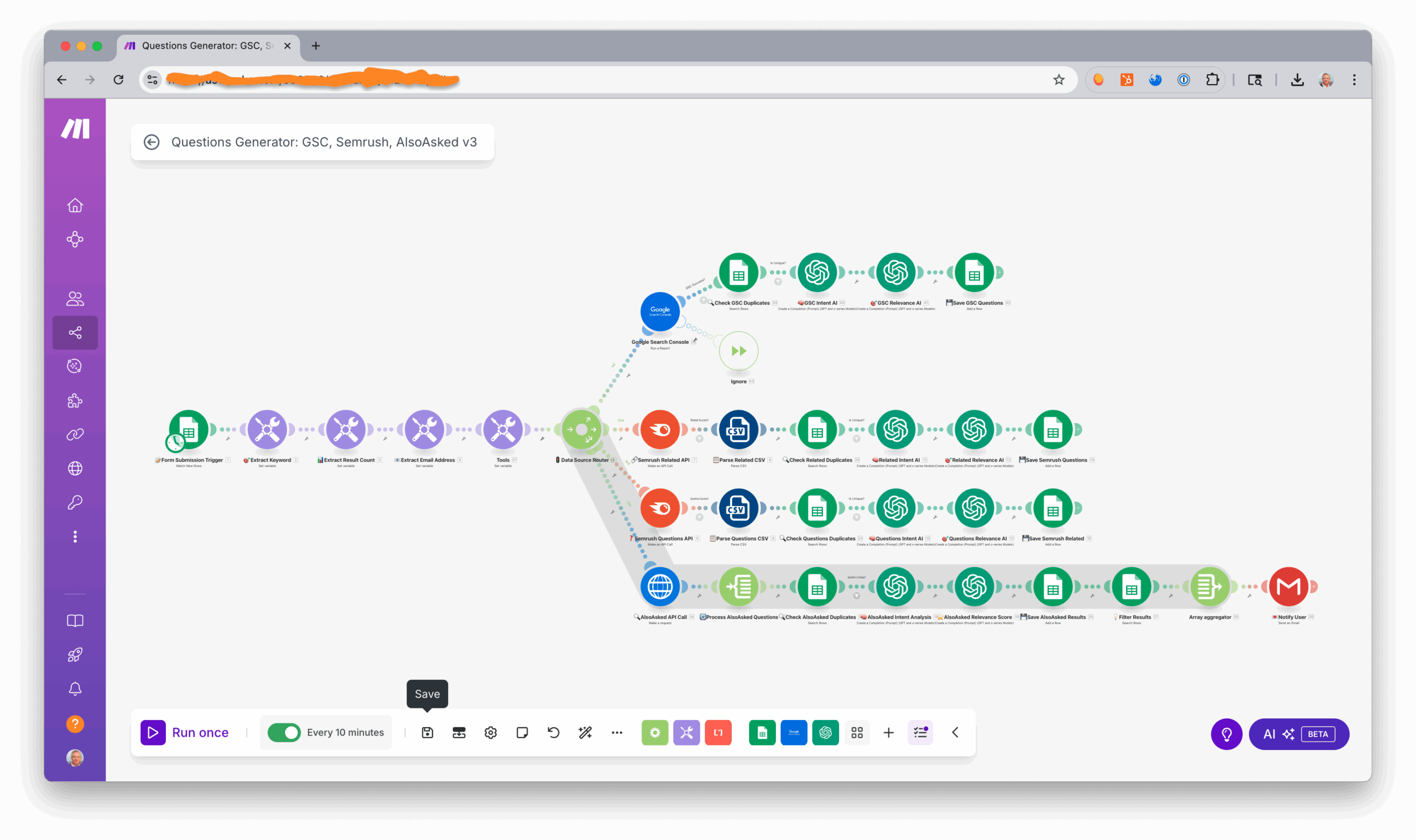
    I built the SEO automation in Make.com to actually analyze, not just move data around. The workflow connects Google Search Console, Semrush, and People Also Ask into one system. If a URL has enough data in GSC, it pulls questions from there. If not, it automatically looks at the whole domain for context. Then it grabs related questions from People Also Ask, pulls keyword data from Semrush, and uses AI to score every question based on what you’re actually trying to accomplish with that page.

    High-Traffic Pages: Get laser-focused questions with direct GSC processing, plus related questions from People Also Ask for thorough FAQ development.

    Newer Content: Enhanced with domain-wide context and AI question discovery to find content gaps and optimization opportunities.

    Strategic Analysis: Semrush integration helps us spot competitive keyword opportunities and find gaps in the market.

    AI Search Optimization Through Automated Question Discovery

    Raw question data from Google Search Console and Semrush tells you what people search for. AI-powered analysis tells you what’s relevant for AI search optimization and FAQ schema implementation.

    The automation looks at two things most tools completely ignore:

    Page Context: What’s this page actually trying to accomplish? Is it a service page, blog post, product page? What’s already covered in FAQs? What could work better for AI search?

    Business Context: What industry you’re in, who you’re targeting, and what actually matters for your goals.

    Then it scores each question on several factors: how relevant it is to your page topic, whether the search intent matches what your page does, how likely it is to show up in AI Overviews, whether it’s good for FAQ sections, and how much business value it could drive.

    This isn’t search volume analysis—it’s contextual intelligence that considers what you’re actually trying to accomplish with AI search optimization and semantic SEO.

    Benefits of SEO Automation for AI Search Optimization

    The real value of question discovery automation isn’t the 20 hours we save weekly. It’s consistency in AI search optimization. Automation doesn’t cut corners or make mistakes when deadlines are tight. It looks at opportunities with the same care every time, and it’s specifically built to work with AI Overviews, People Also Ask boxes, and FAQ schema markup.

    More importantly, the Make.com automation handles all the grunt work so the team can focus on what actually requires human expertise: figuring out why competitors are winning, developing content strategies that align with business goals, and solving complex technical SEO problems.

    As Google’s AI Overviews and other AI search features change how people find content, having good answers to specific questions matters more than ever. The teams that will win are those using automation for data collection while putting human expertise toward strategy and execution.

    Here’s something important: Google’s AI search features literally pull answers from web content to populate results. If your content answers the questions people are actually searching for, you show up. If it doesn’t, you don’t. The automation helps identify exactly which questions your content should answer to get maximum visibility in these new search features.

    Implementing SEO Automation: Make.com Blueprint for Question Discovery

    I made the complete blueprint open source because everyone should be doing this instead of manual data collection. Everything you need—the Make.com workflow, Google Search Console setup, Semrush integration, and People Also Ask automation—is at https://github.com/willscott-v2/get-questions.

    What took us months to build, you can set up in an afternoon. The blueprint has everything: smart routing logic, AI scoring for relevance, People Also Ask automation, Semrush workflows, plus optimization features for AI search.

    The automation can also help with FAQ schema markup, How-To schema, and other structured data that search engines love.

    Strategic Advantage: Human Creativity Unlocked Through SEO Automation

    If your team is still spending time manually sourcing questions for FAQ optimization and AI search, you’re losing strategic ground in AI-driven SEO.

    As AI search and Google’s AI Overviews continue to change search, the choice is simple: let your best people do work that Make.com automation can do better, or free them to do the strategic work that actually wins in AI search optimization.

    SEO automation isn’t about doing less work—it’s about doing different work. The kind that requires creativity, strategic thinking, and industry knowledge that machines can help with but can’t replace.

    Every hour spent manually pulling questions is an hour not spent on competitive analysis, content strategy, or optimizing for AI search features. The tools exist to fix this trade-off.

    The complete SEO Automation blueprint is available on GitHub, including setup guides, People Also Ask integration, Semrush workflows, Google Search Console automation, and FAQ optimization features.

    You like it? Link to it. Link to this post, please: SEO Automation, or AI Search Optimization.


  • SMX Advanced Boston Session: Will Scott on “5 Key Insights for Mastering Generative Engine Optimization”

    5 Key Insights for Mastering Generative Engine Optimization

    This past June, Search Influence Co-Founder and CEO Will Scott attended SMX Advanced Boston to speak on one of the most pressing topics in digital marketing today: Generative Engine Optimization (GEO).

    His session, “5 Key Insights for Mastering Generative Engine Optimization,” took place on Friday, June 13, from 1:45 to 2:15 PM ET.

    This fast-paced, tactical talk explored how marketers can improve their visibility in AI-generated search results across platforms like Google AI Overviews, Bing Copilot, and ChatGPT Search.

    Catch a preview of what was discussed in this video interview with Will Scott and Danny Goodwin, Editorial Director of Search Engine Land and Search Marketing Expo.

    Why Generative Engine Optimization Matters

    A model of brain synapses

    AI-powered search is rapidly transforming how content is discovered, ranked, and served. Instead of simply matching keywords, today’s generative engines rely on a mix of structured data, recognized entities, and conversational language to deliver summarized results.

    These changes aren’t just reshaping rankings. They’re redefining what “findability” means in search.

    To stay competitive, marketers need to understand how these systems retrieve and prioritize information. In “5 Key Insights for Mastering Generative Engine Optimization,” Will outlined five critical tactics to help SEOs adapt their strategies for the AI-first search world.

    After attending, marketers walked away with a clearer understanding of how to:

    • Align content with recognizable entities and structured data to improve AI relevance
    • Enhance visibility by incorporating sources and signals that reinforce trust
    • Evaluate how content performs across AI-generated search results using AI SEO tracking tools
    • Refine SEO tactics to accommodate conversational and predictive search

    About Will Scott

    Will Scott has been at the forefront of SEO for over two decades, helping marketers adapt to constant shifts in how content is discovered and ranked.

    In 2006, he co-founded Search Influence with his wife, Angie, and has since led the agency in supporting thousands of clients through everything from technical site fixes to the emergence of AI in SEO.

    He’s internationally recognized for his contributions to the industry and is credited with coining the term “barnacle SEO” in 2008 — a strategy still used today to build visibility through high-authority platforms.

    This spring, Will led a two-day Generative Engine Optimization Master Class for SMX, delivering practical guidance on content structure, entity optimization, and tracking AI search performance. He also presented at LocalU Global, sharing AI-powered strategies for streamlining local SEO efforts.

    In addition to leading Search Influence, Will regularly contributes to marketing publications and speaks at industry conferences such as Pubcon, offering insight into the evolving relationship between AI and SEO.

    Take Your AI SEO Strategy Further

    The words 'AI' with a robot hand and human hand

    The SMX Advanced session offered a sharp look into what matters most for AI SEO. But when the session ended, the real challenge began: taking those insights and turning them into action for your institution.

    That’s where our SEO Roadmap comes in.

    SEO Roadmap: A clear path to SEO success

    Built specifically for higher education marketers, the SEO Roadmap is a short-term, high-impact engagement that goes deep on one top degree program. It gives you a focused, testable plan you can implement immediately and scale strategically.

    Each SEO Roadmap includes four key components of a comprehensive SEO strategy:

    • Keyword Strategy: Targeted terms based on search demand, competition, and AI-query relevance
    • Content Strategy: Page-level guidance for structure, on-page optimization, and entity inclusion
    • Technical SEO: Fixes and enhancements to help search engines (and AI models) crawl and index your site more effectively
    • Authority & Link Building: Tactics to boost your trust signals and visibility in both traditional and AI-generated search results

    You’ll gain prioritized recommendations and clear next steps so your team knows what to do now and what to build toward next.


    Ready to start with one program and scale your results?

    Contact us to build a future-ready AI search strategy that drives enrollment.

    Images:
    Unsplash
    Unsplash

  • The June Influencer: Agency vs. In-House? Plus, Mastering AI for SEO

    Stay ahead in digital marketing with The Influencer, Search Influence’s monthly newsletter covering SEO, digital advertising, and content strategy. Get top tips to fuel your online growth, expert insights from the Search Influence team, and our latest company news. Don’t miss out!

    The AI SEO Guide: From Concepts to Application blog post

    The AI SEO Guide: From Concepts to Application

    WILL SCOTT | 17-MINUTE READ

    As AI reshapes search behavior, your content strategy must adapt. Learn AI SEO essentials to stay discoverable with help from Search Influence.

    Read More


    A quote about SEO Strategy from Search Influence

    Sales & Marketing Director Paula French for UPCEA’s Industry Insights Blog

    Higher Ed SEO Trends to Stay Competitive

    PAULA FRENCH | 13-MINUTE READ

    Find out how to conquer key higher ed SEO trends to ensure you continue to reach and engage prospective students effectively.

    Read More


    Coworkers giving each other a high five

    In-House Marketing vs. Agency Teams: Build a Strong Strategy Together

    PAULA FRENCH | 14-MINUTE READ

    Debating between in-house marketing vs. an agency partnership? See how leveraging both approaches benefits your long-term strategy with Search Influence.

    Read More


    How to Market Microcredentials for Maximum Program Visibility blog graphic

    How to Market Microcredentials for Maximum Program Visibility

    ALISON ZERINGUE | 13-MINUTE READ

    Driving enrollment for non-traditional degrees starts with visibility. Learn how to market microcredentials using a cross-channel approach with Search Influence.

    Read More

  • AI SEO Leader Will Scott to Speak at Two Sessions at Pubcon Pro 2025 in Austin, TX

    AI SEO Leader Will Scott to Speak at Two Sessions at Pubcon Pro 2025 in Austin, TX

    Search Influence is proud to announce that our CEO and Co-Founder, AI SEO Expert, Will Scott, will be speaking at Pubcon Pro 2025.

    The event will take place in Austin, TX, June 19–20, 2025.

    On Thursday, June 19, Will will bring his AI SEO expertise to two high-impact sessions:

    • AI-Powered Agencies: Automate 80% of Your SEO Work
      In this session, Will will reveal how agencies can use AI SEO tools to streamline content workflows, scale optimizations, and maintain quality while accelerating delivery.
    • AI and SEO Content Generation
      As the moderator, Will will guide a dynamic discussion on how AI is reshaping the content lifecycle, from ideation to optimization to AI Overview readiness.

    A Recognized Leader in AI SEO Strategy

    Will Scott is an AI SEO Expert and a digital marketing pioneer known for coining the term “barnacle SEO” and for championing the intersection of automation and strategic SEO. 

    As a founding faculty member at Local U and a frequent speaker at SMX, past Pubcon conferences, and industry associations across the country, Will brings decades of SEO wisdom into today’s generative search era.

    Under his leadership, Search Influence has become a go-to AI SEO (also known as Generative Engine Optimization) agency for organizations in higher education, healthcare, and hospitality, amongst other industries. From content creation and semantic optimization to AI search visibility tracking, our team helps clients adapt to the realities of AI-powered search.

    Learn more about Will’s approach by reading some of his recent blogs:

    Why This Matters: Visibility in a Generative Search World

    AI SEO isn’t a trend, it’s the new foundation of online visibility. With AI Overviews now live in Google Search and large language models shaping what users see, brands that fail to optimize for AI risk falling behind.

    Search Influence has long anticipated this shift. We’ve equipped our clients with agile solutions, including content structured for AI retrievability and scalable workflows using AI SEO tools. 

    Ready to Future-Proof Your SEO?

    If you’re attending Pubcon Pro 2025, don’t miss Will’s sessions.

    From automation strategies that can scale your SEO output to real-world guidance on AI-powered content generation, Will will share practical insights you can put into action immediately.

    Can’t make it to Austin? No problem. 

    Our award-winning AI SEO agency is ready to help you launch your strategy into the future.

    In higher ed? 

    Start with our Higher Ed SEO Roadmap to assess your visibility in an AI-driven search world.

  • How Will AI Search Affect Paid Ads? What Marketers Need to Know

    Graphic for How Will AI Search Affect Paid Ads? What Marketers Need to Know blog post

    Key Insights

    • AI Overviews decrease paid ad performance. When an Overview appears, Google Ads CTR drops from 21.27% to 9.87%.
    • Zero-click search is becoming part of the new norm. Some 58.5% of U.S. searches end without a website visit, elevating impression share, on-SERP visibility, and AI-referral traffic as essential metrics.
    • Lower-funnel tactics mitigate loss. AI-driven creative, smart bidding, transactional keywords, and conversational search phrases recover clicks that Overviews cannot satisfy.
    • First-party data and channel diversity preserve revenue. Feeding CRM signals into ad platforms and expanding into programmatic, CTV, and creator-led video sustains growth as generative SERPs evolve.
    • Advertisers will soon be eligible to have their ads shown in AI Overviews and AI Mode if they use Performance Max, Shopping, or broad match Search campaigns, including AI Max for Search.

    Ask any paid search specialist today, “How will AI affect paid search ads?” and you’ll see the same mix of excitement and anxiety.

    The chat-style answer from Google’s AI Overviews (AIOs) now blocks the top of search results, condensing information from multiple web pages and displaying it above everything on the results page.

    Marketers are already measuring the fallout: When an AIO fires, paid ad click-through rates (CTRs) can plunge by more than half, and organic traffic often drops too.

    Yet, declaring PPC dead would be premature.

    AIOs also provide new context signals and fresh attribution labels in GA4 that can boost performance when used strategically.

    And now, there’s a new development: Google has announced that advertisers will soon be eligible to appear in AI Overviews and AI Mode if they use Performance Max, Shopping, and broad match Search campaigns, including AI Max for Search.

    While this capability isn’t yet widely available to all advertisers, it hints at a future where paid visibility within AI-powered experiences will be possible.

    This post unpacks the latest data on visibility declines, explores emerging AI PPC opportunities, and outlines how Search Influence is helping brands safeguard revenue while turning generative search into a competitive edge.

    What Are AI Overviews, and Why Do They Matter for Paid Search?

    AI Overviews appear at the top of the SERP, absorb user attention, and compress the real estate available to paid ads.

    An AIO is essentially Google’s “CliffsNotes” for a query. Google Gemini analyzes millions of pages, extracts key points, and presents a conversational answer with citations. Because the card can occupy the entire first viewport, especially on mobile, users often get what they need before scrolling.

    Fewer impressions reach the positions where search ads typically run, driving immediate visibility loss and, in turn, lower CTR. In practice, that means campaigns relying on upper-funnel traffic or broad-match keywords feel the squeeze first, while tightly focused brand and product queries remain comparatively resilient.

    How Does AI Impact Google Ads’ Performance in 2025?

    A person using Google on their smartphone

    When an AIO triggers, paid ad CTR drops from 21.27% to 9.87%.

    A six-month Seer Interactive panel found that AIOs currently fire on roughly 7% of paid impressions. That share sounds modest until you realize it skews toward high-volume, informational queries that traditionally fill remarketing lists.

    With clicks disappearing on those terms, advertisers face two immediate pressures: shrinking top-funnel traffic and higher average cost per click (CPC) as more brands bid harder for the impressions that remain. Savvy teams now track impression share by SERP feature, segmenting “AIO” versus “no AIO” to spot dips early and reallocate spend before budgets burn.

    Are AI Overviews Reducing Web Traffic and Ad Clicks?

    By satisfying informational intent on-page, AI Overviews cut organic visits by 18–64% and dampen paid ad engagement.

    A Bounteous analysis revealed that sites targeting informational-type queries (think “average HVAC install cost” or “symptoms of low iron”) lost up to two-thirds of traffic once AIOs rolled out. Because AI search platforms resolve a user’s curiosity instantly, many never click another result. Paid ads suffer collateral damage, particularly for queries without commercial intent.

    Brands that once depended on broadly educational content to seed future conversions must now find new ways (first-party data, remarketing from social, and answer-engine optimization) to keep their funnels full.

    What Are Zero-Click Searches?

    Zero‑click searches occur when search engines satisfy user intent on the results page itself, leaving no need to visit another site.

    Featured snippets, knowledge panels, local packs, and now AI Overviews all deliver answers instantly, so the original search queries end right there. Recent SparkToro research found that 58.5 % of U.S. Google searches in 2024 finished without a click — proof that user behavior is tilting toward on‑SERP consumption.

    For marketers, this shift clouds traditional metrics. Impressions may vanish before ads load, and click‑through rate tells only part of the story. Tracking impression share, on‑SERP visibility, and emerging “AI referral” traffic offers a truer view of campaign performance in a world where many journeys now begin and end on Google itself.

    How Do AI Overviews Affect Paid Ads Differently Than Organic Listings?

    AI Overviews diminish paid impressions more than organic visibility because only organic citations appear inside the answer card.

    When Gemini selects content for an Overview, it lists source links at the bottom of the snapshot. That gives SEO teams at least a branding breadcrumb, even if clicks decline. Paid ads, however, receive no such cameo; they’re simply shoved below the fold. The double hit, fewer impressions, and zero on-card mentions force advertisers to squeeze more profit from every click.

    It also nudges CPC upward as marketers bid aggressively for shrinking inventory.

    Collaboration between PPC and search marketers becomes indispensable. Organic can still score brand impressions, while paid must double down on high-intent keywords that AIOs rarely answer outright.

    What Should Marketers Do to Adapt Paid Search Campaigns for AI Search?

    The Google Ads logo

    Advertisers can reclaim lost clicks by combining AI-driven creative, intent-rich targeting, and smart bidding tuned for AI-powered search.

    First, embrace AI as a creative partner. AI-powered tools like Performance Max, ChatGPT, and Gemini can spin adaptive headlines that mirror the conversational phrasing users now type, or voice search, into Google. Feeding first-party CRM segments back into Google Ads sharpens audience models so the algorithm boosts bids only for prospects who resemble real buyers. Smart bidding strategies, such as Target CPA or Target ROAS, then respond in milliseconds if an Overview slashes available impressions.

    Next, pivot budgets toward bottom-of-funnel phrases — “same-day crown dentist near me,” “buy carbon-fiber pickleball paddle,” “cloud ERP demo pricing.” These commercial-ready searches still require a click, making them less vulnerable to AIO cannibalization.

    Finally, test longer, question-style keywords. Broad match combined with responsive search ads (RSAs) can capture AI-driven, voice-style queries like “Who installs tankless water heaters in Austin on weekends?”

    It’s also worth noting that campaigns will be eligible to appear in AI Overviews and AI Mode when using Performance Max, Shopping, or broad match Search, including the new AI Max for Search.

    Marketers leveraging these campaign types should monitor announcements from Google Ads to understand when and how this feature rolls out to their accounts.

    This conversational SEO/PPC crossover ensures visibility as search behavior evolves.

    Will AI Referral Traffic Replace Traditional Clicks?

    AI referral traffic is still embryonic but poised to become a measurable channel worth monitoring in GA4.

    Dig into GA4 source/medium reports, and you might notice entries such as gemini.google.com or chat.openai.com. Creating a custom channel group for any URL or host containing “ai” or “overview” lets marketers benchmark engagement metrics, time on site, scroll depth, and assisted conversions for these visits.

    Early numbers suggest that AI referral users consume content quickly and frequently navigate to deeper pages, perhaps because they arrive already primed by the answer box.

    Tracking micro-conversions (PDF downloads, click-to-call events) will help quantify the true value of this emergent audience as volumes grow.

    How Will the Paid Search Industry Evolve in Response to AI?

    Paid search is shifting toward data-heavy automation, diversified media mixes, and AI-enhanced creative storytelling.

    Google has already infused Gemini into ad creation, offering dynamic headline suggestions pulled from landing pages, product feeds, and customer intent signals. As SERP space tightens, brands are funneling incremental dollars into programmatic native, connected TV, discovery campaigns, and AI paid advertising on social platforms like TikTok Pulse. Agencies that weave PPC, conversion rate optimization, and answer-engine optimization into one cohesive strategy will distance themselves from siloed competitors.

    Meanwhile, the concept of Generative Engine Optimization (GEO) (or AI SEO, as we like to call it) has gone from theory to practice. Expect PPC managers to partner with SEO leads on structured data, schema markup, and entity optimization designed to make both ads and citations algorithm-friendly.

    How Can You Future-Proof Your Paid Search Strategy in an AI-Driven World?

    To future-proof your paid search strategy in an AI-driven world, marry rapid experimentation with rich first-party data and a diversified channel mix so revenue stays resilient as generative SERP features evolve.

    Operate on rapid test–learn loops: Weekly experiments reveal performance swings long before quarterly reviews surface them. Push every offline conversion, call, CRM deal, and store visit into Google Ads and Microsoft Advertising so machine-learning models optimize for profit, not vanity clicks. Layer audience signals, such as lapsed customer reactivation or high-value upsell, to fine-tune bidding during low-impression windows caused by AI models.

    Outside the SERP, pilot creator-led YouTube shorts, TikTok Spark Ads, and programmatic audio to hedge against further search volatility. These channels, amplified by AI-targeting capabilities, keep your message in market even when Google’s answer engines handle the top of the funnel.

    Finally, build dashboards that isolate artificial intelligence search impressions, CPC deltas, and AI-powered search marketing ROI so leadership sees both the risk and the enormous opportunity.

    Higher Ed Spotlight

    AI Overviews reduce top-funnel research traffic, yet high-intent education queries remain prime real estate for paid ads.

    Prospective students may find tuition averages or admission timelines directly in an Overview, but searches like “AACSB-accredited online MBA with scholarships” or “fastest RN-to-BSN program near me” still demand a click. Higher ed institutions that refine keyword match types and clusters around modality, cohort start date, and location continue to generate qualified leads at competitive cost per inquiry (CPI).

    Personalizing ad copy to speak to specific learner motivations, career advancement, salary potential, and schedule flexibility improves conversion rate even when impressions drop.

    To see where AI-powered search has distorted your funnel, use our free Higher Ed CPI Worksheet.

    Learn More About Navigating AI-Powered Search With Search Influence

    AI Overviews aren’t fading. They’re expanding.

    But that doesn’t mean your paid media growth and ad relevance have to shrink.

    The search marketers at Search Influence are already training AI tools to craft conversion-tested creatives, teaching smart-bidding algorithms to detect Overview-heavy SERPs, and visualizing AI referral paths inside GA4.

    We blend AI-powered bidding, conversational keyword research, and cross-channel planning to turn generative search disruption into revenue.

    If your CTR line looks like a ski slope or your CPC has climbed without a parallel rise in leads, it’s time for a deeper conversation.

    Contact our digital marketing team and let’s rewire your PPC campaigns for the AI Overview era.

    Images:
    Unpslash
    Unsplash

  • The May Influencer: Don’t Get Left Behind – Key AI Search SEO Changes to Know

    Stay ahead in digital marketing with The Influencer, Search Influence’s monthly newsletter covering SEO, digital advertising, and content strategy. Get top tips to fuel your online growth, expert insights from the Search Influence team, and our latest company news. Don’t miss out!

    AI Powered Search graphic

    AI-Powered Search Is Here — Why It’s Time to Invest in SEO

    CHUCK WILKINS | 11-MINUTE READ

    Learn how AI-powered search is changing SEO and what your brand must do to stay visible. Get expert tips in our must-read guide.

    Read More


    Letter tiles spelling out the word Search

    The Latest SEO Trends and Challenges You Can’t Ignore

    ALISON ZERINGUE| 13-MINUTE READ

    Struggling to keep up with SEO trends? We’ll show you how to adapt to AI and social search before your visibility and traffic take a hit.

    Read More


    Overlooked Higher Education Marketing Strategies To Maximize Your Budget blog post

    Overlooked Higher Education Marketing Strategies To Maximize Your Budget

    JEANNE LOBMAN | 16-MINUTE READ

    Boost enrollment with data-driven higher education marketing strategies. See how Search Influence empowers universities to reach more students efficiently.

    Read More


    UPCEA Webinar Top Takeaways: SEO for AI Search

    1-HOUR WATCH

    Catch up on our latest webinar, “SEO for AI Search: Protect Your Student Enrollment Pipeline,” to discover how to stay visible in the new era of search.

    Watch

  • The AI SEO Guide: From Concepts to Application

    The AI SEO Guide: From Concepts to Application

    The AI SEO Guide: From Concepts to Application blog post

    Key Insights

    • AI SEO means creating content that resonates with humans and is easily interpreted by AI systems.
    • Search engines prioritize semantic relevance, so depth and clarity now matter more than exact keywords.
    • AI models pull from trusted sources, making content accuracy and accessibility essential.
    • Content should align with user intent and be structured in self-contained chunks that AI can retrieve.
    • Winning at AI SEO requires ongoing effort, fresh content, and the right tools to track AI visibility.

    AI SEO is the strategic optimization of digital content to perform well with both human visitors and artificial intelligence systems like search engines, voice assistants, and chatbots. As we enter an era where content is increasingly filtered through AI tools like ChatGPT and Google’s AI Overviews, and voice assistants are answering user questions directly, your content must now serve two audiences:

    1. Your human customers
    2. The AI models deciding what content to surface in search results

    To improve your organic traffic and win in this environment, you need to understand how AI works, how search engines are changing, and how to optimize content so it’s both discoverable and compelling. This guide walks through the essential concepts of AI SEO, from AI fundamentals to successful content optimization.

    Part 1: Foundations — What Powers AI SEO

    Artificial intelligence (AI)

    Think of AI as your super-smart digital teammate who learns from data to make decisions, generate content, or answer questions. It’s like having a research assistant who’s read the entire internet and never sleeps.

    In your website’s world, AI helps with:

    • Answering customer questions automatically
    • Suggesting content your visitors might like based on their behavior
    • Improving your SEO by understanding what your content means, not just what keywords it contains

    Try This: Ask ChatGPT to analyze one of your web pages and suggest improvements. You’ll get a taste of how AI “sees” your content.

    Large language models (LLMs)

    LLMs, like GPT-4, Claude, or Gemini, are a type of AI software powering tools like ChatGPT that your team can use for content creation and optimization. These sophisticated platforms process and generate human language based on vast amounts of text data they’ve analyzed.

    For AI SEO specifically, your marketing team can use LLMs to:

    • Create search-optimized content that addresses search intent.
    • Generate blog ideas based on trending topics and search volume.
    • Analyze top-performing search results to identify content gaps.
    • Draft meta descriptions and title tags that improve click-through rates.
    • Develop FAQ sections that address common user queries and help with featured snippets.

    Embeddings in search engines

    Embeddings transform text into numerical vectors that capture meaning. For AI SEO, this is crucial because modern search engines use embeddings to understand the topics in your content.

    For example:

    • “Buy running shoes” and “purchase athletic footwear” would have similar embeddings despite using different words.
    • This allows search engines to match your content with user queries based on meaning, not just exact keyword matches.

    Content creation strategies should focus on comprehensive topic coverage rather than exact keyword density.

    The best AI SEO software tools now use embeddings to analyze how search engines will interpret your content, helping you optimize for semantic relevance.

    Vectors and AI-driven search results

    Vectors are the actual mathematical representations of your content that search engines use to match with search queries. When optimizing content for AI SEO:

    • Each piece of content has a unique vector “signature” based on its topics and meaning.
    • Search algorithms compare query vectors with content vectors to determine relevance.
    • The closer these vectors align, the higher your content may rank in search results.
    • Recent changes in search engine algorithms prioritize semantic relevance over exact keyword matching.

    Try This: Use AI SEO tools to analyze your highest-performing organic content and identify the semantic topics that may be driving its success in search results.

    Part 2: Making AI Smarter — Grounding and RAG

    Grounding

    Ever had a conversation with someone who confidently states something completely wrong? AI can do that too. It’s called “hallucination.” Grounding is like giving AI a fact-checker before it speaks.

    In practical terms, grounding means connecting AI to reliable sources of truth, such as:

    • Your website content
    • Product catalogs
    • Knowledge bases
    • Customer support archives

    This matters because it ensures that when someone asks a question about your business, the AI answers with accurate information, not what it thinks might be true.

    RAG: Retrieval-augmented generation

    RAG is the framework that makes grounding possible. Think of it as a three-step process:

    1. Retrieve: The AI searches for relevant content in your database (using those vector coordinates we talked about).
    2. Augment: It adds this information to its “working memory.”
    3. Generate: It crafts a helpful, accurate response using this fresh information.

    It’s like the difference between asking someone to recall a movie plot from memory versus letting them look up details while they tell you about it. The second approach is always more accurate.

    This is what powers:

    • Custom GPTs with access to your content
    • Site search that gives conversational answers
    • Google’s AI Overviews that summarize search results
    • Enterprise chatbots that know your specific business

    Try This: Test an RAG system yourself by creating a custom GPT in ChatGPT with your website content, then see how it answers questions about your business.

    Part 3: Structuring Content — Relevance, Salience, and Granularity

    Topical relevance

    Topical relevance means your content matches what people are looking for. It’s not just about keyword matching. It’s about addressing the concepts behind the keywords.

    To boost relevance:

    • Focus each page on one clear topic (avoid the “everything bagel” approach).
    • Use natural language that covers related terms and concepts.
    • Match the underlying intent, not just the exact search terms.

    Salience

    Salience is about prominence and focus. Is your core topic front-and-center, or just mentioned in passing?

    Think of it this way: If your page were a movie, is your key topic the star, or just an extra in the background?

    To win at AI SEO, know that:

    • Salient content gets retrieved more often.
    • It ranks better in traditional search, too.
    • It delivers what real users are looking for.

    Chunks (Passages): The unit of retrieval

    Modern search engines and AI don’t read your content like humans do. They break it into bite-sized pieces called “passages” or “chunks.”

    Think of each chunk as a mini-document focused on one subtopic. When someone asks a question, AI might pull just that relevant chunk, not your entire page.

    To optimize your chunks:

    • Use clear subheadings that state the main idea.
    • Make each section answer a specific question.
    • Keep related information together.
    • Aim for self-contained sections that make sense on their own.

    Try This: Look at your top-performing page. Can you identify distinct chunks? Would they make sense if read in isolation?

    Good vs. great: What high-salience content looks like

    Low-salience example: “We offer a range of services, including SEO, PPC, email, social media, and more.”

    High-salience example: “Our SEO strategy begins with a technical audit, followed by keyword mapping and targeted content updates to drive organic rankings.”

    Why this matters: The first mentions SEO, and the second is focused on it. That focus is what makes content salient and retrievable.

    Part 4: Aligning Content With Intent and the Customer Journey

    Understanding user intent

    User intent is the “why” behind a search. It’s the difference between someone researching a topic and someone ready to buy.

    • Informational: “What is university SEO?” (They want to learn.)
    • Navigational: “Search Influence SEO services” (They’re looking for a specific site.)
    • Transactional: “Hire higher ed SEO agency” (They’re ready to act.)
    • Investigative: “Best SEO firm for colleges” (They’re comparing options.)

    Matching content to intent

    Remember those AI concepts we discussed earlier? Here’s where they come together:

    • Use topical relevance to ensure you’re covering the right concepts.
    • Apply salience to focus your content on what matters most.
    • Structure your content in chunks that answer specific questions.

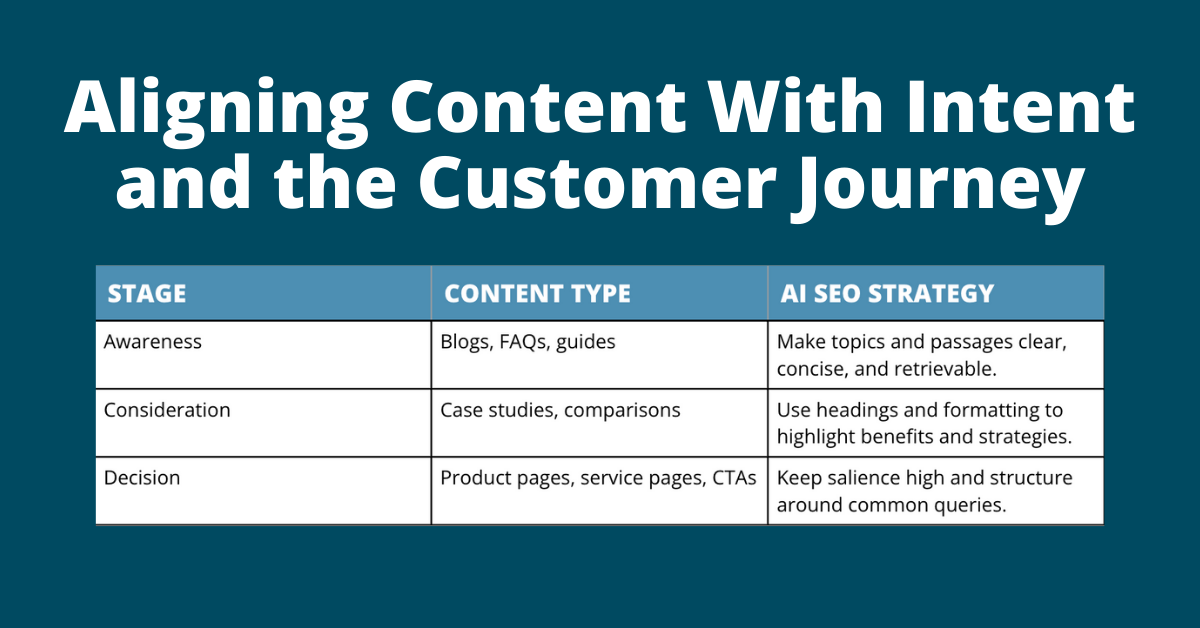
    Mapping to the customer journey

    Your website isn’t just a collection of pages — it’s a journey you’re guiding users through:

    Aligning Content With Intent and the Customer Journey graphic

    Try This: Audit your content by journey stage. Do you have gaps? Are you heavy on awareness but light on decision content?

    Keep It fresh: Why content age matters in AI retrieval

    Both search engines and AI systems prefer fresh content. It’s not just about having a recent publication date but about having current information.

    Picture this: If two pages have similar relevance, but one was updated last week and one two years ago, which would you trust? AI feels the same way.

    Best practices:

    • Set a calendar reminder to review key pages quarterly.
    • Update statistics, examples, and trends regularly.
    • Add “Last Updated” dates to show content freshness.
    • Consider a content refresh strategy as part of your regular marketing calendar.

    Invisible SEO: Metadata, markup, and machine signals

    AI doesn’t just see what humans see. It reads the code behind your pages, too. These behind-the-scenes signals help machines understand your content:

    • Semantic HTML: Using proper heading tags (H1, H2) instead of just making text bigger
    • Schema markup: Adding code that explicitly tells search engines “this is a product” or “this is an FAQ”
    • Meta information: Writing compelling, keyword-relevant titles and descriptions
    • Image alt text: Describing images for both accessibility and context

    Try This: Use either Schema Markup Validator or Google’s Rich Results Test and see what structured data your site currently has. Look for opportunities to add FAQ, HowTo, or other relevant schema types.

    Your content in vector indexes and AI repos

    Your content doesn’t just rank in traditional search. It gets embedded, chunked, and compared in massive vector databases:

    • For content to be found, it must be crawlable (unless in a private system).
    • It needs semantic richness — context and meaning, not just keywords.
    • Strong internal linking helps establish relationships between concepts.
    • Clear structure signals what’s important and how ideas relate.

    Testing and tuning: How to track your AI SEO performance

    AI SEO isn’t “set it and forget it.” It’s an ongoing process:

    • Track your presence in AI Overviews using monitoring tools like SEMRush or Advanced Web Ranking.
    • Test common customer questions in ChatGPT to see if it references your content.
    • Identify gaps by comparing what questions you want to rank for versus what AI actually retrieves.
    • Consider one of the emerging AI tracking tools like Scrunch, RankScale, or Profound.
    • Use these insights to continuously improve your content strategy.

    Part 5: The Future of AI SEO — Preparing for What’s Next

    Search engine diversity: Beyond Google

    While Google dominates the conversation around search, different search engines and AI platforms approach content evaluation in unique ways:

    • Bing/Microsoft: Often emphasizes freshness and social signals differently than Google
    • DuckDuckGo: Focuses on privacy and may value different content signals
    • Niche Search Engines: Vertical-specific engines like Amazon or YouTube have their own unique ranking factors

    Content optimized for multiple AI systems should:

    • Focus on universal quality factors like clarity and comprehensiveness.
    • Avoid over-optimization for any single algorithm.
    • Test performance across multiple platforms.

    Try This: Compare how your top content performs in Google versus Bing or other search engines to identify potential optimization gaps.

    Knowledge graphs: Entities and relationships

    Search engines use knowledge graphs to understand entities (people, places, things) and how they relate to each other. This structured understanding helps AI comprehend context and meaning beyond just keywords.

    For example, a knowledge graph understands that:

    • “Apple” could be a fruit, a technology company, or a record label.
    • Tim Cook is the CEO of Apple Inc.
    • iPhones are products made by Apple Inc.

    To optimize for knowledge graphs:

    • Use schema markup to clearly identify entities.
    • Build content that reinforces entity relationships.
    • Create content clusters that thoroughly cover related topics.

    Try This: Research how your brand and key products appear in Google’s Knowledge Panel to understand how search engines currently interpret your entity.

    Agentic search: When AI acts on your behalf

    We’re moving from an era where users search for information to one where AI assistants search on their behalf. Think of it as the difference between looking up a restaurant yourself versus telling your assistant: “Book me a table at a good Italian place nearby.”

    This shift has profound implications:

    • Users may interact less directly with your website.
    • First impressions will happen through AI interpretations of your content.
    • Content needs to be both human-friendly AND machine-actionable.

    Try This: Ask an AI assistant like ChatGPT to recommend a product in your category and see what sources it draws from. What made those sources retrievable?

    Agent-to-agent communication

    The next frontier is machines talking to machines on our behalf. Imagine your customer’s AI assistant negotiating with your business’s AI system to book an appointment or customize a product.

    To prepare for this:

    • Structure data in machine-readable formats.
    • Develop clear API documentation.
    • Ensure your content can be easily parsed into actionable items.
    • Consider what permissions and capabilities you’ll grant to external AI systems.

    E-E-A-T: Building trust with both users and AI

    To describe quality content, Google coined the term: E-E-A-T principles (Experience, Expertise, Authoritativeness, Trustworthiness). While not explicitly related to AI search, the factors are increasingly important for AI evaluation:

    • Experience: Show first-hand knowledge and practical application.
    • Expertise: Demonstrate a deep understanding of your field.
    • Authoritativeness: Build recognition from others in your industry.
    • Trustworthiness: Provide accurate, current information with transparency.

    AI systems are getting better at evaluating these signals to determine which content to trust and recommend.

    Try This: Audit your key pages for E-E-A-T signals. Do you clearly communicate credentials? Do you reference authoritative sources? Do you show real expertise?

    Multimodal AI SEO: Optimizing beyond text

    AI systems are increasingly “multimodal,” i.e., able to understand text, images, audio, and video together. This trend has significant implications for comprehensive content optimization:

    • Image Source Optimization: Use descriptive filenames and alt text that help AI understand image content.
    • Video SEO: Include transcripts and structured markup that make video content discoverable.
    • Podcast Optimization: Provide detailed show notes and timestamps that AI can index.
    • Social Media Integration: Coordinate messaging across platforms for consistent brand signals.

    The best AI SEO strategies now incorporate multiple content formats to create comprehensive digital experiences that rank well across all search platforms.

    The evolving link landscape in AI SEO

    While internal linking remains crucial for establishing content relationships, the role of external links is also evolving in an AI-driven search environment:

    • Quality over quantity becomes even more important.
    • Contextual relevance of linking domains matters more than domain authority alone.
    • Links from diverse but topically relevant sources create a more natural signal.
    • Citations and mentions may gain importance alongside traditional links.

    To adapt your link-building strategy:

    • Focus on genuine relationships with relevant content creators.
    • Seek opportunities to be cited as an information source, not just linked to.
    • Create link-worthy resources that AI systems would recognize as authoritative.

    Part 6: AI SEO Tools and Implementation

    Essential AI SEO software and platforms

    To effectively implement AI SEO strategies, your team will need the right tools:

    • AI Content Creation Tools: Platforms like ChatGPT, Jasper, ContentBot, or CopyAI help generate search-optimized content
    • SEO Analysis Software: Tools like SEMrush, Ahrefs, or Moz now include AI-powered content suggestions
    • Search Intent Analysis: Specialized tools that analyze user queries and suggest content angles
    • AI-Powered Keyword Research: Software that identifies semantic keyword clusters and topic opportunities
    • Content Optimization Platforms: Tools that evaluate your content against top-performing competitors
    • Dedicated AI Tracking Tools: Tools like Scrunch, RankScale, or Profound can explicitly track your placement in AI search results

    These tools work best when used by skilled marketers who understand both SEO fundamentals and AI capabilities.

    AI SEO implementation timeline

    For teams looking to adopt AI SEO practices, consider this phased approach:

    1. Audit Current Performance (1-2 weeks)
      • Analyze organic traffic trends.
      • Identify content performing well/poorly with AI systems.
      • Benchmark against competitors.
    2. Tool Selection and Training (2-4 weeks)
      • Choose appropriate AI SEO software.
      • Train your team on new platforms.
      • Develop internal best practices.
    3. Content Optimization (Ongoing)
      • Prioritize high-value pages for updates.
      • Create new content using AI SEO principles.
      • Monitor performance and adjust strategies.
    4. Advanced Implementation (3-6 months)
      • Develop custom AI applications for your website.
      • Create specialized datasets for content creation.
      • Build automated optimization workflows.

    The most successful brands view AI SEO as an ongoing process rather than a one-time project.

    Measuring AI SEO success

    Track these key metrics to evaluate your AI SEO efforts:

    • Featured Snippet Appearances: How often your content appears in position zero
    • SERP Feature Presence: Inclusion in knowledge panels, FAQs, and other enhanced results
    • AI Overview Mentions: References to your content in Google’s AI Overviews
    • Voice Search Results: How often your content is selected for voice assistant responses
    • Click-Through Rate Changes: Shifts in user behavior based on SERP changes
    • Page-Level Engagement: Time on page, bounce rate, and conversion metrics
    • Organic Traffic Quality: Not just more visitors, but more qualified prospects
    • Referrals from AI Engines: It is possible to create filters in GA4 and other Analytics packages to track AI referrals
    • AI Presence: If you invest in an AI tracking tool, you can track your presence in snippets and citations over time

    Set up custom dashboards in your analytics platform to monitor these metrics by page type and content category.

    The AI SEO Opportunity

    AI SEO represents the future of search engine optimization, blending traditional SEO best practices with new approaches designed for AI-powered search. As these trends continue to reshape how people find information online, brands that adapt will gain significant advantages in organic traffic and digital visibility.

    Success in AI SEO requires:

    • Understanding how AI systems evaluate and retrieve content
    • Creating comprehensive resources that address search intent at every stage
    • Optimizing for both traditional search results and AI-generated answers
    • Building content that establishes your brand as an authoritative source
    • Staying current with the latest AI search engine trends and changes

    The most effective teams will use AI tools to enhance their content creation process while maintaining the human expertise and brand voice that connects with their audience.

    Your Next Steps:

    1. Conduct an AI SEO audit on your highest-traffic pages to identify optimization opportunities.
    2. Explore how AI tools can help your team create more comprehensive, relevant content.
    3. Develop a content plan that addresses each stage of your customer journey.
    4. Build internal expertise on how AI is changing search behavior in your industry.

    The brands that embrace these changes now will build sustainable advantages in organic search that will serve them well as AI continues to transform how people find and consume information online.

    Need help navigating the shift to AI SEO? Contact Search Influence to develop a strategy that keeps your content visible, valuable, and ahead of the curve.