Tag: AI overviews

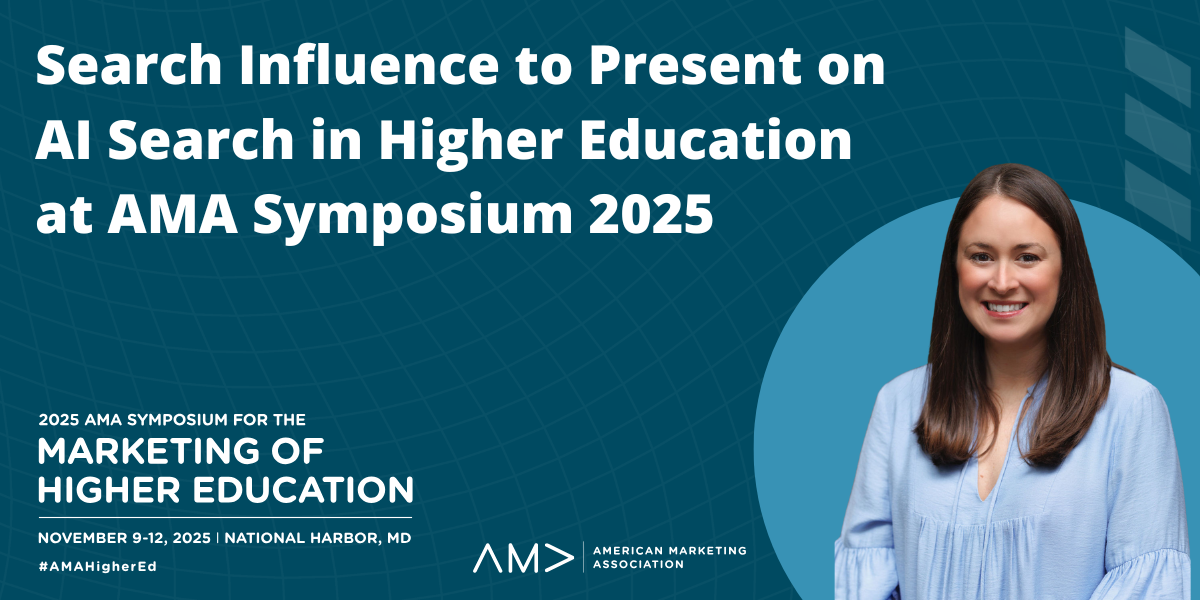
  • Search Influence to Present on AI Search in Higher Education at AMA Symposium 2025

    Search Influence to Present on AI Search in Higher Education at AMA Symposium graphic

    AI-driven discovery is rewriting the rules of visibility for universities. As prospective students increasingly rely on tools like Google’s AI Overviews, ChatGPT, and Perplexity, the traditional SEO playbook is no longer enough. 

    The next era of visibility requires a strategy built for recognition and trust within AI ecosystems, not just rankings on search results pages.

    Presentation Slides

    At the 2025 AMA Symposium for the Marketing of Higher Education, Paula French, director at Search Influence, and Tara Pope, director of marketing at Tufts University College, will explain how institutions can thrive in this new environment. 

    Their presentation, “How to Win AI Search: Three Pillars for Success,” will be held on Tuesday, November 11, from 2:50 to 3:40 p.m. in National Harbor, Maryland.

    The Evolving World of AI Search in Higher Education

    Recent findings from the new UPCEA + Search Influence research study, AI Search in Higher Education: How Prospects Search in 2025, reveal that generative AI is transforming how students find and evaluate programs:

    • 50% of prospective students use AI tools weekly.
    • 79% read AI-generated summaries when available.
    • 56% are more likely to trust a site featured in an AI Overview.

    These numbers highlight a pivotal shift. Visibility in AI search is now visibility with students. 

    Institutions that fail to appear in AI-generated answers risk being overlooked entirely, even before a prospective student reaches a search results page.

    Inside the Framework: Three Pillars of AI SEO

    In their AMA Higher Ed session, French and Pope will introduce a practical framework that helps institutions strengthen their visibility and authority within AI-generated environments.

    1. Entities

    AI systems interpret structured data and networked entity relationships. By using schema markup, entity-rich language, and consistent identifiers, institutions can help AI better recognize programs, faculty, and departments.

    2. Semantic relevance

    AI favors content that mirrors how people naturally ask questions. Structuring content in concise Q&A form, using natural language headings, and speaking clearly to student intents makes it easier for AI to parse and surface your content.

    3. Citations

    Trust is a currency in AI. When content is cited or linked from reputable sources (media, academic directories, “best of” lists), AI is more likely to elevate it. PR and content teams should actively integrate link building and authoritative mentions into the SEO strategy.

    Together, these three pillars form the foundation of a sustainable AI SEO strategy that builds visibility across traditional and generative search experiences alike.

    About the Speakers

    Tara Pope serves as director of marketing at Tufts University College, where she oversees marketing and communications for a diverse portfolio of programs, including Pre-College, Professional Education, and the Osher Lifelong Learning Institute. With more than 25 years in digital marketing and communications, her career spans technology, e-commerce, and higher education.

    Paula French, director at Search Influence, is a digital marketing leader with 15 years of experience helping higher education institutions enhance their online visibility and enrollment outcomes. She frequently contributes insights on SEO, analytics, and strategy to national audiences and industry publications.

    About the 2025 AMA Symposium for the Marketing of Higher Education

    The AMA Symposium for the Marketing of Higher Education brings together higher ed marketers and communicators from across the country to exchange insights and shape the future of education marketing.

    For more than 30 years, the Symposium has served as one of the field’s leading events, offering peer-reviewed sessions that inspire collaboration, innovation, and actionable learning. The 2025 Symposium will take place November 9–12, 2025, in National Harbor, Maryland, helping institutions refine their strategies, strengthen their reputations, and drive meaningful impact.

    Why This Conversation Matters

    As generative AI continues to influence how students research, compare, and decide on programs, institutions must adapt their content strategies accordingly. Optimizing for AI search in higher education means focusing on recognition, structure, and authority, not just visibility.

    Paula French and Tara Pope’s framework offers higher ed marketers a clear path forward: one grounded in data, built on collaboration, and ready for the AI-driven future of discovery.

    Learn More About the Research
    Want to explore the trends shaping student search behavior in the age of AI? 

    The new UPCEA + Search Influence research study, AI Search in Higher Education: How Prospects Search in 2025, reveals how students use AI, search engines, and university websites to make enrollment decisions.

    Download the study today to learn how your institution can adapt.
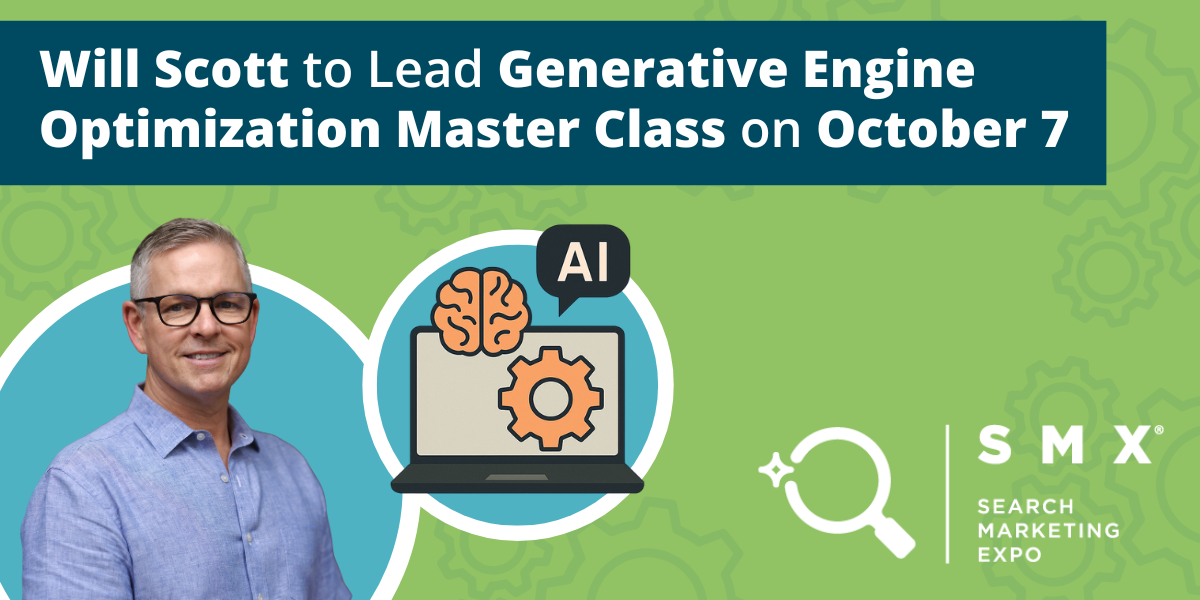
  • Will Scott to Lead Generative Engine Optimization Master Class on October 7

    Search is no longer limited to ten blue organic links. Today, platforms like Google AI Overviews, ChatGPT, and Perplexity generate direct answers that change how people discover information.

    If your content isn’t optimized for these generative engines, you risk being left out of the results entirely.

    On October 7, 2025 (11:00 am – 4:45 pm ET), Search Influence CEO and Co-Founder Will Scott will lead a live, online Generative Engine Optimization (GEO) Master Class with Search Engine Land. This intensive session will show SEO professionals and content strategists how to align with AI-driven search while continuing to perform in traditional results.

    Why AI SEO Can’t Wait

    AI-powered search surfaces content differently than Google’s organic results. Instead of ranking pages, these engines parse entities, measure authority, and pull contextual answers.

    For marketers, that means adapting keyword strategy, strengthening trust signals, and structuring content so AI systems can cite it directly.

    Will Scott, who coined the term “barnacle SEO,” has long helped businesses prepare for shifts in digital visibility. His GEO Master Class is designed to provide a practical framework so marketers can maintain and expand reach across both AI-driven and traditional search environments.

    What the Master Class Covers

    Fundamentals of GEO

    Learn how generative engines interpret relevance, authority, and citations, and what that means for your content.

    Content Structuring for AI

    Explore formatting and entity optimization techniques that improve your chances of being cited in AI-generated responses.

    Keyword Strategy for AI Queries

    Move beyond static keywords and into conversational phrasing, questions, and modifiers that trigger AI responses without losing organic visibility.

    Competitive Analysis for AI Visibility

    See how competitors perform in generative results, where opportunities exist, and how to adapt their wins to your own strategy.

    Authority and Trust Signals

    Understand how AI systems assess brand authority and what steps you can take to strengthen recognition.

    Measurement and Iteration

    Gain tools and frameworks for tracking appearances in AI answers and adjusting content accordingly.

    Future Outlook

    Get an informed view of what’s next in AI search and how to prepare your strategy today.

    Who Should Attend

    This training is built for content strategists, SEO specialists, and digital marketers with 2–5 years of experience who need actionable techniques for AI SEO. Whether you manage in-house content or work with multiple clients, the session will equip you with skills to keep visibility strong in a generative-first world.

    Agenda at a Glance (ET)

    • 11:00–12:15 — GEO fundamentals: entities, citations, and semantic relevance
    • 12:30–1:45 — Keyword and entity optimization, with a schema deep dive
    • 2:00–3:15 — AI-ready content strategies and hands-on competitive analysis
    • 3:30–4:45 — Measurement, tools, and a forward look at AI search

    About Will Scott

    With decades of experience in SEO and digital marketing, Will Scott has been at the forefront of shifts in search behavior. Beyond leading Search Influence, he has presented at SMX, Pubcon, and LocalU, sharing strategies on AI-driven search and optimization.

    Earlier this year, he led a two-day AI for SEO Master Class with SMX and presented at LocalU Global on using AI for local search. His upcoming session with Search Engine Land builds on that momentum, offering professionals practical frameworks they can apply immediately.

    “Marketers don’t need to abandon SEO. They need to evolve it,” Scott explains. “Generative Engine Optimization is about ensuring your content is both discoverable by AI systems and valuable to human readers.”

    Register Now

    The Generative Engine Optimization Master Class will be held live online on October 7, 2025, from 11:00 a.m. to 4:45 p.m. ET. Registration is $249 and includes on-demand access.

    Don’t miss your chance to learn directly from Will Scott and gain practical skills for AI SEO.

    Register now to secure your spot.


    Images:
    Unsplash Image 1
    Unsplash Image 2

  • Webinar Recap: How AI Is Changing Search and SEO

    Webinar Recap: How AI Is Changing Search and SEO

    Webinar Recap: How AI Is Changing Search and SEO

    Key Insights

    • AI search is changing the rules but not the game. Foundational SEO fundamentals still matter, but success now depends on adapting them to how AI understands, cites, and delivers information.
    • Visibility comes from trust, context, and structure. Entity-rich content, credible citations, and clear organization make it easier for AI and traditional search engines to surface your brand.
    • Optimizing for Google means optimizing for AI search everywhere. Google’s AI Overviews influence visibility across multiple platforms, making Google-centric AI SEO the highest-impact starting point.

    SEO is not becoming obsolete but is undergoing a significant transformation in an AI-powered search world, requiring adaptation of fundamental strategies rather than a complete overhaul.

    In our recent client webinar, “SEO for AI Search: Stay Visible in the Age of Generative Answers,” we discussed the overall AI shift and the necessary changes to SEO strategy.

    Watch the replay to learn more, or read on for a high-level recap.

    Evolution, Not Replacement

    While the search landscape is changing with the rise of AI, traditional search (dominated by Google) still holds the majority of market share. AI-powered search tools like ChatGPT are a growing segment that needs our attention now to stay ahead.

    AI Search Defined

    AI search uses artificial intelligence to comprehend complex queries, generate concise summaries, and provide direct answers, moving beyond just a list of links. Key features include conversational input, AI-generated overviews, context awareness, entity recognition, and citations.

    Shift in SEO Focus

    The fundamental pillars of SEO are adapting…

    From keywords to entities

    The focus is shifting from exact keyword matching to understanding and optimizing for entities (named people, places, things, ideas). AI tools use entities to understand context rather than literal search terms. A significant finding is that ~87% of the time, the exact search query does not appear in the AI Overview (AIO) summary, emphasizing the importance of context and the decline in exact-match keyword optimization importance.

    From content volume to semantic relevance

    Content optimization moves from mere text volume and keyword use to semantic relevance, meaning content that demonstrates depth, is structured for natural search, and reflects how people genuinely ask questions and connect topics. Content needs to be structured in the same way, be clear, and be concise to be chosen by AI as a trusted source.

    From links to citations

    While links are still important, the emphasis shifts to citations, which involve building trust through mentions and references from authoritative sources. Being present in Google’s top 10 organic results is highly correlated with being cited in AIOs (~41% of citations come from Google’s top 10).

    Google’s Continued Importance

    Optimizing for Google Search and its AIOs is the most impactful strategy for immediate and long-term results. Google’s AIOs are a hybrid model that pulls real-time data from its index, uses a language model to generate answers, and blends various search results and structured data. Moreover, optimizations made for Google AIOs also positively impact visibility in other AI search platforms like ChatGPT.

    Brand Impression in Zero-Click Searches

    With the rise of “zero-click searches” (where users get answers directly from AIOs without visiting a website), being cited in an Overview can still create a crucial brand impression and even encourage later brand-specific searches.

    Actionable AI SEO Strategies

    Search Influence is actively taking concrete, AI search-optimized steps for our clients where applicable:

    • Content Design: Writing entity-rich, specific, direct, “chunked,” organized, and authoritative content, incorporating clear citations and external references.
    • Semantic Triple: Structuring content using a subject-predicate-object format to help AI extract facts easily.
    • Internal Linking: Linking to and from entities rather than using generic call-to-action anchor text.
    • Schema Markup: Utilizing web code like schema to reinforce entities and structure content, which AI-powered search reads and benefits from.
    • Citation Building: Actively building citations through online directories, media mentions, thought leadership, speaker bios, and professional associations, reinforcing the desired association between your brand and its offerings.
    • Tracking and Analytics: While data for AI search tracking is rapidly developing, current tools like Google Analytics 4 can provide referral traffic from AI, and Google Search Console can identify conversational queries. Newer AI SEO tracking tools are emerging to monitor presence and sentiment in AI results.

    We recommend a proactive and adaptive SEO approach that understands and leverages how AI processes information, prioritizing:

    • Contextual understanding
    • Structured content
    • Credible external validation over traditional keyword-focused content and link quantity

    Stay Ahead in the AI Search Era

    We’re in the middle of one of the biggest shifts in search since Google was founded, but the fundamentals of SEO still matter. How you apply them just looks different in an AI-driven world. The brands that adapt now will be the ones that stay visible tomorrow.

    Watch the full webinar recording for practical examples and strategies you can start using right away.

    Wondering what this all means for your brand? Contact us, and let’s talk about how to position your brand for success in both traditional and AI search.

    Image

    Unsplash

  • Is Your Website Leaving Visitors Behind? [Plus: Ads in AI Overviews!] – July Client Insider

    Is Your Website Leaving Visitors Behind? [Plus: Ads in AI Overviews!] – July Client Insider

    The Latest on Ads in AIOs & Creating an Inclusive Web Experience for Your Audience

    Ads in AI Overviews are Coming

    From Google: “Advertisers who are already using Performance Max, Shopping, and Search campaigns with broad match, including AI Max for Search campaigns, will be eligible to have their ads appear in AI Overviews and AI Mode.”  

    Currently, advertisers do not get much control or reporting on performance in these placements. 

    We’ll continue to keep you updated as we learn more, and we’re optimistic this could become an important tool to regain some organic traffic lost to AI Overviews and SERP features.

    Discover How accessiBe Can Make Your Website ADA Compliant and Accessible to All

    Website accessibility isn’t just a legal requirement; it’s fundamental to creating a positive online experience for all users. When you make your website accessible, you comply with ADA regulations and open the doors to a broader audience, improve user satisfaction, and enhance your company’s reputation as an inclusive and socially responsible entity.

    How accessiBe Helps

    accessiBe provides a widget that makes accessibility modifications to your website based on a user’s individual needs. Artificial intelligence (AI) also runs in the background to scan your website every 24 hours and automatically optimizes its accessibility level. 

    Some of the most used features include: 

    • Changing the font to be a standard, legible font
    • Increasing the font size
    • Emphasizing titles and links
    • Content scaling (zooms in the whole page) 
    • Adjust word spacing
    • Screen reading software for full or partial blindness

    How Can I Add accessiBe to My Site?

    We can guide you through the key steps to improve the accessibility of your site. accessiBe requires an annual subscription and a one-time implementation of website code. Once set up on your site, it will be present at all times, so long as you continue to renew your subscription.

    • accessiBe Annual Subscription: Starting at $490/year
    • Search Influence-facilitated Implementation: Starting at $475/website

    Reach out to your Account Manager to get started, and our team of experts will facilitate setting up your account and implementing the code across your website. 


    Read More About Web Accessibility