Tag: AI for digital marketing

  • Will Scott Returns to SMX Online With Generative Engine Optimization Master Class

    On Tuesday, April 14, 2026, Will Scott, Co-Founder and CEO of Search Influence, returns to SMX Online to teach his Generative Engine Optimization (GEO) Master Class, the best-selling Master Class in SMX Online history.

    The live, online session runs from 11:00 a.m. to 4:45 p.m. ET and is available both live and on demand for $199.

    Designed for experienced marketers navigating AI-driven search, this intensive training delivers actionable, real-world strategies on how to stay visible as platforms like Google AI Overviews, ChatGPT, and Perplexity reshape how content is discovered.

    What You’ll Learn in the GEO Master Class

    This is not a theoretical overview of AI SEO. It’s a hands-on, tactical course that focuses on how generative engines actually retrieve, evaluate, and cite content today.

    Attendees will learn how AI platforms differ from traditional search engines and what that means for content structure, keyword strategy, and authority signals. The course dives into creating content that works for humans and machines alike, including entity optimization, formatting for AI extraction, and writing in a way that earns citations in AI-generated answers.

    Will also explores how keyword strategy has evolved in an AI-first world, shifting from static phrases to conversational, intent-driven language. Competitive analysis also plays a key role, with practical exercises that show how to evaluate which brands are winning AI visibility and why.

    Rounding out the day are sessions on measuring AI visibility, tracking performance across platforms, and future-proofing your content strategy as generative search continues to evolve.

    Who Should Attend

    The Generative Engine Optimization Master Class is built for SEO professionals, content strategists, and digital marketers with 2–5 years of experience who are ready to expand beyond traditional optimization. It’s especially valuable for agency marketers, in-house teams managing complex websites, and leaders responsible for long-term content strategy.

    If you’re already strong in SEO fundamentals but need clarity on how AI is changing rankings, visibility, and brand authority, this course is designed for you.

    Meet AI SEO Expert Will Scott

    Will Scott is a recognized authority in SEO and AI-driven content strategy and a longtime advocate for adapting marketing to how search actually works. He is widely known for coining the term “barnacle SEO” and has been a featured speaker at industry events, including PubCon, SMX, and Local U.

    Will leads the Search Influence team in delivering AI-enhanced, data-driven SEO strategies for industries such as higher education, healthcare, and hospitality. With a degree in architecture from Tulane University, he blends strategic systems thinking with practical execution, making complex concepts actionable for marketers.

    Save Your Seat

    Generative search is no longer optional knowledge. It’s the foundation of future visibility. If you want to understand how AI platforms select sources, summarize content, and decide which brands get cited, the GEO Master Class is built to give you that edge.

    Register now for the Generative Engine Optimization Master Class on April 14, 2026, and learn how to optimize for AI SEO performance.

    Get in touch for our super-secret 15% discount code.

  • The Future of Search Marketing as AI Search Optimization Expands Beyond Google

    Key Insights

    • Search no longer lives in one place. Today’s search behavior spans Google, Reddit, YouTube, social platforms, and AI tools.
    • AI is now the connective tissue of search. AI systems increasingly synthesize answers from multiple platforms, meaning visibility depends on where your content exists, not just how your website ranks.
    • The user journey is shorter and less linear. Many users get the information they need directly from AI-generated answers, videos, or community discussions before ever clicking through to a website.
    • Platforms like Reddit and YouTube now influence search visibility. Community-driven content and video are being indexed, cited, and surfaced in AI Overviews and search results alongside traditional web pages.
    • Winning the future of search requires an omnichannel mindset. Brands that align content, messaging, and authority across platforms are better positioned to earn trust, citations, and long-term visibility in an AI-driven search landscape.

    The future of search marketing is being reshaped by how people discover information, and Search Influence helps brands adapt to that shift.

    People no longer rely on Google alone to find answers.

    That’s not a prediction, it’s observable user behavior.

    Search now happens across Reddit threads, YouTube videos, Instagram posts, TikTok clips, private communities, and increasingly, AI tools that generate answers directly. Traditional search engines still matter, but they’re no longer the sole gateway to information.

    According to the AI Search in Higher Education Research Study conducted by UPCEA in partnership with Search Influence, search behavior is becoming increasingly diversified. Among prospective students surveyed, 84% use search engines, 61% use YouTube, and 50% use AI tools during their research process. While this study focuses on prospective students, it illustrates a broader shift occurring across industries: users are increasingly moving between multiple search platforms before ever visiting a website.

    This creates a new tension in the search landscape. As search behavior fragments, Google Search, AI Overviews, and large language models are doing the opposite — indexing, synthesizing, and summarizing content from all of these platforms into direct answers.

    The user journey is no longer linear or heavily reliant on traditional SERPs. Many users get the rational context they need before clicking anywhere at all. In many cases, the answer replaces the click.

    That shift may feel threatening to organic search traffic, but it also creates opportunity. Brands that understand how the search engine landscape is expanding can earn visibility far beyond traditional rankings.

    Search Influence helps brands optimize their visibility across websites, platforms, and AI-driven search engines.

    This explainer breaks down how search works across platforms today, why Reddit and YouTube matter most right now, and what an omnichannel search strategy really means in an AI-driven world.

    What the Future of Search Marketing Looks Like Today

    The future of search marketing is distributed, platform-native, and behavior-led.

    Search engine optimization and search engine marketing have evolved. Where success once meant ranking webpages on search engine results pages, it now means earning visibility across an ecosystem of platforms, answer engines, and AI-generated summaries. The goal is no longer just organic links. It’s search visibility wherever users express intent.

    AI search optimization acts as the connective layer. It determines which content is surfaced, cited, and trusted across traditional search engines, AI platforms, and conversational search interfaces. This shift affects every industry, from higher education and healthcare to e-commerce and B2B services. The future of search isn’t about abandoning traditional SEO; it’s about expanding beyond it.

    How AI Search Optimization Is Expanding Search Beyond Google

    AI tools like AI Overviews, AI chatbots, and conversational search interfaces generate answers using content pulled from multiple sources. These include websites, forums, videos, social media platforms, and structured data.

    At a high level, AI search optimization works by aligning content with how AI models evaluate relevance, authority, and context. Platforms that provide clear answers, strong community signals, and high-quality content are favored. Instead of ranking ten blue links, AI systems synthesize information into direct answers that often eliminate the need to click.

    This is why search marketing beyond Google is now required to maintain search visibility. If your content only exists on your website, you’re limiting your presence in a search generative experience that increasingly pulls from everywhere else.

    Social Platforms and the Rise of Social Search

    Social search continues to reshape how users discover information. Google now includes a native “Short Videos” filter directly within search engine results pages, signaling how tightly visual search and social content are integrated into the search landscape.

    Brands can leverage short videos by addressing popular FAQs and informational queries, increasing coverage for zero-click search and query fan-out opportunities. Social discovery is driven by visual cues, community signals, and algorithmic recommendations rather than keyword matching alone.

    Instagram supports inspiration and brand validation. TikTok delivers quick demos and direct answers. These platforms are increasingly influencing where users search, rather than Google, especially for lifestyle, education, and product discovery. Social media platforms now firmly sit within the search engine landscape.

    Reddit has become a primary search engine

    Reddit’s role in search has accelerated rapidly. In early 2024, Reddit entered into a data licensing agreement with Google, underscoring its significance in the search engine landscape.

    Users have long added “reddit” to their Google queries to find unfiltered, experience-based answers. They’re seeking peer validation, nuance, and real-world context that traditional organic results often lack. Reddit threads perform well in search results because they deliver long-form, contextual answers supported by community engagement.

    Those same qualities explain why Reddit content frequently surfaces in AI Overviews. Threads frequently answer nuanced informational queries directly, using natural language and lived experience. AI systems favor this conversational format because it aligns with user intent and demonstrates deep understanding.

    From an SEO strategy standpoint, Reddit influences both traditional SERPs and AI-generated summaries. It deserves outsized attention in modern search marketing strategy. Not as a replacement for traditional SEO, but as a powerful signal within the broader search ecosystem.

    YouTube is a search engine, not just a video platform

    YouTube has always been a search platform, but its role in AI-driven search visibility is growing. Videos are increasingly featured, embedded, and cited within Google AI Overviews and other AI summaries.

    Users search YouTube for how-tos, walkthroughs, comparisons, and explanations. Unlike Google search, where users expect links, YouTube search is visual and instructional. The expectation is an answer, not a destination.

    Video search optimization supports AI search because transcripts, titles, descriptions, and engagement signals provide machine-readable context. AI tools can parse video content at scale, reference it as a citation, and surface it alongside traditional organic results. In the new era of search, YouTube SEO is no longer optional; it’s foundational.

    What the AI Search in Higher Education Research Reveals

    The AI Search in Higher Education Research Study, conducted by UPCEA in partnership with Search Influence, surveyed 760 adult learners ages 18–60 interested in professional and continuing education. While the focus is on higher education, the findings reflect broader user behavior across digital marketing.

    The research shows that prospects use multiple platforms to research programs. AI tools and social platforms are increasingly influencing decision-making, and community-driven content plays a significant role in shaping trust.

    Key findings illustrate how search is expanding beyond traditional search engines:

    • 68% of respondents said they are more likely to consider a product or service mentioned or recommended on social media
    • Respondents’ top platforms for program search were: YouTube 57%, LinkedIn 49%, Facebook 43%
    • 1 in 3 prospects trust AI tools for program research

    Higher education often acts as a leading indicator. The developments here reflect broader shifts in search behavior across industries, from healthcare to B2B marketing strategies.

    Omnichannel Search Strategy in an AI-Driven World

    An omnichannel search strategy focuses on visibility across websites, platforms, and AI-generated answers. Optimization can no longer be siloed into traditional SEO, paid search, or social media alone.

    AI systems ingest information from multiple platforms, publications, and outlets. When a brand is consistently present in places where AI is crawling and learning, it sends corroborating signals about topical authority and relevance. This co-occurrence of brand and topic/entity strengthens AI visibility and citation potential.

    AI search optimization rewards brands that appear consistently across aligned signals, including high-quality content, structured data, schema markup, and consistent messaging, throughout their digital footprint.

    What This Shift Means for Marketers

    Rankings alone are no longer enough.

    Visibility is now earned through presence, trust, and relevance across the entire search landscape. Early adoption of AI optimization creates long-term advantage, helping brands stay ahead as user behavior and AI platforms evolve.

    Search Influence helps brands navigate this new era, blending traditional SEO, AI search optimization, and digital marketing strategy to future-proof search visibility before competitors catch up.

    FAQs About the Expanding World of Search

    What is the future of search marketing?

    The future of search marketing is defined by visibility across platforms, communities, and AI-generated answers.

    Search marketing no longer focuses only on ranking webpages in Google. Discovery now happens on Reddit, YouTube, social platforms, and AI tools. AI systems synthesize information from multiple sources instead of directing users to a single link. Effective strategies prioritize presence, authority, and clarity across the full digital ecosystem.

    How is AI changing search marketing?

    AI is changing search marketing by determining how results are selected, summarized, and delivered to users.

    AI-powered search emphasizes answers over lists of links. Content is evaluated based on relevance, context, and trustworthiness. Users receive information without always clicking through to websites. Search marketing now requires content that works for both humans and machines.

    Why does Reddit appear so often in Google and AI results?

    Reddit appears frequently in Google and AI results because it offers experience-based, community-validated answers.

    Reddit threads often address highly specific, real-world questions. Strong engagement signals indicate authenticity and usefulness. Google indexes Reddit prominently for informational and long-tail queries. AI systems reference Reddit due to its conversational language and lived experience.

    How does YouTube function as a search engine?

    YouTube functions as a search engine by matching video content to user intent through metadata and engagement signals.

    Users search YouTube for tutorials, explanations, and demonstrations. Search intent on YouTube is visual and instructional. Video transcripts and descriptions make content discoverable to AI systems. YouTube results frequently influence Google search and AI-generated summaries.

    Where are people searching instead of Google?

    People are searching instead of Google on platforms like Reddit, YouTube, social networks, and AI tools.

    Reddit supports peer-to-peer research and detailed explanations. YouTube enables visual learning and step-by-step guidance. Social platforms like Instagram and TikTok support discovery-driven search. AI tools provide synthesized answers without requiring multiple searches.

    How does AI search optimization work across platforms?

    AI search optimization works by increasing content visibility across websites, platforms, and AI-generated answers.

    AI evaluates content from multiple sources, not just traditional webpages. Clear structure and consistent messaging improve retrievability. Platforms such as Reddit and YouTube influence AI responses alongside websites. Optimization focuses on being referenced, trusted, and cited across the digital footprint.

    Turn Search Behavior Shifts Into Strategic Advantage

    Search has expanded, and AI connects it all.

    The future of search marketing requires optimizing for where people actually search, not just where marketers are comfortable. Brands that adapt now will earn visibility across platforms, AI summaries, and evolving search experiences.

    To explore the full data and strategic recommendations behind this shift, download the AI Search in Higher Education Research Study.

    Search Influence serves as a guide for brands navigating the future of search marketing, helping them stay visible, credible, and ahead in an increasingly AI-driven search landscape. Contact us to future-proof your search engine marketing strategy.

    Images:
    Unsplash
    Unsplash

  • How to Optimize Content for AI Search Engines

    How to optimize content for AI Search Engines

    Key Insights

    • AI search content optimization means structuring your content so AI systems can easily interpret, retrieve, and cite it in AI-generated answers.
    • Traditional SEO remains the foundation — clean site structure, structured data, and authority signals still drive AI visibility.
    • Organizing key insights, FAQs, and comparison tables makes your content easier for AI search engines to understand and surface in AI Overviews.
    • Writing in clear, natural language and updating regularly helps AI platforms recognize your content as accurate, relevant, and current.

    Search Influence leads in AI search content optimization by helping brands structure content that both humans and AI systems can easily understand and retrieve.

    Just as Frank Lloyd Wright believed buildings should grow naturally from their environment, AI-optimized content should grow naturally from meaning and structure. The future of search belongs to those who can design information that fits its landscape, where every heading, list, and table works like a carefully engineered beam.

    At Search Influence, we’re the architects of AI search visibility, helping site owners and marketers craft pages that perform beautifully across AI-powered search engines.

    This isn’t a theoretical guide. It’s the nuts and bolts of how to build AI-optimized content that earns citations, captures AI-generated answers, and stays visible in an evolving AI search landscape.

    Why Optimizing for AI Search Matters

    AI-powered search engines like Google’s AI Overviews, Perplexity, and ChatGPT don’t just rank pages; they summarize them. Instead of serving ten blue links, these AI engines generate conversational AI answers synthesized from multiple trusted sources.

    That means search visibility no longer stops at position one. You need your brand’s content to be included inside the AI answer.

    Click-through rates are declining as zero-click searches rise, and users are becoming increasingly satisfied with direct responses from AI platforms. If your valuable content isn’t structured for retrieval, AI systems may skip over it entirely.

    Optimizing for AI search isn’t about replacing traditional SEO; it’s about building on it. Think of AI search optimization as a natural evolution: combining the best of search engine optimization, structured data, and modern AI tools to help both humans and algorithms recognize your authority.

    At Search Influence, we help brands adapt their digital marketing strategies so they stay visible as AI models rewrite the rules of search behavior.

    Traditional SEO Is Still the Foundation

    Before you dive into AI search optimization, make sure your traditional SEO is rock-solid.

    AI search engines still rely on the same crawl and ranking infrastructure as traditional search engines. If AI crawlers can’t read, index, or trust your site, no amount of clever structure will help.

    Key traditional SEO best practices still matter:

    • Clean architecture and crawlability: Ensure internal linking is logical, pages load quickly, and site maps are up to date.
    • Mobile-first performance: Many AI search tools prioritize user experience metrics tied to page speed and responsiveness.
    • E-E-A-T signals: Add clear bylines, About pages, and author or brand context. Even a simple byline builds trust for AI engines.
    • Structured data: Implement schema markup for FAQs, products, or local business details. It helps search engines understand relationships between entities.

    AI systems like Gemini and Perplexity still rely on traditional search engine crawlers to determine credible citations. Traditional SEO is the foundation, and AI SEO is the architecture built on top.

    Creating Key Insights at the Top

    The best-optimized pages start strong. Your top 200 words are prime real estate for both readers and AI search platforms.

    AI models scan for concise, self-contained summaries near the top of a page to define its topic and relevance. These “vectors of meaning” determine whether your page gets cited in AI search results.

    How to create effective key insights:

    • Write a 3–5-bullet “Key Insights” section summarizing the core takeaways (see the top of this blog!)
    • Use keyword-rich, natural language that mirrors user intent (think “how” and “why” phrasing.)
    • Keep each insight standalone. If a model were to pull that one bullet out, it should still make sense.
    • Include one light mention of expertise or authority (e.g., “Based on Search Influence’s experience optimizing higher-ed sites for AI visibility…”)

    Pro Tip: Treat key insights like metadata in human language — short, factual, and extractable. AI systems interpret them as anchors for what your page means. More AI SEO pro tips here.

    Building a Machine-Readable Table of Contents
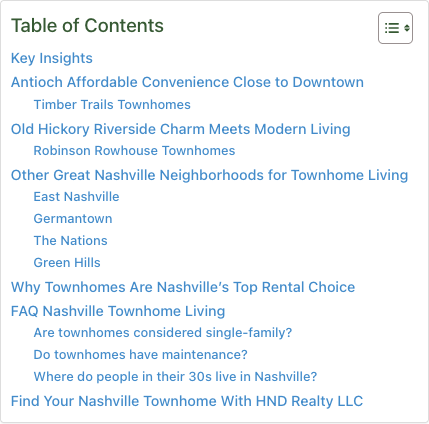
    Table of Contents screenshot

    Think of your table of contents as a blueprint that helps both humans and AI search engines navigate your page.

    Just as a building’s floor plan shows how rooms connect, a well-structured TOC tells AI crawlers where each topic begins and ends. This improves comprehension, organization, and retrievability.

    How to do it right:

    1. Use jump-linked headings (<a href=”#section-name”>) or your CMS’s automatic TOC generator.
    2. Reflect natural search queries in each heading — e.g., “How to Optimize for AI Search” rather than “Optimization Overview.”
    3. Keep heading hierarchy consistent (H2 → H3 → H4).
    4. Use descriptive, not vague language.
    5. Add ItemList schema markup around the TOC for extra machine clarity.

    A good TOC tells AI engines how the story flows and helps your content appear in multiple passage-level citations within AI-generated responses.

    Writing a Semantic Triple Intro

    A semantic triple intro is a concise statement that defines your topic in the format of subject + predicate + object.

    Example: “AI search content optimization is the process of structuring web content so it can be easily retrieved, summarized, and cited by AI-driven search engines.”

    This tiny sentence packs a big SEO punch. It clearly tells AI systems what your page is about before anything else.

    Why it matters:

    • AI engines convert text into numerical “embeddings.” The first few sentences shape your page’s meaning signature.
    • A strong semantic triple reduces ambiguity and helps your content rank for related natural language queries.

    How to do it:

    • Use your main keyword naturally.
    • Define what it is and what it does.
    • Follow with a quick credibility line (e.g., “At Search Influence, we help businesses earn visibility in AI-generated answers.”)
    • Avoid filler like “In today’s world…” — it wastes your most valuable context window.

    Chunk Content for AI Retrieval

    Psst… You wanna know a secret? AI engines don’t read like people; they retrieve by passage.

    Instead of analyzing an entire web page, AI systems break text into smaller “chunks” and compare them to user queries.

    Best practices for chunking:

    • Keep each section around 150–300 words.
    • Focus on one topic per chunk.
    • Start each with a clear claim or question, then support it with concise examples or bullet points.
    • Use transition phrases like “For example” or “This means” to preserve context.
    • End each chunk with a short takeaway sentence that restates the point (see below).

    Chunking multiplies your retrieval opportunities. Each section can be surfaced as its own AI search answer.

    Using FAQs to Capture Long-Tail AI Queries

    If AI Overviews had a favorite format, it would be the FAQ.

    Why? Because FAQs naturally mimic how people search in natural language. Each question represents a distinct user intent that AI tools can easily identify, summarize, and cite.

    Why it matters:

    • Long-tail questions like “How do AI search results work?” align perfectly with how users phrase queries in AI-driven search and voice search.
    • Each Q&A acts as a self-contained data node, making your page more likely to appear in AI-generated responses.
    • Structured FAQs feed into the Google Knowledge Graph, improving your search visibility across generative search engines.

    How to implement:

    1. Use tools like AlsoAsked or Semrush to identify conversational long-tail questions centered around your topic.
    2. Phrase questions naturally. Avoid stiff or keyword-stuffed wording.
    3. Begin each answer with a semantic triple that defines the topic clearly.
    4. Support with concise bullets, data, or short examples.
    5. Add FAQPage schema markup so AI crawlers recognize the format.

    Think of FAQs as the structural beams that make your content citation-ready. Each question builds another route to reach your audience.

    Visuals, Tables, and Comparison Content
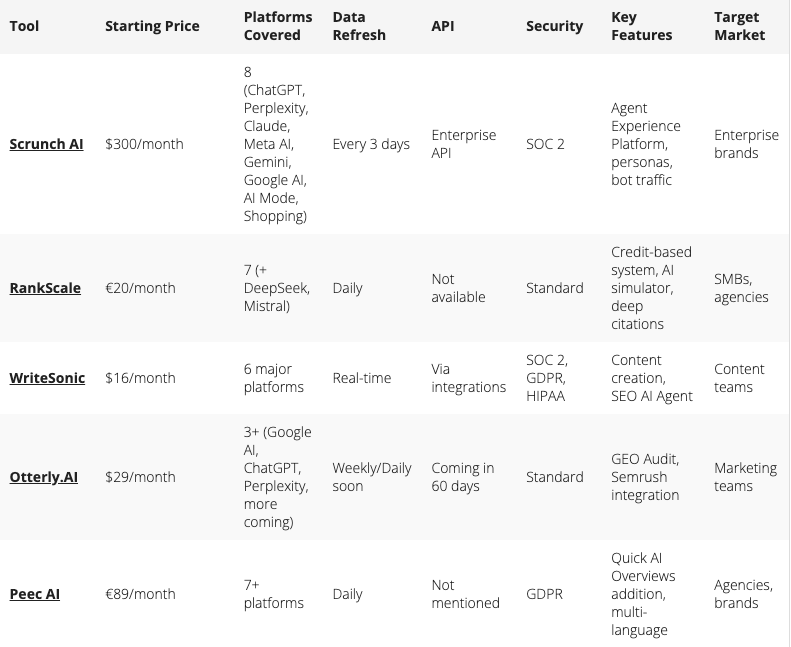
    Table comparing different tools

    Text isn’t the only thing AI engines read. AI search platforms use tables, charts, and labeled visuals to understand relationships and compare information.

    Why comparison content works:

    • Tables make AI-generated answers more precise. They can extract facts directly instead of summarizing loosely.
    • Comparison charts satisfy evaluative intent, a frequent category in AI search queries (e.g., “AI SEO vs. traditional SEO”).
    • Data tables strengthen embeddings by clarifying relationships between key details.

    How to structure tables for AI systems:

    • Use real <table> tags or Markdown tables, never screenshots.
    • Label columns descriptively: “Traditional SEO Tactics” | “AI SEO Tactics.”
    • Keep it simple: 3–5 columns, 5–10 rows.
    • Write factual captions, not marketing fluff (e.g., “This table compares how traditional and AI-driven search optimization differ in structure and retrieval focus.”).
    • Include schema markup where relevant.

    AI can quote directly from a well-structured table, boosting your authority in AI-powered search engines.

    Writing for Humans and Machines

    The best AI-optimized content reads smoothly to humans and structurally to machines.

    Follow these hybrid writing rules:

    • Use clear, factual sentences that stand alone if excerpted.
    • Keep paragraphs under 120 words.
    • Avoid vague language. Replace “this” or “it” with clear nouns.
    • Add internal linking every 150–200 words to reinforce relationships between entities.
    • Balance narrative and structure: storytelling for people, schema for crawlers.

    Remember: clarity isn’t just stylistic, it’s structural. It helps AI understand what matters.

    The Blueprint for AI Search Visibility

    Let’s recap your new building plan for AI search optimization:

    1. Lay the foundation: solid SEO fundamentals first.
    2. Frame the entryway: start with a clear semantic triple.
    3. Add the blueprint: summarize early with key insights.
    4. Map the layout: create a TOC and structured content chunks.
    5. Finish the details: use FAQ schema, visuals, and comparison tables.

    The goal? A digital structure that humans and AI engines recognize as sound.

    Search Influence helps brands design these frameworks to thrive in a world of AI-driven search and generative engine optimization.

    AI Content Optimization FAQs

    1. How to optimize content for AI search?

    AI search content optimization is the process of structuring digital content so AI systems can retrieve, summarize, and cite it accurately.

    To optimize effectively, focus on clarity, organization, and accessibility. Start by breaking your page into self-contained sections with clear H2s and H3s, ensuring each chunk of content addresses a single topic. Use structured data and schema markup to help AI crawlers interpret meaning, and reinforce relationships through strong internal linking.

    Keep your content current with up-to-date examples and sources. AI platforms prioritize pages that demonstrate freshness and accuracy. The more clearly your structure communicates what each section is about, the easier it is for AI search engines to select, summarize, and cite your work in AI-generated answers.

    2. How to write content for AI search?

    Writing for AI search means combining clarity, structure, and contextual depth that both humans and algorithms can understand.

    This approach starts with writing in natural language that reflects how people actually search using long-tail, conversational keywords that match user intent. Begin your piece with a strong semantic triple and support it with concise, fact-based explanations.

    Avoid vague language, dense jargon, or keyword stuffing, which can confuse both readers and AI engines. Instead, focus on writing self-contained paragraphs that answer one question or explain one concept at a time.

    The goal is to make your content easy to read, easy to reference, and easy for AI systems to understand, all while delivering genuine value to your audience. These are insights marketers can’t afford to miss.

    3. What is AI search?

    AI search is an intelligent system that uses language models to interpret and synthesize web information.

    Unlike traditional search engines that simply match keywords, AI-powered search engines like Gemini, GPT, and Perplexity analyze meaning, relationships, and intent behind queries.

    These AI models draw from multiple authoritative sources, summarizing content to deliver direct, conversational answers. Instead of serving a list of blue links, AI search engines generate synthesized overviews, making accuracy and structure more important than ever.

    Understanding how AI search works helps you build content that earns citations and remains visible across this new landscape of AI-generated results.

    4. How do AI search results work?

    AI search results are generated by analyzing and summarizing multiple high-authority sources into one synthesized response.

    When a user enters a query, AI systems identify relevant passages, or “chunks,” from indexed web content. These passages are then combined, summarized, and rewritten in natural language to provide a complete answer.

    Structured, fact-based content with schema markup and clear sectioning helps AI determine what information to include and who to cite. The result is a unified, conversational overview drawn from many sites, with attribution given to the most trustworthy and clearly organized sources.

    This is why creating structured, authoritative content is key to being referenced within AI-generated answers.

    5. Why is AI-optimized content important now?

    AI-optimized content is crucial because generative search engines prioritize structured, factual information over traditional keyword density.

    As tools like Google’s AI Overviews reshape how people access information, visibility now depends on whether your content is retrievable and citable by AI systems. Instead of focusing solely on ranking position, site owners must think about inclusion in AI-generated summaries, the new “position zero.”

    Structured content supported by schema markup, internal linking, and fresh data is far more likely to be featured in these overviews. Investing in AI optimization now ensures your content stays relevant and continues to attract attention even as user behavior and search technology evolve.

    6. How do I know if my content is AI-optimized?

    AI-optimized content demonstrates clear structure, entity consistency, and schema integration that make it retrievable by AI systems.

    To evaluate your current pages, look for clear topic separation, consistent use of entities (like names, products, or locations), and properly implemented structured data.

    Each section should serve a specific purpose and read well both in context and isolation. Lists, FAQs, and tables should be properly labeled and formatted for easy parsing. You can test your content’s performance in AI platforms like Perplexity or use emerging AI SEO tracking tools that monitor how your content appears in AI Overviews.

    If your web pages are easily understood, cited, or summarized by AI tools, you’re on the right track toward sustainable AI visibility.

    7. How often should I update my content for AI optimization?

    Regular updates signal freshness, an important trust metric for AI retrieval.

    AI engines and traditional search algorithms value recency because it suggests reliability. Reviewing your content quarterly helps ensure that statistics, external links, and schema markup stay accurate and relevant.

    Update examples, visuals, and tables as trends evolve, and consider adding new FAQs to reflect emerging search behavior. Regular optimization also gives you an opportunity to re-chunk long sections into smaller, more focused passages that align with current AI retrieval models.

    In a rapidly changing AI-driven search environment, staying up to date is not optional; it’s the difference between being cited and being invisible.

    Stay Ahead With Search Influence

    AI search is shaping how every Google search result is generated and displayed.

    Search Influence specializes in turning traditional SEO content into AI-optimized assets that perform across every AI search platform.

    Here’s how we can help you build your next competitive edge:

    • Audit your top pages for AI readiness, analyzing structured data, schema markup, and retrievability.
    • Upgrade your content architecture for the AI era.
    • Implement optimization strategies that strengthen traditional rankings and AI citations.
    • Track performance to understand how AI engines reference your brand.
    • Consult and educate your team on how to create comprehensive content that satisfies both search algorithms and users.

    AI search is rewriting the rules of visibility, and the brands that adapt their structure now will own tomorrow’s results.

    Let’s talk about how we can audit your site for AI readiness and start building your AI-optimized content framework today.
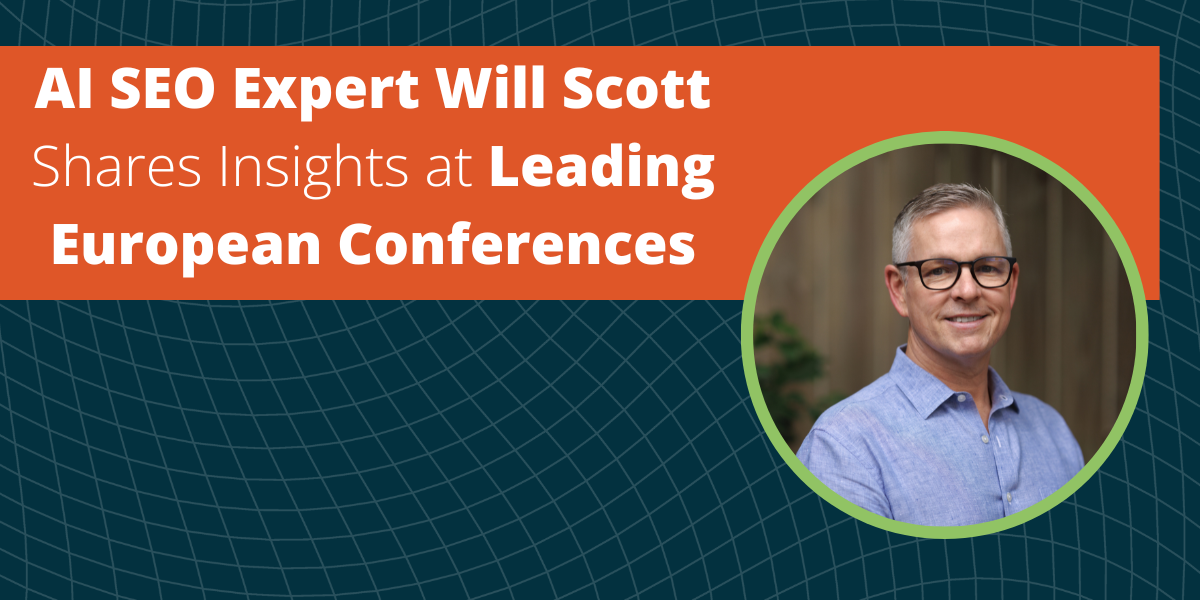
  • AI SEO Expert Will Scott Shares Insights at Leading European Conferences

    Search Influence continues to advance the conversation around AI SEO on a global scale.

    This fall, CEO and Co-Founder Will Scott represented the agency at two of Europe’s most respected industry events, SEOktoberfest G50 Summit in Austria and SMX Advanced Europe in Berlin, sharing insights on how artificial intelligence is reshaping search, content, and visibility.

    Bringing AI SEO Expertise to the Global Stage

    At SEOktoberfest, an invite-only event limited to just 50 of the top SEO professionals globally, Will joined peers from leading organizations, including Google, Yoast, and Faber Company, to explore the next generation of AI search and generative engine optimization (GEO).

    The gathering fosters open discussion among industry pioneers, offering a rare opportunity to exchange forward-thinking strategies about how artificial intelligence is redefining visibility and authority in search.

    Will’s participation highlights Search Influence’s position among agencies advancing the real-world application of AI SEO — ensuring clients benefit from strategies informed by direct collaboration with the industry’s brightest minds.

    Advancing AI SEO Strategy at SMX Advanced Europe

    Following SEOktoberfest, Will spoke at SMX Advanced Europe 2025 in Berlin, delivering the session “AI Tools for Creation, Deployment & Tracking.” The two-day event is known for fast-paced, expert-level presentations designed for experienced search professionals who want to deepen their technical and strategic knowledge.

    In his session, Will shared actionable approaches for integrating AI SEO tools into marketing workflows. His presentation emphasized how agencies and in-house teams can harness AI to enhance creativity, streamline execution, and measure success more effectively.

    These insights are part of Search Influence’s ongoing commitment to helping brands adapt to a rapidly changing search environment — where visibility depends on mastering traditional SEO fundamentals and emerging AI search capabilities.

    Continuing the Conversation on AI Search

    Will’s European appearances build on a growing list of speaking engagements, including SMX Advanced Boston, SMX Online Masterclasses, Local U, and Pubcon, where he has helped marketers understand and apply AI SEO. His expertise continues to position Search Influence at the intersection of AI innovation and strategic SEO, helping clients thrive in a marketplace transformed by generative search.

    Maximize Your Success With Proven Industry Experts

    At Search Influence, we don’t just talk about online growth. We engineer it.

    Our team combines deep industry knowledge with cutting-edge AI SEO strategies to help clients in higher education, healthcare, hospitality, and more rise above the competition.

    Every strategy we craft is backed by data, driven by results, and designed to unlock your full potential.

    Contact the AI SEO experts at Search Influence and transform your digital presence into a sustainable engine for visibility, authority, and measurable growth.

  • AI SEO Fundamentals vs. Foundational SEO: What’s Changed, What Hasn’t

    AI SEO Fundamentals vs. Foundational SEO: What’s Changed, What Hasn’t

    Key Insights

    • AI SEO builds on, not replaces, foundational SEO: Core principles like site structure, crawlability, and authority still power visibility, but AI SEO adapts them for generative search experiences.
    • Entities are the new keywords: While keywords still matter, AI-powered platforms prioritize clearly defined people, places, products, and concepts they can connect in their knowledge graph.
    • Trust signals matter more than ever: Citations, structured data, and mentions in authoritative sources strengthen your credibility in AI-driven results.
    • Content must be precise, structured, and interpretable: AI favors fact-based, well-organized information that it can quickly retrieve, summarize, and verify.
    • Visibility now spans traditional and AI-driven search: Success means optimizing for both blue-link search results and zero-click AI-generated answers.

    Search is shifting. Not in a way that erases what’s worked before, but in a way that builds on it.

    As AI-powered platforms reshape how answers are generated and delivered, marketers are starting to hear more about AI SEO fundamentals and how they differ from foundational SEO.

    The truth is, the two are deeply connected. Foundational SEO gives your site the structure, content, and authority it needs to be discovered, while AI SEO adapts those strengths for generative search experiences. Knowing how they work together is what keeps your brand visible across both traditional search results and AI-driven answers.

    In this post, we’ll explore what’s changed, what’s stayed the same, and where to focus your SEO efforts now.

    What Is AI SEO?

    AI SEO, sometimes called answer engine optimization (AEO) or generative engine optimization (GEO), is the process of optimizing for search platforms powered by large language models (LLMs).

    These systems don’t just match words to queries. They interpret meaning, connect related concepts, and generate answers by pulling from multiple sources.

    The goal of AI SEO is to make your content interpretable, not just indexable. That means presenting information with enough clarity, context, and authority that AI-powered platforms, from Google’s AI Overviews to voice assistants, can confidently surface it in their answers.

    What Is the Difference Between Foundational SEO and AI SEO?

    The easiest way to think about it? Foundational SEO is the playbook. AI SEO is the game adaptation.

    The rules of search visibility haven’t been thrown out. They’ve just been rewritten for a different kind of opponent.

    Foundational SEO focuses on:

    • Indexing – ensuring your pages can be crawled and stored in the search engine’s database
    • Keyword-based ranking – matching specific search terms with the right on-page signals
    • Link equity – building authority through relevant, high-quality backlinks

    AI SEO shifts the focus toward:

    • Understanding – making sure AI grasps the meaning and relationships in your content
    • Summarization – structuring information so AI can distill it into concise, direct answers
    • Entity recognition – clearly defining the people, places, and concepts your content references
    • Trust signals – earning credibility through citations, authoritative mentions, and structured data

    AI SEO builds on foundational SEO, but it doesn’t replace it. Without solid site structure, clean crawlability, and on-page optimization, AI won’t know your content exists, let alone quote it in a response.

    Just like the Braves still rely on strong pitching and fielding, no matter how the opposing team changes its lineup, your SEO success starts with the fundamentals before you adapt to the new game.

    Foundational SEO vs. AI SEO Fundamentals

    Foundational SEO vs. AI SEO Fundamentals

    Foundational SEO Pillars

    Keywords

    In traditional search, exact-match keywords have reigned as the primary way search engine algorithms connect queries to pages. In AI SEO, they’re no longer the only factor, but they still carry weight. Pages in Google’s top 10 results, where keyword targeting is strongest, account for 40.58% of AI citations, suggesting that keyword optimization still contributes to visibility.

    Content

    Foundational SEO rewarded sheer volume and careful keyword placement. AI search rewards content that’s precise, well-structured, and easy to parse. That means answering the full question, organizing information for clarity, and removing anything that doesn’t serve the search intent. Strong content creation now means creating “chunks” of content that can stand alone as a trusted resource.

    Links

    Quality backlinks have long been a direct signal of authority for search engines. When reputable, relevant sites link to your pages, it tells algorithms your content is trustworthy and worth ranking. A well-earned backlink profile improves visibility, strengthens domain authority, and supports higher placements for competitive queries.

    AI SEO Pillars

    Entities

    Entities are the people, places, products, and concepts AI recognizes in its knowledge graph. Optimizing for them means naming them clearly, connecting them to related topics, and using structured data to define their relationships. Whereas keywords are the handshake with traditional search engines, entities are the introduction that AI trusts.

    Semantic relevance

    Semantic relevance is the alignment between your content’s meaning and the intent behind a query. AI models analyze relationships, flow, and coverage of related subtopics to ensure they can extract accurate, context-aware answers. This shifts the focus away from keyword density and toward content that demonstrates topic expertise and logical connections — the qualities AI trusts when deciding what to surface.

    Citations

    Citations are mentions of your brand, content, or expertise in authoritative sources, even without a hyperlink. They act as trust signals, confirming to AI that your content is credible. In foundational SEO, the emphasis is on backlinks as the measure of off-site authority. In AI SEO, citations expand that concept, showing that recognition and validation from trusted sources can influence visibility just as much as linked endorsements.

    This also ties into co-occurrence, when two or more related terms, entities, or phrases appear near each other within your content or across multiple authoritative sources. Even without a direct hyperlink, co-occurrence helps AI understand the relationships between concepts, strengthening your relevance and authority in generative search results.

    How to Optimize for AI SEO

    How to Optimize for AI SEO (Content, Structure, & Technical)

    Once you understand the shifting priorities in search, the next move is to make your content work for both humans and machines.

    Step 1: Identify & Include Recognizable Entities

    If AI can’t tell what (or who) you’re talking about, it won’t feature you in results. Use clear concepts by name and connect them to related ideas so AI crawlers and search engine algorithms understand your content.

    1. Mention people, places, programs, and products by name.
    2. Add related concepts to show the full scope of the topic.
    3. Include brand mentions, institutional affiliations, or commonly searched services.

    Step 2: Write Fact-Based, Declarative Content With Monosemanticity 

    AI-powered tools pick up straightforward, fact-based writing faster than clever wordplay. This is where monosemanticity comes in, i.e., structuring a statement so it carries only one clear meaning, without ambiguity or multiple possible interpretations.

    When applied to content, monosemanticity ensures that each sentence is direct, fact-based, and disambiguated, making it easier for both readers and AI systems to understand.

    1. Lead with simple semantic triples about your brand or related offerings/concepts, including a subject, predicate, and object.
    2. Write with short, direct sentences.
    3. Use credible data sources and skip the filler.

    Step 3: Structure Content for Chunking & Retrieval

    Good structure helps both people and AI quickly parse meaning. The clearer your layout, the faster information can be pulled into relevant answers.

    1. Use short paragraphs, bullets, and clear H2/H3 headings.
    2. Add question-based subheadings that mirror natural searches.
    3. Include a table of contents, jump links, and direct Q&A sections.

    Step 4: Optimize Meta Tags for Clarity

    Your title tags and meta descriptions still matter in an AI search world. They’re one of the first clues search engines use to understand your content and one of the first things users see. In AI contexts, clear and descriptive titles also help LLMs match your page to the right queries.

    1. Write titles that clearly reflect the page’s primary topic.
    2. Keep title tags under ~60 characters so they display fully in search results.
    3. Use meta descriptions (under ~155 characters) to summarize the page in a way that’s useful for both people and AI.
    4. Include your target keyword/entities naturally in both the title and description.

    Step 5: Build Technical Infrastructure That Supports AI

    Even the best content won’t get surfaced if the backend blocks it. Keep the pathways clear so AI can access, understand, and rank your pages.

    1. Keep sitemaps current and allow access to valuable pages in robots.txt.
    2. Use short, readable URLs that signal page relevance.
    3. Improve load times with strong hosting, compressed assets, and fewer blocking scripts.
    4. Strengthen internal links so related topics connect naturally.

    Step 5: Apply Structured Data Markup

    Structured data acts like a guide for AI, showing exactly what your content is about and how it connects to related topics. When applied correctly, it removes guesswork for search engines and generative AI platforms, making your content easier to interpret and more likely to be pulled into results.

    1. Add Schema.org markup for organizations, people, products, courses, and FAQs.
    2. Label relationships between entities so AI can connect the dots.
    3. Keep markup accurate and updated as your content changes.

    Step 7: Distribute Content Across Trusted Platforms

    AI evaluates credibility by looking beyond your website, so your authority should be visible wherever your audience and industry interact. The more your brand appears in reputable spaces, the stronger the trust signals it sends to AI systems.

    1. Publish or repurpose high-value content on platforms like LinkedIn, YouTube, and Medium.
    2. Issue press releases or guest posts in respected industry outlets.
    3. Consistently engage where your target audience spends time to increase brand mentions and citations.

    AI SEO Fundamentals FAQs

    Is SEO going away with AI?

    No, SEO isn’t going away, but it is evolving. The first step toward optimizing for AI SEO is building on strong foundational SEO, because without a clean site structure, relevant content, and credible off-site signals, AI tools won’t surface your pages. Think of AI SEO as an additional layer that works best when the groundwork is already in place.

    What elements are foundational for SEO with AI?

    Core elements like clean site architecture, fast load times, and well-structured content are still essential. These make it easier for both web crawlers and AI models to access, parse, and understand your site.

    Relevant content and credible backlinks build trust with AI-powered search just as they do in traditional search results. Without these fundamentals, your AI optimization efforts won’t have a solid base to succeed.

    Can older content still perform well in AI search?

    Yes, older content can still rank and appear in AI-generated results if it’s accurate, relevant, and updated to reflect current information. AI models prioritize clarity, credibility, and completeness over publish date alone.

    Refreshing older posts with updated data, better structure, and entity optimization can extend their visibility in both traditional search results and AI-driven answers. The key is ensuring the content remains useful and aligned with modern search behavior.

    How does AI SEO apply to higher education marketing?

    AI SEO helps higher education institutions surface in AI-generated answers for prospective students searching across voice search, AI search engines, and conversational platforms. By optimizing for entities like programs, faculty, and campus locations (and pairing that with fact-based, well-structured content), schools can improve their AI visibility.

    This means prospective students may encounter your institution earlier in their research, even without clicking through traditional search results.

    [POP-OUT] Are you a higher education marketer struggling to keep your institution visible in AI-driven search? Our SEO Roadmap delivers three months of actionable tactics you can implement now to strengthen both your foundational and AI SEO for one top program.

    Let’s Make Your AI SEO Strategy Work for You

    Mastering AI search starts with a strong foundation and a clear plan for adaptation.

    By combining proven SEO principles with strategies built for generative search, you can create content that performs now and stays relevant as search technology evolves.

    At Search Influence, we’ve been early adopters of AI SEO, refining foundational tactics while aligning content with the way AI-driven search works today. Our team tracks algorithm changes and AI search updates in real time, ensuring your strategy evolves with today’s top platforms.

    Let us help you adapt existing content, create AI-ready assets, and maintain visibility where it matters most. Contact us today to start building a modern search strategy that works harder for you.

    Images:
    Unsplash
    Unsplash

  • The Future of SEO Is AI: Will Scott on What’s Changing and What’s Next

    The Future of SEO Is AI: Will Scott on What's Changing and What's Next

    You’ve probably noticed search isn’t what it used to be. The “10 blue links” are buried under AI-generated answers, featured snippets, and who-knows-what pulled from who-knows-where.

    So if you’re in SEO, the obvious question is: what now?

    That’s the focus of a recent conversation between Will Scott, CEO of Search Influence, and Will Brooks on the Partnerships for Profit podcast. They didn’t talk theory. They talked about real-world shifts in how AI is reshaping search and what marketers can do to stay relevant.

    🎧 Watch the full episode on YouTube

    The Big Shift: From Keywords to Context

    One of Will’s most important points is that SEO isn’t going away. It’s just evolving.

    “It’s not about chasing rankings anymore,” he says. “It’s about making sure the machine understands that you are the best result.”

    That means writing for both humans and machines. Google’s AI Overviews, ChatGPT, and Gemini all rely on systems that prioritize context, relationships, and structure — a big change from the days of exact-match optimization.

    What This Looks Like in Practice

    If you’re thinking, “Okay, so what should I actually be doing differently?” here’s what came out of the episode:

    • Structure matters more than ever. Use schema, clear headings, and answer-based formatting. Will explained how internal linking and semantic cues are essential to showing up in AI results.
    • RAG is real. That’s Retrieval-Augmented Generation — how AI pulls from sources like your website to answer a question. If your content isn’t clear and accessible, it won’t be pulled. Tools like the Web Content Chunker can help structure content for better AI processing.
    • AI tools can help, but don’t replace strategy. Will talked about using AI SEO tracking tools to speed up workflows, but emphasized they’re only effective when used by people who know what they’re doing.

    “The AI’s not going to save you,” Will joked. “But it might save you time if you use it right.”

    One example he shared: A healthcare client where AI-assisted content helped speed up landing page creation by 40%, but only after a strategist built a proper outline and prompt structure first. Without that, the outputs were generic and flat.

    So, What Should You Do Now?

    Here’s the short version:

    • Audit your content. If it’s full of fluff, unclear, or hard to navigate, it’s probably invisible to AI systems. Comprehensive site audits can help identify these gaps.
    • Write with structure. Think FAQs, summaries, and natural language, not walls of text.
    • Understand your entities. Your brand, products, and topics need to be clearly defined so search engines know how they connect. Technical SEO expertise plays a big role here.
    • Experiment with AI, but don’t blindly trust it. Use it to brainstorm, draft, and revise, but always edit with human judgment.

    Why This Conversation Matters

    This episode is worth your time not because it has “hot takes” but because it grounds big ideas in practical reality. Will doesn’t hype the tech. He talks about what’s working (and not) across real campaigns, including insights from the latest SEO trends and challenges his team is navigating.

    If you’re trying to figure out how to keep your content visible in an AI-powered search environment, this is a solid place to start.

    🎙️Here’s the full episode if you want to dig deeper.

    One Last Thought

    SEO isn’t dead. It’s just growing up. And like any maturing system, it rewards clarity, credibility, and consistency over gimmicks.

    If you’re willing to adapt, there’s a real opportunity to stand out, not just in search results, but in the answers users actually see. Want to see how AI-ready your website is? Check out our AI Website Grader for a comprehensive assessment.

    👤Follow Will Scott on LinkedIn 🏢Learn more about Search Influence

  • AI for Digital Marketing With Will Scott at DFWSEM State of Search

    Key Insights

    • AI-powered tools offer numerous opportunities for digital marketers, from generating content ideas to researching keywords and programming code efficiently.
    • While AI can produce impressive content, human intervention remains crucial. Relying solely on AI for content creation can lead to subpar results and may not align with Google’s E-E-A-T requirements.
    • Marketers should view AI as a valuable assistant rather than a sole content creator, harnessing its potential while upholding campaign integrity and customer satisfaction.

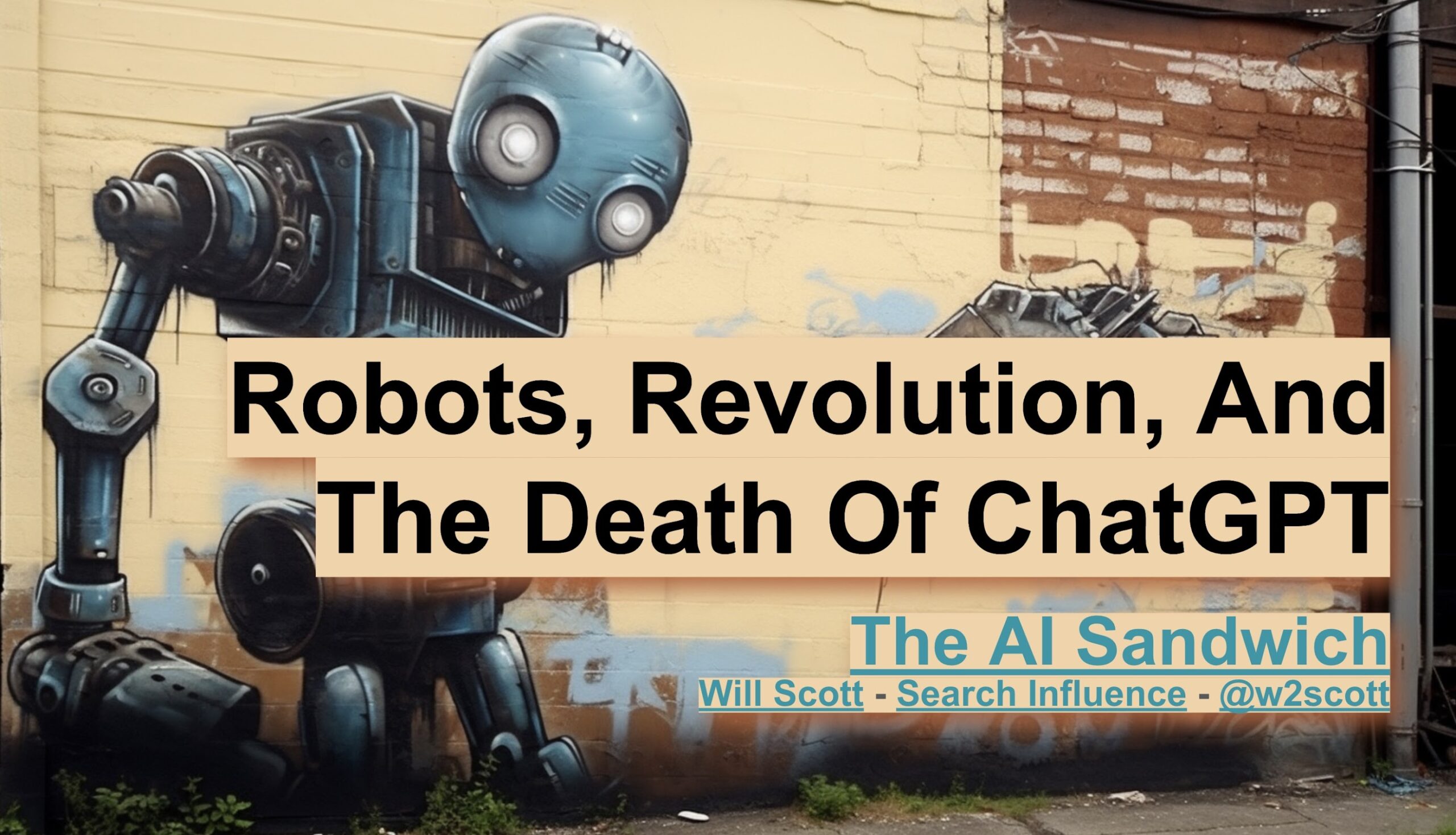
    Image of a robot, showcasing Will Scott of Search Influence in New Orleans' AI for digital marketing presentation.

    Search Influence Co-founder and CEO Will Scott presented “Robots, Revolution, and the Death of ChatGPT” at the 2023 State of Search Conference in Dallas, Texas.

    In Will’s artificial intelligence marketing strategy presentation, the SEO veteran discussed his vision of what incorporating AI into the content creation process will look like and how marketing teams can use AI technology responsibly.

    In this blog post, we’ll dive deep into Will’s thoughts on AI in digital marketing and provide AI-powered tools and content creation techniques to bring your processes into the robotic age.

    What Is the State of Search Conference?

    The State of Search Conference is an annual digital marketing event produced by DFWSEM (the Dallas, Fort Worth Search Engine Marketing Association) that brings together industry experts, seasoned practitioners, and marketing enthusiasts.

    One of the standout features of this conference is the expertise it brings under one roof. Digital marketers who attend this conference learn about the latest and greatest search marketing trends and gain valuable insights from experienced practitioners.

    The digital advertising landscape is in a constant state of flux. From social media dynamics and Google’s ever-evolving algorithms to the intricacies of effective content marketing, staying ahead of the curve is essential. This conference is meticulously designed to equip attendees with practical tips and tricks to master these facets.

    As the topics at the State of Search Conference are always on the cutting edge of marketing, it is no surprise that the main topic of this past year’s conference was AI in digital marketing.

    A long-time resident of the digital marketing world, Will Scott was interested in how artificial intelligence might change the neighborhood. Read on for his thoughts about AI marketing strategies.

    Lessons From “Robots, Revolution, And The Death Of ChatGPT”

    2023 State of Search Conference presentation on AI for digital marketing with Will Scott of Search Influence

    In the late months of 2022, Will began obsessively learning and experimenting with digital marketing AI tools. And while his first thoughts on AI might have brought him to the robot apocalypse — much to the fault of movies like The Terminator, The Matrix, and Blade Runner — he quickly recalculated and began creating practical use cases for AI in digital marketing.

    Everything you need to know about the AI sandwich

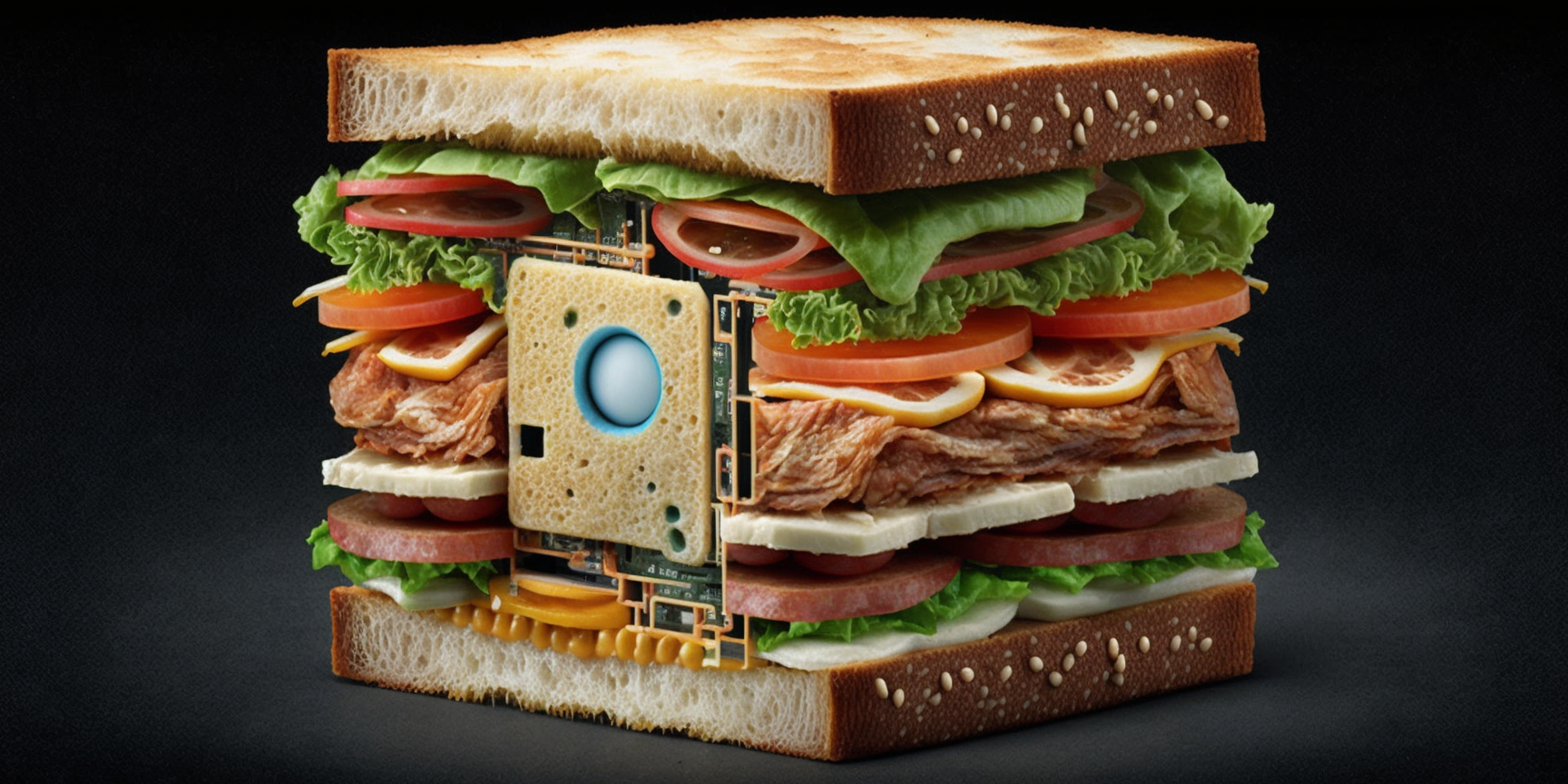
    The AI sandwich, coined by Will Scott of Search Influence in New Orleans

    In the ever-evolving content marketing landscape, the AI sandwich has emerged as a game-changing approach to crafting engaging and relevant content. This innovative content creation workflow combines the power of AI-driven tools with human creativity to produce high-quality content across various platforms, from social media posts to blog articles and ad copy.

    Let’s dive into the intricacies of the AI sandwich and explore how it can revolutionize your marketing campaigns.

    The AI Sandwich unwrapped

    At its core, the AI sandwich is a strategic content creation process that integrates the capabilities of AI-powered tools with human expertise. The workflow typically follows a three-step pattern:

    1. Human-Powered Prompts: The journey begins with a human writer who lays the foundation by creating thought-provoking prompts. These prompts serve as the guiding framework for the AI to work its magic.
    2. AI-Generated Content: Enter the AI marketing tool. This intelligent technology takes the provided prompts and crafts content that aligns with the desired objectives. It leverages machine learning algorithms to generate text that resonates with the target audience.
    3. Human Refinement: While AI can produce impressive content, human intervention remains crucial. Skilled editors review, refine, and enhance the AI-generated material. They ensure that the final output is grammatically correct and aligned with the brand’s voice and values.

    Elevating content quality

    The AI sandwich isn’t just about efficiency and cost savings; it’s a recipe for creating content that satisfies your audience’s cravings. By combining the strengths of AI and human oversight, you ensure your content meets the highest standards of relevance and quality.

    Meeting Google’s E-E-A-T requirements

    In today’s digital landscape, Google’s Search Quality Raters evaluate content based on criteria such as Experience, Expertise, Authoritativeness, and Trustworthiness (E-E-A-T). The AI sandwich is tailor-made to meet these standards.

    Beyond “empty calories”

    Think of content generated solely by AI as the equivalent of a quick solo meal — convenient but likely lacking substance. The AI sandwich, on the other hand, resembles a hearty home-cooked meal prepared with care. It’s nourishing content that informs, engages, and resonates with your audience.

    The path forward

    As AI marketing tools use continues to grow, we’re in the midst of an AI-generated content explosion. While some may use these tools for spammy purposes, legitimate content creators recognize the potential to enhance their work, develop creative ideas, and serve their organizations and clients more effectively.

    Embracing the AI opportunity

    For those of us rooted in the world of SEO and marketing, AI, including ChatGPT and its counterparts, offers a tremendous opportunity. It’s not just a means of automating tasks; it’s a tool for testing and refining strategies, optimizing marketing campaigns, and ultimately amplifying the impact for our clients.

    The AI sandwich emerges as a winning recipe in the journey to craft effective marketing campaigns and deliver relevant content. It combines the precision of AI-powered content generation with the finesse of human creativity, ensuring that your marketing efforts stand out in a crowded digital landscape.

    As we move forward, embracing AI as a valuable ally in the world of content marketing will lead to new heights of success and innovation.

    SEO and ChatGPT are alive and thriving together

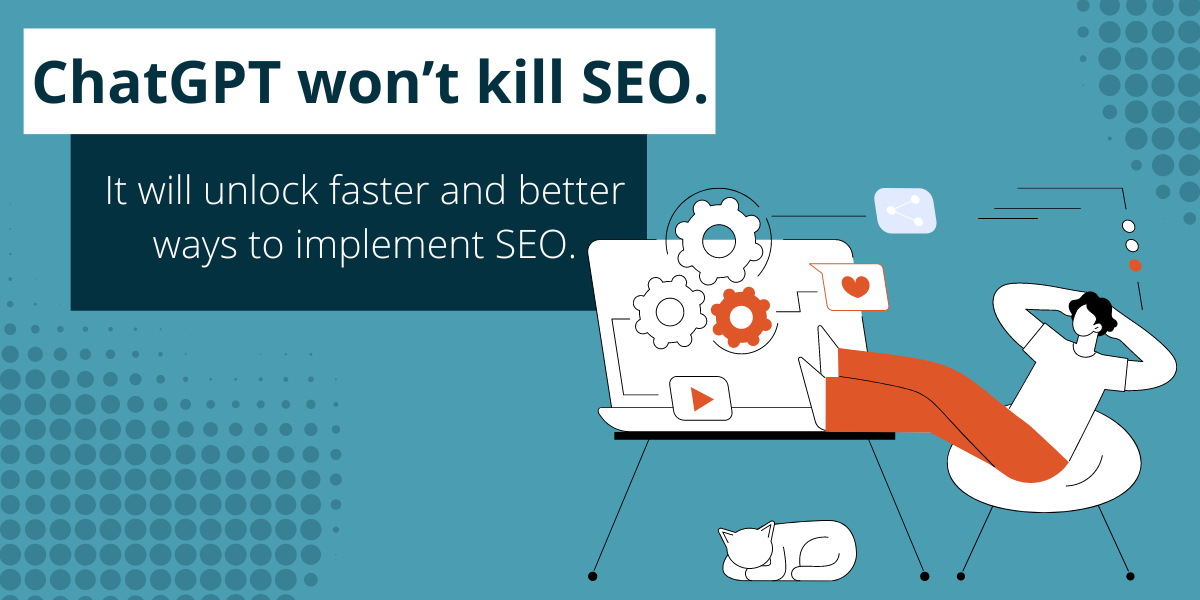
    Graphic depicting the future of ChatGPT and SEO

    SEO is not on life support — it’s adapting and thriving alongside AI advancements.

    ChatGPT and other artificial intelligence tools don’t spell doom for SEO; these machine-learning tools are catalysts for faster and more innovative SEO strategies. They empower SEO professionals to dive deeper into customer data and refine their advertising campaigns.

    Forward-thinking SEO experts should embrace AI tools as a means to enhance their skills. AI tools are becoming commonplace, but their true value lies in individuals who can wield them effectively.

    Content creation processes like the AI sandwich and the AIO method prove that machine learning tools still need a human touch to create content that improves customer experiences.

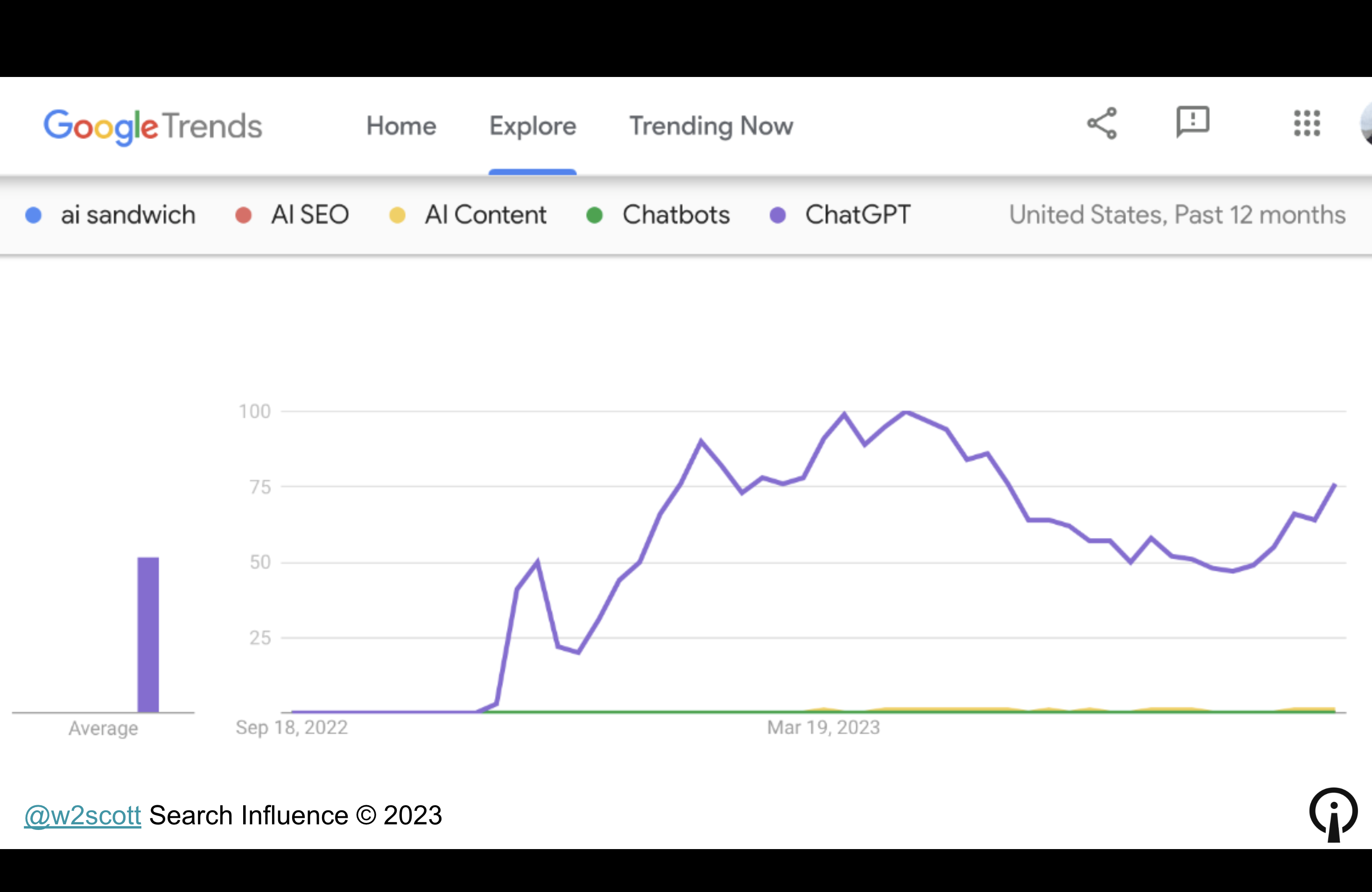
    Contrary to sensationalist headlines, ChatGPT is also far from death’s door. In fact, the screenshot below showing the last 12 months of Google Trends Data proves the AI-powered tool is quite young and spry.

    Graph showing high usage rates of ChatGPT in 2023

    Artificial intelligence tools for digital marketing

    As is the Search Influence way, we’d like you to leave this blog post with some things you can use immediately to improve your marketing campaigns. Below are the marketing tools we have recently used to do everything from automating repetitive tasks to finding relevant keywords.

    Artificial intelligence content tools for crafting engaging content:

    • Machined.ai
    • ZimmWriter
    • Content at Scale
    • Surfer SEO AI Writer

    Artificial intelligence image creation tools:

    • Midjourney
    • Dall-E 2
    • Stable Diffusion

    Artificial intelligence SEO and keyword tools:

    • Frase
    • Surfer
    • PageOptimizer Pro

    Artificial intelligence video tools:

    • Steve.ai
    • Wave.video

    The SEO Skyscraper Method and ChatGPT data mining are a match made in heaven

    Image of a skyscraper, symbolizing the Skyscraper Technique

    Early in 2023, Will explored “ChatGPT: Data Mining and SEO With OpenAI and Bing.” Since then, the landscape of machine learning, AI, OpenAI, ChatGPT, and content has evolved significantly.

    With substantial updates to the core OpenAI GPT, both in technological advancements and content processing capabilities, we’ve entered an era where we can delve deep and wide into topics like never before.

    The integration of web search capabilities through plugins and expanded data exploration tools has transformed ChatGPT into a data mining powerhouse, allowing for the summarization and comprehension of extensive and complex subjects.

    Recent experiments have demonstrated the prowess of ChatGPT in summarizing top articles on a given topic while highlighting unique perspectives. Natural language processing and AI-driven content analyses have made ChatGPT a vital tool for tasks that rely on data collection and correlation analysis.

    Now, let’s bring in the Skyscraper Method.

    The SEO Skyscraper Method, popularized by Brian Dean at Backlinko, is a strategy that’s been imitated repeatedly.

    It’s actually quite simple:

    • Step 1: Find content on your given subject that is worth linking to.
    • Step 2: Write content that is even more informative than the content you found.
    • Step 3: Reach out to the right people who might be willing to link to the web page/content you wrote.

    Back in the initial development of the Skyscraper Method, the focus was on links as indicators of authority. However, Google’s evolution towards a semantic, entity-based web has expanded the playing field. Content and its relationship to recognized entities now share the spotlight with links in SEO success.

    By combining the Skyscraper Method with ChatGPT’s knack for data mining, you can unearth valuable insights with ease.

    Rather than merely one-upping competitors, this approach looks at all content receiving Google’s attention. It acknowledges and respects the competition by summarizing and linking to their work, thereby incorporating semantic entities and keywords.

    By leveraging ChatGPT for data mining, you can simplify the process. It starts with a Google search for your target keyword, leading to fresh ideas and a wealth of links. Then, ChatGPT can extract common elements, such as keywords and subjects covered from the content you choose to use.

    While AI technology is a potent and valuable tool, you’re still Batman, and it’s still Robin.

    Although ChatGPT’s utility for data mining has grown immensely in recent months, challenges persist, particularly in ensuring data accuracy and reliability. This is one of the many reasons you shouldn’t use AI blindly.

    ChatGPT and the SEO Skyscraper Method form a harmonious partnership for extracting valuable insights from web pages and creating worthwhile content. This dynamic duo empowers content creators and SEO professionals to identify patterns, understand market trends, and anticipate future behaviors. As AI tools continue to evolve, their role in providing valuable insights into customer behavior and market trends will expand, making them indispensable assets for data analysis.

    Next in AI marketing: opportunities, concerns, and more robots

    AI-powered natural language generation tools offer marketers valuable capabilities, such as generating content ideas, researching keywords, compiling facts, and even simplifying programming tasks. However, it’s essential to recognize that these tools aren’t flawless and may produce typos or require editing and fact-checking.

    One critical concern is the risk of overreliance on AI. Relying solely on AI for content creation can lead to subpar results and may not align with Google’s E-E-A-T requirements, potentially impacting user satisfaction and campaign effectiveness. Nobody likes a lazy SEO or spammers, especially Google.

    A balanced approach is critical to ensure quality writing that combines AI content creation with human editing — thorough fact-checking is a must.

    By using AI as a valuable assistant rather than a sole content creator, marketers can harness its potential while maintaining the integrity of their digital advertising campaigns and ensuring customer satisfaction.

    There are no doubt more robots to come — AI is a worthwhile technology in a free market, after all. With everyone from venture capitalists to garage start-ups looking to get a piece of the pie (or sandwich?), we must be responsible as we forge these lands.

    As modern-day explorers trekking across this new technological landscape, it’s our duty to avoid making the same mistakes as the navigators of years past.

    We are not here to divide and conquer; we are here to build and progress.

    Image of robots and humans coexisting peacefully

    What’s Next for AI Algorithms in the Digital Marketing Landscape

    From social media marketing to email marketing and collecting data, AI algorithms will reshape the landscape of digital advertising.

    But there’s no need to fear; Search Influence is here! (Underdog is still cool, right?)

    Search Influence will happily be your guide during the AI for digital marketing revolution. No matter your business’s needs, our extensive list of services can help you grow.

    Contact us today to learn how we use the latest digital technology to get our clients real-world results.