Tag: AI content marketing

  • Will Scott Returns to SMX Online With Generative Engine Optimization Master Class

    On Tuesday, April 14, 2026, Will Scott, Co-Founder and CEO of Search Influence, returns to SMX Online to teach his Generative Engine Optimization (GEO) Master Class, the best-selling Master Class in SMX Online history.

    The live, online session runs from 11:00 a.m. to 4:45 p.m. ET and is available both live and on demand for $199.

    Designed for experienced marketers navigating AI-driven search, this intensive training delivers actionable, real-world strategies on how to stay visible as platforms like Google AI Overviews, ChatGPT, and Perplexity reshape how content is discovered.

    What You’ll Learn in the GEO Master Class

    This is not a theoretical overview of AI SEO. It’s a hands-on, tactical course that focuses on how generative engines actually retrieve, evaluate, and cite content today.

    Attendees will learn how AI platforms differ from traditional search engines and what that means for content structure, keyword strategy, and authority signals. The course dives into creating content that works for humans and machines alike, including entity optimization, formatting for AI extraction, and writing in a way that earns citations in AI-generated answers.

    Will also explores how keyword strategy has evolved in an AI-first world, shifting from static phrases to conversational, intent-driven language. Competitive analysis also plays a key role, with practical exercises that show how to evaluate which brands are winning AI visibility and why.

    Rounding out the day are sessions on measuring AI visibility, tracking performance across platforms, and future-proofing your content strategy as generative search continues to evolve.

    Who Should Attend

    The Generative Engine Optimization Master Class is built for SEO professionals, content strategists, and digital marketers with 2–5 years of experience who are ready to expand beyond traditional optimization. It’s especially valuable for agency marketers, in-house teams managing complex websites, and leaders responsible for long-term content strategy.

    If you’re already strong in SEO fundamentals but need clarity on how AI is changing rankings, visibility, and brand authority, this course is designed for you.

    Meet AI SEO Expert Will Scott

    Will Scott is a recognized authority in SEO and AI-driven content strategy and a longtime advocate for adapting marketing to how search actually works. He is widely known for coining the term “barnacle SEO” and has been a featured speaker at industry events, including PubCon, SMX, and Local U.

    Will leads the Search Influence team in delivering AI-enhanced, data-driven SEO strategies for industries such as higher education, healthcare, and hospitality. With a degree in architecture from Tulane University, he blends strategic systems thinking with practical execution, making complex concepts actionable for marketers.

    Save Your Seat

    Generative search is no longer optional knowledge. It’s the foundation of future visibility. If you want to understand how AI platforms select sources, summarize content, and decide which brands get cited, the GEO Master Class is built to give you that edge.

    Register now for the Generative Engine Optimization Master Class on April 14, 2026, and learn how to optimize for AI SEO performance.

    Get in touch for our super-secret 15% discount code.

  • UPCEA MEMS 2025 Recap: 11 Higher Ed Marketing Presentations That Show Where We’re Heading

    This review was created with AI assistance and human guidance from Will Scott, AI SEO Expert and CEO of Search Influence.

    TL;DR: The UPCEA MEMS 2025 conference made one thing clear: AI isn’t coming to higher education marketing. It’s here. And institutions that aren’t actively optimizing for AI search, building integrated marketing systems, and using data to drive decisions are already falling behind.

    Here’s what we learned from 11 presentations that are reshaping how institutions connect with students.

    The Big Picture

    So, we just got back from MEMS 2025, UPCEA’s Marketing and Enrollment Management Summit, and the theme was impossible to miss.

    AI is fundamentally changing how students discover and evaluate educational programs.

    Not “might change.” Not “will change eventually.”

    It’s happening now.

    The conference brought together marketing and enrollment professionals from institutions across higher education, and what struck us was how many presenters were sharing real implementations, not theoretical frameworks. We’re past the “what if” stage. We’re in the “here’s what works” stage.

    Throughout 11 presentations, three themes kept coming up:

    1. AI search visibility is the new SEO — and most institutions are missing it
    2. Integration beats silos — successful strategies span channels and touchpoints
    3. Data only matters if it drives action — too many institutions collect without implementing

    Let’s break down what we learned from each session.
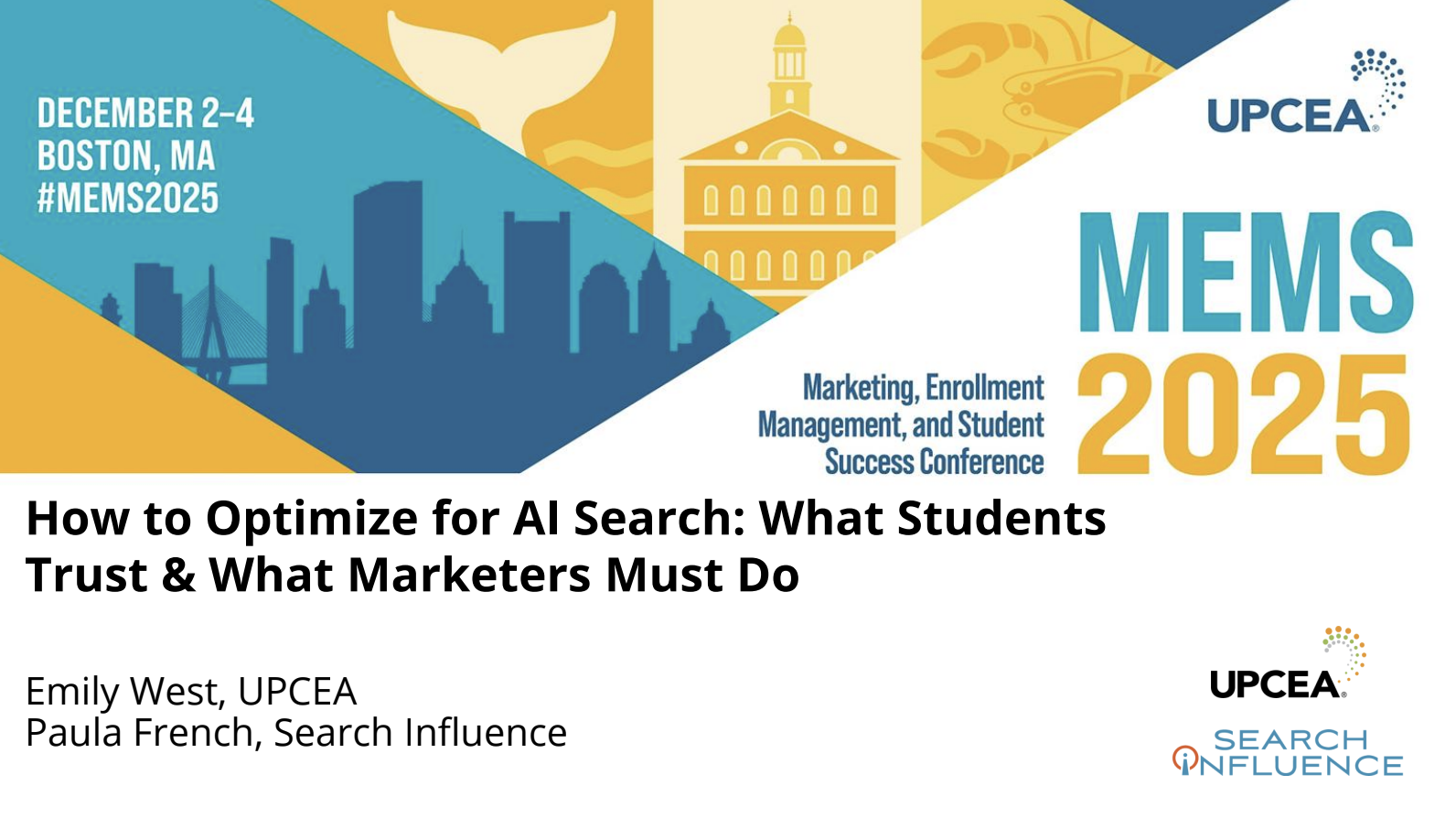
    1. How to Optimize for AI Search: What Students Trust & What Marketers Must Do

    Presenters:

    Emily West and Paula French opened with research that cuts through the speculation.

    The Data:

    • 1,061 individuals surveyed
    • 760 met the qualification criteria
    • One of the largest datasets on student search behavior in the AI era

    What This Means:

    The presentation revealed which search platforms students actually trust and how they perceive AI-driven results. The answer isn’t what most institutions assume.

    The Finding That Stopped Everyone:

    During the Insights & Innovation session (UPCEA’s industry insights presentation), a statistic was mentioned that should prompt every higher education marketer to pause: University websites appear in only 3% of AI Overviews.

    Let that sink in.

    Students are using AI search. AI is generating answers. And institutional websites are barely showing up.

    Students use different platforms for different purposes. They place varying levels of trust in AI-generated results versus traditional search. And they’re developing new research patterns that institutions need to understand.

    The Actionable Part:

    West and French didn’t just present data. They shared strategies for:

    • Creating content that AI systems actually cite
    • Building authority that makes AI search engines trust your institution
    • Understanding the nuanced ways students use AI tools, search engines, and university websites

    The Bottom Line:

    If you’re not thinking about AI search visibility, you’re already behind. The opportunity gap is massive, and it’s only getting wider.
    2. AI from Ad to Grad: Enhancing the Student Journey with Connected Agents

    Presenters:

    This session changed how we think about AI in higher education.

    Most institutions treat AI as a point solution — maybe for chatbots, maybe for content generation. But GWU and Noodle showed something different.

    The Concept: Connected Agents

    Rather than isolated AI tools, they’re building AI systems that work together across the entire student journey, from first advertisement to graduation.

    Consider this: An AI agent that assists with initial inquiries shares context with the enrollment agent, which in turn shares context with the student success agent. Each interaction builds on the last.

    Why This Matters:

    The session’s title, “AI from Ad to Grad,” captures the scope. This isn’t about optimizing one touchpoint. It’s about creating a seamless, intelligent experience that follows students throughout their entire journey.

    The Practical Applications:

    The presentation explored how institutions can:

    • Create AI systems that anticipate student needs rather than just respond
    • Build integrated ecosystems instead of point solutions
    • Develop partnerships that enable comprehensive AI implementation

    The Takeaway:

    AI works better when it’s connected. Isolated tools create isolated experiences. Connected agents create momentum.
    3. From Leaky Funnel to Flywheel: Reimagining the Online Enrollment Journey

    Presenters:

    This might have been the most conceptually transformative session of the conference.

    The Problem With Funnels:

    The University of Michigan team made a compelling case: The traditional funnel model is fundamentally flawed for modern enrollment.

    Funnels are leaky. They’re one-way. They require constant input of new marketing dollars.

    The Flywheel Alternative:

    Instead, they proposed a self-reinforcing system:

    • Satisfied students create success stories
    • Success stories attract more students
    • More students create more success stories
    • The momentum builds on itself

    This isn’t semantics. It’s a complete reimagining of how institutions approach enrollment.

    The Real-World Proof:

    What made this session powerful: U-M has actually implemented this. They shared real examples of how the flywheel model works in practice.

    The Framework:

    1. Build systems where student success creates marketing momentum
    2. Reduce dependency on constant new marketing spend
    3. Create self-sustaining enrollment cycles

    Why It Works:

    Instead of constantly chasing new prospects, institutions can build systems that naturally attract and convert students while improving the experience for current students.

    The flywheel compounds. The funnel just leaks.
    4. DIY Digital: In-House Strategies That Scale — From Startup to Powerhouse

    Presenters:

    One of the most practical sessions came from two powerhouse institutions sharing their journeys.

    The Question Every Institution Faces:

    When do you outsource marketing? When do you build in-house?

    Purdue and Florida provided frameworks for making that decision, and more importantly, guidance on transitioning between models.

    The Honest Assessment:

    Both teams spoke from experience about the benefits of in-house operations. But they were refreshingly honest about the challenges and trade-offs.

    This wasn’t a sales pitch. It was a balanced exploration of how to scale from startup-level operations to powerhouse marketing teams.

    The Decision Framework:

    1. Assess your institutional needs
    2. Evaluate vendor vs. in-house capabilities
    3. Plan transitions that don’t disrupt operations
    4. Build internal capabilities while maintaining quality

    The Key Insight:

    There’s no one-size-fits-all answer. However, there are frameworks available to help you make the right choice for your institution’s unique situation.
    5. From Click-Chasing to Trust-Building: The AI Marketing Shift

    Presenters:

    This session addressed one of the most fundamental shifts in marketing today.

    The Old Playbook:

    Optimize for clicks. Maximize conversions. Track immediate ROI.

    The New Reality:

    In an AI-driven landscape, that playbook doesn’t work the same way.

    AI systems prioritize authoritative, trustworthy content. They recognize long-term value over quick conversions. They build on relationships, not transactions.

    The Shift:

    The title says it all: “From Click-Chasing to Trust-Building.”

    Success isn’t measured just in clicks and conversions. It’s measured in how institutions are perceived by:

    • AI systems
    • Search engines
    • Prospective students (who are increasingly sophisticated about evaluating marketing messages)

    The Strategy:

    Build long-term trust, authority, and value. Create content that AI systems recognize as reliable. Focus on relationships that extend beyond the initial inquiry.

    The Bottom Line:

    Click-chasing is a short-term game. Trust-building is how you win in the AI era.
    6. Insights & Innovation: Strategic Perspectives from UPCEA’s Trusted Corporate Partners

    Presenters:

    • Will Scott, Search Influence
    • Tracy Kreikemeier
    • Shauna Cox
    • Jennifer Blassingame

    (Full disclosure: This is our group session, so we’re recapping what we presented.)

    Session Focus: Are You Showing Up? How to Track Visibility in AI Search

    The Problem:

    Most institutions have a critical gap in their analytics: Traditional SEO tracking doesn’t capture AI Overviews, AI-generated answers, or how institutions appear in AI-powered search experiences.

    The Question:

    How do you know if your institution is actually appearing in AI search results?

    The Challenge:

    You can’t optimize for what you can’t measure. And traditional analytics tools weren’t built for the AI search landscape.

    The Solution:

    We shared tools and strategies specifically designed for monitoring AI search presence. The goal isn’t just knowing whether you’re showing up — it’s understanding how you’re appearing and in what contexts.

    The Framework:

    1. Track visibility in AI search results (tools that traditional analytics miss)
    2. Understand AI Overviews and their impact
    3. Monitor AI search presence across platforms
    4. Position your institution to appear in AI-generated results

    The Actionable Part:

    This isn’t just about SEO in the traditional sense. It’s about understanding how AI systems evaluate and surface content, and how institutions can position themselves to be included.

    The Tools:

    Several AI SEO tracking platforms are available now. The tracking piece is becoming a commodity — the value is in what platforms do with that data.

    The Takeaway:

    If you’re not tracking AI search visibility, you’re flying blind. And you can’t optimize what you can’t see.
    7. Designing with Data: Using Surveys and Stories to Shape Online UX + ROI

    Presenters:

    • Auris Calvino, Associate Director of Online Marketing and Communications
    • Lindi Ragsdale, Associate Director of Online Data, Technology, and Operations

    This session addressed one of the most common problems in higher ed marketing.

    The Gap:

    Institutions collect student feedback. But do they actually act on it?

    The session opened with a provocative question: “How confident are you that your institution is acting on student feedback and not just collecting it?”

    The Problem:

    Survey fatigue. Data that sits unused. Feedback that doesn’t drive change.

    The Solution:

    Combine quantitative survey data with qualitative stories. Use data to inform UX decisions that actually improve outcomes.

    The Framework:

    1. Collect both quantitative and qualitative data
    2. Bridge the gap between collection and implementation
    3. Create systems where feedback drives continuous improvement
    4. Measure ROI through data-driven design

    The Key Insight:

    Measuring and improving ROI requires both:

    • Quantitative rigor (Ragsdale’s data and technology background)
    • Qualitative insights (Calvino’s marketing and communications role)

    The Takeaway:

    Data is only valuable if it drives action. Too many institutions collect without implementing.
    8. In Marketing, Evolution isn’t Optional: Getting Ahead in an AI-driven World

    Presenters:

    West and Gonzalez presented findings from their 2025 research study.

    The Data:

    • 99 marketing and enrollment professionals surveyed
    • 62 met the qualification criteria
    • Insights into how institutions are responding to the AI revolution

    The Finding:

    61% of respondents say their institution is receptive to emerging technologies.

    That’s up from just 40% in 2024.

    What This Tells Us:

    Institutions are recognizing the need to evolve. The question is whether they’re actually implementing change or just acknowledging the need.

    The Trends:

    The research revealed emerging trends in higher education marketing and enrollment management, showing how institutions are adapting (or struggling to adapt) to new technologies.

    The Gap:

    There’s a difference between recognizing the need to evolve and actually implementing change. The study explored that gap.

    The Actionable Insights:

    The presentation translated findings into actionable insights for institutions looking to get ahead rather than just keep up.

    The Bottom Line:

    Evolution isn’t optional. But recognition without implementation doesn’t count.
    9. From Search to Success: Integrating SEO and Email Marketing to Drive Enrollment

    Presenters:

    • Tim Grenda, SEO and Content Manager
    • Caitlin Dimalanta, Marketing Communications Specialist

    This session addressed one of the most common problems in digital marketing: silos.

    The Problem:

    SEO and email marketing are often managed separately. They operate in isolation. They don’t work together.

    The Solution:

    Integrate SEO and email marketing strategies into cohesive campaigns.

    The Framework:

    1. Break down channel silos
    2. Create campaigns that span search and email
    3. Repurpose search-optimized content through email
    4. Use email engagement data to inform SEO strategy

    The Synergy:

    Content optimized for search can be extended through email. Email engagement data can inform SEO strategy. The channels work better together than apart.

    The Takeaway:

    Integration beats isolation. Every time.
    10. Boosting SEO & Engagement Through Testimonial-Driven Web Content

    Presenters:

    This session addressed one of the most effective but underutilized content strategies.

    The Strategy:

    Leverage student and alumni testimonials for both SEO and engagement.

    The Balance:

    Many institutions struggle with this: How do you optimize for search while maintaining authenticity?

    The Answer:

    Authenticity and search optimization aren’t mutually exclusive. In fact, authentic student stories often perform better because they naturally include the language and questions that prospective students are searching for.

    The Multi-Purpose Approach:

    Testimonials can serve multiple purposes:

    • Improve SEO through natural language and long-tail keywords
    • Build trust with prospective students through authentic voices
    • Create engaging content that keeps visitors on site longer

    The Framework:

    1. Collect testimonials strategically
    2. Optimize for search while maintaining authenticity
    3. Deploy across multiple touchpoints
    4. Measure impact on both SEO and engagement

    The Takeaway:

    Maximize content value. One piece of content can serve multiple purposes if you think strategically.
    11. Education is a Business: Using ROI Data to Have Hard Conversations

    Presenters:

    This might have been the most candid session of the conference.

    The Reality:

    Institutions need to make data-driven decisions about where to invest marketing dollars. Those conversations aren’t always easy.

    The Challenge:

    Using ROI data to make strategic decisions isn’t just about numbers. It’s about:

    • Having the right data
    • Presenting it effectively
    • Navigating the political and cultural challenges that come with data-driven decision-making in higher education

    The Framework:

    1. Measure ROI accurately
    2. Communicate insights clearly
    3. Navigate institutional politics
    4. Make decisions that balance educational mission with financial reality

    The Honesty:

    The presenters were refreshingly honest about what works, what doesn’t, and how to handle difficult situations when data suggests changes that institutions may be reluctant to make.

    The Takeaway:

    Hard conversations are easier when you have the right data, presented the right way, with the right frameworks.

    Common Themes: What This All Means

    So, what do these 11 presentations tell us about where higher education marketing is heading?

    Three themes kept coming up:

    1. AI Search Visibility Is the New SEO

    Multiple presentations highlighted the critical need for institutions to adapt to AI-driven search environments.

    The reality: AI isn’t just another tool. It’s fundamentally changing how students discover, evaluate, and engage with institutions.

    The challenge: Success in AI search requires a different approach than traditional SEO. It’s about building authority, creating content that AI systems trust and cite, and understanding how AI Overviews are reshaping the discovery process.

    The opportunity: Institutions that aren’t thinking about AI search visibility are already falling behind. The gap will only widen.

    2. Integration Beats Silos

    Many sessions focused on integrating marketing channels and strategies rather than operating in isolation.

    The reality: Isolated tactics don’t work in the modern marketing landscape.

    The solution: Successful institutions think holistically about the student experience, creating integrated systems where different channels and touchpoints work together.

    The framework: Think systems, not silos.

    3. Data Only Matters If It Drives Action

    Several presentations addressed the gap between collecting data and actually using it.

    The problem: Too many institutions collect data that sits unused.

    The solution: Institutions need frameworks for interpreting data, communicating insights, and using information to drive decisions.

    The framework: Data → Interpretation → Communication → Action

    The Bottom Line: What Institutions Need to Do Now

    Based on what we learned at MEMS 2025, here’s what institutions should prioritize:

    1. Start Tracking AI Search Visibility

    If you’re not measuring how you appear in AI Overviews and AI-generated answers, you’re flying blind. Traditional SEO analytics don’t capture this.

    2. Build Integrated Systems

    Stop thinking in silos. Start thinking about how channels work together. Whether it’s SEO and email, or AI agents throughout the student journey, integration beats isolation.

    3. Close the Data-to-Action Gap

    Collecting data isn’t enough. You need frameworks for interpreting, communicating, and acting on insights.

    4. Focus on Trust and Authority

    In an AI-driven landscape, trust and authority matter more than clicks. Build long-term value, not short-term conversions.

    5. Think Flywheel, Not Funnel

    Build systems that create momentum. Student success should attract more students. That’s how you reduce dependency on constant new marketing spend.

    Resources and Next Steps

    Presentation Slides: Links to presentation slides will be made available through UPCEA’s member portal and conference resources.

    Presenter Contact Information: Many presenters are available for follow-up questions. Contact information can be found through UPCEA’s member directory or through the presenters’ institutions.

    Tools and Frameworks: Several sessions mentioned specific tools, frameworks, and resources. We’ll be sharing more on these in upcoming posts.

    The Conversation Continues:

    The question isn’t whether higher education marketing will continue to evolve. It’s whether individual institutions will evolve with it.

    What strategies are you implementing? What questions do you have? Let’s keep the conversation going.

    This recap is based on presentations from MEMS 2025, UPCEA’s Marketing and Enrollment Management Summit. For questions or to share your own insights, connect with us on LinkedIn or reach out through Search Influence.

    This recap reflects what we heard on stage.

    To understand how these trends are already showing up in real student behavior, explore Search Influence’s AI Search in Higher Education: How Prospects Search in 2025 research, conducted in partnership with UPCEA.

    The study reveals how prospective students utilize AI tools, search engines, and university websites in conjunction and what higher education marketers need to do now to remain visible in AI-driven enrollment decisions.
  • How to Optimize Content for AI Search Engines

    How to optimize content for AI Search Engines

    Key Insights

    • AI search content optimization means structuring your content so AI systems can easily interpret, retrieve, and cite it in AI-generated answers.
    • Traditional SEO remains the foundation — clean site structure, structured data, and authority signals still drive AI visibility.
    • Organizing key insights, FAQs, and comparison tables makes your content easier for AI search engines to understand and surface in AI Overviews.
    • Writing in clear, natural language and updating regularly helps AI platforms recognize your content as accurate, relevant, and current.

    Search Influence leads in AI search content optimization by helping brands structure content that both humans and AI systems can easily understand and retrieve.

    Just as Frank Lloyd Wright believed buildings should grow naturally from their environment, AI-optimized content should grow naturally from meaning and structure. The future of search belongs to those who can design information that fits its landscape, where every heading, list, and table works like a carefully engineered beam.

    At Search Influence, we’re the architects of AI search visibility, helping site owners and marketers craft pages that perform beautifully across AI-powered search engines.

    This isn’t a theoretical guide. It’s the nuts and bolts of how to build AI-optimized content that earns citations, captures AI-generated answers, and stays visible in an evolving AI search landscape.

    Why Optimizing for AI Search Matters

    AI-powered search engines like Google’s AI Overviews, Perplexity, and ChatGPT don’t just rank pages; they summarize them. Instead of serving ten blue links, these AI engines generate conversational AI answers synthesized from multiple trusted sources.

    That means search visibility no longer stops at position one. You need your brand’s content to be included inside the AI answer.

    Click-through rates are declining as zero-click searches rise, and users are becoming increasingly satisfied with direct responses from AI platforms. If your valuable content isn’t structured for retrieval, AI systems may skip over it entirely.

    Optimizing for AI search isn’t about replacing traditional SEO; it’s about building on it. Think of AI search optimization as a natural evolution: combining the best of search engine optimization, structured data, and modern AI tools to help both humans and algorithms recognize your authority.

    At Search Influence, we help brands adapt their digital marketing strategies so they stay visible as AI models rewrite the rules of search behavior.

    Traditional SEO Is Still the Foundation

    Before you dive into AI search optimization, make sure your traditional SEO is rock-solid.

    AI search engines still rely on the same crawl and ranking infrastructure as traditional search engines. If AI crawlers can’t read, index, or trust your site, no amount of clever structure will help.

    Key traditional SEO best practices still matter:

    • Clean architecture and crawlability: Ensure internal linking is logical, pages load quickly, and site maps are up to date.
    • Mobile-first performance: Many AI search tools prioritize user experience metrics tied to page speed and responsiveness.
    • E-E-A-T signals: Add clear bylines, About pages, and author or brand context. Even a simple byline builds trust for AI engines.
    • Structured data: Implement schema markup for FAQs, products, or local business details. It helps search engines understand relationships between entities.

    AI systems like Gemini and Perplexity still rely on traditional search engine crawlers to determine credible citations. Traditional SEO is the foundation, and AI SEO is the architecture built on top.

    Creating Key Insights at the Top

    The best-optimized pages start strong. Your top 200 words are prime real estate for both readers and AI search platforms.

    AI models scan for concise, self-contained summaries near the top of a page to define its topic and relevance. These “vectors of meaning” determine whether your page gets cited in AI search results.

    How to create effective key insights:

    • Write a 3–5-bullet “Key Insights” section summarizing the core takeaways (see the top of this blog!)
    • Use keyword-rich, natural language that mirrors user intent (think “how” and “why” phrasing.)
    • Keep each insight standalone. If a model were to pull that one bullet out, it should still make sense.
    • Include one light mention of expertise or authority (e.g., “Based on Search Influence’s experience optimizing higher-ed sites for AI visibility…”)

    Pro Tip: Treat key insights like metadata in human language — short, factual, and extractable. AI systems interpret them as anchors for what your page means. More AI SEO pro tips here.

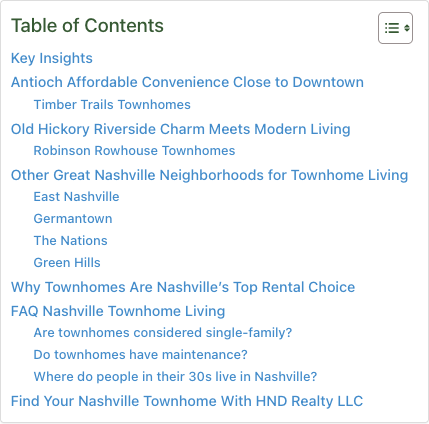
    Building a Machine-Readable Table of Contents

    Table of Contents screenshot

    Think of your table of contents as a blueprint that helps both humans and AI search engines navigate your page.

    Just as a building’s floor plan shows how rooms connect, a well-structured TOC tells AI crawlers where each topic begins and ends. This improves comprehension, organization, and retrievability.

    How to do it right:

    1. Use jump-linked headings (<a href=”#section-name”>) or your CMS’s automatic TOC generator.
    2. Reflect natural search queries in each heading — e.g., “How to Optimize for AI Search” rather than “Optimization Overview.”
    3. Keep heading hierarchy consistent (H2 → H3 → H4).
    4. Use descriptive, not vague language.
    5. Add ItemList schema markup around the TOC for extra machine clarity.

    A good TOC tells AI engines how the story flows and helps your content appear in multiple passage-level citations within AI-generated responses.

    Writing a Semantic Triple Intro

    A semantic triple intro is a concise statement that defines your topic in the format of subject + predicate + object.

    Example: “AI search content optimization is the process of structuring web content so it can be easily retrieved, summarized, and cited by AI-driven search engines.”

    This tiny sentence packs a big SEO punch. It clearly tells AI systems what your page is about before anything else.

    Why it matters:

    • AI engines convert text into numerical “embeddings.” The first few sentences shape your page’s meaning signature.
    • A strong semantic triple reduces ambiguity and helps your content rank for related natural language queries.

    How to do it:

    • Use your main keyword naturally.
    • Define what it is and what it does.
    • Follow with a quick credibility line (e.g., “At Search Influence, we help businesses earn visibility in AI-generated answers.”)
    • Avoid filler like “In today’s world…” — it wastes your most valuable context window.

    Chunk Content for AI Retrieval

    Psst… You wanna know a secret? AI engines don’t read like people; they retrieve by passage.

    Instead of analyzing an entire web page, AI systems break text into smaller “chunks” and compare them to user queries.

    Best practices for chunking:

    • Keep each section around 150–300 words.
    • Focus on one topic per chunk.
    • Start each with a clear claim or question, then support it with concise examples or bullet points.
    • Use transition phrases like “For example” or “This means” to preserve context.
    • End each chunk with a short takeaway sentence that restates the point (see below).

    Chunking multiplies your retrieval opportunities. Each section can be surfaced as its own AI search answer.

    Using FAQs to Capture Long-Tail AI Queries

    If AI Overviews had a favorite format, it would be the FAQ.

    Why? Because FAQs naturally mimic how people search in natural language. Each question represents a distinct user intent that AI tools can easily identify, summarize, and cite.

    Why it matters:

    • Long-tail questions like “How do AI search results work?” align perfectly with how users phrase queries in AI-driven search and voice search.
    • Each Q&A acts as a self-contained data node, making your page more likely to appear in AI-generated responses.
    • Structured FAQs feed into the Google Knowledge Graph, improving your search visibility across generative search engines.

    How to implement:

    1. Use tools like AlsoAsked or Semrush to identify conversational long-tail questions centered around your topic.
    2. Phrase questions naturally. Avoid stiff or keyword-stuffed wording.
    3. Begin each answer with a semantic triple that defines the topic clearly.
    4. Support with concise bullets, data, or short examples.
    5. Add FAQPage schema markup so AI crawlers recognize the format.

    Think of FAQs as the structural beams that make your content citation-ready. Each question builds another route to reach your audience.

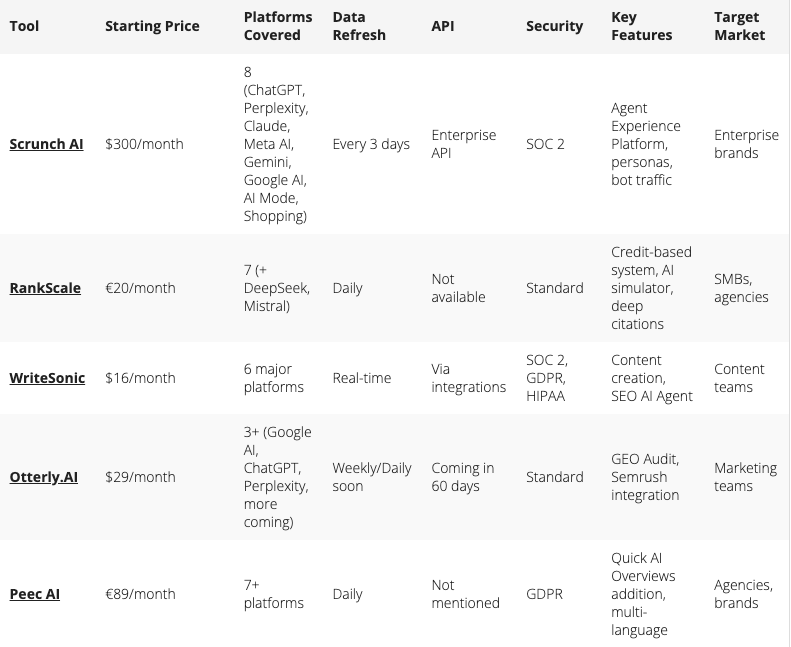
    Visuals, Tables, and Comparison Content

    Table comparing different tools

    Text isn’t the only thing AI engines read. AI search platforms use tables, charts, and labeled visuals to understand relationships and compare information.

    Why comparison content works:

    • Tables make AI-generated answers more precise. They can extract facts directly instead of summarizing loosely.
    • Comparison charts satisfy evaluative intent, a frequent category in AI search queries (e.g., “AI SEO vs. traditional SEO”).
    • Data tables strengthen embeddings by clarifying relationships between key details.

    How to structure tables for AI systems:

    • Use real <table> tags or Markdown tables, never screenshots.
    • Label columns descriptively: “Traditional SEO Tactics” | “AI SEO Tactics.”
    • Keep it simple: 3–5 columns, 5–10 rows.
    • Write factual captions, not marketing fluff (e.g., “This table compares how traditional and AI-driven search optimization differ in structure and retrieval focus.”).
    • Include schema markup where relevant.

    AI can quote directly from a well-structured table, boosting your authority in AI-powered search engines.

    Writing for Humans and Machines

    The best AI-optimized content reads smoothly to humans and structurally to machines.

    Follow these hybrid writing rules:

    • Use clear, factual sentences that stand alone if excerpted.
    • Keep paragraphs under 120 words.
    • Avoid vague language. Replace “this” or “it” with clear nouns.
    • Add internal linking every 150–200 words to reinforce relationships between entities.
    • Balance narrative and structure: storytelling for people, schema for crawlers.

    Remember: clarity isn’t just stylistic, it’s structural. It helps AI understand what matters.

    The Blueprint for AI Search Visibility

    Let’s recap your new building plan for AI search optimization:

    1. Lay the foundation: solid SEO fundamentals first.
    2. Frame the entryway: start with a clear semantic triple.
    3. Add the blueprint: summarize early with key insights.
    4. Map the layout: create a TOC and structured content chunks.
    5. Finish the details: use FAQ schema, visuals, and comparison tables.

    The goal? A digital structure that humans and AI engines recognize as sound.

    Search Influence helps brands design these frameworks to thrive in a world of AI-driven search and generative engine optimization.

    AI Content Optimization FAQs

    1. How to optimize content for AI search?

    AI search content optimization is the process of structuring digital content so AI systems can retrieve, summarize, and cite it accurately.

    To optimize effectively, focus on clarity, organization, and accessibility. Start by breaking your page into self-contained sections with clear H2s and H3s, ensuring each chunk of content addresses a single topic. Use structured data and schema markup to help AI crawlers interpret meaning, and reinforce relationships through strong internal linking.

    Keep your content current with up-to-date examples and sources. AI platforms prioritize pages that demonstrate freshness and accuracy. The more clearly your structure communicates what each section is about, the easier it is for AI search engines to select, summarize, and cite your work in AI-generated answers.

    2. How to write content for AI search?

    Writing for AI search means combining clarity, structure, and contextual depth that both humans and algorithms can understand.

    This approach starts with writing in natural language that reflects how people actually search using long-tail, conversational keywords that match user intent. Begin your piece with a strong semantic triple and support it with concise, fact-based explanations.

    Avoid vague language, dense jargon, or keyword stuffing, which can confuse both readers and AI engines. Instead, focus on writing self-contained paragraphs that answer one question or explain one concept at a time.

    The goal is to make your content easy to read, easy to reference, and easy for AI systems to understand, all while delivering genuine value to your audience. These are insights marketers can’t afford to miss.

    3. What is AI search?

    AI search is an intelligent system that uses language models to interpret and synthesize web information.

    Unlike traditional search engines that simply match keywords, AI-powered search engines like Gemini, GPT, and Perplexity analyze meaning, relationships, and intent behind queries.

    These AI models draw from multiple authoritative sources, summarizing content to deliver direct, conversational answers. Instead of serving a list of blue links, AI search engines generate synthesized overviews, making accuracy and structure more important than ever.

    Understanding how AI search works helps you build content that earns citations and remains visible across this new landscape of AI-generated results.

    4. How do AI search results work?

    AI search results are generated by analyzing and summarizing multiple high-authority sources into one synthesized response.

    When a user enters a query, AI systems identify relevant passages, or “chunks,” from indexed web content. These passages are then combined, summarized, and rewritten in natural language to provide a complete answer.

    Structured, fact-based content with schema markup and clear sectioning helps AI determine what information to include and who to cite. The result is a unified, conversational overview drawn from many sites, with attribution given to the most trustworthy and clearly organized sources.

    This is why creating structured, authoritative content is key to being referenced within AI-generated answers.

    5. Why is AI-optimized content important now?

    AI-optimized content is crucial because generative search engines prioritize structured, factual information over traditional keyword density.

    As tools like Google’s AI Overviews reshape how people access information, visibility now depends on whether your content is retrievable and citable by AI systems. Instead of focusing solely on ranking position, site owners must think about inclusion in AI-generated summaries, the new “position zero.”

    Structured content supported by schema markup, internal linking, and fresh data is far more likely to be featured in these overviews. Investing in AI optimization now ensures your content stays relevant and continues to attract attention even as user behavior and search technology evolve.

    6. How do I know if my content is AI-optimized?

    AI-optimized content demonstrates clear structure, entity consistency, and schema integration that make it retrievable by AI systems.

    To evaluate your current pages, look for clear topic separation, consistent use of entities (like names, products, or locations), and properly implemented structured data.

    Each section should serve a specific purpose and read well both in context and isolation. Lists, FAQs, and tables should be properly labeled and formatted for easy parsing. You can test your content’s performance in AI platforms like Perplexity or use emerging AI SEO tracking tools that monitor how your content appears in AI Overviews.

    If your web pages are easily understood, cited, or summarized by AI tools, you’re on the right track toward sustainable AI visibility.

    7. How often should I update my content for AI optimization?

    Regular updates signal freshness, an important trust metric for AI retrieval.

    AI engines and traditional search algorithms value recency because it suggests reliability. Reviewing your content quarterly helps ensure that statistics, external links, and schema markup stay accurate and relevant.

    Update examples, visuals, and tables as trends evolve, and consider adding new FAQs to reflect emerging search behavior. Regular optimization also gives you an opportunity to re-chunk long sections into smaller, more focused passages that align with current AI retrieval models.

    In a rapidly changing AI-driven search environment, staying up to date is not optional; it’s the difference between being cited and being invisible.

    Stay Ahead With Search Influence

    AI search is shaping how every Google search result is generated and displayed.

    Search Influence specializes in turning traditional SEO content into AI-optimized assets that perform across every AI search platform.

    Here’s how we can help you build your next competitive edge:

    • Audit your top pages for AI readiness, analyzing structured data, schema markup, and retrievability.
    • Upgrade your content architecture for the AI era.
    • Implement optimization strategies that strengthen traditional rankings and AI citations.
    • Track performance to understand how AI engines reference your brand.
    • Consult and educate your team on how to create comprehensive content that satisfies both search algorithms and users.

    AI search is rewriting the rules of visibility, and the brands that adapt their structure now will own tomorrow’s results.

    Let’s talk about how we can audit your site for AI readiness and start building your AI-optimized content framework today.

  • The Future of SEO Is AI: Will Scott on What’s Changing and What’s Next

    The Future of SEO Is AI: Will Scott on What's Changing and What's Next

    You’ve probably noticed search isn’t what it used to be. The “10 blue links” are buried under AI-generated answers, featured snippets, and who-knows-what pulled from who-knows-where.

    So if you’re in SEO, the obvious question is: what now?

    That’s the focus of a recent conversation between Will Scott, CEO of Search Influence, and Will Brooks on the Partnerships for Profit podcast. They didn’t talk theory. They talked about real-world shifts in how AI is reshaping search and what marketers can do to stay relevant.

    🎧 Watch the full episode on YouTube

    The Big Shift: From Keywords to Context

    One of Will’s most important points is that SEO isn’t going away. It’s just evolving.

    “It’s not about chasing rankings anymore,” he says. “It’s about making sure the machine understands that you are the best result.”

    That means writing for both humans and machines. Google’s AI Overviews, ChatGPT, and Gemini all rely on systems that prioritize context, relationships, and structure — a big change from the days of exact-match optimization.

    What This Looks Like in Practice

    If you’re thinking, “Okay, so what should I actually be doing differently?” here’s what came out of the episode:

    • Structure matters more than ever. Use schema, clear headings, and answer-based formatting. Will explained how internal linking and semantic cues are essential to showing up in AI results.
    • RAG is real. That’s Retrieval-Augmented Generation — how AI pulls from sources like your website to answer a question. If your content isn’t clear and accessible, it won’t be pulled. Tools like the Web Content Chunker can help structure content for better AI processing.
    • AI tools can help, but don’t replace strategy. Will talked about using AI SEO tracking tools to speed up workflows, but emphasized they’re only effective when used by people who know what they’re doing.

    “The AI’s not going to save you,” Will joked. “But it might save you time if you use it right.”

    One example he shared: A healthcare client where AI-assisted content helped speed up landing page creation by 40%, but only after a strategist built a proper outline and prompt structure first. Without that, the outputs were generic and flat.

    So, What Should You Do Now?

    Here’s the short version:

    • Audit your content. If it’s full of fluff, unclear, or hard to navigate, it’s probably invisible to AI systems. Comprehensive site audits can help identify these gaps.
    • Write with structure. Think FAQs, summaries, and natural language, not walls of text.
    • Understand your entities. Your brand, products, and topics need to be clearly defined so search engines know how they connect. Technical SEO expertise plays a big role here.
    • Experiment with AI, but don’t blindly trust it. Use it to brainstorm, draft, and revise, but always edit with human judgment.

    Why This Conversation Matters

    This episode is worth your time not because it has “hot takes” but because it grounds big ideas in practical reality. Will doesn’t hype the tech. He talks about what’s working (and not) across real campaigns, including insights from the latest SEO trends and challenges his team is navigating.

    If you’re trying to figure out how to keep your content visible in an AI-powered search environment, this is a solid place to start.

    🎙️Here’s the full episode if you want to dig deeper.

    One Last Thought

    SEO isn’t dead. It’s just growing up. And like any maturing system, it rewards clarity, credibility, and consistency over gimmicks.

    If you’re willing to adapt, there’s a real opportunity to stand out, not just in search results, but in the answers users actually see. Want to see how AI-ready your website is? Check out our AI Website Grader for a comprehensive assessment.

    👤Follow Will Scott on LinkedIn 🏢Learn more about Search Influence

  • The 8 Best AI SEO Tracking Tools: A Side-by-Side Comparison

    The 8 Best AI SEO Tracking Tools: A Side-by-Side Comparison

    SI Essential AI SEO Tracking Tools

    Key Insights

    • AI search is already reshaping the way users discover content, and using the right tools for SEO is essential to track visibility across AI search platforms.
    • Accuracy matters. Because AI search results are dynamic and context-driven, SEO professionals must continually test and compare tools to ensure their targeted keywords are truly making an impact.
    • Not all AI SEO tools are created equal. Each platform offers unique strengths depending on your goals, budget, and reporting needs.
    • An experienced SEO expert will help you get the most out of these tools, turning raw data into strategic decisions that improve rankings, visibility, and performance.
    • SEO content must now work for both humans and AI. Tools that help identify citations, brand mentions, and gaps in AI visibility can guide more effective SEO content creation and optimization strategies.

    Updated October 13, 2025 at 10:36 AM Central by Will Scott, AI SEO Expert, and CEO of Search Influence.

    New & Improved: The Ultimate Guide to AI SEO Tracking Tools in 2025

    I created an updated post based on our testing and deep research with Claude. Check out the comprehensive review of AI SEO Tracking Tools, with side by side comparison tables and more.

    Table of Contents

    As AI-driven search evolves, marketers need more than instincts and old-school metrics.

    They need reliable AI SEO tracking tools to measure their visibility across platforms such as Google’s AI Overviews, ChatGPT search, Perplexity, and Microsoft Copilot. These search engines synthesize answers, prioritize trusted sources, and favor structured, entity-rich content.

    You still need solid technical SEO and consistent SEO tasks driving your campaigns. The real difference maker today is how you track and adjust your content creation strategy for artificial intelligence-driven results.

    That’s where the new generation of tracking tools comes in.

    And here’s the truth: It’s not just about which tool you’re using.

    It’s about how well you understand the insights those tools deliver and how quickly you can adapt your strategy based on what you find.

    Used effectively, these tools help you fine-tune your approach, improve rankings, and drive better results from Google Search and beyond.

    At Search Influence, we bridge the gap between tool and strategy. We don’t just run reports. We turn data into action.

    In this blog post, we’ll break down eight of the best AI SEO tracking tools available today.

    You’ll see how they compare in usability, insights, and pricing, and get our recommendations on which tools deliver the most strategic value.

    What Are the Best AI SEO Tracking Tools?

    What are the Best AI SEO Tracking Tools?

    1. Scrunch AI

    If you’re managing multiple brands or juggling several sites, Scrunch AI is quickly becoming one of the most versatile and agency-friendly platforms in the space. It’s one of the latest AI SEO tools I’ve tested, and so far, it’s my favorite.

    What sets it apart isn’t just its ability to track AI visibility across platforms, but how seamlessly it adapts to different client needs. Whether you’re running a site audit, optimizing top-ranking pages, or tracking brand mentions in AI-generated responses, Scrunch AI gives you the control and clarity you need to scale your strategy.

    Pros:

    • Offers both SMB/agency and enterprise pricing plans, making it flexible for teams of all sizes
    • Concierge onboarding helps you get up and running quickly, with expert support
    • API access for enterprise accounts enables deeper integrations with your existing SEO software and reporting workflows

    Cons:

    • Limited export capabilities may be a drawback for data-heavy teams

    Best for:

    Agencies managing multiple brands that need a single AI tool to monitor and compare performance across clients. It’s also a great option for marketers who need actionable insights across various search engine rankings.

    2. Advanced Web Ranking (AWR)

    Advanced Web Ranking (AWR) is a long-standing player in the SEO software space, now evolving to support the realities of AI search engines. Known for reliable rank tracking, AWR has introduced filters for SERP features — including Google’s AI Overviews — to help marketers monitor where and how their content appears in AI-generated results.

    While AWR doesn’t yet track visibility in platforms like ChatGPT search, or Microsoft Copilot, it gives SEO professionals a head start in understanding their footprint in Google’s AI ecosystem and Perplexity.

    Pros:

    • Already widely used by SEO experts and marketing agencies for standard SEO tasks
    • Lets users filter for AI Overview visibility, providing insight into performance in AI-enhanced search engine results
    • Helps assess how effectively your content satisfies search intent in AI-modified Google results

    Cons:

    • AI visibility insights are still surface-level — enough for awareness, but not enough to drive high-level strategy
    • Refers to AI Overviews as “SGE,” an outdated term that can muddy reporting
    • Doesn’t track presence on ChatGPT or CoPilot

    Best for:

    Marketers who want to begin tracking their presence in AI-generated Google results using a tool they already know. AWR offers a light lift for those testing the waters of AI search tracking while maintaining focus on core rank tracking and search intent metrics.

    3. Semrush (AI Analytics Tool)

    Semrush added an AI analytics tool to its already expansive suite, giving marketers early insights into how their brand and content are interpreted by AI search engines. While still in its early stages, this feature helps teams gauge high-level presence and sentiment across emerging AI-driven platforms.

    This isn’t a tool for granular AI visibility tracking yet, but it does offer signals that show whether your content is resonating within AI-generated content and across AI SEO surfaces.

    Pros:

    • Provides domain-level indicators such as sentiment, engagement, and visibility that can correlate to AI search engine performance
    • Offers limited but growing AI-specific reporting that aligns with AI SEO tools
    • Easy add-on for existing Semrush users — no steep learning curve required

    Cons:

    • Data is not yet comprehensive
    • Misclassifies some brand names
    • Insights are still surface-level compared to specialized AI SEO tools

    Best for:

    Teams already using Semrush who want a low-effort way to monitor their early visibility in AI-powered search environments. It’s especially useful for validating whether your SEO content and keyword research strategies are beginning to register across AI-generated results.

    4. xƒunnel

    xƒunnel is a newer entry on this list, but one that’s making waves by tracking user journeys through AI search engines, not just traditional SEO. Rather than stopping at keyword performance, xƒunnel maps how users refine their queries. It also surfaces where your brand is being cited within AI answers across platforms.

    Pros:

    • Tracks query refinement, giving deeper insight into how users evolve their questions
    • Persona-based breakdowns show how different demographics interact with AI search engines
    • Enables citation tracking across trusted sources like Reddit, YouTube, and more — places that influence AI-generated answers

    Cons:

    • Currently in limited release, so availability may be restricted
    • User interface is not as polished as more mature SEO AI tools
    • Requires manual inputs for some features, limiting scalability for large teams

    Best for:

    Brands and digital marketers who want to understand how they’re appearing (or not appearing) across the full AI search landscape. xƒunnel is especially valuable for teams interested in optimizing not just for search engine results pages, but for the emerging, conversational search behaviors reshaping how users engage with information.

    5. Rankscale

    Rankscale is one of the first purpose-built tools designed to monitor visibility in AI search engines. Rather than just tracking rankings on traditional SERPs, this SEO tool evaluates how often your brand or content is cited or surfaced within AI-generated responses — an increasingly important metric as organic traffic shifts toward conversational search.
    Its standout feature, the AI Search Rising Score, gives marketers a directional look at their SEO performance within the AI ecosystem. Rankscale also delivers strong entity-based insights, which help fine-tune your SEO strategy around how large language models interpret your brand.

    If you’re serious about preparing your SEO efforts for the future of search, this is one tool to watch closely.

    Pros:

    • Measures visibility in AI-generated search with a proprietary AI Search Rising Score
    • Tracks citation sources, showing which pages, platforms, or mentions contribute to AI visibility
    • Helps identify what entities AI search engines associate with your brand, supporting deeper search engine optimization
    • Provides high-level reporting ideal for informing strategic SEO efforts

    Cons:

    • Requires manual selection of each target keyword, which can be time-consuming at scale
    • Pricing is still TBD — uncertainty may limit accessibility for smaller teams or early adopters

    Best for:

    SEO strategists and marketing teams focused on refining their SEO software stack to support the artificial intelligence era optimization. Rankscale is ideal for tracking how your content performs in AI-generated search and understanding which citations and entities drive results.

    6. Otterly

    Otterly is a rising contender among the best SEO tools designed specifically for tracking brand performance in AI search engines. Unlike tools that rely solely on traditional keyword rankings, Otterly focuses on search prompt visibility. This makes it especially useful in an era where users interact with AI search platforms in more conversational ways.

    Pros:

    • Tracks visibility based on full prompts rather than just keywords
    • Works across multiple AI search platforms, including ChatGPT, Perplexity, and Google AI Overviews
    • Clearly displays brand mentions, citations, and links returned in response to each search

    Cons:

    • Requires manual entry of each prompt, which can be time-intensive
    • Doesn’t offer automatic topic clustering or entity suggestions
    • The interface is less intuitive than tools that use AI to surface insights automatically

    Best for:

    Teams that want highly structured, prompt-specific tracking across AI platforms. Otterly is a great choice if your strategy depends on SEO content optimization and refining title tags or other metadata to improve how your brand appears in conversational search responses. It’s especially useful for marketers who want more control over tracking defined topics rather than relying on automated discovery.

    7. Profound

    Profound is a powerhouse in the SEO AI tool landscape, designed specifically for large organizations that need deep, enterprise-grade insights into how they appear in AI-generated search results. With the most robust dataset currently available for AI search tracking, Profound gives SEO teams a clear view into their presence across platforms like Google AI Overviews, ChatGPT search, Microsoft Copilot, and Perplexity.

    Unlike other tools, Profound automates both topic clustering and citation tracking, offering rich, actionable insights with minimal manual lift. It’s one of the few SEO tool solutions that not only shows your brand’s visibility but also reveals where competitors are gaining traction and which essential SEO elements you may be missing.

    Pros:

    • Offers the deepest dataset available for tracking search results across multiple AI search engines
    • Auto-generates topic clusters and citation analysis, speeding up SEO processes
    • Highlights competitor visibility and entity optimization opportunities
    • Supports CSV exports for SEO experts who want to dig into custom reporting and secondary data layers

    Cons:

    • Enterprise-level pricing (starting at $3,000/month) limits accessibility for smaller teams
    • It’s not always clear whether topic groupings are AI-driven or manually curated, which may affect strategy interpretation

    Best for:

    Large SEO teams or enterprise brands that need a bird’s-eye view of their performance across AI search ecosystems for multiple websites. If you’re looking for SEO AI insights that go beyond basic rank checking and want to benchmark against competitors while automating much of the discovery process, Profound offers a powerful, though premium, solution.

    8. Peec AI

    Peec AI is a newer AI SEO tool on the market that’s gaining traction. It offers a straightforward way to track visibility across major AI search platforms, with the added benefit of location-specific tracking.

    Its pricing model is accessible for teams that don’t need enterprise-scale insights but still want to understand how their target keywords are performing in AI-driven search. While it doesn’t have the depth of some other tools, it’s a solid starting point for smaller SEO audit projects or those managing multiple client websites with limited resources.

    Pros:

    • Offers location-specific tracking, which is ideal for regional visibility (local SEO)
    • Covers a good range of AI search platforms
    • Entry-level pricing makes it a low-risk investment for AI tracking

    Cons:

    • Limited by the number of tracked queries — may not scale well for larger sites

    Best for:

    Budget-conscious marketers, freelancers, or agencies managing smaller client websites who want to begin tracking AI visibility and validating their target keywords in AI search. Peec AI is also a great complement to a traditional SEO audit, helping surface new optimization opportunities as AI search evolves.

    Which AI SEO Tracking Tool Offers the Most Accurate Data?

    AI-generated search results are dynamic and interactive, making data accuracy even more critical. They change based on user prompts, intent, and evolving models. Inaccurate reporting can lead to a flawed SEO strategy, ineffective content creation, and underperformance in what may soon become the dominant form of search.

    To stay ahead, marketers must monitor:

    • How keyword research efforts translate into mentions and visibility within AI search platforms
    • Whether tools are detecting citations embedded in AI responses versus just traditional blue links
    • How well tools can differentiate between AI Overviews, standard SERP features, and deep content citations

    What impacts data accuracy in AI SEO software?

    Several factors influence how trustworthy a tool’s output is:

    • Update frequency: Tools that update in real-time or daily provide more relevant insights. Weekly data may already be stale in AI-driven search.
    • Citation recognition: Look for tools that identify both direct links and entity-based mentions — a crucial distinction when optimizing for search engine optimization in the AI era.
    • Context parsing: Accurate tools must be able to separate brand mentions in citations from general topic references. This is especially important for tracking internal linking performance and content attribution.

    Keep testing. Keep learning.

    Because no AI SEO tracking tool is fully mature, the best approach right now is to test multiple platforms, validate their findings, and refine your SEO processes accordingly. Use these tools to supplement your broader SEO strategy, not define it outright. As the tools improve, so will the reliability of the actionable insights they provide.

    How Do I Choose the Right AI SEO Tracking Software?

    With so many new AI SEO tools entering the market, choosing the right one can feel overwhelming. But it all comes down to your goals, budget, tech stack, and where your audience is searching.

    1. Assess your goals

    Start by asking the big questions:

    • Are you trying to track brand visibility in AI search platforms like Google AI Overviews or Microsoft Copilot?
    • Do you want to optimize content for more citations in AI-generated search results?
    • Are you aiming to improve entity SEO and dominate specific topics or concepts?

    Knowing your objectives will help you choose between a simple keyword rankings tool and a full-scale platform built for AI visibility.

    2. Consider your budget and resources

    Some tools, like Profound, offer incredible insights but come with enterprise-level pricing. Others, like AWR, are more accessible but require more manual setup. Consider:

    • Enterprise vs. mid-market vs. small business needs
    • Your team’s bandwidth for manual input versus your desire for automated reporting

    3. Evaluate your current SEO stack

    Already using Semrush or another mainstream keyword research tool? Adding an AI component like Semrush’s AI Analytics can be a frictionless first step. If your team is already comfortable with keyword research tools and technical SEO platforms, an integrated solution may be ideal.

    • Already running local SEO or Google Business Profile campaigns? Look for AI tracking tools that complement those efforts.
    • Need deep customer journey data? Tools like xƒunnel can show how people interact with your brand across AI search engines.

    4. Think about the search engines you prioritize

    If you’re focused exclusively on Google Search, tools that specialize in AI Overviews might be enough. But if you’re looking for multi-platform coverage, choose tools that track across ChatGPT search, Microsoft Copilot, and Perplexity, too.

    5. Consider ease of use and reporting needs

    • Do you need easy-to-understand dashboards for client reporting?
    • Or do you prefer detailed CSV exports for deeper internal data analysis?

    The right AI SEO tool should match your workflow, not disrupt it.

    6. Plan for scalability

    As AI search ecosystems grow, so should your tracking capabilities. Make sure your chosen AI SEO tool:

    • Is updated frequently and keeps pace with AI developments
    • Has a roadmap to evolve with platforms like Google Search, Perplexity, and beyond

    A Real-World AI SEO Tracking Tool Example

    AI GPU Chip on motherboard

    To show how AI SEO tools can drive real results, let’s look at a hypothetical, but realistic, use case featuring Riverstone University, a mid-sized institution launching a new online Master’s in Environmental Policy program.

    Quick setup

    Riverstone’s marketing team wanted to increase the visibility of the new degree across AI-powered platforms like Google’s AI Overviews and ChatGPT search. Traditional SEO tools were no longer enough — they needed a way to monitor how the program was appearing in AI-generated search results.

    Tool selection

    After evaluating several tools for SEO, the team selected Rankscale. It offered the ability to track entity mentions, analyze citations, and identify how well the university was being represented across emerging AI search engines.

    Process

    With Rankscale in place, the Riverstone team got to work. They:

    • Tracked target keywords related to environmental policy degrees, sustainability education, and public policy programs
    • Used Rankscale to monitor search rankings and citation frequency across AI platforms
    • Analyzed where and how Riverstone was being mentioned, or missed, within AI-generated answers
    • Noted which meta descriptions and page content were being pulled into responses and where gaps in entity strength existed
    • Used these insights to create optimized content, strengthen internal linking, and improve schema markup in Google Search Console
    • Applied ongoing content optimization tactics to refine page copy, headings, and citations

    Potential outcomes

    With consistent use of AI SEO tracking tools, Riverstone’s team could:

    • Increase brand recognition and authority in environmental education topics
    • Earn more citations across AI search engines, driving AI-informed traffic to their program pages
    • Improve their search rankings in both traditional SERPs and AI Overviews
    • Track results over time and prove value to stakeholders using visual dashboards and exportable reports

    From higher education marketing to e-commerce, the best AI SEO tools can help you proactively shape how your brand is represented in AI-driven search.

    Whether it’s refining meta tags, optimizing for local search, or expanding SEO content creation, AI SEO tracking gives your team the power to act with intent, not guesswork.

    If you’re a marketer, an SEO expert, or just someone trying to future-proof your strategy, now is the time to start integrating AI SEO tools into your stack.

    My Final Recommendations

    Choosing the right AI SEO tools depends on your goals, team size, and budget. Here’s a quick breakdown:

    • Already using Semrush? The Semrush AI analytics add-on is an easy way to begin tracking AI Overviews without overhauling your stack.
    • Focused on citation visibility? Rankscale delivers strong insights into where and how your brand is mentioned in AI-generated content.
    • Have enterprise-level needs and budget? Profound provides the most comprehensive view of AI visibility and brand relevance.
    • Want to track the full customer journey in AI search? xƒunnel is a forward-thinking choice for journey-based visibility.
    • Need flexibility from SMB to Enterprise? Scrunch is a great choice.

    The great news is that all of these tool providers are iterating like crazy. If you find a feature in one you like, chances are it will be in all of them within weeks.

    Regardless of which tool you choose, an experienced AI SEO agency can help you unlock its full potential.

    At Search Influence, we don’t just track performance — we help you optimize content, interpret the results, and build strategies that drive organic traffic, support SEO-optimized content, and even improve your Google Business Profile management.

    The tools gather the data. We help you act on it.

    Learn More About the Best AI SEO Tools With Search Influence

    If you caught my recent sessions at the Zenith Digital Marketing Conference or our most recent UPCEA webinar on SEO for AI search, you heard my thoughts on how AI is reshaping the search landscape.

    When I look into my SEO crystal ball, one vision is clear: AI is leading the way.

    At Search Influence, we’re not just watching this shift happen. We’re actively helping our clients evolve with it.

    We believe insight is only useful if it drives action. That’s why we go beyond reporting to help you make smart, data-backed decisions — whether it’s refining SEO content, fixing broken links, improving internal links, or updating meta descriptions.

    Our work with clients includes everything from SEO content creation and keyword suggestions to SEO audits and digital advertising campaigns, all rooted in best practices that align with the realities of AI-powered search.

    If this blog post sparked ideas or gave you a clearer view of where SEO is headed, let’s talk.

    We’ll help you put the right AI tools and strategies in place to create optimized content, boost your organic traffic, and get measurable results from your AI SEO efforts.

    Images:
    Unsplash
    Unsplash

  • AI Content Marketing: Achieve More in Less Time [ANYWORD X SEARCH INFLUENCE WEBINAR]

    Acheive More in Less Time - Search Influence & anyword Webinar

    Key Insights:

    • AI content marketing is changing the way agencies, internal marketing departments, and freelancers go about their daily workflow.
    • As more marketers add generative AI to their competitive toolkit, the gap between those who use AI versus those who don’t will grow. This makes jumping on the proverbial AI train today more crucial than ever.
    • Search Influence uses a suite of data-driven AI tools, including Anyword, to complement our content creation processes, thus maximizing our efficiency while ensuring our content is performance-optimized.
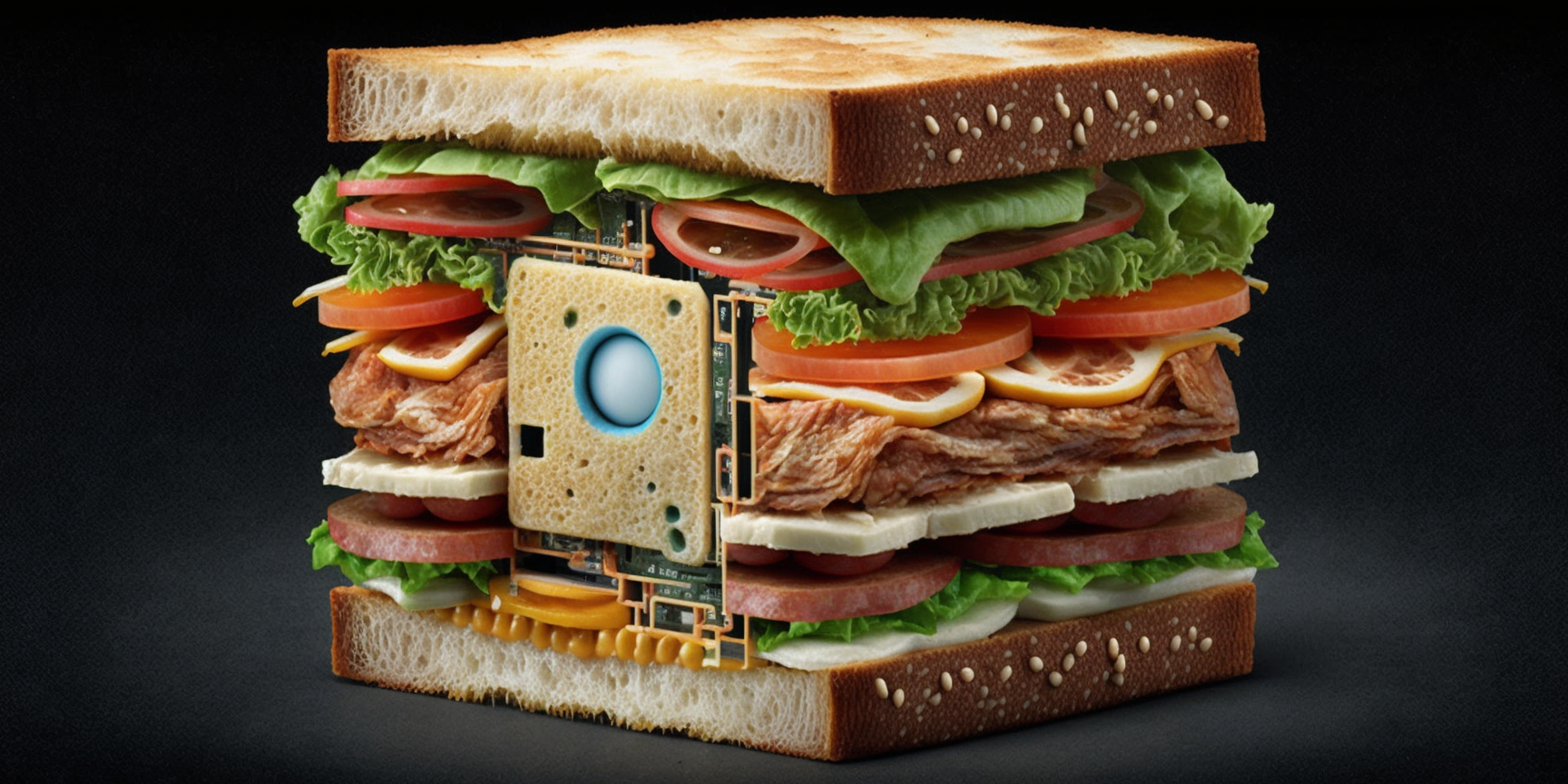
    • Just as AI has its benefits, it also has its limitations. To mitigate AI shortcomings, it’s important to maintain the magic touch of the human editor via the “AI sandwich.”
    • Intuitive prompting can distinguish between content that meets expectations and content that falls short of them.

    Over the course of history, countless tech advancements have reshaped how we view and approach our daily workload.

    In the late 19th century, the invention of the tractor revolutionized the average farmer’s day-to-day by enhancing planting and harvesting efficiency, thus reducing the need for manual labor. In the mid-20th century, the introduction of ATMs made banking more accessible, minimizing the necessity for bank tellers to be available around the clock. Now, fast forward to the early 21st century, and generative AI tools are empowering content marketers to maximize their productivity and automate the creation of performance-driven copy, all in just a few keystrokes.

    Recently, I had the pleasure of sitting down with our good friends at AI platform Anyword to discuss the impact of AI on content creation and how it helps our team work smarter. In our joint webinar “AI Performance Writing: How to Apply AI + Analytics to Your Content,” we dove deep into the state of AI content marketing, its opportunities and challenges, and how Search Influences uses data-driven tools like Anyword to better predict the success of our content collateral.

    In case you missed it, here’s a quick overview of our action-packed discussion for your convenience, and maybe — just maybe — you’ll consider giving it a watch in your free time if you’re interested (100% shameless plug there).

    The AI Train: Getting On or Getting Left Behind

    Few industries will be as affected by generative AI as marketing. That is, if you look at some hot takes by sites like Hotjar, Spiceworks, and U.S. News & World Report… among many, many others.
    The pressure is on many agencies, internal marketing departments, and freelancers to adopt AI into their daily workflows. This mounting pressure isn’t necessarily being applied from internal sources, but rather in the way the industry tides are naturally turning.

    The data shows that more and more marketers are integrating AI into their daily tasks, whether it’s to help generate a punchy headline or to save time in their workload altogether. With a steady influx of marketers leveraging the power of AI, those who do not will inevitably feel the brunt of a competitive disadvantage.

    Since generative AI first broke, Search Influence knew we couldn’t be one to miss the proverbial “AI train,” as it would only pass us right up on the route to our competitors. As Bora Tarimcilar, our Anyword webinar co-panelist and client support specialist, put it, “If you’re not on the train, there is this kind of sense of getting left behind.”

    Anyword: The AI Software Built for Content Marketing

    Search Influence started testing Anyword in 2023, at a time when generative AI was first starting to grow wings and take flight in the public eye. We set out on a mission to add another AI platform to our diverse suite of tools, which includes platforms like ChatGPT, Adobe Suite, Surfer SEO, and Google Gemini, among several others.

    With Anyword, we’ve found success in creating performance-driven content that resonates with our clients and their audiences. The tool has since become one of many key strategy components for producing high-quality, impactful content.

    Benefits of Using AI in Content Marketing

    Investing in AI today has its payoffs tomorrow.

    Timesaving for peak efficiency

    The phrase “time is money” rings true in content marketing. We all wish we had more hours in the day, especially when deadlines are looming.

    With AI as a +1 on our teams, we can now produce an entire ad campaign’s worth of copy in minutes versus the hours we’d have likely spent prior.

    The faster we produce content, the more time we have to focus on strategy, optimization, and the bigger picture as a whole.

    Relevant, competitive content

    An important disclaimer: Generative AI is not a subject matter expert. It doesn’t have a degree, it doesn’t have any certifications, and it certainly doesn’t have real-world industry experience.

    However, AI models do function by scraping the web for a “common consensus” on what to include in its outputs in response to your prompts.

    For example, let’s say you’re writing a blog for your legal client titled, “When Should You See a Personal Injury Lawyer?” and you default to AI to help get you started. After receiving your prompt, the AI model will analyze a vast dataset of online content, including articles, legal blogs, FAQs, and expert opinions on personal injury law. It will then identify common themes, important legal terms, and frequently mentioned advice to construct a well-rounded response.

    This helps ensure that the content you write is robust, researched, and in line with what your competitors are discussing. Plus, it may even help fill in some topic gaps that you’ve missed but your competitors haven’t.

    A hub for brainstorming

    Sometimes, the hardest part of content creation is simply getting that first word or sentence down.

    AI tools are perfect for those “blank page” moments. Need a catchy headline or an engaging intro? Generative AI’s brainstorming capabilities can spark creativity and help overcome writer’s block, setting the stage for compelling content that doesn’t leave you with a headache.

    If you’re not all in for AI automation, using tools for brainstorming purposes is one of the best use cases for getting your feet wet with this new tech. Even the best fires need an accelerant here and there, and AI is just that for your content creation process.

    Challenges of AI Content Marketing

    Despite all its benefits, AI content marketing is not without its limitations. To get the most value from an AI tool, you’ll need to know what to look out for — just as much as what to look for.

    Robotic tendencies

    AI is, in its truest form, just a robot. It’s not the kind you see in science fiction movies that are cynically threatening, but nonetheless, there’s no human behind the screen.

    Generative AI is not capable of experiencing human emotion, and it naturally lacks empathy. Unless you give it highly detailed context, it won’t automatically know that you’re maybe speaking to an audience with highly sensitive needs, like, for example, those in the “Your Money or Your Life” category.

    Because the model is not human, it also does not know how to distinguish fluff from lean, helpful content. With fluffy content, you lose the full extent your content can make on your audience simply by being generic and impactful. You’ll always need to bring humanness to the content, which also means double-checking that the content reads natural and conversational, not robotic.

    AI buzzwords

    “Unwavering,” “top-notch,” “a beacon of,” and so on — sometimes, it seems like AI has a few favorite words and a severely limited vocabulary.

    With these “AI buzzwords” comes one inevitable pitfall: Your content ends up using the same adjectives to describe your brand or services as your competitors.

    This can be beneficial in some areas, like when you’re trying to establish a place in the industry relative to your competitors, but it also leaves you with the risk of content that sounds the same as everyone else’s — thus affecting your ability to stand out.

    At one point, these terms likely did do considerable justice to content, and some could even have been classified as power words. Now, however, their impact seems diluted due to overuse.

    Machine hallucination

    AI is, again, no subject matter expert, and it is capable of making mistakes.

    The phenomenon “AI hallucination” occurs when an AI model generates content that is factually incorrect or nonsensical. This happens because the AI tries its best to create plausible-sounding information based on patterns it has learned, even if the actual data or facts do not exist.

    ChatGPT even has a disclaimer that it can make mistakes, and to always check information that isn’t common knowledge.

    By blindly trusting the facts and evidence AI provides you, you risk publishing inaccurate and possibly even offensive content that could harm your brand’s trustworthiness, authoritativeness, and overall bottom line.

    Mitigating Common AI Shortcomings

    Where there are problems, there are solutions.

    The AI Sandwich

    Generative AI is your teammate, it’s your dynamic +1, but it is not your replacement.

    The human editor will always be necessary to create a human-like feel in the content, fact-check all information, and optimize it for maximum engagement.

    At Search Influence, we like to call the relationship between the human and the AI model the “AI Sandwich.”*

    The human (acting as the top bun or slice of bread) prompts the machine with all the important information it needs to produce a quality output, and then they wait as the machine gets to work (acting as the sandwich’s hearty sandwich ingredients — think lettuce, tomato, onion, cheese, and meat). Once the machine produces its output, the human editor (now acting as the bottom bun or slice of bread) goes behind it, cleans it up, personalizes it more to the brand, fact-checks it, and overall adds that human touch.

    While the content is not produced top-to-bottom by a sole human writer, it is perfected by the human, which grants an overall stamp of approval that the copy meets quality standards.

    *Learn more about the AI Sandwich and its use cases with Search Influence CEO, Will Scott, on the “Make Marketing Make Sense” podcast.

    Practical prompting

    If you’re worried about generic, impactful content and the overuse of AI buzzwords in your content, the solution starts with your prompt.

    I’m a strong believer that the quality of your prompt determines the quality of your output. If you give the AI model a bare-bones prompt and expect it to fill in the gaps, it may do so in a way that doesn’t suit your brand or campaign goals.

    I recommend you include these points to be as specific as possible with your prompts:

    • Your campaign goal and keywords (if applicable)
    • Your tone of voice and your target audience
    • Your desired call to action
    • Your desired word count
    • Any terms you do or do not want to be included in your output

    When you’re working with a platform like Anyword, with pre-built prompts, covering all your bases is simple. But if you aren’t using a tool with pre-built prompts provided, there are a ton of helpful articles, videos, and templates online that can get you started.

    9 Prompting Tips for AI Content Marketing - Courtesy of Search Influence and the Search Influence and anyword Webinar

    Dive Deeper Into AI Content Marketing

    A very, very big thank you to Anyword for inviting me to join “AI Performance Writing: How to Apply AI + Analytics to Your Content.” I hope that you all are just as excited and geeked out as we are about this new wave of content marketing.

    And, if you’re not, that’s perfectly okay. Just know the AI train does have a seat open for you.

    Search Influence specializes in full-service content marketing, from SEO and paid advertising to email marketing, social media, and beyond. To learn more about how we’re using AI content marketing to drive client success at scale, get in touch with us today.

  • AI for Digital Marketing With Will Scott at DFWSEM State of Search

    Key Insights

    • AI-powered tools offer numerous opportunities for digital marketers, from generating content ideas to researching keywords and programming code efficiently.
    • While AI can produce impressive content, human intervention remains crucial. Relying solely on AI for content creation can lead to subpar results and may not align with Google’s E-E-A-T requirements.
    • Marketers should view AI as a valuable assistant rather than a sole content creator, harnessing its potential while upholding campaign integrity and customer satisfaction.

    Image of a robot, showcasing Will Scott of Search Influence in New Orleans' AI for digital marketing presentation.

    Search Influence Co-founder and CEO Will Scott presented “Robots, Revolution, and the Death of ChatGPT” at the 2023 State of Search Conference in Dallas, Texas.

    In Will’s artificial intelligence marketing strategy presentation, the SEO veteran discussed his vision of what incorporating AI into the content creation process will look like and how marketing teams can use AI technology responsibly.

    In this blog post, we’ll dive deep into Will’s thoughts on AI in digital marketing and provide AI-powered tools and content creation techniques to bring your processes into the robotic age.

    What Is the State of Search Conference?

    The State of Search Conference is an annual digital marketing event produced by DFWSEM (the Dallas, Fort Worth Search Engine Marketing Association) that brings together industry experts, seasoned practitioners, and marketing enthusiasts.

    One of the standout features of this conference is the expertise it brings under one roof. Digital marketers who attend this conference learn about the latest and greatest search marketing trends and gain valuable insights from experienced practitioners.

    The digital advertising landscape is in a constant state of flux. From social media dynamics and Google’s ever-evolving algorithms to the intricacies of effective content marketing, staying ahead of the curve is essential. This conference is meticulously designed to equip attendees with practical tips and tricks to master these facets.

    As the topics at the State of Search Conference are always on the cutting edge of marketing, it is no surprise that the main topic of this past year’s conference was AI in digital marketing.

    A long-time resident of the digital marketing world, Will Scott was interested in how artificial intelligence might change the neighborhood. Read on for his thoughts about AI marketing strategies.

    Lessons From “Robots, Revolution, And The Death Of ChatGPT”

    2023 State of Search Conference presentation on AI for digital marketing with Will Scott of Search Influence

    In the late months of 2022, Will began obsessively learning and experimenting with digital marketing AI tools. And while his first thoughts on AI might have brought him to the robot apocalypse — much to the fault of movies like The Terminator, The Matrix, and Blade Runner — he quickly recalculated and began creating practical use cases for AI in digital marketing.

    Everything you need to know about the AI sandwich

    The AI sandwich, coined by Will Scott of Search Influence in New Orleans

    In the ever-evolving content marketing landscape, the AI sandwich has emerged as a game-changing approach to crafting engaging and relevant content. This innovative content creation workflow combines the power of AI-driven tools with human creativity to produce high-quality content across various platforms, from social media posts to blog articles and ad copy.

    Let’s dive into the intricacies of the AI sandwich and explore how it can revolutionize your marketing campaigns.

    The AI Sandwich unwrapped

    At its core, the AI sandwich is a strategic content creation process that integrates the capabilities of AI-powered tools with human expertise. The workflow typically follows a three-step pattern:

    1. Human-Powered Prompts: The journey begins with a human writer who lays the foundation by creating thought-provoking prompts. These prompts serve as the guiding framework for the AI to work its magic.
    2. AI-Generated Content: Enter the AI marketing tool. This intelligent technology takes the provided prompts and crafts content that aligns with the desired objectives. It leverages machine learning algorithms to generate text that resonates with the target audience.
    3. Human Refinement: While AI can produce impressive content, human intervention remains crucial. Skilled editors review, refine, and enhance the AI-generated material. They ensure that the final output is grammatically correct and aligned with the brand’s voice and values.

    Elevating content quality

    The AI sandwich isn’t just about efficiency and cost savings; it’s a recipe for creating content that satisfies your audience’s cravings. By combining the strengths of AI and human oversight, you ensure your content meets the highest standards of relevance and quality.

    Meeting Google’s E-E-A-T requirements

    In today’s digital landscape, Google’s Search Quality Raters evaluate content based on criteria such as Experience, Expertise, Authoritativeness, and Trustworthiness (E-E-A-T). The AI sandwich is tailor-made to meet these standards.

    Beyond “empty calories”

    Think of content generated solely by AI as the equivalent of a quick solo meal — convenient but likely lacking substance. The AI sandwich, on the other hand, resembles a hearty home-cooked meal prepared with care. It’s nourishing content that informs, engages, and resonates with your audience.

    The path forward

    As AI marketing tools use continues to grow, we’re in the midst of an AI-generated content explosion. While some may use these tools for spammy purposes, legitimate content creators recognize the potential to enhance their work, develop creative ideas, and serve their organizations and clients more effectively.

    Embracing the AI opportunity

    For those of us rooted in the world of SEO and marketing, AI, including ChatGPT and its counterparts, offers a tremendous opportunity. It’s not just a means of automating tasks; it’s a tool for testing and refining strategies, optimizing marketing campaigns, and ultimately amplifying the impact for our clients.

    The AI sandwich emerges as a winning recipe in the journey to craft effective marketing campaigns and deliver relevant content. It combines the precision of AI-powered content generation with the finesse of human creativity, ensuring that your marketing efforts stand out in a crowded digital landscape.

    As we move forward, embracing AI as a valuable ally in the world of content marketing will lead to new heights of success and innovation.

    SEO and ChatGPT are alive and thriving together

    Graphic depicting the future of ChatGPT and SEO

    SEO is not on life support — it’s adapting and thriving alongside AI advancements.

    ChatGPT and other artificial intelligence tools don’t spell doom for SEO; these machine-learning tools are catalysts for faster and more innovative SEO strategies. They empower SEO professionals to dive deeper into customer data and refine their advertising campaigns.

    Forward-thinking SEO experts should embrace AI tools as a means to enhance their skills. AI tools are becoming commonplace, but their true value lies in individuals who can wield them effectively.

    Content creation processes like the AI sandwich and the AIO method prove that machine learning tools still need a human touch to create content that improves customer experiences.

    Contrary to sensationalist headlines, ChatGPT is also far from death’s door. In fact, the screenshot below showing the last 12 months of Google Trends Data proves the AI-powered tool is quite young and spry.

    Graph showing high usage rates of ChatGPT in 2023

    Artificial intelligence tools for digital marketing

    As is the Search Influence way, we’d like you to leave this blog post with some things you can use immediately to improve your marketing campaigns. Below are the marketing tools we have recently used to do everything from automating repetitive tasks to finding relevant keywords.

    Artificial intelligence content tools for crafting engaging content:

    • Machined.ai
    • ZimmWriter
    • Content at Scale
    • Surfer SEO AI Writer

    Artificial intelligence image creation tools:

    • Midjourney
    • Dall-E 2
    • Stable Diffusion

    Artificial intelligence SEO and keyword tools:

    • Frase
    • Surfer
    • PageOptimizer Pro

    Artificial intelligence video tools:

    • Steve.ai
    • Wave.video

    The SEO Skyscraper Method and ChatGPT data mining are a match made in heaven

    Image of a skyscraper, symbolizing the Skyscraper Technique

    Early in 2023, Will explored “ChatGPT: Data Mining and SEO With OpenAI and Bing.” Since then, the landscape of machine learning, AI, OpenAI, ChatGPT, and content has evolved significantly.

    With substantial updates to the core OpenAI GPT, both in technological advancements and content processing capabilities, we’ve entered an era where we can delve deep and wide into topics like never before.

    The integration of web search capabilities through plugins and expanded data exploration tools has transformed ChatGPT into a data mining powerhouse, allowing for the summarization and comprehension of extensive and complex subjects.

    Recent experiments have demonstrated the prowess of ChatGPT in summarizing top articles on a given topic while highlighting unique perspectives. Natural language processing and AI-driven content analyses have made ChatGPT a vital tool for tasks that rely on data collection and correlation analysis.

    Now, let’s bring in the Skyscraper Method.

    The SEO Skyscraper Method, popularized by Brian Dean at Backlinko, is a strategy that’s been imitated repeatedly.

    It’s actually quite simple:

    • Step 1: Find content on your given subject that is worth linking to.
    • Step 2: Write content that is even more informative than the content you found.
    • Step 3: Reach out to the right people who might be willing to link to the web page/content you wrote.

    Back in the initial development of the Skyscraper Method, the focus was on links as indicators of authority. However, Google’s evolution towards a semantic, entity-based web has expanded the playing field. Content and its relationship to recognized entities now share the spotlight with links in SEO success.

    By combining the Skyscraper Method with ChatGPT’s knack for data mining, you can unearth valuable insights with ease.

    Rather than merely one-upping competitors, this approach looks at all content receiving Google’s attention. It acknowledges and respects the competition by summarizing and linking to their work, thereby incorporating semantic entities and keywords.

    By leveraging ChatGPT for data mining, you can simplify the process. It starts with a Google search for your target keyword, leading to fresh ideas and a wealth of links. Then, ChatGPT can extract common elements, such as keywords and subjects covered from the content you choose to use.

    While AI technology is a potent and valuable tool, you’re still Batman, and it’s still Robin.

    Although ChatGPT’s utility for data mining has grown immensely in recent months, challenges persist, particularly in ensuring data accuracy and reliability. This is one of the many reasons you shouldn’t use AI blindly.

    ChatGPT and the SEO Skyscraper Method form a harmonious partnership for extracting valuable insights from web pages and creating worthwhile content. This dynamic duo empowers content creators and SEO professionals to identify patterns, understand market trends, and anticipate future behaviors. As AI tools continue to evolve, their role in providing valuable insights into customer behavior and market trends will expand, making them indispensable assets for data analysis.

    Next in AI marketing: opportunities, concerns, and more robots

    AI-powered natural language generation tools offer marketers valuable capabilities, such as generating content ideas, researching keywords, compiling facts, and even simplifying programming tasks. However, it’s essential to recognize that these tools aren’t flawless and may produce typos or require editing and fact-checking.

    One critical concern is the risk of overreliance on AI. Relying solely on AI for content creation can lead to subpar results and may not align with Google’s E-E-A-T requirements, potentially impacting user satisfaction and campaign effectiveness. Nobody likes a lazy SEO or spammers, especially Google.

    A balanced approach is critical to ensure quality writing that combines AI content creation with human editing — thorough fact-checking is a must.

    By using AI as a valuable assistant rather than a sole content creator, marketers can harness its potential while maintaining the integrity of their digital advertising campaigns and ensuring customer satisfaction.

    There are no doubt more robots to come — AI is a worthwhile technology in a free market, after all. With everyone from venture capitalists to garage start-ups looking to get a piece of the pie (or sandwich?), we must be responsible as we forge these lands.

    As modern-day explorers trekking across this new technological landscape, it’s our duty to avoid making the same mistakes as the navigators of years past.

    We are not here to divide and conquer; we are here to build and progress.

    Image of robots and humans coexisting peacefully

    What’s Next for AI Algorithms in the Digital Marketing Landscape

    From social media marketing to email marketing and collecting data, AI algorithms will reshape the landscape of digital advertising.

    But there’s no need to fear; Search Influence is here! (Underdog is still cool, right?)

    Search Influence will happily be your guide during the AI for digital marketing revolution. No matter your business’s needs, our extensive list of services can help you grow.

    Contact us today to learn how we use the latest digital technology to get our clients real-world results.