Category: Higher Education Marketing

  • How to Measure Paid Advertising Success in Higher Education—and Why an Agency Can Help

    A man sitting at a table working on data analysis from his Higher Education Marketing Research Campaigns - Search Influence

    Key Insights

    • Tracking, reporting, and analyzing are three pillars of a successful higher education advertising strategy.
    • From click-through rate to cost per inquiry, several metrics temperature check your paid ad campaign performance.
    • Search Influence and UPCEA collaborated to establish the first industry-wide cost per inquiry benchmark to help higher education marketers assess the state of their campaigns.
    • Tapping into the right metrics and data sources for your university unlocks insights that best optimize your campaigns.
    • When in doubt, partner with an experienced paid advertising agency that is proficient in turning data into decisions.

    According to 2023 research from Invoca, 87% of marketers feel that data is their most under-utilized asset.

    Like a gym membership, full of promise but often underused, data insights are what lead to the most gains in your higher education marketing campaigns.

    But the challenge lies in knowing which numbers matter and where to dig them up.

    Today, more universities than ever rely on paid advertising to attract the new tech-savvy adult learner. The global shift to digital marketing has opened doors to new metrics and tracking capabilities, all of which help gauge your campaigns’ success.

    If you’re a digital marketer, tracking and reporting on the right metrics ensures you use your resources effectively to reach your goals. Here’s what to know about measuring paid advertising success in higher education — and how an agency can help you uncover the metrics that truly matter.

    The Importance of Tracking & Reporting in Paid Advertising

    Diligently tracking and analyzing vital metrics empowers your higher education institution to assess the impact of your digital campaigns. By maintaining a vigilant oversight of the performance of your paid advertising initiatives, you gain the ability to:

    Understand your audience

    Data shows that 71% of consumers expect personalized marketing, and 76% feel frustrated when brands fail to meet this expectation.

    Achieving this level of personalization starts with knowing your prospective student. This goes beyond mere demographics, factoring in their aspirations, challenges, and the digital footprints they leave.

    Through a deep dive into audience analytics, you can segment your prospective students more effectively, crafting campaigns that address their specific needs and interests.

    Whether it’s highlighting flexible scheduling for working adults, showcasing success stories from similar backgrounds, or emphasizing support services for international students, tracking audience insights helps center your messaging around your core audience.

    Optimize your campaigns

    The digital advertising playing field is dynamic, with campaign performance varying by the minute.

    Real-time data analysis plays a critical role in optimizing your campaigns for the best results. It enables you to make immediate adjustments, such as pausing underperforming ads or reallocating the budget to more successful ones, which fosters a cycle of testing, learning, and optimization.

    Staying agile and responsive to campaign performance 24/7 through successful tracking keeps your advertising aligned with your marketing goals.

    Enhance the return on your investment

    The true value of tracking and analysis lies in its ability to reveal not just which channels and campaigns are performing but also why.

    By dissecting the elements of successful ads — be it the magic words, compelling visuals, or the right call-to-action — you can fine-tune your approach, guaranteeing every dollar spent is one working towards greater engagement and higher conversions.

    In doing so, you’ll demonstrate the value of your marketing campaign in ways you want the most: increased return on your investments.

    Effective Metrics for Measuring Paid Advertising Success in Higher Education

    Tracking the right marketing metrics can make the difference between campaigns that meet the mark and ones that fall flat. The following metrics act as vital signposts, indicating the health and impact of your advertising efforts:

    • Click-Through Rate (CTR): gauges the initial appeal of ad copy and visuals, signaling how well your ads grab attention and prompt click
    • Conversion Rate: measures the success of those clicks in achieving desired outcomes, like applications, spotlighting how ads translate interest into action
    • Return on Ad Spend (ROAS): assesses financial efficiency, comparing campaign costs against generated revenue to quantify your advertising investment’s return
    • Cost Per Acquisition (CPA): calculates the average expense of attracting a student via paid ads, offering insights into the cost-effectiveness of marketing strategies
    • Engagement Metrics: explores deeper interactions beyond clicks, revealing how compelling and relevant your content is to potential students

    Beyond these widely recognized metrics is a critical but often overlooked indicator: Cost per inquiry (CPI).

    This metric offers a nuanced view of the investment needed to generate a prospective student’s interest, providing a deeper layer of insight into campaign efficiency and the quality of engagement.

    Cost Per Inquiry in Higher Education Marketing

    In higher education marketing, CPI measures the financial investment needed to generate a single prospective student’s interest in your offerings, such as your programs, courses, or services.

    This metric uncovers exactly what it costs to catch the eye of a potential student, whether they’re signing up on your contact form, reaching out by email, or picking up the phone to learn more.

    The “cost” cost component varies based on:

    • The specific marketing campaigns
    • The mix of marketing channels used
    • The capability to track an inquiry back to its origin

    By focusing on CPI, your institution can pinpoint the effectiveness of your ad campaigns, guaranteeing that your allocated budget directly contributes to attracting potential students. This helps you achieve a favorable balance between the cost of attracting inquiries and the quality of interest generated.

    Benchmarking your CPI against the wider industry
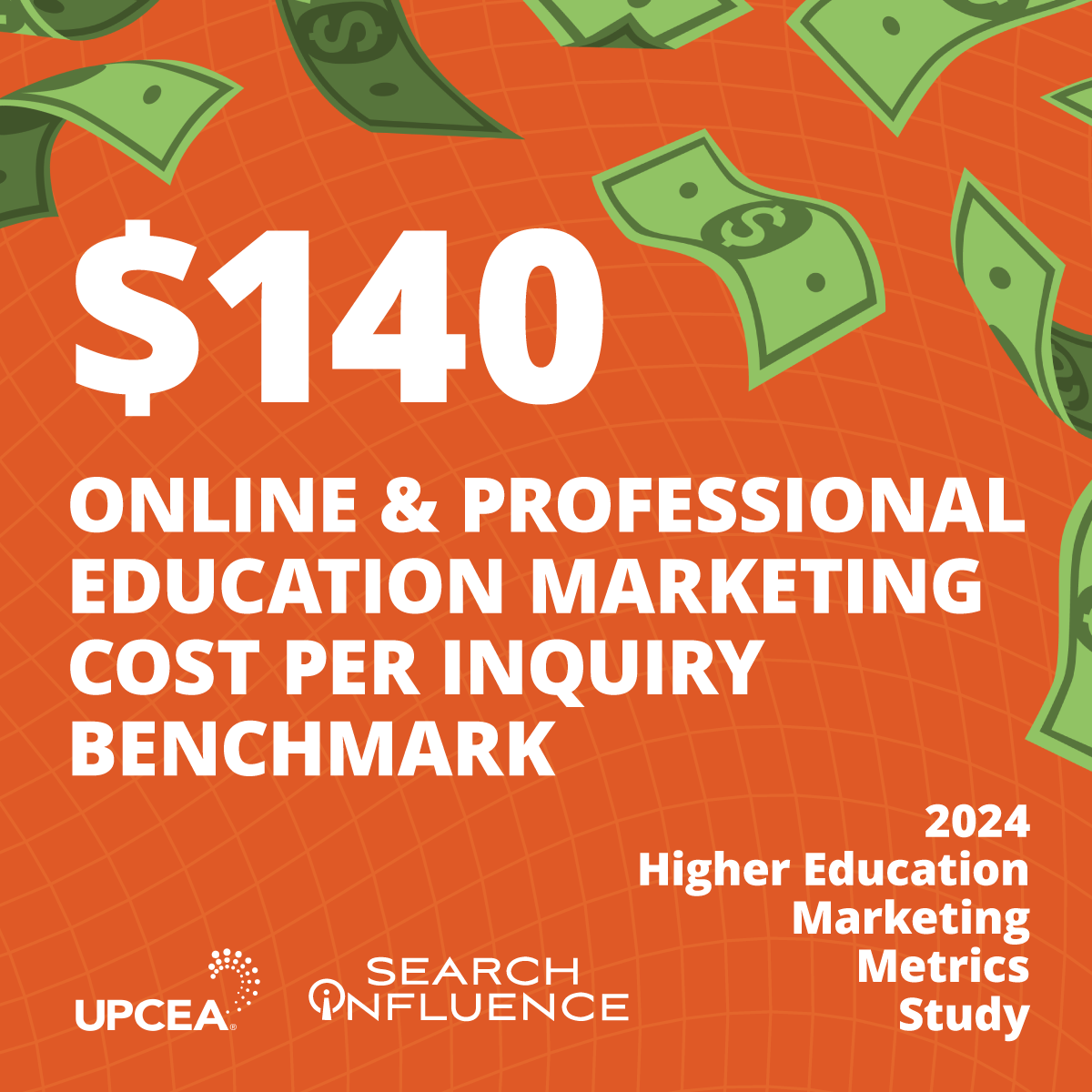
    In collaboration with UPCEA, Search Influence established the first industry-wide CPI benchmark to help higher ed marketers like you better assess how you measure up to others in your industry.

    Our 2024 Higher Ed Marketing Metrics Research Report revealed that while 73% of marketers track the source of inquiries for their professional, continuing, and online (PCO) programs, less than half (46%) of higher education marketers track CPI.

    For those who are tracking this key metric, the average PCO CPI is $140, with a median of $106 and a range of $29.03 – $450.

    The research study also unveiled a strong link between metric tracking and satisfaction with results. In fact, 92% of those confident in their tracking abilities also report being satisfied or very satisfied with their marketing campaign performance. This finding reinforces the old adage that “what gets measured gets managed,” emphasizing the importance of diligent tracking in achieving impactful marketing outcomes.

    Key Data Sources to Track for Campaign Success

    Charts and graphs showing the results of Higher Education Marketing research results - Search Influence

    Where you track matters just as much as what you track. At Search Influence, we recommend leaning on the following data sources to keep a steady pulse on your campaign success:

    • Website Analytics: Tools like Google Analytics are indispensable for observing how users interact with your site. They offer a window into which paths lead towards inquiry or application and highlight the landing pages that work best.
    • CRM Integration: By syncing CRM data with your digital campaigns, you gain a comprehensive view of the prospective student’s journey, from first contact to enrollment, helping to pinpoint effective strategies.
    • Social Media Insights: The rich data from social platforms can inform you about engagement levels, reach, and which content types drive actions, allowing for agile strategy adjustments.
    • Other Prospect Data Sources: Don’t overlook additional touchpoints like email interactions, webinar participation, or content downloads. These can provide valuable insights into your audience’s preferences and behaviors.

    Tracking cost per inquiry

    Cost per inquiry is a more individualized KPI, with extra flexibility in how you can measure it to best fit your institution.

    Most marketers track CPI as a KPI for:

    • Specific Digital Marketing Channels: Differentiated CPI from paid search, organic search, etc., for precise adjustments to strategy and budget
    • All-Platform Digital Marketing Spend: Comprehensive CPI across all digital channels to understand the overall budget impact and guide comprehensive financial strategies

    However, some marketers may find it more fitting to track:

    CPI Per Program: Segmented CPI analysis for individual academic programs to enable targeted marketing enhancements

    Organic CPI: CPI exclusively from organic search to refine SEO and content tactics

    Overall CPI Across All Marketing Expenses: CPI from all marketing activities for a global perspective on investment efficiency

    Whichever way you look at CPI, it’s a versatile metric designed to suit the distinct objectives of your institution and unveil whether your marketing dollars are spent wisely.

    Maximizing Results Through Agency Partnerships

    Struggling to keep track of your paid campaign’s success? Partnering with an experienced advertising agency can help take the weight off your shoulders.

    With an agency’s robust tracking, reporting, and analysis capabilities, you’ll be equipped with the insights needed to make informed decisions and refine your strategies. You’ll gain the advantage of knowing:

    • Precisely what to measure
    • How to tailor your optimization efforts
    • The best ways to integrate these insights into your campaigns for enhanced performance

    Agencies are data specialists. They know how to interpret your school’s results, provide actionable next steps, and ensure your strategy always aligns with the latest industry and software changes.

    Are You Tracking the Right Metrics?

    At Search Influence, we pride ourselves on our ability to obtain results, track them, and report them back to your institution.

    We’re here to eliminate the guesswork from tracking the essential metrics that propel your success forward. To get you started, we’ve crafted a comprehensive, free worksheet designed to simplify the calculation of your CPI.

    Need more context on how you measure up to competitors? Download our 2024 Higher Ed Marketing Metrics Research Report to gain a clearer picture of your standing in the industry.


    Images Courtesy of Luke Chesser and Towfiqu Barbhuiya
  • Gain Recruitment SEO Insights From Will Scott’s Recent UPCEA Blog Post

    Will Scott on Higher Education SEO Strategies for UPCEA Guest Blog

    Search Influence Co-Founder and CEO Will Scott recently wrote a guest blog post for our higher education marketing partners at UPCEA.

    The blog post, titled “Drive Success: Using Recruitment SEO to Fill Higher Education Seats,” takes an in-depth look at how higher learning institutions can utilize recruitment SEO to adapt to evolving demographics and industry shifts.

    In his blog post, the SEO expert argues that traditional higher education marketing tactics are not enough. Today’s learners discover and explore educational programs differently, and institutions need to adapt their strategies accordingly.

    Takeaways from Will Scott’s UPCEA Blog

    • The Enrollment Funnel in the Digital Age: Today’s students research programs online throughout their decision-making process. Marketers must ensure a seamless online experience, from the initial discovery to application completion. This reiterates the importance of recruitment SEO, or optimizing websites for search engines.
    • A Shrinking Traditional Market: The number of high school graduates is declining, forcing universities to redefine their ideal students. Adult learners and non-traditional students present new opportunities, but also challenges, as they may not be aware of programs that can help them achieve their goals.
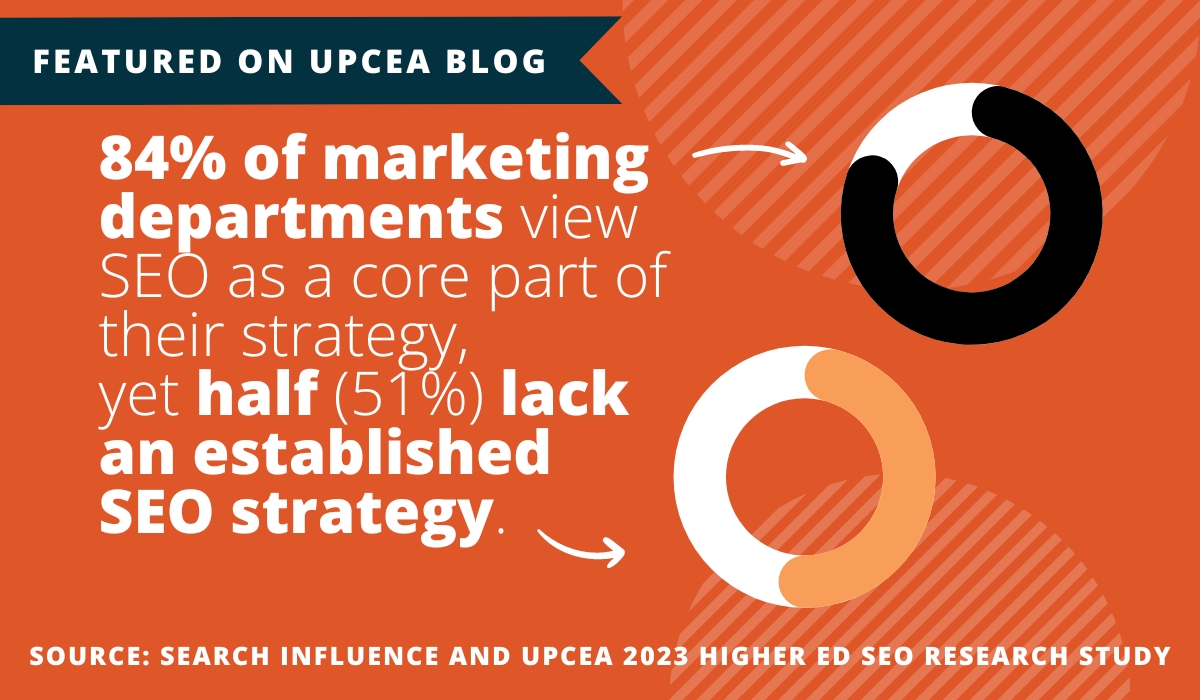
    • The Power of SEO: A well-crafted SEO strategy can significantly improve a university’s online presence. It can increase brand awareness, attract qualified leads, and move potential students down the enrollment funnel. Search Influence and UPCEA’s Higher Ed SEO Research Study shows that 84% of marketing departments view SEO as important, but only half have a defined strategy.
    • Beyond Discovery: SEO isn’t just about getting noticed. Prospective students often conduct follow-up searches to validate their initial impressions. Consistent presence in search results builds trust and credibility. Conversely, an absence can undermine an institution’s efforts and benefit competitors.
    • Challenges to Effective SEO in Higher Ed: Many universities lack the resources or expertise to implement a strong SEO strategy. Professional, Continuing and Online departments may be understaffed or underfunded, and institutional leaders may not understand the value of SEO. A Search Influence study revealed that marketing departments rated their SEO skills as just average, and website audits showed significant room for improvement.

    Infographic for Search Influence's Will Scott's UPCEA Guest Blog Post on Higher Education SEO Strategies

    Learn More About Recruitment SEO With Search Influence

    Prospective students are just a search away. Don’t let outdated marketing strategies hold you back.

    Search Influence has years of experience helping universities including Tulane SoPA and Palo Alto University attract qualified leads and fill seats with strategic SEO.

    Contact us today and learn how we can transform your website into a student discovery powerhouse.

  • Will Scott Talks Higher Education Schema in Seer Interactive Guest Blog

    Search Influence - Will Scott on schema for Seer Interactive

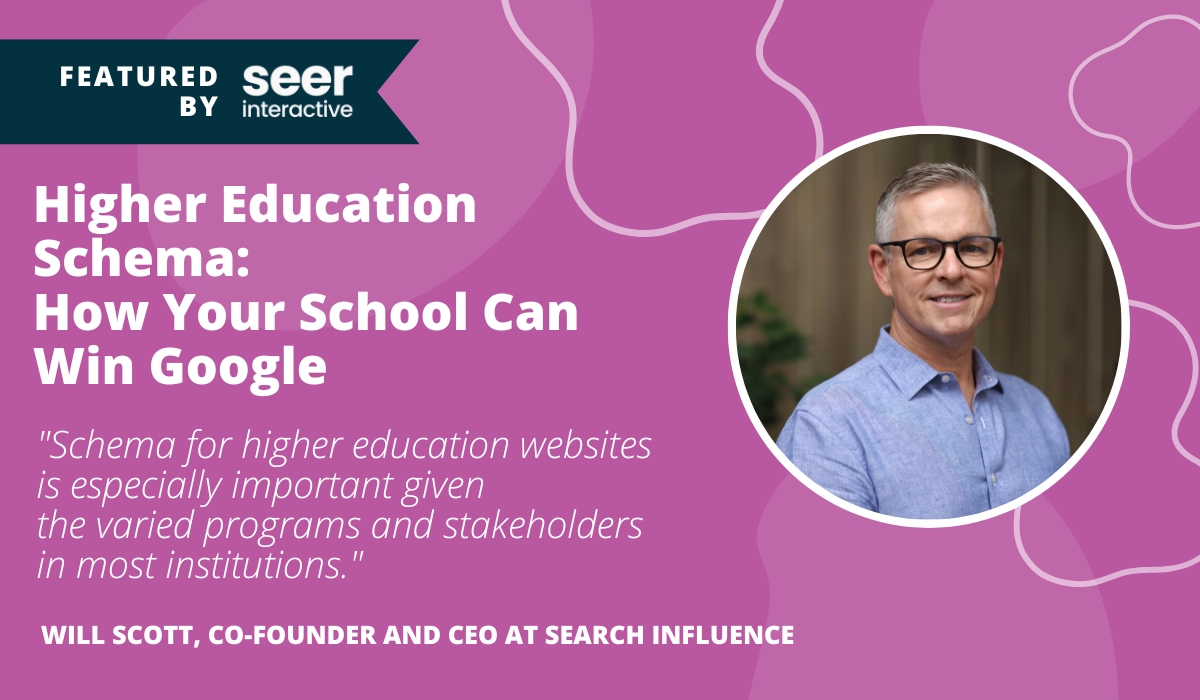
    In a June guest blog for B-Corp certified digital marketing agency Seer Interactive, Search Influence Co-Founder and CEO Will Scott breaks down a fundamental, yet often overlooked, higher education SEO tactic: schema markup.

    Schema markup for higher education websites is a form of microdata added to a website’s HTML to help search engines better understand the content. It uses a semantic vocabulary (i.e., code) known as Schema.org to annotate various webpage elements with metadata. By crawling your schema, search engines can get a better sense of who you are and surface your site in the SERPs in response to relevant search queries.

    Schema markup is the back-end roadmap for your higher ed website. It guides search engines, like Google, Bing, and Yahoo, through the campus of your content via structured data that’s easy to understand and follow. This helps streamline your site’s crawlability, boost your chances for rich snippets, and improve your visibility in the search engine results pages (SERPs).

    How do you know if your institution’s schema markup is up to par? See Will’s blog, “Higher Education Schema – How Your School Can Win Google,” for tips to better speak search engines’ language.

    Key Takeaways From “Higher Education Schema – How Your School Can Win Google”

    Schema is much beyond just simple code. In “Higher Education Schema – How Your School Can Win Google,” Will goes deep into this core technical SEO concept, offering insights on:

    • The Fundamentals of Schema Markup: Understand the basics and why it’s essential for higher education websites.
    • Step-by-Step Implementation: Detailed instructions (with a template) on how to apply schema markup using Schema.org, tailored specifically for educational institutions.
    • Practical Examples: Real-world applications and examples to illustrate how schema markup can be effectively used.
    • Impact Analysis: Insights on how schema markup can grow your institution’s online presence and drive more prospective students to your enrollment funnel.

    Search Influence - High Education Schema for Seer Interactive

    Dive Deeper Into Higher Education Schema

    2024 research from Schema App found that 1 in 5 digital marketers have trouble showing the value of their schema markup. If you’re unsure whether your school’s schema is truly search engine fluent, do your part in helping Google to translate it.

    See Will’s full article on Seer Interactive for more “higher ed schema 101” and how to optimize your site for search engines

  • 2024 Higher Education Marketing Benchmarks: Get Past Your Blindspot

    2024 Higher Education Marketing Benchmarks: Get Past Your Blindspot

    Key Insights

    • A shifting higher education playing field is causing universities to reevaluate their results and the costs associated with them.
    • Despite increased competition and an evolving modern learner, higher education marketing departments can still reach their enrollment goals by tracking the right metrics to inform future strategies.
    • New Search Influence and UPCEA research reveals a blind spot in higher education marketing tracking: cost per inquiry and cost per enrollment.
    • Cost per inquiry and cost per enrollment are compasses that help you determine your marketing budget’s efficiency and effectiveness. By tracking these key metrics, you can see what’s working and what’s not as part of the bigger picture.
    • Marketers who keep a pulse on their campaigns via in-depth tracking are more satisfied with their overall marketing performance.

    Changing demographics, limited resources, and increased competition in higher education are making university leaders rethink their marketing strategies.

    Colleges and universities need to pinpoint where to invest their resources for the best return — and where to trim the fat.

    This starts with tracking the right higher education marketing metrics.

    While overall marketing metrics offer valuable insights, the ability to analyze the data at the program level will ultimately determine which institutions meet enrollment goals and which fall behind.

    In “What Gets Measured Gets Managed,” our 2024 higher education marketing benchmark research conducted in partnership with UPCEA, we analyzed whether professional, continuing, and online (PCO) units are tracking two key metrics that could inform critical outcomes: cost per inquiry (CPI) and cost per enrollment.

    See the state of tracking in higher education marketing and how your institution compares to others in the industry.

    Key Findings of the UPCEA Research Study

    The average annual digital ad spend on PCO units is nearly $900k

    The modern learner has gone digital, and the higher education marketing sector rightfully followed suit.

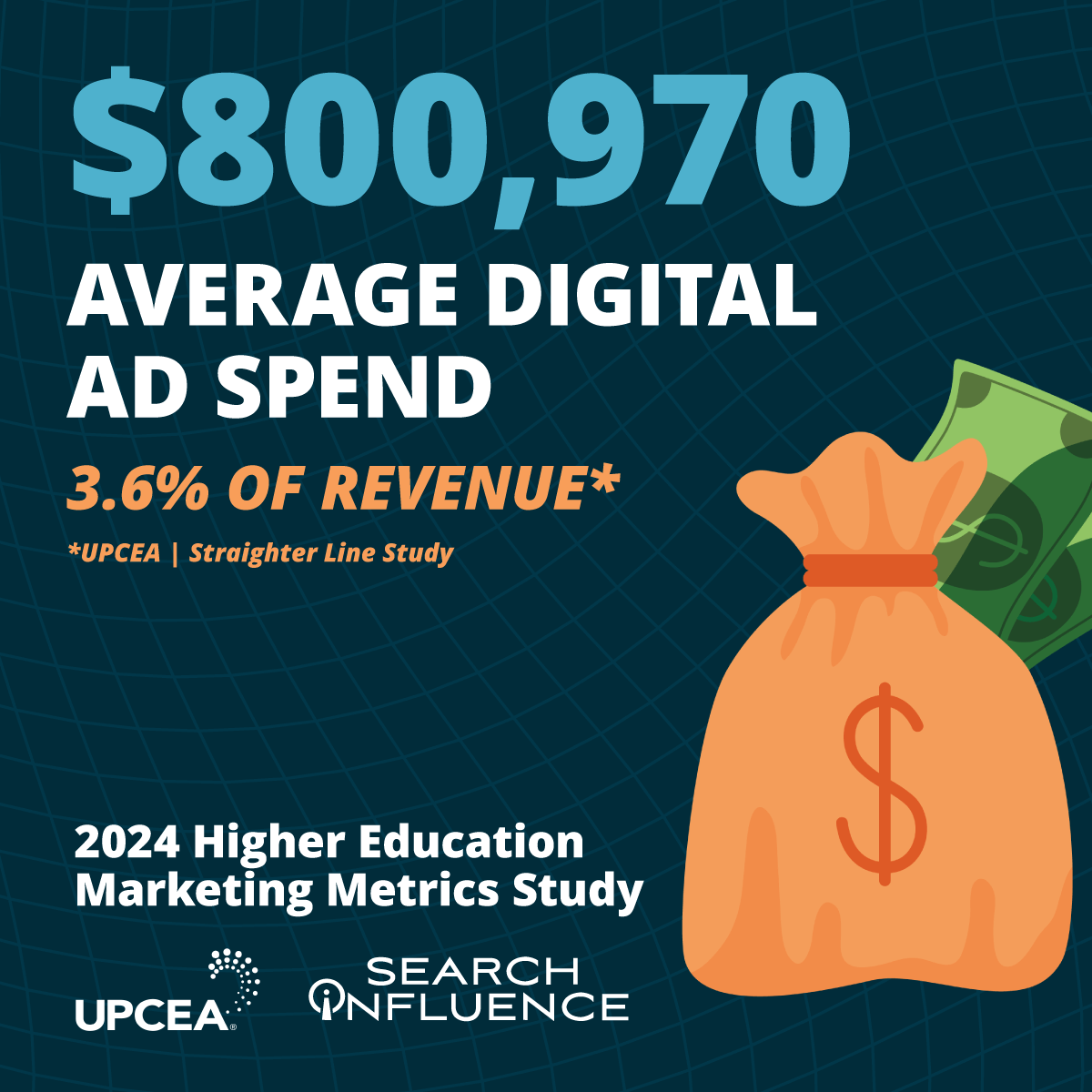
    Professional and online education units spend an average of $800,970 each year on digital advertising spend, including paid search, social advertising campaigns, and connected TV (CTV) streaming ads.

    Average digital ad spend was $800,970 - Search Influence Higher Education Marketing Benchmarks

    As the new learner searches for higher education programs online, digital advertisers must meet inquirers where they are in their enrollment journey.

    This involves continuous learning, adapting, testing, and re-testing — a process that starts with tracking the right campaign data, like cost per inquiry.

    Less than half of higher ed marketers track cost per inquiry

    Cost per inquiry is the most important metric to track to reduce the expenses of driving your prospects to take action. But if you aren’t tracking this key metric, the good news is you’re not alone.

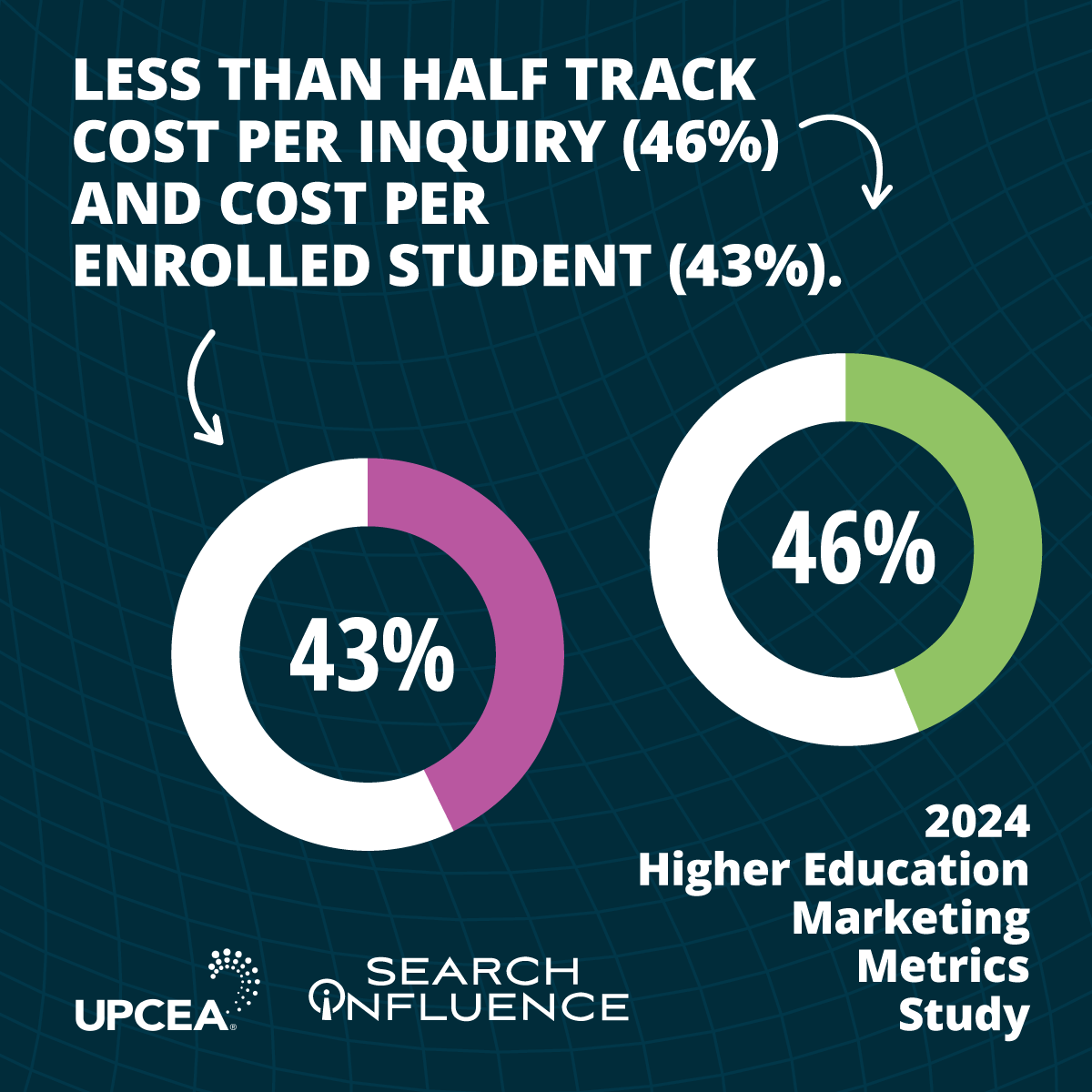
    Today, most higher education marketers have a fairly strong grasp of the source of their inquiries — not necessarily the costs associated with them. Nearly three-quarters (73%) of marketing units track inquiry sources for their PCO programs, while less than half track cost per inquiry (46%) or cost per enrolled student (43%).

    And, for nearly one out of five research survey respondents (17%), metric tracking isn’t even on their radar.

    Less than half track cost per inquiry and cost per enrolled student - Search Influence Higher Education Marketing Benchmarks

    The average cost per inquiry (CPI benchmark) for professional and online education is $140.

    Of the 46% of PCO units that track cost per inquiry, the average CPI for the 2022-2023 fiscal year was $140, with a median of $106. Roughly one-third (32%) of PCO units had a CPI between $50 and $100, 15% between $101 and $150, and 15% over $200.

    The expenses associated with this CPI benchmark for marketing varied but most often consisted of:

    • Media spend (88%)
    • All marketing expenses, excluding salaries (46%) and agency management fees (39%)

    Result satisfaction is fairly low, with 38% of survey respondents reporting they’re content with their school’s CPI, and 27% not sure.


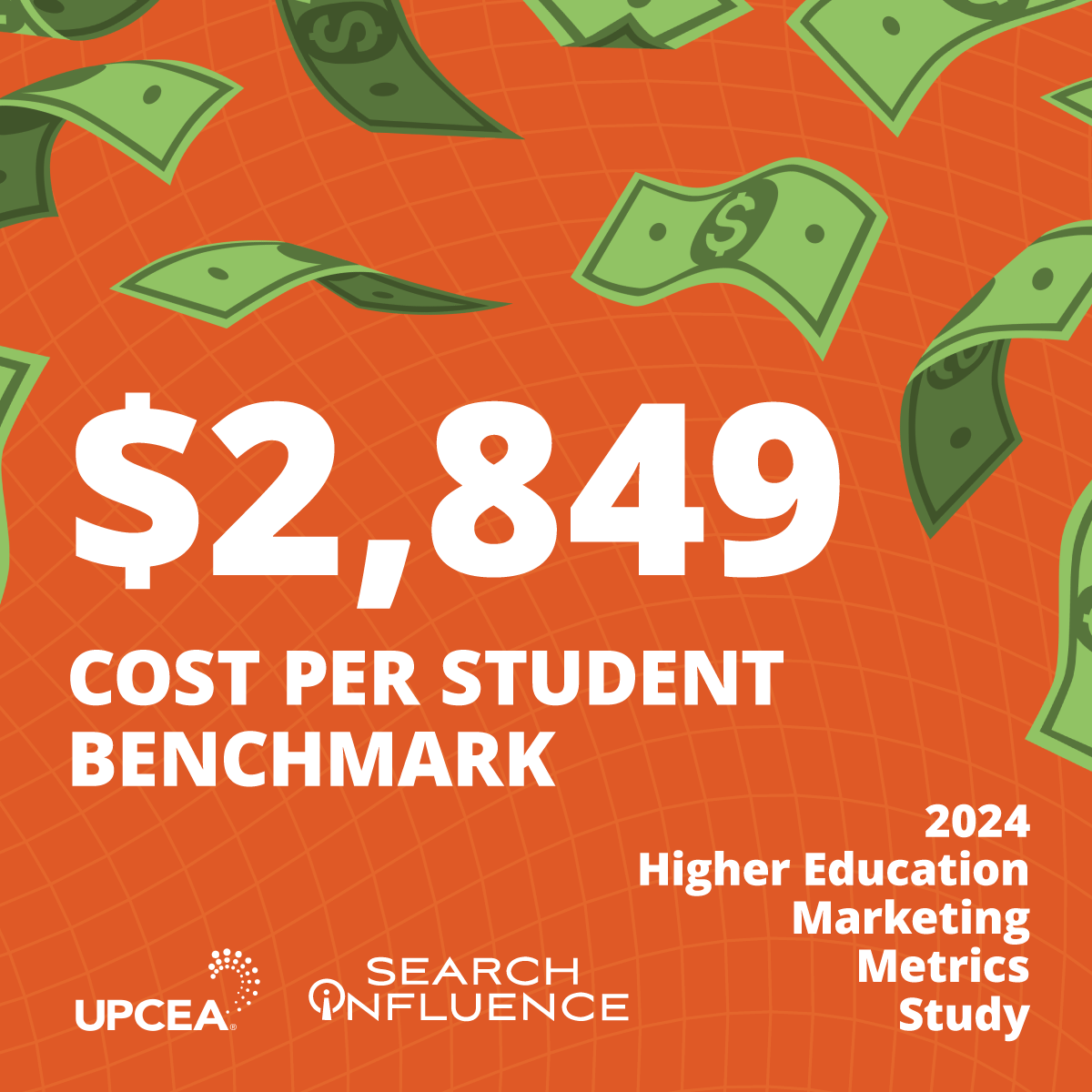
    The average professional and online education cost per enrolled student is $2,849.

    Of the 43% of PCO units that track cost per enrolled student (43%), the average cost per enrolled student for the 2022-2023 fiscal year was $2,849, with a median of $1,173. 27% of PCO units had a cost per enrolled student under $500, and an additional 27% had a cost per enrolled student of over $3,000.

    $2,849 cost per student benchmark - Search Influence Higher Education Marketing Benchmark

    Email marketing is most often managed in-house, while digital advertising is most often outsourced

    Nearly three-quarters (73%) of higher ed email marketing and half of search engine optimization (44%) efforts are entirely managed in-house. However, digital advertising remains an item ripe for outsourcing, with half of the survey respondents exclusively outsourcing their Google paid search campaigns to experienced agencies.

    Whether it’s due to budget constraints or simply just a preference to keep things internal, most PCO units mix and match what is outsourced and what is managed in-house. However, it’s important to note that managing any marketing campaigns in-house requires universities to have the time, skills, and resources to monitor campaigns and stay up to date on trends.

    If you’re unsure whether partnering with an agency is the best option for your university, start a conversation with us today.

    Marketers who track their campaigns are more happy with performance

    Tracking campaign performance has a direct link to overall marketing satisfaction.

    According to our research findings, those who are satisfied with their back-end campaign tracking capabilities are more likely to be satisfied with how those campaigns perform in the wild.

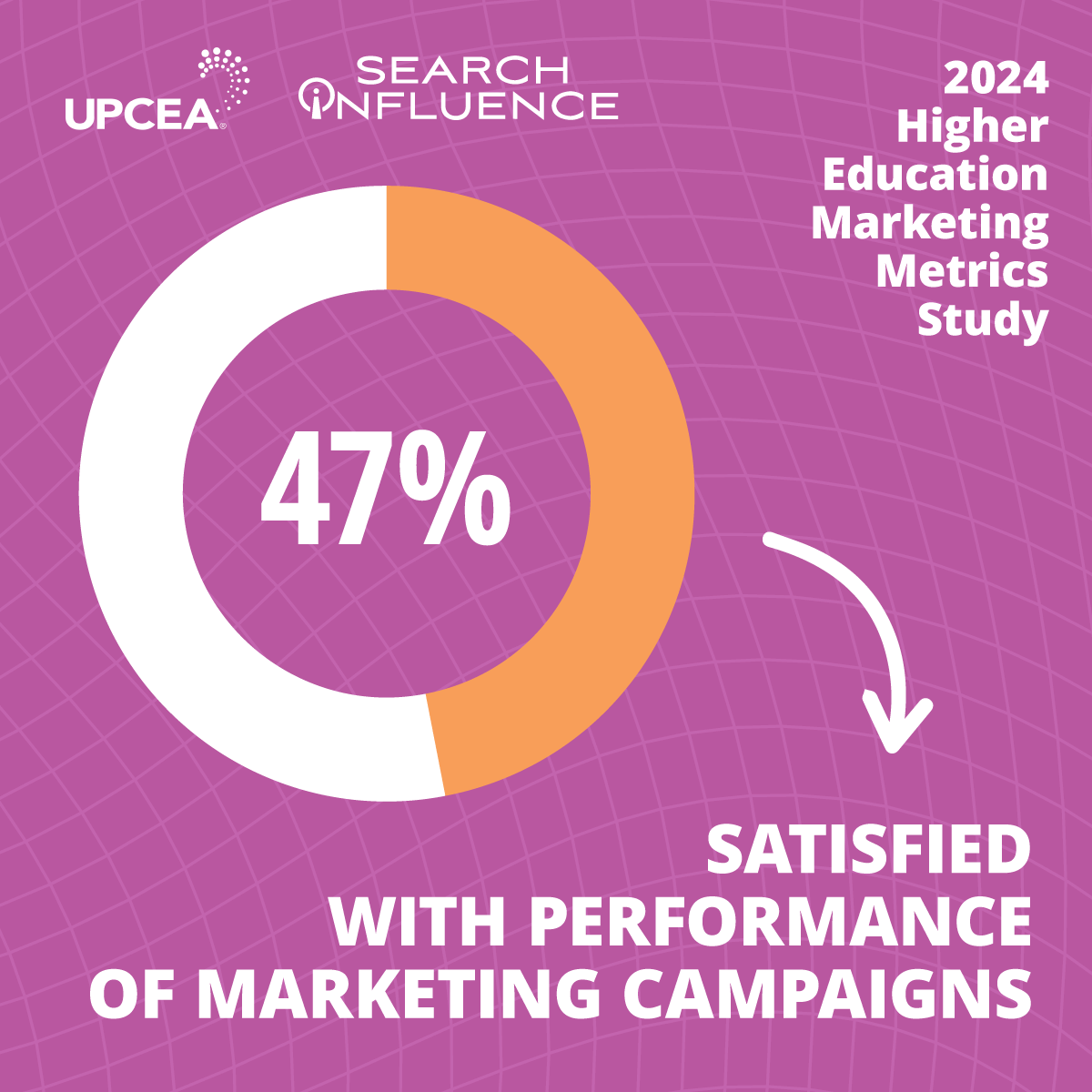
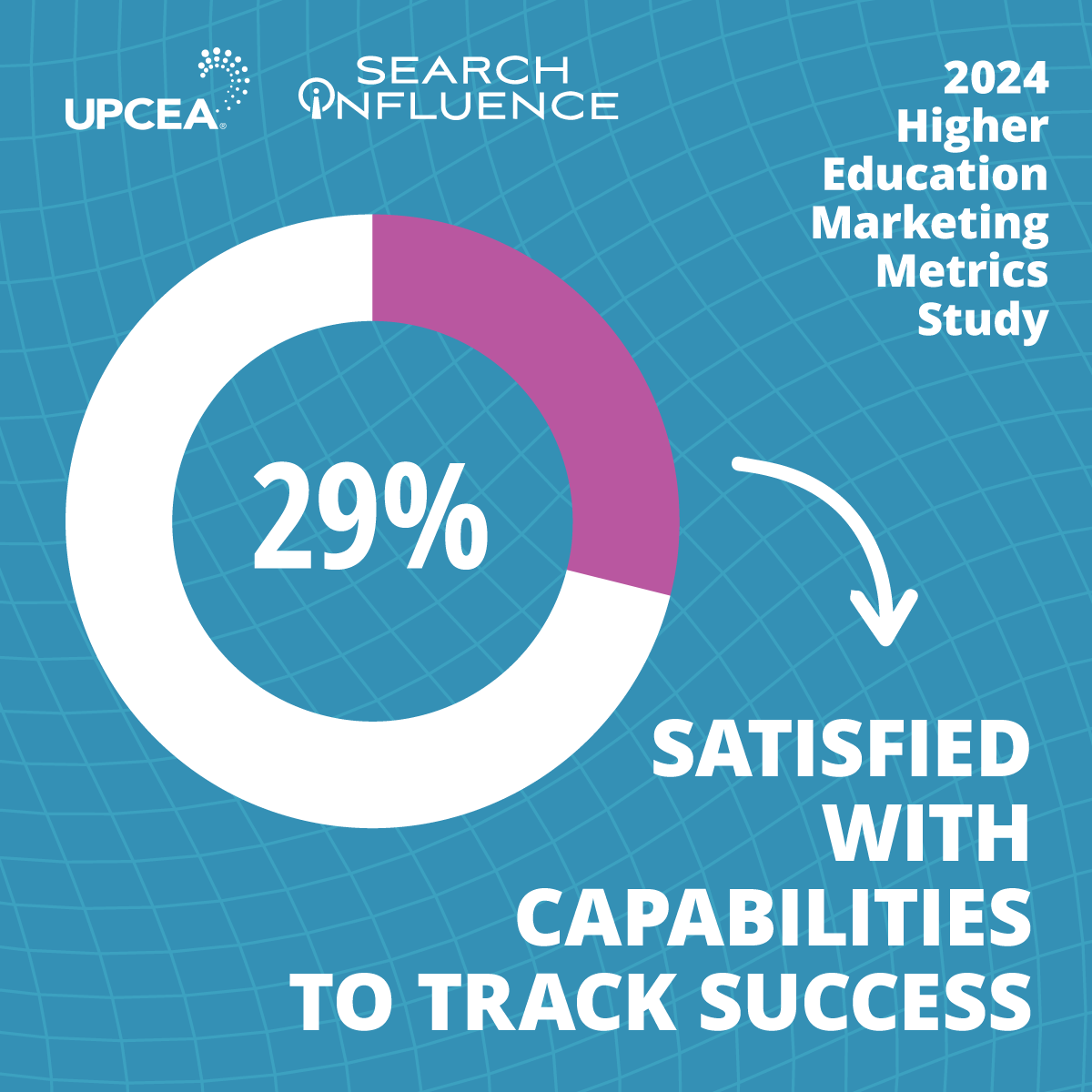
    Despite this, many marketers lack the know-how, resources, and time to keep a steady pulse on their campaigns, leaving key metrics to fall to the wayside — entirely overlooked. Fewer than half (46%) of survey respondents report satisfaction with their campaign’s performance, and only 29% are satisfied with their ability to track such success.

    This blind spot then creates a grueling cycle of campaign launch → result dissatisfaction → repeat, with no guide for improving results.

    29% of companies were satisfied with capabilities to track success - Search Influence Higher Education Marketing Benchmark

    How Higher Education Marketing Benchmarks Drive Marketing Outcomes

    There’s an old saying by British mathematician Lord Kelvin that goes, “To measure is to know.” 

    When thought of strategically, digital advertising is data for dollars. Within a single campaign, you can gain insights into its effectiveness, ranging from lead quality to cost per inquiry, without hours of tedious pen-to-paper calculations. And, with industry-wide higher education marketing benchmarks, you can compare how you’re doing with competitors and determine ways to refine your budget and outcomes.

    Going beyond basic metrics like cost-per-click and leveraging more granular metrics like cost per inquiry helps you:

    • Have more confidence in your inquiry quality and quantity
    • Know which campaigns are performing or underperforming, and which optimizations to make to improve results
    • Assess how adjustments like budget and targeting changes affect campaign results
    • Establish a starting point to dive deeper into metrics like conversion rates as prospective students move through the enrollment funnel

    Armed with a well-rounded understanding of each inquiry, you can drive home campaigns that resonate without wasted ad spend.

    How to utilize cost per inquiry

    Cost per inquiry isn’t a metric exclusive to higher education institutions. Healthcare, hospitality, and B2B marketers have long relied on this measurement to assess the state of their incoming inquiries.

    Why? Because CPI is a direct measurement of budget efficiency and effectiveness.

    Your institution’s CPI is calculated by dividing how much you’ve spent on marketing and advertising by the number of inquiries received. In higher education, inquiries commonly originate from emails and college websites, specifically:

    • Request for information forms
    • Brochure request forms
    • Request a visit forms

    Utilizing a CPI metric gives your marketing department valuable insights into your advertisements’ impact. It helps you examine your performance and provides guidance on budgeting and refining your marketing strategy.

    But, just like any marketing metric, CPI works best when it’s evaluated as part of the bigger picture. Building your data stack with additional key metrics, like cost per enrolled student, helps you visualize the cost of the entire conversion process, from the initial inquiry to final enrollment.

    How to utilize cost per enrolled student

    Cost per inquiry is a leading indicator of success.

    Cost per enrollment is the most definitive metric you can review to see how much you are spending to get a new student.

    This metric encompasses the total costs invested in securing a student’s enrollment, factoring in expenses from the initial marketing efforts and campaign launch all the way to the student’s matriculation. Most often, these include:

    • Media spend
    • Agency management fees
    • University marketing team salaries
    • All other marketing undertakings

    When analyzing cost per enrollment over time, or comparatively within your programs, you can get a sense of where you need to make the biggest changes – either budget, resource allocation, or overall strategy.

    Leveraging cost per inquiry and cost per enrollment in tandem can lead you down the right path to campaign effectiveness. Ideally, by adopting these metrics into your tracking tool kit, your higher education institution can prioritize the digital marketing campaigns that yield the most inquiries at the lowest costs.

    Not sure how to calculate your school’s cost per inquiry or cost per enrollment? See our new CPI Calculator or download our free worksheet for help getting started.

    Gain Insights Into Your Higher Ed Marketing Performance With Search Influence

    The bottom line: Tracking cost per inquiry and cost per enrollment is an untapped opportunity for many schools looking to maximize every marketing dollar invested. These often neglected, yet incredibly insightful, metrics help you understand what’s working, what isn’t, and how to allocate your budget accordingly for the best results.

    We hope that, with this new industry-wide benchmark, your college or university will better judge the performance of your professional and online program marketing.

    If you’re unsatisfied with your digital advertising performance, tracking these key performance metrics can get you past your blind spot. After all, you can’t improve what you don’t measure, and what gets measured gets managed.

    Download the full 2024 higher education marketing benchmark research study with UPCEA today.

  • Search Influence and UPCEA to Present Higher Education Marketing Webinar: “Stop Wasting Budget: How to Get Better Digital Ad Results and Increase Satisfaction”

    Higher education marketing agency webinar

    As a higher education digital advertiser, you know managing campaigns is no easy feat. Marketers need to contend with increased competition, limited resources, and a complex marketing landscape.

    Fortunately, with the right expertise and digital platform knowledge, your school’s marketing department can achieve your enrollment goals — if not surpass them — without overworking your budget.

    Join Search Influence and UPCEA on April 30 for the live webinar, “Stop Wasting Budget: How to Get Better Digital Ad Results and Increase Satisfaction,” to see how to maximize enrollment and minimize lost ad dollars at your university.

    Featured Session at a Glance

    Each year, online and continuing education schools funnel an average of $800,000 into their digital marketing. Yet, only 47% are satisfied with campaign performance, and just 38% are satisfied with their cost per inquiry (CPI).

    This April 30 at 12PM EDT / 11AM CDT, Search Influence and UPCEA team up to tackle this discrepancy head-on and offer opportunities for campaign improvement. Tune into our live webinar to gain:

    • Key takeaways from our latest research study revealing most schools have room for marketing improvement
    • An exploration of the top strategies to improve your digital advertising results and reduce CPI
    • Strategies for maximizing your marketing budget while maintaining (or even enhancing) your lead quality

    By attending, you’ll come away with actionable tips and tricks to identify wasted budget and upgrade your prospect’s experience.

    Hear From Higher Education Marketing Trailblazers

    Search Influence has been a proud Platinum Partner of UPCEA since 2022. In “Stop Wasting Budget: How to Get Better Digital Ad Results and Increase Satisfaction,” you’ll hear from both UPCEA and Search Influence’s higher ed marketing veterans:

    • Jim Fong, Chief Research Officer, UPCEA
    • Paula French, Director of Sales and Marketing, Search Influence
    • Jeanne Lobman, Digital Advertising Manager, Search Influence

    Attend Live & Qualify for a $50 Giveaway

    As a thank you for attending, Search Influence and UPCEA will draw four live attendees to win a $50 credit to a global reward catalog featuring 1,000+ of the most popular gift cards, prepaid cards, and charitable donations.

    All live attendees will be automatically entered in the giveaway.

    Join us live for a chance to win a take-home prize beyond the insightful marketing strategies you’ll gain from the webinar.

    Improve Your Higher Education Digital Ads With Search Influence

    Is your higher ed marketing budget feeling the heat from underperforming campaigns?

    As a higher education digital marketing agency, Search Influence has helped plenty of schools like yours turn strategy questions into data-driven decisions. With nearly two decades of experience marketing for schools across state lines, we know higher education digital advertising, and we know what converts without sacrificing budget.

    Register now for “Stop Wasting Budget: How to Get Better Digital Ad Results and Increase Satisfaction” to dive into strategies that revamp your campaign success.


    LIVE WEBINAR: Stop Wasting Budget

  • Google Renames Conversions in Google Analytics 4 (GA4) to “Key Events”

    Google Renames Conversions in Google Analytics 4 (GA4) to “Key Events”

    Vector Illustration: Google Analytics 4 Conversions are now Key EventsTo differentiate from Google Ads, GA4 has renamed conversions to “key events.”

    What You Need to Know:

    • Analytics conversions have been renamed as “key events” in GA4 to distinguish them from conversions in Google Ads.
    • “Conversions” still exist, in the context of Google Ads which are also reported as Ads conversions in GA4. Advertisers can create conversions from Analytics key events, and optimize for those conversions in their ad campaigns.
    • No action is required from your end as key events are created and reported in the same way as previous conversions in Google Analytics.
    • If you have a linked Google Ads account, conversions created from Analytics key events will appear as conversions in the Analytics advertising section.

    Key events in Google Analytics measure the interactions most important to your business, such as form submissions or newsletter signups. These will now appear as key event metrics in Analytics reports.

    While changes like renaming an important metric can be hard to get used to, we believe that these changes will provide more clarity and consistency in reporting, ultimately helping agencies like us, and businesses like you better understand and optimize your digital marketing efforts.

    Learn more in Google’s resource about conversions vs. key events.

    Search Influence clients, reach out to your Account Manager if you have any questions about how this change may affect your data or campaigns.

    If you aren’t a Search Influence client (yet) and need help understanding how this and other Google Analytics 4 updates impact you, contact us to speak with a member of our sales team or learn more about our Analytics and Lead Tracking services.

  • Search Influence to Present on Higher Ed Marketing Metrics at the 2024 Annual UPCEA Professional and Online Education Conference

    Search Influence to Present on Higher Ed Marketing Metrics at the 2024 Annual UPCEA Professional and Online Education Conference

    UPCEA Annual Conference

    This year at the 2024 Annual UPCEA Conference, Search Influence will present an informative session titled, “Secrets of Highly Successful Enrollment Marketing Teams: Proven Strategies to Set & Reach Goals and Maximize Budgets.”

    Join us as we uncover the secrets to supercharging your enrollment pipeline through efficient higher education marketing.

    Featured Session: A Deep Dive into Enrollment Marketing

    The 2024 Annual UPCEA Conference will take place from March 26-28 in Boston, MA, pooling industry thought leaders from across the globe.

    In their session, Search Influence’s Paula French, together with industry experts Val Fox, Alicia Jasmin, and Leo Rice, will delve into today’s challenges of achieving graduate and adult learner enrollment goals. Attendees will gain various tips and tricks for turning enrollment hurdles into opportunities through:

    • Effective enrollment goal-setting with stakeholders
    • Hands-on enrollment funnel management
    • Strategies to reduce cost per inquiry
    • Maximizing marketing budgets without losing lead quality
    • Keyword optimization and bidding strategies

    Participants will leave equipped with the knowledge and strategies to transform their enrollment processes, setting a new standard for success in higher education digital marketing.

    UPCEA: A Century of Educational Innovation

    Founded in 1915, UPCEA has long been a cornerstone in advancing professional, continuing, and online (PCO) education. Over the years, it has established itself as a vital network for higher education marketing teams, fostering innovation and collaboration across the sector.

    A Platinum Partner since 2022, Search Influence has routinely worked alongside the higher ed association to share industry expertise through insightful research and conference presentations.

    This year’s Annual UPCEA Conference marks just one more chapter in our work of advancing higher education through cutting-edge strategies and insights.

    Refine Your Higher Education Digital Marketing Strategy

    Whether you’re looking to refine your enrollment goals, optimize your marketing budget, or explore innovative digital marketing strategies, our 2024 Annual UPCEA Conference session
    is your gateway to success. Come see us in Boston for our exclusive look into the current state of enrollment marketing.

    Search Influence is here to help you maximize your strategy and results in SEO, paid search, and everything in between. Together, we can turn your marketing challenges into victories.

    Get in touch today and let us show you the way to measurable success and beyond.

  • Higher Education Digital Marketing – Your Key to Growth In 2024

    Higher Education Digital Marketing – Your Key to Growth In 2024

    Imagine you’re a ship captain embarking on a voyage in uncharted waters. That’s what it’s like navigating the ever-changing currents of Higher Education Digital Marketing.

    Higher education digital marketing in 2024

    As the deck shifts beneath you, you are steering your institution’s ship through the waves of change – hopefully toward improved enrollment and a better return on investment (ROI.)

    Mobile devices, social media, and the need to show value with data analytics are critical in your marketing efforts to attract, engage, and retain students.

    As we go deeper, you’ll learn to master the art of marketing in higher education, turning challenges into opportunities and ensuring your ship doesn’t just stay afloat but sails triumphantly toward the horizon of success.

    [ez-toc]

    Digital Marketing Strategy – What’s Working?

    For a more comprehensive look at what other schools and their agencies are thinking about for lead generation. Have a look at our blog roundup: 10 Winning Higher Education Marketing Strategies.

    Top 10 Higher Education Digital Marketing Strategies

    • SEO (Search Engine Optimization)
    • Paid Advertising (PPC, Pay-Per-Click, Display and More)
    • Content Marketing
    • Email Marketing
    • Social Media Marketing
    • Video Content
    • Personalization
    • Branding
    • Chatbots and Conversational Marketing
    • Data-Driven Strategy

    SEO: The Key to Visibility

    SEO is essential in your institution’s visibility online, bringing high-quality content to the forefront and establishing your authority. It’s a cornerstone of higher education marketing, offering a way to increase search engine rankings and maximize organic traffic.

    Good SEO is simple, not easy.

    In short, SEO is about relevance and authority. Or, another way, keywords, content, and links.

    An academic research paper is judged over time by the number of citations it receives, and your website is judged by the number of links, references, and citations, too.

    In Higher Ed, SEO basics can go a long way.

    Keyword Research Is Changing

    As Internet search engines move from “lexical” to “semantic” search, it is that much more important to create connections in a semantically relevant way. Keywords (or search terms) are still important, but equally important are the entities they represent.

    Hint: look for bolded text in this article. Most are entities – either Wikipedia or Google NLP. Some are just for emphasis.

    Consider the humble Hoagie. You don’t know what a hoagie is? It’s what people in Philly call a Sub or Hero. In New Orleans, we call it a Po-Boy.

    To Wikipedia, however, Sub, Hoagie, Grinder, and others are the semantic equivalent of “Submarine sandwich.”

    Constructivist learning theory suggests learners construct knowledge by integrating new information with existing knowledge and experiences. Search is like that.

    There are far too many “keywords” for search engines to catalog them all, and they must, therefore, index those keywords to known entities.

    A fun aside: Po’ boy gets its own Wikipedia page.

    Link Building Is Hard

    The good news for you, if you’re marketing higher ed institutions, is that most of your websites are very authoritative. They already have a lot of external links, and they get a lot of organic usage.

    Image of an interconnected web of laser-like lights intended to represent the importance of links in higher education SEO.

    In the SEO community, we’ve long believed that user signals, i.e., the way a visitor interacts with your website, are important. With students and other community members using your website as a resource, you can be assured that your user signals demonstrate engagement.

    But is it easy for them to find what they need? And if you were a search engine crawling your own website, would it be easy to navigate among related topics?

    When the World Wide Web first launched, hyperlinks were a radical departure. The idea we could jump from one document or passage to another was revolutionary.

    Site visitors want to move seamlessly from one idea to the next and from one page to another, as well. Search engines do, too.

    Chances are you don’t have enough internal links within the content of your website. If you want the search engines to really understand the relationship between areas of your site, you need to demonstrate those connections with links.

    Hopefully, your content management system supports easy internal linking. If you use WordPress, we’ve been enjoying the plugin LinkWhisper which automates much of the internal linking process.

    Does this mean you don’t need external links? Not at all, but you get to be more selective.

    Are you launching a new program? Highlighting a student or faculty story? These may need external links to get found, and those can be in the form of PR, social media, and other organic behaviors.

    Embrace Your Technical Side

    If your website doesn’t function properly, users and search engines will not be able to find what you want them to.

    Image of a robot head in a field of technology to represent the importance of technical SEO for higher ed.

    A broken website is obvious, but there are less obvious technical implementations that can add tremendous value:

    • Website load speed
    • Readability (important for accessibility as well)
    • Image size and format (relates to load speed)
    • Structured data

    A typical “SEO Audit” will highlight a number of irrelevant issues, like HTML code compliance, for instance. Today, however, having a fast, easy-to-read site that loads well on mobile devices and feeds the engine semantically relevant information is the starting point.

    Technical SEO doesn’t have to be scary if you focus on the handful of things that really matter.

    Paid Advertising: Extend Your University Marketing

    Search engines are attacking your organic search efforts on multiple fronts which makes online advertising that much more critical.

    The integration of AI results means your organic content is further down the search engine results page (SERP.)

    New social channels, like TikTok, Instagram, and Snapchat, are being used by the coming generations in place of search engines.

    Image of a laptop with a graduation cap (mortarboard) surrounded by a swarm of logos to indicate the importance of digital advertising channels for higher ed.

    PPC, Pay-Per-Click, and Search Ads

    You are likely familiar with paid search ads. They are one of the oldest forms of Internet advertising, dating back to the last century.

    They have come a long way. In the beginning, they matched ads to what a user searched for. Now, they can include multiple layers of targeting.

    In addition to the searched words, we can now layer demographics, searcher intent, and even retargeting. The humble search ad started as a sledgehammer and is now a laser-guided surgical instrument.

    With pay-per-click, you only pay when someone clicks your ad, making it a good way to manage budget and ROI.

    Digital Display Advertising

    Closely related to search advertising and often available in the same systems are digital display ads.

    Many channels have options for display advertising, including the Google Display Network and Meta (parent of Facebook and Instagram).

    There are also specialized advertising platforms that allow digital ads to be targeted based on third-party data. These can be subscribers to various services, demographics, or affinity, and in-market data.

    Social Media Advertising for Higher Ed

    Group of young people taking a selfie in front of an institution of higher learning with books and graduation caps floating in the background.

    Each platform has paid ads available. In addition to PPC and Display, there are platform specific options such as InMail on LinkedIn.

    When these advertisements are native to the platform, they often provide a better response rate.

    Television and Connected Devices DTV/CTV/OTT

    As in-home entertainment moves more asynchronous and digital, you can now reach prospects with digital advertising during leisure activities.

    These platforms share the audience targeting capabilities of digital display.

    Retargeting and Remarketing

    Each time a web searcher is exposed to messaging online, whether news sites, entertainment, or in the social media space, they become an opportunity for retargeting.

    You can target visitors to your website, those who’ve seen other ads or a specific landing page, and even by email and phone number. These technologies are available in most paid campaigns, even your existing Google ads.

    Whether you like it or not, if you want to reach your target market, you will sometimes need to pay for it.

    Content Marketing Drives Engagement

    At its best, content marketing is a storytelling opportunity. Regardless of the medium, you have an opportunity to engage your audience in entertaining and informative ways.

    Image of a group of students studying with electronic devices to indicate the importance of content marketing.

    Showcase your institution’s unique values, tell your story, and present your offerings in a way that appeals to your prospective students.

    Current students, campus life, and your degree program are all great topics. Your blog and video content allows for student-centered content with an integrated call to action for relevant leads.

    As higher education marketers, we have to wear a number of hats. Yes, we need to increase search engine visibility. And lead generation has to be a major focus of any marketing campaign focused on new students. But we also have to serve our faculty and administrators.

    The great news is our faculty are prolific content creators in their own right.

    This frees us from having to build brand awareness with new content. We can optimize existing content from our college website and degree programs to reach the prospective student.

    Content comes in many forms. Just as we can leverage the university website to get in front of prospects, we can take advantage of admissions materials like video campus tours to increase our university’s brand visibility.

    The smart marketer is making more with less. Any existing content that is supportive of your school’s brand is ripe for reuse.

    With new AI tools, we can even take a web page and turn it into a short-form video, social media posts, or pretty much anything we can dream up.

    Video content is particularly powerful in higher ed marketing, as it offers an engaging, dynamic way to showcase your institution and its offerings.

    But there are nearly endless ways to get your university noticed with content. Here’s a list to get you thinking:

    Written Content

    1. Blogs
    2. Articles
    3. E-books
    4. White Papers
    5. Case Studies
    6. Newsletters
    7. Infographics
    8. Press Releases
    9. Guides and How-To’s
    10. Checklists and Cheat Sheets

    Visual Content

    1. Images
    2. Videos
    3. Webinars
    4. Slideshows and Presentations
    5. Live Streaming
    6. Virtual Reality (VR) and Augmented Reality (AR)

    Audio Content

    1. Podcasts
    2. Audiobooks

    Social Media

    1. Facebook
    2. Instagram
    3. Twitter
    4. LinkedIn
    5. Pinterest
    6. Snapchat
    7. TikTok
    8. Reddit

    Interactive Content

    1. Quizzes and Polls
    2. Interactive Infographics
    3. Online Courses and Workshops
    4. Games and Interactive Experiences

    Hopefully, this shows that there are tons of ways to get in front of your audience, and in many cases, adapt existing material to new channels to do so.

    Effective Email Marketing

    There are three distinct types of email marketing every school or business unit should be engaged in.

    Image of diverse group of students at university with mobile devices and email icons.

    • Outbound or cold email
    • Nurture sequences (including email, SMS, social media)
    • Newsletter

    Outbound Email Marketing For Higher Ed

    The biggest challenge in lead generation is getting your school’s brand in front of a ready audience.

    Done well, outbound email opens up new audiences for your degree programs you might not reach otherwise.

    There are platforms focused on college students in various stages of decision-making.

    And, with email lists, you can access demographic data that is no longer available on traditional advertising platforms.

    Just like direct mail of old, email is a great way to test messaging and calls to action and to get a quick response.

    Nurture And Followup Email

    What a shame it would be for you to spend time, money, or both getting interested students to your web pages or landing page and then not following up. And if they’re getting there and not taking action you may want to consider conversion optimization.

    We help our clients build nurture sequences in HubSpot, Slate, and other customer relationship management systems (CRM), which include email, SMS, and social media contacts as well.

    The higher education buying cycle can be long, and it pays to stay in front of your prospects throughout that time.

    You can use nurture sequences to stay in front of your target audience, share valuable information, answer questions, and share the perspectives of current students.

    And email nurture is good customer service, too.

    Newsletters

    Newsletters are a great way to stay in front of your audience and communicate important news and events, even when they’re not actively engaged in a marketing campaign.

    For effective email:

    • Personalize: Use the recipient’s name and tailor content to their interests or actions.
    • Segment: Target groups based on course of interest, geography, and more.
    • Make Them Compelling: These are your first impressions. Make them count.

    Invest time in crafting thoughtful, relevant emails. Your prospective students deserve it, and your enrollment numbers will thank you.

    Social Media for Brand Awareness

    Harnessing the power of social media boosting brand awareness

    Harnessing the power of social media can significantly boost your institution’s brand awareness and forge stronger connections with potential students.
    By using popular social media platforms like TikTok, Instagram, LinkedIn, and Facebook, higher education institutions can effectively reach and engage their target audience.

    Sharing engaging content such as videos, experiences, and university events on these platforms can elevate your brand and increase its visibility. You’re not just marketing your institution; you’re building a community where students feel heard, seen, and valued.

    Consider platforms like YouTube and TikTok for sharing engaging video content. These platforms can significantly improve your reach and brand awareness.

    Influencer marketing can significantly increase brand visibility and foster trust with potential students. Consider your own students, some may be micro-influencers in your community.

    In addition to organic engagement, social media sites offer significant advertising opportunities.

    Video Marketing: A Powerful Tool

    Video content resulting in user engagement

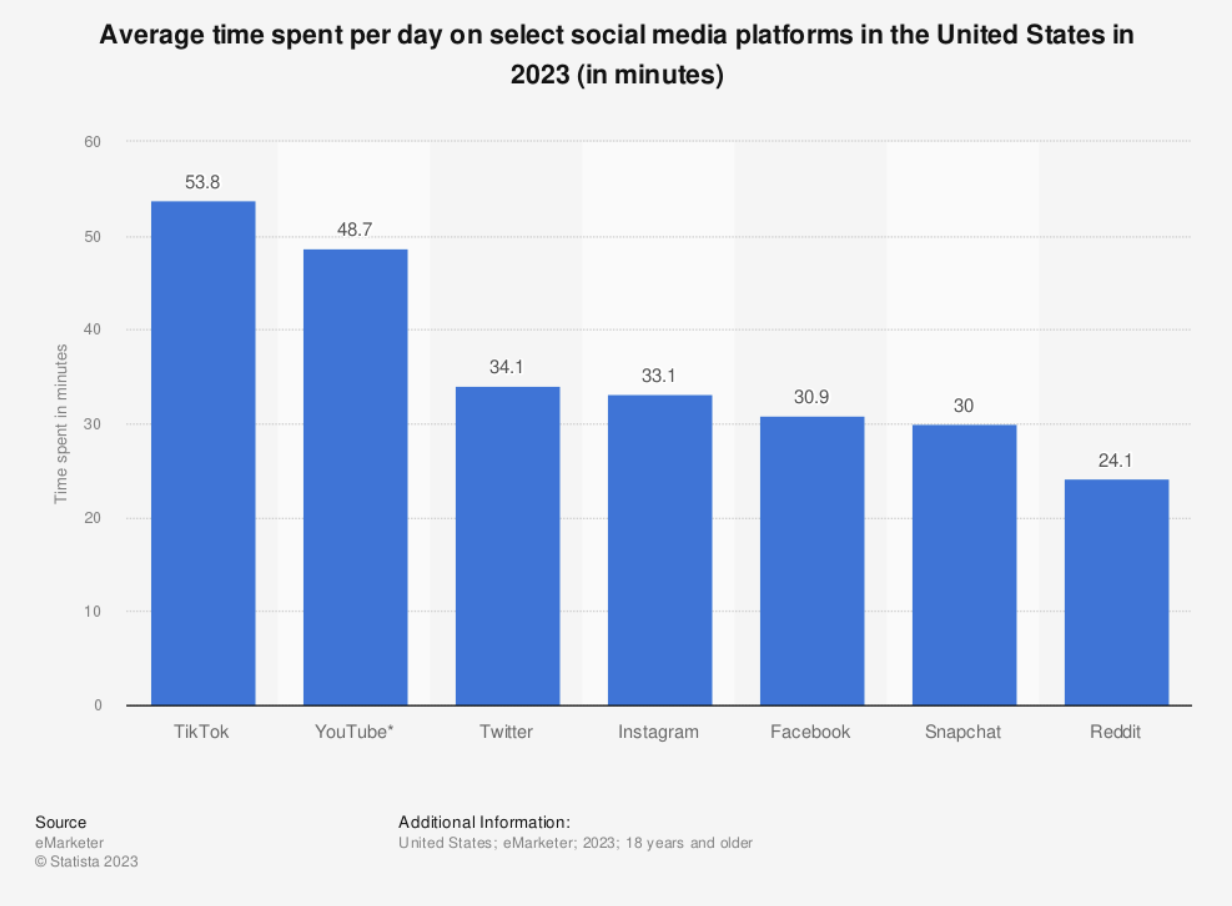
    YouTube is the second most used search engine.

    TikTok and Youtube — video sites — earn around 50 minutes/day of users time and attention.

    This is significantly more than any other platform.

    Time spent on social media platforms in the US in 2023

    And, in each case, the platform algorithms are tuned toward engagement.

    Platforms like YouTube and TikTok are perfect for sharing short videos that showcase your university’s programs and lifestyle. These bite-sized pieces of content often result in better engagement and can be easily shared across various social media platforms.

    Consider crafting virtual tours of your campus facilities. Prospective students can experience your institution from the comfort of their homes, making it a unique selling point in your higher education marketing strategy.

    Additionally, you can link these short videos to longer, more detailed ones for additional information and engagement.

    Analytics & Reporting: Show Me The Money

    higher education analytics and reporting

    Analytics and reporting are an absolute must if you want to demonstrate your value.

    In our practice, we talk about analysis, tracking, and reporting ATR for short. We use that language for a couple of reasons. First, analytics is the brand of Google’s tracking system. More importantly, we believe that without analysis, the data is meaningless.

    For many of our clients, lead generation and cost per lead (or cost per inquiry/CPI) are the most important metrics.

    With every report, we’re making a case for our continued employment. In a recent UPCEA research study the data indicates that 62% of higher education institutional leaders want reporting on SEO metrics, but just 31% receive regular updates.

    There are many ways to view Google search data and other metrics relevant to your higher education website.
    Some of our favorites are:

    • Google Analytics
    • Google Search Console
    • Google Business Profile
    • Bing Webmaster Tools
    • Advance Web Ranking

    We bring all this, plus advertising and task data, together in custom reports built-in Google Looker Studio.

    If you’re trying to decide if a topic is worth pursuing, you can also look at Google search trends.

    It’s important to remember that any of these tools are directional, not exact. The numbers are always an estimate, and the best you can do is follow the trends.

    Prospective Students Aren’t The Only Target Audience

    Often, when we think of university marketing efforts, we think Generation Z enrollment. But there are many more constituencies to consider.

    When we focus on high school students and the younger generation, we may overlook some channels that are more appropriate to some of these other audiences. Just because those high school students aren’t on Facebook doesn’t mean they’re not influenced and financed by someone who is.

    diverse group of people smiling and showing thumbs up gestures and visible five-star review symbolizing positive feedback

    Parents

    At the undergraduate level, college marketing needs to consider parents in lead generation efforts.

    Whether they are paying, guaranteeing a loan, or simply supporting their student, you want to think about parents. They will approach information differently than their students.

    Community

    It’s unlikely that your school is on an island. The community in which you live and work is an important target for your marketing campaigns.

    Whether you are recruiting staff or simply trying to maintain a good reputation, your local community needs to know what is going on at your school.

    Peer Organizations

    Whether down the block or around the world, peer schools and organizations can be an important part of your efforts.

    You may not be trying to fill a faculty position today, but you will.

    Consider how you find “product” information. You ask someone who knows, and likely, your peers will be asked about you.

    Existing Students

    Our best prospect is a customer who’s already connected with us. Your existing students know who you are and, in many cases, are a captive audience on your campus.

    One of our client schools has even used yard signs to reach prospective students for summer graduate programs on campus.

    Your students are also uniquely qualified to create user-generated content that will be sure to resonate with prospects.

    Faculty And Staff

    Like some of these other examples, your employees can be some of your best ambassadors.

    You may have the opportunity to double your return on effort if your marketing campaigns also support your internal communications.

    Frequently Asked Questions

    Students and parents using digital media platforms

    What Is the Role of Digital Marketing in Higher Education?

    The role of digital marketing in higher education is growing. Prospective students and their influencers are turning to digital media first. Traditional media: publications, television, and radio are being overtaken by digital advertising.

    Can You Do Digital Marketing to High School Students?

    There are a number of platforms (TikTok, Snapchat, etc.) that are popular with high school students. You can also use programmatic advertising and email to target households likely to have high school students. You can also use professional sites like LinkedIn to target educators and counselors.

    Which Type of Digital Marketing Is Best for Students?

    The type of digital marketing that is best for student recruitment will depend on a number of factors. Are you targeting undergraduate, graduate, non-credit, community college, or something else?

    There is no one-size-fits-all.

    Who Does Marketing for Universities?

    Marketing for universities is typically a combination of the internal marketing team, external agencies — specialized firms who bring expertise in areas like digital targeting, enrollment campaigns, branding, and faculty and students. Faculty, staff, student achievements, and campus life stories enable compelling content.

    What Are the Functions of Marketing?

    The functions of marketing are understanding customer needs and creating value. Research, develop, price, promote, deliver, nurture, and measure success. It’s all about connecting products with happy customers.

    A computer rendering of an institution of higher learning with images of digital marketing related icons in the foreground.

    Conclusion

    There are countless ways to approach higher education digital marketing. After 18 years in business, we understand the value of focus.

    We specialize in search engine optimization and paid digital advertising because they’re the most reliable way to drive qualified inquiries and deliver a provable ROI.

    By implementing a comprehensive Higher Education Marketing Strategy, you can effectively reach and engage your target audience, nurture leads, and ultimately attract new students.

    By focusing on these key areas and tailoring your approach to your specific audience and goals, you can create Higher Education Digital Marketing Strategies that drive meaningful results.

    The key is to focus on a student-centric approach, utilize a variety of digital marketing tools, and continuously measure and optimize your efforts for maximum ROI.

    We hope this overview was useful. Some other areas you may want to spend time learning about are:

    • Optimizing landing pages for paid search campaigns.
    • Utilizing short-form video content for social media platforms like TikTok.
    • Implementing conversational marketing strategies to engage with prospective students directly.
    • Collaborating with student ambassadors to promote the university brand.
    • Integrating voice search optimization into your content strategy.

    We know it’s a lot. Search Influence has worked with higher education institutions for over a decade to attract prospective students. Get in touch and let’s see if we can help you, too.

    This article was mostly written by Will Scott, CEO of Search Influence with a little help from the robots.

  • UPCEA Webinar Highlights: The Power of CPI in Measuring Higher Ed Marketing Success

    UPCEA Webinar Highlights: The Power of CPI in Measuring Higher Ed Marketing Success

    SI Cost Per Inquiry

    Key Insights:

    • Search Influence and UPCEA have teamed up to create a nationwide benchmark for cost per inquiry (CPI) specifically for professional, continuing, and online education institutions.
    • With an industry-standard benchmark, higher education institutions can better understand how effective their marketing efforts are in attracting prospective students and the factors influencing their success, from media spending to agency fees.
    • To truly harness the power of calculating your CPI, you need a team/system in place that can properly interpret your data.

    Search Influence recently co-hosted a webinar with UPCEA titled “The Power of CPI to Measure Higher Ed Marketing Success.”

    UPCEA is a leading online and professional education association whose members constantly push higher education to new heights. Through everything from professional development to conferences and seminars, UPCEA and its members are diligently working to improve educational access and outcomes.

    Since partnering in 2022, Search Influence and UPCEA have hit the ground running with webinars, research studies, and countless blog posts.

    In our latest collaborative webinar, we stressed the importance of measuring CPI.

    Cost per inquiry (CPI) is the ratio between the amount spent on your online advertising campaign and the actual inquiries made. You can utilize this in your higher education marketing toolkit to measure your campaign’s effectiveness.

    But to truly master the art of measuring cost per inquiry in higher education, you’ll need more details from the experts.

    Watch the recording from our CPI Webinar for a roadmap to guide you through the challenges of calculating CPI for your institution.

    Hear from UPCEA’s Chief Research Officer Jim Fong, Senior Director of Research Bruce Etter, and UPCEA Platinum Partner Search Influence as they provide their insights on the best place to start and how to remove common roadblocks to keep you on your path.

    In this blog post, we’ll summarize the webinar’s highlights and help you determine the best way to utilize cost per inquiry in higher education.


    On-Demand: Cost Per Inquiry Higher Ed Webinar

    What Makes Cost Per Inquiry in Higher Education Important?

    marketing budget

    In higher education marketing, CPI is a vital metric that helps you understand how effective your marketing efforts are in attracting prospective students.

    CPI provides a clear, quantitative way to assess the efficiency and quality of your marketing strategies in engaging with your target audience. It refers to the cost of generating a single inquiry or lead from a prospective student through advertising or promotional campaigns.

    Multiple dimensions of CPI

    When diving into the world of CPI, it’s crucial to consider the various dimensions through which you can examine this metric, including:

    1. Media Spend: This dimension focuses on the direct advertising expenses incurred in generating inquiries. It helps institutions analyze the cost-effectiveness of their digital advertising campaigns, ensuring they allocate resources wisely to reach prospective students. This is most common.
    2. Media Spend and Management Fees: This accounts for both internal and external costs associated with marketing efforts. In addition to direct media expenses, including management fees provides a more comprehensive view of the total investment required to generate inquiries. This is less common than looking at just media spend.
    3. All Marketing Leads and All Leads From Marketing Efforts: Institutions more accurately understand their marketing funnel by considering all leads, not just those that ultimately enroll. This broader perspective allows for the evaluation of the entire journey, from initial inquiry to the conversion of prospective students into enrolled students. This is the least common way to calculate cost per inquiry.

    Benefits of Measuring CPI in Higher Education Marketing Campaigns

    cost per inquiry


    Cost per inquiry holds significant importance for colleges and universities:

    1. Confidence in Inquiry Generation: A calculated CPI instills confidence that an institution’s marketing efforts drive an appropriate volume of inquiries from prospective students. Assurance is vital for ensuring institutions’ marketing campaigns align with their goal of attracting high-quality leads.
    2. Benchmarking Against Industry Standards: CPI allows colleges and universities to benchmark their performance against industry standards. By comparing their CPI to broader industry metrics, higher education marketers can assess whether their outcomes align with expectations and identify areas for improvement.
    3. Vendor Assessment: When working with third-party vendors or partners in higher education marketing, having a clear CPI enables institutions to evaluate the realism of promises made by these vendors.

    Top CPI Questions From the Webinar Audience

    Q. What is the first step in trying to calculate CPI?

    It all starts with the tracking. Most institutions have CRM (customer relationship management) systems and know their spend.

    CRMs can determine the source of the inquiry (which marketing channel brought in that inquiry), but that data isn’t always leveraged, or isn’t viewed in aggregate. If you’re unfamiliar with how to pull this data, seek admin support.

    Determining the source, and pulling high-level reports, will allow you to get more granular with your CPI.

    But data is just data until you have a skilled marketer to interpret it.

    Similar to the need for a thoughtful editor to adjust AI-written copy, a human touch is necessary to truly get nutrition from the data salad your CRM prepares.

    Not interpreting the data from your online advertising campaign is like having a gold mine in your backyard but never buying a rock hammer and picks.

    Utilize tracking data to optimize your future campaigns and help inform decision-makers on the proper next steps for your institution.

    Q. When will the results of the CPI benchmark survey be published?

    Search Influence and UPCEA anticipate publishing the results of our higher ed research survey in Spring 2024.

    Q. How often should schools analyze CPI?

    It depends on your campaign strategy and consistency. Monthly, at a minimum.

    If your school has a more aggressive digital marketing strategy with ads running consistently throughout the year to attract students, analyzing CPI monthly might work best.

    If you are making adjustments and watching them closely, and your spend is large enough, you may look at CPI just a few days after a change.

    You do want to take a step back and look at quarterly, yearly, and monthly trends. Perform seasonal comparisons (YOY) and compare to the same semester the prior year.

    Q. What’s the relationship between cost per enrollment and cost per inquiry?

    Unfortunately, we don’t always have access to cost per enrollment because it can be complicated, especially in the online and professional education world, where adult learners might take a while to decide if they want to go through with the application process and return to school.

    That being said, we have seen that when cost per inquiry is optimized down, your cost per enrollment should also decrease — assuming quality is maintained.

    Search Influence & UPCEA CPI Benchmark Survey

    si & upcea benchmark survey

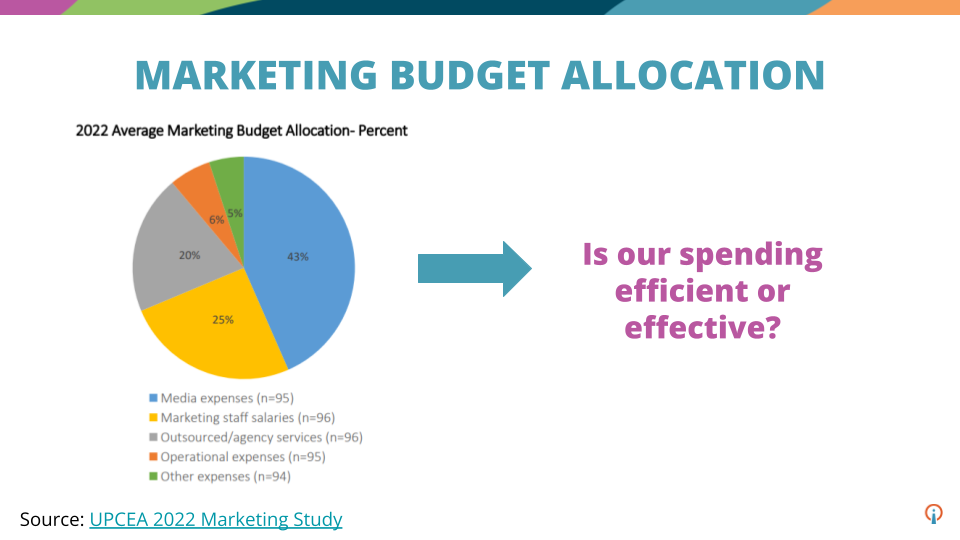
    According to UPCEA, higher ed institutions had an average marketing budget of $1,294,630 in 2022.

    No matter your institution’s budget, you need some standardized measurement to know exactly what your ad spend is getting you.

    That’s why Search Influence and UPCEA have partnered to create a nationwide benchmark for cost per inquiry. This initiative seeks to standardize the measurement of CPI, ensuring uniformity and consistency in how higher education professionals evaluate this critical metric.

    UPCEA and Search Influence believe this metric can help democratize success in higher education marketing.

    Our latest endeavor with UPCEA is a response to the industry’s long-standing need for a credible, industry-specific benchmark for measuring success. The foundation of this benchmark is the CPI Benchmark Survey, an initiative designed to collect diverse insights and data from digital marketers across higher education.

    This initiative is poised to elevate the landscape of higher education marketing strategies, fostering a community of shared knowledge and best practices for engaging new students and optimizing the enrollment funnel.

    With the implementation of an industry-standard benchmark, our shared goal is to enable universities to measure their CPI accurately and gain comprehensive insights into the myriad factors that influence it. From media spend to agency fees, each component plays a pivotal role in determining CPI, and these variables vary from institution to institution.

    If you’re uncertain about your institution’s CPI or are seeking ways to optimize your marketing budget, we designed a CPI Worksheet. You can use it to calculate your CPI and, in the near future, compare it to the broader industry standard we are diligently working to establish.

    Gain a Better Pulse on Your CPI

    With nearly two decades of experience in digital marketing, including higher education digital advertising and search engine optimization, Search Influence is your trusted partner for understanding your institution’s cost per inquiry.

    Our experts simplify CPI analysis, allowing you to effectively assess marketing efforts, evaluate lead generation, and enhance your enrollment funnel.

    Contact Search Influence today to learn more about our lead tracking, reporting, and data analytics services.

    And be sure to watch our recording of The Power of CPI to Measure Higher Ed Marketing Success to gain more valuable insights.

  • What is Cost Per Inquiry (CPI) in Higher Ed Marketing?

    What is Cost Per Inquiry (CPI) in Higher Ed Marketing?

    What is CPI?

    Key Insights

    • Cost per inquiry is the most important metric to measure and drive the efficiency of campaigns.
    • Cost per inquiry is most frequently tracked as a KPI for digital marketing channels (i.e., CPI from paid search or CPI from organic), and it can also measure the effectiveness of digital marketing spend across all platforms.
    • Search Influence and UPCEA’s 2024 research established a reliable industry benchmark for cost per inquiry and cost per enrolled student in online and continuing education.
    • The joint study found a strong link between metric tracking capabilities and overall campaign performance satisfaction.

    As the education sector evolves and marketing programs — especially to adult learners — become more complex, understanding and harnessing the power of cost per inquiry (CPI) is essential for staying competitive and achieving your institution’s goals.

    CPI is the definitive key performance indicator for higher education marketers to track advertising campaign success. Serving as a dual compass, this metric guides your higher education marketing endeavors toward optimal campaign performance and strategic budget spending. It also empowers you to gauge your efficiency, optimize your ad spend, and make data-driven decisions.

    For far too long, higher education digital advertisers haven’t had a benchmark for this critical metric, and certainly not one specific to professional, continuing, and online (PCO) education.

    That’s why Search Influence and our higher education partners at UPCEA (the leading online and professional education association) collaborated to establish the first industry-wide benchmark for CPI — to the tune of $140.

    An infographic courtesy of Search Influence detailing CPI information when doing Higher Education marketing

    In our 2024 study, “Search Influence and UPCEA Higher Ed Marketing Metrics Research Report: What Gets Measured Gets Managed,” we took a look at the state of CPI tracking among PCO units and what marketers need to know to get the most value from their budget spend.

    Before you dive into the research, here’s what to know about CPI in digital marketing, how it’s calculated, and why it should be your school’s top tracking priority.

    What is Cost Per Inquiry in Higher Education Marketing? How Do You Calculate Cost Per Inquiry?

    Cost per inquiry is a fundamental metric that plays a pivotal role in higher education marketing. CPI measures the financial investment required to generate a single inquiry or lead.

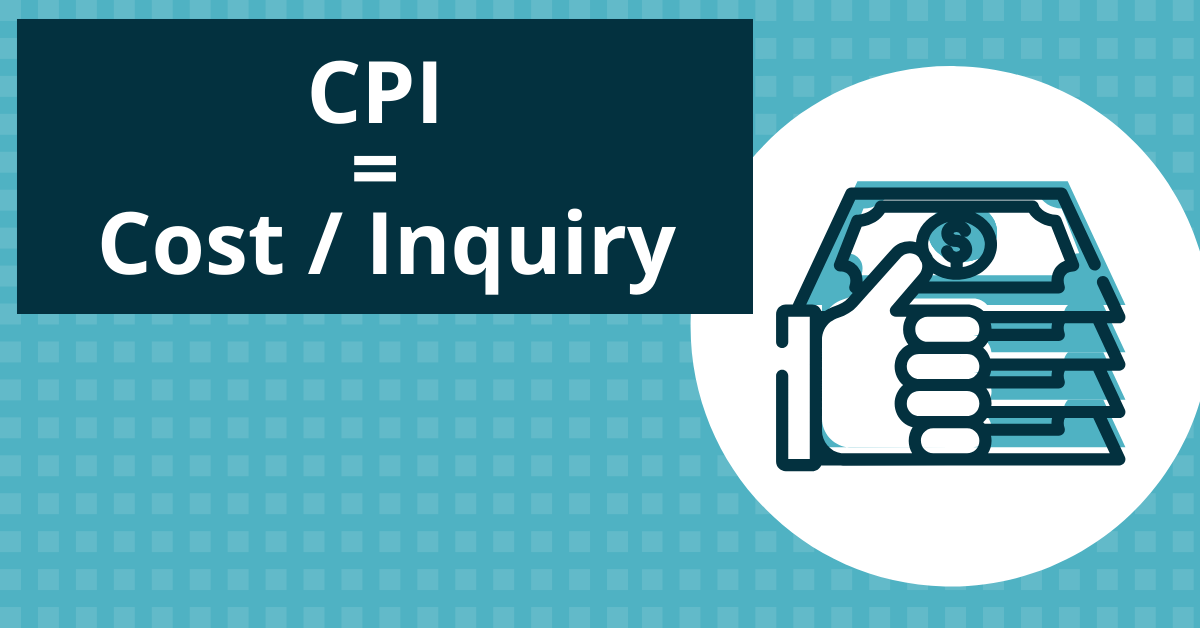
    CPI = Cost / Inquiry

    SI CPI Blog

    In the context of higher education digital marketing, an “inquiry” refers to a prospective student expressing interest in your institution’s programs, courses, or services. This expression of interest could manifest as filling out a contact form, requesting a brochure, or making direct inquiries via email or phone.

    The “cost” in the calculation depends on what marketing campaigns you are trying to measure, your marketing mix, and tracking technology (for example — are you able to track an inquiry back to the source?).

    Cost per inquiry is most frequently tracked as a KPI for:

    • Digital marketing channels (i.e., CPI from paid search or CPI from organic)
    • Digital marketing spend across all platforms

    Some may look at it:

    • CPI per program
    • Organic CPI (leads from organic search visitors)
    • Overall CPI across all marketing expenses

    Different ways to calculate CPI in marketing
    Cost Per Inquiry Worksheet for Higher Education Websites

    In our CPI worksheet, we provide two foundational calculations to help you get started:

    • Digital Advertising Media Spend ÷ # of Inquiries Attributed to Digital Advertising = Digital Advertising Cost Per Inquiry
    • Marketing Expenses ÷ Total Inquiries (All Sources) = Overall Cost Per Inquiry

    This industry-standard cost per inquiry calculation creates an “apples-to-apples” comparison, helping institutions like yours know the real cost and payoff of your marketing efforts.

    Why Measure Cost Per Inquiry in Higher Education Marketing?

    SI CPI Budgeting

    The significance of measuring CPI cannot be understated for marketers.

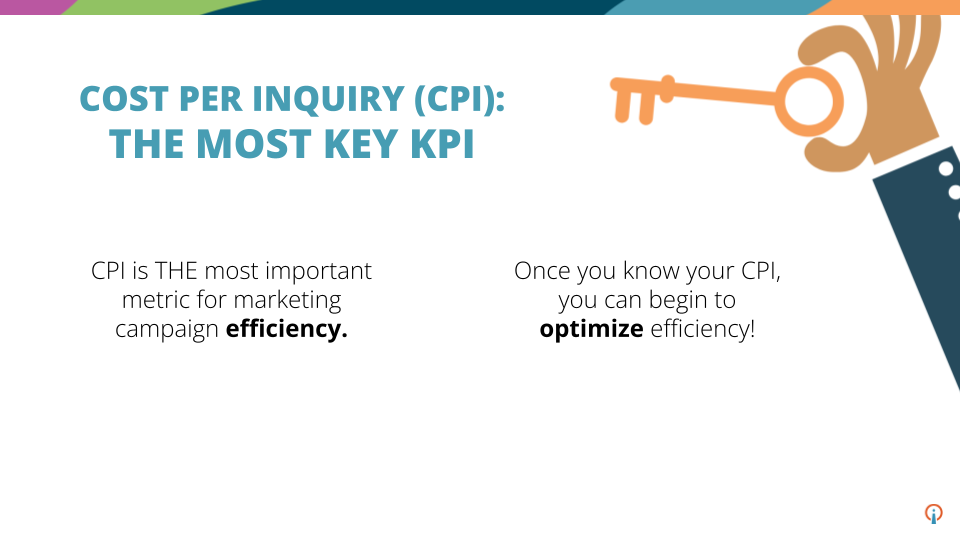
    CPI in advertising is THE most important metric for campaign efficiency.

    Once you know your CPI, you can begin to optimize your efficiency!

    When you consistently measure cost per inquiry in your higher ed marketing campaigns, you can:

    • Have confidence that you’re driving an appropriate amount of inquiries and yielding the desired results
    • Evaluate your outcomes against broader industry standards
    • Project your marketing results and how quickly you can generate necessary inquiries
    • Judge if the promises from third-party vendors are realistic

    Research Numbers at a Glance

    In our 2024 Marketing Metric Research Study, we examined not only whether PCO units tracked cost per inquiry but also their level of campaign performance satisfaction. Our findings yielded a strong correlation between CPI tracking and perceived campaign success — thus bringing to life the old adage, “What gets measured gets managed.

    Key Research Findings:

    • Less than half of PCO units track cost per inquiry (46%) and cost per enrolled student (43%).
    • Nearly one out of five (17%) higher ed marketers do not track the source of their inquiries, nor CPI or cost per enrolled student.
    • Among the PCO units that track cost per inquiry, the average CPI is $140, with a median of $106 and a range of $29.03 to $450.
    • 92% of those satisfied with their tracking capabilities also express satisfaction or strong satisfaction with the effectiveness of their marketing campaigns.

    For further insights into CPI, how it works, and why it works, be sure to check out our full research study. For more tactics to improve your marketing results, take a look at our Higher Education Marketing Resources & Guides.

    Learn More About CPI in Higher Education Marketing

    What is CPI?

    Search Influence and UPCEA are committed to elevating strategy standards in higher education marketing. We hope that, with this industry-wide benchmark for measuring cost per inquiry, you can implement practical strategies for achieving efficient ad spend.

    And, in a world where nearly one in five dollars of programmatic advertising goes to waste, this pivot to efficiency is much needed.

    Ready to see how you measure up to others in the sector? Download the Marketing Metrics Research Study today to take the guesswork out of CPI in advertising.

    Image Sources:

    Image 1: Unsplash

    Image 4: Unsplash