Category: Email Marketing

  • How To Use Cold Email Marketing to Reach New Audiences

    • Cold email marketing is often underused in top-of-funnel strategies, yet it’s a powerful way to introduce your brand to new audiences and build awareness early in the buyer’s journey.
    • Cold emails work best as part of a multi-channel strategy, including display ads and social media. It creates a unified approach to reaching new audiences and amplifying your brand.
    • Cold emailing leverages advanced targeting, allowing businesses to personalize messages based on factors like location, interests, and demographics for maximum relevance.
    • Adhering to regulations like the CAN-SPAM Act, GDPR, and CCPA is vital in cold email marketing to maintain compliance and foster trust with your audience.
    • Search Influence offers targeted cold email campaigns with verified, double opt-in lists, ensuring spam-proof targeting, high deliverability, and expanded brand visibility.

    Most people associate email marketing with nurturing prospects already in the pipeline. However, cold emails open the door to new audiences, helping you connect with people beyond your current reach.

    Cold email marketing goes beyond conventional email use cases, combining the precision of digital ad targeting with the direct reach of email to build relationships from the ground up. It shifts email into a top-of-funnel strategy, sparking interest and driving awareness in audiences that traditional campaigns often miss.

    With the right data and approach, cold emails can effectively grow your brand visibility and expand your customer base. Here’s what to know about cold email marketing, its capabilities, and how Search Influence uses it to increase your brand’s impact.
    Search Influence - How to use cold email marketing to reach new audiences

    Using Cold Email Marketing to Reach New Audiences

    Using cold email marketing as a top-of-funnel strategy reaches people who may not know your brand but fit your target market. Unlike traditional email marketing strategies, which focus on targeting those in existing lists, cold emails tap into new audiences and potential leads. When used in tandem, these strategies create endless opportunities for prospect engagement.

    Many marketers worry that cold emails come off as intrusive and only end up in a spam folder. However, according to RAIN Group Center for Sales Research, 80% of buyers would rather be contacted via cold emails than through cold calls.

    Think of it as a digital handshake that opens the door to new opportunities, both for you and the recipient.

    At Search Influence, we deliver personalized cold email campaigns with verified, double opt-in lists, ensuring targeted and compliant outreach. This strategy complements your existing email efforts and allows you to reach untapped audiences.

    Cold Email Marketing Benefits for Top-of-Funnel Growth

    Cold emails connect your brand with new prospects

    Cold email marketing is a way of making a strong first impression, increasing brand awareness, and positioning your brand as a solution to your audience’s challenges. This tactic introduces your brand to prospects who may not have even heard of it — directly in their inbox.

    A key advantage of cold email marketing is the ability to use re-drops, which involve sending follow-up emails to the same audience, particularly those who didn’t engage with the initial message or only clicked without taking further action. Re-drops increase impressions, giving prospects additional opportunities to engage with your content and, ultimately, convert.

    Cold emails reinforce display ad messaging

    A cold email is most effective when used alongside other outreach tactics, like display ads, to create a cohesive strategy. Recipients who receive a cold email and then see your display ad are more likely to remember your brand. This coordinated effort strengthens your overall messaging and increases the chances of engagement by making your brand more memorable across multiple touchpoints.
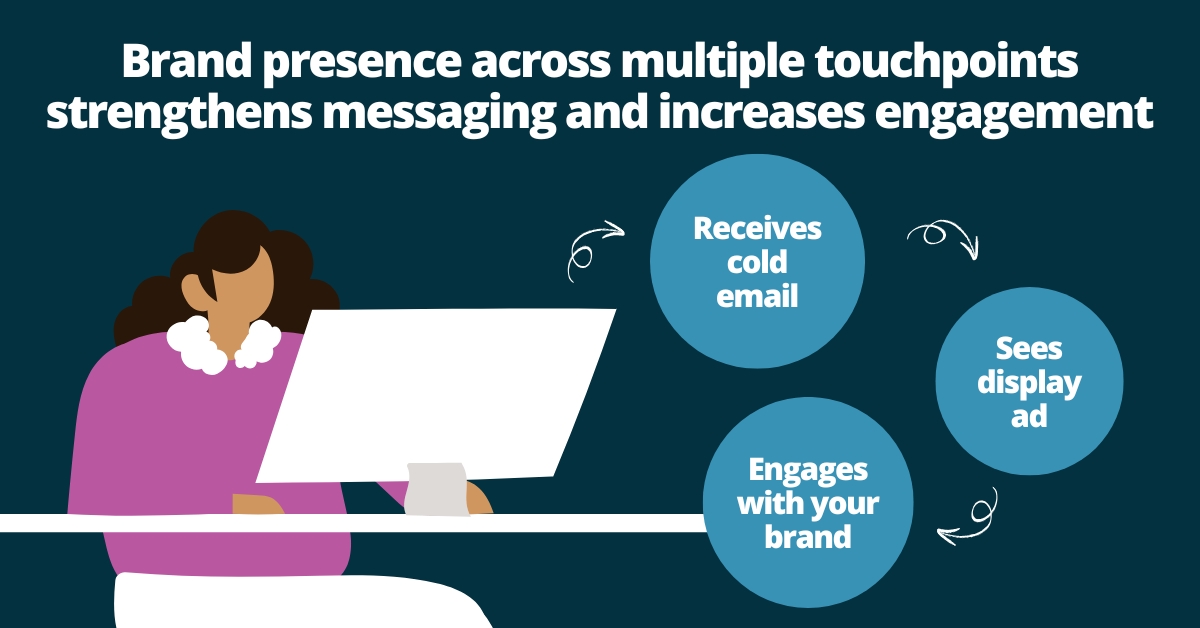
    Search Influence - brand Presence across multiple touchpoints strengthens messaging and increases engagement

    Cold emails fuel early-stage engagement

    Cold emails are often the starting point of a prospect’s journey. By offering useful resources, educating the recipient on your brand, or inviting readers to take a low-commitment action (like downloading a guide or signing up for a webinar), you drive early engagement. This type of early interaction primes recipients for future nurturing campaigns, moving them deeper into the funnel where they’re more likely to convert.

    Cold emails provide customer behavior insights

    Every cold email campaign gives you valuable data. By tracking how prospects respond (whether they open, click, or ignore your messages), you gain insights into customer behaviors and preferences. These insights help refine future outreach and improve the performance of other marketing tactics like retargeting ads or automated follow-ups, optimizing your approach for later stages in the funnel.
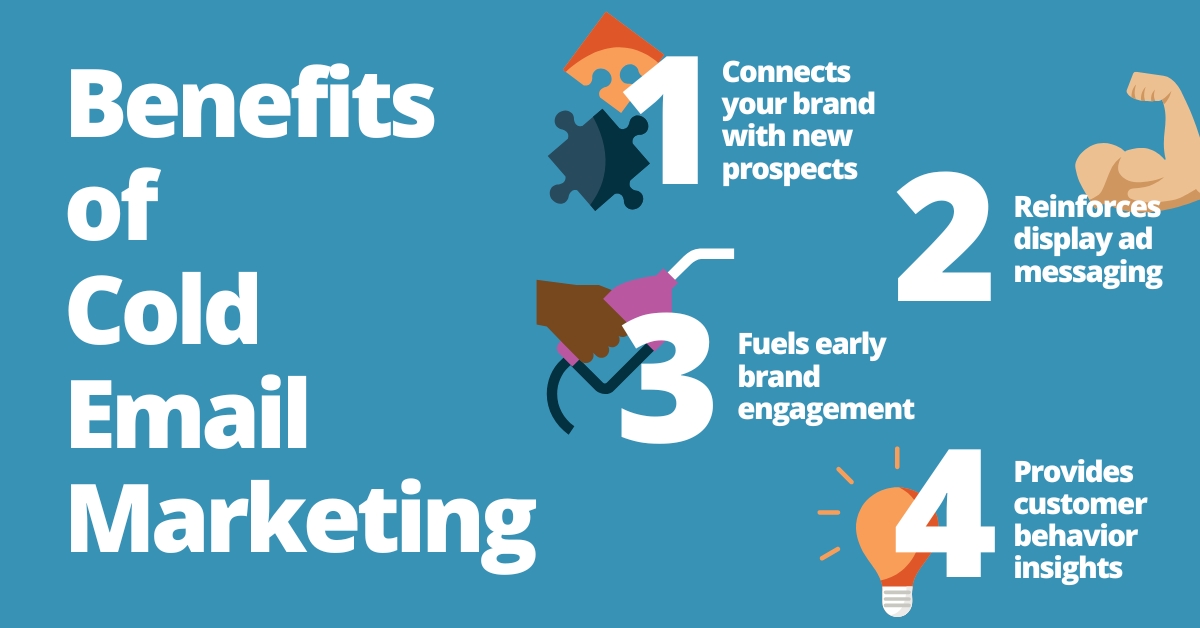
    Search Influence - The Benefits of cold email marketing

    Advanced Targeting Techniques in Cold Email Marketing

    Cold email marketing isn’t just about sending messages to a random list of prospects — it’s about precision. Like paid advertising, cold emails use advanced targeting techniques, so you can pinpoint the exact audience most likely to engage with your brand. This strategy takes into account a variety of factors, ensuring that each email is tailored to the specific needs and behaviors of the recipient.

    Some key targeting capabilities include:

    • Geographic: Reach prospects based on their location, ensuring your message resonates with local trends, needs, and market conditions.
    • Individual: Hone in on personal demographics like age, gender, education, marital status, and even political party to make your outreach more relevant.
    • Interest: Align your email content with the recipient’s personal interests to personalize your messaging and increase chances of engagement.
    • High-Tech: Use technology preferences to refine your audience, ensuring you’re reaching those who are best suited for your product or service.
    • Buying Activity: Focus on prospects based on their shopping habits and credit card usage, allowing you to reach those whose recent spending patterns suggest they may be interested in your products or services.

    By combining these advanced targeting techniques, cold email marketing becomes a powerful tool for reaching the right audience at the right time. It creates a personalized experience that speaks directly to the recipient’s current needs.

    Search Influence’s advanced targeting capabilities

    Search Influence takes advanced targeting even further to create email campaigns that break through the noise of a crowded inbox and resonate with the people who matter most.

    Our custom top-of-funnel email marketing service gives you access to curated databases of potential prospects, all verified through a double opt-in process to ensure deliverability and privacy compliance. We set precise demographic specifications — including social, economic, geographic, and interest-based factors — and efficiently build campaigns using your brand’s unique content and creative.
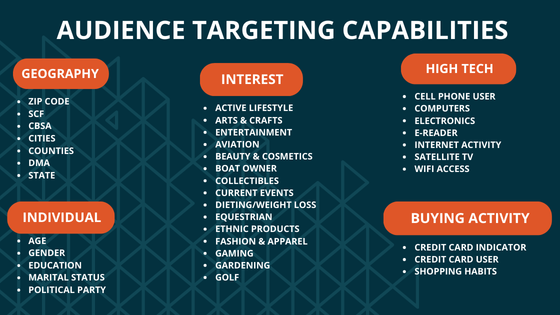
    Search Influence's Audience Targeting Capabilities with Cold Emails

    Integrating Cold Email Marketing into Digital Advertising Strategies

    Cold email marketing works best as part of a broader, integrated digital marketing strategy. When combined with display ads, social media outreach, and other top-of-funnel tactics, cold email creates a robust, multi-channel marketing effort.

    Let’s put this into perspective with an example. Say you’re a higher education marketer looking to generate high-quality leads and expand your student base. Cold emails would introduce your institution to a targeted audience, display ads would reinforce the message, and social media campaigns would keep the conversation going. Each tactic complements the other, creating a unified strategy that reaches prospects wherever they are.

    This approach builds brand awareness and allows your university to track engagement, gather insights, and refine recruitment strategies for future outreach efforts.

    Addressing Concerns About Regulatory Compliance

    Is cold emailing legal in the U.S.?

    Yes, cold email marketing is legal in the U.S. as long as it follows relevant regulations. While cold email outreach is permissible, businesses must ensure they adhere to established guidelines like the CAN-SPAM Act to avoid penalties and maintain ethical practices. Ensuring compliance protects your business from penalties and also helps maintain trust with your recipients.

    What are the customer data privacy regulations for cold email marketing?

    Cold email marketers must adhere to key data privacy regulations. In the U.S., the CAN-SPAM Act requires businesses to provide opt-out options, avoid misleading subject lines, and include a valid physical address. Internationally, the GDPR in the European Union demands explicit consent before emailing recipients, while the CCPA in California gives consumers the right to know how their data is used and opt out of data sales.

    To stay compliant, marketers must use verified email lists, respect privacy preferences, and ensure transparency in data handling. Understanding all of the requirements helps you avoid penalties for cold email marketing, which can be costly and damage your brand’s reputation.

    How does cold email marketing differ from buying email lists?

    Far from a black hat technique, cold emailing ensures compliance with regulations, making them 100% spam-proof. Cold email marketing uses opted-in, validated email addresses, meaning recipients have actively agreed to receive messages through a third-party platform. These lists are continuously refreshed to stay relevant, with individuals added or removed based on changing interests.

    On the other hand, buying email lists often involves sending messages to unverified, unopted-in recipients through your own system, which can cause inconsistent deliverability and harm your sender reputation. Cold outreach avoids these risks by using an external platform, protecting your domain, and ensuring higher email deliverability, all while following ethical practices with the recipient’s best interests in mind.

    Achieve Top-of-Funnel Success With Cold Email Marketing

    Cold email marketing is a powerful way to grow brand awareness, generate high-quality leads, and reinforce your display ad messaging.

    By targeting the right audience with personalized outreach, you effectively engage new prospects and drive early-stage interactions that set the foundation for deeper connections.

    Interested in how cold email marketing can diversify your top-of-funnel strategy and increase brand visibility? Get in touch with us today to see how we can help you reach new audiences and drive sustainable growth.

  • Which Email Marketing Strategy Will Help Me Reach My Goals?

    Key Insights

    • Email marketing is still 100% relevant
    • Establish specific goals for your email marketing campaign
    • Determine the metrics you want to measure before executing your campaign
    • Think of conversion and retention campaigns as umbrella campaigns. Choose a more specific subset campaign once you decide which aligns best with your marketing goals

    You may have gotten a notification in your email inbox about this blog. Or, you started your morning organizing the daily or weekly emails in your inbox. Hello, email marketing!

    Yes, we’re still talking about email as an effective marketing strategy in the age of TikTok and Instagram. When done correctly, email campaigns can help businesses build brand loyalty and nurture potential leads into customers. Companies have the chance to get directly in front of their audience,—99% of consumers check their emails every day—while exhibiting the value of their products and services.

    Remember: if your audience chose to subscribe to your email list, they have some interest in your brand. Don’t waste their time with irrelevant content that has them reaching for the “Unsubscribe” button.

    In this post, we’ll define conversion and retention email campaigns, explore campaign types within those categories (campaign-ception!), and find the right email marketing strategy for your campaign.

    Determine Your Goal: Conversion or Retention?

    Before you decide on a strategy, you need to identify your main goal. Do you want your campaign to result in X% more subscribers buying a product or downloading an ebook? Perhaps you want only X% to Y% subscribers to hit “unsubscribe” in the next quarter or X% more engagement with your content.

    These are examples of conversion and retention goals—now, let’s find out which type of goal is for you! Think of conversion and retention campaigns as umbrella campaigns. Once you decide which aligns best with your marketing goals, you’ll choose a more specific subset campaign.

    Once you pick a goal that’s S.M.A.R.T. (specific, measurable, attainable, relevant, and time-bound) and your metrics to measure, you’ll know if your email marketing strategy should be a conversion or retention campaign.

    Conversion goals focus on your subscribers completing the desired action prompted by your email.
    Examples:

    • Download an ebook
    • Purchase a product
    • Fill out a form
    • Register for a service

    Retention goals focus on keeping your subscribers engaged and satisfied with your brand. You can measure their success by monitoring how subscribers interact with your emails.
    Examples:

    • Rate of subscribers vs. unsubscribers
    • Open rate
    • Click-through-rate
    • Content engagement

    An animated envelope with a notification symbol on the top

    Conversion Email Campaigns

    Conversion email campaigns focus on building brand loyalty and establishing trust with potential leads that have shown interest in a business’s product or service. They nurture leads through the buyer’s journey with the ultimate goal of, you guessed it, conversion.

    If your industry has a more extended buyer’s journey, conversion campaigns nurture prospects from the top of the marketing funnel and through the entirety of your buyer’s journey.

    The first email in a conversion campaign won’t end with “buy now.” You’ll have to build trust with your audience before we get there! (However, if your buyer’s journey is on the shorter side, you can always adjust your email campaign’s length).

    Drip Campaigns

    A drip email campaign is a multi-email strategy that targets your leads along every stage of the marketing funnel. Drip emails are relatively simple to set up and can be great tools for a quick-start campaign.

    Purpose: Drip emails are sent at regular intervals to potential leads. Each email is connected to an overarching goal or strategy.

    Recipients: Recipients are potential leads identified in real-time or when they take a specific action (e.g., fill out a landing page form) that serves as a catalyst to start the drip campaign.

    Content: Content will align with your marketing funnel. Campaigns typically start at the top of the funnel with more general content (introductory information, overview) and eventually lead readers to content encouraging decision-making. A specific call-to-action will be outlined in each email.

    Timing: These emails are sent automatically according to an established campaign timeline.

    Possible Metrics: Open rate, click rate, and the desired conversion.

    A typewriter spelling out the word goals

    Nurture Campaigns

    Nurture email campaigns are similar to drip campaigns, but they’re even more detailed and contain many moving parts.

    Purpose: Readers are nurtured through the marketing funnel by content sent over a period of time, ultimately leading them to the desired action.

    Recipients: Similar to drip campaigns, recipients are potential leads that are identified in real-time or when they take a certain action (e.g., fill out a landing page form) that serve as a catalyst to start the nurture campaign.

    Content: Content should be tailored to your marketing funnel and your lead’s behavior. They should receive specific content based on which action they took. Did they request general information? Have they downloaded your ebook? Content could include F.A.Q.’s, testimonials, additional information, benefit stories, and a call-to-action leading them to the next step in the funnel.

    Timing: Communication is automated with a customized timeline based on a set of defined actions (unlike drip campaigns that follow one general schedule). If your lead takes the desired action, they stop receiving one series of emails and move on to the next email series (or another step.)

    Possible Metrics: Open rate, click rate, desired conversion, and length of time in each email segment.

    Retention Email Campaigns

    While both conversion and retention email campaigns do build trust with readers, retention campaigns focus more on trust than promoting products or services. Customers receiving these emails fall into the “Delight” stage of the marketing funnel. Delight content focuses on maintaining the loyalty of established customers.

    You want to retain customers and build brand loyalty by delighting and engaging them with helpful updates, promotions, sales, news, and upcoming events—delivered right to their inbox.

    Here’s what that this looks like:

    One-Off Campaigns

    One-off email campaigns are short, sweet, and focused.

    Purpose: These email(s) offer specific promotions or timely events your business is running.

    Recipients: Those already familiar with your brand, such as subscribers who have already made a purchase or leads near the bottom of your marketing funnel.

    Content: Keep it short and visual! Content should be easily skimmable and focused around eye-popping graphics.

    Timing: Timing will vary with the offer and strategy. You can send out multiple emails leading up to the event or just send one the day of to create a sense of urgency.

    Possible Metrics: Open rate, click-through-rate, and visiting a specific site page.

    Newsletter Campaigns

    Newsletter email campaigns are non-promotional and sent out periodically to customers.

    Purpose: Update customers about your business and establish a sense of loyalty and trust—you’re not asking them to convert!

    Recipients: Broader audiences that have subscribed to your mailing list. Your audience can be at different levels in your marketing funnel, but they are usually familiar with your brand.

    Content: Newsletters contain topical company news, important updates, helpful tips, and other content that makes readers feel like an insider at your business.

    Timing: Campaigns are recurring and regularly occur monthly or quarterly.

    Metrics: Open rate, click-through-rate, and unsubscribe rate.

    Email campaigns can be an excellent marketing tool with a pretty impressive R.O.I.—it can generate $38 for every $1 spent! If you’re not sure where to start, contact our team at Search Influence. Together we can help craft, set up, and optimize an email marketing campaign that’s tailored to your goals.

    Images:

    Envelope

    Typewriter

  • 5 Tips for Engaging Email Marketing

    Sending frequent emails isn’t enough. In fact, if your content isn’t thoughtfully developed for your target audience, your hard work can find its way to the spam folder. From collecting email addresses to allowing people to unsubscribe, basic newsletter marketing is required to reach your audience’s inbox. Once you’ve got an interested audience, engagement is the first step to generating conversions.

    Craft a Strong Subject Line

    If your subject line isn’t engaging, the email may not be opened. Your subject line needs to communicate the content of the message clearly. Are you talking about a new product that’s not available anywhere else? Create urgency by emphasizing the timeline on the sale or promotion. From commercials and social media, we all have a basic understanding of how to make a compelling pitch. The challenge is creating an original subject line for each email marketing blast.

    Curious dog using the internet - Search Influence

    Your subject line should attract interest like a BuzzFeed headline, whether it’s describing an upcoming sale or exciting news updates for your stakeholders. Numbers are easy to digest, and they make better use of fewer characters. An email with “5 insider coupons” is more appealing than a vague promise of a special promotion. Similarly, “curiosity gap” is a term for headlines that give just enough information to make readers curious to read the rest of the story. Give the reader just enough information to pique their interest, and they will open the email in search of the answer.

    Create Valuable Content

    Before you put too much work into planning the perfect subject lines, make sure that your email marketing blasts are worth opening. Collect compelling, interesting, and useful information that rewards subscribers who continue to open and read emails. With both your website and email marketing, content is king. Whenever practical, offer special advantages and updates on future events. Are your subscribers offered insider discounts and advanced notice of sales?

    If your email marketing campaign suffers from a high rate of people clicking “unsubscribe,” then you aren’t meeting the expectations of subscribers. Think about the types of content that would most interest your target audience, whether they are interested in regular news about your industry or only occasional updates, presented in a timely manner. Offer special promotions and tips that reward people for continuing to follow along.

    Rotating mobile device - Search Influence

    Optimize for Mobile

    Many viewers will be sorting through their inbox on a smartphone. In fact, mobile devices are where 65 percent of emails are first opened. Those first seconds are critical in determining whether the recipient reads the message, archives it to read later, or deletes it immediately. A complex, information-rich chunk of text may get archived for later, but that’s no guarantee that it won’t be forgotten.

    If you have too many images or a poorly formatted page, you’ve already alienated a lot of potential readers. A modern email marketing campaign needs to leverage a mobile-friendly approach to newsletters, as well as websites. Short lines of text and a fast loading speed are essential. When targeting readers on their mobile devices, try to get them to engage while still on their smartphone. Keep your message short and clear, and quickly convert views into leads with an effective call to action.

    Use Compelling Calls to Action

    What’s your desired outcome for your email marketing campaign? Whether you’re looking to collect more followers, increase website traffic, or turn subscribers into repeat customers, the call to action should reflect your goals. The call to action should have a sense of timely urgency, and it should dovetail with the value offered by your email. Are the readers looking for a coupon or more information about new technology? Direct readers to your website for additional details. Have them call or visit your contact page to use the coupon today.

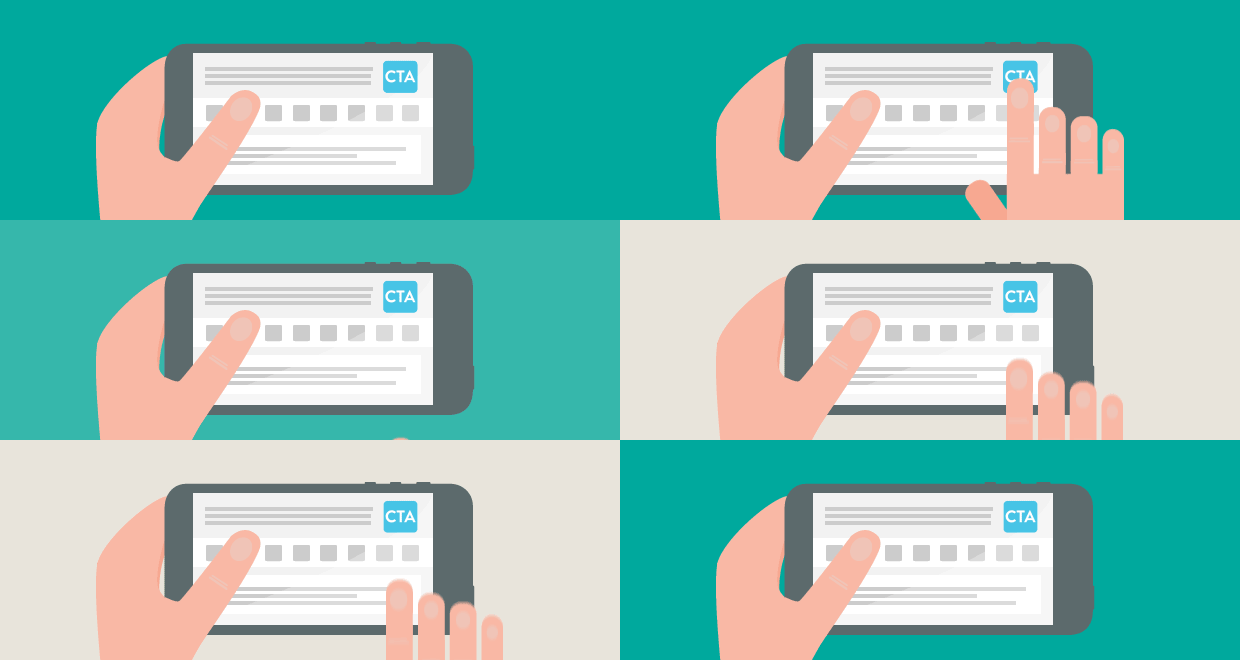
    Animation of a call to action icon on a mobile device - Search Influence

    Be careful about sounding too gimmicky or cheesy, both with your subject line and your call to action. We’re all familiar with the promotional hyperbole of excited advertisers, promising that this one-time offer is the best thing ever. Try to avoid language like “click here,” which is both overly specific and vague. “Here” doesn’t explain the content or purpose of the page that you want the reader to visit. “Click” places all the emphasis on the first action you want from the viewer. A stronger call to action would focus on the benefits of calling or visiting. Will they learn more about a new service? Will clicking or calling allow them to schedule a free consultation or request a proposal?

    Break Up the Text With Subheadings

    Attention spans are shorter, regardless of whether readers are pausing with their smartphones or relaxing with their laptops. Even a compelling subject line won’t compensate for a large, intimidating block of text. Break up your message into short paragraphs with frequent subheadings. Get conversions instead of TL;DR responses and deletions.

    Like subject lines, subheadings should summarize content in a concise and interesting way. Readers who aren’t interested in the first paragraph may find a later subtopic appealing. Similarly, readers on a tight schedule should be able to skim the page to locate the information most relevant to their needs.

    Email marketing is an effective way to generate leads, but it only works with an engaging message and appropriate formatting. Contact our team to learn more.

    Images:

    Internet Dog

    Mobile CTA

  • What to Expect From Your Email Marketing Campaign

    No joke, this is what my wife’s inbox looks like.

    I’ve sent out a few newsletters in my time at Search Influence, and I’ve had to curb the client’s expectations more than once. Email marketing can be a time-consuming, arduous process and returns what seems to be very little. While email marketing is becoming more obsolete in this social media-dominated world, it’s still worth pursuing. Your expectations just need to be adjusted (read: lowered). Below I’ll break down the different metrics, what they mean, if you should care about them and what you should be expecting out of a successful campaign.

    Open Rate
    The Open Rate is exactly what it sounds like… well, sorta. It measures how many recipients opened the newsletter, but beware. These numbers are usually vastly underreported. For instance, if the recipient’s email blocks images, it will not count as an open unless they click to display them. Many people (including myself before learning this information) choose not to display these images, so I wouldn’t put much stock in this metric.

    If you do, however, here is what you should expect. I’ll use an industry familiar to me – Beauty and Personal Care. I had a client express disappointment with the performance of a particular Mother’s Day campaign. It went out to roughly 1,500 recipients and had an Open Rate of 19%, which looks pretty terrible on the surface; however, MailChimp reports that the average Open Rate for this industry is 14.94%. It might not be something to write home about, but after delivering this information to the client they were much more impressed with their campaign.

    Click Rate
    Good thing these names pretty much define themselves. Saves me some time. The Click Rate (click-thru rate or CTR) is how many people click a link from your campaign. This metric is going to be drastically lower than your Open Rate. It’s possible to get into a double-digit percentage here, but not likely. In fact, The Click Rate average for most industries is less than 5%.

    Bounce Rate
    In email marketing, the Bounce Rate is determined by the number of email addresses that failed to receive the message sent. There are two types of Bounce Rate: hard and soft. A hard bounce occurs when the recipient email address does not exist or is unrecognized. This is generally anywhere from 1% – 5% for most industries. It’s important to purge the incorrect addresses when this occurs, as it can bring down your sender reputation.

    A soft bounce is when the message is sent back from a valid email due to an issue with the server, such as an inbox that has reached capacity. There’s not much you can do about these, but the average is typically less than 3% so it doesn’t have a negative impact.

    Abuse Complaint Rate
    One of my biggest pet peeves is also one of the most ridiculous. I cannot stand it when someone abuses the “Abuse Complaint” function in eblasts. Its intended purpose is to mark spam or emails to which you may not have subscribed. If you use an eblast client like MailChimp, it will automatically remove these emails from your list. If you’re sending out your own, you could be blocked from the ISP if too many complaints are received, so constant vigilance is needed.  The industry averages are mostly below 0.01% for this, so if yours is higher than that I don’t know what to tell you. Delete all emails in your list? Wipe your harddrive? Burn your computer? I don’t know, I’m just spit-balling here. This feature is not intended to be used as a quick way to stop receiving annoying emails because you hastily forgot to uncheck the “send me news and specials” box of a form. That’s what the next section is for!

    (Sorry, I know I can get unnecessarily worked up over something so trivial. My therapist and I are working on it. For the time being I’ll shift my hatred to those who are more deserving of it, like people who leave shopping carts in parking spaces or in the middle of the lot because they’re too lazy to walk the 30 feet to the cart corral.

    People who leave shopping carts in parking spaces. People who leave shopping carts in parking spaces. People who leave shopping carts in parking spaces)

    Unsubscribe Rate
    …is, again, exactly what it sounds like. It’s the rate of people that unsubscribe from your newsletter. This is what most people intend to do when reporting you as spam, but are too lazy to find out the proper way to do so and end up doing unwarranted damage to your campaign stats.

    I’m just going to stop here before a tirade ensues.

    People who leave trash in movie theaters. People who leave trash in movie theaters. People who leave trash in movie theaters…

    These are the basic factors that you’ll be looking at when running an email marketing campaign — remember, while your success can be tracked with some measure of accuracy, it’s all relative. Next time you send out a newsletter or special email offer to your subscribers, take a look at your metrics. You might be pleasantly surprised!

  • Email Marketing for Small Business: 9 Things Not to Do

    I am all about receiving e-mail marketing from eCommerce sites that I am interested in.  Seriously – my personal e-mail inbox has 2,445 unread messages – I sign up for everything 🙂 With that said, you have to say something enticing for me to open your e-mail.  And, for some reason, today I opened an e-mail from a local small business that seriously frustrated me.  The guilty party will remain nameless.

    E-mail Marketing Bandit

    In my current position at Search Influence, I do not work with email marketing on a daily basis.  However, in my previous job, I did.  I worked with both consumer emails and eNewsletters within organizations.  My intention here is not to call-out the small business who sent this email – but, to hopefully allow other small businesses to learn from their mistakes with some very basic email marketing tips.
    For starters, I will show you a screen shot of the email that I received.  At first glance, how many things can you find wrong with it?

    E-mail Marketing No-No

    This is just to give you a visual.  There are some things that you cannot tell just by looking at this screen shot.

    At first glance, here are some things that I noticed that you should NOT do when sending an email to your customers:

    1. The very first thing you might notice is that the entire email is written in ALL CAPS and has a million exclamation points!!!!!!!!  This actually lessens the impact of your message and may appear that you are SHOUTING AT YOUR CUSTOMER!!!  It can also land your email in your customer’s spam folder.

    2. There are some obvious grammatical errors here.  One in particular is the misspelling of what is supposed to read “your” in the last line.  It is evident that whoever wrote and sent this email was in a rush and did not proofread their own work and also did not get someone else to proofread the work.  (And, if they did, then….well…I will leave it at that 🙂 ) You should ALWAYS proofread your work, and even get someone else to give it a once-over before you hit the “send” button.  In addition to proofreading, you should also send out test emails to yourself or fellow staffers, to make sure that it is functioning properly and that it looks just how you want it to look.

    3. The subject line used in this email reads “get your spring glow NOW.”  This is a weak subject line because it does not give a peek of what you can find inside the email; it pretty much IS all of what is inside this email.  The actual content of this email itself is not much more than what is listed in the subject line.  In the article “15 Email-Marketing Best Practices”, Mitchell Harper says “When your email arrives in your subscriber’s inbox, you generally have about half a second to catch their attention with the subject line of your email. After this, they will either delete your email or ignore it.”  He later suggests, “In your subject line, try and specify a benefit that the subscriber can expect by reading your email.”

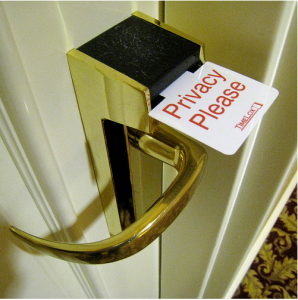
    4. Here is something that you may not be able to see in the screen shot:  All of the recipients of the email are visible.  It is an email marketing best practice to not disclose the email addresses of the recipients of your email.  It allows your customers privacy.

    E-mail Marketing Best Practice: Privacy for your Recipients

    5. Second thing that you cannot tell just by viewing this screen shot:  there is not a single link within this email! How is the consumer supposed to dive in deeper and get more information? This is a major rookie mistake.  This particular business has a website.  Why would you not want to drive more traffic to your site?  This is a missed opportunity indeed.

    E-mail Marketing Best Practice: LINKS!

    6. There is no unsubscribe option given in this email.  According to Wikipedia, “The CAN-SPAM Act of 2003, signed into law by President George W. Bush on December 16, 2003, establishes the United States’ first national standards for the sending of commercial e-mail and requires the Federal Trade Commission (FTC) to enforce its provisions.”  Wikipedia later explains that under the CAN-SPAM Act of 2003, “A visible and operable unsubscribe mechanism must be present in all emails.”  This gives your customer the option of no longer receiving your business’ marketing emails.  Furthermore, if your customer decides to unsubscribe from your emails, you have 10 days to honor their request.

    E-mail Marketing Best Practice: Must offer an unsubscribe option!

    7. They are not promoting or offering anything worth my time to take any action here: no percentage off, no BOGO (buy one get one), no sale information.  You get the picture.  What are they trying to get me to do here?  And, an even better question: what are they willing to do to get me there?  There was no planning involved in this email.  Try to offer your readers something unique in each email that you send, whether it be a promotion or an important news story relevant to your business.

    8. The are no images in the email to catch the reader’s attention.  It is not a necessity to include imagery in your email content.  However, it is a good idea.  Pleasant and relevant imagery can catch the reader’s attention.  Even something as simple as including your company’s logo can help to build your brand recognition.

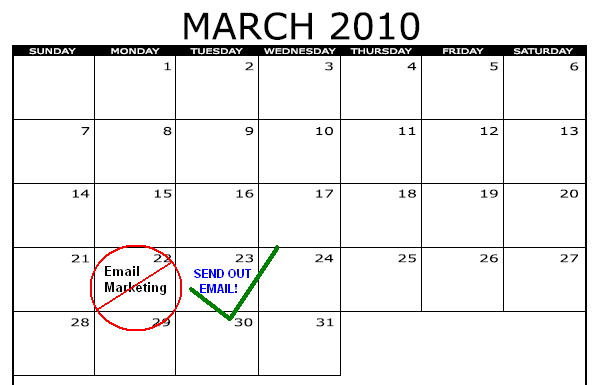
    9. Another not so obvious factor:  this email was sent out on a Monday.  According to the article by Mitchell Harper entitled “15 Email-Marketing Best Practices”: “Studies conducted by online research analysts have shown that the best days to perform a mail-out to your list are Tuesday and Wednesday, as this is when people are more receptive to communication. This means that they are more likely to read your content and click on links, meaning more sales. On Mondays, everyone is still recovering from a hectic weekend. On Thursday and Friday, people are already too busy looking forward to the weekend.”

    Search Influence‘s in-house email marketing guru, Janna Vastola, adds that she believes “The best time to send is Tuesday between 9-10 am.”

    E-mail Marketing: Timing Matters

    These are only a few basic email marketing tips. Essentially, what you put in is what you will get out.  First impressions are everything.  If your customers open an email from your business, such as the one outlined in this blog, they may not open another one, if it makes its way into their inbox.

    Take your time, plan and have a purpose for your email.  No matter how many email addresses you have on your email marketing list, they are all valuable to your business.  Your customers’ time is also valuable.  Make it worth their time to open your email and actually get something out of it.  Just because you operate a small business does not mean that you cannot create an email marketing campaign that rivals the biggest and best!


    { Prepare + Promote + Proofread + Professionalism = Positive Brand Image + Conversions + ROI (Return on Investment) }

    Resources:

    Photo Credits:

    • “Pug Shot” http://www.flickr.com/photos/jerry_reynolds/1449005045
    • “Privacy, Please!” http://www.flickr.com/photos/nitot/3488350975
    • “Unsubscribe” http://www.flickr.com/photos/johnhaydon/4349744825
    • “Weakest Link”  http://www.flickr.com/photos/96dpi/3371440496