Author: Shauntae Joseph

  • Are Your KPIs Leading to a Healthy ROI?

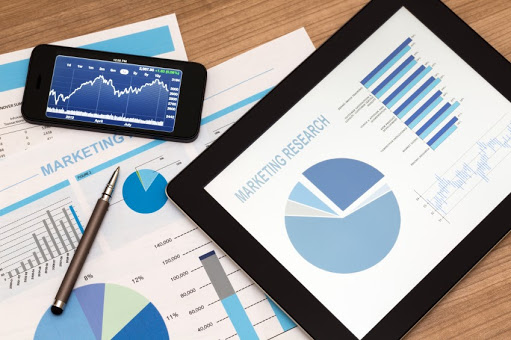
    Marketing research displayed on multiple graphs and charts - Search Influence

    One metric that every small business owner should track and strategically work to improve is return on investment (ROI). Improving ROI can depend on boosting any number of individual indicators that help businesses focus on what they’re doing right and where they need to improve. Learn how these indicators apply to digital marketing and how to track, set goals for, and improve those indicators.

    What Are ROI and KPIs?

    Most business owners are familiar with the concept of ROI as an important, perhaps the most important, bottom line for any expenditure. ROI provides a simple ratio that expresses how successful an expenditure is relative to the income it generates. For some business decisions, calculating ROI is relatively straightforward. The ROI for a rental property, for example, would be based on the cost of buying the property plus taxes and upkeep divided by the amount paid by tenants each year. In the world of digital marketing, however, it can be difficult to determine the value of clicks, shares, and retweets, and to draw a direct line from any specific customer to a specific advertisement.

    Key performance indicators (KPIs) are more specific data that provide the metrics to analyze the effectiveness of a digital marketing strategy. In fact, ROI itself is a KPI. A business may select ROI as their #1 KPI, and then other secondary KPIs to watch as leading indicators of success. Paying attention to the right KPIs, and understanding how they relate to and inform ROI, can allow businesses to agilely hone a lean marketing approach around what works by cutting out the fat failing to provide a return.

    How to Determine Your KPIs

    It’s important to realize that not every metric is a KPI. For example, a tourism company might find it especially helpful to track how often promotional emails are forwarded or social media posts are shared. People like to share vacation experiences with friends who often rely on recommendations, and people also like to vacation with their friends. A high share rate could indicate a multiplier effect for some promotions, meaning that the marketing strategy is generating customers outside of a business’ subscriber list or social media following who nonetheless engage with the content. (Read more about creating customer advocates for tourism businesses). While every metric might not be important for your business, here are some common KPIs:
    Website traffic sources – Visitors enter your site from many avenues. The traffic sources can be organic, direct, referral, or paid. Each source can be reviewed to provide high-level information about your site traffic. Organic search traffic, when a visitor finds your website by searching keywords in a search engine and clicking through to your site, is the top source for generating traffic. It’s essential to improve SEO in order to increase your organic traffic.

    Engagement metrics – Take a moment to compare your favorite website to a website that you dislike. What impacted your experience on those sites? Optimizing your website for an intuitive user experience is essential. Bounce Rate and Average Time on Page are two key indicators of how visitors are interacting with your site. Be sure to monitor these metrics and optimize your website layout and content as needed.

    Conversion rate – This is a KPI that any business owner wants to see continually increase. Filling out an on-site form, clicking your number to call, or purchasing your product are just a few conversions that you want to encourage on your site. Each conversion can generate a lead for your campaigns. The higher the conversion rate, the higher the ROI.

    How Do KPIs Affect ROI?

    In a certain sense, ROI is the mother of all KPIs. The best performance indicator of almost any business investment is how much return it produces. Calculating ROI, however, requires an understanding of how a business’ applicable KPIs determine ROI.

    A simple formula is just the return minus investment and then divided by the investment:
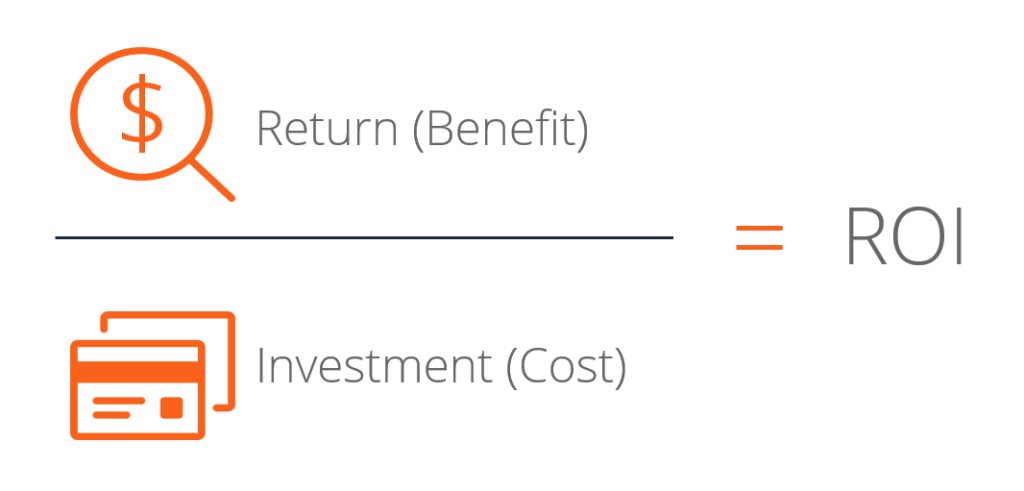
    Your result can then be expressed as a percentage. In order to account for your KPIs, your return should take into consideration factors such as the average lifetime value of a customer and conversion rate of turning leads into customers, in addition to the average profit margin.

    How to Set S.M.A.R.T. Goals for Your KPIs

    Businesses commonly use the acronym S.M.A.R.T. when setting KPIs; it stands for specific, measurable, achievable, results-oriented, and time-bound. Focus on goals that are detailed and clearly defined, and that can be tangibly measured to determine success or failure unequivocally. They should be within reach (a business that constantly falls short of its goals needs to rethink their achievability) and based on the objective ends rather than the means. Finally, they should have a definitive deadline to make sure goals aren’t kicked to the next quarter or year.

    Digital marketing may not quite be rocket science, but it does get pretty complicated. It’s important to determine what KPIs are most important to your industry, look to competitors and market leaders to see where indicators are comparable and where there’s a discrepancy, then develop strategies to boost those indicators. Small business owners have enough on their plate to worry about without poring over the nitty-gritty of analytics and lead tracking. Search Influence is a nationally recognized leader in search-focused digital marketing, with the expertise to help small businesses succeed in an ever-more digital world. Read testimonials from our clients to get a feel for how we can help your business grow, or contact us today to see what our understanding of KPIs can do for your ROI.

    Images:

    Social Media Machine

    ROI Calculator

    Rockets Away

  • Five Surefire Signs Your Online Reputation Needs Work

    A bad reputation is terrible for business, and yet online reputations are difficult for many business owners to fully understand—much less control. When a customer is upset in your restaurant or store, it’s relatively easy for a manager to handle the situation in person. Problems with online branding can be harder to detect than an angry patron. A negative online review might feel less urgent than a disgruntled customer screaming at your employees, but that review may be seen by countless potential customers in the future. An unpopular social media presence is a missed opportunity for cost-effective community engagement, and unpopular websites appear lower in search rankings. Learn how to identify the signs of a reputation problem online and protect the future of your brand.

    Thumbs down key on a keyboard - Search Influence

    1. Your Bounce Rate Is High

    We all do it. You visit a website, but it doesn’t have what you wanted, so you return to the search engine and try elsewhere. When your website has a high bounce rate, it means that people aren’t finding what they wanted. Bounce rate issues are insidious because they erode your online reputation with search engines, but they can be caused by a combination of overlapping factors. Low-quality content can drive up a bounce rate, but so can technical details about website formatting.

    Websites that aren’t responsive or mobile-friendly have a high bounce rate because mobile users are unable to access the content. On the other hand, some sites are difficult to navigate on any device because of unclear menu options and poor organization. The text on a page should be clear and helpful, relevant to the topic at hand. If a link about a specific product directs to a landing page with information about the general industry, then users may decide to search elsewhere. The easiest way to address a high bounce rate is to work with a web designer and content creator to improve the user experience.

    2. There’s an Increase in Negative Reviews

    It’s impossible to please everyone, and some customers always seem to find a reason to be disappointed. Nevertheless, a streak of negative reviews can undermine any online reputation. When negative reviews appear, it is important to address the reviewer’s concern within your company. Accept the feedback as an opportunity to prevent a repeat of the same disappointment.

    When the reviewer’s concerns are being addressed, it sometimes makes sense to reply to the review. Make it a brief and professional response to avoid getting entangled in an argument. As quickly as possible, move the discussion out of the public eye, preferably by providing an email address for further correspondence. Many people are more understanding and open to resolution in direct correspondence, but remember that anything you write in email can still be copied into a public forum. Ultimately, any response to negative reviews is an exercise in damage control. The best solution is prevention, providing such a high quality of service that the positive reviews outnumber negative ones.

    3. Your Social Media Engagement Is Lacking

    Social media marketing is a cost-effective way to interact with customers and build your brand awareness. An inactive Facebook page is a missed opportunity for advertising, and so is a mismanaged page. Excessively promotional posts don’t offer value to your audience and can give a negative impression. If none of your recent posts have any likes, shares, or comments, then your audience is not engaged with your message.

    Rather than only promoting your business, use social media to share other kinds of content as well. Share informational posts about recent news and updates relevant to your industry or community. Include frequent posts that aim primarily to elicit engagement, whether they share a cute animal picture or joke. Depending on what’s appropriate for your industry, you can also post a poll asking for people to voice their preference between popular techniques or theories.

    4. Your Website Is Not Authoritative

    Authoritative websites rank higher on Google, but building authority takes time. One of the most reliable methods for building authority is inbound links. When important, trustworthy websites link to your website, it shows search engines that your content is a trustworthy authority on those subjects. In the early days of search engine optimization, you could improve your ranking by posting links to your website in random blog comments and basically spreading the links as many places as possible. Now, algorithms are smart enough to sort out what is authentic, and will not reward those who take shortcuts to improve their ranking.

    To build authority, invest time into quality content that provides useful information to visitors. Accelerate the authority-building process by getting your business (and website) mentioned in newspapers and trade journals, resources that have already established themselves as reliable. Ultimately, a high quality and helpful website will be shared by people organically as a resource. Your authority will grow as visitors share your page with their friends.

    Rotating image of a person's identity - Search Influence

    5. Your Branding Is Inconsistent

    Inconsistent branding isn’t always as obvious as it sounds. Some companies might change their name while keeping the same website, and then it’s obviously important to go through and eliminate all appearances of the old name. On the other hand, many businesses use a shortened version of their full name in casual conversation. It can be tempting to use the shorter name in website content, making the tone friendly and hospitable, but search engines don’t appreciate that your company’s nickname isn’t an altogether different name. If a search engine thinks your business can’t keep its own name straight, then that’s a sign that the content may not be reliable. Avoid using shortened versions of your name, and make sure to proofread when you’re publishing content and adding your business to online directories.

    To protect and improve your online reputation, talk with a digital marketing consultant. The team at Search Influence has experience managing all the key aspects of your brand’s internet presence.

    Images:

    Changing Identity