Author: Leslie Williams

  • How to Use Google Shopping to Increase Retail Sales

    It’s more important for retailers, now more than ever, to capitalize on the internet as an additional revenue source for their businesses. The vast majority of internet users in the U.S. are expected to shop online this year, with Statista estimating that 80% of all internet users in the country are expected to make at least one purchase online during the 2019 calendar year. Compound this fact with the matter of Google being the most used search engine worldwide with over 1 trillion searches taking place on the search engine per day, the importance of utilizing Google’s shopping tools to boost profitability can’t be overstated.

    What Are Google Shopping Ads?

    One of the most important Google tools that online retailers can take advantage of is Google Shopping Ads. Google Shopping Ads are product listing ads that are featured across Google’s Search and Shopping results. These ads differ from Google’s paid search ads in that they feature product pictures, while paid search ads do not. There’s also no need to set up text ads or bid on any keywords with the use of Google Shopping Ads, which is another key difference between the two popular ad types.

    Person using credit card to make purchase on Google Shopping

    Online retailers can use Google Shopping campaigns to promote their local and online inventory, and boost traffic to their websites and local stores. Shopping campaigns also give retailers the benefit of being able to find better qualified leads for their product offerings. By featuring detailed product information directly within your shopping ads, online retailers better help shoppers make well informed purchasing decisions, which in turn leads to increased conversions and purchases. In addition to including detailed product information within your Google Shopping Ads, there are several other key areas of importance that retailers must focus on in order to achieve success with a Google Shopping Ads campaign.

    Your Product Feed: The Key to Campaign Success

    One of the most important areas to consider when taking on a shopping campaign is the proper setup and optimization of your product feed. For context, Google Shopping is powered by two platforms: AdWords and Google Merchant Center. Google Merchant Center is where your product feed lives. Your data feed is simply information about the products that you want to sell formatted in an organized way that Google can read and understand. As we previously mentioned, you don’t bid on the keywords your Product Listing Ads show up for. Google instead crawls your feed and determines if one or more of your products is relevant for a particular search query. In this regard, Google Shopping has similarities to SEO. You need to structure the various elements of your feed so that Google can make sense of it and find it relevant for the appropriate search queries.

    The three most important elements to consider when building your product feed include the product title, product description, and Google product category. First and foremost, your product title should be accurate, descriptive, and include top keywords as well as the name of the product. Important information about the product should be frontloaded in the title, and additional descriptors such as make, model, size, or color are all helpful keywords to include in the title of your product.

    Secondly, product descriptions should follow the same guidelines as product titles. Ensuring that your product description accurately describes the item at hand, while also including relevant keywords and important product information at the beginning of the description all help increase the chances of your ad being shown for relevant search queries.

    Lastly, choosing an appropriate category for the products in your shopping campaign is an important (and required) step to getting your products to show up for the right search queries. Google has created a fairly exhaustive list of categories and subcategories that your products might fall under, which can be found here. There are currently over 6,000 categories and subcategories to choose from on Google’s list. Only one category per product can be selected, so it’s important to choose the most relevant category for the product at hand. This will help Google understand exactly what your product is when deciding to display your ad in response to consumer search queries.

    Carrying shopping bags after a lot of retail spending

    Getting Your Bidding Strategy Correct

    Aside from your product feed, your shopping campaign bids are the most important part of your ad strategy. Your bids will play a key role in determining which queries your ads show up for, along with the overall profitability of your campaign. Shopify suggests taking into account your product price, profit margin, and online conversion rate to calculate your initial cost per click bid. Once your initial bid is set, be sure to adjust your bids if you find that your ads aren’t gaining enough impressions, clicks, and conversions. Increase bids slightly—by $.05 to $.10 at a time—until the ads begin to generate more impressions and clicks.

    You’ll also want to be mindful of your daily budget, and monitor this metric closely. It’s very likely that a new campaign won’t hit their maximum daily budget in the first days and weeks. Over time, as your click-thru rates improve, and as Google gains more data on how users respond to your ads, they’ll begin to show them more frequently for relevant queries. Once this trend shifts, you’ll want to review your daily budget to allow for more impressions and clicks for your campaign.

    Campaign Performance Review & Ongoing Optimizations

    After your campaigns are set up, and you’ve settled on a successful bidding strategy, it’ll be time to track your success and review your campaign for optimization opportunities. Reviewing the amount of clicks and impressions for the products in your product feed can help you in deciding next steps to further boost the performance of your campaign.

    For example, products with a high amount of clicks but low conversions may benefit from a thorough review of their product page on your site. Could your product images be clearer? Does the page showcase product reviews? Think of the onsite page optimizations from a consumer standpoint, and make adjustments accordingly.

    Another report worth reviewing regularly is the search query report. Reviewing keyword performance will give you insight into whether adding negative keywords, changing up your product feed, or reducing certain product bids would be an effective optimization.

    When you partner with our team at Search Influence, we will handle every detail of your campaign to make sure it performs effectively so you can focus on growing your business. Our online advertising services can help you reach your target audience and make continuous improvements to your advertising strategy. Get started today by requesting a proposal online.

    Images
    Shopping

  • How Voice Command Is Changing SEO

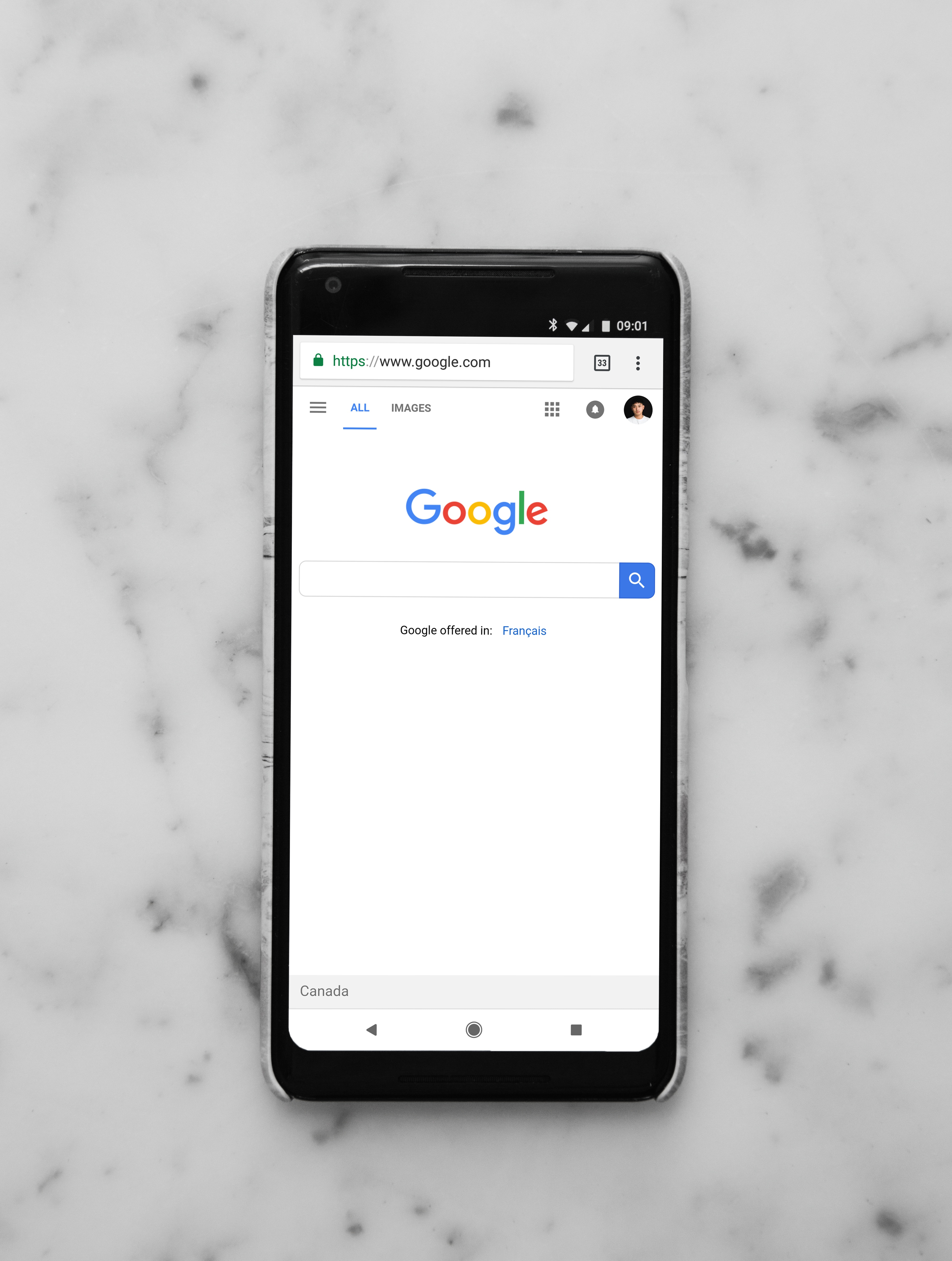
    iPhone with its screen displaying Google search at Search Influence in New Orleans, LA

    Most marketers are familiar with the shift from laptop and desktop computers searches to mobile searches. Statista reports that searches performed on mobile devices have continued to grow in recent years, with mobile devices making up 55 percent of all organic search engine visits in the United States in the second quarter of 2018, up from 46 percent in the second quarter of 2016. In fact, the number of mobile search users is expected to increase to 221 million by 2020.

    The shift to mobile search comes at a time when most smartphones are equipped with some sort of voice-assisted search capability, such as Siri, Alexa, and Google Assistant. Artificial intelligence (AI) assisted voice search has effectively changed the way users are searching for the information, products, and services that they need, with searches now taking place with nothing more than the sound of your voice. As mobile and voice searches continue to increase, marketers should be mindful of the impact these search trends will have on their SEO strategies and plan accordingly to remain competitive and continue to stand out in search engine results.

    Mobile Optimizations Are Key

    As most voice searches are done on some type of smartphone or mobile device, having a mobile-friendly site is critical to ensure your business or brand appears for valuable voice searches that are taking place on mobile phones. Marketers should take steps to make sure their websites are mobile-friendly. Luckily, Google offers a free tool that can assist in determining how mobile-friendly your website is.

    In addition to researching and implementing Google’s suggested mobile optimizations for your site, the layout of your content on a mobile device is also very important. Try breaking content up into shorter paragraphs, utilizing lists and bullet points, and including images to help make your content more mobile-friendly and keep readers engaged.

    Optimizing Content for Voice Search

    One of the most important factors to keep in mind when considering voice searches and SEO is the fundamental difference in the way people type versus the way people actually speak. Search Engine Watch notes that searchers using voice-assisted search are more likely to use full sentences and grammatically correct language, compared to using a non-sentence when typing a phrase or question into Google.

    For example, a voice-assisted query about the importance of voice search and SEO could be:

    “Why is Voice Search important to SEO?”

    Whereas a typed query would be more informal and broken up:

    “Voice search SEO”

    Marketers looking to optimize content for voice search should utilize clear, conversational language that answers specific questions.

    The Impact on Local SEO

    A large percentage of all voice searches are location-based queries, making it more important than ever to make claiming and optimizing your business listings and Google My Business listing a priority in your SEO strategies. Due to the inherently mobile nature of smartphone use, a large portion of voice requests through Alexa, Siri, and similar AI technologies also deal with navigation and location.

    What exactly does this mean for local business owners? This means that now, more than ever, utilizing well-thought-out local SEO tactics will be especially important for your business to appear at the top of local search engine results.

    Local businesses should look for ways to creatively include local information in their SEO strategies to capitalize on local search intent via voice-assisted search queries. Try including both long tail and short keywords within your content that mention local landmarks and places in your neighborhood.

    Woman on a laptop at Search Influence in New Orleans, LA

    Keep It Simple

    While the thought of another technological trend impacting your SEO strategy and results can be intimidating, keep in mind that many of the tactics one would use to optimize for voice searches are also ones that would be used when optimizing for traditional searches as well. Optimized content is the foundation of any SEO strategy, regardless of whether or not you’re optimizing your content for a traditional or voice-assisted search.

    Other SEO building blocks that positively impact search engine results for traditional search queries include mobile-friendliness and mobile site speed. Again, the good news is that if you continuously focus on optimizing your site as well as your site’s content for traditional search queries, chances are that you’ll be in a good position when it comes to optimizing your site for voice assisted searches as well.

    As voice search continues to grow, it will be up to marketers to adapt to capture the benefits of this new type of search. By continuing to employ tried-and-tested SEO tactics and staying up to date on how new trends can impact your SEO, you can stay ahead of the competition and keep potential customers engaged. Our team of experts thrives on staying on top of new trends in the digital marketing landscape. Reach out to us today to learn how we can help your business stay up to date as well.

    Images:

    iPhone on Google search

    Woman on laptop


  • 5 Tips for Engaging Email Marketing

    Sending frequent emails isn’t enough. In fact, if your content isn’t thoughtfully developed for your target audience, your hard work can find its way to the spam folder. From collecting email addresses to allowing people to unsubscribe, basic newsletter marketing is required to reach your audience’s inbox. Once you’ve got an interested audience, engagement is the first step to generating conversions.

    Craft a Strong Subject Line

    If your subject line isn’t engaging, the email may not be opened. Your subject line needs to communicate the content of the message clearly. Are you talking about a new product that’s not available anywhere else? Create urgency by emphasizing the timeline on the sale or promotion. From commercials and social media, we all have a basic understanding of how to make a compelling pitch. The challenge is creating an original subject line for each email marketing blast.

    Curious dog using the internet - Search Influence

    Your subject line should attract interest like a BuzzFeed headline, whether it’s describing an upcoming sale or exciting news updates for your stakeholders. Numbers are easy to digest, and they make better use of fewer characters. An email with “5 insider coupons” is more appealing than a vague promise of a special promotion. Similarly, “curiosity gap” is a term for headlines that give just enough information to make readers curious to read the rest of the story. Give the reader just enough information to pique their interest, and they will open the email in search of the answer.

    Create Valuable Content

    Before you put too much work into planning the perfect subject lines, make sure that your email marketing blasts are worth opening. Collect compelling, interesting, and useful information that rewards subscribers who continue to open and read emails. With both your website and email marketing, content is king. Whenever practical, offer special advantages and updates on future events. Are your subscribers offered insider discounts and advanced notice of sales?

    If your email marketing campaign suffers from a high rate of people clicking “unsubscribe,” then you aren’t meeting the expectations of subscribers. Think about the types of content that would most interest your target audience, whether they are interested in regular news about your industry or only occasional updates, presented in a timely manner. Offer special promotions and tips that reward people for continuing to follow along.

    Rotating mobile device - Search Influence

    Optimize for Mobile

    Many viewers will be sorting through their inbox on a smartphone. In fact, mobile devices are where 65 percent of emails are first opened. Those first seconds are critical in determining whether the recipient reads the message, archives it to read later, or deletes it immediately. A complex, information-rich chunk of text may get archived for later, but that’s no guarantee that it won’t be forgotten.

    If you have too many images or a poorly formatted page, you’ve already alienated a lot of potential readers. A modern email marketing campaign needs to leverage a mobile-friendly approach to newsletters, as well as websites. Short lines of text and a fast loading speed are essential. When targeting readers on their mobile devices, try to get them to engage while still on their smartphone. Keep your message short and clear, and quickly convert views into leads with an effective call to action.

    Use Compelling Calls to Action

    What’s your desired outcome for your email marketing campaign? Whether you’re looking to collect more followers, increase website traffic, or turn subscribers into repeat customers, the call to action should reflect your goals. The call to action should have a sense of timely urgency, and it should dovetail with the value offered by your email. Are the readers looking for a coupon or more information about new technology? Direct readers to your website for additional details. Have them call or visit your contact page to use the coupon today.

    Animation of a call to action icon on a mobile device - Search Influence

    Be careful about sounding too gimmicky or cheesy, both with your subject line and your call to action. We’re all familiar with the promotional hyperbole of excited advertisers, promising that this one-time offer is the best thing ever. Try to avoid language like “click here,” which is both overly specific and vague. “Here” doesn’t explain the content or purpose of the page that you want the reader to visit. “Click” places all the emphasis on the first action you want from the viewer. A stronger call to action would focus on the benefits of calling or visiting. Will they learn more about a new service? Will clicking or calling allow them to schedule a free consultation or request a proposal?

    Break Up the Text With Subheadings

    Attention spans are shorter, regardless of whether readers are pausing with their smartphones or relaxing with their laptops. Even a compelling subject line won’t compensate for a large, intimidating block of text. Break up your message into short paragraphs with frequent subheadings. Get conversions instead of TL;DR responses and deletions.

    Like subject lines, subheadings should summarize content in a concise and interesting way. Readers who aren’t interested in the first paragraph may find a later subtopic appealing. Similarly, readers on a tight schedule should be able to skim the page to locate the information most relevant to their needs.

    Email marketing is an effective way to generate leads, but it only works with an engaging message and appropriate formatting. Contact our team to learn more.

    Images:

    Internet Dog

    Mobile CTA