Author: Jenna Movahed

  • 15 Questions Every University Should Ask Their PPC Agency About Their Campaigns

    Key Insights

    • Many universities rely on a PPC agency, but most campaigns aren’t built to connect ad spend directly to student enrollment outcomes.
    • A strong Google Ads agency should track meaningful conversions, such as inquiries, applications, and campus visits — not just clicks.
    • Ongoing PPC management, post-launch optimizations, and negative keyword strategies are essential to avoid wasted ad spend.
    • Transparent reporting, real-time dashboards, and CRM integration should be standard for any higher ed paid advertising campaign.
    • Search Influence combines PPC advertising with search engine optimization (SEO), delivering a full-funnel strategy tailored to higher education institutions.

    Universities invest heavily in paid search and display advertising to reach prospective students. Still, not every PPC agency delivers the transparency and strategy required to connect those campaigns to enrollment outcomes. Too often, agencies measure success in clicks or impressions, failing to show how those digital marketing efforts translate into inquiries, applications, and enrolled students.

    This blog provides 15 questions higher education leaders can use to evaluate their current Google Ads agency or PPC marketing company. These questions go beyond surface-level performance metrics and focus on alignment with institutional goals, proper campaign management, and integrating PPC with broader digital marketing strategies.

    By setting the right expectations, you’ll quickly see whether your PPC advertising campaigns are optimized for today’s competitive, AI-driven search environment or your budget is stretched thin without producing results.

    Questions to Ask Your PPC Agency

    1. How do you align PPC campaigns with our enrollment goals?

    A PPC agency should align campaigns with university enrollment goals by connecting paid search strategies to inquiries, applications, and enrollments.

    In higher education marketing, this means campaigns must be tied directly to the admissions funnel, not just surface-level metrics like clicks or impressions. Campaign management should include keyword research, ad placement, and bid strategy that align with institutional objectives and admissions cycles.

    One of the most important measures of this alignment is higher education cost per inquiry (CPI). In our 2024 study created in collaboration with UPCEA, Higher Ed Marketing Metrics Research Report: What Gets Measured Gets Managed, we established the first industry-wide CPI benchmark for professional, continuing, and online (PCO) education, finding an average CPI of about $140. This benchmark gives universities a precise reference point for evaluating whether their campaigns are efficient compared to peers.

    We design PPC campaigns around your enrollment goals, prioritizing CPI and cost per enrollment. This ensures that your ad spend drives measurable student recruitment outcomes and aligns with industry best practices.

    2. What conversion actions are you tracking?

    An effective PPC agency should track conversions tied to student recruitment, including form fills, calls, campus tour sign-ups, and event RSVPs.

    Tracking these actions provides actionable insights into whether PPC ads produce conversions that matter. Without accurate conversion tracking, PPC campaigns can’t show how ad spend supports enrollment objectives.

    We connect conversion actions directly into CRM systems, tying campaign management to the admissions funnel. By aligning pay-per-click advertising with key performance indicators (KPIs), we help universities measure ROI in ways most PPC agencies overlook.

    3. How do you optimize campaigns post-launch?

    Strong PPC agencies optimize campaigns after launch by running ongoing A/B tests, refining negative keywords, and adjusting bid strategies to improve performance.

    Post-launch optimization includes keyword research, ad copywriting, and monitoring ad groups across platforms like Google Ads, Microsoft Ads, and the Google Display Network. Without continuous updates, PPC costs rise, and wasted ad spend becomes unavoidable.

    At Search Influence, we use Google Analytics and other performance tracking tools to refine PPC management services weekly. By monitoring ad placement, web traffic trends, and audience targeting, we keep campaigns efficient and focused on producing qualified student inquiries.

    4. What role does AI play in our paid ads strategy?

    Modern PPC agencies should use AI to enhance paid search campaigns through smarter bidding, predictive audience targeting, and automated ad creation.

    AI can improve bid management and ad placement, but without human oversight, it risks inflating PPC costs and generating irrelevant traffic.

    Our approach combines AI-powered campaign management tools with human expertise in higher education marketing. By balancing automation with strategy development, we maximize ad spend efficiency, reduce wasted ad spend, and ensure PPC ads produce conversions tied to business goals.

    5. How do you integrate SEO and paid ads?

    A strong PPC agency should integrate paid ads with SEO to maximize visibility on search engines and strengthen digital marketing strategies.

    Paid search campaigns and search engine optimization work best when combined, creating a consistent presence that supports both immediate conversions and long-term visibility.

    At Search Influence, we unify PPC marketing with SEO services to deliver a comprehensive digital marketing plan. By aligning paid and organic strategies, universities gain a competitive advantage, capture more web traffic, and improve online success across online platforms.

    6. Can you show us real-time performance dashboards?

    A transparent PPC agency should provide real-time dashboards integrating Google Ads, GA4, and CRM data.

    These dashboards allow higher ed leaders to monitor campaign management without waiting for monthly reports, ensuring ad management aligns with enrollment goals.

    We create custom dashboards highlighting cost per inquiry, campaign performance, and other key performance indicators. These tools give universities immediate visibility into PPC performance and help them quickly adjust their digital marketing efforts.

    7. How do you feed PPC data into our CRM?

    Effective PPC agencies should integrate PPC data into CRM systems to connect clicks with inquiries, applications, and enrollments.

    Without CRM integration, pay-per-click advertising cannot be tied to real ROI, making campaign management incomplete.

    We connect PPC advertising directly into admissions CRMs, enabling universities to attribute web traffic and inquiries to specific ad groups, platforms, and campaign strategies. This level of integration provides actionable insights for optimizing PPC budget allocations.

    8. What certifications does your team hold?

    Certified PPC experts should manage higher education campaigns with credentials in Google Ads, Google Analytics, and Meta platforms.

    Certifications prove technical expertise, but higher ed experience ensures that knowledge translates to enrollment outcomes.

    Our PPC experts hold platform certifications and apply them directly to higher education campaigns. We deliver PPC management services that outperform generalist marketing agencies by combining industry expertise with advanced platform knowledge.

    9. How do you ensure our budget is spent efficiently?

    A reliable PPC agency should maximize budget efficiency through negative keyword strategies, pacing adjustments, and cross-channel ROI tracking.

    Inefficient campaign management leads to wasted ad spend, inflated management fees, and poor alignment with business objectives.

    Our team focuses on reducing PPC costs by lowering the cost per qualified inquiry. We monitor bid strategy across Google Ads and programmatic advertising to ensure ad spend is optimized across online platforms. This approach helps universities avoid wasted ad spend while boosting enrollment ROI.

    10. What reporting cadence and metrics do you provide?

    A PPC agency should report on enrollment-focused metrics such as inquiries, applications, cost per lead (CPL), and cost per enrollment (CPA).

    Reporting should include actionable insights, not just clicks and impressions, to show how PPC advertising supports student recruitment.

    We provide monthly and quarterly reporting built around the KPIs that matter most in higher education. Our reporting connects paid search and paid media performance directly to student recruitment goals, ensuring transparent and accountable campaign management.

    11. How do you handle audience targeting for higher ed?

    Higher education PPC agencies should use precise audience targeting strategies, including geo-targeting, demographic segmentation, and program-specific ad groups.

    Effective ad management also requires compliance with platform policies while reaching students most likely to apply.

    Our campaign management uses advanced audience targeting techniques across social media marketing, search engine marketing, and remarketing campaigns. With years of higher ed experience, we ensure ad placement reaches qualified students while staying compliant with advertising regulations.

    12. What’s your approach to ad creative and testing?

    A strong PPC agency should continually test ad creative to improve engagement and drive conversions.

    This includes responsive search ads, video ads, ad copywriting, and programmatic advertising designed to boost inquiries. Campaigns should evolve with student behavior to maintain a competitive advantage.

    We run ongoing ad creation and testing cycles, using actionable insights from ad platforms like Google Ads, YouTube ads, and social media advertising. This process ensures PPC ads produce conversions and align with student search intent.

    13. How do you stay ahead of AI and platform updates?

    PPC agencies should proactively adapt to AI advancements and ad platform updates to maintain effective campaign management.

    Search engines and online platforms frequently roll out updates that affect ad placement, bid strategy, and audience targeting.

    Search Influence monitors how AI affects paid ads in real time, adjusting strategy development across Google Ads, search, and social media platforms. This proactive approach keeps universities ahead of competitors and prevents wasted ad spend.

    14. How do you prove campaign ROI to university leadership?

    A PPC agency should prove ROI by tying PPC campaigns to student enrollment outcomes through clear attribution.

    Reporting must connect ad spend to inquiries, applications, and seats filled, providing leaders with actionable insights.

    We create enrollment-focused ROI reports highlighting cost per inquiry and enrollment. By connecting PPC performance to business goals, we make it easy for university leadership to see the value of their paid advertising campaigns.

    15. What’s your experience with higher education institutions?

    PPC agencies with higher education experience can better manage enrollment seasonality, compliance, and admissions cycles than generalist agencies.

    Higher ed campaigns are complex and require specialized knowledge in paid advertising, remarketing campaigns, and digital marketing strategies.

    Search Influence is a higher ed marketing agency with years of experience managing PPC campaigns for universities. Our industry expertise helps institutions boost sales of their academic programs, allocate PPC budgets strategically, and achieve online success through comprehensive digital marketing.

    Solve Your Higher Ed Marketing Puzzle With SEO and Paid Digital Ads

    SEO and paid ads together improve student recruitment results. Universities that integrate search engine optimization with PPC advertising maximize their limited budgets and create a consistent presence across online platforms.

    Our white paper demonstrates how SEO and paid ads work hand-in-hand to:

    • Capture students actively searching for programs
    • Maximize limited budgets through smarter campaign management
    • Deliver real-time outcomes that can be optimized mid-campaign
    • Drive action at every stage of the admissions funnel
    • Attribute the source of your most valuable prospects
    • Prove ROI with measurable results tied to enrollment
    Ready to See If Your PPC Agency Measures Up?

    If these 15 questions leave you uncertain about your current campaigns, you may not be getting the most from your ad budget. Most PPC agencies focus narrowly on clicks or impressions, but universities need a partner that understands how digital marketing strategies drive enrollment.

    Search Influence blends AI-driven paid search with proven SEO strategies, offering universities a strategic partner for campaign management that reduces wasted ad spend and increases inquiries.

    Download the white paper today to see how SEO and paid ads work hand-in-hand to drive measurable impact for universities.
    Images:
    Unsplash
    Unsplash

  • Turn Data Into Decisions With Your 2025 KPI Dashboard

    Turn Data Into Decisions With Your 2025 KPI Dashboard blog by Search Influence

    Key Insights

    • KPI dashboards consolidate key performance metrics into a single, visually intuitive platform, providing clarity and actionable insights.
    • Aligning KPIs across marketing, sales, and leadership ensures all teams work toward shared strategic goals. A centralized dashboard eliminates data silos, fosters collaboration, and enhances decision-making.
    • KPI dashboards empower marketers to make budget-conscious, data-backed decisions, whether tracking costs like CPI and ROI or monitoring performance across multiple data sources,

    A KPI dashboard is a tool that visualizes your key performance indicators (KPIs) and consolidates these critical metrics in an easily digestible format, typically through charts and graphs. Modern KPI dashboards allow you to quickly analyze your performance and uncover actionable insights to optimize your campaign while bypassing the headaches of data overload.

    Imagine a NASCAR driver pushing the pedal to the metal without a dashboard above his wheel to help guide his decision-making. That’s pretty risky.

    Not using a KPI dashboard to drive marketing decisions in your online ad campaigns is similarly dangerous.

    In this blog, we’ll explain how to use your KPI dashboard software to maintain data accuracy, track progress, and boost marketing performance in 2025 and beyond.

    Buckle up — you’re on the fast track to valuable insights.

    The Top 5 Things You Should Use Your KPI Dashboard For

    1. Visualize your funnel and identify fallout points

    A well-designed KPI dashboard brings clarity to complex data, enabling marketers to pinpoint fallout points at each stage of the funnel. By analyzing historical data and tracking key metrics such as lead-to-MQL and MQL-to-SQL conversion rates, you will quickly find areas where your funnel doesn’t perform as expected.

    Benefit: Pinpoint friction points to improve conversions

    When you visualize key performance indicators, you’re not just looking at raw numbers — you’re gaining actionable insights. By identifying where prospects are dropping out, you can adjust messaging, optimize touchpoints, and create a smoother journey for your audience.

    Case study: Higher education KPI dashboard example

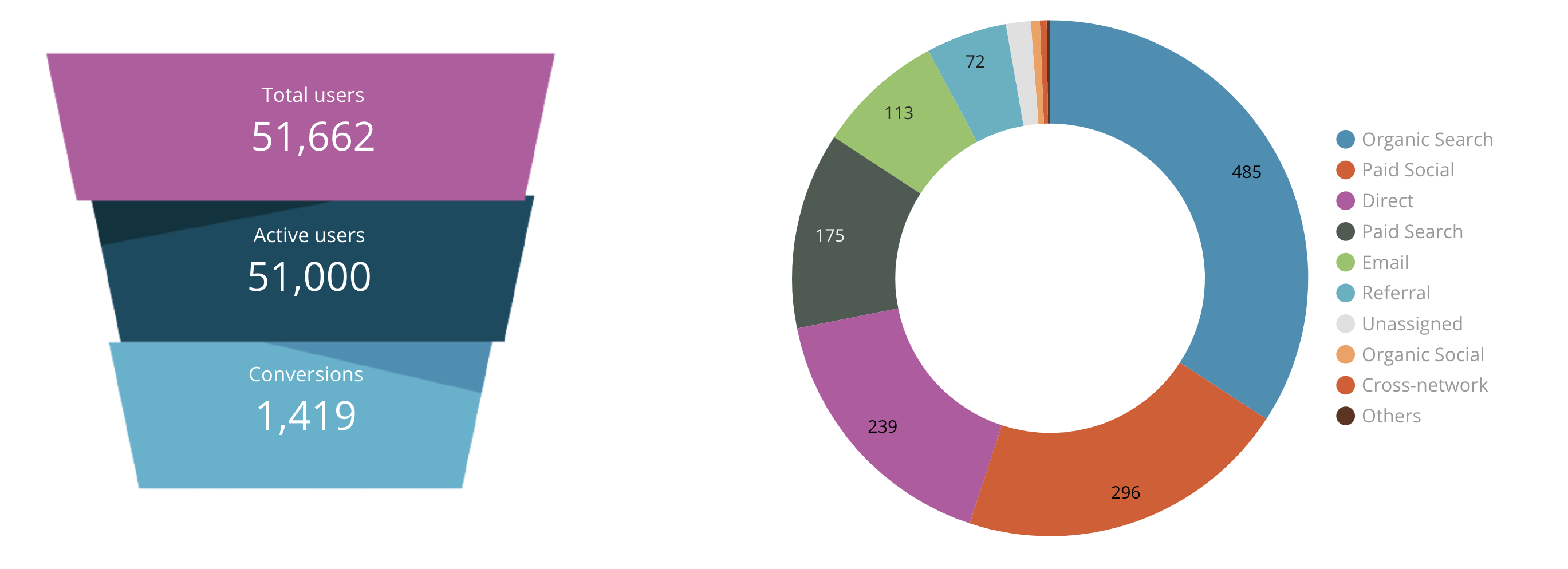
    Charts from a KPI dashboard created by Search Influence

    Search Influence collaborated with one of our long-time higher education clients to create a KPI dashboard that simplified their data and visualized their campaign outcomes. 

    This private research university’s marketing objective was to continuously grow incoming inquiries and start applications for their priority degrees and programs through digital advertising, SEO, email marketing, and PR.

    Our KPI dashboard enabled the higher education institution to pinpoint successful areas of their campaign and allocate more resources to them.

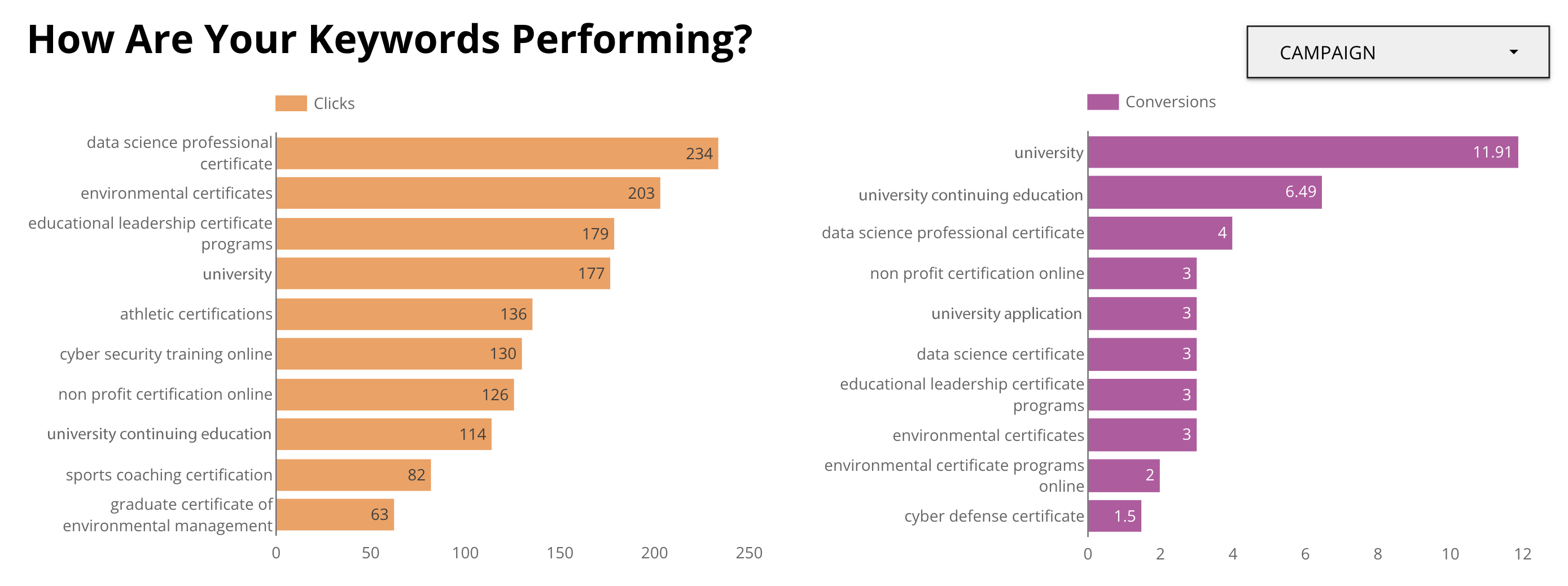
    Keyword performance charts from a KPI dashboard made by Search Influence

    Equipped with access to clear data points, our higher education client adjusted their paid and organic search campaigns to include the high-performance keywords driving clicks and conversions. 

    This attention to detail led to nearly 140,000 impressions in November and December of 2024 alone. 

    2. Assess lead quality to improve ROI

    Not all leads are created equal, and understanding lead quality is essential for maximizing the return on investment (ROI) of your digital advertising campaign.

    With an executive KPI dashboard, marketers analyze lead quality in real-time using data visualizations that highlight key insights. 

    By evaluating key performance indicators like cost per lead (CPL), cost per acquisition (CPA), and cost per inquiry (CPI), you can align your efforts with your strategic goals.

    Benefit: Focus on high-quality leads for better ROI

    Focusing on high-quality leads ensures your campaigns are both effective and efficient. For instance, tracking engagement indicators such as email open rates, website visits, or time spent on landing pages within an analytical dashboard helps identify leads most likely to convert. Prioritizing these leads allows you to allocate resources more strategically and see a measurable improvement in ROI.

    3. Align on KPIs that truly matter

    Many marketers struggle with overwhelming amounts of data, making it difficult to focus on what truly drives success. An operational KPI dashboard empowers you to zero in on the relevant data that aligns with your marketing goals.

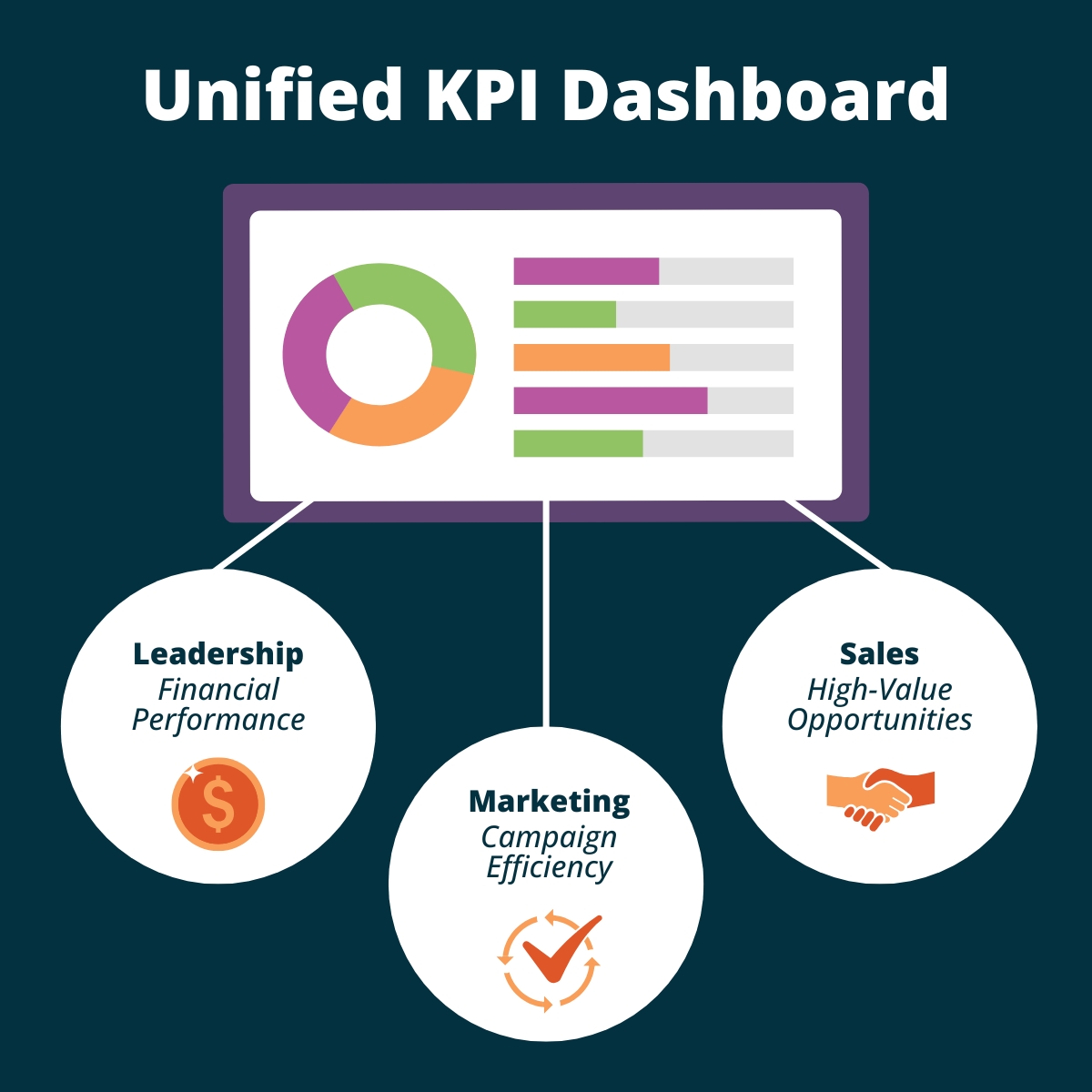
    Graphic of what it takes to make a unified KPI Dashboard by Search Influence

    Coordinating key performance indicators across marketing, sales, and leadership teams ensures everyone works toward the same objectives. For example, marketing might track customer acquisition cost (CAC), while the sales team monitors conversion rates. Combining these metrics into a unified KPI report provides a clear picture of performance across departments.

    Benefit: Enhanced collaboration and better decisions

    When all teams work from the same operational KPI dashboard, it creates alignment that fosters trust and transparency. Leadership can focus on financial performance, sales can prioritize high-value opportunities, and marketing can track campaign efficiency — all while working toward shared strategic goals.

    4. Get a clear picture from multiple data sources

    Modern marketers rely on an array of tools — Google Analytics, CRMs, social platforms, and more — to collect valuable data. The challenge lies in making sense of these fragmented insights. A marketing KPI dashboard solves this problem by consolidating data from multiple sources into one unified view, creating a reliable single source of truth.

    When raw data is combined into a centralized operational dashboard, it transforms into actionable insights. The dashboards’ visual nature gives stakeholders clear insights on how to optimize their campaigns.  

    By aligning important performance indicators across platforms, business leaders will eliminate silos and ensure all teams are working from the same playbook.

    Benefit: Save time and make unified decisions

    Consolidating data into a single dashboard saves countless hours of toggling between platforms. It also promotes collaboration by breaking down departmental barriers. With interactive charts and real-time data, decision-makers can easily visualize operational metrics and overall performance.

    5. Track critical costs and performance indicators (CPI, ROI, and more)

    Budget-conscious decision-making is only possible when you have a clear view of your spending. The right KPI dashboard software makes data analysis straightforward, enabling you to identify where your marketing dollars are used most effectively.

    Benefit: Optimize spend and eliminate inefficiencies

    Tracking cost-related metrics ensures your campaigns are efficient and impactful. By using your dashboard to analyze data, you will quickly spot underperforming initiatives and reallocate funds to strategies that yield better results.

    KPI Dashboard FAQs

    How do I create a KPI dashboard?

    To create a KPI dashboard, start by identifying the best KPIs for your campaign and marketing goals. Use tools like Google Data Studio, Tableau, or custom software to visualize these metrics. Many of these platforms include template galleries you can tailor to fit your needs and help you get started. You can centralize your insights into a single, cohesive view by integrating data sources such as Google Analytics, CRM tools, and social platforms. 

    How do you use a KPI dashboard effectively?

    To use a KPI dashboard effectively, it’s important to regularly refer to it for actionable insights. This allows you to monitor team progress, track past performance, and adjust strategies as needed. 

    But without the proper team in place to monitor your dashboard, even this clear, visual aid turns into a sea of confusion.

    Hiring an experienced digital marketing agency like Search Influence is like throwing your team a life preserver. 

    Search Influence ensures you fully leverage your dashboard by using analytics and lead tracking to inform your strategic planning and optimize your efforts. Whether you have questions about results or need to pivot your campaign to new goals, we simplify the process.

    What data should be in a KPI dashboard? 

    A well-designed KPI dashboard should include key indicators tailored to your goals. For marketing, this might involve metrics like cost per impression (CPI), return on investment (ROI), and conversion rates. Sales managers may focus on lead-to-close ratios or revenue growth. The best dashboards also include metrics for monitoring performance, like customer acquisition costs, traffic sources, and campaign engagement, ensuring that all critical data is visible at a glance.

    What are the best practices for KPI dashboard design?

    • Simplicity: Focus on the most relevant performance metrics to avoid overwhelming users.
    • Clarity: Use intuitive charts and visuals to ensure the data displayed is easy to interpret.
    • Customization: Tailor your dashboard to align with specific marketing objectives.
    • Real-time updates: Ensure data is updated regularly to support data-driven decision-making.
    • Accessibility: Design for all stakeholders, so everyone benefits from the insights.

    What are the three essential elements of a KPI dashboard?

    • Data consolidation: Integrate information from multiple sources to create a unified view.
    • Real-time tracking: Include up-to-date metrics to ensure accurate performance monitoring and informed decisions.
    • Actionable insights: Focus on metrics that drive strategic planning and empower your team to make data-driven decisions.

    Turn Data Into Decisions With Help From Search Influence

    KPI dashboards are indispensable for marketers and business leaders aiming to stay ahead in 2025. They help you visualize your funnel, assess lead quality, align team goals, consolidate multiple data sources, and track critical costs.

    Search Influence has the expertise to create and analyze custom dashboards that align with your marketing objectives. We help you focus on the metrics that matter, enabling you to optimize your strategies and achieve better results.

    Take the guesswork out of your data.

    Contact Search Influence to see how we will help you harness the power of KPI dashboards and elevate your business with our digital marketing services.

  • Beyond the Hype: Is Geofencing the Right Strategy for Your Brand?

    Key Insights

    • While geofencing offers the unique advantage of targeting potential customers within a specific geographic range, it doesn’t guarantee ROI.
    • Geofencing holds the potential to drive impactful results by targeting specific geographic locations, but its effectiveness varies based on a brand’s goals and audience.
    • Geofencing is a potent tool that works best in conjunction with a broader marketing strategy — a strategy that incorporates multiple forms of online advertising and keeps the audience at the center.

    Marketers around the globe are touting geofencing as the new golden child of online advertising.

    While geofencing’s ability to target potential customers in a specific geographic radius makes it a worthwhile tool, it’s not a magic wand you can use to guarantee ROI.

    The strategy behind its use is more important than any tool.

    Targeting the right audience is the most critical tactic to pursue, whether that includes geofencing or traditional PPC ads.

    In this blog post, we will go beyond the hype and help you determine when to use geofencing ads.

    Geofencing Strategy

    How Do Geofencing Ad Campaigns Work?

    Patented in 1995 by American inventor Michael Dimino, geofencing allows businesses to advertise directly to mobile users within a targeted geographic radius.

    Since then, the success of geofencing has become evident. 95% of companies worldwide use some variation of geofence marketing in their online advertising campaigns.

    The power of geofencing is its ability to engage potential customers based on their location in real time — offering marketers a highly targeted advertising approach.

    This is advanced, exciting stuff!

    The nitty-gritty of how it works is even more interesting.

    Geofencing ads use GPS, Wi-Fi, and cellular data to determine a user’s location — all with varying levels of accuracy.

    Marketers use software to set up geofenced areas, ranging from broad (a neighborhood) to very specific (inside a store).

    When a user crosses a geofenced area, they trigger specific actions, such as being sent a push notification, text message, or an ad within an app. These conversion opportunities all have the potential to turn a prospect into a customer.

    Geofencing Example

    Say you’re a local pizza shop in Downtown NOLA trying to attract more customers on a Saints football Sunday.

    While people might not have traveled Downtown to grab a quick slice from your shop, they will undoubtedly be hungry after the game.

    You can use geofencing ads to target the area outside the Superdome. Once the user steps outside the Dome, they will be targeted with ads about your delicious za only being a 10-minute walk away.

    In scenarios like this, geofencing should be your go-to digital advertising strategy — like pizza is your go-to meal after the big game.

    The Benefits of Geofencing Ad Campaigns

    Geofencing ads offer many unique benefits that marketers can utilize as part of a broader digital marketing campaign, including:

    • Hyper-Localized Targeting: Allows businesses to target customers within a particular geographic area, even as precisely as a single building.
    • Real-Time Engagement: Provides the ability to engage consumers as they enter, leave, or linger in the geofenced area, offering timely and relevant promotions or messages.
    • Increased Foot Traffic: Drives customers to physical locations, such as retail stores or events.
    • Contextual Relevance: Brands can create highly relevant and contextual promotions, deals, or alerts based on a user’s location.
    • Personalization: The ability to tailor messages to individual user behavior, enhancing the user experience and increasing the likelihood of engagement.
    • Improved Data Collection: Geofencing allows businesses to collect valuable data on consumer behavior, such as how often they visit a location. Pro tip: Use this data for your future targeting and strategy.
    • Highly Measurable: Provides in-depth analytics to measure campaign effectiveness, including visit frequency, dwell time, and conversion rates.

    At this point, you might be thinking, “Wow! Geofencing ads cover all the bases necessary for a successful digital marketing campaign. Why would I use anything else?”

    While your excitement is warranted, it’s still important to remember that the digital marketing world is home to many valuable types of ads.

    Let’s learn about them and see how they compare to geofencing ads.

    Comparing Geofencing Ads vs. Typical Display Targeting vs. “Traditional” PPC/Paid Search Ads

    Online advertisement variations are tools. No one type of ad is better than another because they each serve a unique purpose.

    In the same way sandals are better for a beach day, and tennis shoes are better for a jog — each shoe has its specific use. Your ability to choose the right one is what optimizes your experience.

    Not one is better than the other — they’re just different.

    How they differ in their approach

    • Geofencing Ads: Most often used in display ad targeting, geofencing ads focus on a specific geographic location, targeting users within a particular area to drive actions like store visits, event attendance, or online conversions.
    • Typical Display Ad Targeting: Operates on a broader scale, focusing on demographics, interests, and behaviors to reach a broad but relevant audience.
    • Traditional PPC/Paid Search Ads: Focus on search intent or behavior-based angles, aiming to capture users already interested in a service, product, or topic.

    How they differ in their reach

    • Geofencing Ads: Limited to a specific geographic area or individual locations, such as a single building or street. The audience is inherently localized.
    • Typical Display Ad Targeting: Designed for flexibility, these ads can be cast wide or narrowed down based on various factors like demographics, interests, and behaviors. While they can target specific locations, they are not restricted by it, giving advertisers the freedom to reach audiences across regions, countries, or even continents.
    • Traditional PPC/Paid Search Ads: Have the potential for a broader, even global reach, depending on campaign settings.

    How their overall goals differ

    • Geofencing Ads: Primarily aim to drive real-world actions, such as increasing foot traffic to a physical location, engaging attendees at an event, or capturing consumers near a competitor’s site (geo-conquesting).
    • Typical Display Ad Targeting: These ads balance raising brand awareness and prompting specific user actions. While they can drive real-world interactions, their strength lies in reaching users across various digital touchpoints, aiming to increase brand visibility and online engagement.
    • Traditional PPC/Paid Search Ads: Typically aim to drive online actions, such as website visits, form submissions, or online sales, although you can also use them for local business promotion.

    Most Successful Geofencing Targets

    Geofencing ads work best in a largely populated city or when your brand has many locations or has a lot of foot traffic (such as a pizza shop with multiple locations in a city’s business district).

    This is where geofencing ads shine because you can use them to capture potential customers near your business location — even if unintentionally.

    Some examples of popular places to target using geofencing ads include:

    • Airports
    • Near competitor locations
    • Near schools for child-friendly activities (like visiting the zoo)
    • Near events (sporting events, concerts, business seminars)
    • Near universities

    The powers of geofencing are also best used when your other targeting options are limited.

    For example, Facebook has policies so you cannot target people based on housing. This has made it difficult for real estate companies and housing communities to target users on the platform. To mitigate these limitations, you can run geofencing display campaigns around competitors to help reach this audience.

    Limitations and Challenges of Geofencing Ad Campaigns

    While geofencing can be highly effective, it might not always be the best move for your business.

    Limitations and challenges of geofencing ads include:

    • Accuracy and Precision: While GPS technology is generally accurate, it’s not perfect. Buildings, lousy weather, and other physical obstructions can affect the accuracy of location data.
    • Privacy Concerns: Collecting and using location-based data raises concerns about user privacy. Brands need to be transparent and comply with data protection regulations.
    • User Opt-in Required: For geofencing to work, users must opt-in to location services for the particular app pushing the ad. This limits the pool of potential recipients.
    • Limited Reach: Geofencing is a hyper-local strategy targeting users within a defined geographic area. This can limit businesses with a more diverse or widespread audience.
    • Platform and Device Limitations: Not all devices support geofencing, and there may be variability in how different mobile operating systems interact with geofencing technology.
    • Scalability: While geofencing can be effective for local campaigns, it may not be easily scalable for national or global marketing initiatives.

    All expert marketers know the key to a successful campaign is targeting the right audience, not just the nearest audience. Your best customers could live on the other side of town.

    It would be a waste to lose out on those potential sales, right?

    The Importance of Audience Analysis

    In any online advertising campaign, the need for audience analysis is paramount to success.

    Creating a target based on audience behavior, needs, or preferences allows you to build a more personalized and effective strategy than focusing only on where your audience is located.

    When you only use geofencing ads, you’re actually doing the ads themselves a disservice.

    Geofencing ads are a team player — they work best when woven into a broader marketing strategy that keeps the audience at the center.

    Geofencing Strategy

    Integrating Geofencing into a Broader Marketing Strategy

    In today’s marketing landscape, brands need more than just a single tactic to make a lasting impact. Geofencing, while powerful, is just one tool in a marketer’s arsenal. To truly resonate with audiences and cultivate memorable brand experiences, it’s crucial to weave geofencing into a holistic marketing approach.

    Here are some strategies to consider when integrating geofencing into your overarching marketing blueprint:

    • Multi-Channel Synergy: Utilize geofencing as a complementary tactic alongside other display targeting, as well as other marketing channels like social media, email, and paid search, to create a seamless brand experience.
    • Consumer Journey Mapping: Integrate geofencing touchpoints into your overall consumer journey map to ensure that you’re reaching people at the right time and place.
    • Timing and Frequency: Align the timing of your geofencing ads with other marketing campaigns to maximize their impact.

    An example of geofencing integration in a broader marketing strategy

    When skilled marketing professionals use different variations of online advertising in tandem, the result is a return on investment for clients.

    Search Influence recently integrated a geofencing campaign with a Facebook ads campaign for our longtime higher education marketing collaborator Tulane SoPA’s Fall 2023 Grad Fair.

    To help boost enrollment in Tulane SoPA’s graduate programs, we put a geofence around other undergrad schools in hopes of capturing interesting students who might want to go to grad school once they finish undergrad.

    Once people became aware of the programs via the geofence campaign, we utilized Facebook event ads to get them to respond whether or not they were interested in attending the Fall Grad Fair.

    After this, we created a Facebook conversion campaign to remarket to those who responded to the event ads.

    Geofencing Ad Campaigns FAQs

    What’s the difference between geofencing and geotargeting?

    Geofencing involves setting up virtual boundaries around a specific location, allowing marketers to target users when they enter, exit, or spend time within these boundaries.

    Geotargeting refers to delivering content or ads to users based on broader geographical locations, like cities, regions, or countries, often leveraging criteria like user preferences, demographics, or search behavior in tandem with their location.

    Is there a minimum or maximum area that can be geofenced?

    Geofencing can be incredibly precise, targeting areas as small as a specific building or street. However, the exact minimum or maximum area can vary based on the platform or service provider used. Typically, there’s no strict maximum limit.

    How quickly can I see results from my geofencing ad campaign?

    The immediacy of results from a geofencing ad campaign largely depends on the targeted location’s foot traffic and the campaign’s specific objectives. You can observe interactions within hours of launching for areas with high foot traffic. However, it might take days or weeks to gauge significant results for campaigns with long-term goals or in less frequented areas.

    No matter how long it takes, the data shows you will likely see results. According to the U.S. Data Corporation, 53% of shoppers visited a retailer after receiving a location-based message.

    How do device permissions and location settings impact geofencing effectiveness?

    Geofencing heavily relies on users’ device location services. If a user has turned off location permissions for a specific app or their device in general, geofencing campaigns targeting them will be ineffective.

    What platforms or tools are best for setting up and monitoring geofencing campaigns?

    Several platforms excel in geofencing capabilities, with popular choices including Google Ads, Facebook Ads Manager, and dedicated platforms like GroundTruth or Simpli.fi. These platforms facilitate the setup of geofenced areas and provide robust analytics to monitor campaign performance in real time.

    Focus on the Best Return, Above All Else

    At Search Influence, we have the industry expertise to support you in reaching your online advertising goals. Our experience has helped clients from a multitude of industries reach their desired audience.

    Whether through geofencing, display targeting, or paid search, we will partner with you to build an all-encompassing digital ads strategy that delivers a return on your investment.

    If you’re ready to learn if geofencing ads are a good fit for your digital marketing strategy, contact our expert team to get started.


    Image sources:

    1. https://images.unsplash.com/photo-1608222351212-18fe0ec7b13b?auto=format&fit=crop&q=80&w=1974&ixlib=rb-4.0.3&ixid=M3wxMjA3fDB8MHxwaG90by1wYWdlfHx8fGVufDB8fHx8fA%3D%3D
    2. https://images.unsplash.com/photo-1570101945621-945409a6370f?auto=format&fit=crop&q=80&w=2070&ixlib=rb-4.0.3&ixid=M3wxMjA3fDB8MHxwaG90by1wYWdlfHx8fGVufDB8fHx8fA%3D%3D
  • Why Advertising Costs Spiked in 2021, Particularly in Q4 (and What You Can Do About It)

    Key Insights

    • Advertising costs tend to be higher in Quarter 4 for all industries
    • The iOS14 update in 2021 and the pandemic in 2020 magnified these trends in 2021
    • Plan ahead and anticipate this spike by creating a full-funnel strategy in advance to help offset these costs

    Screenshot of google search console data platform

    As we make our way into 2022, you may be high-fiving your team as you happily report that cost per impression has dropped across your Facebook campaigns, particularly for month-over-month comparisons. While this is exciting to see in the first quarter of the new year, it’s not exactly a coincidence. In fact, it’s actually the result of a trend we see in quarter 4 of the year prior. Q4 is notorious for driving advertising costs to their highest rates of the year. This is an important topic to address because it affects nearly all industries and can negatively affect your bottom line as the year comes to a close. The biggest driver of elevated CPMs during this time is increased competition.

    Starting with Black Friday, more and more marketers are rushing to push their ads live in time for the holidays, meaning more competition and higher advertising costs for you. While this likely doesn’t come as a huge shock, you might be surprised to learn that 2021 advertising costs were particularly high.

    To find out just how high, Search Influence has pulled our internal Facebook data to best answer this question. We have also included three proactive measures to help you plan for and cut these costs down each year.

    Internal Case Study

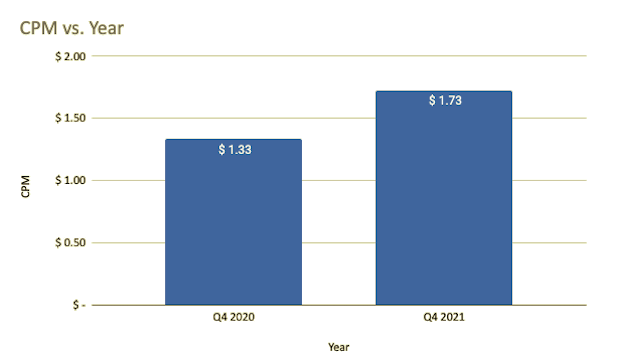
    In this review, we compared our 18 active Facebook clients, regardless of campaign objective, to the 17 Facebook clients active in 2020 during the same period. The results showed that Facebook cost per impression rose 29.48% in quarter 4 of 2021 compared to Quarter 4 of 2020.

    CPM versus year in quarter 4 2020 versus quarter 4 2021

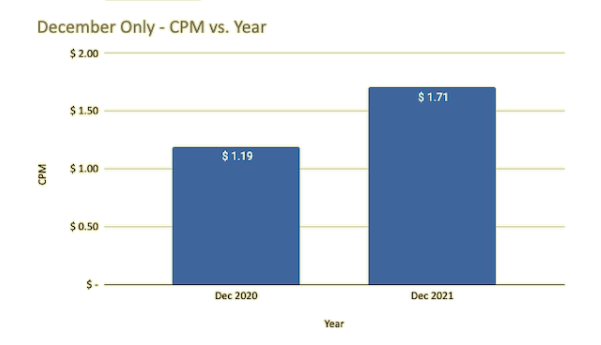
    The results were even more drastic in December. In December alone, CPM rose 43.07%!

    December data for CPM versus year for December 2020 against December 2021

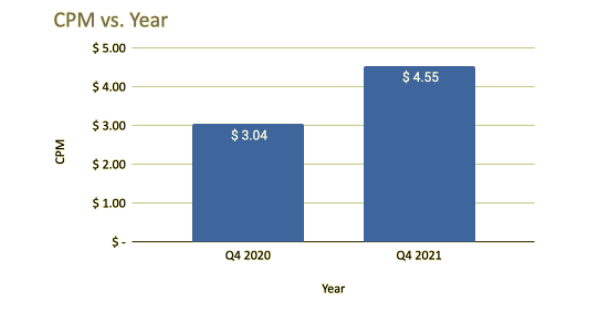
    For our higher education clients, in particular, we saw even more fluctuation. In quarter 4 of 2021, Higher Education CPMs rose 49.51% compared to the year prior.

    CPM comparison from Q4 2020 to Q4 2021

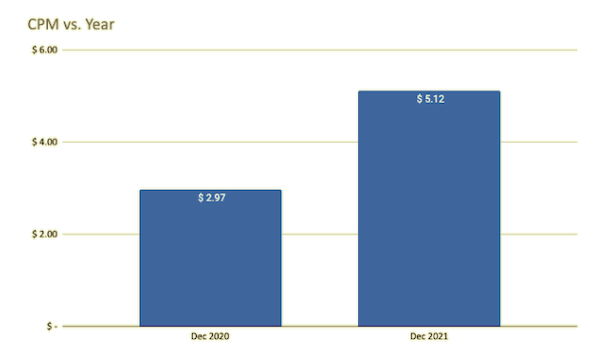
    And in December alone, CPMs grew 72.13% for this industry compared to December 2020.

    December only higher education CPM versus year data

    But, Why 2021?

    The most likely culprit is the iOS14 update that went into effect earlier in the year. Now that privacy is under the magnifying glass, Facebook has to revamp. Retargeting and Lookalike audiences are largely unavailable or tanking in performance due to most iOS users opting out of tracking. The result? Much smaller retargeting audiences.

    Additionally, Lookalike audiences, which come from Pixel data, aren’t being tracked the same way. Therefore, the data source for much of your Lookalike audience quality has been falling, and performance will suffer as a result. In sum, your ads are targeting a broader audience than before. Add that with the seasonal trends we see in Q4, and what do you get? Record high CPMs.

    Lastly, 2020 was a truly difficult year for everyone. As companies made cuts across their business, advertising budgets were often the first item on the chopping block. If you could keep your advertising campaigns running during this time, you might have been pleasantly surprised by the reduced competition. Now that the world is growing more and more accustomed to the new “normal” in light of the pandemic, companies can get back in the marketing game, and boom, competition is back, as are high CPMs.

    So What Does This Mean for You and Your Industry?

    Higher CPMs are here to stay, and you can expect them to be the highest towards the end of the year. The biggest spikes will likely hit in November and December, beginning around Black Friday.

    At Search Influence, we recommend the following strategies to help you counterbalance the increased costs in the final quarter:

    • Plan and execute a full-funnel strategy
      • The best way to prepare for this is to be proactive about your advertising strategy and plan at least six months in advance again. We would recommend allocating additional budget towards the end of the year to help compensate for the seasonality OR start running your campaigns earlier to ensure your ads are out of learning and optimizing towards your goals before the holiday rush hits. Beginning early in the year with a brand awareness strategy that leads into a conversion or lead generating strategy closer to the busy season allows users to grow familiar with your brand before it’s time for them to convert.
    • Create early incentives
      • Another strategy we recommend would be to set initiates for users to convert early. For example, an education client might waive an application fee if submitted before November 20. Likewise, an eCommerce click might benefit from offering an early bird promo code to encourage shoppers to purchase before marketing costs surge.
    • Increase awareness with high-quality video assets
      • Using video assets is an excellent way to improve performance. They almost always outperform static images, and 81% of customers decide to buy a product or service by watching a brand’s video content. Videos are also a great tool because you can use them to remarket to users that have viewed them before.

    Failing to plan ahead of this seasonal push could have a detrimental impact on your business. At Search Influence, we believe it is essential to build a full-funnel strategy throughout the year that can help you with most of your marketing budget. Reach out to our expert team at Search Influence to find out how you can improve your marketing strategy today!

    Images

    Search Console

  • Gen Z is the Next Non Traditional Student: Move Them Down the Funnel with These 2 Tactics

    Key Insights

    • Since Generation Z (Gen Z) is the next generation of non-traditional learners, it’s essential to provide accessible and relevant information to this new generation of life-long learners.
    • Two tactics in higher education marketing—Facebook/Instagram Lead Generation and Email Nurture campaigns—can help move prospective students through the funnel and one step closer to applying and registering.
    • Facebook/Instagram Lead Generation creates a friction-less conversion point for users at the consideration stage of the funnel.
    • Email Nurture campaigns allow you to send personalized, targeted messages to prospects in the consideration and decision phase of the funnel, addressing key decision points in their journey.

    Woman working at a laptop in front of a window

    Higher education marketing isn’t an easy A—it’s always evolving because the upcoming generation heavily influences the industry. As Gen Z is added to the typical prospective non-traditional student pool, marketing strategies must also change to appeal to prospective students in a relevant and engaging way.

    One of the most prominent characteristics of Gen Z is their tech savvy. This generation was born into the interconnected world of the internet, smartphones, tablets, and other smart devices. Digital marketers targeting Gen Z must provide easily accessible information at their fingertips and across social media platforms to compete for their attention.

    When first targeting prospective students, universities need to clearly display the attributes that make them different. Once the intended audience recognizes an institution’s brand and starts engaging with their social media and web content, it’s time to shift the strategy from brand awareness to the next phase in the marketing funnel: consideration, and ultimately through to decision (applying) and to registration.

    During the consideration phase, the prospective student is more familiar with a school. They may schedule a virtual tour or download a brochure. Students may even start imagining themselves attending—but they aren’t quite ready to commit. Prospective students are likely still researching other schools and weighing their options. During this stage, universities need to provide the information prospective students are looking for. Universities can use first-party data, like past inquiries, to directly target and speak to prospective students in this stage of the funnel.

    Facebook/Instagram Lead Generation Ads and Email Nurture campaigns can engage digitally savvy prospective students and move them through the marketing funnel to take the next desired action.

    Facebook/Instagram Lead Generation Ads

    What is a Facebook/Instagram Lead Generation Ad?

    During setup, Facebook gives marketers the option to create campaigns based on objectives (i.e., goals). All campaigns can also be converted to Instagram (73% of Gen Zers actively use Instagram, while only 40% use Facebook).

    Universities can select a Traffic campaign if the goal is to send their target audience from Facebook/Instagram to an external URL, like a blog page. This campaign would be most applicable at the top of the funnel.

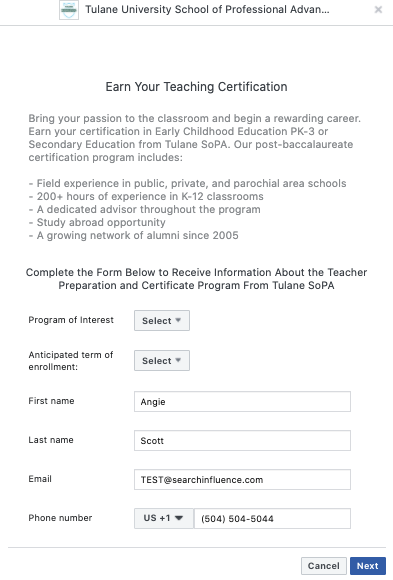
    In the consideration phase of the funnel, Lead Generation campaigns can be a convenient way to convert prospective students. Ads in Lead Generation campaigns look similar to other campaign ads, but instead of linking to a website outside of Facebook, Lead Generation ads send the user to an “Instant Form” directly in the Facebook (or Instagram) platform. Here, the user is prompted to fill out basic contact information.

    Then, in the decision stage, when it’s time to focus on driving potential students to fill out applications, marketers can show ads just to people who have completed that lead generation form. It’s best practice to run this campaign with a Conversion objective to optimize for users to take specific action on their site, such as an application.

    Why are Facebook/Instagram Lead Generation campaigns relevant?

    These campaigns are very user-friendly because the form fills are pre-populated with the user’s Facebook contact information, a feature many Gen Zers have come to expect. In a few seconds, the user can click the ad, retrieve the relevant information, and send over contact information that creates a new qualified lead. It’s that simple. (With some custom configurations, that conversion can automatically input into an enrollment management system like Slate!)

    Screenshot of Facebook ads campaign for higher education client

    Facebook/Instagram Lead Generation campaigns can also help universities gain more qualified prospects. Users don’t want to give their contact information to just anyone—if they’re submitting their contact information, they probably trust the business.

    It’s critical to target a lower-funnel audience to be most effective with this type of ad. Users who are already somewhat familiar with a university’s brand are more likely to be comfortable providing their information if they’re interested in learning more.

    How do Facebook/Instagram Lead Generation campaigns produce high-quality leads?

    When starting a new campaign, it’s common to feel like many of the prospects that come in aren’t high-quality leads. At first, it will take Facebook and Instagram’s machine learning some time to analyze and make changes to optimize a campaign to attract leads that fit neatly into a target demographic. Don’t be discouraged!

    If lead quality is still an issue after a few months, adding the “high intent” feature to forms can help. This feature adds a review screen for users to confirm before submitting a form. Adding this step helps ensure the user is consciously aware that they’re submitting their information. But note, this “high intent” feature is only available for users on mobile devices, so it will limit placements. Before turning this feature on, assess what percentage of impressions and past form submissions are coming from mobile devices.

    Email Nurture Campaigns

    The second critical tactic to move prospects further down the funnel is an Email Nurture campaign.

    What is an Email Nurture Campaign?

    In a previous blog post about engaging prospective college students, we define an Email Nurture campaign as “an intentional and strategic set of messages sent to a prospect over a period of time to guide them through the decision-making process to an ultimate desired action.”

    These email campaign strategies are built with conversion in mind and are sent to individual prospects directly, not to a bulk list at one time. The prospect’s action will trigger the type of email messaging sent to them. Each action the user takes will determine the next email they receive.

    Graphic showing higher education marketing funnel

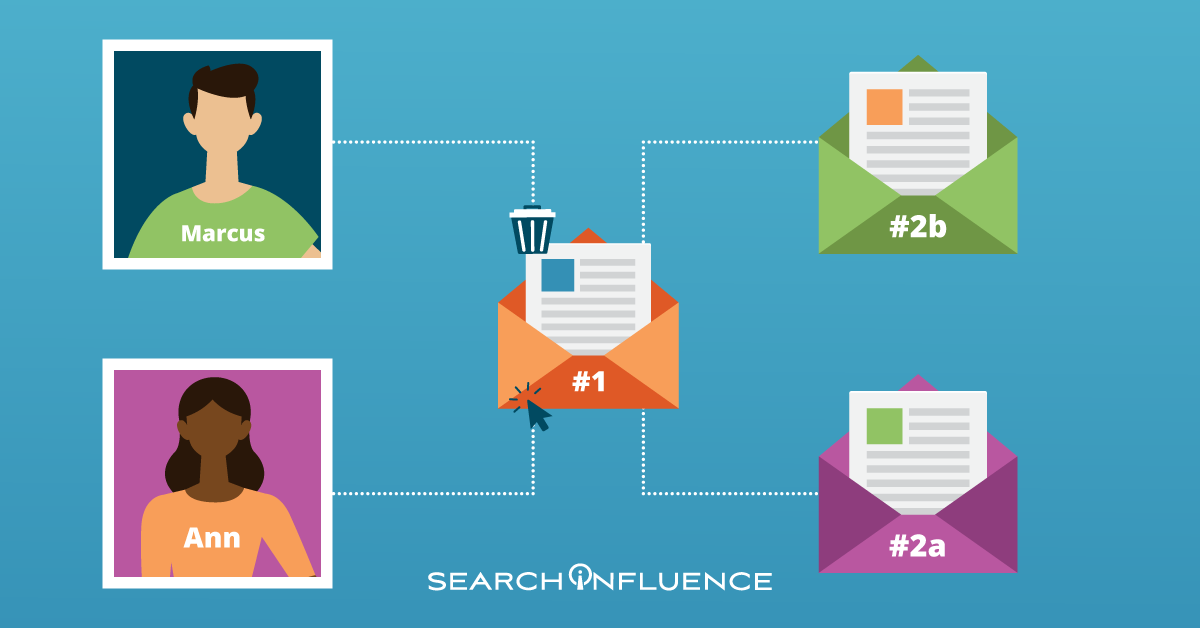
    For example, let’s say Ann (Lead A) and Marcus (Lead B) are both interested in studying urban planning and have submitted an online form on a university’s program page to receive more information.

    From that form submission, both Ann and Marcus will receive Email #1. Ann opens the email immediately and clicks through some of the included links. Based on her actions in that email, she might receive Email #2a one week later, which gives details about next steps and applying.

    Marcus, however, did not interact with Email #1 like Ann did. He deleted it after opening it. Marcus might then receive Email #2b, which contains different content focused on re-engaging him.

    Why are Email Nurture campaigns relevant?

    According to Statista, 90% of U.S. internet users used email each month in 2019.

    As a reminder, the prospective student is already aware of several universities and weighing their options at this point in the marketing journey. Targeted email allows a university to provide interested students with the answers they are looking for before they even search for them.

    In a webinar, Blackboard reported that prospective students have new concerns and questions related to the pandemic, including potential economic fallout, changes to the campus environment, and job prospects after college. Prospective students have stated they would like to hear from admissions counselors at least once a week via email.

    To address this, higher education institutions can implement an Email Nurture campaign to ensure prospective students are getting relevant information based on where they stand in their journey, in addition to personalized outreach from admissions counselors.

    Facebook/Instagram Lead Generation campaigns and Email Nurture campaigns are excellent tactics for engaging with prospective students and providing them with the information they’re looking for, pushing them one step closer to applying to your institution.

    Ready to start building a marketing campaign tailored to your ideal prospective students? Search Influence has helped local and national higher education clients create effective campaigns to target prospective students at all stages of the marketing funnel. Contact one of our experts to learn how you can enhance your current marketing strategies.

    Images

    Laptop

  • Organic, Boosted, & Promoted Posts: What’s the Difference?

    Remember the good ‘ole days when “marketing” meant buying full-page ads in the Yellowpages? Everything was so simple then. TV commercials ruled the airwaves, and people couldn’t help but hum the jingles of Pepsi, Ringpops, and Doublemint Bubblegum commercials. Back then, a catchy jingle was all you needed to give your brand an edge over the competition. But with the dominance of social media, it isn’t as cut and dry as it used to be because marketing platforms are at our fingertips.

    At their peak, YellowPages and TV commercials were industry leaders because there were fewer advertising channels. But now, social media platforms have changed the game because, for the first time, they allow communication through many different avenues. Increasing the distribution of communication yields increased opinions. Put simply by the co-founder of Intuit, Scott Cook, “A brand is no longer what we tell the consumer it is—it is what consumers tell each other it is.” This is why posting on social media is critical to creating awareness and loyalty around your brand.

    Before you jump in and start posting like a maniac, you need to understand how to post, as well as knowing the different types of social posting options. Knowing which posts to use and the best ways to leverage them will help determine the best budgeting decisions for your business.

    Social posting as a business is an effective way to encourage user engagement and increase brand awareness. One way to get your followers to engage with your posts is by catering your content to their interests. Studies have shown that the best performing content elicits emotions from readers. Do this by posting astonishing facts or posing curious questions that a reader can’t help but acknowledge. Another way to keep your followers engaged with social posts is by using different formats. Anyone can create a text post, but adding an image to your post can more than double your engagement rate. Stories and video posts are also effective ways to captivate your audience. Lastly, you can also improve engagement rates by being engaging yourself. People will remember when you engage with their content and will be more likely to return the favor. Liking a follower’s post, acknowledging them with a quick reply, or sharing their post can go a long way.

    Now that you have a better idea about how to write your content, the next step is to decide what types of posts you should be using to deliver that content.

    There are three types of social posts: Organic Posts, Boosted Posts, and Promoted Posts

    The Organic Post

    The OG of posting. Organic posts are the basic posts you create on your page that do not have any spend behind them. These posts display directly on your profile’s page and will be seen only by your followers.

    The Boosted Post


    Screenshot of a boost post form on Facebook

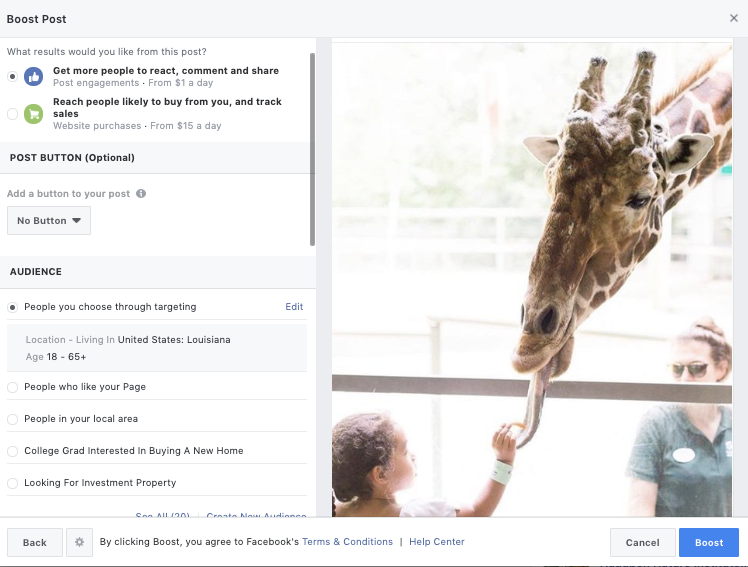
    A boosted post is an organic post to your profile that has been amplified to reach a larger audience outside of your current followers. With boosted posts, you set your budget and audience targeting. You can choose between two options of audience targeting for these posts: you can target “People who like your page and their friends” or “People you choose through targeting.” Keep in mind that with the first option, the “people who like your page and their friends” might not be interested in your business, so if you’re boosting something niche, it might be better to choose the second option.

    The Promoted Post

    The promoted post enables you to ensure that your post will appear in the News Feeds of more people. Typically, these posts are labeled as “sponsored,” so people know that it’s an ad, even though it looks like the other posts on their newsfeed. The benefit of promoting a post is that you have more options for targeting, pricing, and bidding. Promoted posts work well for giveaways, freebies, or coupon codes.

    All three of these types of posts provide valuable ways to build your brand’s identity. It’s important not to limit yourself to only one type. I would recommend testing your organic posts to see how your followers respond. Then, once you have a better idea of what works well with your audience, it makes sense to add some spend behind your best performing posts! Using different types of posts will get your content out to the most diverse users, so mix it up!

    If you’d like to improve your reach on social media, Search Influence can help. Since 2006, we’ve helped businesses reach their full potential with our digital marketing services. To learn more about how we can work with you, contact us online or call (504) 208-3900.

    Images:
    Smart Phone

  • Get the Most Out of Your Website With These Essential Google Analytics Metrics

    iPhone screen with google analytics at Search Influence in New Orleans, LA

    In today’s world, having an online presence is essential to business. With 27,378,962 live websites currently using Google Analytics, most business owners have heard of Google Analytics. But simply knowing about Google Analytics isn’t enough. Learning how to use the platform can provide business owners with insight into targeted audiences and what they think and feel about your products or services. Knowing the details of your customers’ behaviors will help you determine which pages are drawing customers to your site and which pages need some optimizing. Consider these questions to determine what is most important to your business.

    What Are People Doing on My Website?

    This is a measure of your site’s audience. Tracking your audience reveals who is using your site. When you know the type of person that is visiting your site, you can establish the direction and language of your site’s content and messaging in order to cater to this specific type of person.

    Session Duration

    This metric measures the amount of time that people spend on your website before leaving. The longer someone’s visit, the more likely they are to convert. Tracking this metric can help you determine which pages are effectively supporting your marketing strategy and which might need to be optimized.

    Pages per Session

    Like session duration, pages per session allows you to determine whether you are driving the right people to your website. A higher pages/session rate can indicate that visitors are engaged with your content and, therefore, more likely to convert.

    User Demographics

    This data allows you to segment the people who visit your site based on different criteria, such as their location, age, gender, and interests. Tracking this data allows you to gain a better understanding of who your customers are.

    New vs. Returning Visitors

    If visitors return to your site, that’s good news. It probably means that your audience is engaged and will be more likely to convert. Even if someone did not make a conversion the first time they came to your site, your brand has made enough of an impression to encourage them to return.

    Which Channels Drive the Most Visitors?

    This is a measure of your site’s page tracking. Page tracking is helpful to your business because it tell you how your traffic is coming to your site. Understanding this can help you determine which avenues are best for bringing traffic (and hopefully, conversions) to your site. Use this data to make decisions about where you might want to promote your site’s content.

    Fingers typing on a keyboard at Search Influence in New Orleans, LA

    Landing Pages

    Reviewing this metric will provide insight into the specific pages visitors are landing on. This knowledge allows you to:

    • Pinpoint the most and least popular pages of content
    • Track which keywords are most effective at driving organic traffic to your site
    • Identify the landing pages and paths that convert the most visitors and share these highly effective pages on social platforms

    Bounce Rate

    This metric measures the percentage of visitors who landed on a single webpage and then left without visiting any other pages. You can look at the bounce rate of the entire site or the bounce rate of individual pages.

    Exit Pages

    Exit pages measure the percentage of visitors to a single page that click away and completely leave the website. For a visitor to be measured in the Exit Rate, they must have come to your website, visited multiple pages, and then left. Exit pages are important because they let you see where your traffic drops off.

    Pages you want your visitors leaving:

    • Form completion thank you pages
    • Order completion pages

    Pages you do not want visitors leaving from:

    • Your homepage
    • A conversion form
    • During the checkout process

    Is My Website Leading to Conversions?

    This is a measure of your site’s goal tracking. Creating and monitoring your Google Analytics goals are important to your business because it enables you to track the progress of specific user interactions (that you have pre-defined) on your site. Goals should act as your targets to ensure your website is moving in the right direction.

    Laptop screen at Search Influence in New Orleans, LA

    Conversions

    A conversion takes place when a visitor completes an action that you consider important to your business. Examples of conversions could be filling out a form, completing a purchase, or signing up for an email newsletter. You can track these by channel or landing page to determine which sources are leading to the highest and lowest conversion rate. If your marketing strategy includes paid advertisements such as Google Ads or Facebook Ads, you should also be tracking the cost per conversion for all of your paid ads.

    Google Analytics provides you with nearly endless ways to track and review your website metrics. The metrics that most impact  your business will depend greatly on your company goals and industry (like tourism and travel, for instance). Once you have identified the Google Analytics metrics that matter the most to your business, you can determine how and where to allocate your marketing budget. A digital marketing agency can take tracking metrics off of your plate. If you’re interested in partnering with Search Influence, request a marketing analysis today.


    Images:

    Phone screen with Google search

    Hands typing on keyboard


  • Why You Should be Posting on Google My Business

    “Just Yahoo it,” said no one ever. It just doesn’t have the same ring as “Google it,” which was officially added to the Oxford English Dictionary and the Merriam-Webster Collegiate Dictionary in 2006. That’s because Google has practically monopolized internet searching. According to NetMarketShare, Google accounted for over 79 percent of all global desktop search traffic in 2017, followed by Bing at 7.27 percent, Baidu at 6.55 percent, and Yahoo at 5.06 percent. In addition, Google receives over 63,000 searches per second on any given day. In the U.S., more Google searches take place on mobile devices than on computers, and 30 percent of mobile searches are related to a location. It’s obvious that to succeed in the SEO world, you have to play by Google’s rules.

    So, Just How Do You Play By Google’s Rules?

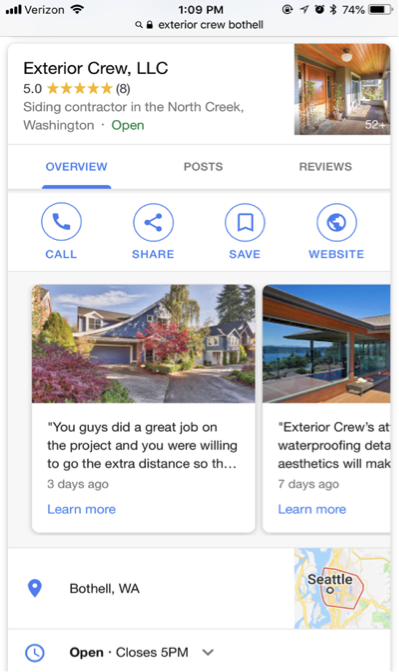
    One way to do this is by creating a Google My Business (GMB) page for your company. This page allows your businesses to manage their online presence across Google, through a physical location. Within this company page, Google has a social posting platform that allows business to provide “up-to-date posts from verified people, places or things, directly in search results.” These public posts allow businesses to share company updates to feature what’s new, respond to customer reviews, and add photos to highlight what makes your business special, and build brand awareness.

    Screenshot of a Google My Business post from Exterior Crew, LLC

    These posts are particularly captivating because, rather than appearing in the search results, they are displayed in the knowledge panel, which presents a more engaging visual aid. This is NOT to be confused with Google +, which was Google’s attempt to compete with Facebook as a social platform. And let’s be real; it was a major fail. Realizing this, Google reconstructed their platform and created GMB. Google + profiles and pages still exist, but they are now subpages of a GMB page.

    The Start of Google Posts With Candidate Cards

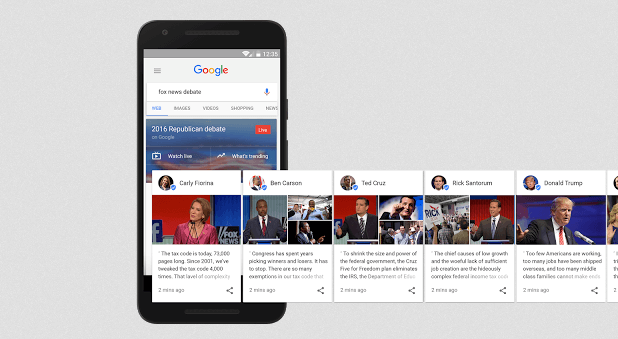
    Before July 2017, Google’s now-called “Google Posts” were only accessible to few. It all started with “Candidate Cards.” You may remember seeing these around the 2016 presidential election. Google described these as non-ad privileges, giving 2016 Republican and Democratic candidates a place in Google search.

    Image of Google's candidate cards - Search Influence

    Proving to be both appealing and informative by viewers, Google allowed the expansion of these cards for celebrities and sports teams. As of June 2017, GMB brought these now-called “Google Posts” to local businesses as an easy way to help attract new customers and build relationships with the customers you already have. These posts have proven particularly effective in promoting flash sales or promotions, emergency updates, such as school closings, and sharing job openings. In addition, these posts contain a call to action (CTA) feature, which provides an easy and direct way for customers to book appointments or reservations.

    Benefits of Google Posts Over Traditional Social Media Posts

    You may be thinking, why would I need to use Google as a social platform when I already use Facebook, Twitter, Instagram, etc.? And you have a point. These social platforms are still great ways to post updates about your business. Although similar, Google Posts offer a few advantages that the typical social media platforms do not, including the following:

    They’re more searchable

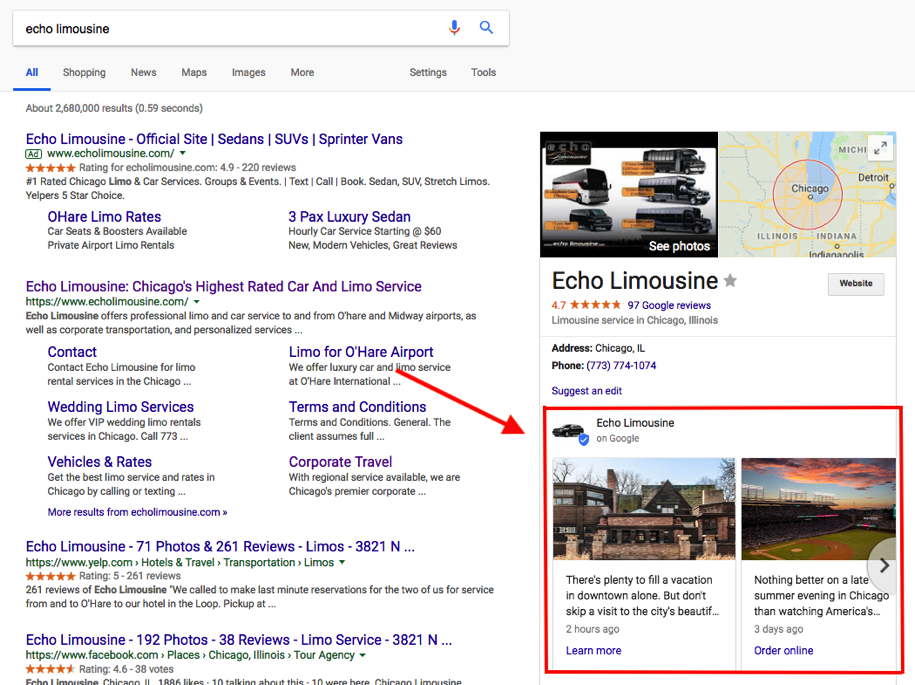
    You can literally “Google it.” When searching for a business, these posts will appear directly on Google Search and Google Maps pages. When someone searches for your business, your location address and phone number will appear in the knowledge panel on the right-hand side of your search results. Your company’s address/location is the primary piece of information searched for by local customers. In regard to mobile, local searches lead 50 percent of viewers to visit stores within one day.

    Screenshot of a GMB post by Echo Limousine - Search Influence

    You will expand your reach

    Not only does Google lead the way in search engine results, but it also surpasses Facebook search queries. According to Adweek, Google averages 3.5 billion searches per day, compared to Facebook’s 2 billion per day. In addition, 82 percent of people turn to search engines to find local information.

    Keyword Searches

    On Google, you can use keywords to target certain audiences—specifically, people that are already looking for your services. Since these people already have an idea of what they are looking for, they are likely to be further along in the decision stage, meaning they are more likely to convert into a client or customer. By contrast, Facebook is geared more toward targeting specific interests and in-depth personal information to lure in a potential customer.

    Impact on your ranking

    Google’s goal is to provide you with the most relevant information based on a search query. When you post new content directly through your GMB listing, you are sharing relevant content and information about your local business, which contributes to building your location authority. This tells Google that your business is legit. The more you legitimize your business to Google, the higher ranking you will get. The higher ranking you have, the higher you will appear on Google search and gain more traffic to your site.

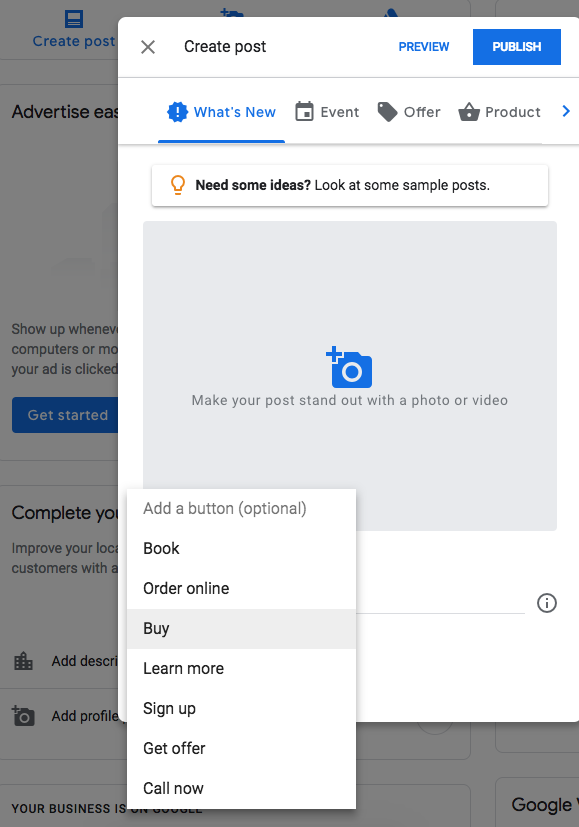
    Screenshot showing how to create a Google My Business post - Search Influence

    Connect with your customers directly

    You can include CTA buttons on all of your GMB posts. Call to action buttons have been proven priceless for converting customers. According to Everything You Need to Know About the Psychology of the Call to Action by Neil Patel, the human mind expects a call to action button. “Our minds are prepared for and are expecting an experience of being called to act and have already decided that there will be a CTA. We know that expectation affects behavior. That’s why people know to act on the CTA. They aren’t staring at the CTA button wondering what it is. They know its a button they are being asked to click.”

    Some examples of how a business can utilize these buttons include the following:

      1. Make a reservation
      2. Sign up for a newsletter
      3. Learn more about the latest offers
      4. Buy a specific product from your website
      5. Call now

    Get backlinks

    Everyone knows that backlinks have a huge effect on organic search results. By posting compelling content on your GMB posts, people are more likely to engage and reference information from your site. You can also link your site pages in a post, making it easier for researchers to find your pages.

    Start Posting!

    Although still green, GMB posting is projected to be incredibly valuable to local businesses. Facebook, Twitter, and Instagram are saturated with businesses looking to promote brand awareness. But since GMB posts are still in the early phases, it hasn’t been flooded by the masses just yet—which is why you should get in now! GMB is an excellent platform that allows your customers to stay in the know of what is going on with your businesses. Not to mention, it’s free! What do you have to lose?

    Here at Search Influence, we’re constantly staying on top of new ways in which we can help our clients be found online and thrive in their industry. If you’re interested in honing your local SEO strategy with rich, relevant Google My Business posts, then request your marketing analysis today to get started.

    Images:

    Candidate Cards