Author: Crysten Price

  • #ShowYourPride: Engaging the LGBTQ+ Community Online

    This post was updated by Crysten Price on June 30, 2020. It was originally written by a Search Influence alumnus on June 16, 2016.

    The LGBTQ+ community is a tech-savvy group with a proclivity towards online shopping. This community is a great audience to consider for ad spend targeting. They have always been early adopters of technology and online trends, with the internet functioning as a safe place to form communities and access resources that might not have been easily or readily available.
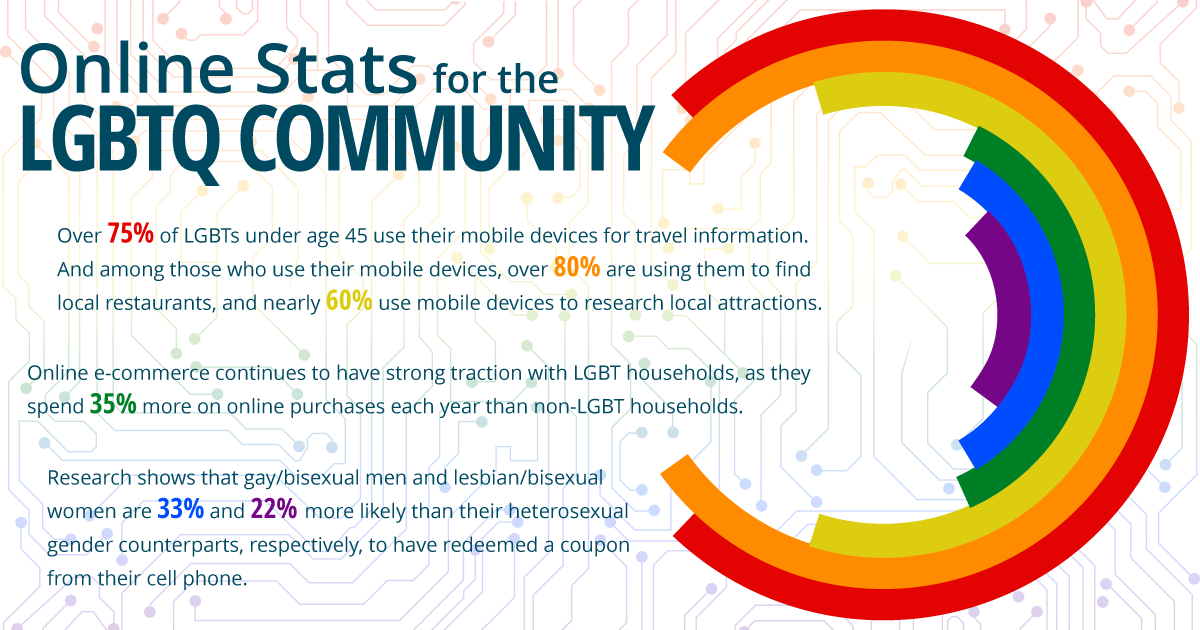
    Online Engagement LGBTQ Statistics Mini Infographic - Search Influence

    How to Make Your Biz LGBTQ+ Friendly with GMB

    Google My Business (GMB) listings offer business owners a free platform to engage with their customers. Your business profile is easily accessible to users on Google Search and Maps. Join over 190,000 other businesses across the globe that enabled the LGBTQ-friendly attributes to their listing by following Google’s quick and easy instructions.

    Keep in mind, to manage your business information in Search, Maps, and other Google properties, you must first verify your business listing. After your GMB listing is set up, you can explore other ways to welcome prospective LGBTQ+ customers:

    • Request/encourage patrons to leave Google reviews highlighting your business as a LGBTQ+ friendly space.
    • Add images of LGBTQ+ customers and travelers to your GMB profile.
    • Use Google Q&A and Posts to let travelers know your business is inclusive.

    If you’re new to GMB, use the following guide to claim your business online:

    • Add or claim your business online or via the GMB app
    • Verify your listing with the following:
      • Requesting a postcard (most common)
      • By phone call or text
      • Email
      • Instant verification (rare)
    • After Google verifies your listing, your business information will be eligible to appear live in Search, Maps, and other Google services

    LGBTQ+ Community and Social Media Platforms

    When it comes to outreach, you can’t rely on a single, catch-all approach. Tailor your campaigns and messaging to subcommunities and audiences across different social media platforms to garner better reach and impressions. To be more specific, Black Twitter is an online subcommunity of Black users on Twitter focused on issues of interest to the their community. As you craft messaging to subcommunities, keep their online subculture in mind.

    Similarly, on TikTok—a social platform widely known for viral dances—content is algorithmically recommended based on user preferences. “Gay TikTok,” or “Alt TikTok” is a subset of content geared toward LGBTQ+ users and their favorite queer culture trends and aesthetics.
    Person holding phone cell phone in the sky with TikTok load screen visible

    Interacting with these users requires taking a step back from the mainstream. References to Gay TikTok culture can help you create more relevant, exciting content, that users will want to engage with.

    Ensuring Authenticity Within LGBTQ+ Targeted Content

    When posting to social media, consider whether your content fits within the interests of the LGBTQ+ community. If it does, use relevant hashtags or try engaging with influencers in the community. However, do your research to ensure that your messaging isn’t missing the mark or reads as inauthentic.

    Users can quickly pick up on Pride-themed content that seems like a marketing gimmick. A 2019 eMarketer survey revealed that gay and lesbian respondents were more likely to patronize a company known for its LGBTQ+ friendliness; however, although subgroups of the LGBTQ+ community expressed that they were more willing to support businesses that promote inclusive ad content, roughly half of the respondents reported that they were “much more” likely to support these businesses. This could be attributed to the fact that ads featuring same-sex couples and relationships are sometimes perceived as marketing ploys rather than a genuine commitment to inclusivity.

    When creating content, consider the aforementioned subcommunities and how to connect with them organically with authentic messaging that is inviting and kind.

    LGBTQ+ Community and Mobile Usage

    Members of the LGBTQ+ community are said to be mobile leaders, and when compared with their heterosexual counterparts, they are more likely to be considered technology “wizards.” Wizards are the consumers Experian Marketing Services has identified as those for whom technology is central to their way of life. This consumer segment, with high mobile technology adoption and usage rates, is an important target for mobile campaigns.

    • Over 75% of the LGBTQ+ community under age 45 use their mobile devices for travel information.
    • Among those who use their mobile devices, over 80% use their devices to find local restaurants, and nearly 60% use mobile devices to research local attractions.
    • Online e-commerce continues to have strong traction with LGBTQ+ households, as they spend 35% more on online purchases each year than non-LGBTQ+ households.
    • Research shows that gay/bisexual men and lesbian/bisexual women are 33% and 22% more likely than their heterosexual gender counterparts, respectively, to have redeemed a coupon on their cell phone.

    Laptop in front of window on desk with love in rainbow color

    Get Digital Marketing Help from the Experts

    Identifying and targeting user groups of interest involves a robust digital marketing strategy, but you don’t have to start from square one all on your own. The experts at Search Influence can help you craft inclusive messaging that resonates with various target audiences so you’ll get the most out of any campaign. Schedule a free consulting session to learn how you can enhance your online marketing efforts with our recommendations.

    Source Content:
    https://www.experian.com/assets/simmons-research/white-papers/2013-lgbt-demographic-report.pdf http://communitymarketinginc.com/year-end-research-report-top-ten-2013-trends-seen-in-lgbt-travel/
    http://www.nielsen.com/us/en/insights/news/2015/us-lgbt-shoppers-make-more-trips-spend-more-than-average.html

    Images

    LOVE

  • How Clever Copywriting Can Improve Your SEO

    In the digital world, your marketing team can’t afford to lose track of SEO best practices. Google is smarter, attention spans are shorter, and the competition is fierce. To drive more traffic to your website, avoid copy that falls flat. In an online world full of skimmers and scanners, the best way to grab attention is by committing to an SEO copywriting strategy that’ll make you a VIP on the search engine results page. To do so, you’ll need to learn what sets quality SEO writing apart from copy that serves other promotional purposes.

    Specialized Copywriting Techniques

    Although colorful descriptions and flowery language can land you on The New York Times Best Sellers list, it’s unlikely that they’ll help you earn repeat customers. SEO copywriting serves to support sales and marketing goals, and the strategies used to do so make this writing technique a key player in marketing efforts. You want to effectively target prospects, drive them to your website, and earn plenty of conversions—in a perfect world, this would be a seamless process. Unfortunately, this isn’t the case for every buyer’s journey. If you’re keen on ramping up conversions in a world of digital hopscotch, the recipe for successful SEO copy includes these crucial ingredients:

    • Keywords and keyphrases
    • Clear calls to action (CTAs)
    • A skimmable format: H2s, we’re lookin’ at you!
    • Strong internal links

    Person scrolling on a glittery pink mouse

    SEO Copywriting in Action

    Now that you have the recipe, it’s time to get cooking.

    Keywords and Keyphrases

    So, what makes keywords “key” words? You want to identify words and phrases that are being used in search queries. For instance, if you’re a clothing retailer trying to promote and sell a product that you’ve listed on your website as a “winter long-sleeved top,” you’re likely to have better luck optimizing your content by using a more relevant search term or keyphrase: “checkered wool sweater.” If you’re still drawing blanks, there are tools on your side to boost your confidence in the keywords you choose. SEMrush allows you to research keywords and phrases and analyze various metrics, including search volume, competitive density, cost per click (the average price in USD that advertisers pay for keywords that trigger their ads), and much more! Be careful not to overdo it though, because stuffing too many keywords in your copy can run your readers away (and can bore Google, too.)

    CTAs

    Delicious copy is useless if you leave your leads hanging. You’ve got cute sweaters, so what? You have to direct your site’s visitors to the next step after they’ve read your blog post, browsed your service pages, or scrolled through your list of products. When it comes to calls to action that convert, let’s be clear about this: you need to provide easy-to-follow next steps. After reading your content, do you want users to sign up for a mailing list or purchase a ticket to an event? Nothing’s clunkier than “To learn more, contact us by filling out our form or calling 555-555 and register for our webinar!” Nail down one specific purpose for each piece of content and identify the clear next step for the site visitor. The last thing you want to do is conclude your beautifully written piece of content with a jumble of desperate pleas followed by a mess of tracking to sort through.

    H2s

    You have a very short time window to attract and delight your website’s visitors—in fact, you only have about 15 seconds. To beat the buzzer, you’ll have to ensure that the user can easily get the gist of your copy before deciding to read further. Wondering how to make the magic happen? Relevant, clever H2s. People are naturally drawn to lists and numbers, and you need to work these into your business’s SEO formula so that your content is not only pleasant to Google’s bots, but human readers as well.

    Internal Links

    Think about how you search for products or services online. If you click on something that isn’t helpful…adios! You wouldn’t waste your time digging deeper into a website that doesn’t seem relevant to your search from the start. Keep this in mind when you link to other pages within your copy. When writing user-facing anchor text, you should always make sure that it reads as a “sneak peek” of the landing page it leads to.

    Cat wearing glasses inspecting something on their laptop

    A Breakdown of the Do’s and Don’ts

    Do:

    • Sprinkle relevant keywords throughout the copy
    • Provide a clear call to action
    • Break up your copy with H2s
    • Include internal links

    Don’t:

    • Clutter your content with filler and fluffy language
    • Overwhelm the reader with never-ending, chunky paragraphs
    • Include links that aren’t related to the on-page content

    Ready to start writing? Great copy is just a piece of the puzzle when it comes to effective SEO strategies, and Search Influence knows how to bring it all together. We help businesses grow online by developing tailored SEO and digital marketing gameplans for each of our clients. Tell us what your business needs and let’s make it happen today.

    Images

    Mac

    Mouse

    Cat


  • How to Be More Than Content With Your Content

    It’s not a good idea to buy everything in bulk—veggies, bread, condiments are a big no-no—and content’s no exception. Just like that 2-week-old bag of spring mix in your fridge, your content can go bad (It can even have an expiration date!) and not yield the results you expected. To drive your website’s visitors to action, you’ll need to bring something fresh to the table. If you’re currently struggling to elevate the value of your content and prevent it from getting smelly and dated, maybe you should take a closer look at your strategy (if you have one) and identify where your team is missing the mark.

    The Big Secret

    That 70s Show gif

    Quality. Over. Quantity.

    Less isn’t always more, but it’s definitely a start when it comes to an overwhelming amount of lackluster content. Creating content for the sake of having it won’t impress your audience—it may even bog them down and send them down a rabbit hole rather than your marketing funnel. However, you shouldn’t ignore the significance of great content’s impact on your organization’s overall marketing success. Content marketing is extremely cost-effective and offers a great return on investment compared to traditional marketing techniques. Major ingredients in a quality content salad include keywords, internal links, and headlines to break up text.

    Your audience turns to your content for insight, entertainment, and to inform their purchase decisions; but they don’t want to spend ALL of their time navigating your content—they have to buy something eventually, right? While you shouldn’t bury your audience with a mass production of daily blogs, social posts, and digital downloads all at once, you still gotta give the people what they want. The content production sweet spot lies somewhere in the middle; to get there, you’ll need a game plan for your team. Follow these best practices to help you develop top-notch content that gets results:

    I mean, it's simple gif from That 70s Show

    1. Know Your Audience

    Understanding your audience personas will help you stay abreast of relevant topics to cover and leverage behavior on social platforms to deliver your content to the appropriate channels. Knowing your audience really comes down to researching and understanding their pain points, learning how these problems affect them, and tracking their progression through the marketing funnel so that you can deliver the right stuff at the right time. Awareness of their stage in the buyer’s journey will help you deliver content that is both better tailored to the users you want to reach and more likely to earn you more conversions, more frequently.

    Lightbulb going off about head that 70s show

    2. Develop A Strategy

    Content serves to help your audience solve problems big and small while reinforcing the strength and uniqueness of your company’s offerings. Developing a content strategy will better help you understand the best time, place, and content type to post. When developing your content strategy, Hubspot suggests focusing on these key points: content format, channels for posting, and a system for managing the creation and publishing of your content. A CMS, or content management system, can help create and organize your digital resources and enhance the user experience. In addition, you should be on top of your editorial calendar—will that blog be outdated if you wait to post it? How useful is Tuesday’s weather forecast while you’re getting dressed for work on Thursday morning? Vary how often you publish time-sensitive content so that you don’t have to deal with the stress of constantly churning out new material.

    Alright, kitty, kitty, don't panic, you know what to do gif

    3. Set Goals

    You post content for a reason, whether it’s solving problems for users, generating leads, or increasing brand awareness. If you align the content you produce with a S.M.A.R.T. goal or one of your company’s goals, you’ll buttress your strategy with a specific purpose in mind. In turn, you’ll know what you plan to measure when the time comes to start analyzing your content’s performance. Your goals can include increasing leads by a certain percentage or even driving more social engagement. By setting goals, you’ll create a plan for your content that can be checked and adjusted.

    Floating heads gif from That 70s Show

    4. Switch It Up (And Around!)

    If you really want to ramp up your content’s impact, get creative. Within the digital space, there’s plenty of wiggle room to do just that. That awesome client testimonial on your website has the potential to be a killer case study, or you can transform it into a stellar infographic. The stories you tell don’t have to live solely on your website. You can repurpose your content so that it can be posted on multiple platforms; you can introduce your stories to new audiences without having to do more legwork. How’s that for bang for your buck?

    When it comes to all of these best practices for creating awesome content, Search Influence has it down to a science. We have the tools and expertise to help you optimize your content’s potential, whether you aim to strengthen your social media presence or paint a better picture of your content’s performance with analytics. Share your goals with us, and we’ll help you get there.

    Images

    One

    Two

    Three

    Four

    Five

    Six

    Seven