Author: Courtney Cummins

  • How a User Experience Audit Benefits Your Business

    Key Insights

    • Website user experience audits help businesses retain users and increase conversions.
    • If you understand the data behind user behavior, you can anticipate a user’s needs when designing and optimizing your website.
    • Examine trust factors, content considerations, and device usage when completing an audit.

    Woman typing on laptop computer and media app icons

    What Is a User Experience Audit?

    A user experience audit, or UX audit, is the process of reviewing a website for areas of usability improvement. There’s no one way to complete an audit because each one depends on the type of products or services offered and data analysis of user types and behaviors. It’s important to keep in mind a few key questions when completing a UX audit:

    • How does user experience impact conversions?
    • Are there usability issues, design issues, or both?
    • Should you consider your business initiatives when performing a UX audit?

    In this post, we’ll cover the questions above, along with the impacts of trust factors, content, and device usage in order to retain visitors and improve conversions.

    User Experience’s Impact on Conversions

    Imagine visiting a website to purchase shoes but find that you can’t add the item to your cart. You could refresh the page or revisit the site at another time, but many people will just visit other websites in search of the same shoe.

    If you’re the business of the original website, you’ve just lost out on a conversion—and likely more than one. Ensuring that your site supports users’ interactions without interruption is vital in retaining users and ensuring they convert.

    Usability Issues

    A site might seem functional, but it could lack the design necessary to increase user interaction and conversions. A ResearchGate study attributes 94% of a user’s first impressions of a site to its design. A poorly designed site could make all the difference in a user staying on the site or leaving with little to no engagement.

    Consider Business Initiatives When Performing a UX Audit

    Each business will have its own specific business initiatives that they want to achieve, such as raising awareness of their brand, increasing user engagement, or improving their ROI. Those initiatives can drive how to look for improvements to a user’s experience when completing a UX audit.

    Graphic of speech bubbles in multiple colors

    The Value of Trust

    Include trust factors on your site to establish credibility with your users. Trust factors are indicators on your site that can help users feel more assured in using your services or buying your products, such as testimonials, awards, and certifications.

    Content accuracy and quality can also impact a user’s trust. Issues such as incorrect grammar or inconsistent contact information help users to decide whether your business has credibility.

    Content Considerations

    A site with lots of pretty pictures won’t cut it. Written content plays a crucial role in determining user engagement. Site language should compel the user to stay on the site and learn more about the products or services offered.

    According to Small Business Trends, 70% of small businesses don’t use calls to action on their site. When a user visits a website, they expect some sort of direction in order to convert. If all they see are images but no clear and obvious path to purchasing a product or service, they likely won’t comb over the site to find out where to complete the purchase. Having clear and specific calls to action is imperative for driving conversions on your site.

    Why Device Type Matters

    Examining how users engage on your site helps you understand how to design for devices that best work for your users. In recent years, mobile device usage has grown over desktop usage. In the span of a single year, mobile usage went up by 10%, while desktop dropped by 6%.

    Several factors impact device usage, so it’s important to understand the data behind user visits and behavior on your site. Do more users visit your site on mobile versus desktop? If so, you should design your site in a way that lends itself to a better user experience on mobile.

    As you can see, UX audits are important for ensuring your site is designed in a way that is suitable to a user’s needs. Incorporating trust factors, understanding user behavior, and captivating content are necessary for a business’s success. By executing these concepts, you can increase visitor retention and engagement, thus increasing your conversions.

    Ready to grow your business with a UX audit today? If so, contact our team for a free consultation!


  • The Rise of Intent Research and What it Means for Keyword Research in 2020

    Keyword research has long been thought of as one of the most impactful ways to gain prime real estate on SERPs. In the SEO world, if you’re not focusing a vast amount of your effort into keyword research, then you’re missing out on a great deal of SEO value. Finding and analyzing search terms by users and incorporating them into your website’s content is about as old as SEO itself. But as 2020 gets underway, a new kind of research is out to dethrone this age-old SEO practice. Intent research is quickly making its case as the new leader in SEO research. Take a look at these two types of research and where you should put your SEO effort in the coming months.

    Understanding the Basics: What is Keyword and Intent Research?

    Gif showing a Google search for Mardi Gras info

    Keyword research is, essentially, the process of identifying and analyzing a word or words users choose to include in search queries and then curating your content based on those specific words or phrases. These words or phrases can be categorized by things like popularity or relevance. Having a good understanding of specific topics is also important. Take, for example, searches done around a holiday—let’s look at Mardi Gras in this case. By understanding the topic, you can assume that users are likely searching for words or phrases like “mardi gras beads,” “mardi gras new orleans,” or “costume stores.” Incorporating those specific keywords into your content in the hopes of getting your content to show up in SERPs is the practice of keyword research.

    Intent research, on the other hand, is less specific and more concerned about what the user is trying to get out of their search. Rather than focusing on particular words and phrases, search engines spit out results based on what they think the user is looking for. Because intent can be hard to pinpoint, and keywords can have several different meanings behind them, how you interpret the keywords you are targeting is essential. Let’s say you’re researching the keyphrase “how to run a marathon.” The intent behind this could mean several different things. Is the user asking how to train for a marathon? How to sign up for a marathon? In understanding the user’s intent behind their search, you can better create content to drive users to your website.

    The Rise of Intent Research

    In a recent video where he discussed what to look forward to in 2020, Bing’s Frédéric Dubut claimed that search engines are quickly moving from keyword to intent research. One of the reasons for this, he believes, is in part due to Google announcing that they are now incorporating their BERT language model into search results. BERT, Bidirectional Encoder Representations from Transformers, is a technique for natural language processing. Google claims that BERT “helps better understand the nuances and context of words in searches” to produce more relevant results. The example they give is the importance of the word “to” in the search “2019 brazil traveler to usa need a visa.” In this example, you can see how the word “to” is what ties together the keyphrase in terms of understanding the user’s intent. By reading and understanding “to” in this context, Google is more likely to weed out content that mentions needing a visa from the USA by a Brazilian traveler, therefore providing them with more accurate search results.

    Is This the End for Keyword Research?

    John Meuller of Google says not so fast. Despite the rise of intent research recently, he believes there will always be room for keyword research. He admits that over time, search engines will become better at understanding a user’s intent, but that at its core, it is more of a balancing act between the two research practices. As he puts it, “even if search engines are trying to understand more than just those words, showing specific words to users can make it a little bit easier for them to understand what your pages are about and can sometimes drive a little bit of that conversion process.”

    So What Does That Mean for SEO in 2020?

    What does that mean gif

    In a nutshell, research practices will largely be a team effort in the coming year. As new language is created and refined and updates to search engines are made, search intent will be easier to understand and interpret. However, specific keywords will still be necessary when understanding that intent. Figuring out what type of research is best suited for your business will take a bit of trial and error. One way to get started is by trying to complete searches as if you were a user and see what sort of results populate. Depending on the types of results generated—and the research practice used—you can get an idea of how you should cater to your target audience. If this sounds overwhelming, don’t worry; we’ve got you covered. Our team of experts is ready to get you on the right path to a successful SEO campaign in the new year. Contact us today for a custom marketing analysis!

    Images

    What does that mean?

  • How User-Generated Content and Engagement Can Help Boost Your SEO

    As we continue moving toward an increasingly digital world, the importance of user-generated content, and the engagement that it produces, is becoming more prevalent in the realm of SEO. What users say about your brand, and how often, can have a real impact on your online visibility. How you promote, engage, and moderate this content is equally important. Below, we’ll look at the good and the bad while also finding ways to use this sort of content to the benefit of your business.

    So What Is User-Generated Content?

    User-generated content (UGC) is as straightforward as it sounds—any content that is created by a user and shared on an online platform. This content can include reviews, testimonials, images, and comments that are shared on platforms such as social media, blogs, or internet forums. Think product reviews on YouTube or reviews of a restaurant on Yelp. Additionally, this type of content can also be shared directly on your business’s website (we’ll go into that more later).

    Eric Cartman walking down the halls in a Yelp Critic shirt

    What Are the Benefits of UGC?

    The most obvious benefit of UGC is the publicity of your brand, products, and/or services. But what does this mean in terms of SEO? For starters, it provides more information and context for search crawlers. Search engines can provide a user with results from both your website and other platforms that mention your brand. For example, a Twitter user’s tweet praising a good experience with your company’s customer service could show up on search engine result pages (SERPS). More content means more opportunities for search engines to find your brand and provide that information to users.

    As mentioned earlier, user-generated content doesn’t have to come from outside sources. There are ample opportunities to obtain UGC directly from your website. In a Reddit AMA last year, Google’s own John Mueller suggested that allowing users to make comments (say, for instance, on your website’s blog entries) is one way of getting more content onto your website. Allowing users to make comments and engage in a discussion will give crawlers more content to consume, thus providing them with more context. Want to share positive feedback from some of your customers or clients? Consider adding a testimonials section to your website that highlights this feedback to impress other potential customers.

    Woman at computer approves and thinks this user generated content is legit

    Another benefit of user-generated content is that it brings authenticity to a brand. According to Stackla, 90% of consumers (a 4% increase in just two years!) believe authenticity to be an important factor when deciding which brands to support, while 61% of marketers say this is what makes content marketing most effective. Authenticity is what drives and encourages engagement from potential customers. Users are 28% more likely to engage when given UGC such as product videos and official brand authorized content. If users are engaged, this will result in more time spent on a site and a higher likelihood that this will result in conversions.

    Are There Any Downsides to UGC?

    Unfortunately, there is a glaring disadvantage to user-generated content if it’s not handled appropriately: People won’t always give your business glowing reviews. We’ve all seen scathing Yelp reviews or tweets go viral. Are they always warranted? Not necessarily, but search engines don’t know that, and they sure don’t discriminate. Just as positive content about your business can give you an advantage in SEO, conversely, negative content can result in poor SEO performance. You may not always be able to do away with the critics, but there are certainly ways to help combat that type of content.

    How to Manage UGC

    So what can you due to limit or control this sort of content? One of the easiest and most obvious ways is to hire someone with the knowledge and know-how to manage it for you. Keeping up with and finding ways to control user-generated content can be incredibly time-consuming, so giving that responsibility to experienced professionals will not only save you time but will also ensure that it’s done in a thoughtful and SEO-friendly way. Finding ways to incorporate user-generated content on your website is one of the easiest ways of managing content since it gives you complete control over the type of content that is shown. Allowing users to submit review videos to your site or to offer a testimonial of their experience are just two ways to get more authentic content onto your site.

    It’s important to keep in mind that user-generated content will happen whether you like it or not. How you choose to handle it is a critical decision for a successful, sustainable business. There are plenty of services available for your business to utilize to achieve the online success you desire. Ready to get started? Contact our team today to see how we can help grow your business.

    Images

    Ilya Pavlov on Unsplash

    Cartman

    Legit

  • Google Moves Toward a More Copyright Friendly Image Search

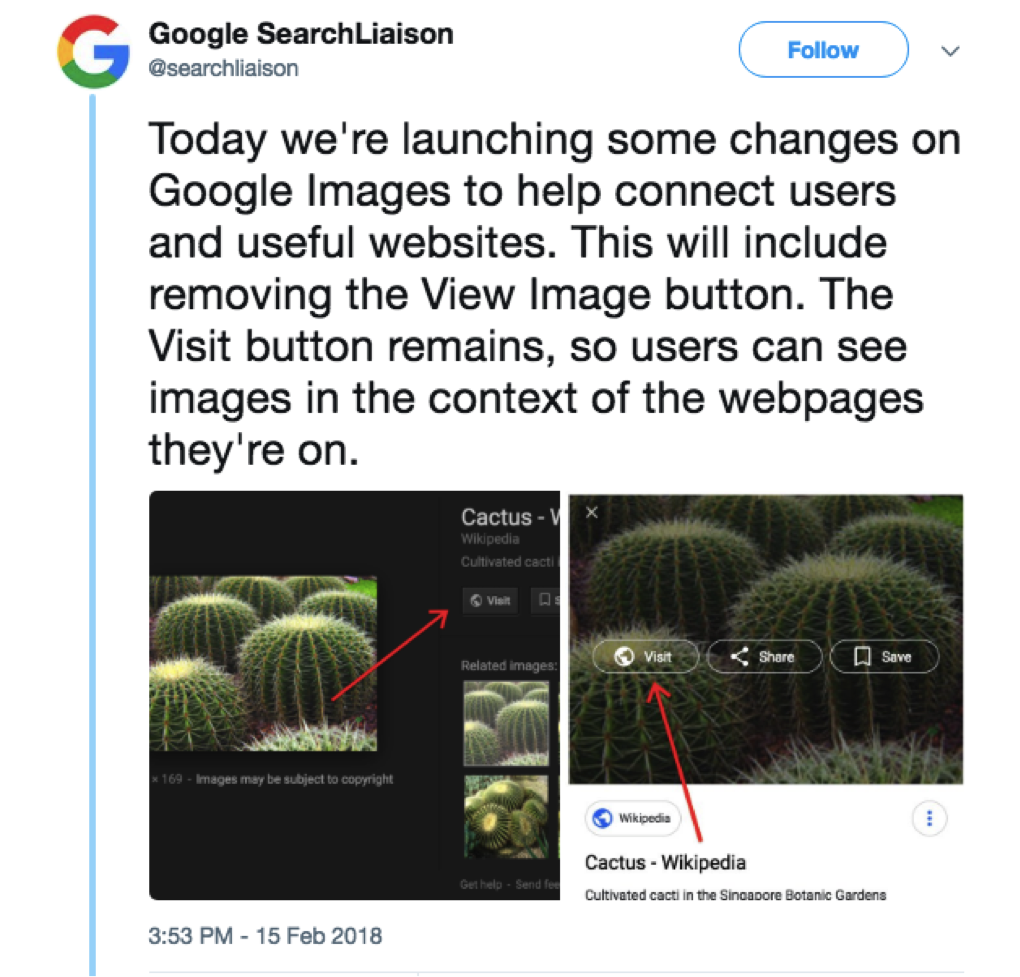
    If you’ve recently used Google’s image search engine, you may have noticed a small change to the options when viewing image results. In an effort to appease photographers, publishers, and stock photo agency Getty Images, Google has removed its ‘View Image’ feature from image search results. This update, along with more attribution visibility for images, comes as Google looks to provide more copyright protection for image owners and publishers. The change to the image search, which is already in full effect, and a plan for more image copyright visibility comes with a new partnership and some likely irritated users.

    Copyright Deal With Getty Images

    Michelle Obama, James Carden, and Missy Elliot singing a car together - Search Influence

    After a 2016 copyright dispute filed between Getty Images and Google, a multi-year deal has been reached that will now allow the search engine to use Getty images through many of their products and services. The dispute, which was eventually withdrawn, stemmed from Getty Images’ allegation that they were losing traffic and revenue to customer sites since users could easily access and download the stand-alone images. They also accused Google of biased search results, claiming the search engine altered search results to favor their own services. This is not the first accusation of the like for the search engine giant. Last year, Google was heavily fined by the European Union in an antitrust ruling that also claimed biases toward their own services. With these recent updates, however, Google looks to be working to gain back the trust and respect of copyright owners.

    Along with the removal of the ‘View Image’ feature, Google will also take a step further in providing copyright protection by making attribution information more visible to users. If you complete a Google image search today, you’ll notice that all images come with a disclaimer once the image is clicked noting that the image “may be subjected to copyright.” This change is still a work in progress and will likely include several different updates. Additionally, Google has also updated their mobile image search to contain page title tags below images. This update will most certainly prove to be a vital SEO ranking factor. Though no character limit has been announced, it’s estimated that the length is around 35 characters.

    How It Affects Users

    Screenshot of a twitter post from Google - Search Influence

    Though a minor change, this new update will likely prove to be a frustration for users, who have grown used to the option of downloading the image directly from the image results. The idea here is that users will now be prompted to view the image through the site it lives on, thus providing websites the traffic, and revenue, they deserve. Unfortunately, there still appears to be a flaw in this update. Users are still able to access the image in its own tab by right-clicking on the image and selecting the option to do so, although this may not be the obvious option for every user. It is also not yet clear what, if anything, Google will do to prevent this loophole in the future.

    Despite a few shortcomings with the recent changes, It’s a step in the right direction for a company that has drawn criticism in recent years over copyright issues. The question still remains what other steps they’ll take to protect copyright owners and how soon these changes will go into effect.

    Images:

    Carpool Copyright 

    Google Tweet

  • A Little Bit Goes a Long Way: Small Steps For Improving Your Online Presence

    Establishing your online presence can seem like a daunting task for small businesses or those who are less knowledgeable about the tech world. Fortunately, there are a few simple ways to market your brand and engage your customers without the hassle. Taking actions like creating social media accounts, keeping your content relevant, and being proactive are valuable ways to attract and keep prospective clients and customers.

    Create Social Media Accounts

    One of the easiest ways to promote your product or service(s) online is by interacting with current and potential customers. A good way to do that is through social media. In the last decade, the social media world has exploded in popularity. Social networking services such as Facebook, Twitter, and Instagram (because who doesn’t love artsy photos of…things) are just a few simple ways to promote your brand while giving you the opportunity to interact with potential clients. The best part about them? They’re free and can be set up in just a few easy steps. Sharing content on your social media account allows you to not only communicate with current clients or customers, but it may also lead those consumers to share it with those who wouldn’t have seen it otherwise.

    Keep Your Content Relevant

    Whether it’s on your social media accounts or your website, it’s important to keep your content fresh and up-to-date. There are few bigger turnoffs to online users than seeing out-of-date information about your company. Offering a new product or service? Customers should know about it (and let’s be honest, you definitely want them to). Moved to a new location? Be sure to change your address. No one wants to get to your “location” only to find out that you’re no longer there.

    CC1

    Be Proactive

    If you’re famous, it’s probably best to avoid reading what people are saying about you online. If you’re a business, you better be. Read online reviews to find out what is or isn’t making your customers happy, and make any necessary adjustments when possible. Engage with your customers directly to show them that you hear them and are working on ways to improve a product or service. Think like a customer. What were some experiences that caused you to support or abandon a certain brand or business? You can’t make everyone happy, but you can certainly take steps to appease the majority.

    There are many other ways to improve your online presence, but these are just a few, easy steps to get started. Interacting with consumers through social media, providing relevant and up-to-date content, and getting proactive will help you to market your brand in a digital world.


  • You Don’t Just Need Good Culture In Your Yogurt, You Need It In Your Workplace!

    You Don’t Just Need Good Culture In Your Yogurt, You Need It In Your Workplace!

    Quality Over Quantity

    Until recently, a company’s success was based on the fundamental principle that quantity outweighs quality. The better your numbers were, the better the chances that your company would outperform its competitors. However, recent studies have begun to offer insight into the importance of a company’s internal environment, which influences its success. The amount of sleep employees get and the relationship between an employer and its employees are major contributors to a company’s overall performance.

    Don’t Lose Sleep Over Your Workload

    In the past, there was a common misconception that longer work hours were key to a thriving business. Fortunately for workers nowadays, studies have shown that fewer work hours—and subsequently more sleep—have actually led to a more efficient workplace. Prominent CEOs like Arianna Huffington, founder of Huffington Post, have praised the importance of sleep and its contribution to a more productive workplace. “Ultimately, at work, the most important thing is our energy. It’s not exactly how many hours we are sitting at our desks, but how present are we when we’re there,” she explains in an interview with Business Insider.

    Open Door (and Mind) Policy

    Many corporations have implemented an open door policy between the company’s leaders and its employees. Even more important, though, is the idea behind an open mind policy. It is becoming more evident that monetary compensation isn’t the only driving force behind an employee’s happiness. The trust that a company builds with its employees—as well as a company’s ability to keep an open mind to the ideas and concerns of its employees—are invaluable tools that have made companies such as Internet giant Google stand out above the rest.

    Search Influence Gets it Right

    In a day and age where merely finding a job can be a challenge all its own, I’m fortunate enough to work at a place like Search Influence, a company that doesn’t take these important elements to success lightly. Their flexible 9-to-5 work hours, quarterly team building events, and company-wide “suggestion box” are just a few factors that helped to name Search Influence one of New Orleans’ 50 Best Places to Work in 2014.


    Image Sources:

    Sleep Image