Author: Cory Agular

  • How Your Website’s Speed Can Impact Your Institution’s Recruitment Goal

    Key Insights

    • Site speed is a key ranking factor—even more so with Google’s Core Web Vitals rollout.
    • Data suggests lower load times leads to a drop in overall conversions.
    • You can consistently monitor site speed with free tools.

    According to previous Google data, users tend to abandon a loading site after just three seconds of waiting. This means your institution needs a fast, reliable website.

    However, beyond the user experience, inadequate site speed can negatively impact rankings. Ever since Google announced that site speed was a ranking factor, the need to consistently monitor and improve site speed has increased tremendously.

    Through continuous improvement to site speed, you may see a positive impact on rankings, thus getting your programs, degrees, and other content in front of more potential students. We recommend having all important elements on-site load under that three-second mark to help with your rankings.

    This blog post will help you understand why site speed impacts rankings and conversions and explain a site speed audit and how your institution could get started with one.

    Graphic of loading web browser

    Does Site Speed Impact Rankings?

    Google has used site speed as a ranking factor for desktops since 2010 and for mobile searches since July 2018. Users performed around 61% of searches on a mobile device in 2021, making it essential that your site is quick on mobile moving forward.

    It is hard to benchmark just how much site speed impacts rankings because it is just one of around 200 ranking factors Google may consider when indexing your site. However, it stands to reason that if your competitors offer comparable content on a faster site, Google and users may reward that site with more traffic, less bounce rate, and more time on-page.

    Overly large images often impact site speed. Just like your computer takes longer to open a large image file, your browser has to execute a similar process. By not compressing these images, you unnecessarily add a lot of load time to the site, thus adding a negative ranking factor.

    Site Speed, User Experience, and Engagement

    A negative site speed experience will directly impact your site’s ability to hold traffic and to prevent other competitors from stealing that traffic.

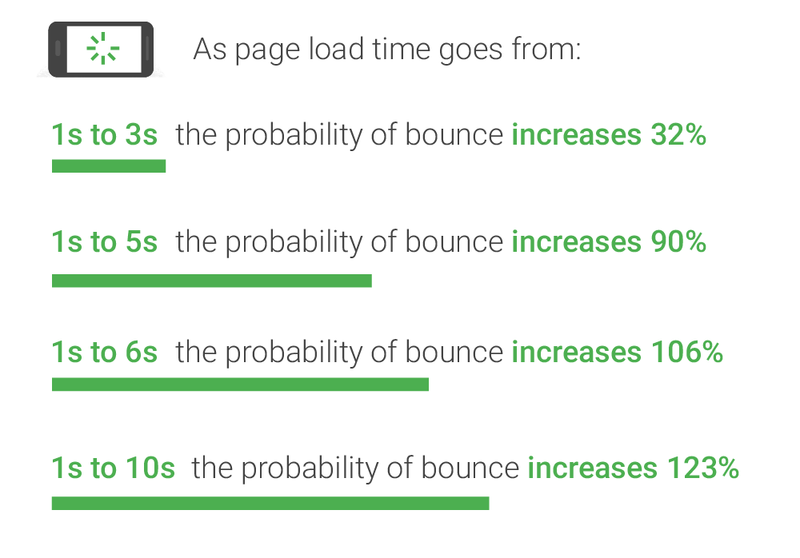
    There is a direct correlation between load times and bounce rates. After 10 seconds of load time, there is a 123% increase in bounce rate versus a site that loads in one second.

    Graph of relationship between bounce rate and website load times

    In May 2020, Google introduced Core Web Vitals, which measures what Google considers essential in a website/user experience: largest contentful paint, first input delay, and cumulative layout shift.

    Without getting too technical, these measurements essentially tell you how quickly your site is usable. The longer the load times on these components, the longer it takes for the site to be usable, contributing to higher bounce rates and less interaction on site.

    Does Site Speed Impact Conversions?

    Similar to user experience, if visitors find that the load times and site speed are inadequate, they are less likely to engage with conversion forms. Data suggests that one second in added load times leads to a 7% drop in conversions. If the goal is to drive more students to a program or degree, slow load times may have a tangible impact on the amount of form fills you receive.

    Key Factors of a Site Speed Audit

    There are so many factors that contribute to a site’s overall speed, but some are fairly common and relatively easy to address compared to more involved technical development fixes. First and foremost, you will want to evaluate your site on desktop and mobile. Nearly any site speed tool you utilize will delineate between the two versions of the site. Some of the more common issues include:

    • Unused / excessive JavaScript or CSS: Many sites have scripts, plugins, and other script-dependent items in their coding that bog down crawlers and site load times.
    • Oversized images: Frequently sites fail to minimize or compress their images, resulting in large file sizes and longer load times.
    • Poor coding: Any broken coding or missing elements can add to a browser’s difficulty in loading a site.

    Beyond these fixes, there are plenty more ways to positively impact site speed; however, it is important to note that many of them require a large amount of technical development work. As a result, some fixes are not attainable without essentially a complete redesign of the site. However, anything that will improve site speed will lead to a higher chance of a conversion.

    Free Tools for Site Speed Testing

    Several tools can help you regularly monitor your site speed and discover errors (for free!)

    Page Speed Insights: This is Google’s tool for testing page speed insights. The report contains more information on the technical items and potential fixes. This report is beneficial for evaluating the Core Web Vitals elements.

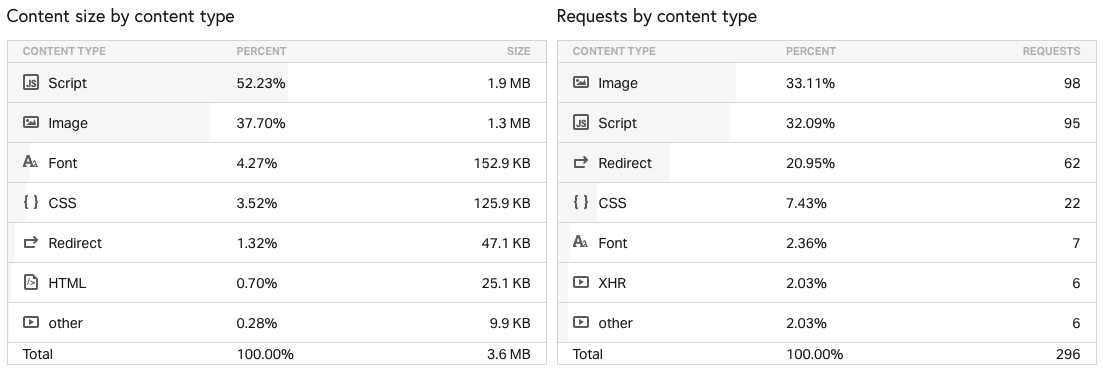
    Pingdom: With this tool, you can more easily break down individual loading elements of a site such as images, JavaScript, CSS, etc.

    Example of Pingdom site speed test results

    WebPageTest: Similar to Pingdom, this is a great tool for a technical breakdown of your site speed. You can also customize your location to test site speed from different locations and different browser and device types. Perhaps most helpful – you can run a Core Web Vitals test.

    Regardless of the tools you use, you should monitor site speed consistently. Google has introduced new elements to its ranking algorithms over the past few years that indicate that user experience, of which site speed is critical, will continue to be an important ranking factor. If your institution’s site speed is lagging behind competitors, there is a good chance you are losing out on potential students, or at the very least, missing more conversion opportunities.

    Concerned about your institution’s site speed? Contact Search Influence today for a consultation.

  • Google Maps: Ongoing List of COVID-19 Updates (June 2021 Update)

    Note: this post was updated on June 9th, 2021.

    Many of the changes that Google made to Google My Business for COVID-19 will likely stick around after the pandemic. Consumer behavior changed and Google adapted to help businesses meet those needs.

    On the other hand, a lot of functionality was limited in the immediate aftermath of COVID-19. Currently, listings more or less have the same functionality as they did prior to the pandemic. A lot of these limitations, such as removing the reviews option, were to prevent overreactions on things like hospital listings in the immediate aftermath of the pandemic. As things settled down, these features returned.

    COVID-19 Google Maps Updates

    • Google removed the option to leave reviews and ask questions in the Q&A section. They now have returned the ability to leave reviews for all business categories besides drug rehab and narrow sets of medical categories like hospitals.
      • UPDATE: Both reviews and questions and answers are back to the pre-pandemic functionality, regardless of category. The changes Google made resulted from uncertainty and potential harm done to certain listings, but as “normalcy” returns, so have these sections.

    Screenshot of Google My Business reviews live on SERP

    • As of today, Google does not permit video uploads to the channel. Previously, businesses could include videos in the overall Photos section. Google has not said when they will update this feature.
      • UPDATE: Videos are now viable and usable on all listings.
    • The company has slowly rolled back out the Q&A section, with service industries seemingly being the first to get these back. There is no clear timetable for the full rollout.
    • Google removed the ability to use their previously supported Chat feature for help. This is likely due to staffing issues related to COVID-19, so the only method to reach Google is through this form.
      • UPDATE: This form remains functional, but the response times vary depending on numerous factors.
    • Google rolled out the ability for chains to use Google Posts.
    • Google is working on features that will help users in the post-COVID-19 world. According to Ramesh Nagarajan, Product Management Director of Google Maps,

    “When you look up public transit directions for a trip that is likely to be affected by COVID-19 restrictions, we’ll show relevant alerts from local transit agencies. These alerts can help you prepare accordingly if government mandates impact transit services or require you to wear a mask on public transportation.

    When navigating to medical facilities or COVID-19 testing centers, we’ll display an alert reminding you to verify eligibility and facility guidelines to avoid being turned away or causing additional strain on the local healthcare system.”

    • It is unclear how this impacts businesses, but it is a sign that businesses should communicate their status around these issues on their profile using the numerous features Google introduced.
    • The “Temporarily Closed” option for listings will remain for as long as needed. It is important to note that Google insists marking business locations as temporarily closed will not impact your ranking.

    Ongoing COVID-19 Google Maps Updates

    • Temporarily Closed option added for listings.
      • UPDATE: This option remains available for businesses.
    • Google added Takeout, Delivery, and Dine-In badges for restaurants and bars to show which options they currently offer.
      • UPDATE: These options remain available and will likely stay for the near future. The relevance of having information about “no-contact“ options will depend on the length of the pandemic, but that may be a consumer behavior that remains.

    Screenshot of dine-in, takeout, no contact delivery attributes on Google My Business listing

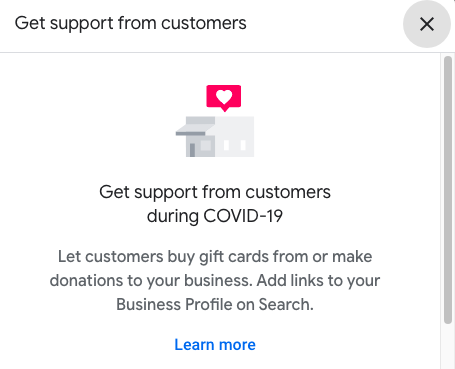
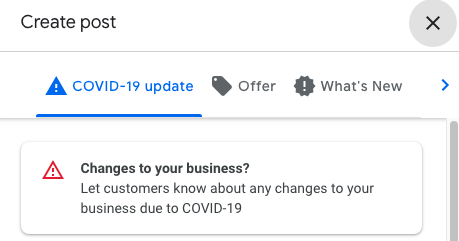
    • There are two COVID-specific post options right now. Both of these are great ways to update users about the status of your business.
      • UPDATE: These post features remain available to businesses.
        • Ways to support your business
        • General update about your status

    Screenshot of get support from customers option offered by Google My Business


    Screenshot of options related to COVID-19 in Google My Business Posts

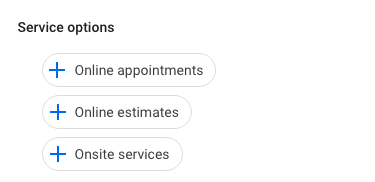
    • Google added backend attributes that help inform both Google and potential customers about what type of online and on-site services you provide.

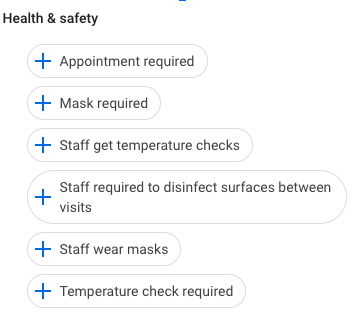
    • Google is now allowing businesses to display COVID-19 safety measures including mask requirements, staff requirements, and temperature checks.
      • UPDATE: Google has added more details around the safety measures taken by businesses.

    Screenshot of Google My Business safety options

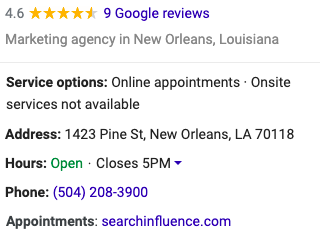
    • UPDATE: During the course of COVID-19, numerous businesses pivoted to offering online services. As a result, Google rolled out features to help businesses connect with users looking for virtual experiences. Some of these include online care, online classes, and online appointments.

    Screenshot of main business information on google my business listing

    Today, Google has essentially returned their listings to their pre-COVID functionality with the added benefits of having service and safety information more present on the listings. These are features that are likely to stay and help increase engagement with listings and provide more user-centric information beyond the business address and phone number.

    If you’re interested in discussing how Search Influence can help you navigate the post-COVID business landscape and your ongoing marketing efforts, please reach out to talk to a strategist about your digital marketing goals.

    Here are some additional resources to help your business run as smoothly as possible during this period.

    Images

    Mobile device

  • Trends in SEO: 2020 and Beyond

    The beginning of a new year marks a fresh start, new outlooks, and perhaps new approaches to a person’s conventional wisdom or habits. Digital marketing, though constantly evolving through the calendar year, is no different. As we begin to envision digital success in the new year, one important exercise is to evaluate where you have been and which trends you need to follow to stay ahead of the competition moving forward. Many of the topics we will discuss are not necessarily new information or revelations, but rather, the relative importance of them has increased and will continue to do so as search goes in a certain direction. With that out the way, let’s jump into the biggest trends that will impact SEO throughout 2020.

    Start Learning and Understanding Google’s BERT Update

    Announced in the latter half of last year, this announcement made waves in the search community due to the potential implications around how digital marketers perform keyword research and develop content. BERT, or Bidirectional Encoder Representations, originated as an open-source research project that aims to better understand the contextual relationship between words and how that tacit relationship may affect the meaning, or intent, of those words when used together. In plainer terms, it is a framework that tries to better understand natural language to deliver better search results rather than serving up more direct, literal word-for-word results.

    Bert from Sesame Street using a banana as a phone and saying hello?

    So, Why Does BERT Matter for Businesses?

    Google posted a blog on October 25th, 2019 announcing their reasoning behind introducing this new algorithmic feature. In his post Pandu Nayak, a Google Fellow and Vice President of Search at Google stated:

    “Particularly for longer, more conversational queries, or searches where prepositions like “for” and “to” matter a lot to the meaning, Search will be able to understand the context of the words in your query. You can search in a way that feels natural for you.”

    Essentially, Google is trying to deliver better results by understanding searcher intent rather than responding to an exact query. This has large implications for content because SEOs will now have to consider intent, or what customers are trying to find, rather than getting bogged down with the exact search value of a keyword string. That is not to say that keyword research does not serve a purpose; this type of research will be helpful to understand broad trends or high-level areas of the search funnel, but what businesses and digital marketers will need to better understand is what the searcher ultimately wants.

    The English language is chock-full of nuance, so this is really a move to try to get at the heart of that nuance. An example of that would be a query such as “how to play a stand up bass”—it is fairly apparent we are not talking about bipedal fish. Trying to better understand the relationship between words and why context matters when delivering search results is at the core of this BERT update. It bears mentioning that John Mueller from Google recently came out and reflected the idea that keyword research is not “dead,” but rather, diminishing in importance a bit:

    “There’s probably always gonna be a little bit of room for keyword research… And even if search engines are trying to understand more than just those words, showing specific words to users can make it a little bit easier for them to understand what your pages are about.”

    While it’s hard to trust Google when talking about these topics, it seems to me he’s implying there will still be value in optimizing towards general keywords with established search volume.

    This discussion leads nicely into another concern for digital marketers moving forward:

    Expansion of Voice Search

    This will be a much shorter section because, as it stands, most of the SEO recommendations made for voice search align with already established SEO trends applicable in normal search context. However, while there are not special SEO tactics needed for voice search, the level of adoption of this product is something to be mindful of because of—you guessed it—BERT!

    People tend to use more natural, longer-tail questions when using a voice-assistant device. A happy coincidence of generating content with BERT in mind is that it will inherently align with the intent of a lot of voice searches. This matters because, according to analytics firm Comscore, nearly half of the searches in 2020 will be done via a voice device.

    As we know, voice search typically serves up a single result that answers the query; in order for businesses to best position themselves for voice search, they will need to be mindful of both BERT and another large issue moving into 2020 and beyond:

    The Rise of Zero-Click Searches

    If you have used Google to find an answer to an inane question in the last few years, you have undoubtedly performed a zero-click search. It may be fairly obvious why these are called “zero-click searches,” but it’s important to understand why this is happening and the ways brands and businesses can work around a system that diminishes traffic to their website. The decline of clicks is likely the reality for the foreseeable future. As mobile and voice search grows, the need for Google to provide quick, relevant answers versus pushing you to a third-party site increases. The goal from there should be to figure out how to get your brand best positioned to be the answer that voice and mobile searchers are looking for.

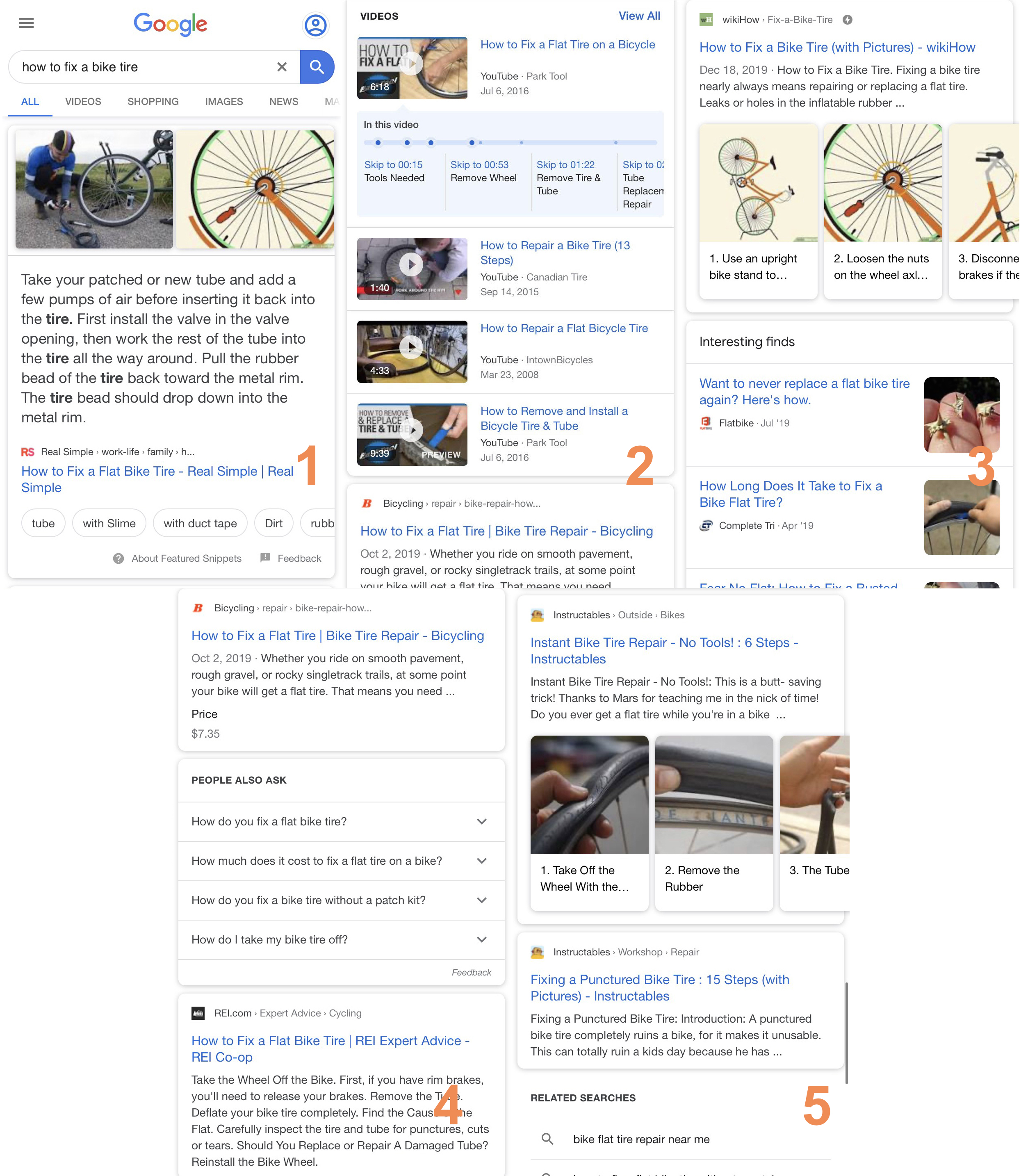
    As mobile search increasingly becomes the search method of choice for users, it’s helpful to visualize just how this impacts user behavior. Let’s take a basic question like “how to fix a bike tire.”
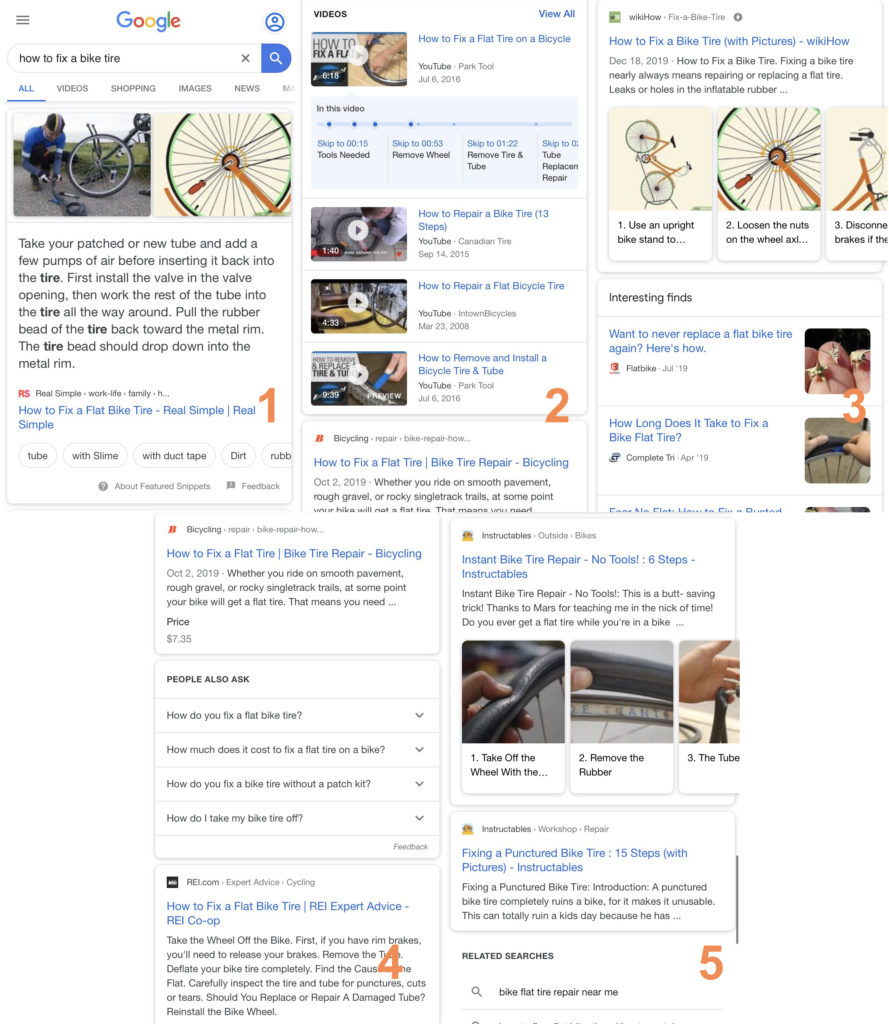
    Screenshot of mobile search on Google for Search Influence blog

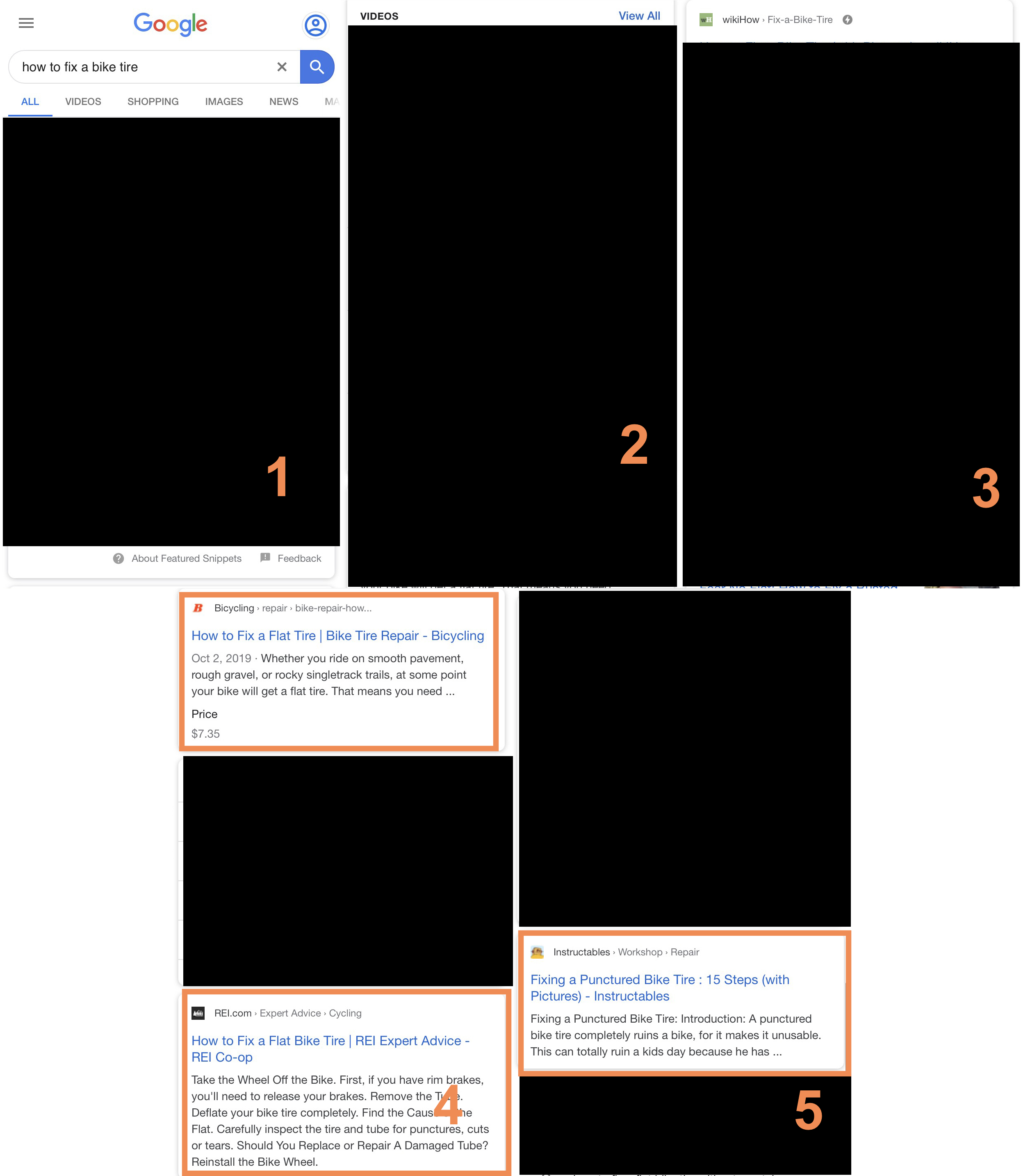
    As you can see, there is competition amongst featured snippets, video content, and embedded images. While discussing this very topic at Local U Advanced in Denver, CO, Cindy Crum from MobileMoxie offered a really interesting visual way to see why zero clicks are becoming more and more important to deal with. If we block out anything that is not a traditional “organic result” in the SERP, you will see that other types of results occupy most real estate.
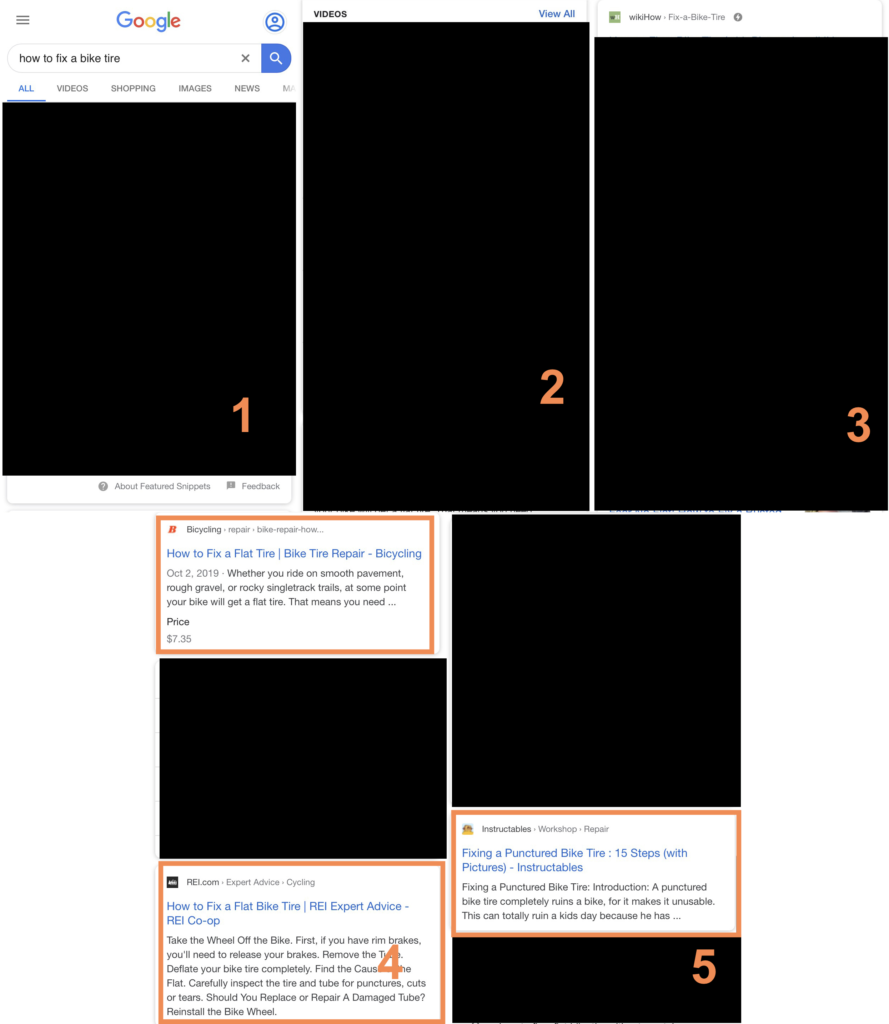
    Mobile search on Google with all non-organic results blacked out

    How to Combat Zero-Click Searches

    It may be time to stop thinking purely in terms of organic traffic. Much of SEO for businesses moving forward is about visibility. How can we position ourselves to be the brand that answers the questions our clients want to know? This is why content will continue to be the backbone of any SEO strategy. Doing proper research into the questions, queries, or searches that align with your business goals and striving to be the authority in your industry is the best way to ensure you remain competitive—and visible—in a landscape that does not necessarily reward good content with clicks.

    In shorter terms, you really want to try to be the featured snippet. This is an extremely difficult task as we know there is a high barrier to entry and it takes content tweaks, patience, and a strong will to see it through to grab snippets. Good content research includes finding the least competitive snippets and prioritizing those over a more competitive, higher level search. Doing simple keyword research is not enough nowadays. Moving forward, thinking about how these searches propagate results is equally as important.

    Google Maps: The New Home for Local Search?

    When people think of search, the Google homepage with the requisite search box is likely most people’s first mental image. However, for businesses moving forward, there should be an increased focus on how the Google My Business/Google Maps product is influencing and driving local search.

    Another big takeaway from the Local U Advanced conference is the volume at which users are going directly to Google Maps to find local businesses. According to the data from industry thought leader David Mihm’s presentation, from March of 2018 to August of 2019, 72% of all impressions on search were on Google Maps as opposed to Google Search (the traditional SERP). This is a huge discrepancy, and one of the big takeaways is that businesses are not leveraging Google My Business as much as they should.

    In order to be competitive in rankings in Maps, it is important to breathe as much life and information into your listing as possible. This includes driving reviews and optimizing descriptions, including appointment links, booking platforms, a healthy number of photos and videos, answering questions, and, finally, ensuring you are engaging with reviews. While proximity to a location plays a huge role in how the Maps listings are displayed, if you are actively managing your profile, the chances are that you will see some benefit.

    Also, consider how public-facing this listing is. If it looks sloppy, incomplete, or utilizes blurry images, users might be less engaged and less inclined to click through to your listing. While this seems relatively simple, many businesses fail to leverage this product—or even use it at all.

    Design Your Site for Mobile First. Always.

    This is not new for 2020, or even 2019 for that matter, but that does not minimize the importance of designing your site to perform well on mobile. Back in late 2018, the SEO community started talking about mobile-first indexing, and this was a major shift in the way search engine crawlers—and Google—understood and indexed your site.

    In response to Internet searches becoming an increasingly mobile experience, Google decided to push developers and business owners in that direction by making the mobile version of the site the version that is indexed in Google. In other words, Google crawls the mobile version of your site and makes determinations about its health on that basis. Web development is often thought about in terms of desktop computers, but it is becoming increasingly the case that your mobile version is at least, if not more, functional than the desktop experience.

    One of the biggest factors and problems searchers find with mobile sites is the overall speed. We know there is a direct correlation between load times and how many people will abandon your page. In the same way that users respond negatively to slow sites, the crawler will factor that in when crawling your site. A slow experience is not good for users, crawlers, or your business.

    This became increasingly visible to digital marketers when they rolled out site speed evaluation in Search Console. Google is essentially giving people feedback about their site speed in the hopes that flagging this will lead developers and businesses to try to create better mobile experiences for users. As seen below, this a report that is now standard in all Google Search Console reports.
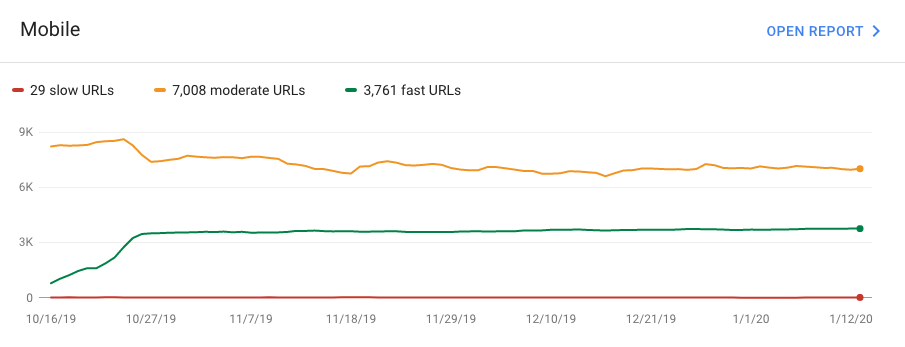
    Example of Google Search Console speed tests for Search Influence blog

    Google has been poking and prodding at digital marketers and developers for a while, indicating their sites are “relatively slow.” To the extent that this is accurate is questionable in my view—my belief is Google is inclined to tell you that your site is slow because they want you to go after improvements that ultimately make Google’s life easier. In that way, I do not see it as super nefarious because ultimately it helps everyone in the end, from users to large businesses.

    What’s Old Is New

    While we have pinpointed some newer aspects or changing directions, there are some old tenets of SEO that will remain very important moving forward. Backlinks are still relevant, you need to leverage structured data, video content will remain a huge differentiator in terms of content, leveraging E-A-T guidelines and content can help drive traffic, and, finally, write good content that serves the need of your users.

    SEO is constantly evolving. Many of these trends will change over the coming months, and different algorithms will impact different industries in unique ways. It will be next to impossible for businesses to develop the “perfect” site for ranking well—the best we can do is interpret what Google is asking for and do our best to align with their needs while also considering the needs of users. Ultimately, Google is incentivized to provide the user a good search experience, so by reading the tea leaves and (skeptically) following their guidance, your site should be in a good place to grow its audience.

    Do you have questions about how SEO could help your business? Need a consultation? The team at Search Influence has experience managing SEO campaigns of all shapes and sizes. Reach out to us today for more information.

    Images

    B.E.R.T.
  • How I Learned to Stop Worrying and Embrace Google Algorithm Updates

    Author’s Note: During the course of writing this blog Google took an unusual step (for them) and announced an impending core algorithm update. While this blog does not discuss this update specifically, the underlying themes about handling these updates should remain applicable. To learn more about this core update, I recommend reading some of industry news sources I have mentioned below. 

    Much like the sun will rise in the east and set in the west tomorrow, digital marketers and business owners alike will hear rumblings every few months about supposed updates to Google’s ever-elusive algorithm and begin to worry. For some businesses, these updates (or “improvements,” as Google usually euphemizes) can generate significant dips in traffic to their site and seemingly undo previously successful SEO efforts. A prime example of that scenario would be back in August of 2018, when SEOs noticed a noticeable drop in site traffic, particularly in the medical vertical.

    This led to wild speculation about the scope, purpose, and future impacts of this particular update. Undoubtedly, many digital marketing practitioners felt the effects of this update with diminished traffic to their sites. As someone who has worked on numerous SEO campaigns and strategies, I can certainly relate to the consternation around Google reconfiguring their algorithms to change the way sites are rewarded organically. In many instances, these updates can positively impact sites that may be less authoritative and in some cases utilize underhanded tactics that do not necessarily meet searchers actual needs.

    Lisa Simpson taking a scientific approach to Google algorith updates

    This is certainly very frustrating from a marketer’s perspective, as the parameters around what is best practice and how to win organically can shift seemingly overnight. When this is combined with Google’s textbook evasiveness around these updates, it may be overwhelming.

    So, How Should I Respond to a Google Algorithm Update?

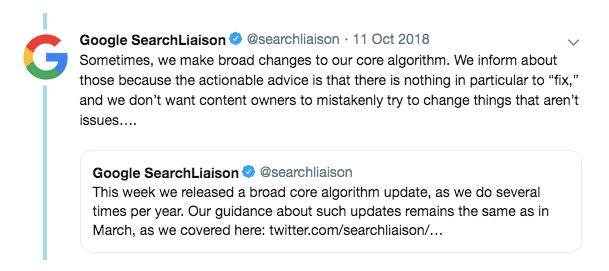
    Google has made efforts to become more communicative with SEOs in recent years (they even updated their “SEO Starter Guide” for the first time in over seven years back in April of 2019), however, they still are very cagey about what they are willing to reveal as it relates to specific algorithmic updates. In certain cases, if there’s enough of a perceived backlash from the larger SEO community, then Google representatives may take steps to address it publicly; however, those answers are typically engulfed in vaguery as well. Take this statement from Google’s Search liaison Danny Sullivan in the aftermath of the August and September 2018 updates as an example.

    “We understand those who do less well after a core update change may still feel they need to do something. We suggest focusing on ensuring you’re offering the best content you can. That’s what our algorithms seek to reward.”

    The word “seek” is pretty telling here, as it underscores the idea that the algorithm is imperfect. Also, consider the fact that Google is constantly reworking their algorithm to best serve searchers, another implicit sign that there is room to improve. The first thing you can do to help yourself respond to algorithm updates is to realize that 1) it’s not a perfect reward system and 2) these changes are out of your control. Additionally, the solution is intentionally vague and does not really define what “best content” really is.

    Screenshot of Twitter discussion of Google algorithm updates

    Above we see the acknowledgment. One can waste a lot of time questioning Google’s decision-making, but it is important to evaluate whether these updates have actually had a tangible effect on your business. In many cases, these updates may impact certain industries, but certain sites within that industry do not see the effects. Before looking at the macro of the issue, the focus should be on if there is any tangible impact on the micro level; in other words, did this update actually impact me? From there, you can start to take the steps needed to recover, if you even need to.

    How Do I Know When a Google Algorithm Update Is Occurring?

    Since Google does not typically acknowledge when an update is happening, digital marketers rely on third-party tools and anecdotal evidence to connect the dots. The best way to stay on top of this is by following some of the industry leaders who follow and discuss news stories of the day, such as (to name just a few) Search Engine Roundtable (who does an amazing job staying on top of chatter around updates), Search Engine Journal, or Search Engine Land.

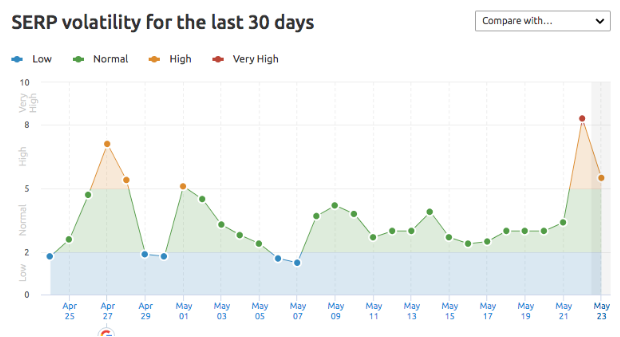
    Most reporting around these updates comes from what SEOs and digital marketers are seeing in real time, as well as from new tools that help monitor search engine volatility. One of these tools is SEMRush’s Sensor that measures the level of volatility across industries and across different countries. Often, the sensor will pick up on this volatility and the news about updates will follow in the next few days.


    SEMRush's Google algorithm sensor

    As you can see here, April 27th and May 22nd are of particular interest. SERP (Search Engine Results Position) volatility is noted as very high, meaning sites’ rankings have fluctuated greatly. As I write this blog on May 23rd, I am starting to see chatter around the typical sites about potential updates to Google. These are largely unconfirmed, and it’s unlikely that this is a massive update, but we do not know that until more SEOs and digital marketers weigh in or Google confirms these updates. What this tells us is that somewhere, in some verticals, rankings have fluctuated. Whether or not this is a result of an update or some other unknown factors is hard to know.

    It is important to remember this: these anecdotes and 3rd party tools are just signs, not concrete evidence. There are many examples of overreaction to this data and many times it can lead to unnecessary scrambling when it may just be a minor change or something completely unrelated to an algorithm change.

    Well, My Traffic Is Way Down, Now What?

    This is where it becomes tricky, as you must be familiar with your overall SEO strategy as well as the possible sources of these issues. This is why monitoring tools like SEMRush’s Sensor as well as the various industry news sources is imperative to running an effective SEO campaign. If your traffic is down as a result of an algorithm update, then there is almost assuredly highly skilled digital marketers attempting to diagnose and find solutions to the problems.

    Take this post about how to recover from the “Medic Update” from Search Engine Journal. This is chock-full of the usual pain points about these updates, Google’s vague acknowledgments, and some evaluation of previous updates. In addition, however, we get plenty of great strategies around content to help rectify the issue. The volatility of SEO and rankings allows for your site to recover if you continue to be ardent about following best practices and putting effort into your strategies. Furthermore, you cannot get locked into a fixed set of best practices. In many cases, the best solution is to try a new approach you may have avoided or not known prior.

    In the moment, these updates can seem like a business-altering minefield, but it is very important to remain focused on long-term strategy. SEO is oftentimes a slow, non-linear process, so it’s important to keep that in perspective before getting overwhelmed by a bad few months after an update.

    If you need help with your SEO strategies, the team at Search Influence has the expertise to navigate through the ups and downs of Google algorithm updates. To learn more, contact us today.

    Images

    Laptop

    Lisa

    Google Twitter

    SEMRush

  • SEO News: Data Aggregator Factual Now a “Submission Only” Source for TDCs

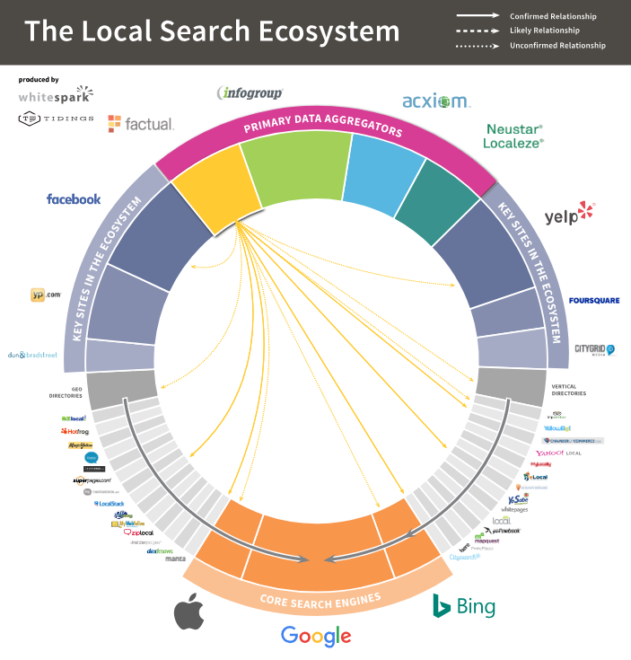
    SEO professionals who deal with clients’ backlink profiles and citation distribution on a daily basis are likely familiar with Factual, one of the largest data aggregators in the local search space. Factual does not accept listing submissions or edits from individual users; rather, they utilize trusted data contributors (more on that later) to help collect, validate, and then disseminate what they describe as “the ongoing accuracy of core business attributes.” In basic terms, you want to have your business listed on Factual as a platform because it helps push that data to other data collecting websites, expanding your digital reach across the internet.

    What Does Factual Moving to Submission Only Mean?

    Factual going to submission only means that third-party trusted data contributors (TDCs) can no longer guarantee that these data submissions will be accepted on Factual’s end. In TDCs like Yext or Moz, users can submit their business data, and the TDCs will push that information all at once to data aggregators, of which Factual is just one. Some other examples of data aggregators would include Acxiom, Neustar/Localeze, and Infogroup. TDCs help SEO professionals by guaranteeing that accurate listings will populate on these very important aggregators. 

    Yext logo


    This helps SEO professionals save a lot of time because it allows them to manage a client’s core data, have the data sent to these aggregators, which then send the data to more sources. Additionally, these tools help measure the accuracy of the listings, telling you if there is a discrepancy in name, address, phone number, or other attributed data. There is tremendous value in having accurate data for these reasons:

    • The data gets pushed from these four aggregators to numerous other internet sources.
    • Having consistent data for your name, address, phone number, and website adds authority to your business, in terms of SEO.

    Why Does Factual Going Submission Only Matter?

    Data aggregators that are willing to accept data from third-party tools as well as measure their accuracy help SEO and/or link builders tremendously in terms of time saved. For those at an agency or juggling numerous clients, monitoring these listings individually and having them edited is a gigantic time suck and oftentimes can be less than effective.

    By eliminating Factual from the equation, there is one less data aggregator that you can manage en masse via third-party tools. Factual will remain an important directory and aggregator, but you have to manage the data in a different way; more than likely, manual review on the physical listings will the best way to ensure accuracy. If there are inaccuracies, the best course of action would be to follow the guidance on how to make edits on their FAQ page.

    Why Did Factual Go to Submission Only for TDCs?

    This is a bit unclear, but Factual made this decision across all platforms. They did not cherry pick the sources that they would allow to guarantee submission or measure accuracy, but rather decided to limit the functionality available to the TDCs. 

    Factual’s next steps might be indicative of a larger trend industry-wide, or it might be just an internal decision based on factors we are not aware of. Regardless, this is worthy of monitoring going forward, because if more TDCs follow suit, local listing and data distribution management might be a bit more challenging in the near term.

    Even though the SEO industry is always changing, the marketing experts here at Search Influence are always keeping up with industry trends to optimize our clients’ SEO campaigns. If you think your business could use help with listing management or other SEO strategies, contact us today to start a conversation.

    Images

    Whitespark

    Yext

  • Year-end Trends: What’s Been Driving Local Search in 2018?

    Annually, the brightest minds in the local search field come together to provide their input on the major changes and trends in the industry via the Local Search Ranking Factors Survey. Coordinated by Darren Shaw from Whitespark and the fine folks at Moz, the 2018 review of local ranking factors helps to coalesce the general sentiment around the most impactful inputs as they relate to local searches. This survey is a great resource for digital marketers because it not only helps us understand the changes in the last year, but also how to better focus our efforts and energy moving forward.

    Here at Search Influence, we are fortunate to be one of the contributors to this survey. With our experience in the local search realm across numerous industry verticals, we are well-equipped to help add more context to an, at times, confusing digital marketing landscape. As expected, much of what we saw in the day-to-day management of our clients’ local search campaigns was reflected in the results of this year’s survey.

    What’s the Biggest Local Search Trend for 2018?

    According to the results of the survey, the biggest local search trend is Google My Business management.

    For those of us who spend countless hours wrangling Google My Business (GMB) and/or Google Maps accounts, the attention Google has put into the product is obvious. With the addition of Google Posts, Google Q&A, website builder, services, expanded attributes, primary and secondary categories, etc., it became clear that GMB was being re-positioned as a social, activity, and information hub for potential customers, current customers, and the business, in some part to offset the loss of Google+ as a business platform.

    Understandably, digital marketers have found GMB signals increasingly important year-over-year. It is pretty straightforward, intuitively—use the new features introduced by Google to help with local search performance. However, many businesses and digital managers fail to follow up once these new features are rolled out.

    Of the eight signals measured in the results, GMB makes up 25.12 percent. As you can see in the image above, this is a large increase from the previous year’s data. Ensuring that your business has a properly optimized listing will go a long way in determining the vitality of your business in a local search context.
    31 questions to ask a marketing agency

    Reviews Are an Increasingly Relevant Local Search Ranking Factor

    Along with increased profile options, Google has started taking steps to help increase review participation on the Google My Business listings themselves. Through new mobile app features, new messaging features, and other small tweaks, Google has made it clear that they do not just want users leaving reviews for the business; they want to make sure businesses are interacting with their reviewers as well. One prevailing thought derived from the data points is that Google is making an effort to create a quasi-community around business listings, making it so users do not even feel the need to click through to a client’s website. There is ample room for discussion about the pros and cons surrounding that concept, but, as a practical matter, digital marketers and businesses should be keenly aware of this trend and know how to best leverage it to convert potential customers.

    This fact is reflected in the breakdown of the influence of review signals. As seen in the table above, the influence of reviews on listings has increased significantly year-over-year. As businesses begin to compete more and more for the “Local Pack,” reviews may be a large factor in whether or not your business becomes listed. Encouraging your customers to review you on Google, whether positive or negative, will help Google know your business is active. What’s more, if you, as a business, respond to the positive and negative reviews, you are adding a valuable signal to Google, as well as displaying good customer service.

    But, What Happened to Links and Citations?

    One important thing to consider in regards to this survey is that just because something has become less important relative to other factors does not mean that it has lost significance. A good local search strategy encompasses a holistic approach that implements strategies for all of the different factors, of which linking and citations are a significant portion.31 Questions Checklist square image

    Part of the reason these factors have seen a dip in relevance is because the other factors have become more influential—in other words, the overall results have become a bit diluted due to the increasing number of factors. To rephrase, linking and citations are still a large, integral part of a good local search campaign; however, you might want to get a wrangle on your Google My Business and review situation prior to embarking on a full-fledged link/citation-building campaign.

    So, What Are the Other Factors?

    A large portion of the review is the section-by-section breakdown, along with a helpful glossary, to help you fully understand how each factor is weighed and what digital marketers think. It is important to distinguish between organic search results and the “Local Pack,” as both have different considerations when it comes to ranking signals. In lieu of breaking that down here, I suggest reading the data supplied in the post on Moz’s blog, as well as Darren Shaw’s companion piece explaining the survey.

    Local search is a constantly evolving, dynamic field that requires actively monitoring changes to platforms and signals, and to Google’s new product rollouts. Undoubtedly, there will be some disruption in the local search field via a new product, new algorithm, or cosmetic changes, but these surveys give us the historical context to better understand why these changes might have occurred and how they might impact future usage. If you’d like help building a dynamic marketing strategy that encompasses these trends, reach out to Search Influence to request your free marketing analysis.

    Images:

    Laptop

  • What Are The Most Important Review Sites? Start With These Three

    In order to remain competitive in the local search space, it is essential to encourage your customers to provide feedback about your business. Reviews and interaction with your digital properties help search engines and users learn more about your business; in today’s environment, if you are neglecting these review sites, then there is a chance you are missing conversion opportunities as well as losing ground to your competitors. With the number of review sites out there, it is important to prioritize their management in order to expose your business to the largest amount of potential customers without spending all day managing different profiles.

    What Are The Most Important Review Sites?

    While there are endless options out there, these are the most important review sites:

    1. Google My Business

    2. Facebook 

    3. Yelp 

    This should not be a huge surprise, even to casual internet searchers. These sites dominate a lot of the search space when it comes to search queries about businesses or services. Here are the basic reasons why these are the most trusted review sites:

    1. Traffic

    2. Reputation

    3. Authenticity

    According to Alexa, a widely accepted measure of websites’ ranking metrics, Google My Business, Facebook, and Yelp are the first, second, and fourth most visited websites in the United States for Consumer and Business Review websites. Amazon currently holds the third spot, but Amazon is not an option if you are in a service-based industry. All of these sites have millions of unique visits a month, meaning, people are undoubtedly coming to these sites for more information. Since these are free to manage, it would be like passing up an opportunity to have a free billboard on one of the most traveled roads in the country. Furthermore, reviews can now populate on organic search for Facebook, Google, and Yelp, so users may or may not click through to your site based on your review situation.

    One of the reasons these sites generate so much traffic is because of their reputation as a reliable source of business information. The amalgamation of traffic, number of reviews, and day-to-day use have made all of these sites integrated into our digital diet. Much like people reflexively would use the Yellow Pages or White Pages in a pre-internet world, people will reflexively use these sites to get more information about a business.

    Lastly, people trust these sites because the reviews are user-generated and moderated by a third party rather than the business itself. While it’s good practice to have reviews and testimonials on your main site, the obvious issue there from a user perspective is that you will probably only promote the positive reviews. These sites allow the opportunity for customers to express a range of thoughts or emotions, allowing potential customers to better discern the pros and cons.

    So, Why Should I Manage Business Review Sites?

    According to Vendasta, 88 percent of online shoppers utilize reviews to inform their purchase decision. Furthermore, the amount of people who do not research a business online prior to a purchase has decreased from 22 percent to 9 percent. The trends are obvious; more people are looking for your business online and more people are using reviews to make a judgment. Let’s take this even a step further—44 percent of users say they need reviews to be younger than a month old in order for them to consider it relevant. This highlights an important point—it is not enough to just let your reviews aggregate on these sites, you need to engage your audience.

    Screenshot of a typical yelp listing - Search Influence

    Screenshot of a facebook review listing - Search Influence

    One concern is that your business may aggregate a bunch of negative reviews. Without getting into the reasons for these negative reviews, it is important that you engage with customers who have had a negative experience. Other users looking at your business will see you engaging with customers who had a negative experience and see that you are making an effort to provide customer service.

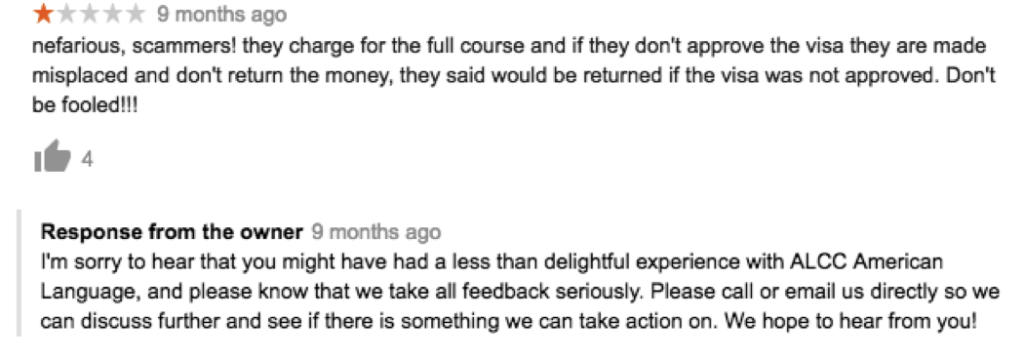
    Screenshot of a typical negative business review with a response from an owner - Search Influence

    You should also respond to the positive reviews. It is a simple gesture to show that you appreciate their business and that they took time out to engage further with your business online.

    Screenshot of a positive business review with a response from the owner - Search Influence

    Beyond the simple client facing, customer service reasons, these reviews are increasingly important to search ranking. It follows that Google will appreciate you using their Google My Business platform to gather and respond to reviews. It improves their product while also helping your business get in front of more people. Being active on your listing can have a positive impact on your local search rankings. When users visit Yelp or Facebook, having a robust review profile with engagement from the business could help you stand out in the crowded marketplace. Managing reviews is now a major factor in the realm of local SEO management.

    How Do I Get More Reviews?

    The simplest way? Just ask! There are numerous ways to interact with your clients and customers, whether it is through an email marketing campaign, adding a request to their receipts or billing, or asking them face-to-face when they are visiting your business. If they are delighted with their service, they may be inclined to help you out by spreading the gospel via Facebook, Yelp, and Google.

    Since running a business is time-consuming on its own, it is important to dedicate some time each week to ensure your digital presence is working for you. By auditing your review situation on Google, Yelp, and Facebook, you will be ensuring that you are monitoring three of the four most visited platforms in the United States among consumer and business review sites. Just a little effort in this area could lead to a surprising amount of new business for your location with the only expense being a bit of your time.

    If you need help getting your online reputation management off the ground, our team at Search Influence can streamline your local SEO strategy to better fit your business goals. Because we are dedicated to the needs of small and mid-sized local businesses, we offer pricing transparency. Request your marketing analysis today to get started.

    Images:

    Thumbs Up

  • What Happened to My Meta Descriptions in Search Results?

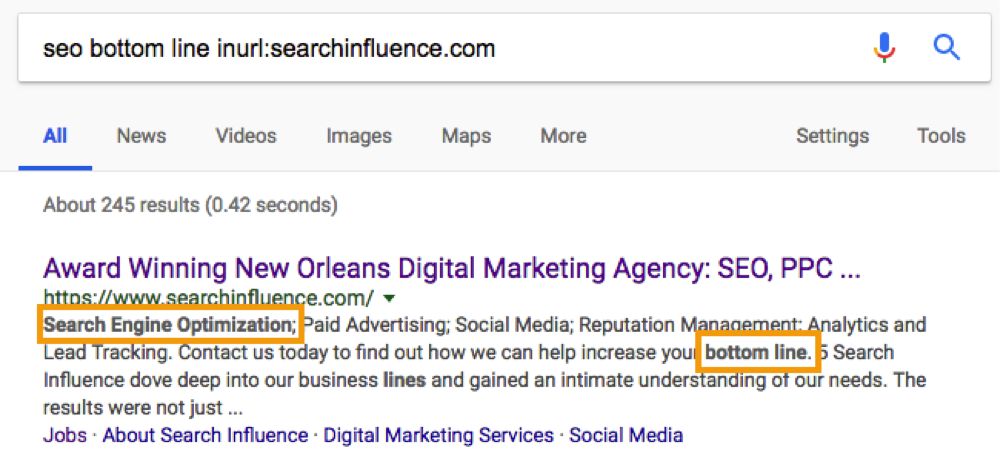
    During a typical day-to-day interaction with Google’s SERP recently, I started to realize the variable nature in which meta descriptions were being pulled into search results for our site. We know that last December Google announced the expanded the character count guidelines for meta descriptions, but that did not seem to be the only input at play—it was pulling in the implemented meta description for some searches and a chunk of the content from the website for other search verticals.

    Let’s start with a service page present on our domain. Within the page’s coding, we have implemented the following meta description:

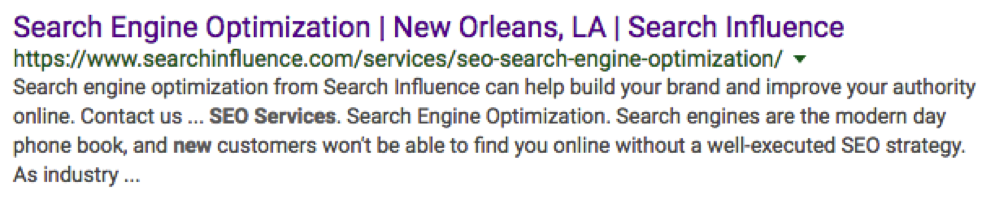
    However, a search for “seo services new orleans” generated a completely different meta description from the one implemented in the site’s coding.

    Google appears to have made the decision that our implemented meta description was either less accurate or less relevant to our search intent than the page’s content. What jumps out here is that in the SERP we see that three of our search terms are bolded in the description, including the “new” from New Orleans. Google has made the decision to extract the “new” and treat it as its own search value and not necessarily as a string with “New Orleans”.

    With this in mind, I began to test the limits of Google’s ability to crawl and pick specific parts of content to utilize in a meta description. Let’s start with our main domain’s meta description.

    In the search for “digital marketing new orleans” our implemented description pulls in perfectly.

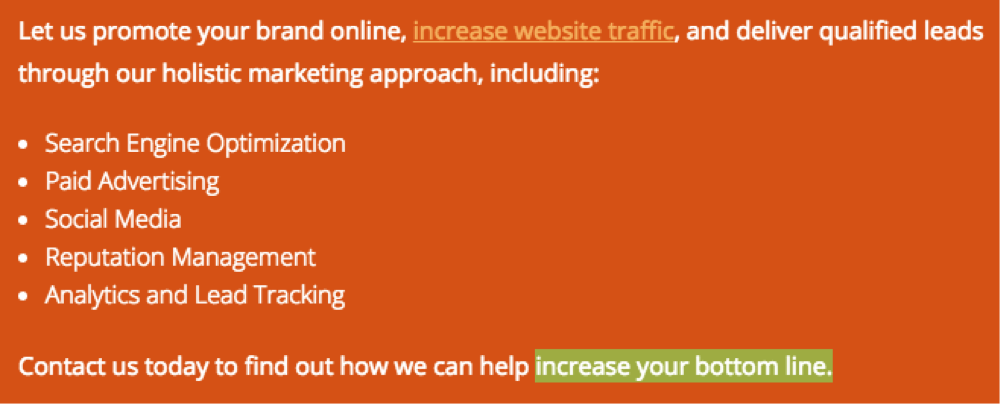
    So in this case, our intent and meta description seem to be perfectly aligned. But, what if I picked some unrelated string of words from my content? I scrolled toward the bottom of searchinfluence.com and picked out a chunk of content to see if I could get it to populate as the meta.

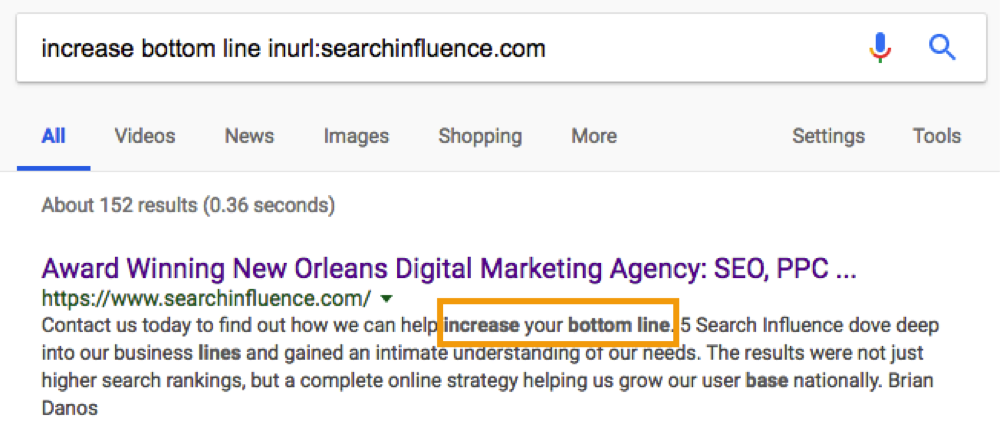
    Wow, that was easier than anticipated.

    Let’s take this a step further. What happens if we Frankenstein some sort of combination of content and our original keyword search.

    So, from this small sample, we can see that Google is actively trying to best address your search intent by extracting the most relevant information from the most relevant pages related to your search query.

    This leads to many follow-up questions: How do I optimize my meta descriptions? Does the length matter? How do I make sure I capture the searchers I want? This presents a lot of loose ends, as these types of things always face small adjustments and tweaks from Google. However, this research can help us form some conclusions about general rules.

    1. Assure your meta description addresses the main focus of the page with search volume in mind.

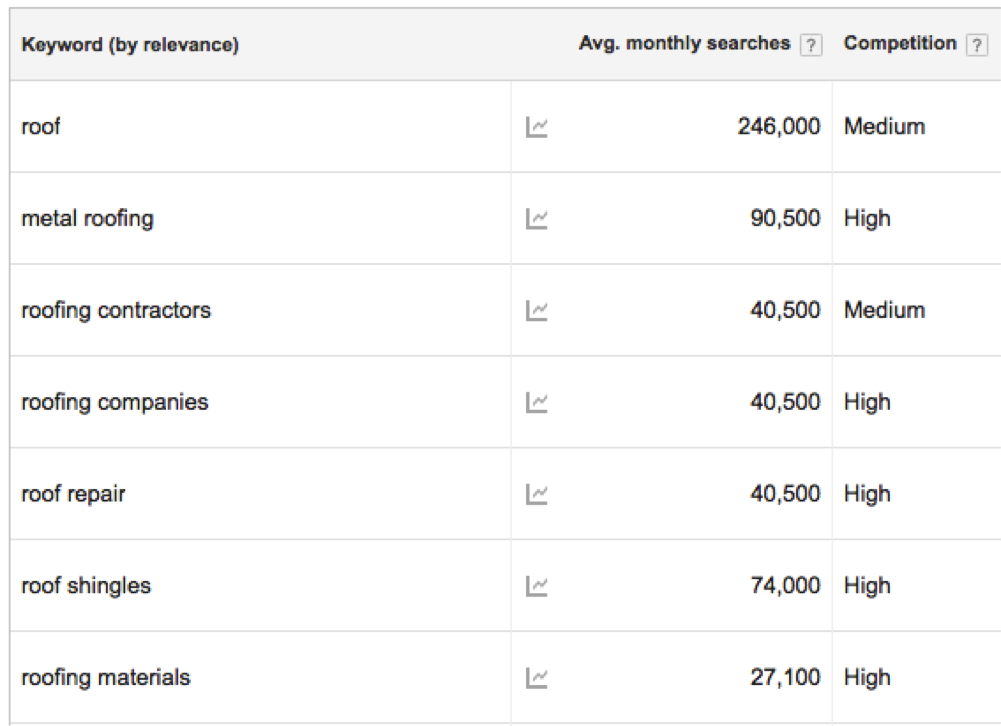
    If Google is trying to tell us that intent matters, then it makes sense to align your meta descriptions with the intent of the searcher. Let’s take a roofer for instance:

    What can I infer from these average monthly searches? For the main domain, best practice would be to address metal roofing, contractors, “company,” repair, shingles, and materials if I want my implemented meta description to pull in for all of the keywords. Keep in mind that, as tempting as it might be, if your page’s content does not address a particular topic or keyword we do not want to include it in the meta description for the sake of attracting searchers. Your keywords or topics in your meta descriptions and on-page content should always align very closely.

    Also, think about pages with a lower number of clicks and conversions. Am I missing any top-level keywords on these pages? Which keywords or topics can I implement to help searchers better understand my product or service? This may require some testing, however, it will aid the end goal of pushing the target audience to the desired product or pages.

    This might seem like a return to a “keyword focused” construction of meta descriptions, but it is more about aligning what your business provides with what a potential customer or client might be searching. If you want your meta descriptions to pull into the SERP, this must be kept in mind.

    2. Meta descriptions should reflect the page’s content.

    When writing meta descriptions, you should also consider the variance in search queries. In theory, your page can rank for a number of keywords outside of your original plan. With that in mind, the meta description should work hand-in-hand with the page’s content. This way, when Google prioritizes one over the other you are still accurately presenting your product or service.

    Additionally, in terms of marketing, find what works best for conversions and stick with it. Since we cannot create a meta description that catches every possible search term or query, you should be strategic about using terms or queries that will best position your business in front of searchers.

    3. Google is utilizing Semantic SEO for Metas.

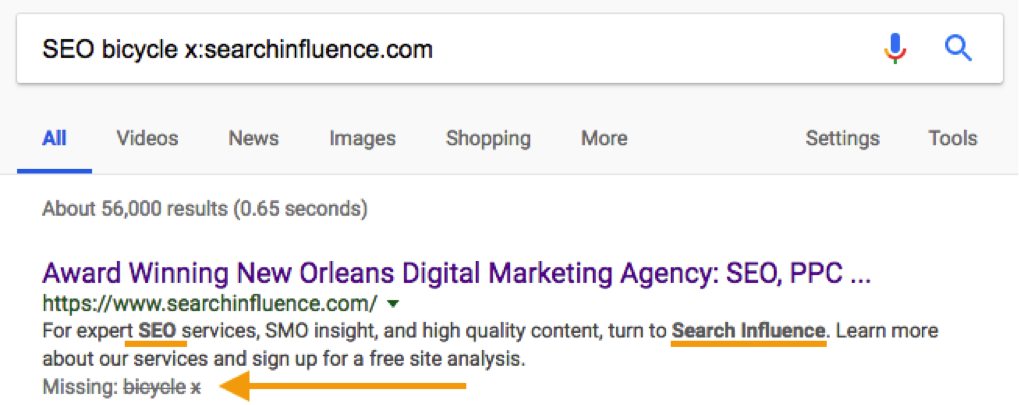
    What we see in bolded text in the SERP results, as seen in earlier sections and the image below, is that Google is continuing to think about searches semantically. In other words, Google is applying more meaning to your searches than a strict A-to-A, keyword-to-result formula. It is trying to infer certain things about your search and what type of content you seek in return. Think about your Semantic SEO strategies and how those can be integrated into your meta descriptions.

    In the above example, we see that Google hit on “SEO” and “searchinfluence” as indicated by the bolded text in the meta description. Below that, we see terms that were excluded, “bicycle” and “x”. What this shows us is how Google is thinking about your search query semantically and thinking about the context of what you are searching, excluding terms that are not semantically part of your search vocabulary.

    4. Utilize the extra space.

    Google has provided us with some extra legroom for our descriptions by expanding the character count to somewhere around 300. Testing has indicated that descriptions can go beyond 300 characters, but that is the explicit cut off provided by Google. While Google will still pull in “shorter” metas that fit the old standard, it makes logical and semantic sense to include as much information that covers as much search intent as possible.

    As with most things Google, this is continually evolving and requires continued observation and testing. However, there are clear signals about the ways meta descriptions are being rethought as they relate to the SERP. This is a great opportunity to test our new ideas and apply new SEO strategies to see what works and how it can positively impact your business.


    All screenshots were taken by Cory Agular.

    Images:

    Start

    Young Frankenstein

    Cat Reflection

    Space

  • Three Simple Tips for Optimizing Your Facebook Page

    Facebook-for-business image - Search Influence

    For developing a meaningful online presence, proper management of your social media profiles is essential to any successful marketing effort. There are some very obvious, and important, actions to take: have a snazzy profile and cover photo, publish meaningful content, and engage with potential clients. However, beneath the surface, there are measures you should take to ensure your Facebook page is helping you reach your audience.

    Image Of Facebook Logo - Search Influence

    1. Ensure You Have Accurate Categories and Subcategories

    Often, businesses have neglected to fully flesh out this portion of their business page. This section is important because the category will indicate that you are, in fact, a local business trying to market a product or service while the subcategories will better define your products and services. In a crowded market, you want to make sure your page is helping guide potential customers directly to the goods and services they need. Facebook allows up to three subcategories, so if possible, find three that best fit the description of your business and the products or services you are marketing. This is editable in the “About” section of your page.

    2. Use a Custom URL and @Username

    Facebook allows businesses to edit their Facebook URL and use an @username to reflect their business name. First, this makes it much easier for new or repeat customers to find your information on Facebook. Additionally, it adds authority to your page because it reflects your business name rather than a random string of numbers and letters. Lastly, from a purely visual perspective, it just looks better. This is also editable in the “About” section of your page.

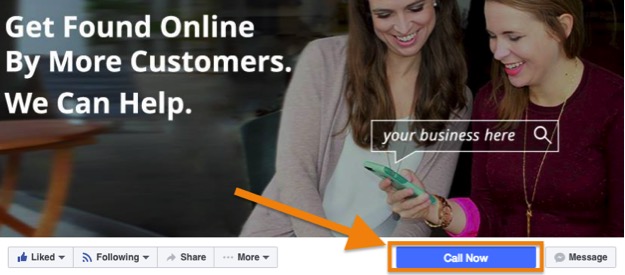
    Image of Call To Action Button On Facebook Page - Search Influence

    3. Add a Call to Action Button

    Facebook makes it easy for your potential customers to reach you by allowing you to have a Call to Action button right there on the cover photo. You want to ensure that you optimize this button so that customers can recognize it and that you get a response if it is used. Book Now, Contact Us, Use App, Play Game, Shop Now, Sign Up, and Watch Video are all options you can use to help boost a product, service, or special promotion your business may be running. You can easily find this where it says, “Add a Button.”

    While it’s easy to focus on the cosmetic and social aspects of your Facebook, it is important to remember that your Facebook can work for you without a great deal of effort from you. Creating accurate, well-written descriptions is another thing you can do to help with your page’s search value. In many cases, having a marketing business that understands how to make Facebook work for you can help you attract customers you would not have reached otherwise.

  • Search Influence Partners with YouthForce NOLA for Second Summer

    For the second summer, Search Influence has partnered with New Orleans-based YouthForce NOLA, a career readiness organization developed by “Educate Now!” that helps match students with local businesses in order to offer real world work experience. According to their website, the organization aims to create “training pathways that prepare students for high-wage, high-demand careers and rigorous post-secondary options.” As part of Search Influence’s commitment to the program, we have welcomed three interns to our team this summer, DaJuan Breaux, Kerriyelle Maxwell-Knight, and Tyriell Poche.

    YouthForce Interns

    “Search Influence has had a long standing relationship with Educate Now!, one of the founding partners of YouthForce NOLA”, said Search Influence COO and Co-Founder Angie Scott. “Ingrained in the culture of Search Influence is giving back to the New Orleans community.”

    What They Do and What They’ve Learned

    In June, DaJuan, Kerriyelle, and Tyriell joined the Production Team and immediately started assisting with Social Media Management along with other projects. All three shared some thoughts about working at our tech company and what they have learned thus far about the company culture at Search Influence.

    “I love it because my whole life I was involved in tech,” said DaJuan. He cited how much he uses technology and social media in his daily life and that it’s a great opportunity to utilize it professionally. “I also like it because I know I have something to put on my resume.”

    When asked what drew her to YouthForce NOLA, Tyriell shared, “I just wanted to get my experience in the job world.” She also expressed how she’s learned more about working with other people and how communication in group work is essential. “It will benefit me in the long run because I want to run my own daycare [one day].”

    Kerriyelle echoed that sentiment, “I have learned it’s okay to be open and communicate with other people—if you ask questions, the work that seems hard isn’t so hard [anymore].” She is also enjoying the work environment. “I like how comfortable it is. I see you can be yourself [here].”

    A YouthForce NOLA Success Story

    Current employee, Jason Plain is evidence of YouthForce NOLA’s success. Jason started working at Search Influence in the summer of 2015 as an intern through the YouthForce NOLA program. His hard work and dedication secured him a position as a part-time employee on the Production Team.

    Instagram photo

    Thus far, the partnership between YouthForce NOLA and Search Influence has proven to be beneficial not just for the interns but for the company as well. It has been a great way to reach out to the New Orleans community and help them get a glimpse into a career in the tech industry.

    “Each individual given the opportunity to work with us has been hungry for more education in online marketing,” Angie explained, “and we are excited to give it to them.”

    Instagram Photo Credit