Author: Brennan Schexnaydre

  • The Strategic Marketing Method to Building Your Brand on Youtube

    In true Search Influence fashion, I am going to start this blog post the same way we typically start our weekly company meetings, with a quote:

    “You cannot teach a man anything; you can only help him discover it in himself.” – Galileo

    Though Galileo provided us with this insightful quote, Frances Bacon formulated one of the most important tools to aid in this self-discovery, the scientific method.

    Now, Let’s Get Started…

    Neil DeGrasse Tyson science meme

    There is a method to the madness! What if I told you that to build your brand on YouTube, all you need to know is the scientific method that you learned in 5th grade? You may ask yourself, what exactly are the six steps of the scientific method and how the heck does this relate to digital marketing? For a little refresher, I have listed the steps to get us started:

    1. Ask a question
    2. Do background research
    3. Construct a hypothesis
    4. Test your hypothesis
    5. Analyze the data and draw a conclusion
    6. Share your results

    STEP 1: Ask a Question

    In the first step, you are going to want to think of multiple questions around the reasoning your experiment. I highly recommend taking the time to write this out, whether it’s with a pen and paper or on your computer. Like any great scientist, you should be documenting all of your brainstorming, research, strategies, and data.

    • What is your niche?
    • What is the problem you want to solve?
    • What is your area of expertise?
    • Who do you want to target?
    • Why are you choosing to focus on this niche?

    The last question is key because there is never going to be the same level of commitment if you aren’t choosing something you are truly passionate about.

    STEP 2: Do Background Research

    Now that we have sorted through all of those questions and have a clearer idea of the direction we want to take, it’s time to start our background research.

    We need to look at what our competitors are doing. Our competitors will be the brands or people that are doing something similar to what we have chosen as our niche. When analyzing them, we should ask the following questions:

    • How do they engage?
    • Which formats do they use?
    • What is their content strategy?
    • Is what they’re doing working?
    • What is your market missing?
    • What can you do differently from them?

    Once again, this last question is the key to your success! What can you do differently that will set you apart from your competitors?

    STEP 3: Construct a Hypothesis

    Now the fun part (and my personal favorite)! We need to construct a hypothesis, or, in marketing terms, create a strategy. We will want to use our research from Step 2 to construct keywords, content, and visual styles that will work with your target audience while utilizing the competitive advantage you identified in Step 2. In this step, you will also want to determine your overall strategy to remain consistent. This is going to include your posting schedule, engagement plan, and who (brands or people) you would like to collaborate with in the future.

    An important part of this step is determining the metrics that matter, what we like to call “SMART Goals.” What are the metrics you should measure to prove the success of your strategy?  This will include constructing a timeline of when you would like to check in on these SMART Goals of your strategy.

    Neil DeGrasse Tyson meme about bracing yourself for digital marketing knowledge

    STEP 4: Test Your Hypothesis

    Testing your hypothesis is when the party really gets started. It’s time to experiment. You are going to implement your strategy. You will take the creative strategies you planned out in Step 3 and put them into action.

    STEP 5: Analyze the Data and Draw a Conclusion

    Using the timeline determined in Step 3, analyze the data and draw a conclusion. Look at those metrics that matter. Ask yourself the following questions:

    • Is your strategy helping you achieve your goals?
    • Did you determine the right goals to track in Step 3?

    STEP 6: Share Your Results

    Now, unfortunately, I can’t say that this is the final step because “sharing your results” means you will now use your conclusions to decide on optimizations for your strategy. You’ll know if you’ve achieved your goals or if certain aspects need to be revisited when you analyze the data in the previous step.

    Scientists share their results to provide insightful information that can be used as research for future experiments. Experiments aren’t meant to be done once. This process should be repeated and repeated to study and improve your marketing strategy.

    Once you’ve got your results, ask yourself the following questions:

    • Should you restrategize your brand?
    • Did you choose the right market?
    • Should you restrategize your execution?
    • What parts of your plan are working?

    And the final question to ask yourself after reading this post is… are you smarter than a 5th grader?

    Luckily, the marketing experts at Search Influence got straight A’s in 5th grade. If you need help developing an effective marketing strategy for your business or building brand awareness on YouTube or any other social media platform, start a conversation with one of our strategists today.

     Images

    NDT 1

    NDT 2

  • Everything You Need to Know About Social Media Images

    Social media users are 10x more likely to engage with a post that includes a photograph or other visual. And, on platforms like Instagram, without a photo, you can’t post at all. So, no matter what industry you’re in—or even for your personal profiles—if you want to reach the 2.34 billion social media users worldwide, knowing the dos and don’ts of quality images is essential. Luckily, the social media experts at Search Influence are here to help.

    Use Professional Photos

    It’s the number one rule of social media—professional quality photos only. Nothing blurry or out of focus, no limbs cut out of the frame. And if no one on your team has top-notch photography skills, it’s worth hiring a professional or reaching out to your design agency, if you use one. As far as the content of these photos, always use positive imagery to keep viewers feeling happy and eager to return to your profile in the future. This might seem obvious, but it can be surprisingly easy to slide into negative territory. Many dentists, for example, feature before and after pictures on their social media—but viewers don’t want to see images of ugly teeth! Avoid the negativity and only showcase the after photos to keep things upbeat. Photos of people are also a good choice. These tend to perform better across social media channels because people relate to other people. Quite simply, if you’re taking social media photos in-house, keep it professional, keep it happy, and feature people whenever possible.

    Make It Personal

    Unique images will always get more traction than generic ones. So, whenever possible, make your social media photos specific to your corporate or personal brand. One great way for businesses to do this is sharing photos of team members or happy customers—taking those high-performing photos of people to the next level. When you post about team members, whether to welcome a new employee or profile a well-established manager, it helps viewers connect with your company on a personal level. Rather than a faceless corporation, you’ll seem like a group of individuals—a much more approachable and engaging online persona. When you post about happy customers, it not only reinforces positive messages about good customer service and high customer satisfaction, but it’s also a great opportunity to expand your presence online. Tag the featured customers whenever possible so their personal networks will see your post. And remember, social media is first and foremost a platform to build relationships.

    Choose Stock Images Wisely

    While it’s always better to take your own professional photos, unfortunately, it’s sometimes impossible to do so. For example, a new apartment complex should start advertising before it’s completed, but mid-construction photos won’t provide viewers with a good idea of the finished product. That’s where stock photos come in. They’ve developed a bit of a bad reputation for being cheesy, over-posed, and filled with women who are way too happy about salad or teams of coworkers that love giving the thumbs up. But, with a discerning eye, it’s possible to pick good stock photos to fill the gaps in your personal photos. Once again, go for photos that feature real people, and choose ones that look as candid as possible. Absolutely no clichéd photos of business people shaking hands!

    Bad stock images:

    Good stock images:

    Also, pay attention to the color palette and make sure it fits with your existing photos and branding. Upcity.com features a list of both free and paid websites for finding stock images. But remember, don’t go with the first photo you find. Hunting through pages of images might seem tedious, but the increased quality and social media engagement will be worth it in the end.

    Don’t Forget Your Audience

    Every social media platform has a different user demographic, and to maximize engagement, you should tailor your image choices to each audience. On Facebook, for example, users are looking for helpful information about your business and an authentic inside look at your company culture. Photos for this platform can be a bit more casual and candid and should especially focus on featuring team members and customers, as discussed earlier.

    Surfers on a beach - Search Influence

    Instagram, on the other hand, requires strong, visually appealing images geared toward a younger audience. In addition to informing image choices, your target audience should also determine how much you advertise on each platform. For example, if you run a community for active seniors, you should primarily advertise on Facebook rather than Instagram, since that’s the platform your target age demographic is more likely to use. If you do advertise on Instagram, your posts should be targeting your customers’ children. Whichever platform you choose, try to put yourself in your audience’s mindset.

    With these dos and don’ts of social media images in your knowledge bank, get ready to see your engagement rates soar. But, if you’re still not getting the results you want, it never hurts to contact the professionals. With services ranging from customized consulting to online advertising, the experts at Search Influence are always happy to help.

    Images:

    Happy Salad Woman

    Fresh Salad

    Surfers

  • Impact Your Tourism Marketing With Instagram Stories

    If you’ve been keeping up with our blog, then you already know how to market your travel and tourism business during the off-season, and how to engage with vacationers using mobile search. But, do you know how to leverage Instagram Stories for impactful tourism marketing? Stories are temporary videos or photos strung together to form a slideshow gallery that, well, tells a story. Since Instagram rolled them out in 2016, over 25 million active business profiles and 300 million active daily users have flocked to this feature, according to ClickZ.com. This means that Stories could be a huge area of opportunity for your business—if you use them the right way. If you’re unfamiliar with Stories, Cnet.com offers in-depth instructions on how to use this feature. But once you have the basics down, dive into our pro tips for how to make Instagram Stories most effective for your company.

    A graphic of someone using Instagram - Search Influence

    Promote Yourself Creatively

    Here’s the great thing about Stories—you no longer have to worry about over-posting. You are free to share as much content as you want throughout the day without taking over anyone’s feed. Plus, since the rollout of Instagram’s latest algorithm update, your traditional posts may have even less chance to be seen by followers in their feed, but Stories will appear right in front of your users at the top of their screens. This gives you more potential screen time and more creative ways to showcase your brand. But remember, it’s not about just posting links and asking users to click them. It’s about creating an experience where following your links is a natural and enticing option. Maybe you’ll be inspired by The North Face, who designed their Story to look like a dating app and asked users to swipe up to match with the perfect sleeping bag. Or, maybe you’ll start a little smaller by moving your weekly newsletter onto Instagram Stories. Whether you’re promoting events, products, newsletters, or just trying to drive extra traffic to your website, keep it creative and enticing and you can’t go wrong.

    A graphic of a stories page for Cheerios Instagram - Search Influence

    Actively Engage Followers

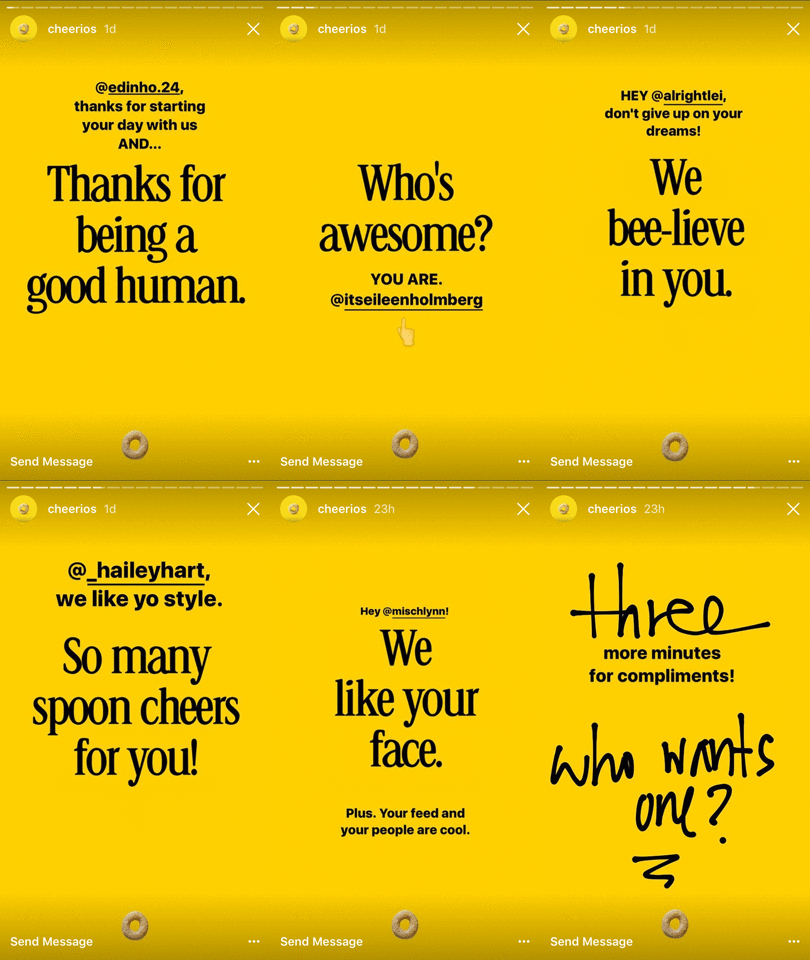
    Promoting your company is important, but the strongest marketing campaigns are customer-focused, not you-focused. Instagram Stories allow you to engage with your customers on a more personal level, while still reflecting your brand’s identity creatively. One great idea for customer engagement comes from Cheerios, who posted a Story that compliments their followers. When followers are tagged in a personalized compliment, they feel valued by the brand, which deepens their sense of connection with Cheerios and builds brand trust and loyalty.

    A more common approach is to leverage user-generated content—using your story to promote posts created by your followers. User-generated content is popular because it not only saves your company the time and energy of designing your own Story, but it also makes your customers feel like a valued part of your brand story, again building trust and loyalty.

    As a final engagement strategy, consider using an Instagram Story poll. Polls tend to be fun and entertaining, and most importantly they ask followers to take an action on your Story that feels far less pushy than clicking a link. They also provide the opportunity to get genuine customer feedback or opinions, which can inform your future marketing strategies. For example, you could post a poll asking followers to choose between an island cabana or a cozy ski lodge, and then use their results to determine whether your next campaign should be focused on the tropics or the mountains. Whether you opt for compliments, user-generated content, polls, or something even more creative, always keep your audience at the forefront of your mind and your engagement will likely be successful.

    A screenshot of Instagram highlights for Search Influence

    Customize Your Highlights

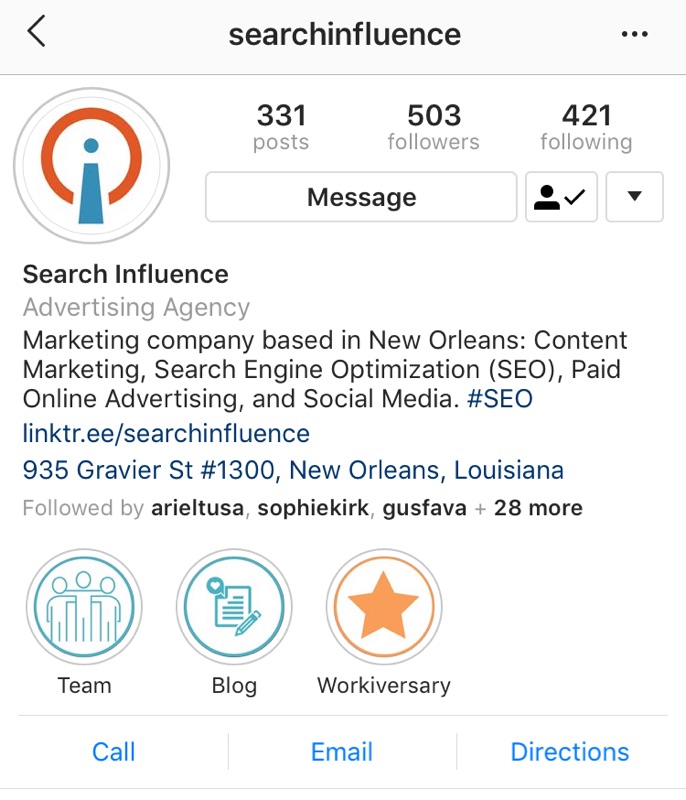
    Unlike regular Stories, which appear across the top of Instagram users’ home feeds, Stories Highlights are located on your company’s profile, between your bio and your photos. Highlights are kept for as long as you want—they will not automatically disappear after 24 hours like a regular Story. Because of this, Stories Highlights are a great way to share important brand information right on your profile, in an organized and aesthetically pleasing way. For an in-depth guide on how to customize your Stories Highlights, later.com walks you through the process of creating your own icons and covers in Canva. And, for an in-depth look at how to use Canva, our blog offers some friendly tips on what Canva can do for your business.

    An example of a sponsored Instagram ad from Search Influence

    Don’t Forget Advertising

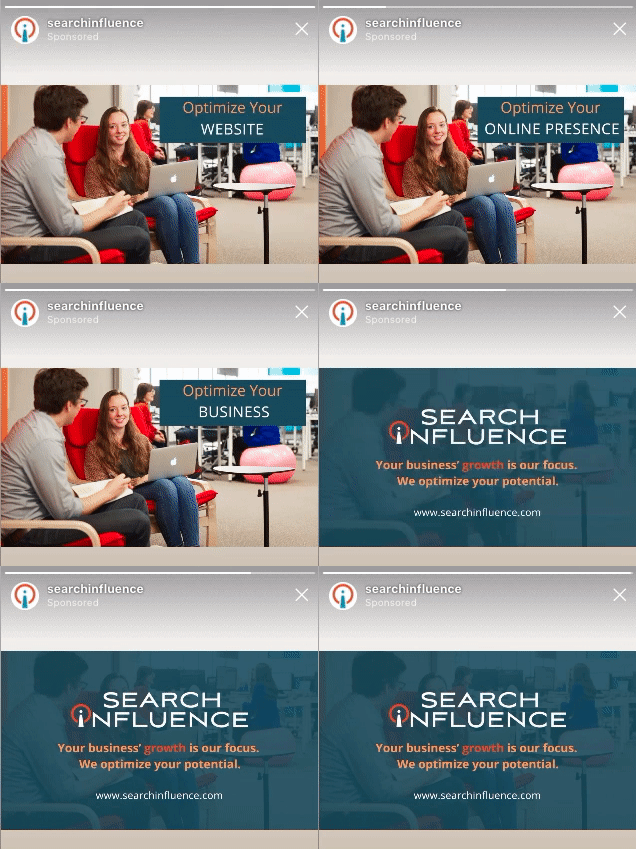
    While authentically engaging with your followers is the ideal situation, sometimes it’s necessary to establish your brand or grow your network with paid advertising. On Instagram Stories, photo ads last 10 seconds, while video ads last for 15 seconds. It’s a very short window of time, but with the right approach, it can still be effective. Design your ads to catch your audience’s eyes quickly. Interest users with strong visuals, engage them with clear messaging, and then urge them into action. With this combination of tactics, you’ll have a good chance of achieving the goal of your ad campaign, whether it’s recruiting more followers, increasing sales, or gaining website traffic.

    Ask the Professionals

    If right now you feel confident and inspired to dive head first into creating exciting Instagram Stories, that’s awesome! But if you want more advice about managing your company’s social media, advertising online, or learning how to use additional Stories features like geotagging, the experts at Search Influence are here to help. Call 504-595-1623 with questions, or request a proposal online today.

    Images:

    Stories Demonstration

    Cheerios

  • 7 Tips for Eye-Catching Social Media Posts

    For years, social media has been the most cost-effective place to advertise your business, but it takes planning to stand out from the competition. In the up-to-the-minute marketplace of memes, it pays to use eye-catching colors, animated images, and consistent, compelling branding. Fortunately, once you develop a digital marketing strategy that reflects the strengths of your company, you’ll be able to create and share content with a minimal investment of time and effort.

    1. A “Social Media Strategy” is Key.

    Every month, 30 percent of millennials interact with a brand on social media platforms like Facebook. Consumers expect to find information about your business on social media, and they want to be able to reference your company’s page when bragging about their positive experience at your establishment. Pictures of meals have been some of the most popular content on Instagram, and a lot of those pictures are copied to other social media platforms. When the friends of your customers ask where they can get that ice cream fudge volcano, wouldn’t it be great if your business page was suggested as a hyperlink? Customers are already talking about your business online, but your business has to be on social media to join that conversation.

    Social media photographer holding up lens to nature scene

    2. Source High-Quality Images.

    We’ve all learned to spot them: bland stock photos show smiling employees or hands at a keyboard, but they don’t inspire trust in the business. Instead of using generic, one-size-fits-all images, consider hiring a photographer to take real photos of your business and products. Alternatively, grab your iPhone and take a few pictures yourself. DIY photos convey relatable authenticity, and they can work as short-term images on social media, but a professional photographer will take lighting and composition into account, digitally adjusting images as needed. Whenever you can afford the expense, make quality images a priority, especially for the long-term images that become profiles and header images on your social media pages.

    Example of Spotify leveraging Instagram post

    3. Pay Attention to Color Schemes.

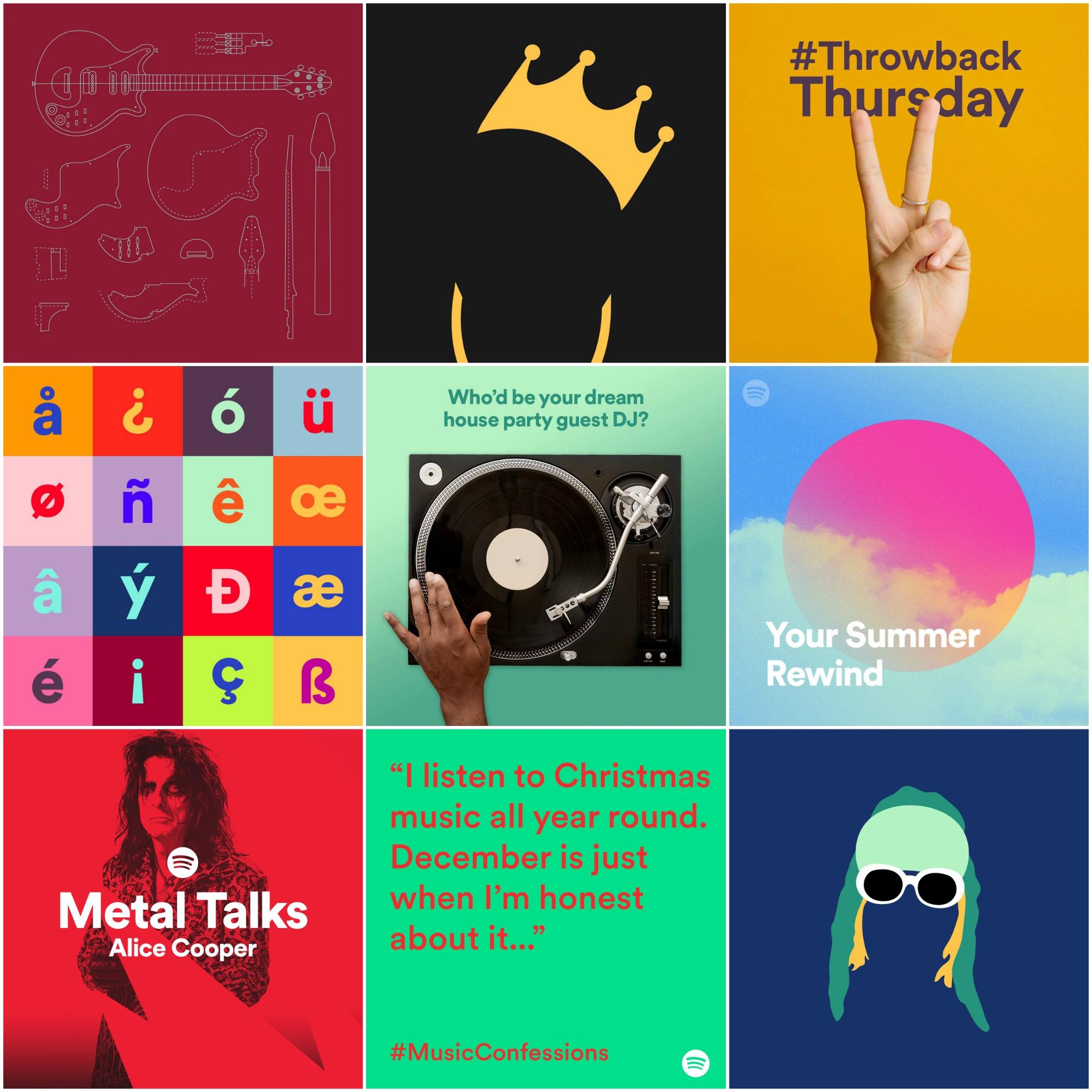
    Does your branding consistently utilize a couple of key colors? Great! But consider using slightly different (but still complementary) colors for different lines of products and services. Spotify is a great example of a brand that makes use of dynamic color schemes but still manages to keep it consistent. In the image from Venngage above, you can see how they’re easy to recognize but hard to forget.

    Colors convey a personality and warmth, and it’s worth a little time to evaluate whether to choose bright and bold colors or something more subdued and approachable. Rather than defaulting to flat reds and blues, use light and dark gradients to achieve something more unique than the local high school’s color scheme. Choose unconventional colors to make your posts more recognizable on social media. Spotify makes use of dynamic color schemes throughout all of their branding designs. This creates a stronger visual for their brand and allows visitors to instantly recognize their graphics and associate them with their company.

    Taylor Swift drinking a Diet Coke

    4. Make Your Own Custom Branded GIFs.

    A step beyond quality still images, GIFs are animated bitmap images. While its pronunciation is debatable, the acronym stands for graphics interchange format. Clips from TV shows and other videos are popular fodder for GIF images, where a gesture or a moment of action is captured and repeated in a short loop. Moving images naturally stand out in the newsfeeds of customers, and humorous GIFs inspire a lot of organic engagement. GIFs are recirculated for free online, but creating your own has distinct advantages. First, when you create your own content, it’s easier to avoid potential copyright issues. Second, when your custom GIFs are fun and compelling, those GIFs can lead people back to your website, helping you build authority online.

    Reeds blowing in the wind

    5. Leverage Cinemagraphs.

    Cinemagraphs can be made in video or GIF format, so there’s naturally some confusion and overlap. Still, GIFs tend to be loops of a video where the beginning and end are clear, not unlike an instant replay from a sporting event. Cinemagraphs, on the other hand, tend to be artistically made in a way in which it’s hard to tell when the image begins to repeat, giving the effect of a live picture or streaming video. A steaming cup of coffee, a waterfall, and a drink being poured are examples of subject matter for cinemagraphs. Naturally captivating, this type of media is harder to DIY, but it can make a crucial difference at the moment when users decide whether to stop or keep scrolling.

    Happy Father's Day custom graphic for Search Influence social media channels

    6. Keep It Consistent But Exciting!

    While experimenting with different types of media and formats, remember to keep your messaging on track. Don’t get bogged down with details, either in perfecting a single post or cramming as much information as possible. With the short attention spans on social media, clarity and brevity are essential.

    – Bullet points and clear headers are helpful with any text. If you haven’t hired a professional graphic designer, then avoid the temptation to use artistic (but hard to read) fonts.

    – Big, clear lettering is safest, especially when your target audience includes older demographics.

    – Numbers, percentages, and impressive statistics can help catch the reader’s eye.

    – Don’t be afraid to try different techniques and learn what works best for your audience, but stay close to home base while you develop your image as a reliable, professional authority.

    Alternatively, a broader presence in the community can make your business a topic of conversation, but that type of campaign can have a more gradual impact on walk-in clients and leads.

    Search Influence employees posing on Canal Street for social media channels

    7. Always Keep Your Marketing Goals in Mind

    Especially when you’re first getting started, it’s a good idea to check out the social media presence of others in the same industry. You may find businesses in the same industry that have a different service area, and therefore they aren’t direct competition. Take a look at how different types of posts inspire different amounts of engagement, and you may find ideas for developing content of your own. As with any type of marketing, it’s also important to clearly define your goals at the outset. Is your objective to build a following and make your brand more recognizable in the community? Or are you mainly looking to generate leads for potential clients? Depending on your industry, dominating local search may be the most effective way to get clients to call your company.

    If you don’t have the time to juggle business operations with digital marketing, then you can always outsource your social media management to professionals. The experienced team at Search Influence can provide a digital marketing and SEO consultation, identifying opportunities to strengthen your online presence. Follow our blog for the latest tips on GIFs and marketing trends.

    Images:

    Camera lens

    Spotify covers

    Taylor Swift

    Cinemagraph