Author: Alula Amare

  • Don’t Miss Out on the Recession Boom in Graduate School Applications

    Research by The New York Times, Stanford, and other sources suggests that interest in graduate school will hit new highs in the coming months and years due to the global recession. Instead of looking at how your organization can cut costs by reducing its marketing budget, you should make the most of this opportunity by allocating marketing dollars to get in front of audiences receptive to your messaging.

    Graduate student smiling wearing a cap and gown at graduation

    Now is the time to make a push to drive more applications to your programs. You need to ramp up your efforts to ensure that your advertisements are being seen by prospective students who are wondering if they should apply to business school, law school, or another graduate program.

    Increased Online Activity Enhances Targeting Efforts

    Online activity has surged in the past few months due to stay-at-home orders. With more active users browsing online, it’s clear that budget allocations and targeting should shift to align with this change. Advertisers can adjust their marketing strategies and find more cost-effective ways to use their marketing dollars.

    Now is the perfect time to push your messaging on Facebook because costs have dropped. Like any marketplace, supply and demand drives Facebook ad pricing. As the platform’s ad inventory has increased due to more activity, the amount it can charge advertisers has decreased. Facebook saw a 50% surge in the use of their messaging apps, as well as a similar increase in the time people spend on Facebook and Instagram.

    Right now, it costs a lot less to reach potential students on social media and on mobile apps. From March 1 to May 20, 2019 it cost an average of $3 for 1,000 impressions (CPM) on Facebook and Instagram. Due to increased online activity in 2020, the CPM fell to an average of $1.22. The first three months of 2020 also saw unprecedented spending ($23.4 billion) and activity (a 20% increase year-over-year) on mobile apps, which grad schools can take advantage of by running ads on Google’s Display Network.

    Graduate student sitting at a desk working on a laptop

    How to Market Your Graduate School Programs: Proven Industry Results

    Our higher education clients have seen a sharp increase in inquiries during the past few months. Several factors drove this spike, including a 20% surge in searches for online degree programs and an increased appetite for applying to grad school. However, increased consumer interest doesn’t mean much if you can’t capitalize on it.

    In March, most states issued shelter-in-place orders. Data from one of our clients, a professional and continuing education school at a private university, shows a record-breaking number of inquiries since this time. Although this organization has a competitive advantage because they already offered many of their programs online, online programs will increasingly become the industry standard.

    Here’s a checklist of tactics our clients utilized to pivot their strategies, which you can use to benefit your institution:

    • Make every course available online
    • Emphasize messaging that provides details about policies regarding transfers, financial aid, and credit for life/work experiences
    • Maintain a digital advertising budget
    • Leverage Facebook Live to increase awareness
    • Shift blog post topics to address the current climate

    Implementing these adjustments yielded significant improvements in digital campaign performance: In March, one higher education client received more Facebook inquiries than they have in any other month since we began working with them. During Q1 2020, they achieved 47% of the total inquiries that they received during all of 2019.

    Marketing Strategy Changes For Your Institution: What You Need to Do Right Now

    The cost of advertising on Google, Facebook, and other platforms are lower than they have been for years; now is the perfect time to get in front of new audiences and build a student pipeline for upcoming semesters.

    Take the next steps:

    • Adjust your marketing budget to accommodate the surge in online activity
    • Leverage video content and mobile platforms
    • Update your messaging to communicate any changes to your services relevant to the current climate

    Millions of Adults Will Consider Graduate School

    In times of a strong economy, individuals interested in graduate school have to balance the
    the impact of two or more years away from their full-time jobs to attend graduate school with the potential of career advancement (or a career change) a graduate degree provides.

    • Loss of full-time salary
    • Forgoing chance of promotion
    • Taking on tuition debt

    Wondering how to ensure your website reaches these expanding audiences? Download our self-assessment to score your marketing strategies and uncover the opportunities you have to drive leads into and down the funnel!


  • Are Wix Sites Bad for SEO?

    Wix is one of the most widely used website builders in the world, with over 150 million users as of 2019. Despite being so popular, it’s not exactly a secret that Wix sites have a bad reputation within the digital marketing community. It got so bad that Wix tried to prove a point by holding a contest to see if anyone could outrank them for the keyword “SEO hero.” Spoiler alert: they didn’t win. But does Wix deserve the flack it gets? And is it realistic for people to expect a (mostly) free website builder to outperform more robust platforms?

    Wix site being displayed on laptop

    Why are Wix sites bad for SEO?

    So what’s wrong with Wix sites? In short, there are several technical aspects of SEO that Wix sites don’t mesh with.

    • URL Structure: Free Wix sites have a URL structure of username.wixsite.com/siteaddress. As an address, that’s hard to remember, and it’s not exactly something you’d print on a business card. Wix users can have more control over their domain name by using the paid service, but if Wix’s entire shtick is being a free website builder, then it’s not a good look to charge people for something as basic as a regular-looking domain name.
    • Google Analytics: Google analytics can’t be implemented on free Wix sites because they technically don’t have unique URLs.
    • Site Crawl Issues: Wix sites don’t allow users to edit their robots.txt files, which can make it more difficult for search engine crawlers to index sites with dozens or hundreds of pages.
    • 301 Redirects: Free Wix sites do not support 301 redirects. If you take down a page for any reason, you can’t redirect users to another page, and you will lose the original page’s link equity.
    • Site Speed: Google has started to place more and more emphasis on site speed as a factor for keyword rankings. Wix sites tend to load slowly because they require hundreds of Javascript file requests before rendering a web page. This affects pages’ keywordrankings and offers a worse experience for users.
    • The Templates: Once you’ve selected a template for a Wix site, you’re stuck with it. You can’t pick a new one or make major edits to your current template without losing all of your content.

    It’s Not All Bad

    Despite their issues, Wix sites have some benefits. Users can still use fundamental site optimization tools, like title tags, meta descriptions, blogs, H1s, and H2s. Business owners can customize their site’s design (to an extent) with Wix’s templates. They also support e-commerce in their premium plans. So if you’re trying to establish a client base online, Wix isn’t the worst place to start, especially if you have a decent following on Instagram and just need a website so users can make purchases.

    To be fair, Wix’s premium plans are reasonably affordable. Their prices are comparable to what other providers, like Squarespace, offer. All of this makes Wix a somewhat decent starting point for small businesses and entrepreneurs who can’t, or don’t want to, invest money in a website. Wix doesn’t allow users to implement highly technical aspects of SEO, like editing their robots.txt file, because they don’t expect people who use a free website to know about them. That may be shortsighted, but that’s clearly the assumption they’re making.

    Most new businesses will outgrow a Wix site once they’ve reached a certain level of success. Attracting new customers, and keeping the ones you already have, will get increasingly competitive. At that point, you’ll need to have a well-defined SEO strategy. Moving on to a more robust CMS like WordPress should be a priority.

    If you have a Wix site and aren’t satisfied with its performance, Search Influence can help. Since 2006, we’ve provided hundreds of clients with digital marketing services like SEO, paid search campaigns, and more. Our team has handled a variety of site migrations, and we can help you build a new website. To learn more about what we can do for you, contact us at (504) 208-3900.

    Images
    Wix on Laptop

  • Influencers Take Part in Rebuilding Together New Orleans’ Build and Boil Event

    On April 6, a group of Influencers took part in the Build and Boil event hosted by Rebuilding Together New Orleans (RTNO). With the guidance of our group leaders (and a few Influencers who are particularly handy), we helped make the home of a Korean War veteran with a disability more suited to his daily needs by improving its accessibility. The team spent several hours working on the home before heading back to the RTNO warehouse to enjoy crawfish and drinks.

    Giving Back to Our Community

    Alula Amare with great waves and Search Influence CEO Will Scott at Rebuilding Together New OrleansDuring the build portion of the event, we had the privilege of working on the home of Clarence Gabriel. Mr. Gabriel was medically discharged after serving in the Air Force during the Korean War. Upon returning to civilian life, he worked for 35 years as a self-employed craftsman and has always enjoyed working with his hands. Mr. Gabriel has lived in New Orleans his entire life and purchased his 7th Ward home in 1996.

    Mr. Gabriel is wheelchair-bound, and his decreased mobility makes it difficult for him to get around. When we arrived at his home, we were greeted by his daughter Melissa, who gave us a bit of background on Mr. Gabriel and the house. A ramp had already been built at the front of the structure, so we got to work adding the finishing touches. Our team cut pieces of lumber with a chop saw, fit the wooden planks with brackets, installed them along the sides of the ramp, and then treated the handrails and latticework with sealant.

    After a day of hard work, we took part in the boil. We made sure to try the crawfish of as many participants as possible by keeping tabs on whose boils we had already sampled. We couldn’t agree on a winner, but we had a great time trying to decide on one.

    Lauren Griffin from Search Influence working at Rebuilding Together New Orleans

    Our Partnership With RTNO

    Rebuilding Together New Orleans is a program of the Preservation Resource Center that works to “improve the quality of life of low-income homeowners, particularly those who are elderly, disabled, veterans, or single heads of households with minor children, through home repair and revitalization of New Orleans’ neighborhoods.”

    Previously, Search Influence partnered with RTNO to secure them a much-needed website redesign and updates to make it more user-friendly and easier for their staff to maintain.

    The goals of RTNO’s new website included the following:

    • Making it easier for those in need of assistance to apply for help
    • Increasing volunteer sign ups
    • Increasing donations

    Based on the success of this April’s Build and Boil event, it seems like RTNO is well on their way to accomplishing those goals.

    Search Influence is proud to help support members of our community and local nonprofits. To keep tabs on our team, follow us on Instagram.

  • How Long Does It Take to See the Benefits of SEO?

    Gif with matthew mcconaughey about SEO turnaround time from Search Influence in New Orleans, LA

    That’s always the question when a business starts something new: how long will it take? The short answer is that SEO campaigns generally see mature results in 6 to 12 months. But any business that starts working on SEO will also see several benefits immediately.

    SEO campaigns should have two goals: to tell external entities on the internet (especially search engines) that your website is an authoritative source of information within your industry, and to help convert potential customers into actual customers once they’re on your site. There are numerous ways to accomplish both of these. Over the course of this post, I will cover a general timeline of an SEO campaign and the accompanying deliverables businesses should expect.

    The Sales Process

    If you haven’t done any SEO work before, then your first step should be reaching out to digital advertising firms. They will perform competitive research before coming back to you with a pitch. This first step is critical because the timeline for the results of an SEO campaign depends on where a business starts off relative to its competition. Obviously, some industries are more competitive than others, but generally, a business’s presence online can be measured by several on-site and off-site factors. Digital marketers will evaluate your website’s content and layout, perform keyword research, and determine how easy it is for leads to complete conversions on your site. Common conversions include filling out on-site forms, booking consultations, product purchases, etc. There are also several off-site tactics that will signal your website’s authority within your industry to search engines, including backlinks from reputable websites, accurate and consistent listings, and social media activity. This research allows digital marketers to set realistic goals from the start and ensure that the work they perform will make a difference.
    New call-to-action

    Campaign Kickoff and Month One

    Once you’ve partnered with a digital marketing firm, they will schedule times to discuss which strategies you would like to move forward with and establish which metrics matter the most to your business. Then, they can use the research that they’ve already compiled to build a plan of attack. Several aspects of an SEO campaign can have immediate effects on your website, such as building out new pages, cleaning up bad links, setting up call tracking, making your site mobile-friendly, and purchasing an SSL certificate. Your team can also begin working on longer-term strategies, such as establishing an overall content strategy. This first month lays the groundwork for the rest of your campaign.

    Month Two and Beyond

    As your SEO campaign progresses, your digital marketing firm can use site data from Google Analytics and other tracking methods to analyze changes in your site’s traffic and on-site conversions to measure the performance of your current strategies.

    After reviewing the results of your campaign, it might make sense to complement your SEO work with other digital marketing strategies, including paid search or social media advertising. The effectiveness of these tactics will depend on your industry, but paid advertising is generally geared toward immediate results. Supplementing SEO with paid campaigns is a logical step to take if your business is more focused on e-commerce or other B2C transactions. However, several elements of SEO (creating landing pages, being HTTPS-secure, and having a mobile-friendly site) will help amplify your paid campaign’s results.

    Keywords, Keywords, Keywords

    Up to this point, I haven’t particularly focused on keyword rankings because it’s difficult to estimate how long improving them will take. Obviously, ranking well for relevant keywords is important and should be part of any SEO campaign. If you’ve never done any SEO or content work before, your rankings will quickly improve from their baseline once your campaign begins. A well-planned strategy can expedite the process, but it will probably take time to crack the first few results for more competitive keywords.

    New call-to-actionSimply being the first result for a search doesn’t necessarily offer value to your business. It’s essential to perform keyword research to see what your customers are actually searching for. By focusing on natural queries and long-tail keywords, businesses can be more selective about which keywords they target. Plus, earning strong rankings for long-tail keywords can be done relatively quickly and inexpensively while attracting people who are more likely to be interested in your services. As always, driving more potential customers to your site should be your focus. Ranking well for relevant keywords certainly helps, but there are other important factors to consider.

    So Now What?

    In general, the results of SEO are gradual, but your business can immediately benefit from on-site optimizations, reconciling conflicting listings, and having a clearer idea of where you stand relative to your competition. As search engine algorithms and user behavior change, you will also have to make adjustments along the way. With that in mind, you should choose the digital marketing firm that you work with carefully. Search Influence has helped businesses expand their client base online since 2006. If you’d like to know more about the timeline of SEO campaigns, give us a call at (504) 208-3900.

    Images

    Keywords

  • 5 Things American Businesses Need to Know About GDPR

    In the wake of the Cambridge Analytica scandal here in the U.S., the General Data Protection Regulation (GDPR) was established by the European Union in May to give users complete transparency on how their data is or will be used. Here’s everything you need to know about GDPR and how it will affect marketers not just in Europe but here at home as well.

    1. Why Did the EU Create GDPR?

    GDPR went into effect on May 25, 2018. It was initially approved by the EU in 2016, well before the news of the Cambridge Analytica data misuse broke. However, it’s hard not to associate one with the other because of the timing. To provide a bit of context, I will quickly outline the details of the Cambridge Analytica case. The data of an estimated 80 million Facebook users was sold and then used to create “psychographic” profiles of American voters. This data was collected through a seemingly harmless personality test called “thisisyourdigitallife.” The test filed away the data of participants and their Facebook friends. The participants unwittingly gave the app’s developers access to this data because by opting to take the test, they agreed to the test’s terms of service, which granted the test access to their information as well as their friends’.

    Though this example of misuse has brought personal data protection to the forefront of the world’s attention, this is not a new practice. The personality test in question was launched in 2014, and people have been using similar techniques to acquire user data for years. The difference is that we rarely questioned the terms of service we agreed to for things like apps, free wifi, and other services in the past.

    2. What Does GDPR do?

    GDPR aims to give users more information on how their data will be used. Its central goals are to keep users informed and to require their consent. The exchange of data for free services such as Facebook and Google can be a fair one. The text of the GDPR legislation is a decent read and is broken into chapters here. Any sites or services attempting to collect data must do so transparently, with “unambiguous” and “specific” purposes. “Data subjects” must be able to request logs of all of the data collected about them and then allowed to ask for the data to be corrected or deleted (appropriately named the “right to rectification” and the “right to be forgotten,” respectively). Also, businesses cannot deny or restrict services to users who opt out of data collection.

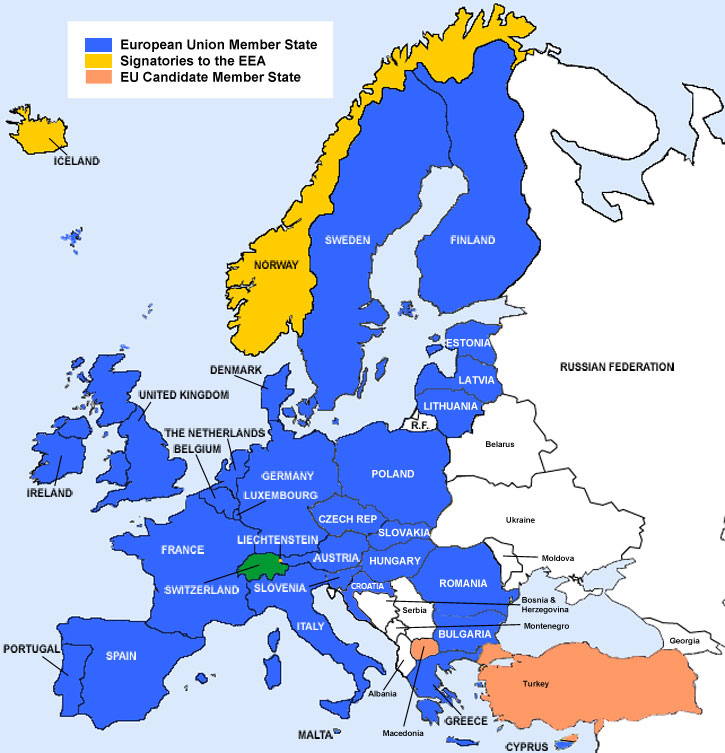
    EEA payment map - Search Influence

    3. Does GDPR Apply to US Businesses?

    Strictly speaking, GDPR applies only to EEA (European Economic Area, see image) citizens while they are in EEA countries, so one might expect that it won’t have a huge effect on American companies that only operate within the United States. However, because the internet is global in nature, it’s rarely that simple. Websites run by American businesses are frequently visited by people around the world.

    Tourism is one of the industries that will be most affected. 39.4 percent of the American tourism market is comprised of European travelers. Zoos, museums, aquariums, and other attractions should review their data and cookie collection methods.

    Also, American businesses must ensure that data they receive or purchase about EEA citizens were collected using techniques aligned with GDPR’s regulations.

    4. What Can You Do to Make Sure Your Business Is Compliant?

    GDPR isn’t intended to stop all data collection or to make targeted marketing less effective. On the front end, the main changes businesses would need to make to adhere to GDPR are stating that they are tracking user data and then how they plan to use the data, whether it’s cookies for remarketing, user session data for site analytics, or other reasons. Further down the line, companies would need to ensure that their records are well-maintained so that they can provide users with their data should there be a need to review or delete them. The key is transparency. As long as you let users know what you’re doing and why, there shouldn’t be any issues.

    Mark Zuckerberg sitting before Congress - Search Influence

    5. Will the U.S. Adopt Similar Policies?

    Anyone who watched Mark Zuckerberg’s testimony to Congress in April might not think there will be changes in US data privacy laws anytime soon. The questions some congressmen and women asked revealed a lack of technical knowledge, as noted by Vox. However, on May 22 Vermont passed the nation’s first data privacy law. Vermont’s legislation focuses on “data brokers,” companies that sell or license data about their consumers to third-party companies that do not have a direct relationship with the consumer whose data they are purchasing.

    A few weeks ago California passed a law that is more all-encompassing than Vermont’s. Similar to GDPR, the law requires businesses to state the type of data they are collecting and how they plan to use it. These changes will not go into effect until 2020, but the process was pushed along because Californian lawmakers were pressured by a grassroots ballot initiative with measures even more stringent than the bill the state passed.

    Due to public outcry and interest, other states are bound to follow suit, so there’s never been a better time to review your data collection practices and consider how easily they can be adjusted to fit the level of transparency that is becoming the new standard.

    Consult With Experts Who Are Up to Industry Standards

    At Search Influence, we consistently stay apprised of new industry standards and regulations regarding how our client’s information is disseminated, including GDPR. Our goal is to help your business grow and optimize your potential online, all while making sure your business is in compliance with data protection laws. If you’d like professional insight into how we can help your business thrive, call 504-336-3422 or request a proposal online today.

    Images:

    EEA Map

    Mark Zuckerberg

  • The Small(er) Screen: How Smart Businesses Attract Customers on YouTube

    Remember those cheesy local ads that used to be on TV all the time? Here’s a New Orleans classic. It’s memorable and fun to watch, but TV ads have their shortcomings, specifically cost and targeting. TV is also starting to lose its biggest advantage: the ability to reach a wide audience. According to research compiled by The Atlantic, streaming services have eaten away at the presence of traditional TV, causing a drop of 25% in viewership among adults aged 18-49 since 2010. As a result, more and more small businesses are choosing to advertise online. However, videos are still a great way to promote your business. On average, research suggests that videos are five times more engaging than text or image ads.

    Old TV sitting in weeds - Search Influence

    Basics of YouTube Advertising

    Over the past few weeks, many of us here at Search Influence have worked toward becoming certified or recertified in Google’s wide range of advertising platforms. Google constantly updates its advertising features and search algorithms, which is why we’re always educating ourselves on the most recent best practices and information. Part of maintaining our status as a Premier Google Partner is consistently demonstrating our expertise in all of its advertising networks.

    Most recently, we have been working on certifications in Google’s Video Advertising platform. Businesses can place their video ads on YouTube and Google’s Display network. Let’s focus specifically on YouTube’s Trueview in-stream ads. These are the ads that run before a video on YouTube. Viewers can choose to skip the ad after several seconds, which allows them to indicate their interest in the ads.

    YouTube reaches more people between the ages of 18-49 on their mobile phones than any TV network, even during the prime time slot of 8-11 p.m. Advertising on YouTube is available at a fraction of the cost of a 30-second TV ad. Plus, most smartphones have cameras that make shooting professional-quality videos much easier to do on your own.

    Benefits of YouTube Ads

    As I mentioned earlier, viewers can skip an in-stream ad after five seconds. YouTube only charges for an ad if someone watches it for at least 30 seconds. This prevents advertisers from wasting money on people who aren’t interested in their services. It also provides advertisers with quick feedback on the placement of their ads. No one will engage with an ad that isn’t relevant to them.

    About 60% of people watch YouTube on their phone, but they don’t just use their phones to watch videos. 91% of Americans turn to their phones when trying to solve a problem, which presents business owners with the perfect opportunity to advertise.

    Man using cell phone - Search Influence

    To give a concrete example, picture Jim. Jim is thirty years old and lives on the third floor of his building. His sink sprang a leak last weekend, and it’s only gotten worse since then. Jim uses his phone to search “how to fix a leaky sink” and watches the first YouTube video he sees. With the right keywords and location targeting, the ad for your plumbing company can be featured right before the video, prompting Jim to call you to schedule an appointment instead of spending all day trying to fix his leaky sink. Utilizing this feature is an easy way to convert your viewers into paying customers.

    Keeping that in mind, make sure your site is mobile-friendly. This blog post can help you ensure that your website is optimized for people browsing on their smartphones.

    What Does This Mean to You?

    Advertising on YouTube can be a powerful tool for any business, but an ad campaign’s results depend on its execution. Google provides numerous study guides to help people learn how to make the most of their advertising networks; but most business owners don’t have enough time to read through hours of material about negative keywords, bidding options, and ad rotations. Fortunately, we are here to help. Reach out to one of our experts to learn more about video ads.


    Images:

    Sad TV

    Man Using Phone